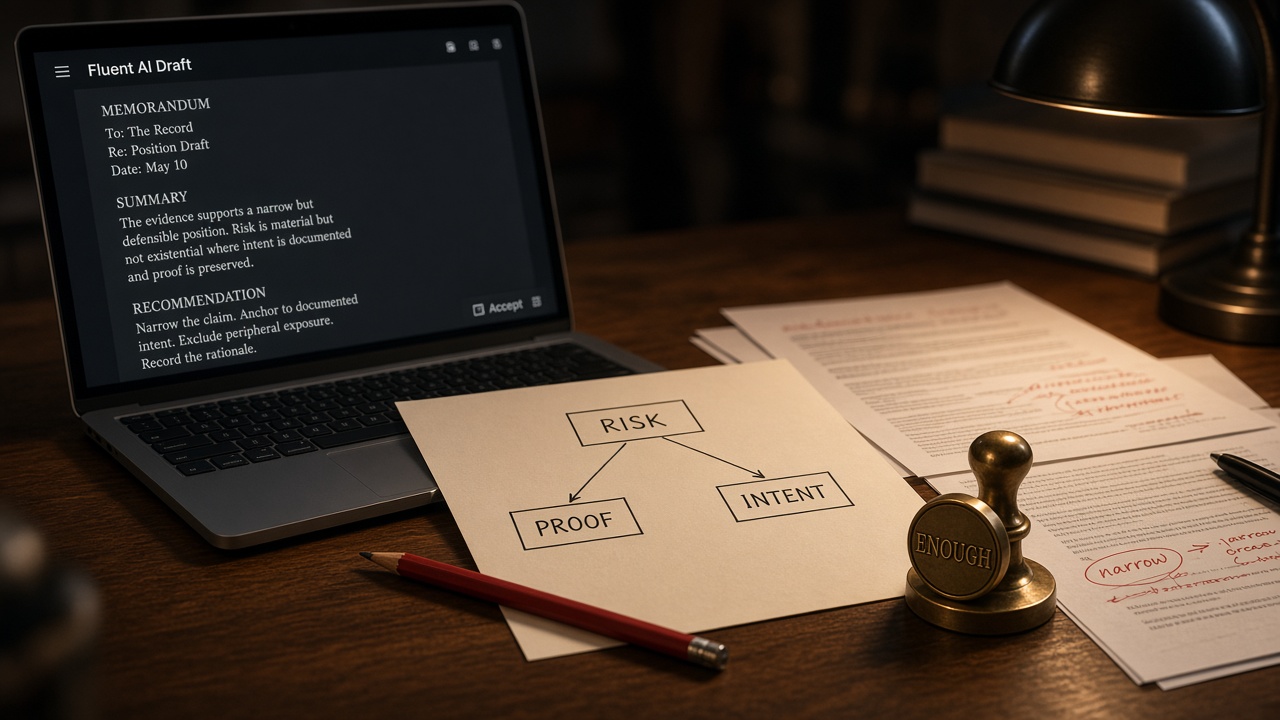
When an AI Content Generator Is Enough (and When It Isn’t)
People search AI content generator because they want a clear line: when is a generator actually sufficient, and when does it become a bottleneck dressed up as speed? The useful answer is not another bake-off between tools. It is a job-fit test—what the page, brief, or campaign must do, and who is accountable if it is wrong.
A generator is a drafting engine. It can expand outlines, rewrite variants, and produce first passes at volume. It cannot own your positioning, verify claims you did not source, or run the workflow that turns a draft into something you would publish under your name. Confusing those jobs is how autoblogging and SEO automation quietly erode trust.
This article stays evergreen: sufficiency is about the task, not the model of the month. If the work is bounded and reviewable, a generator is often enough. If the work must compound—search, brand, and accuracy over time—you still need writers, editors, or a real publishing system.
- Use a generator when the output is a draft, brief, or test you will still review.
- Do not treat generated copy as finished when claims, voice, or legal risk matter.
- SEO and autoblogging fail when volume outruns verification and a coherent site system.
- Writers and editors remain the layer that owns accuracy, taste, and accountability.
- A publishing system is required when content must compound, not just appear.
What “enough” actually means for an AI draft
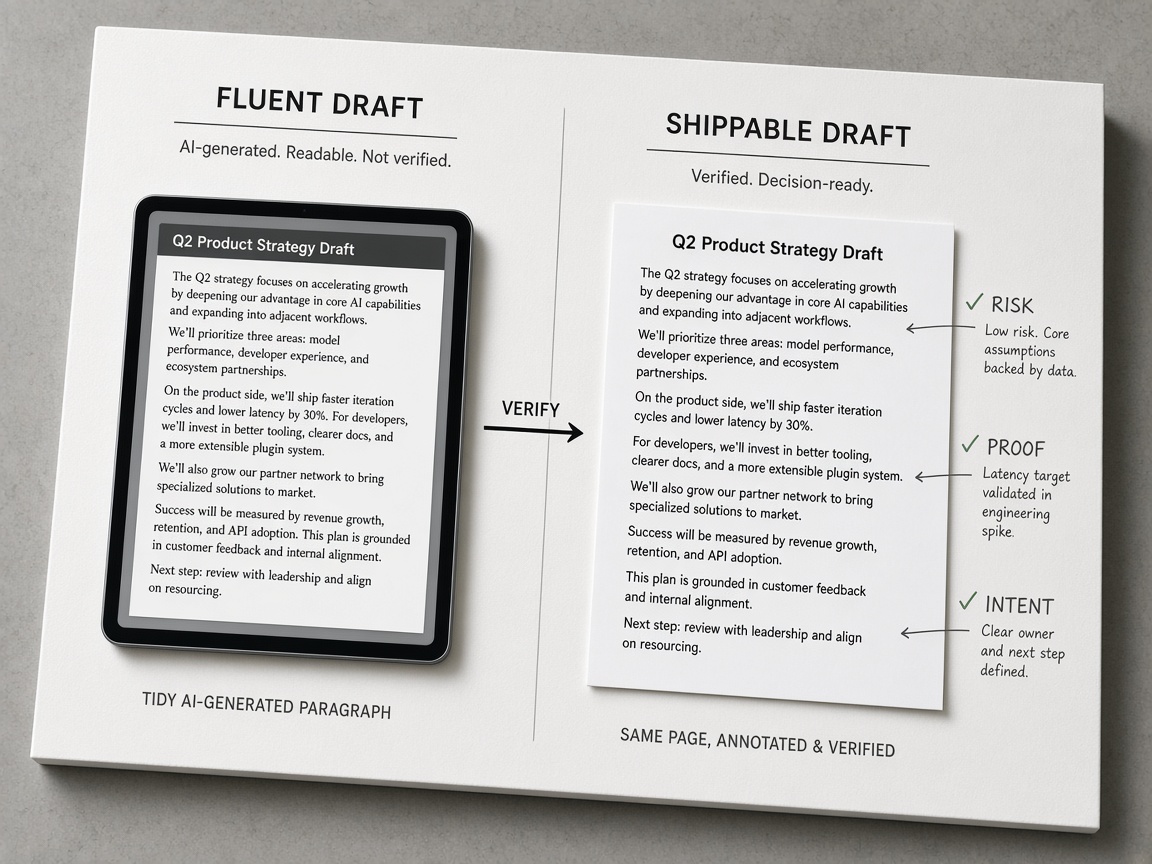
Enough is not a feeling about the sentences. It is a shipping test: a competent editor can verify the draft and send it out for this job’s risk, audience, and intent without rewriting the argument. If they have to rebuild the logic, the claims, or the structure, the generator did not do the job—it only produced raw material.
Fluent prose is the wrong scoreboard. Generators are already good at sounding finished. The real tests are specificity, proof, and on-brand claims: named details that hold up, statements someone would stand behind, and a voice that matches how you actually speak to customers. Smooth filler that could sit on anyone’s blog fails even when it reads well.
Labels like AI article writer, AI blog writer, content or SEO automation, and autoblogging sit on either side of the same drafting job. Mixing those jobs in one box is how teams ship text they cannot defend.
Sufficiency also moves with the page. Internal notes, outlines, and first-pass briefs have a low bar: useful if they save thinking time. Ranking SEO pages, comparison content, and trust-sensitive topics have a high one, because the cost of a wrong claim or a generic angle is paid in search, reputation, or both.
The test — A generator is enough only when an editor can verify and ship the argument as written—not when the prose merely sounds complete.
The jobs an AI generator can actually finish
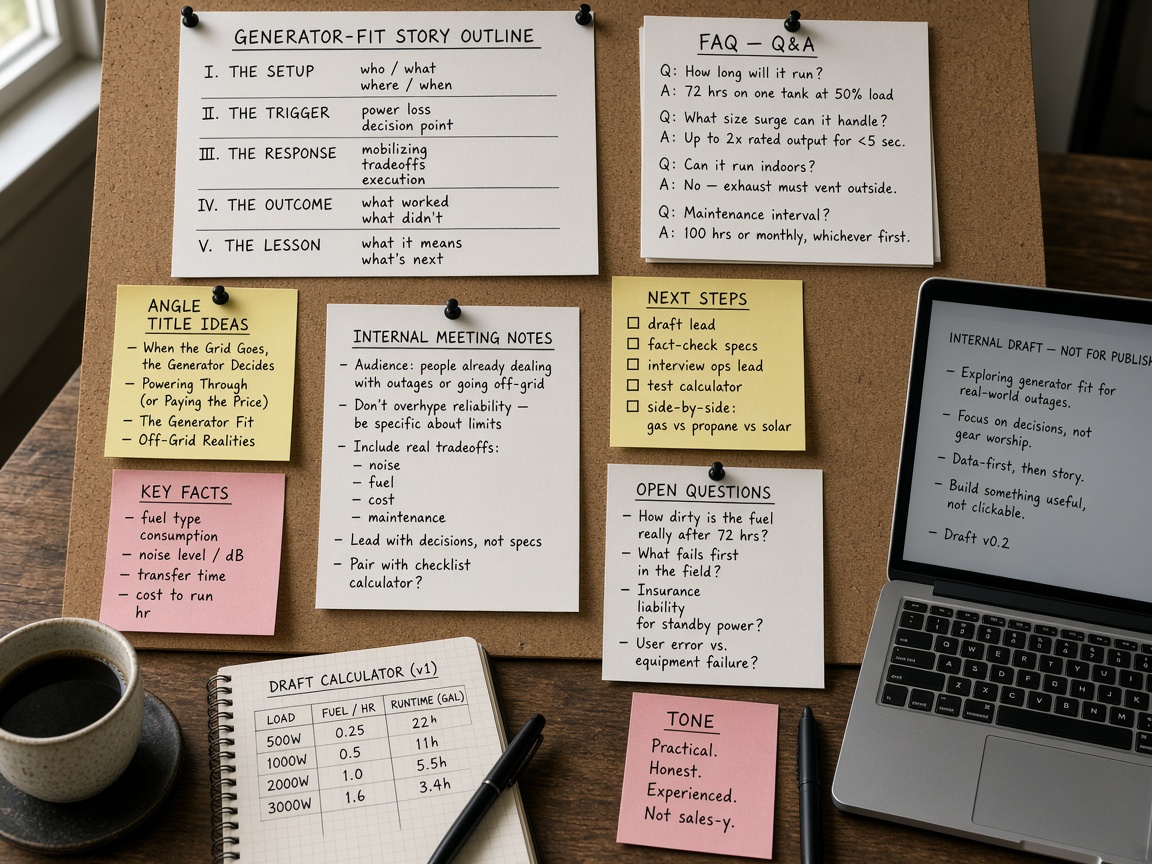
From that shipping test, the jobs that clear it are bounded: the argument is already owned, the facts live in your team, and the output is a first pass someone can verify without rebuilding the piece. An AI content generator is enough when it is filling a known shape, not inventing the thesis or staking your reputation on unowned claims.
That is why outlines, content briefs, FAQ drafts, meta and title variants, internal wikis, social first passes, meeting-note rewrites, and subject-line tests sit in the “enough” column. They are short, constrained, and cheap to reject. The generator is also enough as a research helper—clustering angles, listing questions a reader would ask, turning a human outline into a first draft—so long as a person still owns the thesis and the proof.
When you can actually ship it
Ship only when someone on the team can fact-check from first-party knowledge, the topic is not YMYL, and the page is not your primary money or reputation URL. Those three conditions keep the risk inside the editor’s reach. If edit time stays far below writing from scratch, the generator is doing real work. If every paragraph needs a new claim, a tighter example, or a voice that only your brand can carry, it is not enough—even for formats that look easy.
Ship test — Use a generator for bounded drafts and helpers when a person owns the thesis, can verify from first-party knowledge, and edit time stays far below writing from scratch—not for YMYL or flagship URLs.
Clear signs an AI content generator isn’t enough
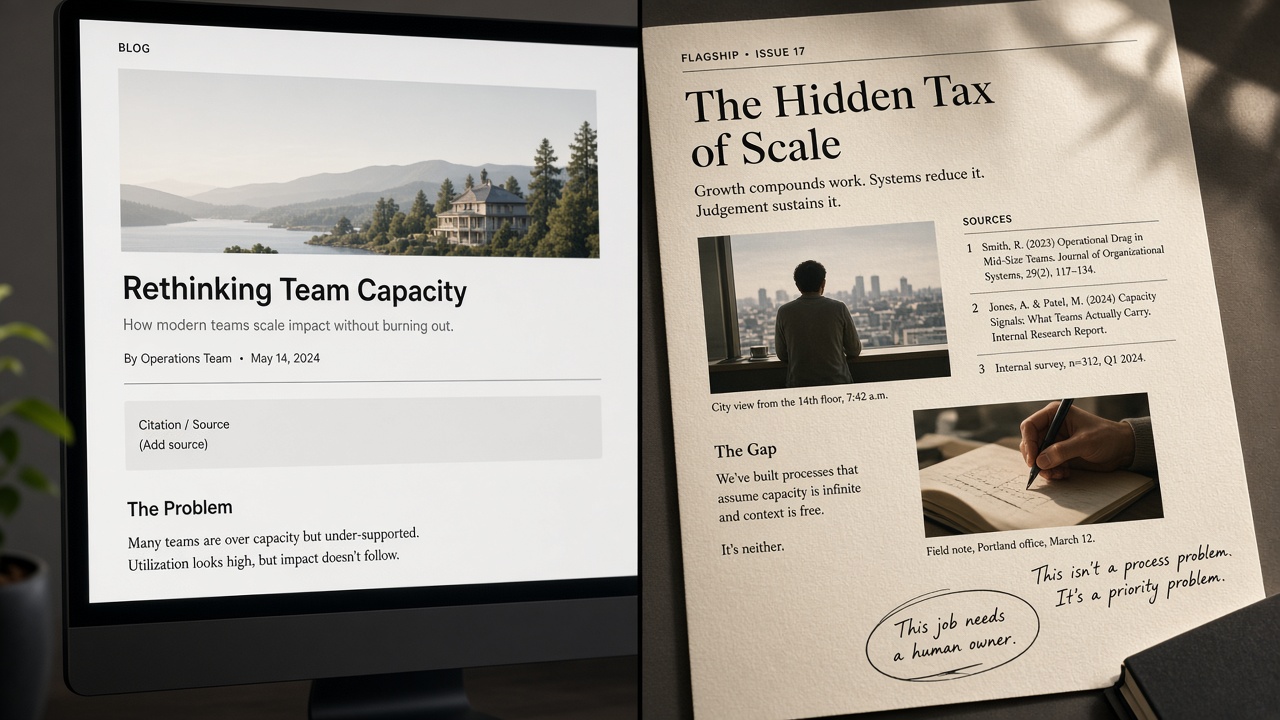
An AI content generator is not enough when the work needs original research, a point of view only your team can own, YMYL or regulated subject matter, a competitive SERP that rewards unique data, or a brand-defining story. Those pages do not fail because the model is inarticulate. They fail because fluency cannot invent proof, experience, or liability.
SEO pages fail when they have no first-party example, no attributable source, and no reason to exist beyond restating what already ranks. A fluent restatement of the SERP still leaves the URL with nothing a searcher could not have read on the pages already winning.
Watch for ceiling signals rather than hoping another prompt will punch through them. Factual drift—dates, product names, and causal claims that slide as the draft lengthens—is one. Interchangeable structure across URLs is another: same H2s, same “here’s why it matters,” same empty close. Voice that could sit on any competitor’s blog is a third. The operational tell is edit time: if polishing the output takes longer than writing a human first draft, the generator is not saving the job; it is adding a detour.
More prompting does not fill a proof gap
You cannot prompt your way into lived examples, proprietary numbers, or a stance you have not earned. Extra instructions may tidy tone; they do not create accountability. When the page needs a pre-publish gate—fact check, legal review, brand voice, or a reason the URL should exist—use a quality checklist rather than iterating the generator until it sounds confident. Confidence without evidence is the opposite of enough.
The ceiling — If the page needs owned proof, a distinctive voice, or a reason to exist beyond the SERP, stop generating and start writing—or gate the draft before it ships.
A five-question go/no-go before you hit generate

Those ceiling signals only help if you use them before the draft exists. Treat generate as a gate, not a habit: five questions, answered in order, decide whether a generator is enough for this URL.
- Can we verify every claim from our own work—docs, product, data, or interviews we already hold?
- Is this low-stakes if we are slightly wrong?
- Does the SERP actually reward unique proof, or will a competent summary compete?
- Will this URL carry brand or revenue risk if the voice or facts are generic?
- Would a skilled editor finish faster than they would write it from a brief?
Yes on verify, low stakes, and editor-faster means the generator is enough: bounded drafting, briefing, or testing a competent editor can ship. Any no on proof, uniqueness, or risk means a human-owned draft—or a fuller research-to-publish path—not another round of prompting.
When it is not enough, do not brute-force volume. Add a brief, a human pass, or a real publishing system that compounds. Stack choice (writer versus pipeline, autoblogging versus editorial ops) is a separate decision; this test is only sufficiency for the piece in front of you. Write the rule down so the team stops renegotiating “good enough” on every article.
The rule — An AI content generator is enough when claims are verifiable, stakes are low, and an editor would finish faster than they would write—and it isn’t when proof, uniqueness, or brand risk require a human-owned draft.
Key Takeaways
Write your team’s go/no-go rule before the next generate, then use a generator only on jobs that pass it.
Frequently Asked Questions
You Might Also Like
- Comparisons AI Article Writer: When to Use One vs a Full Publishing System
- Automation AI Content Generator vs Autoblogging System: Which Scales?
- Guides Quality Checklist for AI-Generated SEO Pages
- Workflows Content Automation Workflow: Research, Draft, QA, Publish
- Automation Automated Blog Posts: Quality Guardrails That Prevent Thin Content