
Content Automation Workflow: Research, Draft, QA, Publish
One-click posting is not a content automation workflow. It is a way to ship pages that look finished and still fail the only tests that matter: search intent, originality, and whether a reader would bookmark the result. Scale without a brief and a human gate before indexation usually produces duplicate angles, unsourced claims, and drafts that invent a ranking story after the fact. The useful pattern is a gated pipeline. Research and a locked brief come first—keyword, intent, outline, sources. Only then does a model draft. QA then catches thin or overlapping pages, broken internal links, and answers that are not citation-ready. Publish is last, not first. Google judges helpfulness and originality, not whether a human typed every word; your ops metric should be cycle time, revision rate, and what actually gets indexed well—not raw article count. This runbook is written for operators who need AI volume without hollowing out the site. Each later section follows the same spine: lock the contract before generation, gate quality before the CMS, and measure the system by what ranks and lasts.
- Treat automation as research → brief → draft → QA → publish, with a human gate before indexation.
- Lock keyword, search intent, outline, and sources in the brief so drafts inherit a rank contract.
- QA must catch thin or duplicate pages, unsourced claims, and broken internal links before CMS publish.
- Helpfulness and originality matter more than whether a human typed every word.
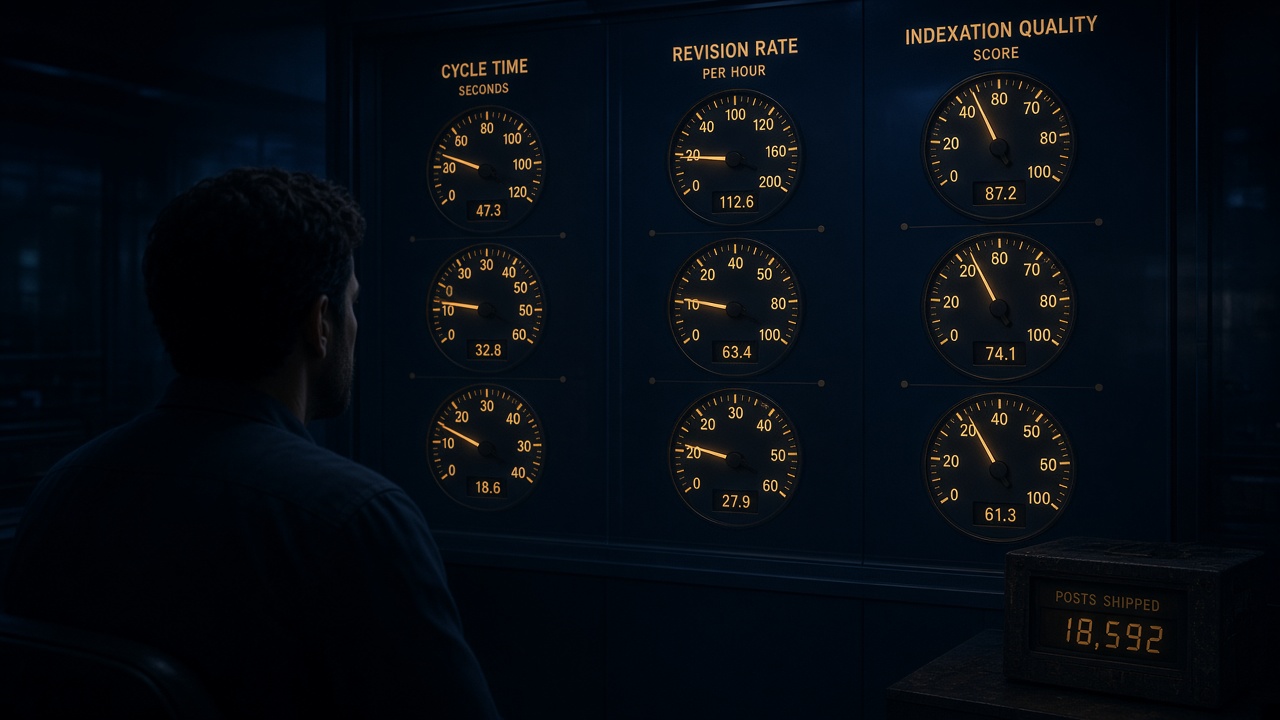
- Measure cycle time, revision rate, and indexation quality—not articles shipped.
Content Automation Is a Gated Pipeline, Not a Publish Button
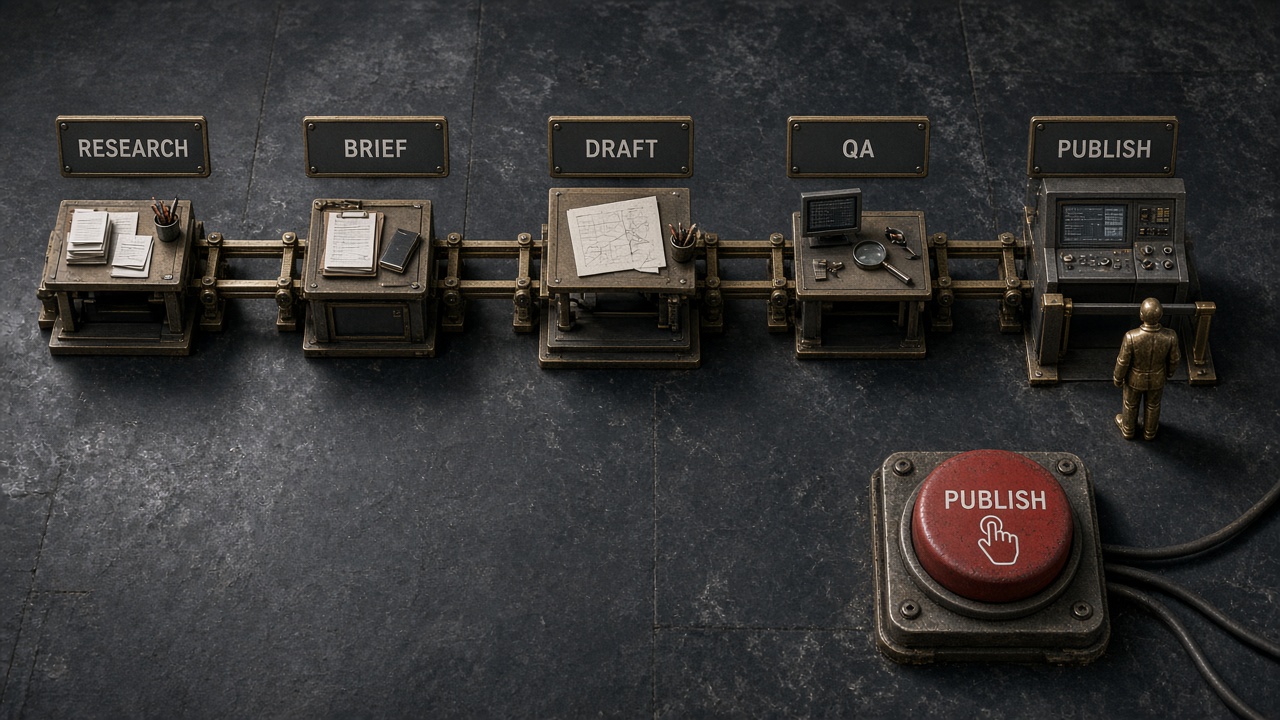
Once you treat automation as a system rather than a shortcut, the work stops looking like a CMS auto-post. Models do not invent a ranking job; they inherit one. The brief is where keyword, intent, outline, and sources get locked so the draft cannot wander into a thin page that never had a reason to exist.
A human gate sits before indexation for a simple reason: automation moves work; it does not waive helpfulness. Skip the gate and you ship volume—automated blog posts with no rank contract and no originality check—then wonder why nothing holds.
Operators who already know which tasks belong in software should not rebuild that map here. Use existing FlowCrews writing on what to automate and on SEO workflow management instead of collecting another tool list or restating stage definitions.
The contract — Automation only scales when drafts inherit a locked rank contract and a person still blocks indexation of thin, duplicate, or unsourced pages.
Lock the Rank Contract in Research and Brief

What that pipeline actually needs first is a brief that behaves like a contract, not a prompt dump. Before any model writes a sentence, lock the primary keyword, the search intent it must satisfy, a working outline, the entities the page has to cover, and the sources it may lean on. That package is the rank contract: the draft inherits SERP jobs instead of inventing them, which is how automation stays useful instead of flooding the CMS with thin pages.
Automate clustering, confirm intent by hand
Keyword research and SERP clustering can run on a schedule: pull queries, group overlapping results, and draft a candidate outline from common headings and related entities. A person still has to confirm intent and angle—whether the cluster is informational, commercial, or mixed, and which unique take the page will own. Without that check, the brief encodes the wrong job and every later stage inherits the error.
Treat the brief as complete only when those pieces are explicit. Then hand off, and only then open the writer.
- Brief marked complete: keyword, intent, outline, and must-cover entities locked.
- Sources attached so claims have somewhere to land instead of being invented.
- Internal-link targets named so the draft can support the rest of the site, not float as an orphan.
Skip that gate and you are not automating content ops—you are asking a model to guess what Google already ranks for. The writer should never start from a blank page and a keyword string. It should start from a contract someone already signed off.
Rank contract first — Do not open the AI writer until the brief locks keyword, intent, outline, sources, and internal-link targets—so the draft inherits a rank contract instead of inventing one.
Draft Against the Brief, Then QA Before the CMS
Once that brief is locked, drafting is not a creative free-for-all. The model writes only against the rank contract: the same primary keyword, the same intent, the same outline, the sources already attached, and the internal-link targets already named. It does not invent a new head term, paste unsourced numbers, or invent product claims. Those constraints are what keep automated drafts from becoming thin pages that never deserved an index.
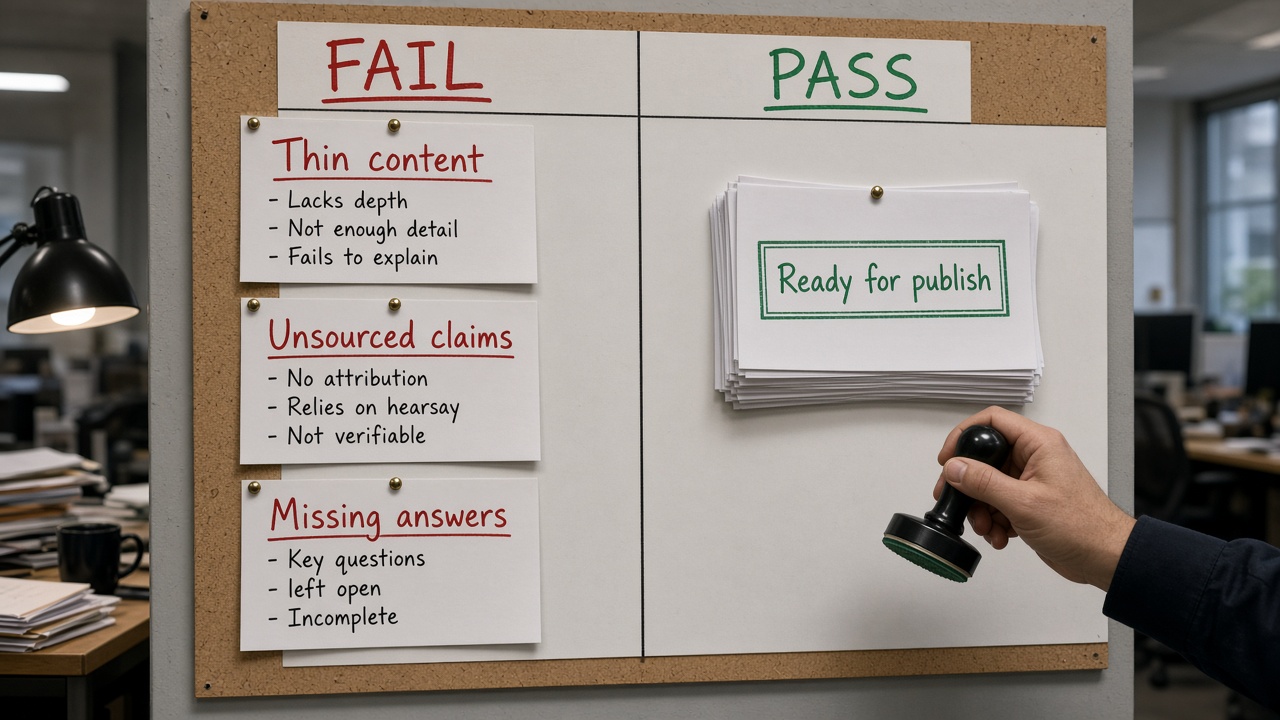
QA is the gate that makes the pipeline honest. It is not a vibe check after publish. Treat helpfulness and originality as explicit checks: does this page answer the query better than what already ranks, or does it restate the SERP? Does it add original framing, first-party detail, or a clearer structure—or is it interchangeable with other AI posts? Fail those tests and the draft never reaches the CMS.
What QA must catch every time
- Thin or near-duplicate pages that add no new entities, examples, or structure beyond the brief’s competitors.
- Unsourced claims, invented statistics, or product statements that were not in the attached sources.
- Broken or missing internal links against the named targets in the brief.
- Missing citation-ready answers—the direct, extractable response the query actually needs.
- Outline drift: sections that wander off the contracted H2/H3 map or skip must-cover entities.
A human editor owns pass or fail. The model does not self-approve. A fail returns to the brief (if the contract was incomplete) or to rewrite (if the draft ignored it). Nothing ships on a retry-until-green loop that bypasses judgment. That human gate is what separates a content ops workflow from a publish button—and it is the last line before indexation, not a cleanup after the fact.
The gate — Drafts inherit the brief; QA encodes helpfulness and originality as pass/fail rules a human owns. Fail goes back to brief or rewrite—never straight into the CMS.
Publish Only After the Brief Is Intact—Then Scale Capacity, Not Volume
Once a draft has passed that gate, publish is still not a dump into the CMS. Slug, title, meta, schema and AEO-style answer blocks, canonical, and internal links must match the brief before anything goes live. If those fields drift, the rank contract you locked in research is quietly rewritten at the last mile. Automation can queue the package, apply templates, and ping the right people. It should not index an unreviewed URL.
Keep a human click on go-live. That click is the last confirmation that helpfulness and originality survived drafting and QA—not a rubber stamp on volume. After publish, watch whether live URLs still match the brief and whether thin pages still leak through. Article count is a vanity metric; a firehose of thin pages is the failure mode this whole workflow exists to prevent.
When you need more output, add parallel research and QA capacity before you add more draft throughput. Extra writers without extra brief and review capacity just invent pages faster.
Go-live — Queue and format automatically, but only a human should send a URL live—and scale research and QA before you scale drafting.
Key Takeaways
Map your next cluster to this gated pipeline so every draft inherits a rank contract before it ever reaches the CMS.
Frequently Asked Questions
You Might Also Like
- Workflows SEO Workflow Management: How to Run Content From Brief to Publish
- Workflows SEO Content Brief: How to Brief Writers (and AI) So Pages Rank
- Automation Automated Blog Posts: Quality Guardrails That Prevent Thin Content
- Automation How to Automate Keyword Research for Content Briefs
- Strategy How to Scale Content Marketing Without Diluting Quality