When an AI Citation Should Trigger a Content Refresh

Teams that log ChatGPT answers and AI Overview mentions often open a content refresh the moment a page is cited. That habit treats visibility as a defect. A citation means a model retrieved the URL and used some part of it to answer a query. It does not mean the page is wrong, thin, or due for a rewrite.
The useful work is narrower. Compare what the model claimed, which passage it leaned on, and what the page actually says. If the facts still hold and the page already answers the query cleanly, leave it. Rewriting a stable page can shift the exact sentences models quote, break internal links, and burn editorial time that should go to pages that are actually out of date.
This piece sets a fail-closed rule for that decision. Default to no refresh. Refresh only when the log shows a defect you can name and a change that would correct it. The sections that follow cover what to record from each mention, which defects count, and how to refresh without chasing every citation.
- A citation in ChatGPT or an AI Overview is a retrieval signal, not a verdict that the page needs a rewrite.
- Fail-closed means you do not refresh unless the log shows a specific defect a change would fix.
- Refresh when facts are stale, the cited passage is misleading, or the page never answers the query the model used it for.
- Log the query, the model's claim, and the cited span so the decision is repeatable rather than a hunch.
- Leave accurate pages stable so later citations keep pointing at a source you still stand behind.
What an AI citation actually tells you
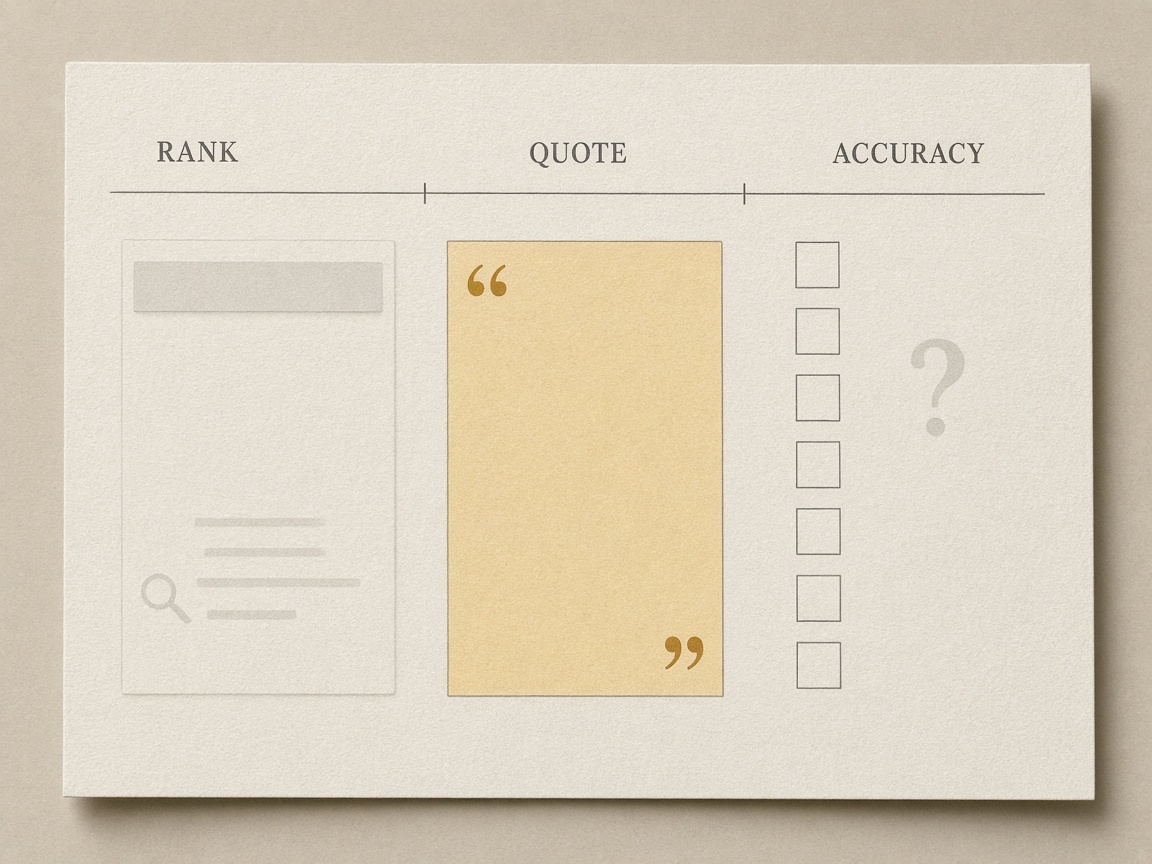
A citation means a model used some passage from the URL to answer a specific question. It does not certify freshness, completeness, or that search demand has changed. ChatGPT, Perplexity, or an AI Overview can quote a line that was once useful and is now stale, partial, or beside the point the page was meant to own.
Three logs, not one signal
Treat the mention as three separate records, not a single quality score.
- Classic rankings and clicks show whether people still find the URL in ordinary search.
- The exact quoted span shows which sentences the model actually used.
- Whether that span is still true is a third check — and the only one that can justify a rewrite.
A strong ranking next to a false or unusable quote is a refresh candidate. A citation of a sentence that is still true and already answers the question is not, even when the mention feels like a win.
The adjacent trap is reading citation-pattern articles as the brief. AI Overview Citation Patterns explains why a page got quoted. This decision is narrower: is the quote still a reason to edit? Log ChatGPT, Perplexity, and AI Overview mentions as question-and-passage evidence, not as a Domain Rating lift or a schema victory. Visibility is not the same as a defect a rewrite would fix.
Not a certificate — A citation shows which passage answered which question. It does not prove the page is current, complete, or newly in demand.
When should you refresh content after an AI citation?
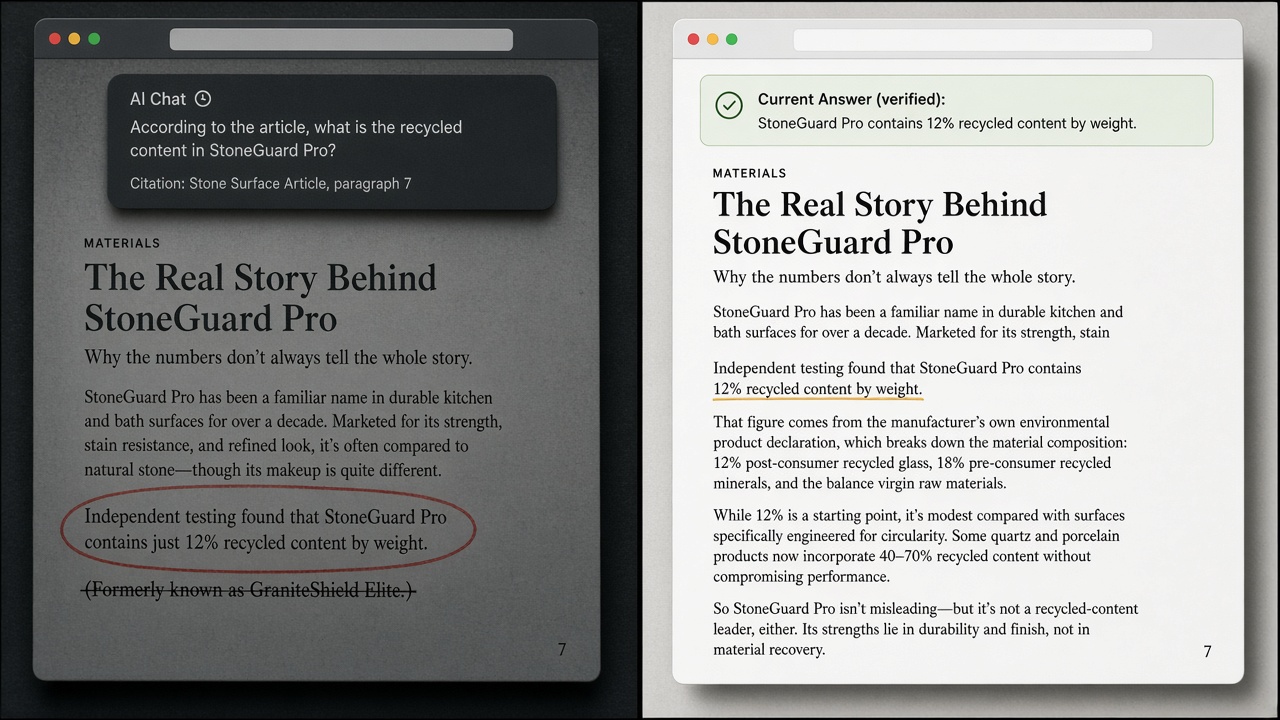
A logged mention is a reason to open the page, not a default rewrite. Refresh only when the cited passage is false, dated, missing a decision the prompt now asks for, or weaker than a rival the model prefers for the same question. Those are the citation problems that mean the page is now the wrong answer.
Three defects are worth acting on. Anything else is noise until the log shows one of them.
- Numbers, names, prices, policies, versions, or dates in the quote no longer match reality. The model reused a span that used to be true; the page is now teaching a stale fact.
- The question is answer-first and your cited section buries the answer, hedges, or solves a different job. Readers (and the model) needed a decision; the quote delivered context instead.
- You are cited for a soft mention while another URL is cited for the comparison, definition, or steps users actually need. Same question, stronger rival passage — your page is no longer the one that owns the answer.
Stay on the same URL. The trigger is a reason to inspect that page, not to spin up a new one or treat the whole site as outdated. Only after one of those defects is confirmed should you decide whether a targeted update or a fuller rewrite is the right fix — that choice belongs in Update vs Rewrite, not in the citation log.
Do not treat “how to get cited by ChatGPT” as the goal of the edit. Visibility is not the defect. The job is to make the quoted answer true and usable for the question that pulled it in, so the next time that span is reused it still earns the mention.
Fix the defect — Refresh after an AI citation only when the quoted passage is stale, answers the wrong job, or loses the useful span to a rival — then fix that same URL so the answer is true and usable, not merely more citable.
When to ignore an AI citation and leave the page alone
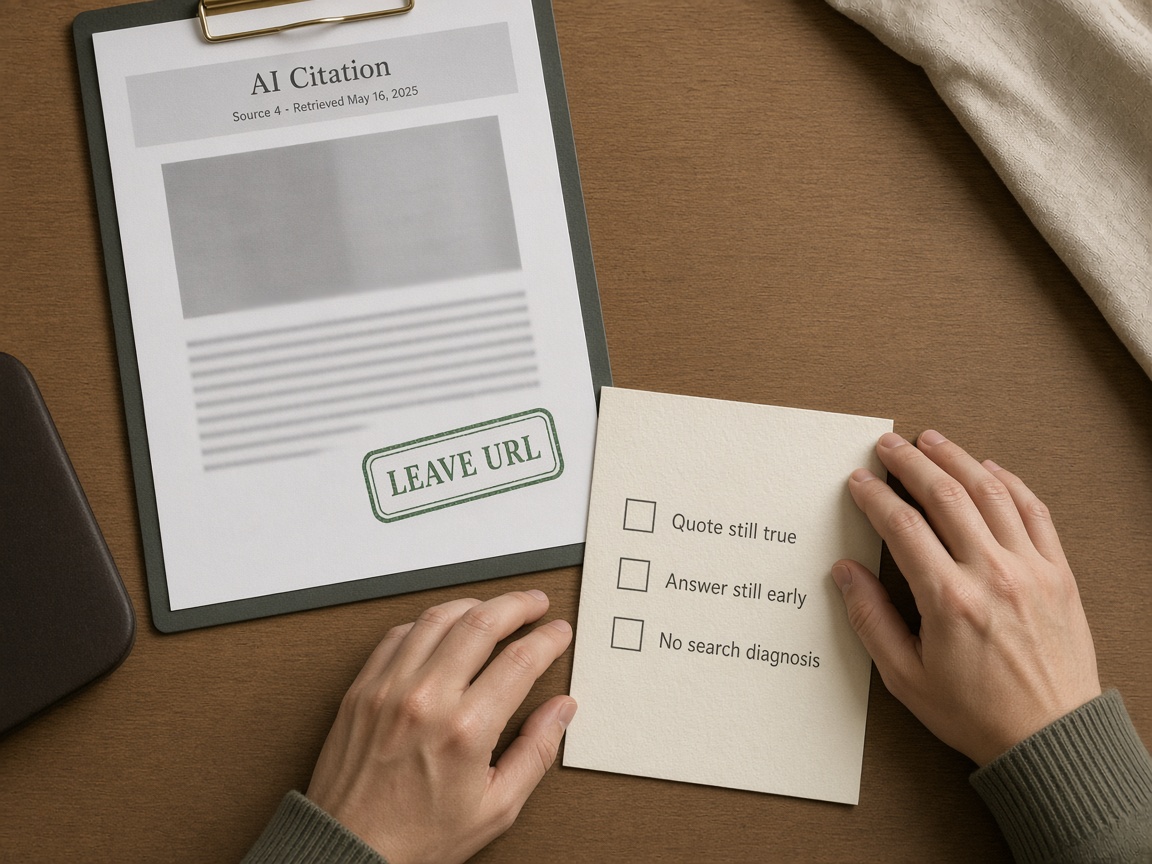
An AI citation is not, by itself, a reason to rewrite a ranking page. Leave the URL alone when the quoted span is still accurate, the page already answers the logged question early, and Search Console does not independently show a problem you have diagnosed. The mention only shows that a model used a passage. If that passage is still true and easy to find, the citation is evidence the page is doing its job, not a brief to open the editor.
A screenshot in Slack is not a ticket. Before anyone touches the URL, require three things, and stop if any of them is missing:
- The exact prompt that produced the mention, not a paraphrased retelling.
- The quoted sentence the model actually used, matched to a span on the page.
- A freshness check against the source that sentence claims to reflect.
Without those three, you are editing a vibe. One-off and off-intent mentions do not justify changing a URL that already ranks. A brand-only name-drop, an unrelated follow-up, or a hallucinated attribution is noise. The model may have grabbed your domain for a question the page was never meant to own, and rewriting the ranking asset to chase that mention can bury the answer that earned the rankings.
Do not launder an AI mention into a decay rewrite. If clicks fell, use the decay checklist first — queries, intent match, and whether the drop has a cause you can name — rather than rewriting because a model named you. When the problem is rankings, not the quote, Content Decay Signals and Content Refresh Strategy are the right next read. The citation log stays in the background until it shows a defect a same-URL edit would actually fix.
Leave it — Ignore the citation and leave the ranking URL alone when the quote is still true, the answer is already up front, and Search Console has not shown a separate problem you have diagnosed. A Slack screenshot is not a rewrite brief.
How to log an AI citation and decide whether to refresh
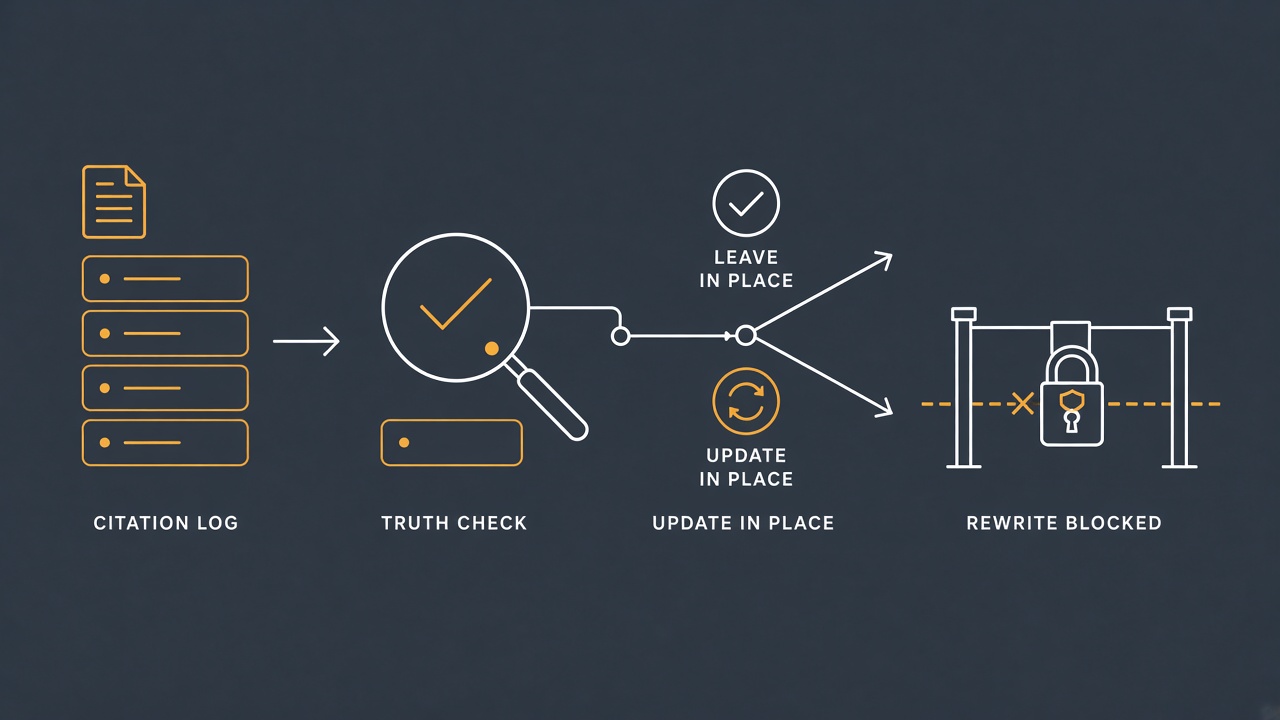
With the false alarms set aside, turn the mention into a ticket you can close. Log the prompt, the engine, the date, the quoted span, and the URL. Refresh only if that span fails a truth check or a completeness check. If both pass, close the ticket and leave the page alone.
A one-person operator can keep this in a sheet: the question asked, the model, the citation URL, the exact quote, still true (yes or no), missing decision (yes or no), and the action — leave, or update in place. Fail closed. Leave is the default. Update in place when a fact or the opening answer is wrong. A citation alone is not a reason to order a full rewrite.
Hand the work off as a keep, change, and refuse brief, not a blank request to make the page more AI-visible. Say what must stay, what the logged quote got wrong or left out, and what must not be invented to chase another mention. How to Brief a Content Refresh for Writers and AI is the format for that handoff. The sheet then has an outcome: closed with no edit, or a same-URL correction aimed at the defect the citation actually showed.
Close or correct — Log the prompt, engine, date, quote, and URL, then refresh only when that quote fails truth or completeness — otherwise the action is leave, and the ranking URL stays put.
Key Takeaways
Log the next AI citation with the prompt and exact quoted span, then refresh the page only if that log shows a defect a rewrite would actually fix.
Frequently Asked Questions
You Might Also Like
- Measurement AI Citation Log Template: Fields to Capture Per Engine
- Workflows How to Brief a Content Refresh for Writers and AI
- Workflows Content Refresh Calendar: When to Update vs When to Brief a New Page
- AI Search AI Overview Citation Patterns: What Gets Quoted vs Ignored
- AI Search Passage-Level SEO: How to Write Blocks Answer Engines Can Lift