Passage-Level SEO: How to Write Blocks Answer Engines Can Lift
Passage ranking SEO is easy to misread as a new index. It is not. Google announced the change on October 20, 2020, turned it on for US English on February 10, 2021, and was explicit: "We are not indexing passages. Period." The page is still the indexed document. What the system adds is the ability to score sections of that document against different queries, so a relevant answer buried in a long or multi-topic page can surface without the rest of the page matching the query.
That scoring change is the writing brief for answer engines. AI Overviews and AI Mode retrieve passages, not whole documents, and they may break a query into related searches across subtopics — query fan-out — so the block that gets lifted often answers a sub-question rather than the H1. Eligibility is ordinary search: the page must be indexed and eligible to show with a snippet. Google's line is that "There are no additional technical requirements." No passage markup. No special schema.
The shape of a liftable block is narrower than "write a longer article." Across 15,699,298 AI Mode citations, 47.7% were scroll-to-text highlights to a specific passage, and the median highlighted passage was about 117 words — typically 75 to 150 — with about 80% answering in the opening sentence and about 85% readable without the surrounding page. The rule that follows is the publish gate for that behavior: one standalone answer per sub-question, and a hold when the block cannot be read alone.
- Passage ranking scores sections of an already indexed page; Google does not index passages separately.
- Once rolled out globally, Google expected the feature to improve about 7% of queries, mainly where the best answer was buried.
- AI Overviews and AI Mode lift passages via query fan-out; a snippet-eligible indexed page needs no extra schema.
- Winning blocks are usually 75–150 words, answer in the first sentence, and can be understood alone.
- Hold any block that needs the paragraph above it, and do not fragment pages just to chase passage markup.
Passage Ranking Scores Sections. It Does Not Index Them.
Passage ranking is a scoring change, not a second index. Google announced it on October 20, 2020 and turned it on for US English on February 10, 2021. The page you already published stays the indexed document. What the system adds is the ability for that one document to earn more than one relevance score — in Martin Splitt’s words, “one document that can be scored with multiple scores according to the queries.” A buried section can match a query the rest of the page does not.
The correction is blunt: “We are not indexing passages. Period.” A passage is not a URL and not a document of its own. It can be a few words or as long as a paragraph, and Google still ranks the page that contains it.
The 7% figure is a narrow lift, not a re-rank of the web. Once globally rolled out, Google expected the feature to improve 7% of search queries across all languages, by understanding “the relevancy of specific passages, not just the overall page,” and finding that needle-in-a-haystack answer on a long or multi-topic page. That is not a reason to fragment URLs.
Keep writing complete pages. Site owners were told to focus on great content rather than a new tactic, and artificial passage markup is out of scope here. Whether a page can be scored at all is ordinary eligibility, which the next section covers.
Eligibility Is Ordinary Search, Not Passage Markup
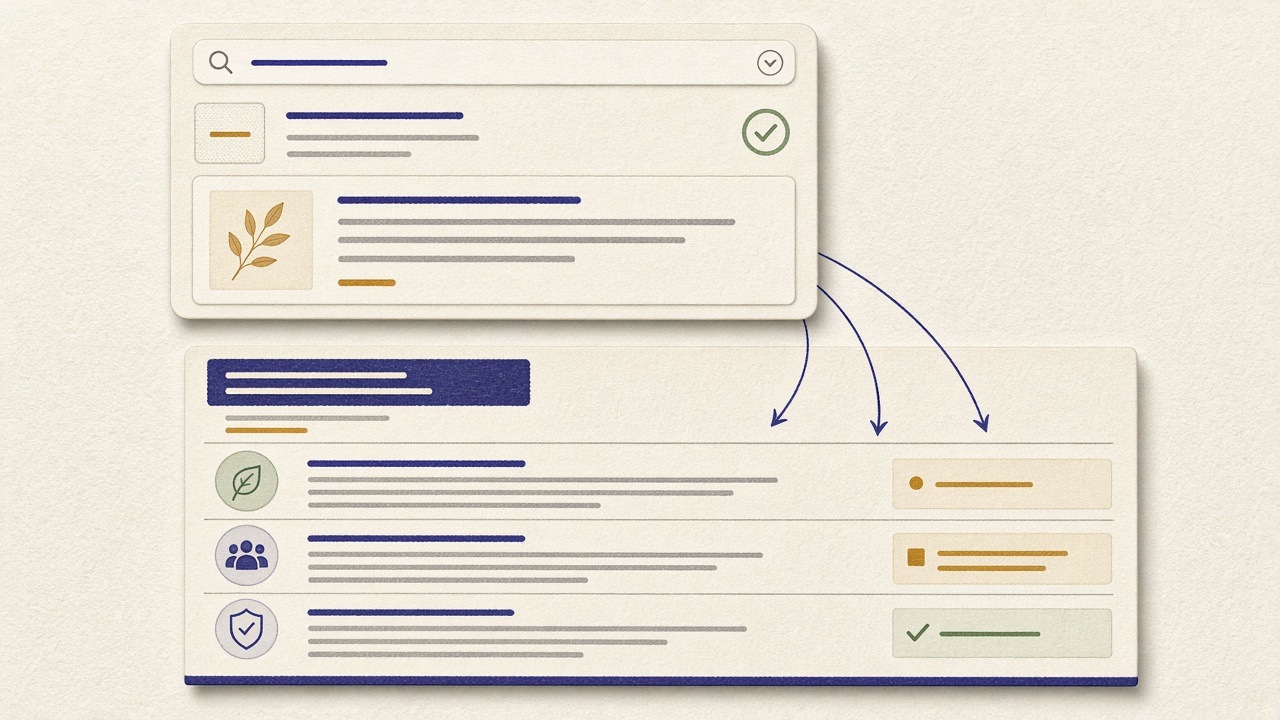
Because passage ranking only scores sections of pages Google already indexes, a supporting link in AI Overviews or AI Mode rides the same ordinary search bar. The page must be indexed and eligible to show in Google Search with a snippet. Google is explicit that there are no additional technical requirements, and there is no passage schema to add and no separate index to join.
What those systems change is the question they score against. Both AI Overviews and AI Mode may use query fan-out, issuing multiple related searches across subtopics. The block that gets lifted often answers one of those sub-questions rather than restating the H1. Stop the craft there: one self-contained answer to that sub-question is the unit worth publishing.
Ordinary bar — Supporting links need an indexed, snippet-eligible page and no special markup. The liftable block answers the sub-question, not the page title.
The Paragraph Shape Answer Engines Actually Lift
With the page eligible, the block that gets retrieved is a passage, not the document. Across 15,699,298 AI Mode citations, 47.7% were scroll-to-text highlights to a specific passage rather than plain links. Those observations resolved to 4.6 million unique highlighted passages on 2.7 million pages. Most passages were cited only once. Reuse was narrow: about 2,300 passages were reused 61 or more times, and the most-reused passage was cited 661 times.
What gets highlighted is a full paragraph. The median extracted passage was about 117 words, typically 75 to 150 words. About 80% answered in the opening sentence, and about 85% could be read without the paragraphs around them. AI Overviews show the same answer-first habit: 87% of cited pages gave a direct answer in the first 100 words, and FAQ-style headings were associated with 3.4 times as many citations. Treat the heading as the question that paragraph must answer.
A dependent mid-page line — "This also applies when the query is narrower" — cannot travel, because the subject lives above it. Name the subject instead: "Passage ranking scores a buried section of an already indexed page, so publish one 75–150 word answer that stands alone." Only the second block can be lifted. Extra keywords in the heading do not make a dependent sentence readable by itself.
Lift this — Write one question-shaped heading and one self-contained 75–150 word paragraph that names the subject and answers in the first sentence — that is the unit an answer engine can lift.
How Lifted Passages Answer
Fan-Out Helps. Rank and Length Do Not Prove a Rewrite.
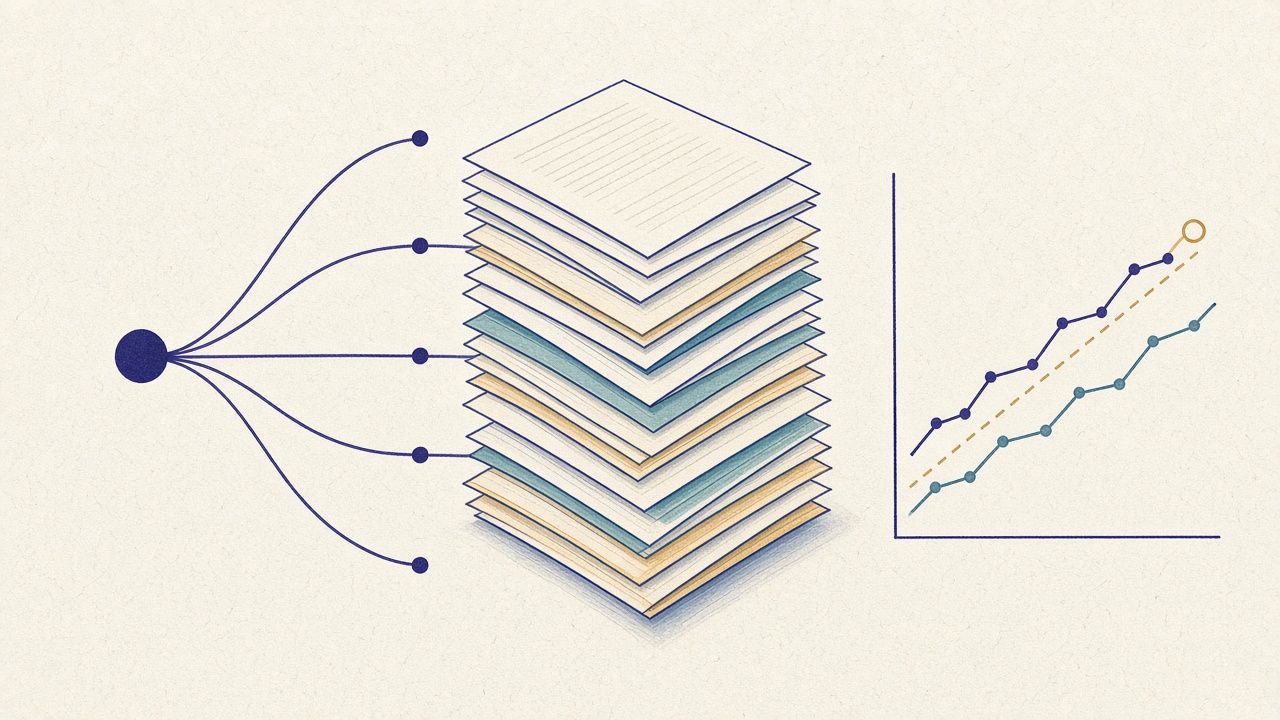
The liftable paragraph still has to be retrieved for the sub-question, not the headline. Pages ranking for fan-out queries had a 161% higher citation likelihood than pages ranking only for the main query in a Surfer test of 10,000 keywords, 33,000 fan-out queries, and 173,902 cited URLs. Spearman correlation was 0.77. About 68% of cited pages ranked in the top 10 for neither the main query nor as a homepage play.
Citations land deep, not on the homepage. BrightEdge found 82.5% pointed to pages two or more clicks from the homepage, and 0.5% pointed to homepages. Of 167.9 million US citations, 57% came from outside the organic top 10.
Highlight counts track organic strength, and that does not prove a rewrite of a weak page creates citations. Pages with 21 or more highlights had a median rank of 1, and 67% ranked first, while one to four highlights sat at a median rank of 11.
Length is not the lever. Word count correlated 0.04 with citation across 174,048 cited pages, 53.4% of cited pages were under 1,000 words, and Google says no special writing style is required just for generative AI search.
Hold the line — Ranking for the fan-out sub-question raises citation odds; a pile of highlights or a longer page does not prove that rewriting a weak URL will get cited.
Fail Closed Before You Publish the Block
Once rank and length are set aside, the publish decision is the part that still fails. An AI answer showed on 81.6% of US queries in First Page Sage's September 2026 panel, so a weak block is no longer a private drafting choice. When that answer is present, the first cited source earned a 5.2% click-through rate, versus 3.6% for organic position 1, and the first three citations took 77.9% of AI-answer clicks. A paragraph that cannot be lifted never enters that set.
Put the proof inside the block, not in a sidebar the highlight will skip. Quotations, statistics, or cited sources raised a source's share of an LLM answer by about 30–40% on Position-Adjusted Word Count. Keyword stuffing scored below the unoptimized baseline. That density rule is already settled — point to the stuffing guidance instead of restating its sentence contract here.
The lean rule is refuse, not decorate. Do not publish a section that only works as a continuation, and do not add schema or fragment the URL to fake passage eligibility. The page still has to be indexed and snippet-eligible. Markup will not create a passage the scorer can lift.
Fail closed — Ship one question-shaped heading and one self-contained 75–150 word answer that names the subject and a sourced figure in the first sentence — and hold anything that cannot be read alone.
Key Takeaways
Before the next long page goes live, hold every block that cannot be read alone and publish only self-contained 75–150 word answers to real sub-questions.
Frequently Asked Questions
You Might Also Like
- AEO How to Add Citation-Ready Answers Without Keyword Stuffing
- AI Search AI Overview Optimization: How to Structure Pages Google Can Quote
- AI Search AI Overview Citation Patterns: What Gets Quoted vs Ignored
- AEO Answer Engine Optimization (AEO): How to Get Cited by AI Search
- Automation Fail-Closed SEO Briefs: The Publish Gate Autoblogging Needs