Schema for AI Overviews: Which Markup Still Helps
Readers hunting schema markup for AI search usually want a type, a JSON-LD snippet, and a citation bump. Google’s own guidance is the opposite of that shopping list. Structured data is not required for generative AI search, there is no special schema.org markup to add for those features, and eligibility for a supporting link in AI Overviews or AI Mode is the same as a normal Search snippet: indexed, with no extra technical requirements.
That does not make markup useless. It makes most “AI schema” projects a bad trade. Google still recommends structured data for rich-result eligibility, and it still asks that markup match the visible text on the page. Bing’s Copilot side has said schema helps its models understand content — comprehension, not a citation promise. ChatGPT, Perplexity, and Claude have not published a schema requirement for being cited.
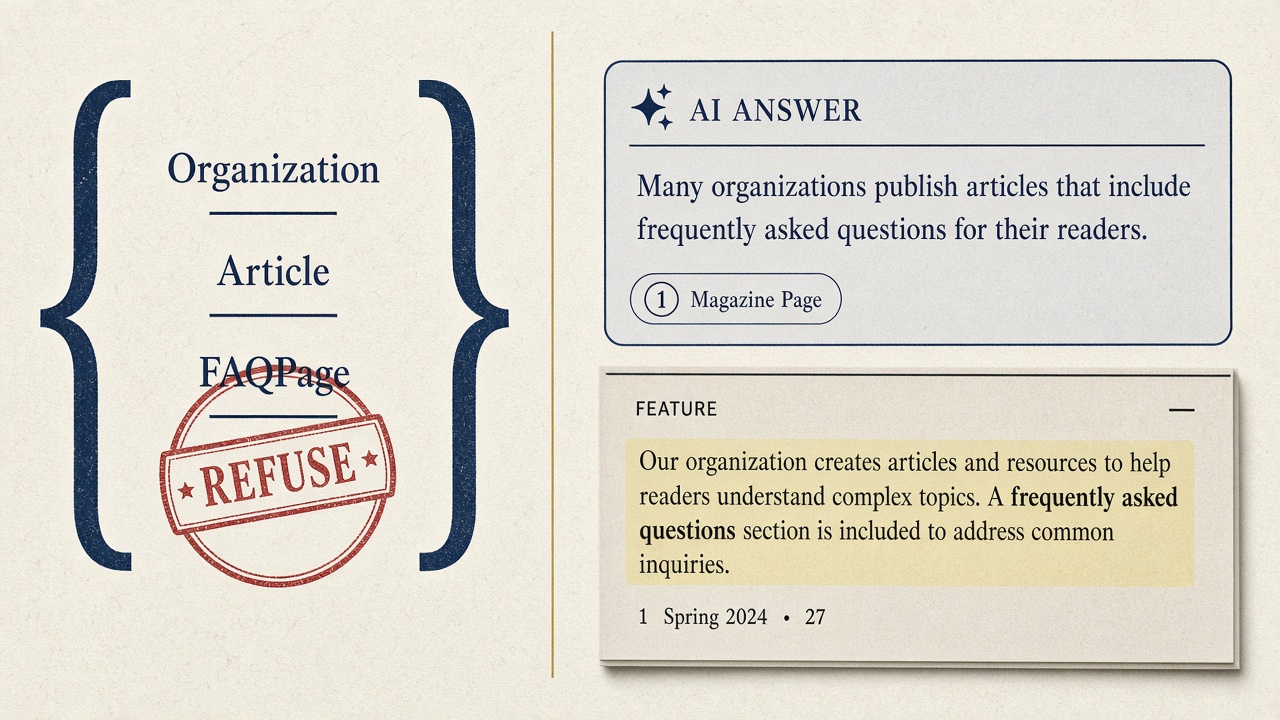
The useful test is fail-closed. Keep markup that describes facts already on the page and that machines still misread: who you are, who wrote this, what the price is, how the page sits in the site. Refuse schema that exists only to impress an answer engine, including FAQPage used as a citation tactic after FAQ rich results left Google Search. The next edit that actually moves visibility is a standalone answer passage a model can quote, not another checklist of types.
- Google says structured data is not required for AI Overviews or AI Mode, and there is no special schema.org type to add.
- Adding JSON-LD has not been shown to cause more AI citations; an older “cited pages have more schema” finding is correlation, not cause.
- Keep markup that matches visible facts and still supports rich results or disambiguation: Organization, Article or BlogPosting, Product and Offer, BreadcrumbList.
- Do not mark up content that is not on the page. Visible Q&A still matters; FAQPage JSON-LD is not a confirmed AI citation tactic.
- Refuse schema-only AI SEO projects and vendor citation multipliers. Spend the next edit on a clear answer passage.
Does Schema Markup Help You Get Cited in AI Overviews?
No. Google says structured data is not required for AI Overviews or AI Mode, and there is no special schema.org type to add for those features. A supporting link has the same eligibility as a normal Search snippet: the page must be indexed, with no extra technical requirements.
Google still recommends schema, but that advice is about rich-result eligibility in Search. It is not an AI citation requirement, and it is not a reason to commission markup solely to appear in generative answers.
Ahrefs tracked those 1,885 pages from August 2025 to March 2026 and found no meaningful AI citation increase. ChatGPT citations rose 2.2% on the treated pages, also treated as noise aside from the small Overview decline. Do not buy a schema project to get cited. Spend the edit on a visible answer a reader can quote, and connect that passage to citation patterns rather than another markup list.
Not a citation lever — Schema does not buy AI Overview citations. Keep markup only when it still describes visible page facts for Search rich results, and put the next edit into a quotable answer.
Citation shifts after schema (%)
Why Cited Pages Have Schema If Adding It Does Not Help
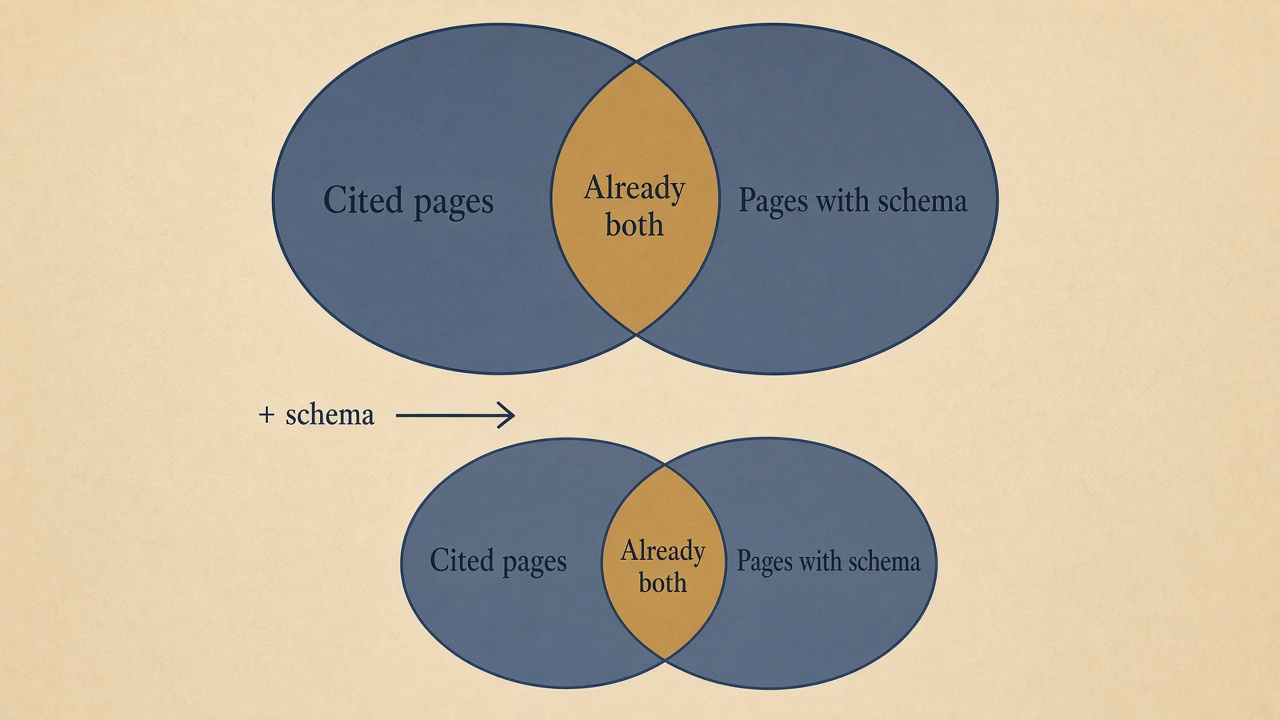
The higher rate is correlation, not a lever you can pull. Ahrefs' scan of 6 million URLs found AI-cited pages almost three times more likely to carry JSON-LD than uncited pages. The later intervention did not support that gap as cause and effect.
Every page in that schema test already had more than 100 AI Overview citations in February 2025, before JSON-LD was added. The study does not speak to pages AI has never cited.
A Semrush analysis of 304,805 URLs, as reported by Radiant Elephant, associated structured data with a 22% citation lift, but ranked it behind clarity, E-E-A-T, Q&A format, and section structure. Search Atlas's study of 5.5 million responses, reported on the same page, found no measurable correlation between schema coverage and citation rates on OpenAI, Gemini, or Perplexity.
Stronger pages do more SEO hygiene. Adding a script tag to a weak page does not recreate the cited set.
Correlation — Cited pages carry schema because they are already stronger, not because the markup is what earned the citation.
Which Schema Types Are Still Worth Adding?
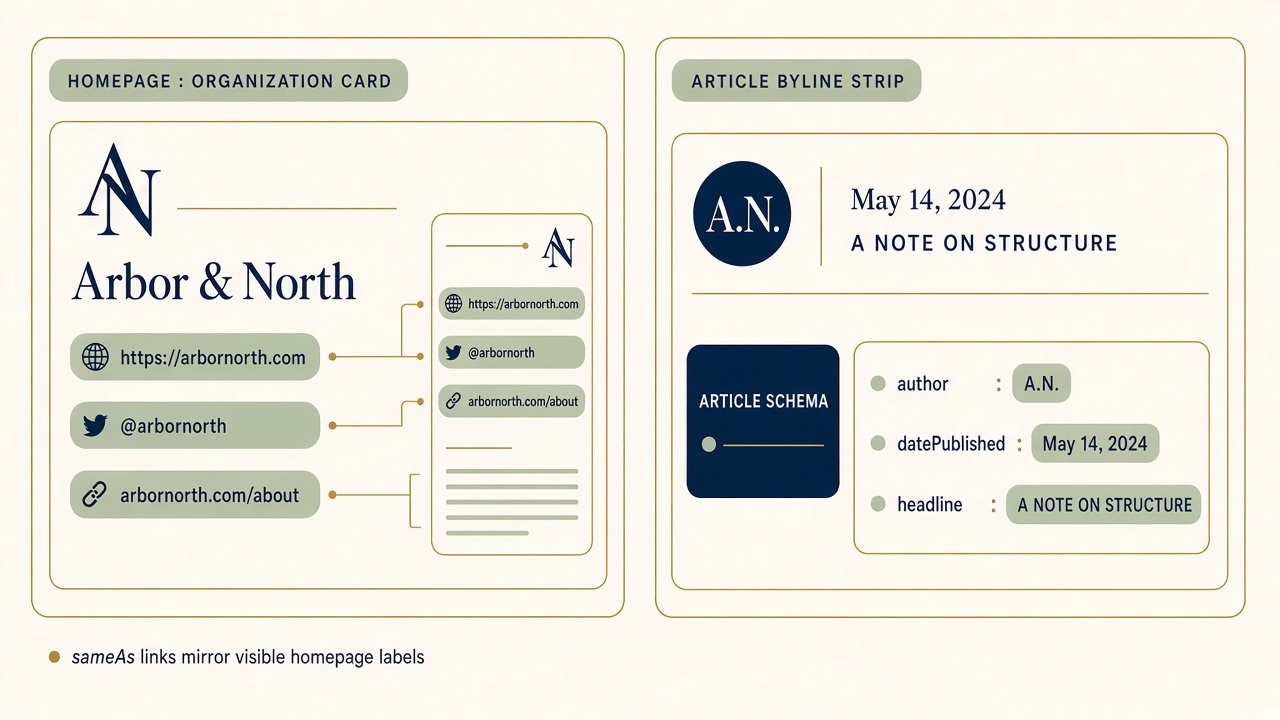
Keep the types that describe facts a reader can already see, facts machines often misread, and that still support rich results or entity clarity: Organization, Article or BlogPosting, Product and Offer when price and availability are on the page, and BreadcrumbList for hierarchy.
Organization markup belongs on the homepage. Google says it can help the search engine understand administrative details and disambiguate the organization in search results, and it does not need to be on every page. sameAs clarifies which entity you are. It does not change AI visibility by itself.
Article, NewsArticle, or BlogPosting can help Google understand the page and show better title text, images, and date information. There are no required properties. A dateModified value does not get the page quoted.
Author, dates, price, and availability have to match what a reader can see. Do not add a type because a vendor labeled it AI schema.
Still worth it — Keep Organization, Article or BlogPosting, on-page Product and Offer, and BreadcrumbList. sameAs and dateModified clarify identity and freshness; they do not buy an AI citation.
Should You Remove FAQPage Schema After Rich Results Ended?
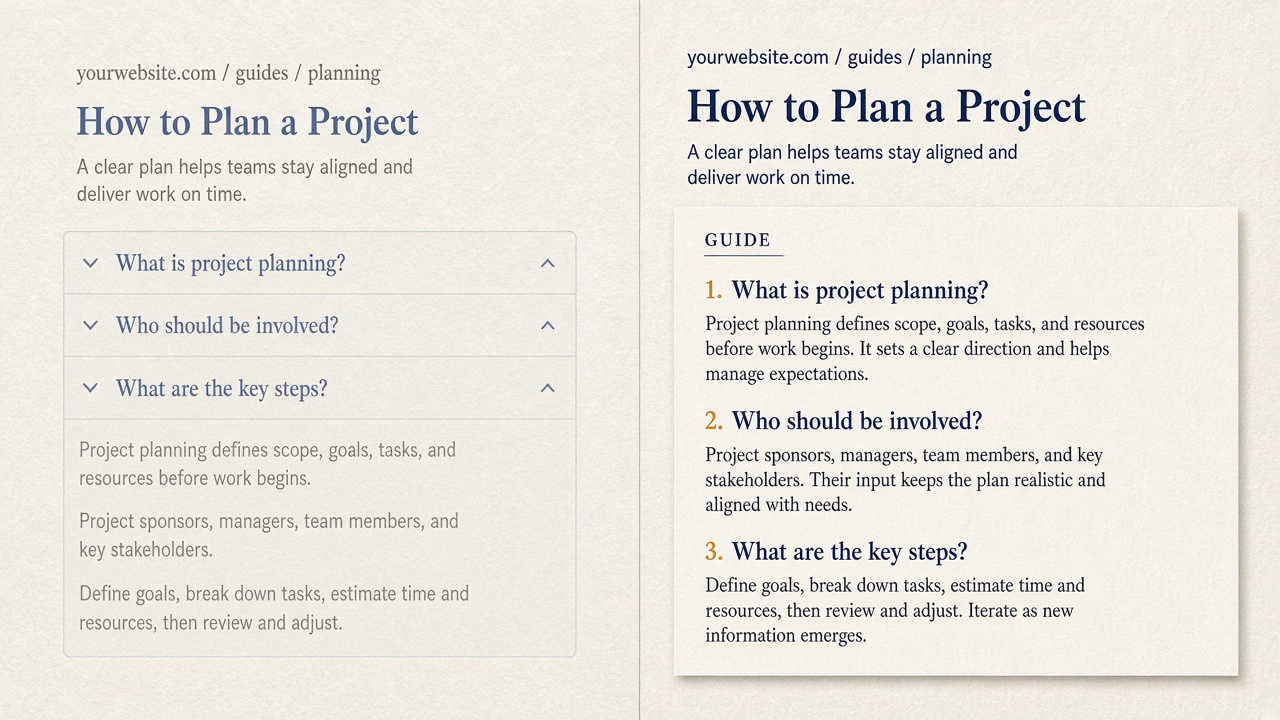
Keep the questions and answers a reader can see. Drop the expectation that FAQPage is still a search feature, or a way to get cited.
Google stopped showing FAQ rich results on May 7, 2026, and said it would drop the FAQ search appearance, the rich result report, and Rich Results Test support in June 2026. FAQPage remains valid Schema.org. It is not a confirmed citation tactic, and it does not belong on a page that is not an FAQ.
Joost de Valk reports no primary source from OpenAI, Anthropic, Google AI Overviews, or Perplexity confirming they favor JSON-LD over rendered HTML. He also flags a 3.2x FAQ-schema claim whose cited URL returns a 404. Treat that kind of multiplier as unsourced.
Does HowTo schema still help?
HowTo markup does not replace the steps. The citable unit is the visible step-by-step text. Ship HowTo JSON-LD only when those steps are already on the page and you still want the type for comprehension, not for an Overview bump.
Keep the answers — Visible questions, answers, and steps are what can be cited. FAQPage and HowTo JSON-LD are neither a live SERP feature nor a confirmed AI citation tactic.
Do ChatGPT, Perplexity, or Claude Actually Parse JSON-LD?
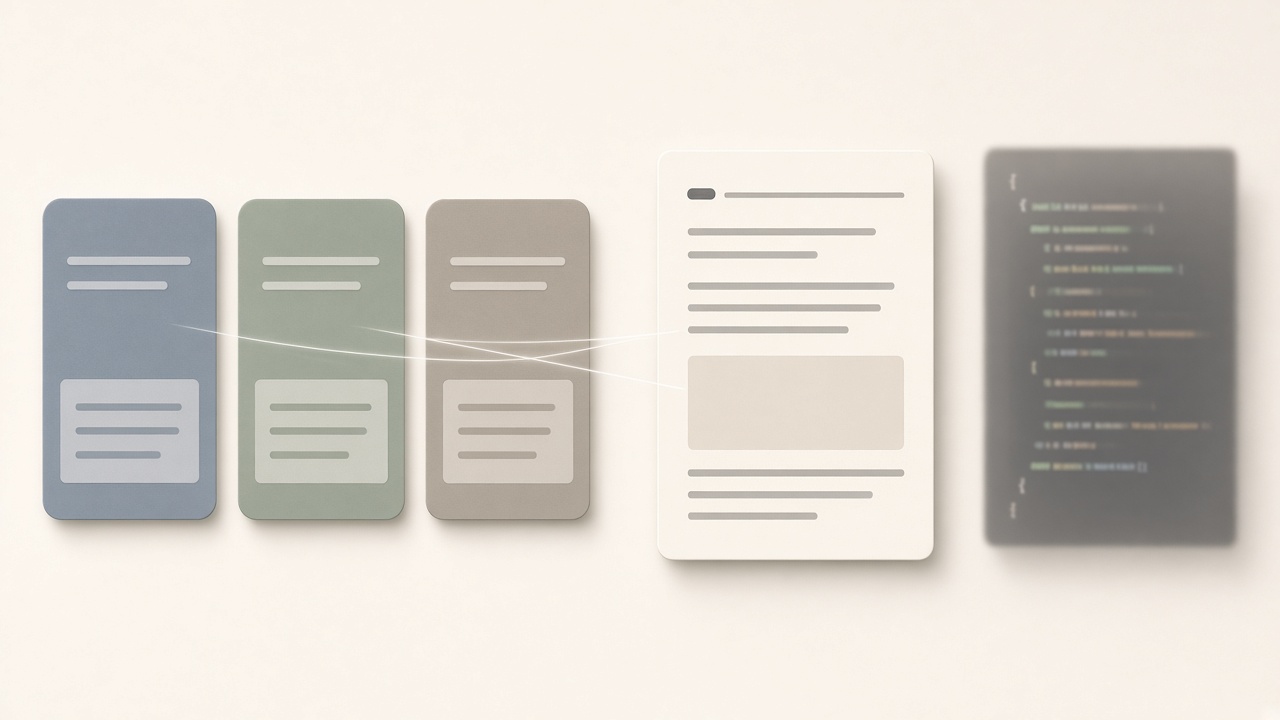
Leaving rich results behind does not mean the other engines parse a valid graph. None of ChatGPT, Perplexity, or Claude has published a schema requirement for citations. A searchVIU live-fetch test found none of five AI systems pulled schema data at answer time; they read only the visible HTML.
Otterly.ai added five schema types from December 2025 to March 2026 and tracked 319 prompts across seven platforms. Six of seven could not fetch or interpret the schema when asked. Only Gemini returned the JSON-LD correctly. AI Overviews coverage rose in that window, but control brands rose too, which points to an algorithm change rather than the markup. Google AI Mode also invented a schema type that was not on the page.
Microsoft’s Fabrice Canel said at SMX Munich in March 2025 that schema helps Bing’s LLMs understand content for Copilot. That is comprehension, not a citation guarantee. Mark Williams-Cook put a fake address only inside invalid JSON-LD; ChatGPT and Perplexity returned it, so a script block can be read as plain text. Hidden or fake facts are a liability. llms.txt is not a substitute: Google says you do not need new machine-readable files, AI text files, markup, or Markdown to appear in Search, including generative AI features.
Visible text wins — ChatGPT, Perplexity, and Claude have not published a JSON-LD citation requirement. Keep markup as a description of visible facts, never as hidden text or a stand-in for llms.txt.
What Should Structured Data Match Before It Ships?
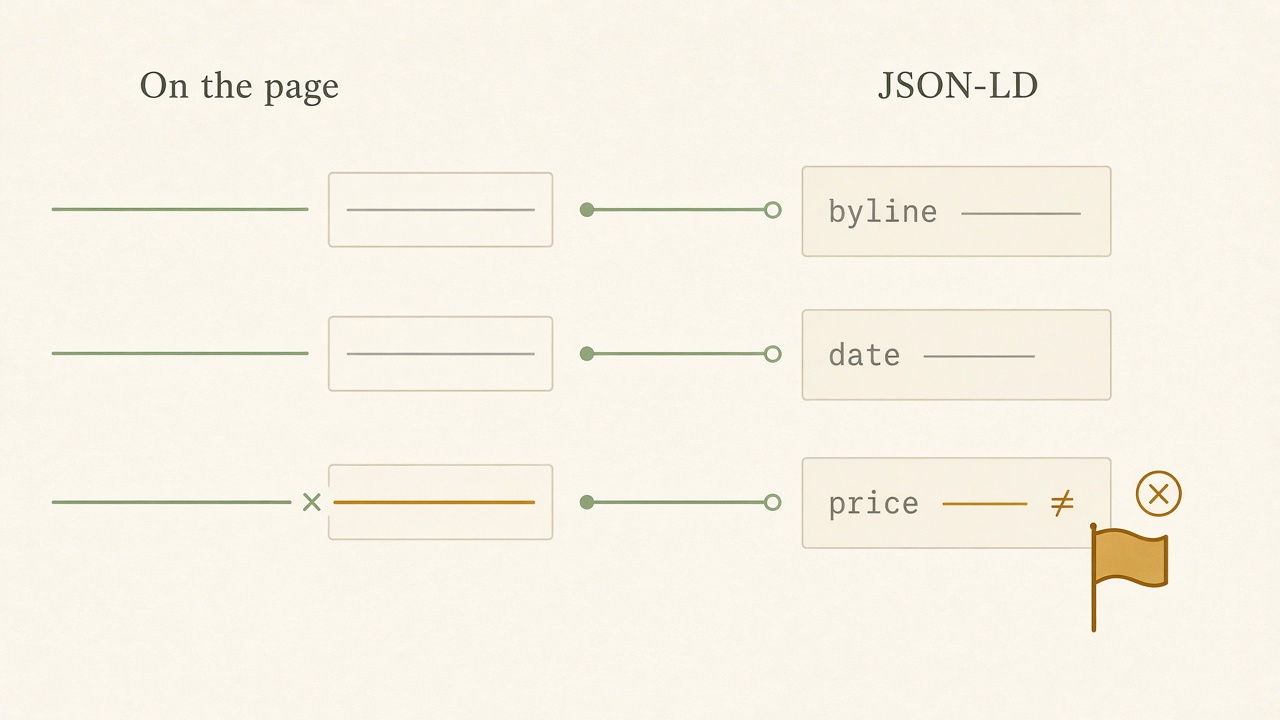
Before it ships, structured data has to match what a reader already sees. Google lists matching structured data to the visible text on the page as an SEO practice for AI features, not as a separate AI markup requirement. Every fact in the graph should already be visible text.
Check the name, author, dates, price, availability, and any FAQ or HowTo steps against the rendered page. If a field is not visible, strip it. Do not mark up content that is not on the page.
A green Rich Results Test only means the type is valid for a rich result where that feature still exists. It is not evidence of an AI Overview win, and it will not cover FAQ after Google drops that test support.
On an automated template, compare the JSON-LD payload with the rendered HTML of that URL before publish. A passing validator on a sample page is not a pass for every generated page.
Match the page — Ship schema only when every marked-up fact is already visible on that URL. A green test validates a rich-result type; it does not prove an AI citation.
When a Publishing Gate Should Refuse Schema
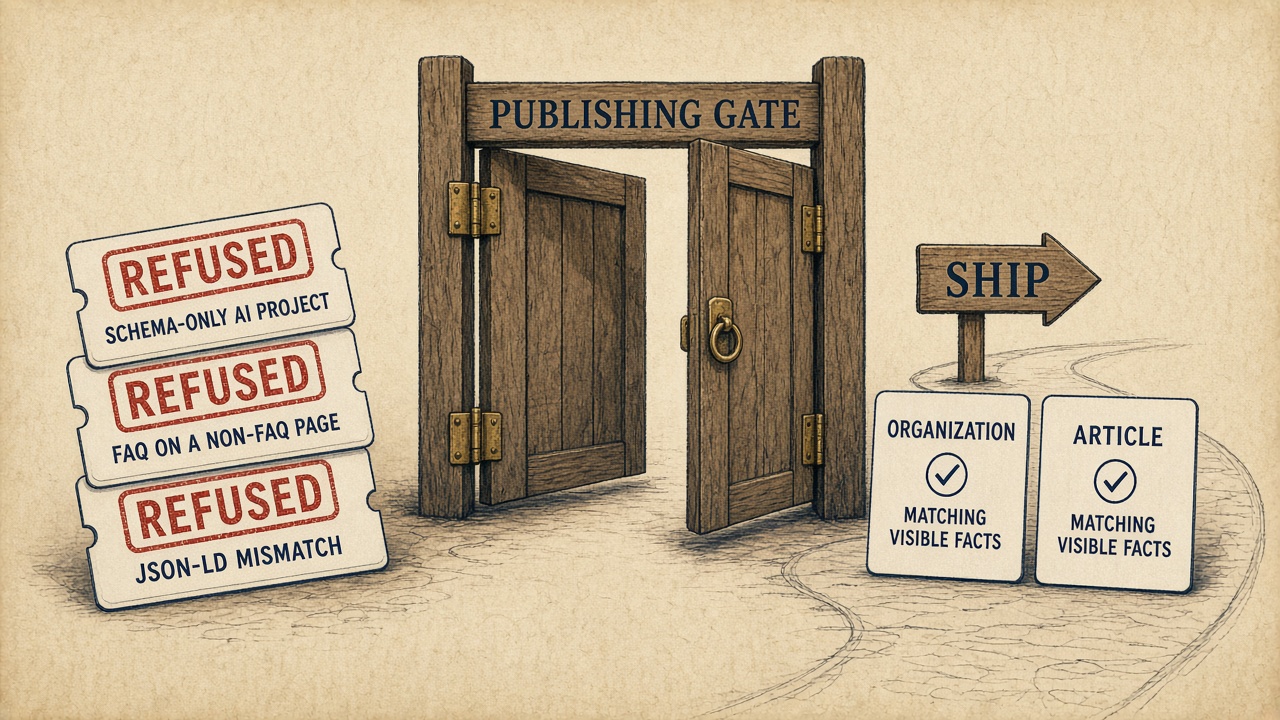
That visible-text check is the publishing gate. On an automated page, refuse the payload when it does not describe what the template already shows — not after a citation fails to show up.
Measure the passage, not the script. Google’s query fan-out is a set of concurrent, related queries the model generates to request more information — its lawn-weeds example is the pattern — so a standalone answer has to exist for those sub-questions. After a content edit, watch citations, mentions, and share of answer. After a markup edit, watch rich-result eligibility and entity consistency only. Do not expect a citation bump.
Next edit — Point the next edit at the citation-patterns piece and the passage-structure guide, and use the AI visibility article for the measurement set. Do not open another schema checklist.
Key Takeaways
Measure citations after content edits, and spend the next revision on passage structure and visibility measurement rather than another schema checklist.
Frequently Asked Questions
You Might Also Like
- AI Search AI Overview Citation Patterns: What Gets Quoted vs Ignored
- AI Search AI Overview Optimization: How to Structure Pages Google Can Quote
- AI Search Passage-Level SEO: How to Write Blocks Answer Engines Can Lift
- AEO How to Get Cited by ChatGPT: A Practical Visibility Checklist
- AEO AI Visibility Checker: How to Audit Whether AI Engines Cite You