AI Overview Optimization: How to Structure Pages Google Can Quote
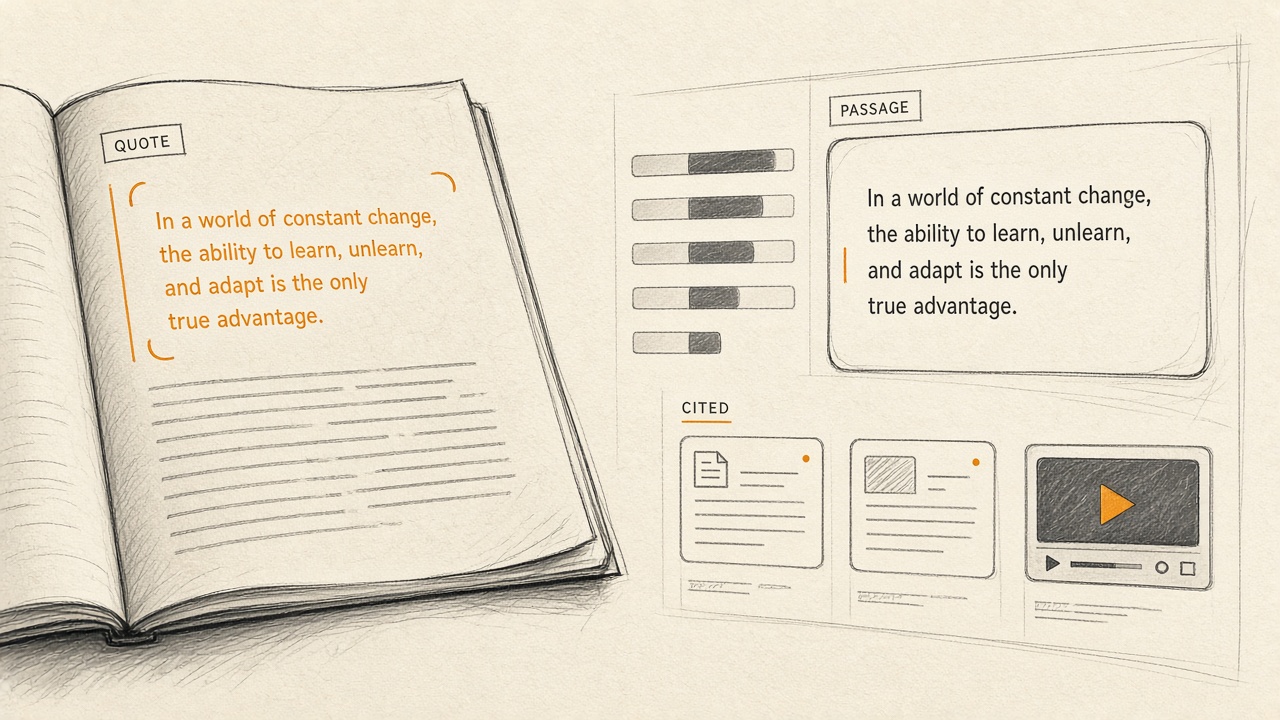
Ranking on the typed query is no longer the same as being the page Google quotes. In Ahrefs’ March 2026 study of AI Overview citations, only 37.9% of cited URLs also sat in the first 10 result blocks; the rest were split almost evenly between positions 11–100 and beyond the top 100. A strong organic position still helps, but it does not decide the citation.
Google treats supporting-link eligibility as ordinary Search: the page must be indexed and eligible to show a snippet, and it lists no additional technical requirements. Search does not use llms.txt, a special AI file, or a special schema.org type, and chunking a page into tiny pieces is not required. What does change the retrieval path is query fan-out: AI Overviews and AI Mode can issue related searches, so a page is often pulled for a subtopic the user never typed.
Useful AI overview optimization — the practical side of answer engine optimization and generative engine optimization — is therefore a writing brief, not a new markup project. Put the important fact in visible text, give each fan-out question one passage that can stand alone, attach a proof line the overview can actually support, and hold the claim when you cannot source it. Google has also said clicks from AI Overview result pages tend to be higher quality, which is the reason to earn the citation rather than to chase a file format.
- A page can be an AI Overview supporting link only if it is indexed and snippet-eligible; Google lists no extra technical requirements.
- Query fan-out means the page is often retrieved for a related subtopic, not only the query the user typed.
- llms.txt, special AI files, and special schema.org markup are not how Search selects generative AI citations.
- Most cited URLs are not in the organic top 10, so a quotable passage matters more than rank alone.
- Write one passage per fan-out question, keep the proof in visible text, and do not publish a claim the page cannot support.
A Top-10 Rank No Longer Predicts the Citation
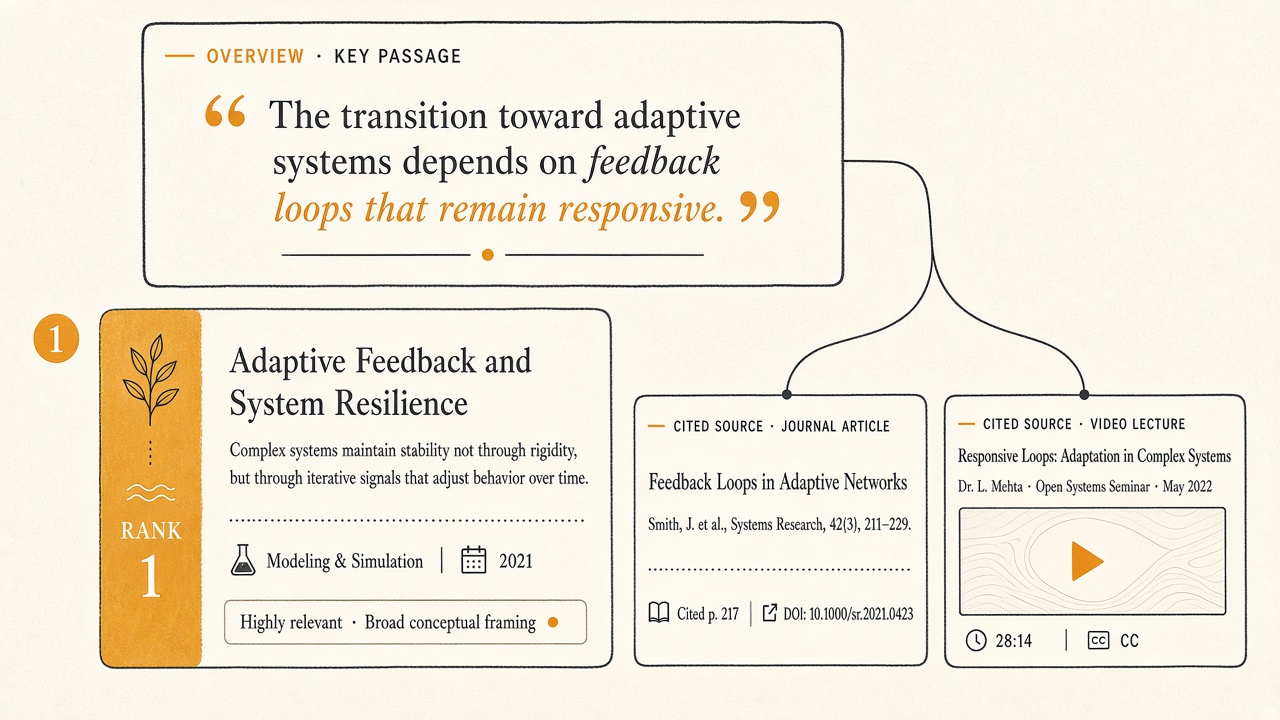
That split is already visible in the citations themselves. In Ahrefs' March 2026 study of 863,000 keyword SERPs and 4 million AI Overview URLs, only 37.9% of cited URLs also appeared in the first 10 result blocks, down from about 76% top-10 overlap in July 2025. A strong organic rank and a citation are no longer the same outcome.
The rest of those citations split almost evenly: 31.2% ranked in positions 11–100, and 31.0% sat beyond the top 100. Among citations outside the top 100, 18.2% were YouTube URLs, equal to 5.6% of all cited AI Overview URLs. A text page is competing with other formats, not only with other blue links. Climbing a few positions inside the old top 10 does not, by itself, put the page in the set the overview quotes.
The click data from the same period does not point to a recovery plan. On Google US desktop in July 2026, Advanced Web Ranking measured position-1 organic CTR at 20.02% across SERPs and 9.69% when an AI Overview was present — that 52% relative drop. An overview by itself lowered position-1 CTR by 36%; stacked features made the loss larger. Overviews appeared on 43% of sampled US desktop SERPs, and 74.3% of those ended with no organic click, versus 53.6% without an overview. Those numbers describe the SERP. They are not a target for winning the click back.
Be the passage for the subtopic
The practical job is to be the passage retrieved for a subtopic, not to climb back into a top 10 that no longer predicts the citation. Query fan-out breaks a broad search into smaller questions; the overview needs a self-contained answer for one of those questions, with the proof sitting in visible text. The ranking-versus-citation split is the subject of the AEO versus SEO article, so it does not need to be re-argued here. Answer engine optimization, AI visibility, and generative engine optimization all collapse to the same page-level test: can this passage be quoted when the overview appears?
That is not a second workflow, and it is not a campaign to reverse zero-click behavior. GEO optimization does not mean a parallel content track beside ordinary Search. It means the claim the overview might repeat is already written, sourced, and readable on the page — and left unpublished when it is not.
Quote the passage — Most citations now sit outside the top 10, and an overview suppresses the click rather than handing it back. The useful response is a page that can be quoted for the subtopic, not a chase to restore the old rank or the old CTR.
CTR and Zero-Click With AI Overviews
Pass the Eligibility Gate Before You Restructure
A citation that never sits in the top 10 still has to clear the same door as every ordinary result. Before you rewrite a page so a model can quote it, confirm this URL is eligible to be a supporting link at all.
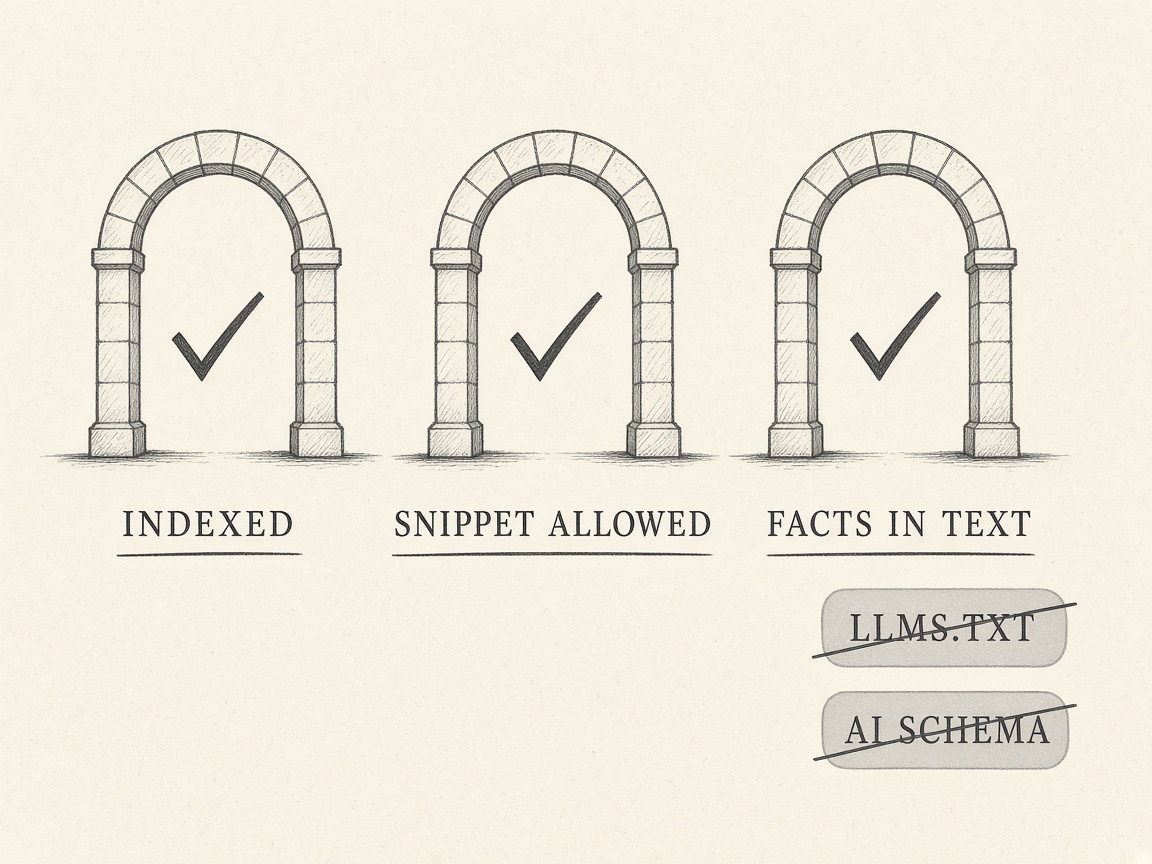
Google’s bar is ordinary Search, not a second technical stack. A page is eligible as an AI Overview supporting link only if it is indexed and eligible to show a snippet. Search Central is explicit that there are no additional technical requirements. The facts you want quoted have to sit in visible text a snippet can use, not in a layer the page hides from Search.
Three checks that close the gate
- A noindex directive keeps the URL out of the index, so it cannot be cited.
- A nosnippet directive blocks the snippet an overview would draw from.
- An answer that exists only in an image never becomes selectable text.
Any one of those removes the page from consideration, even when the rest of the site ranks. Fix visibility first. New passages on a URL Search cannot snippet are work the overview will not see.
Two popular extras fail the same test. Google says llms.txt and other special AI files are not used by Search, and chunking the page into tiny pieces is not required. There is no special schema.org markup required for generative AI search. Recycling content a model could already produce does not open the gate either. Treat that warning as a stop: if the claim is not already on this page in visible text, a file or a schema type will not put it there.
Library-wide cleanup — shared templates, robots rules, image-only explainers across many URLs — belongs in the GEO optimization article. This check only decides whether this URL can be quoted at all.
The gate — If the page is not indexed and snippet-eligible, with the answer in visible text, restructuring it will not make it a supporting link.
Give Each Fan-Out Question One Quotable Passage
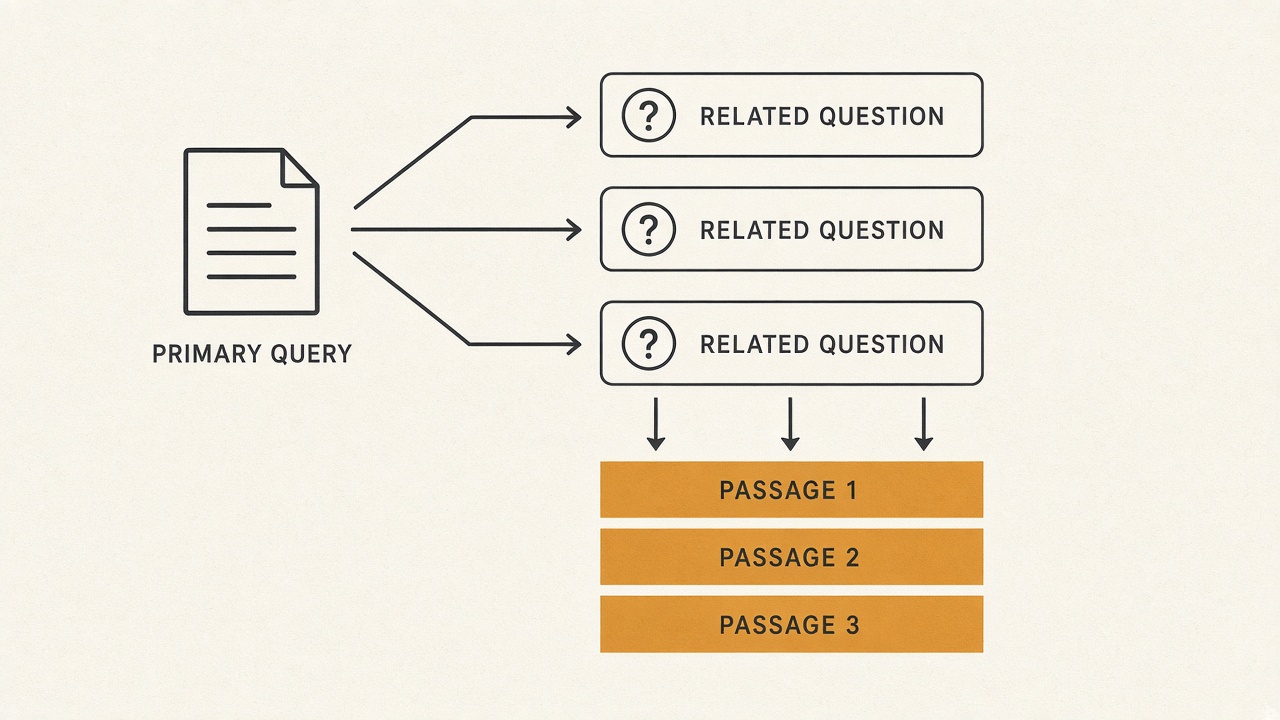
Clearing the eligibility gate only puts the URL in the pool. It does not decide which sentence gets quoted. AI Overviews and AI Mode can issue multiple related searches — Google describes this as query fan-out — so a page is often retrieved for a subtopic rather than the query the visitor typed. The job on this URL is to match those subtopics with passages that still make sense when lifted alone.
Start the list with question-form subtopics, not synonym variants of the head term. A Washington University audit of 55,393 searches in March–April 2026 found AI Overviews on 13.7% of queries overall, but on nearly 65% of question-form queries versus 9.5% of other searches. Fan-out questions are the follow-ups a careful reader would ask after the title: what it is, when it applies, what the limit is, and what to do next. Rank those by how often the page already has a real answer, not by how many headings you can invent.
Length and placement should follow what citations actually match. Traced citations were short and front-loaded: the matched passage was about 28 words at the median, and the first 100 words produced 15% of citations while being about 4% of a typical cited page. Longer pages were not more likely to be cited. A long guide does not earn more quotes by existing. A short, self-contained answer does — especially when the primary one sits near the top of the page, before the supporting detail.
The mapping add-on
Treat this as a placement pass, not a rewrite of the whole article.
- List the likely fan-out questions this URL can honestly answer.
- Write one self-contained passage for each, about a sentence or two, so the line still stands if it is quoted without the heading above it.
- Put the primary answer inside the first 100 words, then place each supporting passage where that subtopic is introduced.
- Do not split the page into tiny chunks. Fan-out is retrieval of related searches, not a requirement to fragment the document.
How those sentences should be worded — the proof line, the claim boundary, the phrasing that survives quotation — belongs in the citation-ready answers article and the survive-AI-Overviews writing contract. This step only decides which question each passage answers and where that passage sits.
One passage — Map each likely fan-out question to one self-contained passage, lead with the primary answer in the first 100 words, and leave sentence craft to the writing contract.
A Page Skeleton a Quote and a Click Can Both Use
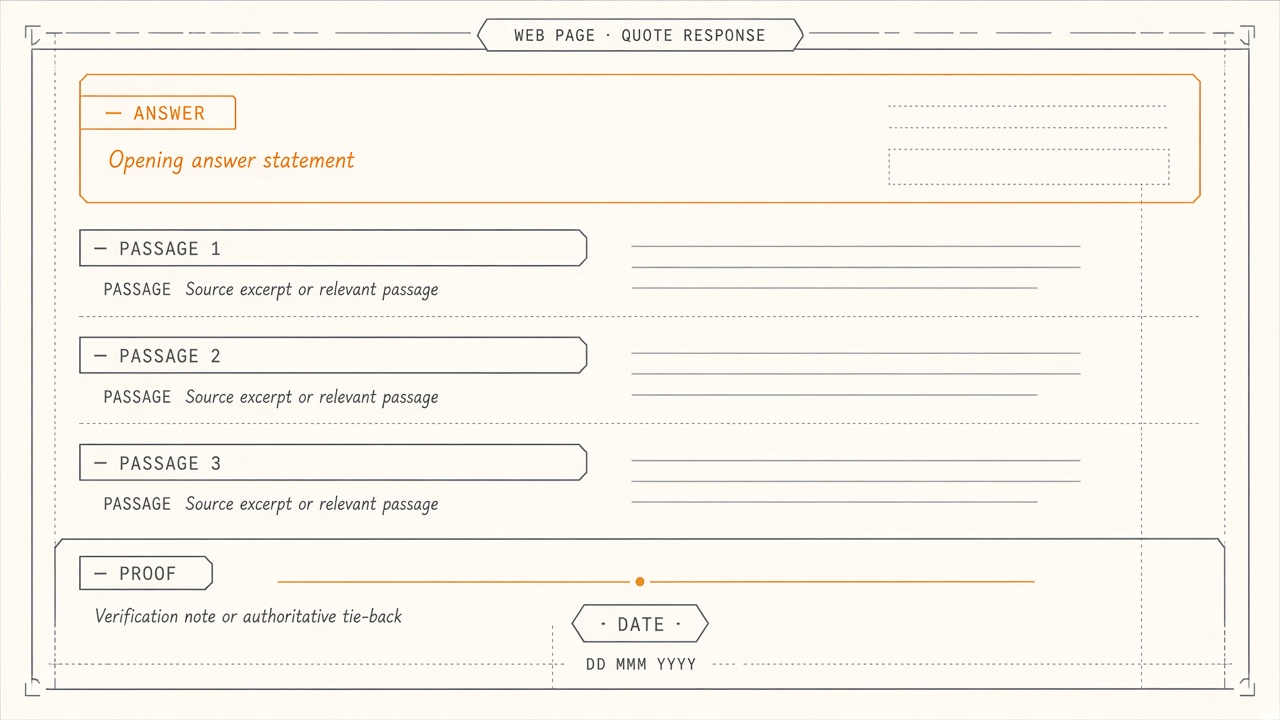
Mapping each fan-out question to its own passage only works if the page holds those passages in a fixed order. The introduction has set up the topic. What follows is the skeleton: one place for the primary answer, one opening for each subtopic, and enough underneath that the visit is still worth taking.
A copyable order
- Title the page for the task, not the brand. The title should name the job the reader came to finish.
- Put a self-contained answer inside the first 100 words, near the ~28-word median already set for a matched passage. That lead is the quote, not a warm-up.
- Open each H2 with its own fan-out passage before any supporting sentences. The heading names the subtopic; the first lines answer it.
- After those openings, keep the detail a person still wants: the proof, the steps, the exceptions, and the choice an overview cannot make.
That last layer is not padding. Google says clicks from AI Overview results pages tend to be higher quality. The skeleton is a quote block plus the proof and steps underneath, not a page that ends when the overview does. If the landing page only repeats the cited sentence, that visit has nowhere to go.
If you use structured data, it must match the visible page text. Do not hide the quotable claim in JSON-LD while the body stays vague or says something else. Markup can describe what a person can already read. It cannot smuggle in a fact, and it does not replace the passage.
Two familiar levers fail as a publish gate. On 1,000 B2B SaaS keywords, only 37% of the sources an AI Overview cited were ranking in the organic top 10, so a top-10 position is not the citation requirement. FAQ schema appeared on 19.5% of cited top-10 pages and 19.3% of skipped ones — too close to treat as a signal. Schema presence and extra length are not why a page gets quoted. Ship the visible order.
Do not add a second FAQ that restates the article. Those questions already have homes: one passage in the lead, one at the top of each H2. Encoding that order into a brief — task title, lead answer, H2 openings, proof underneath — belongs in the existing SEO content brief, not a parallel template.
Order, not markup — Name the task in the title, answer inside the first 100 words, open every H2 with its fan-out passage, then keep the proof a longer visit still needs. Top-10 rank and FAQ schema do not decide whether the page is worth publishing.
Lock a Proof Line, or Hold the Passage
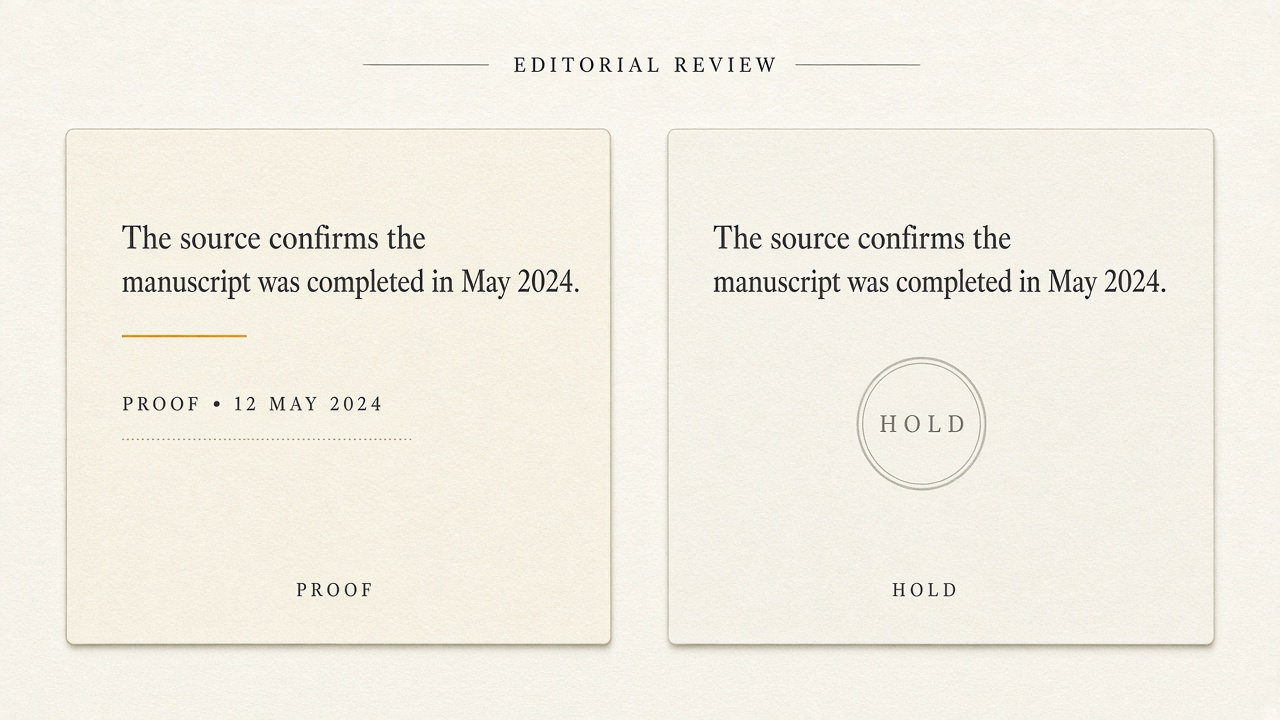
A clean skeleton still fails if the sentence under the heading is one the model could have written without your page. Eligibility and fan-out mapping only get a URL into the set of pages that can be quoted. They do not stop an overview from attaching your URL to a claim the visible text never made.
That gap is why the proof has to be locked before you publish an extractable passage. In the WashU audit, 29.8% of cited domains were absent from the first page, and an average overview cited about eight sources. Breadth is not grounding. About 11% of verifiable claims were unsupported or contradicted the cited page. Only 41.9% of those overviews were fully grounded, meaning every verifiable claim was supported by the cited text they could collect. A quotable sentence can still be misused. The page has to contain the support.
What counts as a proof line
A proof line is something on the page a model cannot invent from the query alone: a dated measurement, a method, a firsthand observation, or a named constraint. Commodity definitions do not count. “AI Overviews summarize search results” is extractable and empty. “We kept the passage unpublished until the March rollout notes sat under the heading, because same-day setup stopped whenever DNS was still propagating” is a proof line. The constraint is observable, and the question does not imply it.
Hold rule: if that proof is not in visible text next to the claim, delete or rewrite the extractable passage. Do not publish a sentence you would not want attributed. “Most teams finish concierge setup the same day” answers a fan-out question and can be written without your site, so it stays off the page. The version that can ship names the pilot, states what “same day” excluded, and puts the DNS constraint in the same block as the claim. Then the opening sentence may say the same thing, because the support is no longer somewhere else.
Hold it — If the dated measurement, method, observation, or constraint is not in visible text beside the claim, hold the passage. A sentence a model can invent from the query is not a proof line.
Ship Only After the Gate Clears
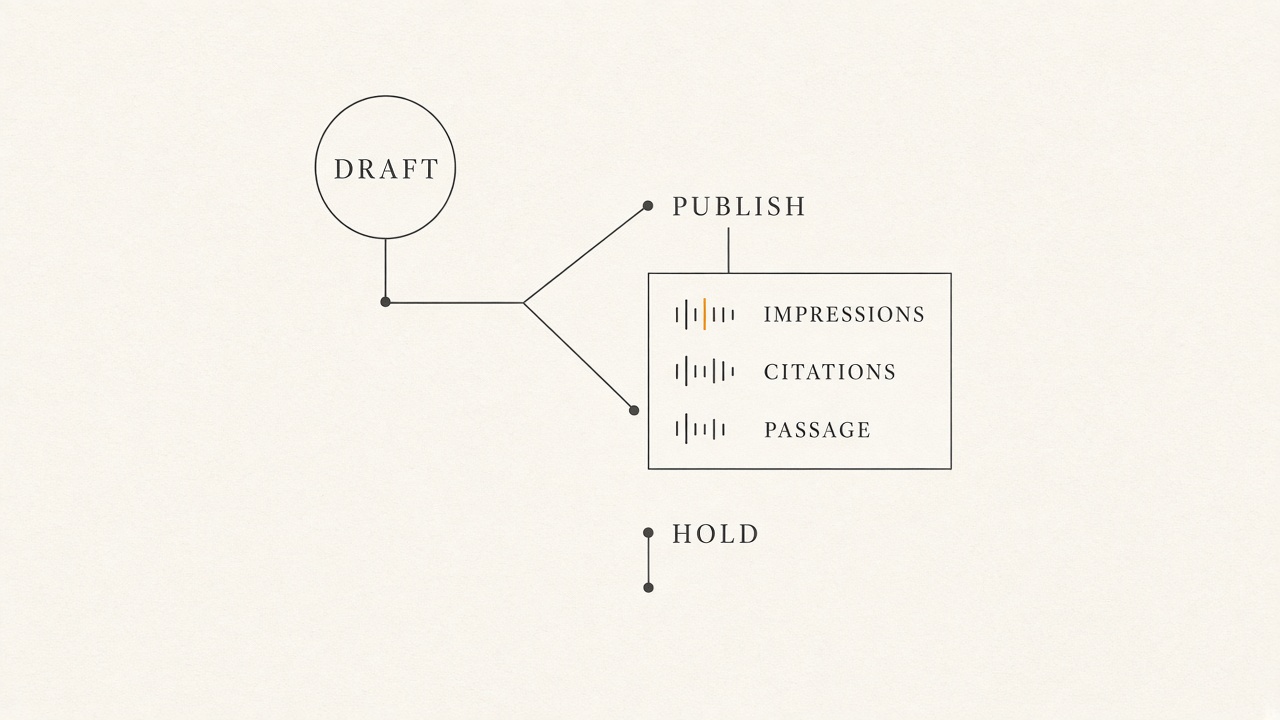
Once the proof line is on the page — or the claim has been rewritten or deleted — the draft is ready for a publish decision, not another rewrite pass. Run the same tree you already used: ordinary Search eligibility, one visible passage per fan-out question, and a claim that exists in the text a reader can see. Any miss is a hold.
Google has reported that AI Overviews had more than 2.5 billion monthly users, and that sites which opt out of generative AI features lose those impressions and clicks. That is the cost of staying out — and the reason opt-out is a business choice, not a way to structure a page. Blocking the feature does not make a passage more quotable. It removes the page from the impressions and clicks those features would have sent.
After you publish, do not hunt for a citation rank to refresh. Watch question-variant impressions, whether the live passage still matches the claim you want attributed, and whether the click lands on a page that fulfills it. The next URL uses the same brief and the same tree — not a new dashboard.
Hold or ship — A miss on any step of the gate is a hold. Once the page ships, judge the live passage and the click it earns, not a citation score you cannot see.
Key Takeaways
Run the next URL through the same brief and tree, and hold the passage until the eligibility gate and the proof line both clear.
Frequently Asked Questions
You Might Also Like
- AEO How to Add Citation-Ready Answers Without Keyword Stuffing
- AEO How to Write SEO Articles That Survive AI Overviews
- AEO Answer Engine Optimization (AEO): How to Get Cited by AI Search
- Guides Quality Checklist for AI-Generated SEO Pages
- Strategy GEO Optimization: How to Optimize Content for Generative Engines