How to Get Cited by ChatGPT: A Practical Visibility Checklist
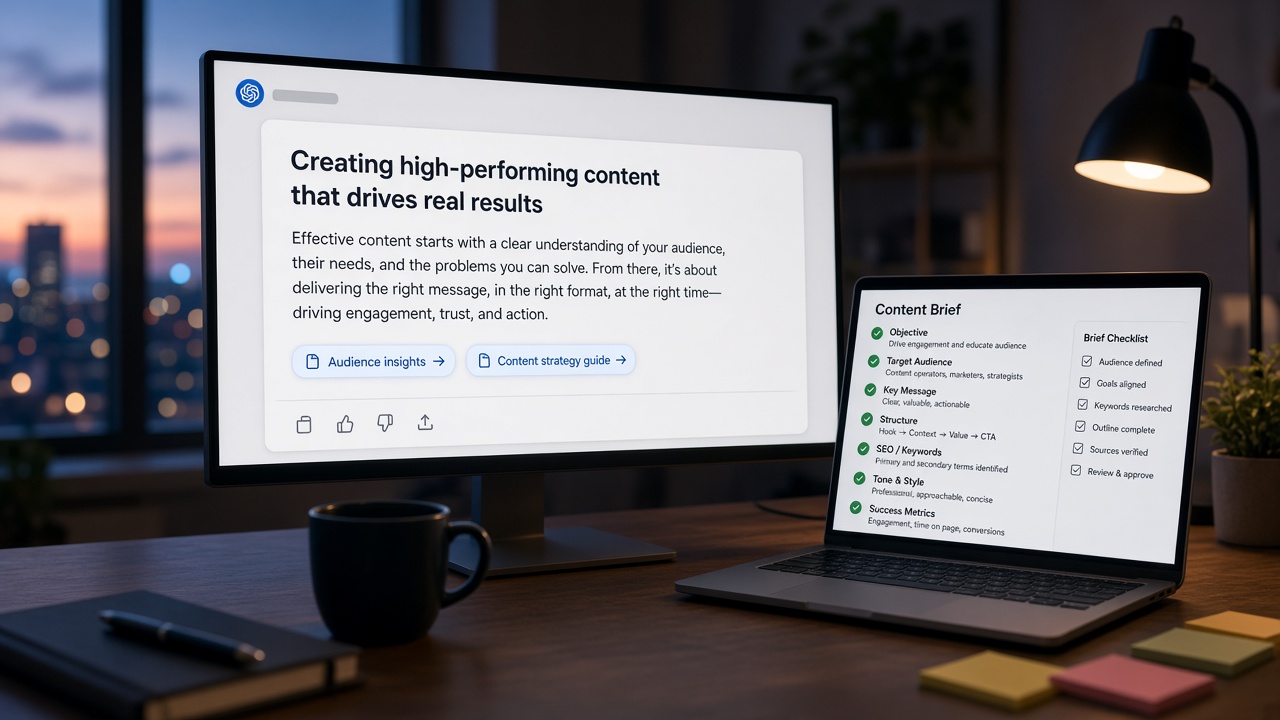
If you publish at scale, you have already felt the shift: someone asks ChatGPT a question and never clicks a blue link. Being cited in that answer is the visibility prize now—and it does not follow the same playbook as classic rankings.
Answer engines prefer sources they can extract in a clean block, attribute to a real brand, author, or organization, and corroborate across other trusted pages. A high domain rating helps, but a muddy roundup with no definition, no sourced facts, and no consistent entity signals is easy for a model to skip.
This article is the operator checklist for that gap: what to put in every brief (clarity, evidence, structure, entities, freshness), how to earn corroboration off-page, and how to track AI visibility without treating citations as a substitute for technical SEO, E-E-A-T, or brand search.
- ChatGPT cites clear, extractable, corroborated sources—not only high-DR pages.
- Lead with concise definitions, sourced facts, FAQ-ready blocks, and original frameworks models can lift cleanly.
- Consistent brand, author, and organization signals make attribution reliable across a topic cluster.
- Digital PR, original research, and mentions from already-cited sites create the corroboration models look for.
- Run a pre-publish checklist and a monthly prompt audit; treat citations as a lagging metric after rankings and brand search.
What ChatGPT Cites—and Why Rankings Alone Fall Short
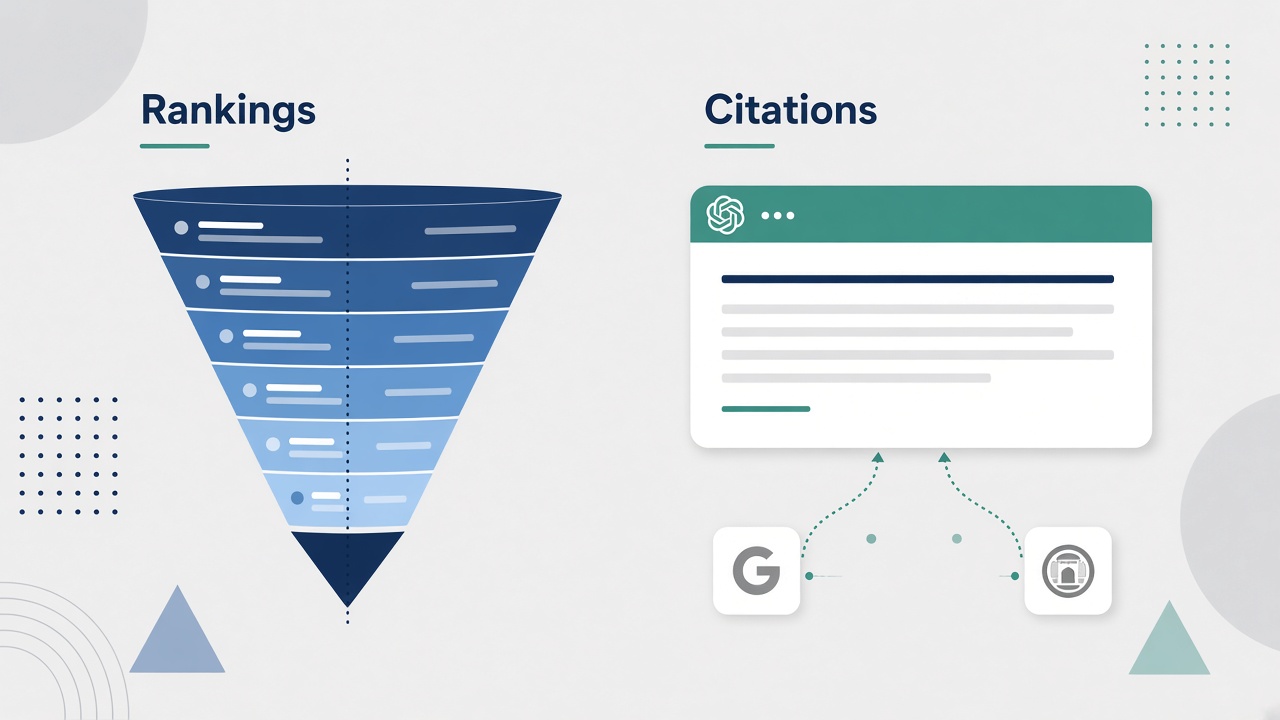
Rankings still decide who gets seen in search. They do not decide who ChatGPT names. The model pulls pages that state an answer cleanly, show their evidence, and show up again on other pages it already trusts. A high-ranking URL with a buried lede and no unique framework often never appears. A clearer page that other cited sites already mention often does.
Crawlability, helpful content, and E-E-A-T still matter. They are the floor, not the citation strategy. Thin scaled pages without original data or a distinctive model rarely get extracted, however well they target keywords. Answer-engine work complements SEO; it does not replace technical health or genuine expertise.
This article stays on ChatGPT-specific operator tactics—what to bake into every brief so a page is extractable, attributable, and corroborable. Broader AEO and GEO theory is covered elsewhere; the job here is the checklist, not the taxonomy.
The real filter — ChatGPT cites pages it can extract, attribute, and corroborate—high rankings without those three rarely make the cut.
The Pre-Publish Checklist That Makes Pages Citable
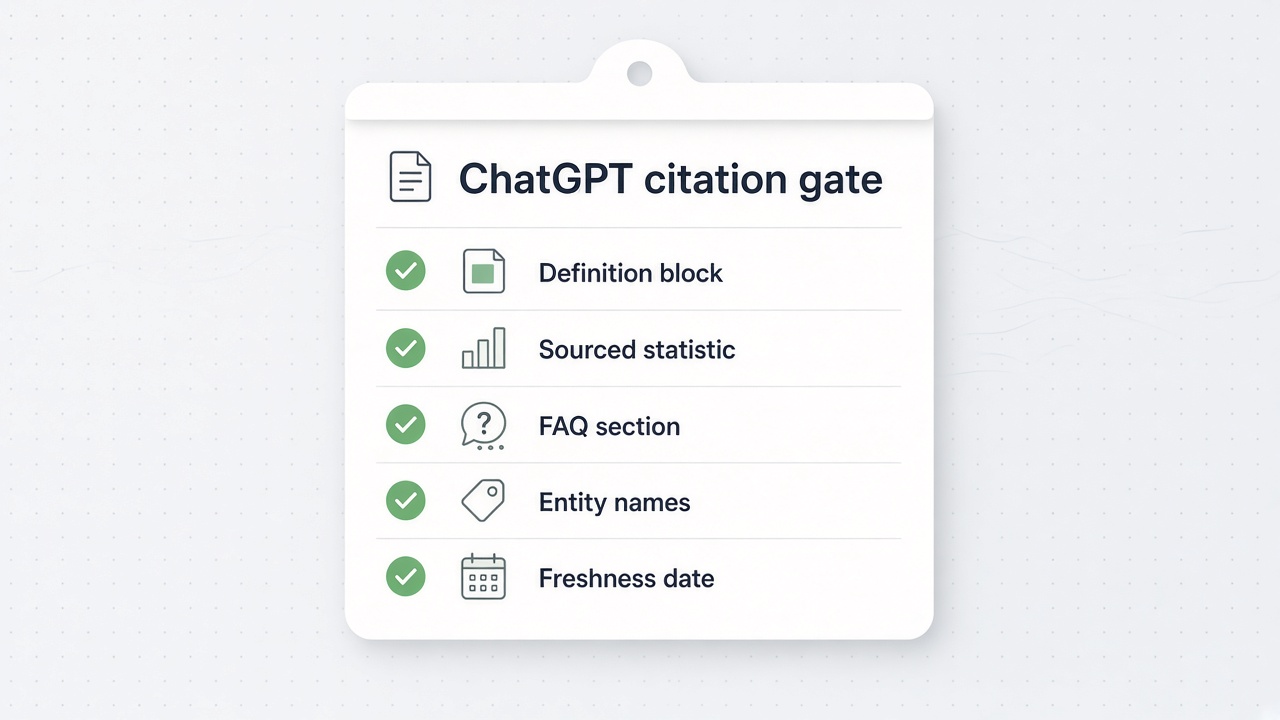
If you only optimize for rank, you still ship pages a model cannot quote. Treat extractability as a gate on every brief: a short pre-publish list, wired into the fields your writers or your autoblogging pipeline must fill, so thin drafts fail instead of going live.
Map each gate to a required brief field—definition, first-screen answer, named sources, FAQ, original angle, entity strings, last-updated—and reject the draft when any field is empty or generic. Run the list only on URLs that match ICP prompts: comparisons, how-tos, and definitions buyers already ask, not vanity topics. Keep it short enough that a lean team finishes it in minutes, every time.
Gate the draft — ChatGPT cites what it can extract on the first pass. Bake definition, answer, evidence, entities, and freshness into the brief so automation cannot publish a page a model will skip.
Shape the page so ChatGPT can extract the answer
Once that checklist is in the brief, the remaining work is structural. ChatGPT cites what it can lift as a self-contained answer, not what a careful reader can eventually infer from a long narrative. Headings, paragraph shape, and how related URLs connect decide whether a model can quote you without reconstructing the argument.
Write H2s and H3s that mirror how people actually prompt—comparisons, definitions, how-tos—instead of clever titles. Put the answer in plain prose in the first lines under each heading, before story, caveats, or origin myths. Keep every paragraph quotable on its own. If a claim only makes sense after a long setup, it will not be the sentence that gets cited.
From a thin post to a layout operators can copy
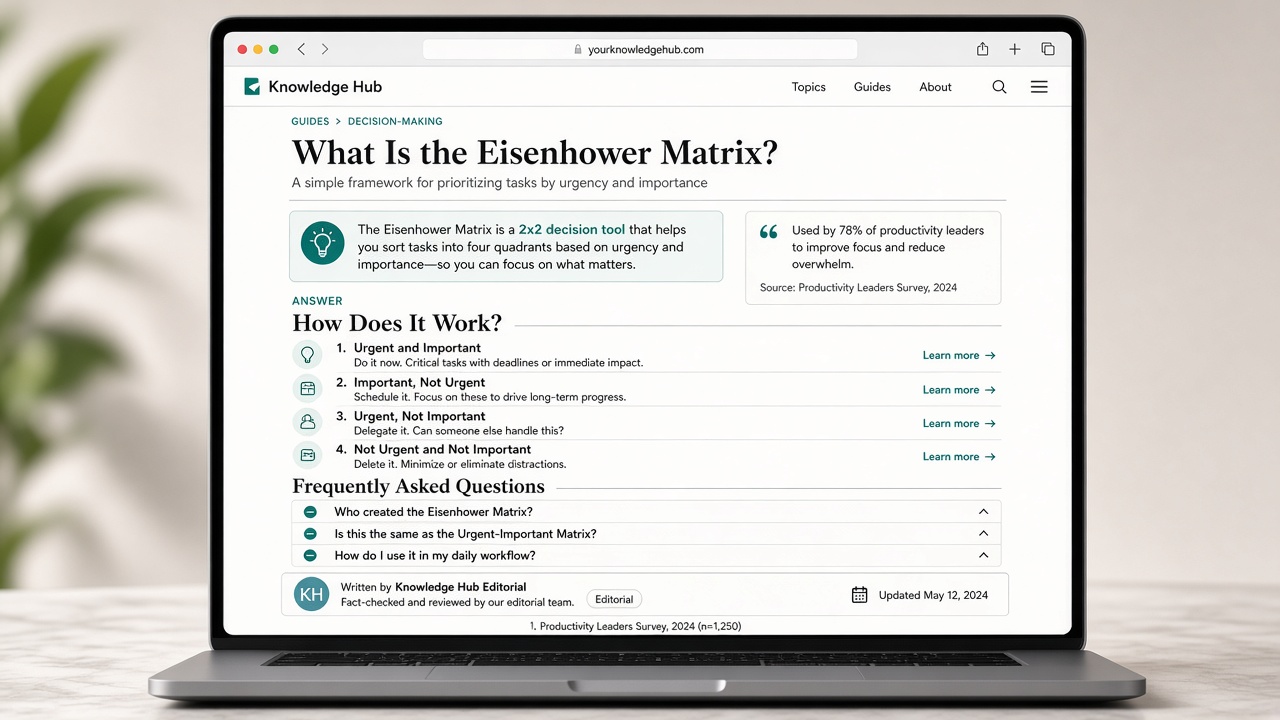
A thin post opens on a hook, mixes advice into the story, and fades out with no block a model can isolate. The citation-ready version does the reverse and stays attributable.
- Prompt-shaped H2s and H3s, with the direct answer in the first paragraph under each.
- Self-contained paragraphs a model can quote without the rest of the page.
- FAQ blocks and comparison tables when the query is a definition, how-to, or comparison—every claim still tied to a named source or your original framework.
- Strong internal links across a topical cluster, using the same brand, author, and organization names so related answers resolve to one entity.
Clusters matter because extractability on a single URL is not enough. When definitions, comparisons, and how-tos in the same topic all point to one consistent source, the model has a cleaner path to attribute you across a family of prompts instead of treating each post as an isolated page.
Extractable layout — ChatGPT quotes self-contained answers under prompt-shaped headings—not buried theses—so design the page for extraction, then bind related URLs into one entity with cluster links.
Earn Off-Page Corroboration ChatGPT Can Trust

Those consistent brand, author, and organization names only stick if the rest of the web repeats them. ChatGPT corroborates before it cites, so you show up more often when reputable pages reuse your framework, data, or definitions—not when an extractable URL sits alone on your domain.
Give other sites something worth repeating. Original research, unique checklists, and honest comparisons travel farther than generic how-tos because peers link them and paraphrase them. Lightweight digital PR and partner mentions work when they land on publications already showing up in AI answers in your niche, piggybacking on sources the model already treats as safe rather than spraying outreach into the void.
Treat identity like a NAP listing. Spell the brand the same way on every property, keep author bios aligned with bylines, and add Organization markup where it is appropriate. Inconsistent names break attribution even when the underlying answer is extractable and unique. Off-page corroboration plus a stable entity is what turns a well-shaped page into one ChatGPT can name with confidence.
Corroboration — ChatGPT names you when other reputable pages repeat your frameworks and the web spells your entity the same way—not when extractable copy lives only on your domain.
Close the Loop With Monthly Audits and Publish Gates
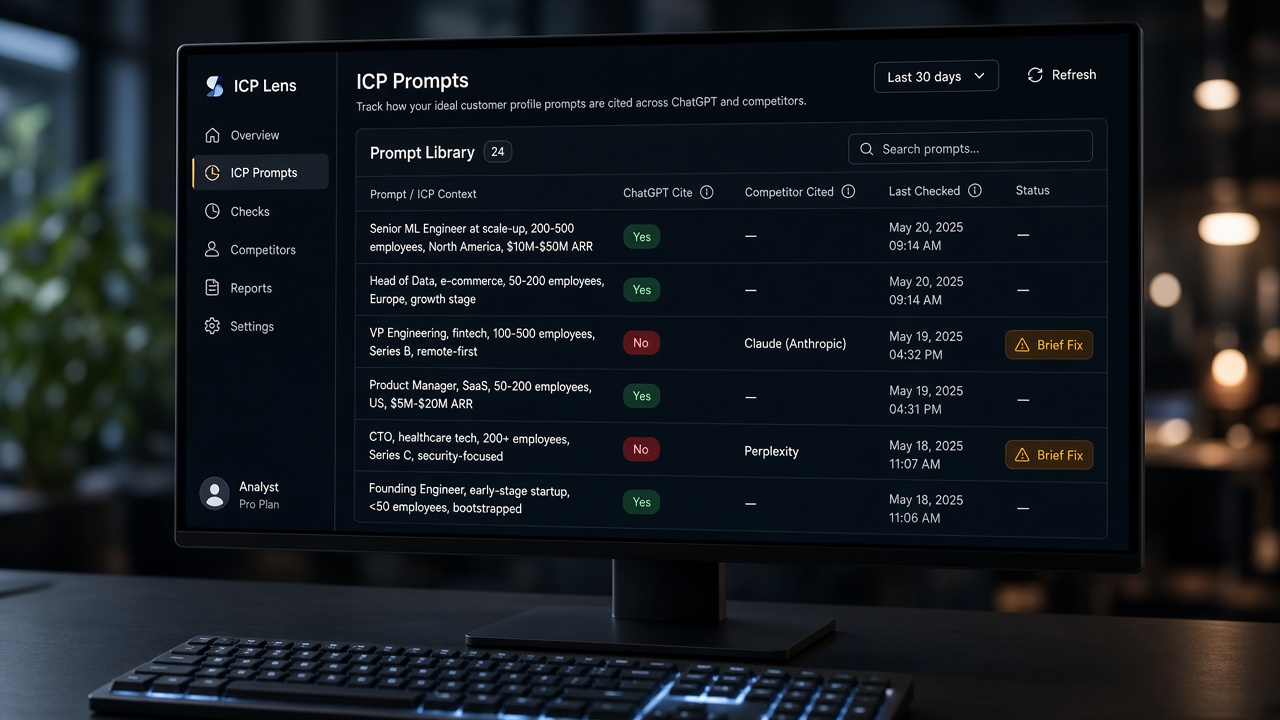
Corroboration makes you attributable. The remaining job is to prove ChatGPT actually names you—and to refuse drafts it cannot name.
Lock a fixed prompt set to the jobs your ICP already tries to complete—comparisons, how-tos, definitions. Re-run that set monthly in ChatGPT and peer answer engines. Log cite or no-cite, the URL attributed, and the competitor names that appear. That log is the operator’s ground truth.
Layer AI visibility checkers and brand-mention monitoring on top, but treat those dashboards as signals, not sole truth. They lag, they miss, and they disagree. The prompt run still decides what you change.
Feed every win and miss back into the brief. Recurring misses usually mean a missing definition block, weak entity strings, or a figure that has gone stale. Fix the pattern in the next draft, not a one-off rewrite of a single URL.
Then wire the same pre-publish checklist into automated quality gates so scale cannot dilute citability. Autoblogging systems and AEO playbooks should enforce those gates; they do not replace unique evidence, extractable answers, or off-page corroboration. Thin pages fail the gate and never go live.
Run that loop and citations become a managed lagging metric—visible after rankings and brand search, and durable only when every draft still has to earn the gate.
The loop — ChatGPT cites pages it can extract, attribute, and corroborate—and it keeps citing them only if you audit the prompts that matter and refuse to publish drafts that fail those gates.
Key Takeaways
Bake this checklist into your next brief and run a monthly ICP prompt audit so the pages you scale are the ones ChatGPT can actually extract, attribute, and cite.