Publishing Governance Checklist Before an Automated Article Goes Live
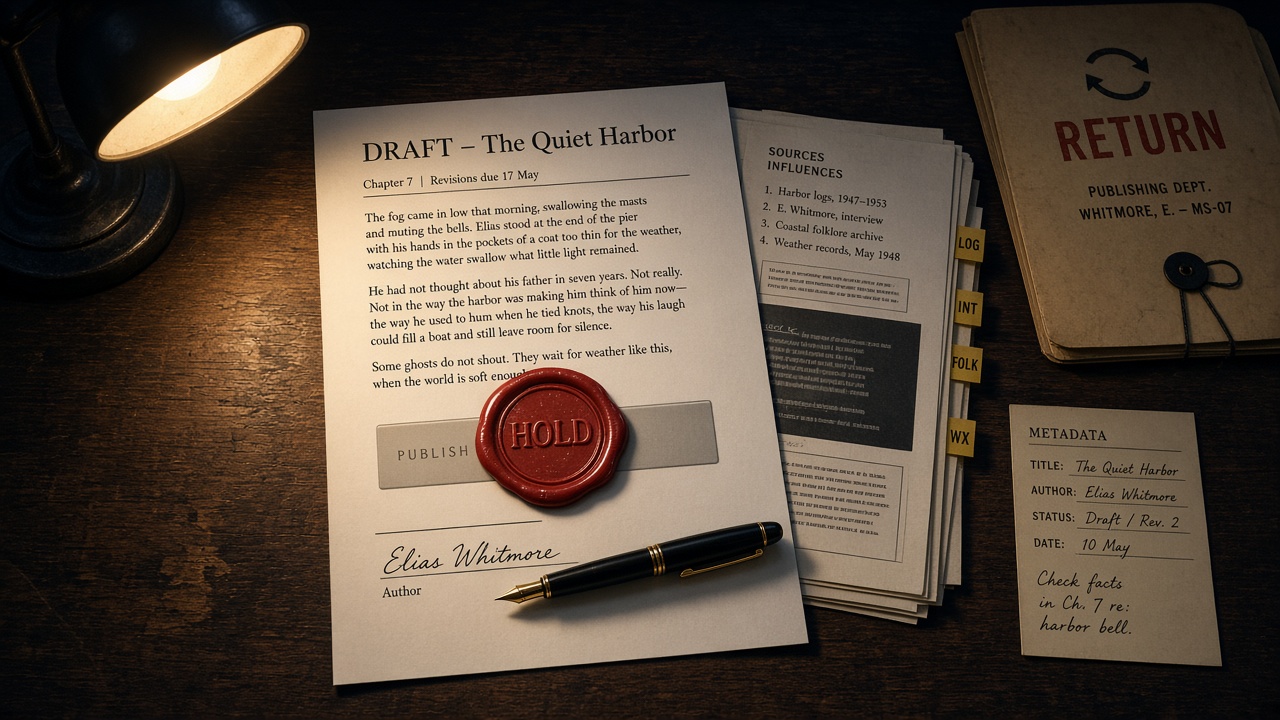
A publishing governance checklist is not another brand policy. Policy and roles should already exist. This artifact answers one narrower question: may this draft go live, and can the publisher later prove who approved it, on what sources, and how to pull it back? That gate has to be fail-closed, because a fluent draft is not proof the facts were retrieved, and a blank field is a hold rather than approval. The sections that follow walk the per-URL record in order: who signs, what sources must be attached, what must be fact-checked, how disclosure and authorship are decided, and how the log supports a correction or takedown.
- A publishing governance checklist is the last fail-closed gate for one URL, not a restatement of company policy.
- Google’s 1 October 2026 guidance requires manual fact-checking of AI-generated body copy and Search metadata before publish, because models predict words rather than retrieve facts.
- Missing source pack, named approver, or information gain blocks publish; silence is a hold.
- Log the prompt, sources, reviewer, and final version so the publisher can prove review, correct, or retract.
- Article disclosure does not cover merchant product data or AI images, and AI should not be listed as an author.
What belongs on a publishing governance checklist — and how it differs from QA or approval
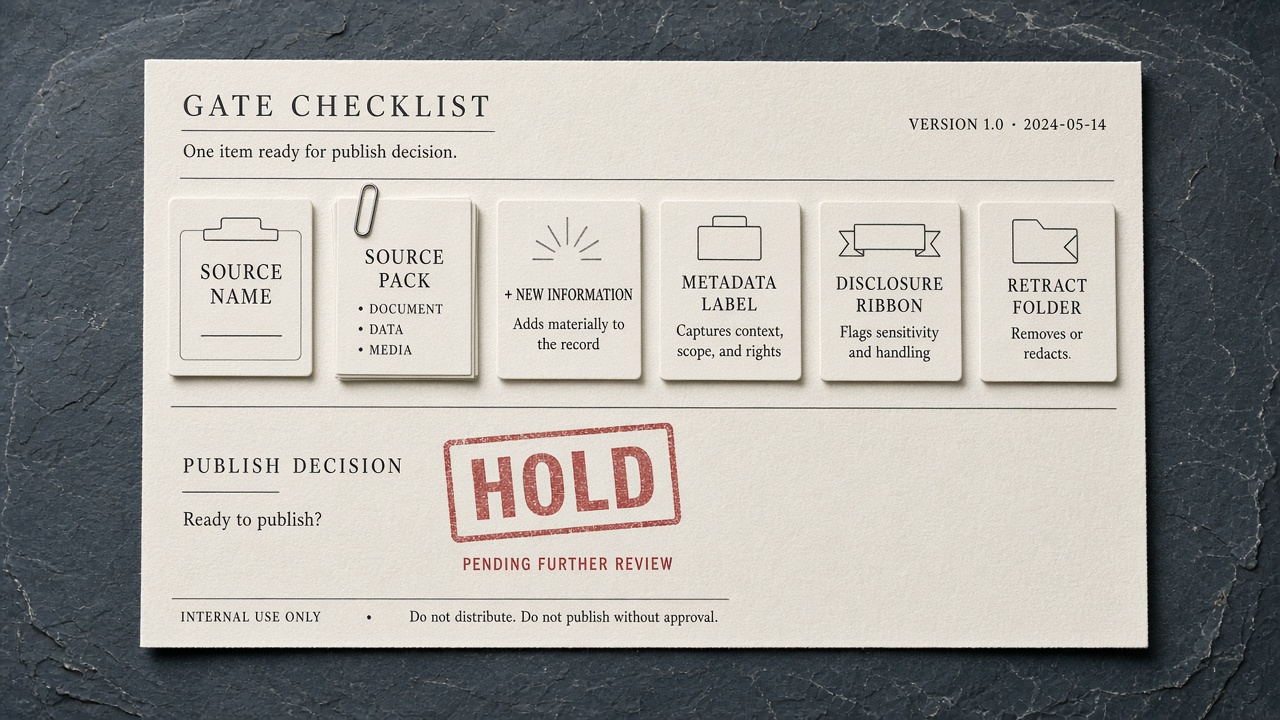
Before an automated article goes live, the publishing governance checklist records six gates for that URL: a source pack, a named human, information gain, a metadata fact-check, a disclosure or named editorial responsibility, and a retract path. A blank field is a hold, not a pass.
That is a different job from the hubs around it. The one-page governance policy says what the publisher will automate, review, or refuse. Sign-off roles name who may approve, edit, or kill. Content QA tests claims and information gain. Link those hubs; do not rebuild the role chart or the QA rubric here. This checklist only asks whether this draft may go live.
Run that list in order and stop at the first fail. Silence, a score, or an empty approver is not permission to publish.
Fail closed — The checklist does not grade the article. It records whether this URL may go live, and any blank gate holds the publish.
What Google requires before AI-generated content is published
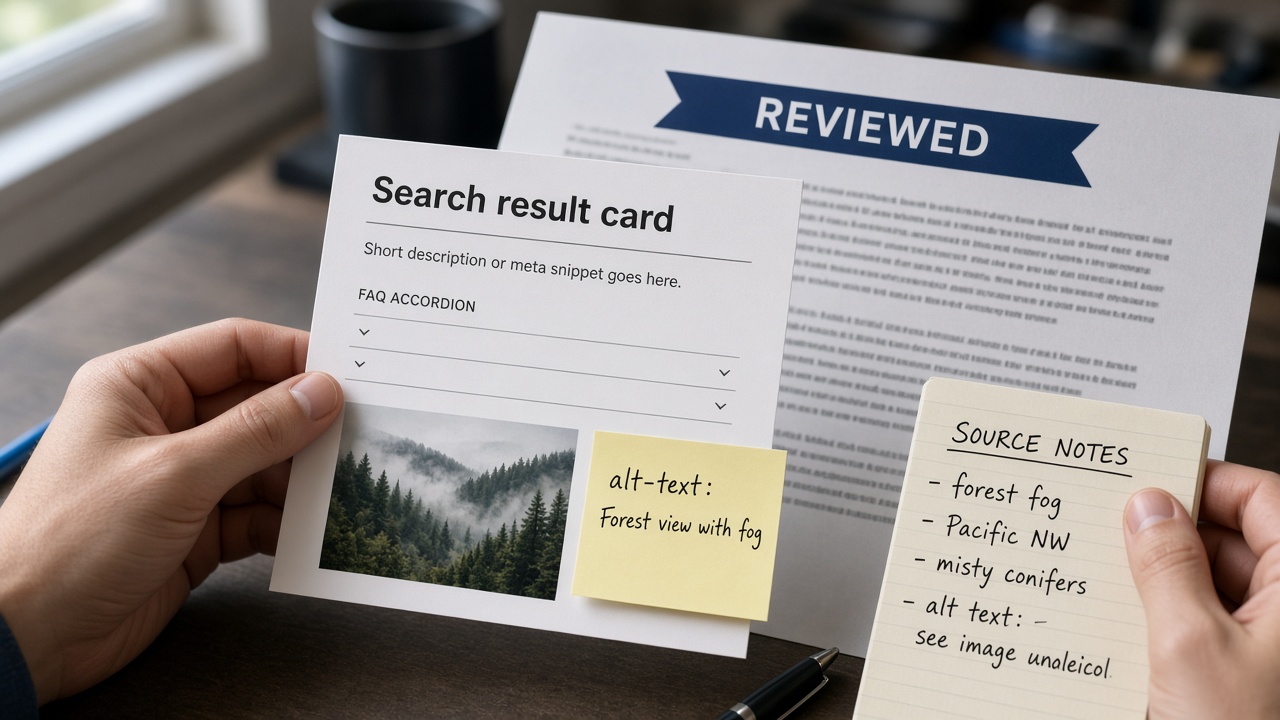
Google’s answer is a hard stop, not a quality score. Google’s guidance on generative AI content, last updated on 1 October 2026, requires every AI-generated page to be manually fact-checked before publishing. Generative models do not retrieve facts. They predict a likely sequence of words, so a fluent page can still hallucinate. On the checklist, that review is the metadata fact-check gate: if it is blank, the URL holds.
The fact-check covers more than body copy. Google says the same review applies to metadata that can appear in Search results, not only the article itself. A clean article whose Search-facing metadata is wrong still fails the gate.
When automation becomes scaled content abuse
Scaled content abuse is defined by purpose and missing user value, not by the tool. It is many pages that do not help users, whether those pages were made by AI, automation, or people. Generating many pages with generative AI or similar tools without adding value is Google’s first listed example, and it can violate the spam policy.
The operator’s hold test is straightforward. If the URL does not help the reader and adds nothing they could not already get elsewhere, do not publish it. Volume is not the violation. Missing user value is.
Hold the URL — An AI-generated URL stays unpublished until a person has fact-checked the page and its Search-facing metadata, and only if the page adds something the reader cannot already get elsewhere.
Who must be named—and what the log must hold—before the gate opens
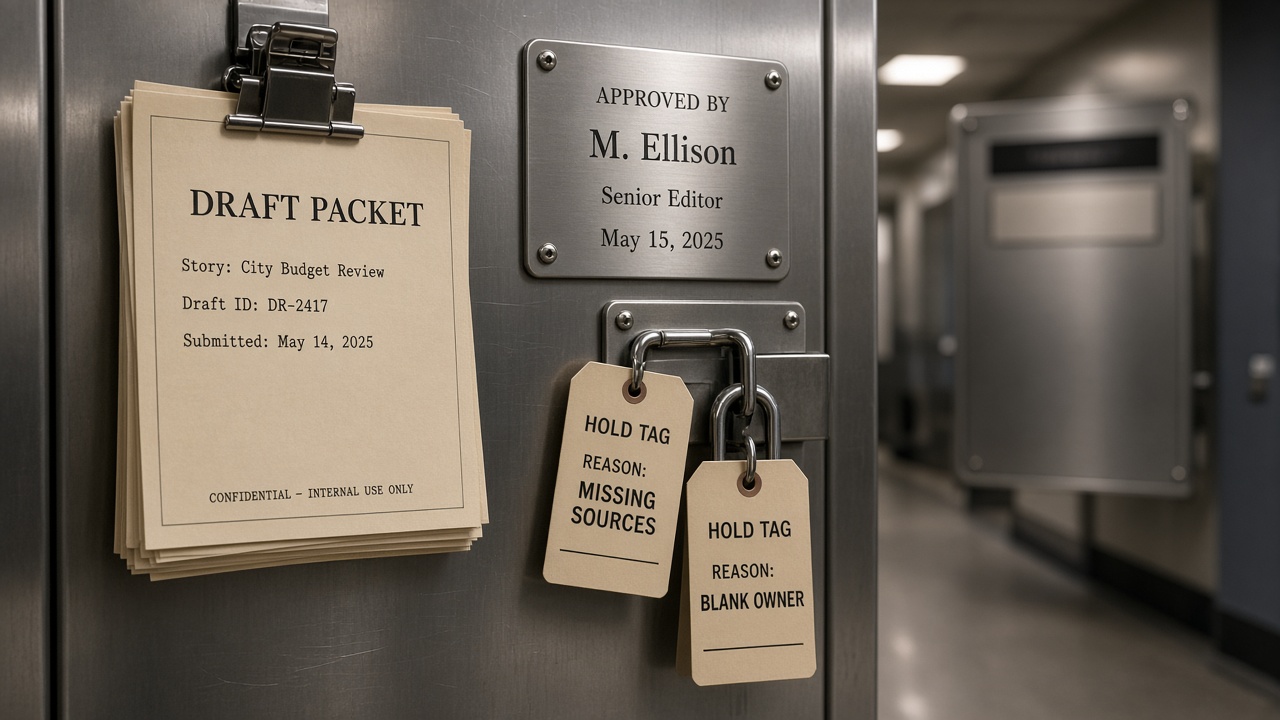
That manual fact-check still fails closed if nobody owns it. A draft passes the publish gate only when a natural person is named on the URL. A model name, a quality score, or an empty approver field is not a signature. Who that person is on a lean team is already set in the sign-off roles guide; this checklist only records that the name is filled.
The audit log stores the prompt, the sources, the reviewer, and the final version, so the publisher can later prove the review, correct the page, or retract it. A claim with no source in the pack does not ship. A later edit is not a substitute for the missing record.
What should force a hold instead of a publish
- A missing source pack
- A missing named approver
- Missing information gain
- Any draft that other AI systems can still retrieve before approval
Keep unapproved drafts out of what those systems can retrieve, rather than trusting a later status filter to hide them. A flag applied after a draft is already retrievable does not undo that exposure.
Named or held — The gate opens only for a named person plus a complete prompt, source, reviewer, and final-version record—and only if unapproved drafts are already out of retrieval.
When AI-generated text must be disclosed under the EU AI Act
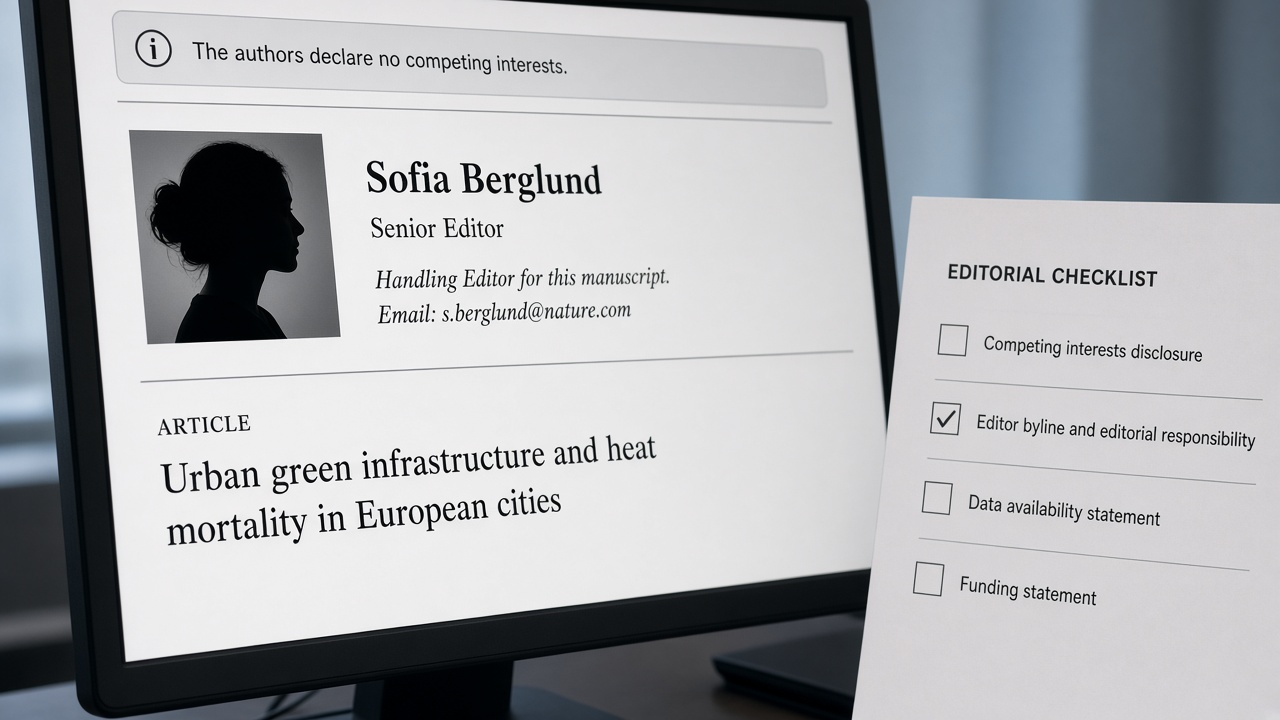
The named person on the log still leaves a disclosure decision. Article 50 transparency obligations apply from 2 August 2026: deployers must label AI-generated or manipulated text published to inform the public on matters of public interest, unless human review or editorial control applies and a natural or legal person holds editorial responsibility.
A human glance does not remove that text-label duty. The exception needs a named person who holds editorial responsibility after review. Record that name on the checklist or show the label—never neither.
Providers have a separate duty. Generative systems must mark synthetic audio, image, video, or text in a machine-readable format so it is detectable as artificially generated or manipulated. Editorial responsibility does not cancel that marking.
If content is generated automatically, Google recommends telling readers how automation was used. That notice is not a substitute for the named editor when the Article 50 exception is the path you choose.
Label or name — From 2 August 2026, public-interest AI text needs a visible label unless a named person holds editorial responsibility after review—and the machine-readable mark still stands either way.
Can AI-generated text be copyrighted, and what must be disclaimed?

Disclosure of how a page was made does not settle ownership. AI-generated text is not copyrightable as original human authorship. On a U.S. copyright application it must be disclosed and disclaimed, and knowingly failing to disclose may be treated as fraud on the Copyright Office.
Should an AI system be listed as the author? No. Scholarly guidance recommends that AI systems not be listed as co-authors, and the same rule belongs on this checklist: a person stays accountable on the byline and in the named-approver field.
Do not treat the article disclosure as covering other outputs. For Merchant Center, AI-generated images need IPTC DigitalSourceType TrainedAlgorithmicMedia metadata, and AI-generated product titles and descriptions must be labeled separately as AI-generated.
Split the record three ways: an article label or a named editor on the page; image metadata on the image file; product-copy labels on the merchant assets. One checkbox does not clear all three, and a blank on any of them holds that asset.
Separate disclaimers — Copyright, byline, image metadata, and product-copy labels are separate gates—article disclosure does not clear the others.
If a live automated article is wrong: correct, take down, and still get a human signature
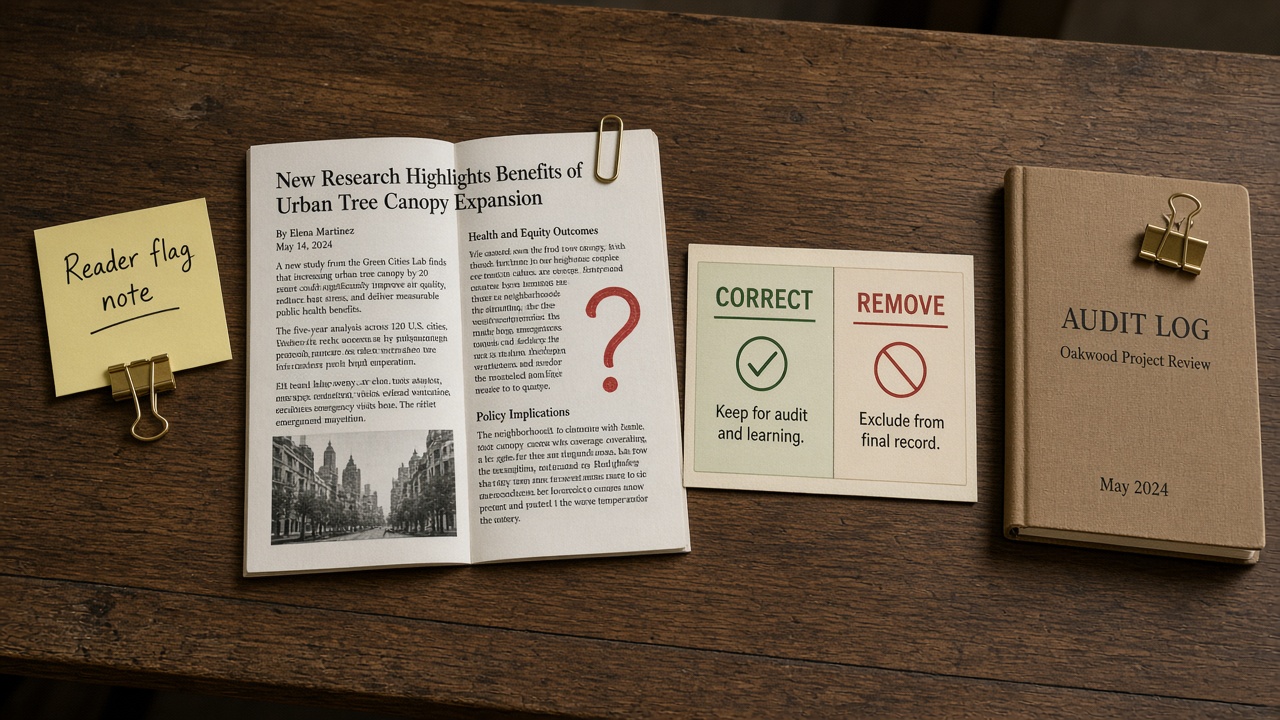
Once the URL is live, a wrong automated article is an incident, not a quiet rewrite. Correct it in place or take it down, and keep the prompt, sources, reviewer, and version in the audit log. One publisher checklist targets incident response within 24 hours, 100% review of high-risk AI outputs, and 95%+ audit completion on lower-risk work.
Do not silent-edit the record away. The retract note should say what changed, who signed, and whether the URL stayed live.
Which checks a stack can run—and which a human must still sign
A stack can refuse blanks: a missing source pack, a missing approver, a missing disclosure choice, duplicate intent, or empty schema and alt fields. It cannot establish truth, judge information gain, or accept editorial responsibility. A human still signs the publish gate. An automated pass on an empty review is a hold, not a publish. Until that signature and the retract path are on the record, the gate holds.
Gate holds — A wrong live article is corrected or taken down with the audit log intact; automation may refuse blanks, but only a named person can sign publish.
AI review and audit targets
Key Takeaways
Before the next automated article goes live, run the checklist on that URL and hold the gate until every field has a named owner and a retract path on the record.
Frequently Asked Questions
You Might Also Like
- Workflows Who Signs Off an Automated Article? Roles for Lean Teams
- Governance Content Governance for AI Publishing: Who Can Approve, Edit, or Kill a Draft
- Workflows Content QA for AI Drafts: The Review Checklist Before You Hit Publish
- Governance Content Approval Workflow: Hold, Edit, or Publish in One Pass
- Governance AI Content Governance Policy: A One-Page Rule Set for Lean Teams