AI Content Governance Policy: A One-Page Rule Set for Lean Teams
Scaling drafts with a model is easy. Knowing who may use it, which inputs are banned, when a named person must reject the page, and what gets logged is the actual policy. That layer is AI content governance. It is not a style guide, a detector score, or another workflow URL. Google does not ban AI-assisted pages. It says generative tools can help research and structure original work, and it also says generating many pages without added user value may violate its scaled content abuse policy. Models predict likely words rather than retrieve facts, so every AI-generated page needs a manual fact-check before it goes live — including titles, meta descriptions, structured data, and image alt text, because those can show up in Search. Scaled content is the problem whether the producer is a model, a script, or a person. Most teams already have unofficial AI use. Microsoft’s 2024 Work Trend Index, as cited by Rework, found that 78% of AI users bring their own tools to work, and the rate is higher at small and medium-sized companies. A policy longer than one page stops being read. The useful floor is three verbs: automate the draft and the log, require a named human to re-check sourced claims, and refuse unsourced numbers, restricted data in public tools, and pages written to rank rather than help the reader.
- AI content governance decides who may use AI, which inputs are banned, when a named human must review, what is logged, and when disclosure is required.
- Google allows AI-assisted pages but requires manual fact-checking of the article and of titles, meta descriptions, structured data, and alt text.
- A lean team’s floor is one page of rules, a data-tier rule, an approved-tools list, and one named owner.
- Automate the draft and the log; require a named reviewer for sourced claims; refuse unsourced numbers, restricted data in public tools, and pages that exist only to rank.
What AI Content Governance Is—and Why a Style Guide or QA Checklist Is Not Enough
AI content governance is the policy layer over the lifecycle of generative output: who may create it, which inputs are allowed, when a human reviews, how involvement is disclosed, and what evidence is kept. A style guide, an AI-detector score, a pre-publish QA checklist, or a workflow URL sits under that policy and cites it. None of those replaces it.
Skip the layer and drafts become hard to trace. A Just Think review of one marketing team's AI workflow sampled 40 assets and found outdated claims, off-brand product copy, an unapproved customer quote, and no record of which prompt produced which page. This is the copyable rule set that the site's sign-off, QA, and workflow hubs link up to.
Policy, not a checklist — Governance is the page those tools cite—who may generate, which inputs are allowed, when a human reviews, and what evidence is kept—not the checklist, detector score, or style guide underneath it.
What Belongs on a One-Page AI Content Policy—and Who Owns It
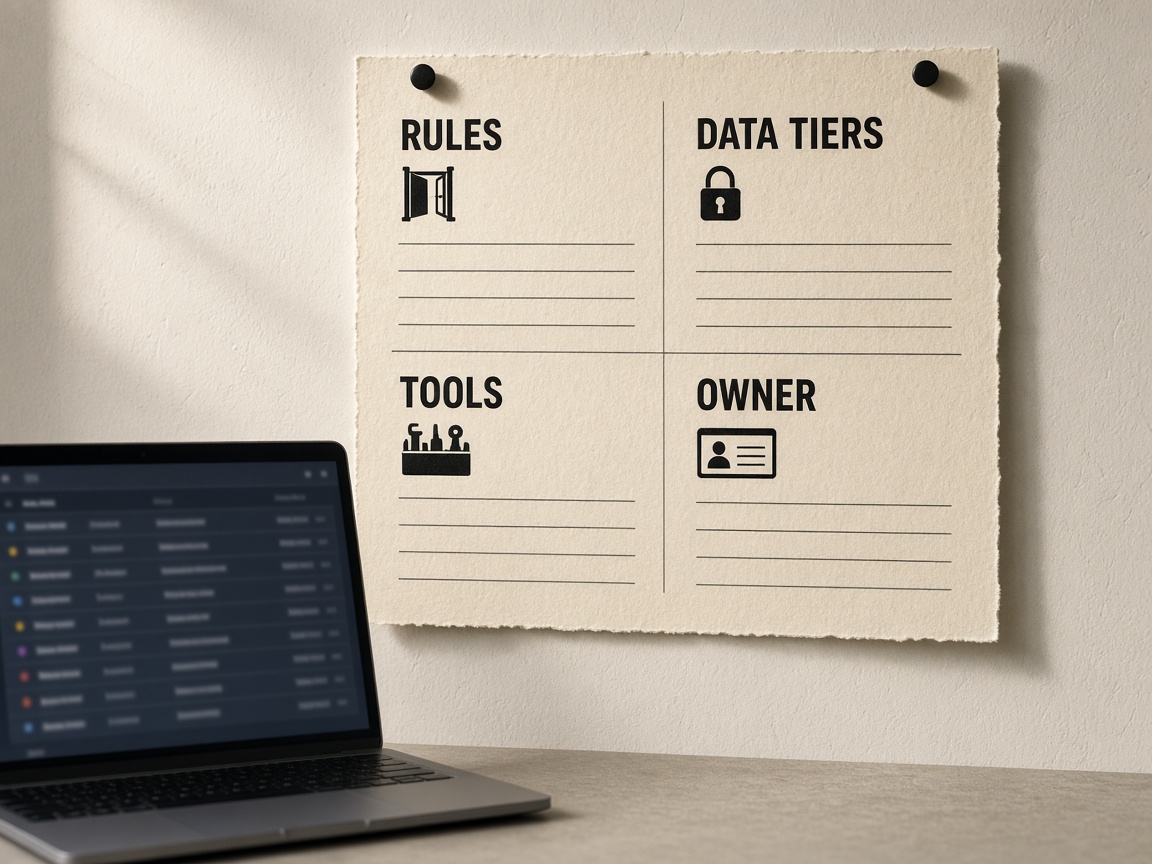
That layer only works if it fits on one page. What belongs there is four artifacts: one page of rules, a data-tier rule, an approved-tools list, and one named owner. If there is no legal or compliance team, that owner is the person who can kill a draft. A company of about fifty people needs only those four until a specific risk fires.
Prefer a data tier to product bans. Name the owner on the page; do not restate sign-off rights here.
One page — Four artifacts and three verbs only work if a named person can kill a draft and the rules stay short enough to be read.
Which Inputs Should Never Go into a Public AI Tool?

The refuse line is specific. Never paste customer or personal data, credentials, unpublished source packs you would not want disclosed, unreleased pricing, or health, legal, or performance facts tied to a real person into a public AI tool.
Write that ban down. An approved-tools list has to be the default, not an IT assumption, because people already use tools the company did not issue.
Those prompts are not a private notebook. In November 2025 a federal court ordered OpenAI to produce 20 million de-identified ChatGPT logs in a copyright case; the users behind them were not parties. If the tool is not on the approved list, the input does not go in. Sensitive tiers stay in approved, access-controlled tools or out of models entirely.
The test — If it is not on the approved list, it does not get the input—and customer, personal, pricing, credential, and person-specific sensitive facts stay in access-controlled tools or out of models entirely.
What a Human Must Check Before an Automated Article Publishes
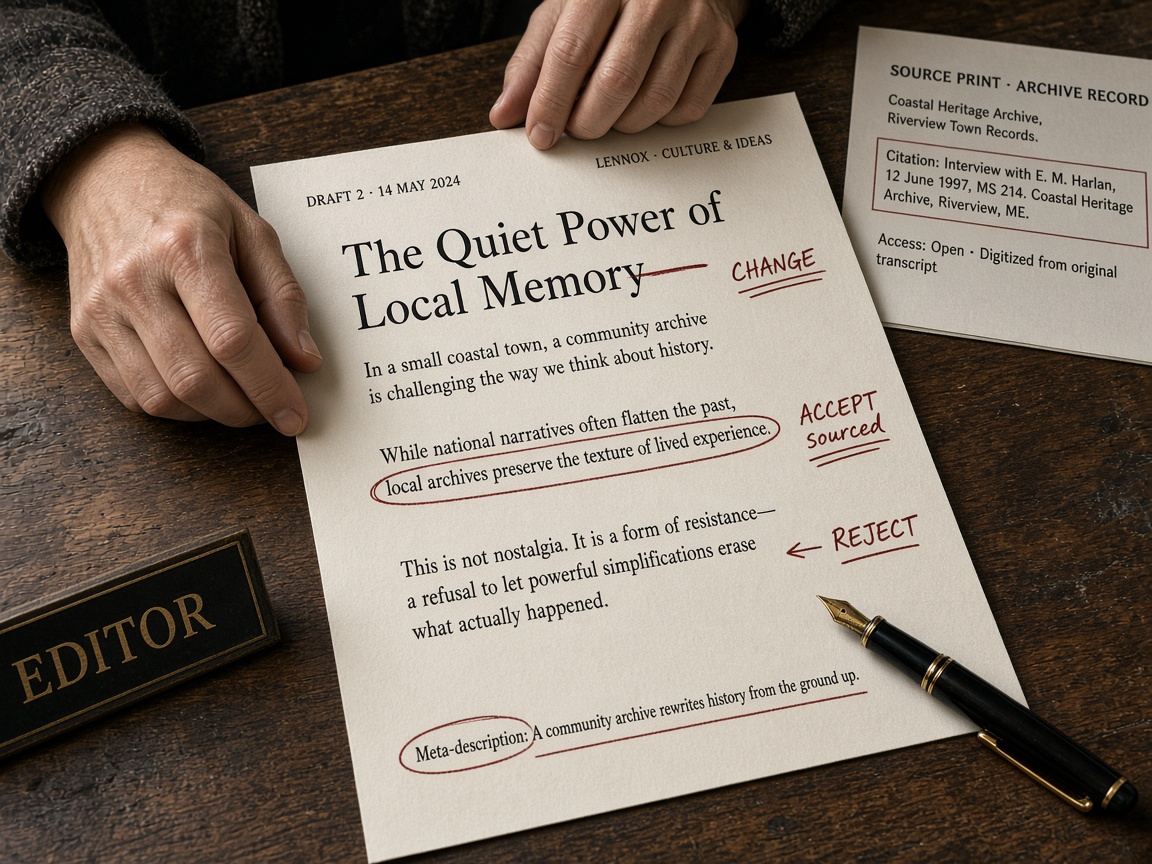
Clearing the input ban does not clear a page for publish. The draft stays on hold until that fact-check is done.
That check is not the body copy alone. Titles, meta descriptions, structured data, and image alt text are in scope, because those strings can appear in Search results and carry the same factual risk as the article.
Spell-check, grammar correction, an AI-detector score, and the author re-reading their own draft do not count. Editorial control means authority to approve, alter, or reject the substance, including fact-checking. If no one with that authority signs off, silence is a hold.
A detector score is not the kill switch. Whether a draft is thin or copied—and how that judgment sits beside useful automation—belongs in Originality Checks That Do Not Kill Useful Automation.
Publish test — A page ships only after a named editor fact-checks the article and its Search-facing fields and can reject the substance—not after a spell-check, a detector score, or a silent reread.
When AI-Written Text Needs a Visible Label
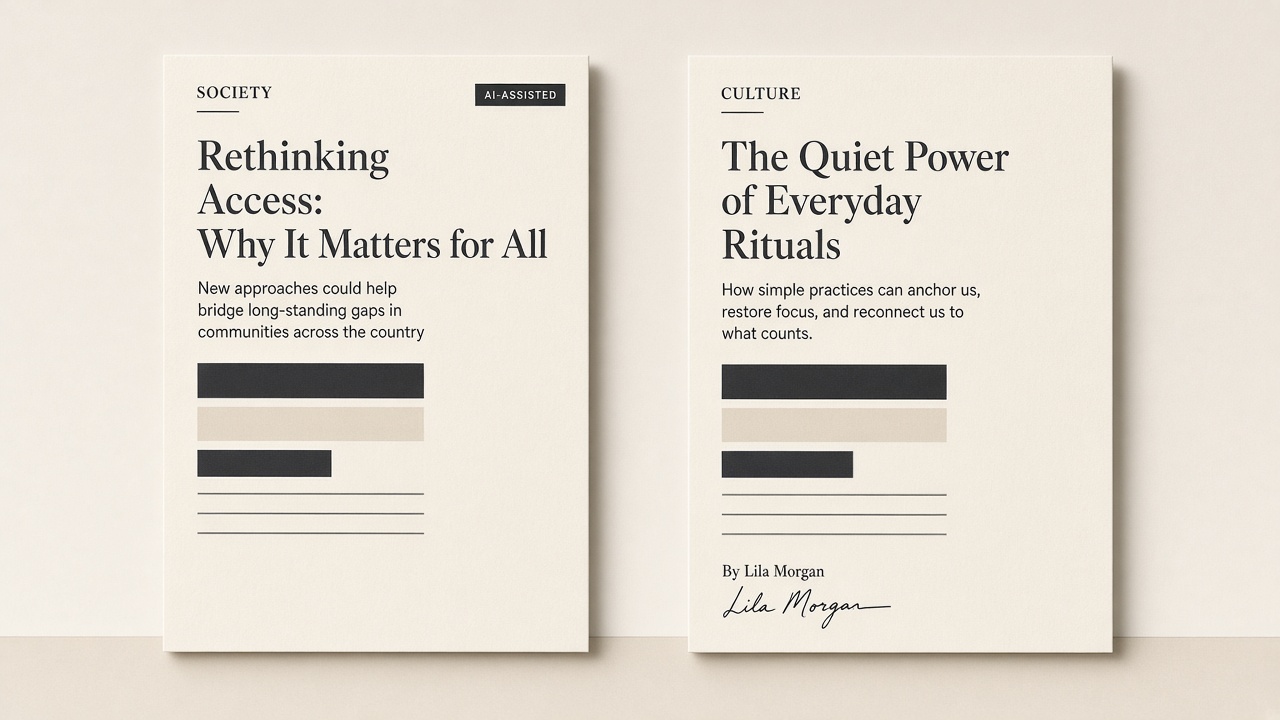
The same human check that clears a page for publish also decides whether readers must see a label. Article 50 transparency obligations apply from 2 August 2026. A visible label on AI-generated or manipulated text is required only when that text is published to inform the public on matters of public interest.
Published text that has had genuine human review or editorial control does not need that label. The reviewer must have been able to change or reject the substance. A substantive AI rewrite after sign-off voids the exception, so the result is treated as AI-generated again. Any model edit to the title, meta description, or summary sends the draft back to hold. That is why the label decision is a logged field, not a vibe. Penalties for the transparency obligations run to €15 million or 3% of worldwide annual turnover, whichever is higher; for SMEs and startups the Act uses whichever is lower.
Log the label — Label public-interest AI text from 2 August 2026. Real editorial control removes the label; a substantive model rewrite after sign-off puts it back and returns the draft to hold.
Does Google Penalize AI-Written SEO Content, or Only Scaled Content Abuse?
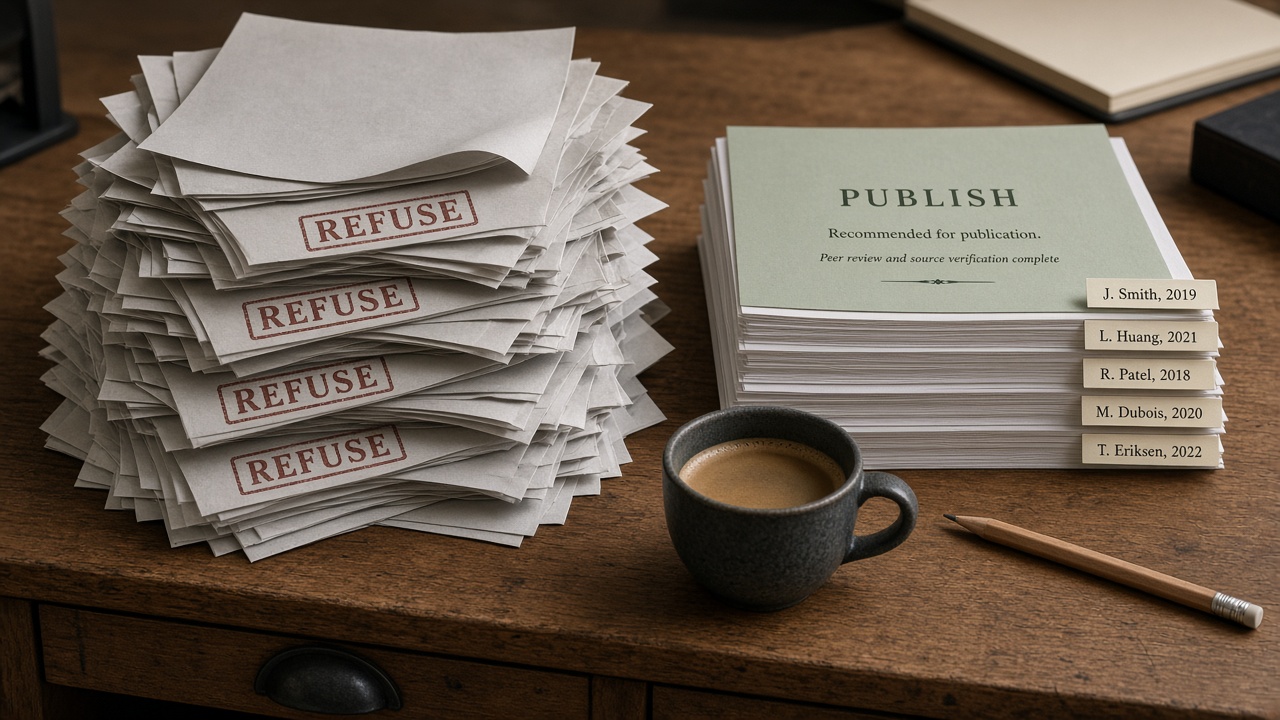
Google’s Search Liaison has said scaled content is a problem whether people, automation, or AI produced it. This page refuses the purpose—pages written only to rank—not the tool.
Volume without a source pack is a hold. Send enforcement to the existing gates rather than rewriting them: the Quality Checklist for AI-Generated SEO Pages is the pass/fail pre-publish check, and originality checks hold thin or copied drafts.
Purpose, not tool — Google does not ban AI-assisted pages. It treats low-value volume—however produced—as scaled content abuse, so the rule set refuses ranking-only pages and holds any batch that has no source pack.
What Belongs in the Provenance Log, and How Risk Tiers Change Approval
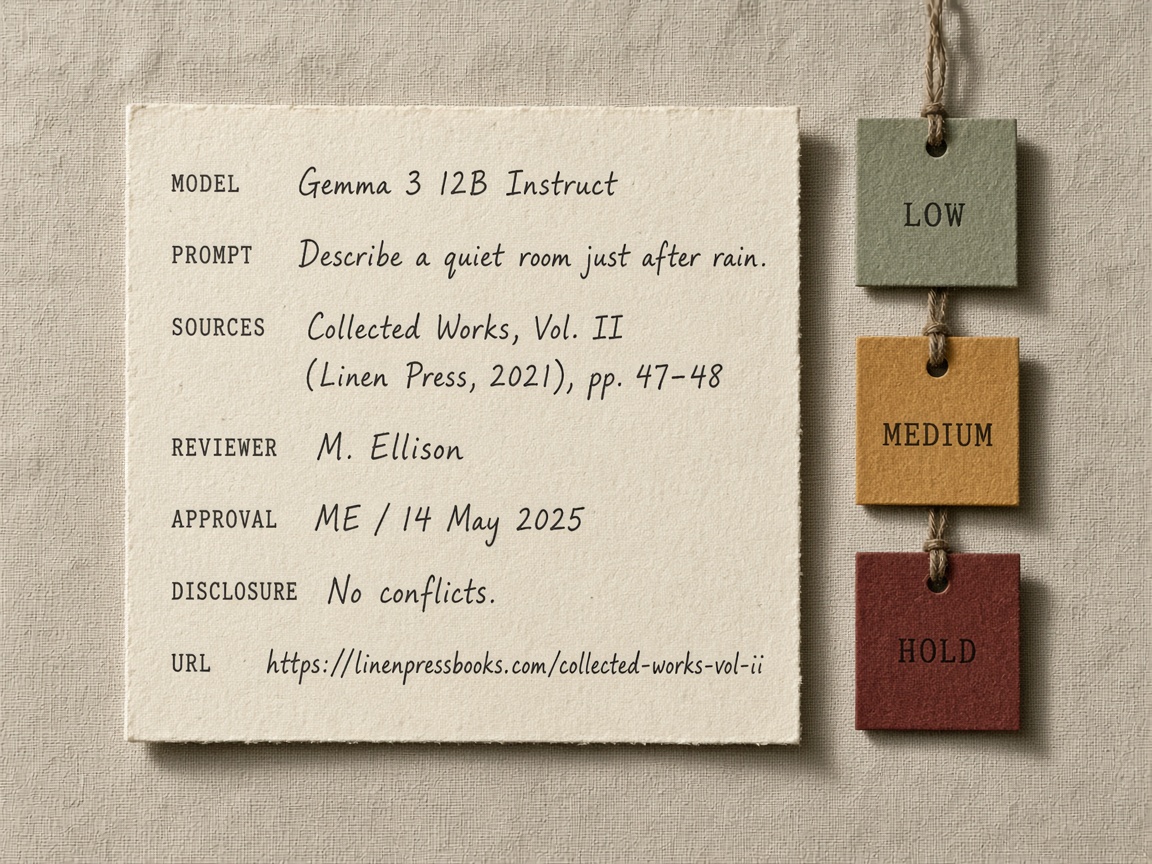
That hold only works if the draft can be reconstructed. Snowflake’s content-governance guidance is direct: don’t assume human review alone is enough. The minimum provenance log lists model name and version, prompt, system instructions, retrieval sources, output, reviewer, approval status, disclosure decision, and final URL or location. A human read without that record cannot reconstruct an error.
Risk tiers change depth, not the existence of a named human. Public SEO drafts are at least medium risk. Regulated topics, pricing, health, and performance claims stay on hold until a qualified person can reject them. The page names the tier; Content Governance for AI Publishing decides who may approve, edit, or kill. Low-risk internal notes can use a lighter edit right. Medium and hold tiers cannot self-approve.
Fail closed. A missing source pack, missing reviewer, or missing disclosure decision means the draft does not publish.
Fail closed — Log model, prompt, sources, output, reviewer, approval, disclosure, and final URL—and treat a missing field as a hold, not a publish.
How Often to Review the Policy, and What Forces an Update
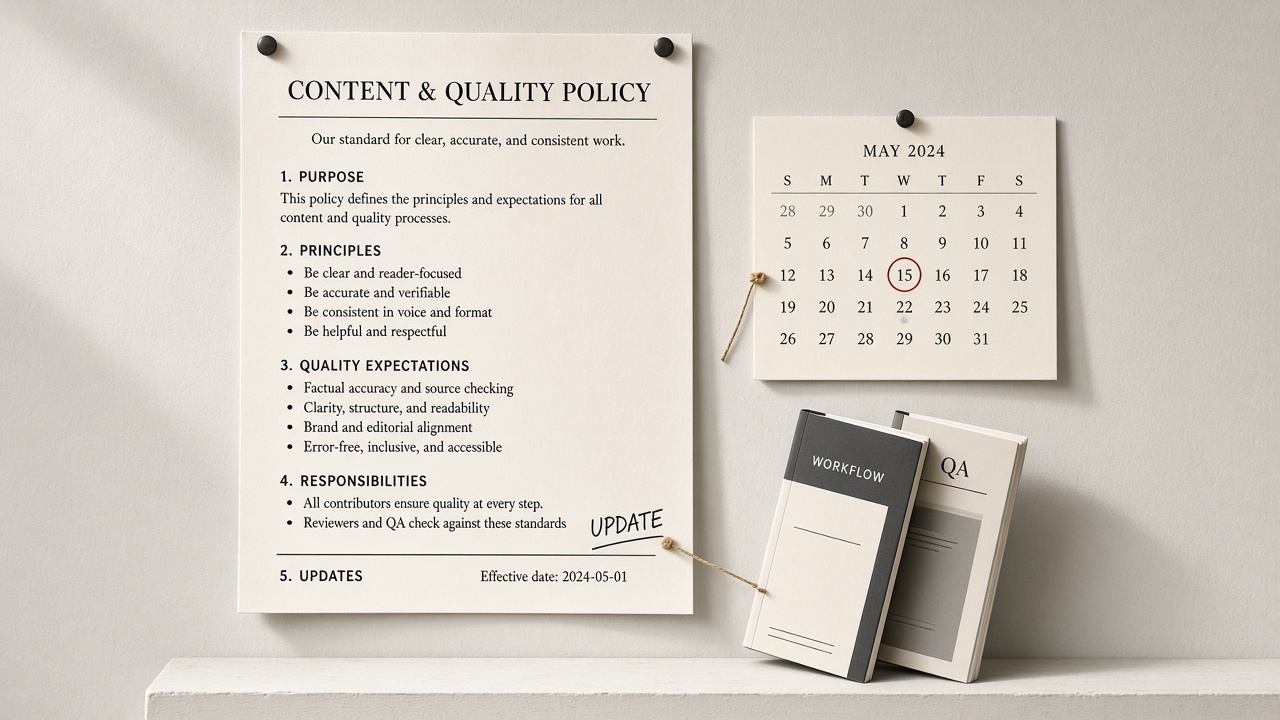
For a lean team, reread the page on a fixed short cycle—quarterly is enough—and rewrite it the same day a trigger fires. A page nobody reopens is decoration.
- An approved tool is added or retired.
- A transparency obligation starts to apply.
- Search spam guidance changes.
- A near-miss publishes.
- A post-sign-off model edit slips through.
This policy is the rule. Content Automation Workflow sequences research, draft, QA, and publish; the quality checklist is the pass/fail gate; sign-off names the human. Each gate cites the page. None of them is the page. Pin the one-pager where the workflow already stops for a human, so the rule is used at the hold rather than filed.
Reopen it — Quarterly reread plus a same-day rewrite when a trigger fires keeps the page in use; every gate cites that rule, and none of them replaces it.
Key Takeaways
Pin this one-page rule set where sign-off, QA, and your publishing workflow already link, and name the owner who can kill a draft before the next automated page goes live.
Frequently Asked Questions
You Might Also Like
- Governance Content Governance for AI Publishing: Who Can Approve, Edit, or Kill a Draft
- Workflows Who Signs Off an Automated Article? Roles for Lean Teams
- Workflows Content QA for AI Drafts: The Review Checklist Before You Hit Publish
- Automation What Is Autoblogging? The Fail-Closed System Lean Teams Can Scale
- Workflows Content Ops for Lean Teams: Roles, Handoffs, and SLAs