Content QA for AI Drafts: The Review Checklist Before You Hit Publish
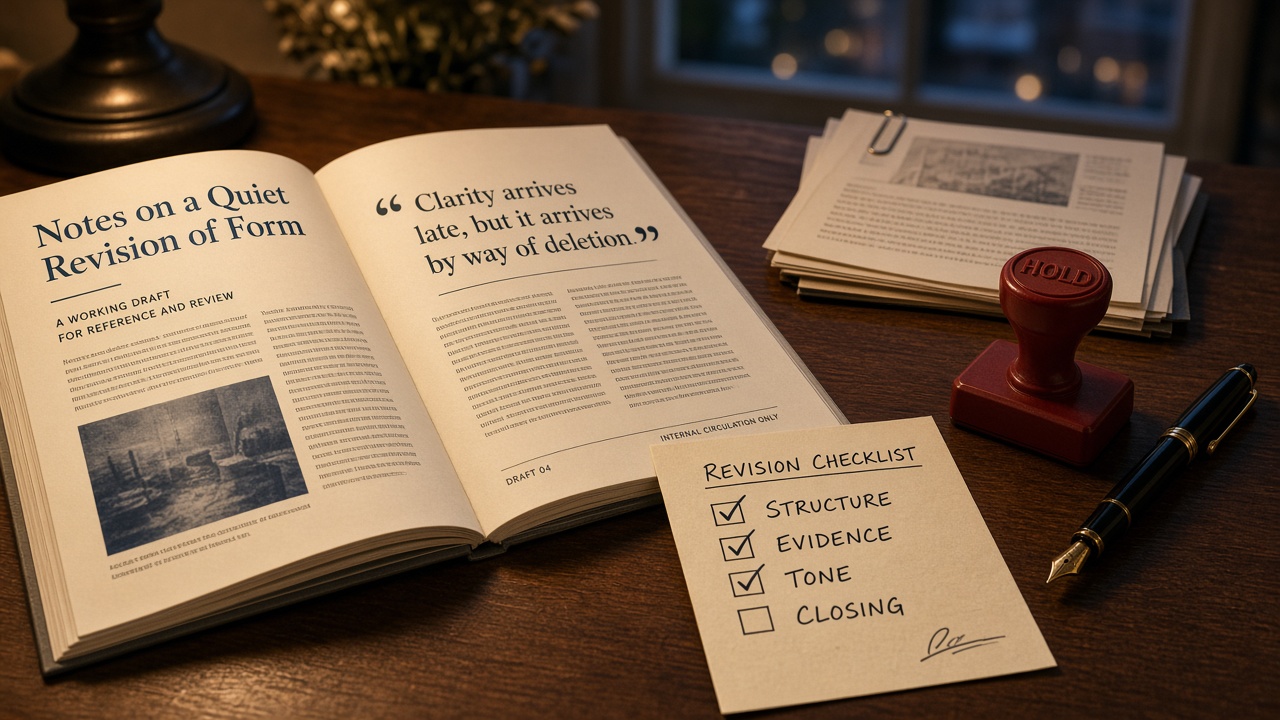
A fluent draft is not a passed draft. Content Marketing Institute reports that 89% of marketers use generative AI tools and 44% use them to write drafts, yet only 4% of B2B marketers report high trust in that output. The gap is a review problem, not a detector problem. In McKinsey's 2025 State of AI survey of 1,993 respondents, summarized by Information & Data Manager, 51% had seen at least one negative consequence from AI use, and inaccuracy was the most common, at 30%. Google Search Central is clear that ranking systems reward original, high-quality content, and that quality matters more than how the content was produced. Appropriate use of AI is not against the guidelines, and using it does not confer a ranking advantage. What the spam policies do forbid is automation used mainly to manipulate rankings, including generative tools used to make many pages without adding value for users. Of experience, expertise, authoritativeness, and trustworthiness, Google says trust is the most important — and trust is something a reviewer can check, not something fluency implies. The checklist that follows is fail-closed. Three binary gates decide the page: every material statistic, quote, product claim, and link traces to a source the reviewer opened; the draft has real information gain, not a polished restatement of what already ranks; and a named person can say hold. Pass all three and you publish. Fail the facts or the usefulness and you rework. Hit a blocking risk and you hold. Detector scores are not that decision.
- Google rewards people-first quality, not the production method; many pages with little added value are scaled content abuse.
- Only 4% of B2B marketers report high trust in generative AI output, while 44% of marketers already use it to write drafts.
- A fluent draft fails until every material claim traces to a source the reviewer opened.
- AI-detector scores are not the publish gate.
- The only outcomes are publish, rework, or hold, with a named human sign-off.
Why a Claim-Level Checklist Beats a Detector Score

A fluent draft can still be the wrong thing to publish. Helpful, original content that satisfies E-E-A-T may do well; content that does not may not. A detector never makes that distinction.
Extensive automation across many topics is a warning sign of search-engine-first content, not proof that one assisted draft is unsafe. This review still has to judge the page in hand.
This piece is not the site’s existing pass/fail quality checklist. That gate asks whether a publishing program is manufacturing pages to game rankings. This one is the claim-level review an operator runs on a single draft before it goes live.
A weighted rubric can still ship an unsourced statistic if the rest of the score looks fine. A detector score can do the same: fluency and a “human-like” reading say nothing about whether a figure, quote, product claim, or link was opened and checked. Here, a material claim that does not trace to a source the reviewer opened is a fail. The page is reworked or held. It does not average its way to publish.
Fail closed — A detector score or a weighted rubric is not a publish gate. Every material claim has to trace to a source the reviewer opened, or the draft is reworked or held.
The Trust Gap in Drafts You Already Automate

That claim-level bar is not a theoretical preference. It matches a trust distribution that never caught up with tool use. Content Marketing Institute research finds that 67% of B2B marketers report medium trust in generative AI outputs and 28% report low trust. Quality judgments are just as restrained — only 17% of B2B marketers rate AI-generated content as excellent or very good.
The gap is how the work is run, not whether a model can sound fluent. Most B2B teams still use AI ad hoc (54%). Only 19% say it is integrated into daily workflows. Generative AI usage guidelines exist at 38% of organizations, rising to 49% among the most successful and falling to 29% among the least successful. Guidelines help, but a guideline that never names a reviewer still leaves the draft unowned.
Forty-five percent of B2B marketers lack a scalable model for content creation. Automation that publishes a fluent page without a person who opened the sources is not that model. The checklist is the trust mechanism: a material claim is kept only when it traces to a source the reviewer opened, and the page is reworked or held when it does not. It is not another tool score standing in for judgment.
Trust gap — Draft generation is already widespread and high trust is rare, so a named, fail-closed review is what makes automation a content model rather than an unowned publish path.
Orgs with AI Usage Guidelines
Three Fail-Closed Gates Before You Publish

That trust mechanism is not another score sitting on top of the draft. It is three gates the reviewer runs on the page already in hand, each one pass or fail, before anyone argues about voice.
A draft is publishable only when all three hold. Miss one and the outcome is rework or hold — never a soft pass.
- Every material claim traces to a source the reviewer opened. That covers a statistic, a quote, a product claim, and a link. If the source was not opened, the claim comes out or the page is held.
- The page adds information a generic rewrite would not: a decision rule, a constraint, a worked example, or a step the brief specifically asked for. Fluency is not information gain.
- A named person signs off. Not a role label and not “the team.” One name on the log owns the decision to publish.
One fail blocks the line
Binary means a single blocking fail stops the line. Style, tone, and a high average score cannot override a failed gate. The only outcomes are publish, rework, or hold, and every fail is logged back into the brief so the next draft does not repeat it.
A one-person stack can run all three without a separate SEO team. Gate one is the source-opening pass while the research notes are still open. Gate two is a comparison against the brief: what would a generic rewrite already say? Gate three is the same person, or a designated editor, putting a name on the decision. None of those steps needs a second department.
This checklist sits inside the research-draft-QA-publish sequence already in use. It is the QA decision inside that sequence, not a second pipeline beside it.
Fail closed — One unsourced claim, no added information, or no named sign-off means rework or hold. Style never publishes a failed gate.
Fact-check every material claim before the draft can pass

The three gates only hold if the first one is a procedure, not a feeling about the prose. A fluent SEO draft can still carry a statistic, price, or product claim nobody opened. This pass is claim-level: you do not grade the page as a whole and then hope the risky sentences are fine.
A material claim is anything a reader could treat as a fact and later find wrong. That includes statistics, quotations, product capabilities, prices, dates, legal or medical assertions, and any link presented as proof. Brand voice, transitions, and opinions your team already owns are not material claims. If removing the sentence would change what the page asserts about the world, it is in scope.
The fail rule is binary. If the reviewer cannot open a source that supports the sentence, the claim comes out or the page is held. A confident tone, a detector score, or a nearby citation that almost matches does not clear it. Log the unsupported sentence back into the brief so the next draft does not regenerate the same assertion.
That block is justified by how AI use actually fails. McKinsey's 2025 State of AI survey put cybersecurity concerns at 10% and regulatory compliance issues at 8%, both behind inaccuracy as reported downsides. A soft warning leaves the most common failure mode on the page.
Fail closed — If you cannot open a source that supports the sentence, the claim is removed or the page is held. Inaccuracy is the failure this gate exists to stop.
Originality Checks That Leave Automation Intact
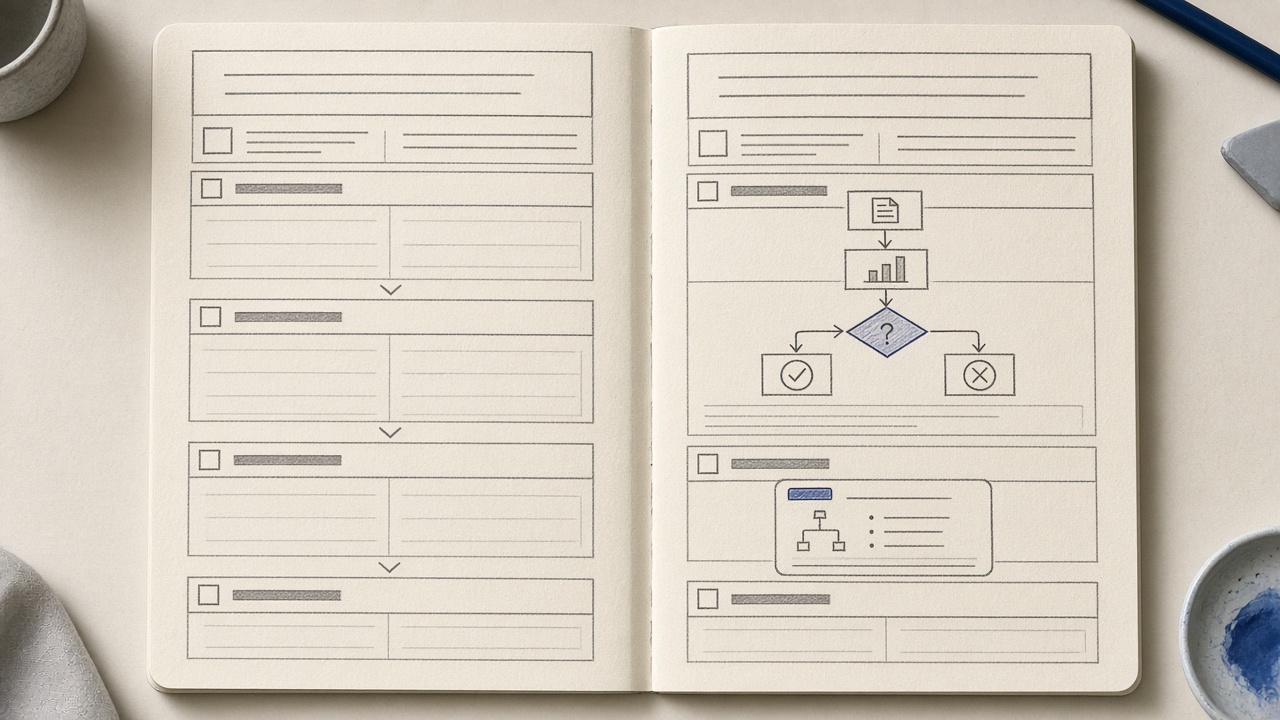
A claim that survives the source check can still fail the page. Once every material number has been opened and matched, the next gate is originality: whether this draft gives the reader something they could not already take from the top results.
Treat originality as added value, not a synonym pass. It shows up as a worked example, a decision rule the reader can apply, first-hand process detail, or a comparison that states what was actually compared. A fluent rewrite of points already ranking is not information gain, and it does not clear the gate.
Three checks that do not force a full rewrite
- The page answers the query in the first screen, not after a warm-up that restates the topic.
- It adds at least one non-obvious step: a constraint, exception, or sequence a generic outline would skip.
- It does not turn the brief back into the article. If the headings are the brief with connective tissue, hold the page.
Automation stays in the loop. The model still drafts structure and prose. Before the page can pass, a person — or a short prompt aimed at the missing block — inserts the information-gain piece: the example, the rule, or the process detail. If that block is absent or generic, the outcome is rework or hold, the same as an unsupported claim.
The thin-content contract for the publishing system lives in the automated-blog guardrails article. This check stays at draft level: one page, one added-value test, before anyone signs off.
Information gain — Originality is a specific added block a reader could not lift from the top results — a worked example, decision rule, first-hand step, or sourced comparison — not a synonym rewrite and not a reason to scrap the automated draft.
A Detector Percentage Is Not a Publish Decision
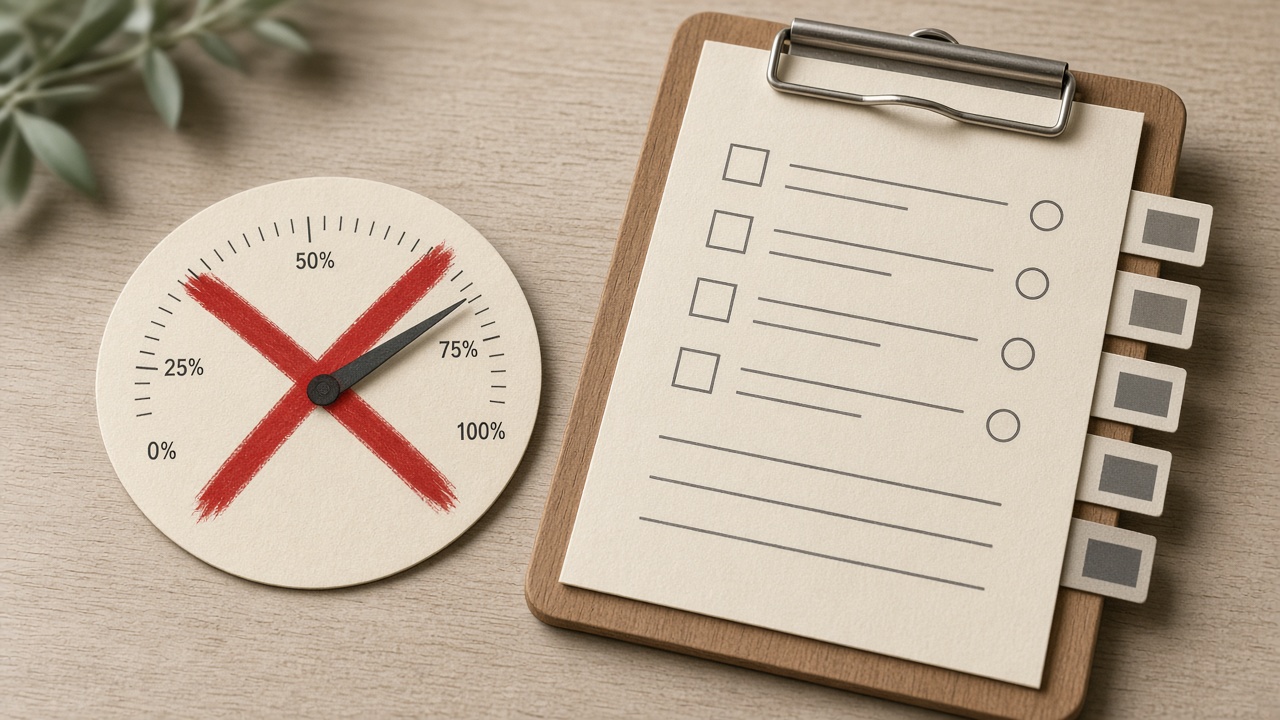
Clearing the originality gate still leaves a shortcut that looks rigorous: score the draft and let the percentage decide. It does not. A detector reading describes how a model classified the prose, not whether a material claim survives a source you opened.
Graphite's May 2026 Common Crawl study of 55,400 English articles put primarily AI-generated articles at 49.6% in Q1 2025, 50.9% in Q4 2025, and 49.9% in Q1 2026 — a plateau near half of new articles across five quarters. That share is a publishing fact, not a quality score you can apply to one edited draft.
The measurement limits are the part an operator has to keep. On pre-ChatGPT articles, Graphite recorded false-positive rates of 1.844% for Pangram, 1.836% for Copyleaks, and 1.355% for GPTZero. Those checks were not run on the work this review actually sees: the study did not test detector accuracy on human-edited AI first drafts. A low false-positive rate on older, fully human pages does not license a pass or a hold on a revised draft.
Graphite also finds that primarily AI-generated articles largely do not appear in Google and ChatGPT, and hypothesizes that the plateau exists because those articles do not perform well in search. Visibility is already tracking usefulness, which is the same distinction the first two gates enforce — not a classifier percentage.
The operating rule is therefore fail-closed on the checklist, not on the detector. Do not hold a page because a score looks high, and do not publish one because a score looks low. Hold when a claim is unsupported, the page adds nothing a generic rewrite would not, or no named person has signed off.
Publish rule — A detector percentage never publishes or blocks a draft. Unsupported claims, missing information gain, and a missing sign-off do.
False Positives on Human Text
A Named Person Signs Off — a Tool Cannot

The third gate is not another reading of the prose. It is a person who can be named on the record.
The operator is enough. You do not need a separate board to approve one article. You do need a name, the date, the draft version, and a note of which gates passed. A model or a workflow status can prepare that record. It cannot be the approver. If the only signature is a tool marking itself complete, the page has not cleared the gate.
Google says E-E-A-T itself is not a specific ranking factor. Sign-off is an editorial control that makes trust inspectable — who stood behind the claims — not a ranking hack.
Publish, rework, or hold
Only one outcome is publish, and only when the required checks passed. Rework if the evidence or the usefulness is still weak but fixable in this draft. Hold for a blocking risk, such as unverified data, and leave the page unpublished until that risk is gone.
Disclosure sits beside that decision, not in place of it. Add an AI or automation note when a reader would reasonably ask how the page was created. The note does not replace opening sources or signing the record.
On a one-person desk, hold the same day for any of these:
- An unsourced statistic
- A broken or unverified link presented as proof
- No information gain beyond a generic rewrite
- No signer available that day
Waiting is cheaper than publishing a claim nobody opened.
Sign-off — A named person — the operator is enough — records the date, version, and gates passed. A tool cannot approve the page, and an automation note does not substitute for that signature.
Log Every Fail Into the Next Brief

A named sign-off closes the draft, not the system. When the page is reworked or held, write the miss down before anyone starts the next run. The log needs four fields: which gate failed, the sentence or section, the source gap, and the brief line that let the claim through. Without that last field, the same instruction will generate the same unsupported line again.
Those three operator metrics are diagnostic. A rising hold rate means the brief is still inviting claims nobody can open. A stubborn unsupported-claim rate means a banned type was never written into the prompt. A long time-to-sign-off usually means the reviewer is hunting sources the brief should have required up front. Do not use any of them to grade the person who drafted the page.
Keep this log inside the fail-closed brief and the brief-to-publish workflow you already run. This checklist is the single-draft test, not a second URL that restates the same gates. A miss goes back into the brief, then waits for the next run.
Close the loop — A fail is useful only if it changes the next brief — required sources, banned claim types, and the information-gain prompt — before another draft is allowed to run.
Key Takeaways
Run the next AI draft through the three gates before you publish, and log every fail into the brief so the following run starts stricter.
Frequently Asked Questions
You Might Also Like
- Automation Fail-Closed SEO Briefs: The Publish Gate Autoblogging Needs
- Guides Quality Checklist for AI-Generated SEO Pages
- Workflows Content Automation Workflow: Research, Draft, QA, Publish
- Automation Automated Blog Posts: Quality Guardrails That Prevent Thin Content
- Workflows Autoblogging Briefs That Rank: Decision Rights for Writers and AI