Content Approval Workflow: Hold, Edit, or Publish in One Pass
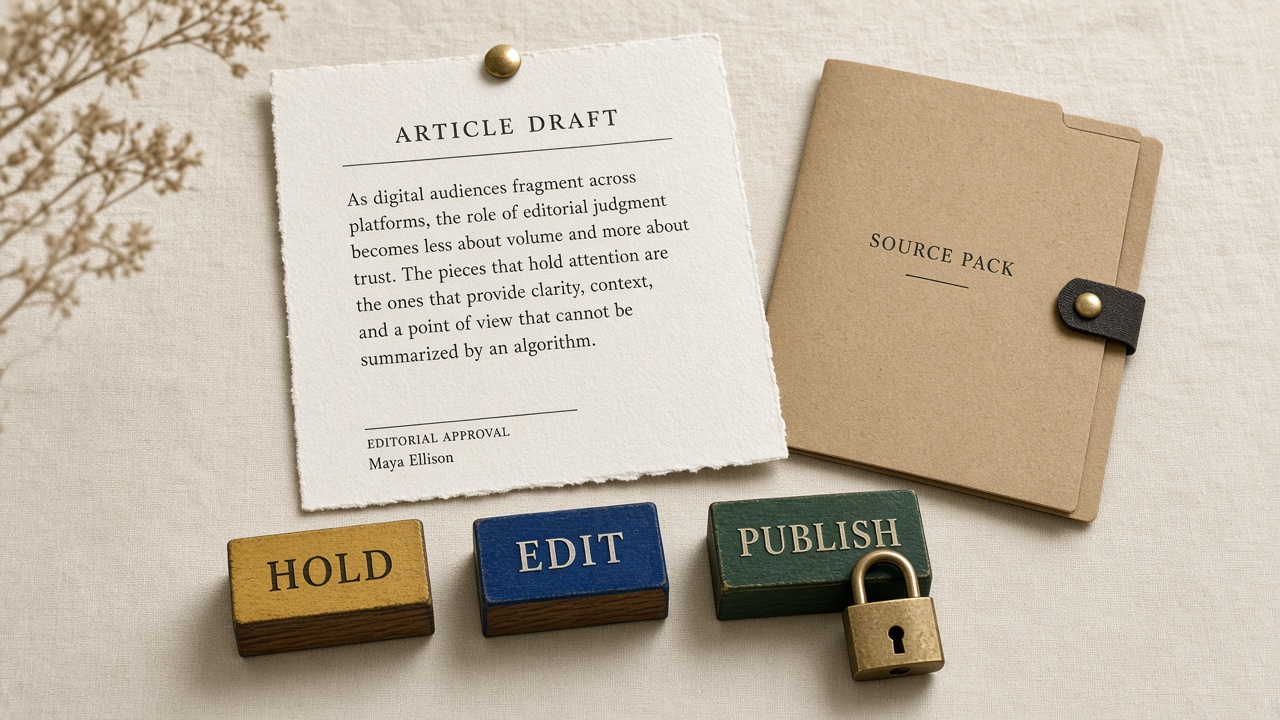
Drafting is no longer the slow part of content operations. Contentoo’s 2026 report cites internal review and approvals as the top bottleneck for 45% of teams, ahead of getting a clear brief (41%) and producing a first draft (40%). A separate 2026 Knak finding, also reported by Contentoo, puts approvals and sign-off as the single biggest on-time launch challenge for 47% of marketing teams.
A written process does not fix that queue. Contentoo found that 65% of teams say they have a fully documented content workflow, yet 76% of those same teams still regularly publish content they know is not good enough. AI has not closed the gap: 85% of teams already use it regularly, 95% always or usually keep a human review step, and 80% still admit they ship work they know is weak.
Google’s Search Central guidance, last updated 1 October 2026, is explicit about why an unread draft cannot be the default. Generative models predict likely word sequences rather than retrieve facts, so output can hallucinate, and Google says it is critical to manually fact-check and review all AI-generated content before publishing—including titles, meta descriptions, structured data, and image alt text. Generating many pages without adding value for users may also violate Google’s spam policy on scaled content abuse. The gate that follows is one named approver, one pinned draft, and three recorded outcomes: Publish, Edit, or Hold.
- Review and approval, not drafting, is the bottleneck most teams actually hit.
- A documented workflow still fails if silence or a passing score can publish an unread draft.
- Google requires manual fact-checking of AI content and of the metadata that can appear in Search.
- The working decision is only Publish, Edit, or Hold, recorded by one named human on a pinned draft.
- Missing evidence, an unnamed owner, or unresolved risk is a Hold, not permission to ship.
What a Content Approval Workflow Is, and How It Differs From Creation
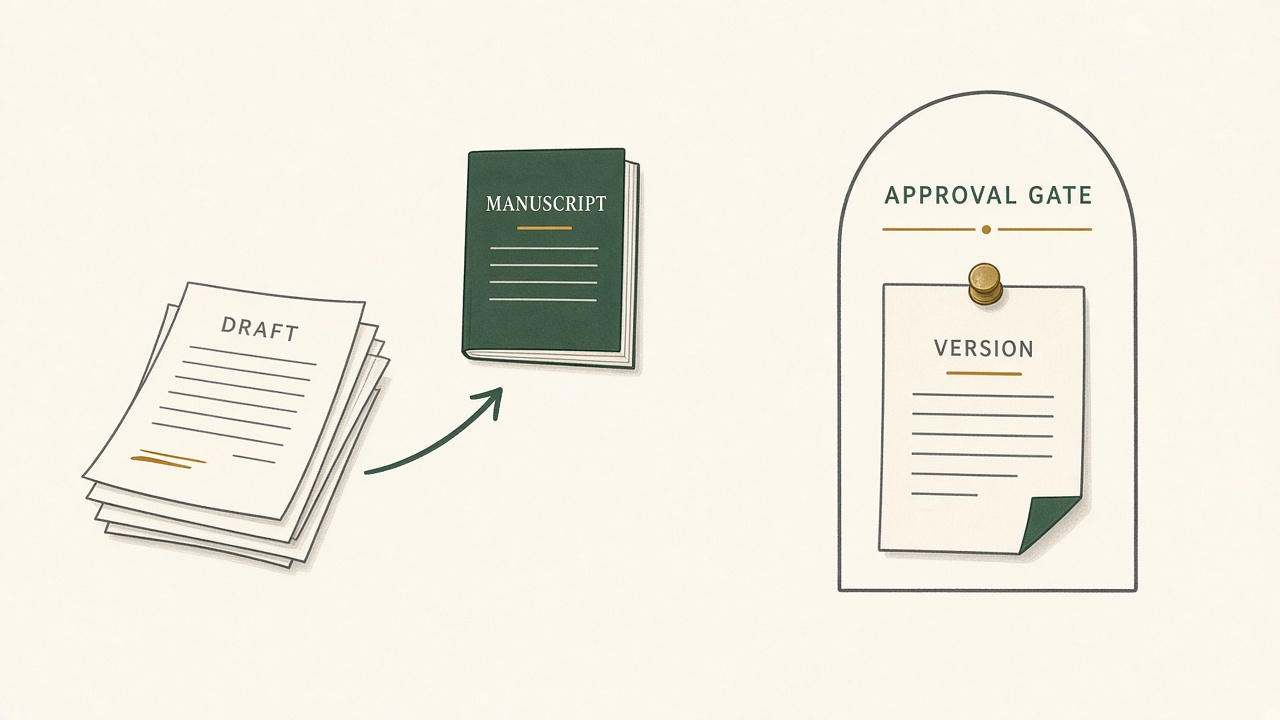
A content approval workflow is the gate after a draft exists: one pinned version, one named human, and a recorded Hold, Edit, or Publish. Creation is how the draft is made. Approval is whether this version may ship.
Review finds issues and advises—is this good enough to publish? Approval is the binding decision to advance, hold, or return. Do not collapse them into one confused pass.
A written workflow is not a working gate. 65% of teams say they have a fully documented content workflow, yet 76% of those same teams still regularly publish content they know is not good enough. Only 43% describe their workflows as standardized and automated. Briefs, drafting, and QA belong in the brief-to-publish operating guide—not here.
The gate — Approval is a recorded Hold, Edit, or Publish on a pinned draft by one named human—not the act of creating or reviewing it.
What Hold, Edit, and Publish Mean in One Pass
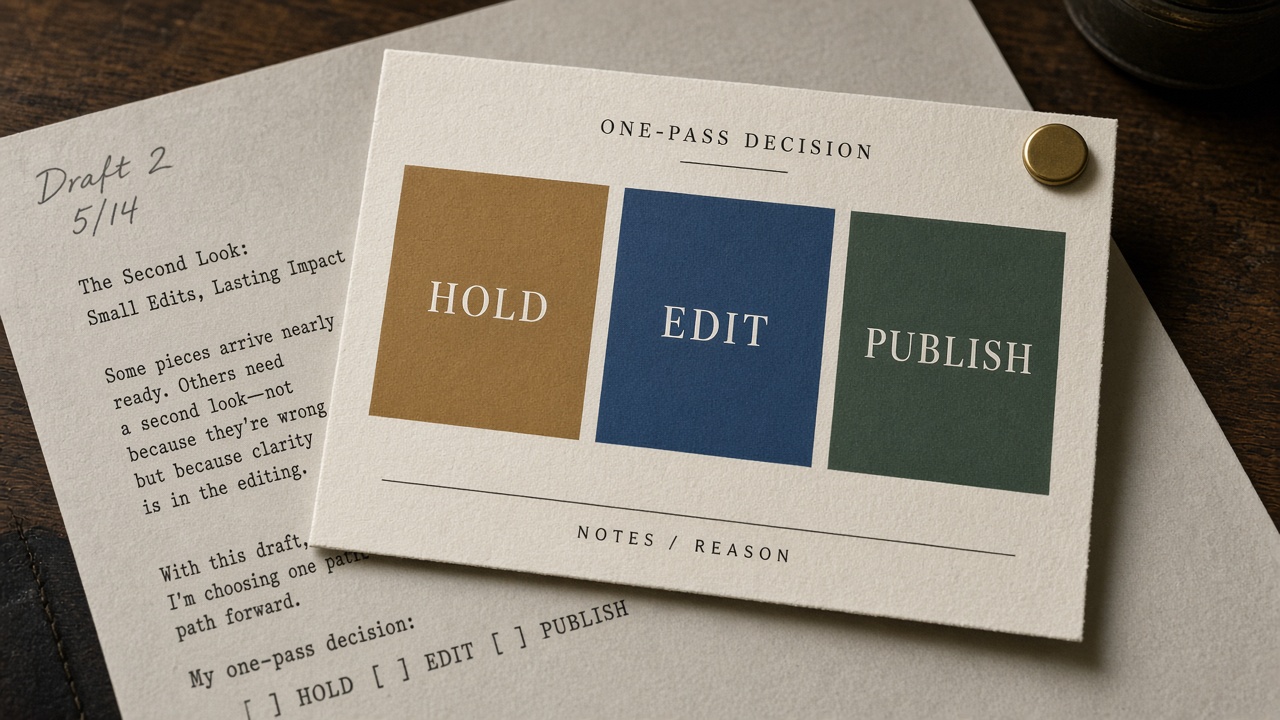
On that pinned draft, one pass allows only three recorded outcomes, each written down with a reason. Publish means the required gates have already passed. Edit — some editorial SOPs call this rework — means a defined change is named and the draft comes back. Hold means the draft stops until the missing evidence, owner, or risk is resolved.
Hold is not a softer edit. Edit continues after a named change. Hold stops the asset. An automated draft should be held, not patched in place, when the source pack is missing, the owner is unclear, or a claim is still risky. Silence and a quality score are holds too. None of them is permission to publish unread AI content.
Put a three-line card on the draft so the outcome, the test that triggers it, and what happens next are visible in one place.
Which person may write that card is set in the sign-off roles guide. This pass only requires that one named human records the outcome.
One pass — Publish, Edit, and Hold are the only recorded outcomes on a pinned draft. Hold stops the asset; silence, a score, or a missing source pack is a hold, not a green light.
Can AI Approve Its Own Article, or Only Flag Issues?
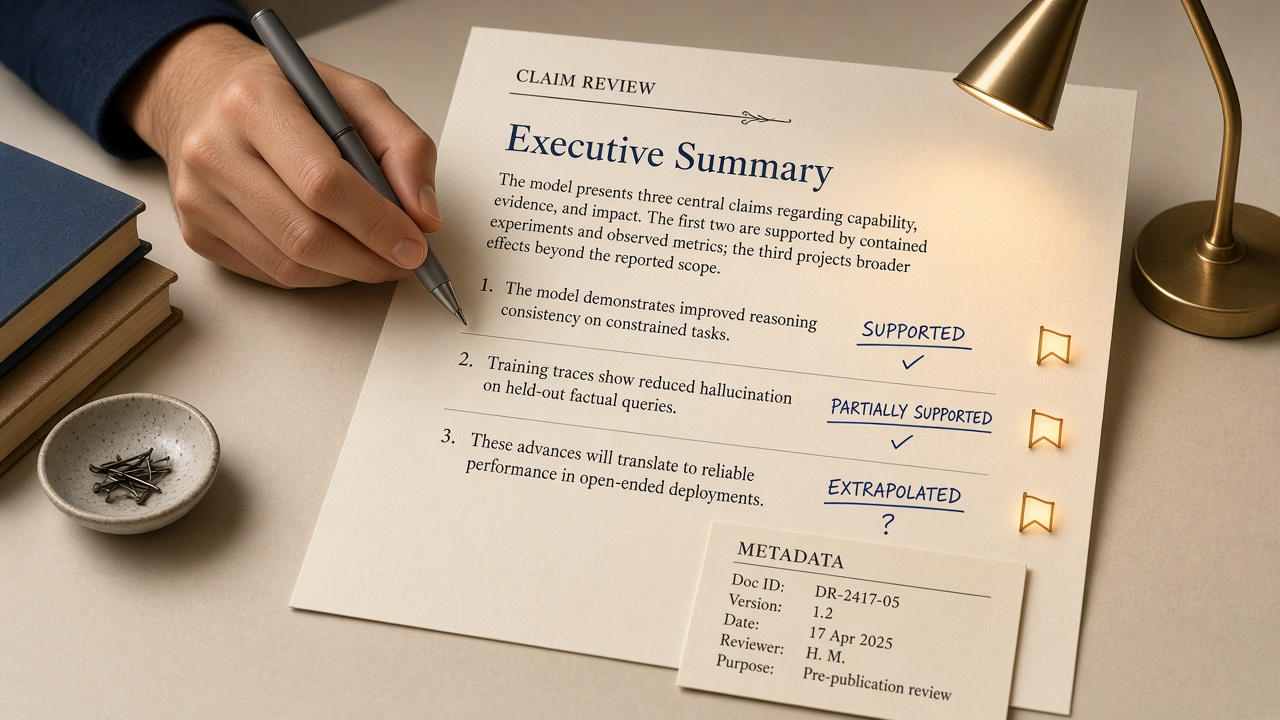
Those three recorded outcomes only count if a person makes them. AI may flag unsupported claims, tone problems, and missing sources. It must not grant final approval: it cannot reliably judge source quality, brand risk, or how far a claim may go.
Google's Search Central guidance, last updated 1 October 2026, says it is critical to manually fact-check all AI-generated content before publishing, because generative models predict likely word sequences and can hallucinate. That review covers titles, meta descriptions, structured data, and image alt text, not only the body.
Generating many pages without added value for users may violate Google's scaled content abuse policy. A nominal human step is not enough. Contentoo found that 85% of teams already use AI regularly and 95% always or usually keep a human review, yet 80% still publish work they know is not good enough. Fact-check the claims and the metadata yourself before anyone records Publish.
Flag, don't ship — AI may flag claims, tone, and missing sources. It cannot approve its own article; a named human still has to fact-check the draft and its metadata.
How Many Approvers a Lean Team Needs When the Reviewer Goes Silent
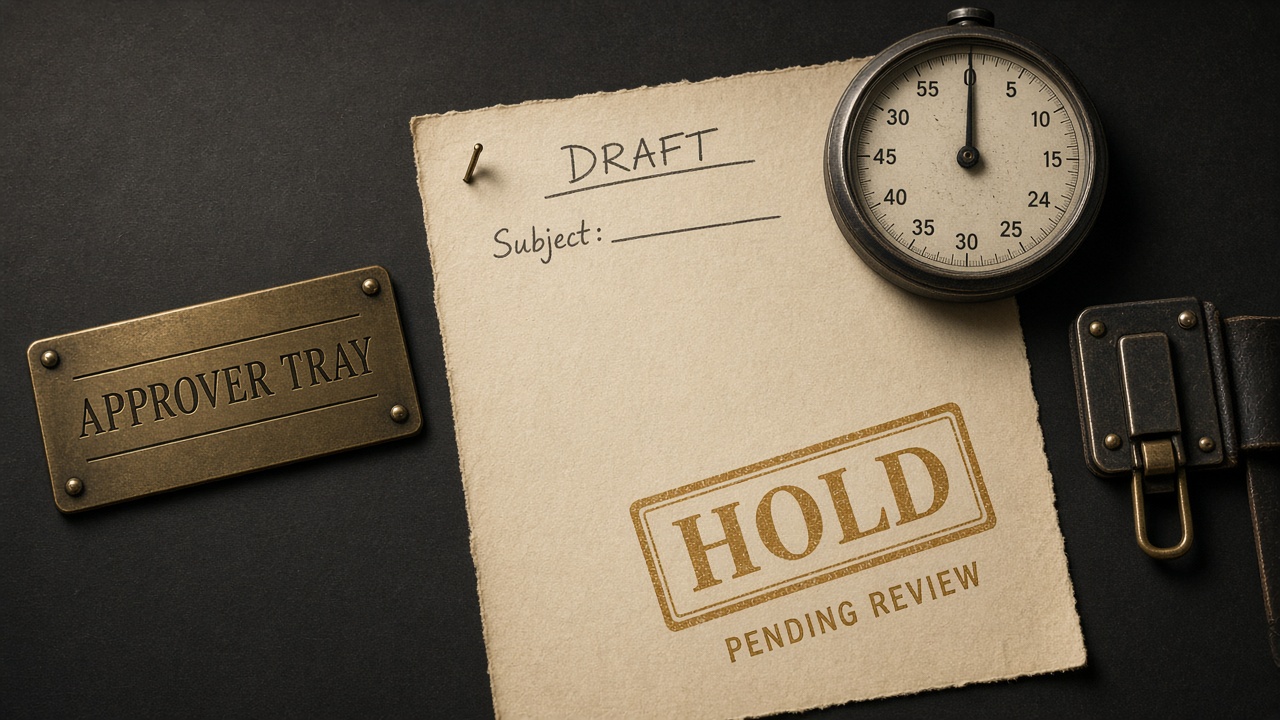
Because a model cannot grant that approval, a lean team needs one accountable approver per tier. Extra stakeholders add wait, not safety. Contentoo reports that 70% of teams run review with two to three stakeholders, and only 7% of that group takes two or more weeks to publish. Clear role frameworks are associated with a 35% reduction in approval delays.
If the named reviewer is silent past the SLA, the draft holds and escalates to a backup named on the record. Silence is not consent and not a reason to auto-publish. Advisors and consultants may comment; they cannot block. How those seats are assigned is covered in the sign-off roles guide.
One owner — One named approver per tier can close the gate; silence past the SLA holds the draft for a named backup, and advisor comments never count as a yes or a block.
How Do You Route Low-Risk Pages Versus Product, Legal, or YMYL Claims?
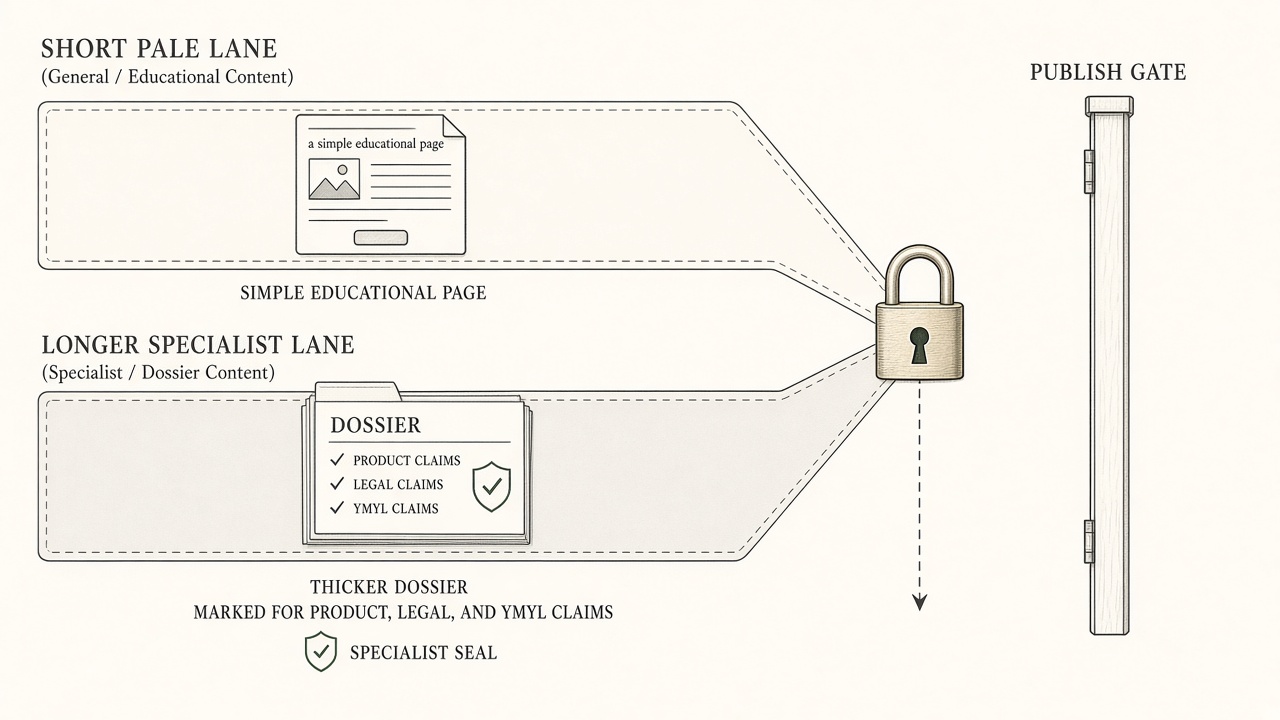
Match the path to claim risk. Do not add stages by default. A low-risk educational page can clear one editorial pass. Product, money, privacy, legal, or YMYL claims need a specialist and a recorded sign-off.
A passing automated check is not permission to publish those claims. High-risk work keeps a hard gate—editor, compliance or legal, and SEO—with manual sign-off required within 72 hours. When AI speeds creation by 10x, one shared queue produces rubber-stamp fatigue. Routing prevents that pile-up without letting low-risk pages self-publish.
Publishing stays locked until the named human records Hold, Edit, or Publish. Do not rely on people remembering not to ship an unread draft. A missed peer SLA holds the page; it does not release it.
Lock the gate — Route by claim risk, keep a hard gate on YMYL and regulatory claims, and leave publishing locked until a named human records Hold, Edit, or Publish.
How Long Should Each Approval Stage Take?
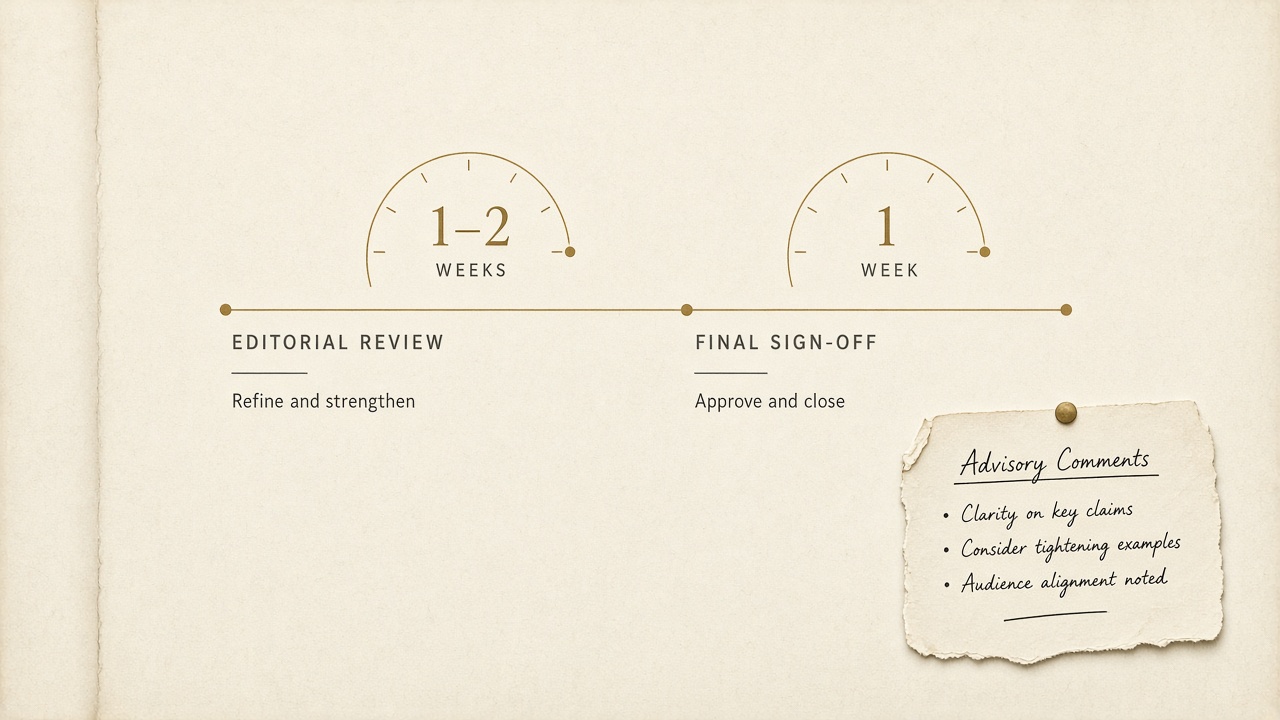
Once the path matches the claim, the remaining failure is an open clock. Put a timer on each stage so a miss becomes an escalation, not a wait. Ordinary marketing copy should clear in three to five business days, with a 24-hour editorial pass and a 24-hour final sign-off. Do not use that blog clock for legal or YMYL work.
Optional clocks run long. Across six B2B teams, the average blog sat in review 4.7 business days (median 3.2; fastest quartile 1.4). The typical approval still takes eight days from submission to sign-off, and more than half of companies miss deadlines because of those delays. Enforced deadlines cut one brand’s campaign approval from 14 days to 4.
Stop loops by scoping the review. Explicit scope cut cycle time about 40% in the first month because reviewers stopped editing outside their domain. Late stakeholder feedback delayed 42% of marketing leaders, so extra comments do not reset the gate. Advisory notes are not a binding decision to advance, hold, or return the asset. An Edit must name the change and send the draft back once.
Clock the gate — A missed stage escalates. Comments advise; only a named Hold, Edit, or Publish moves the pinned draft.
Approval cycle times (business days)
What to Log When You Record Hold, Edit, or Publish
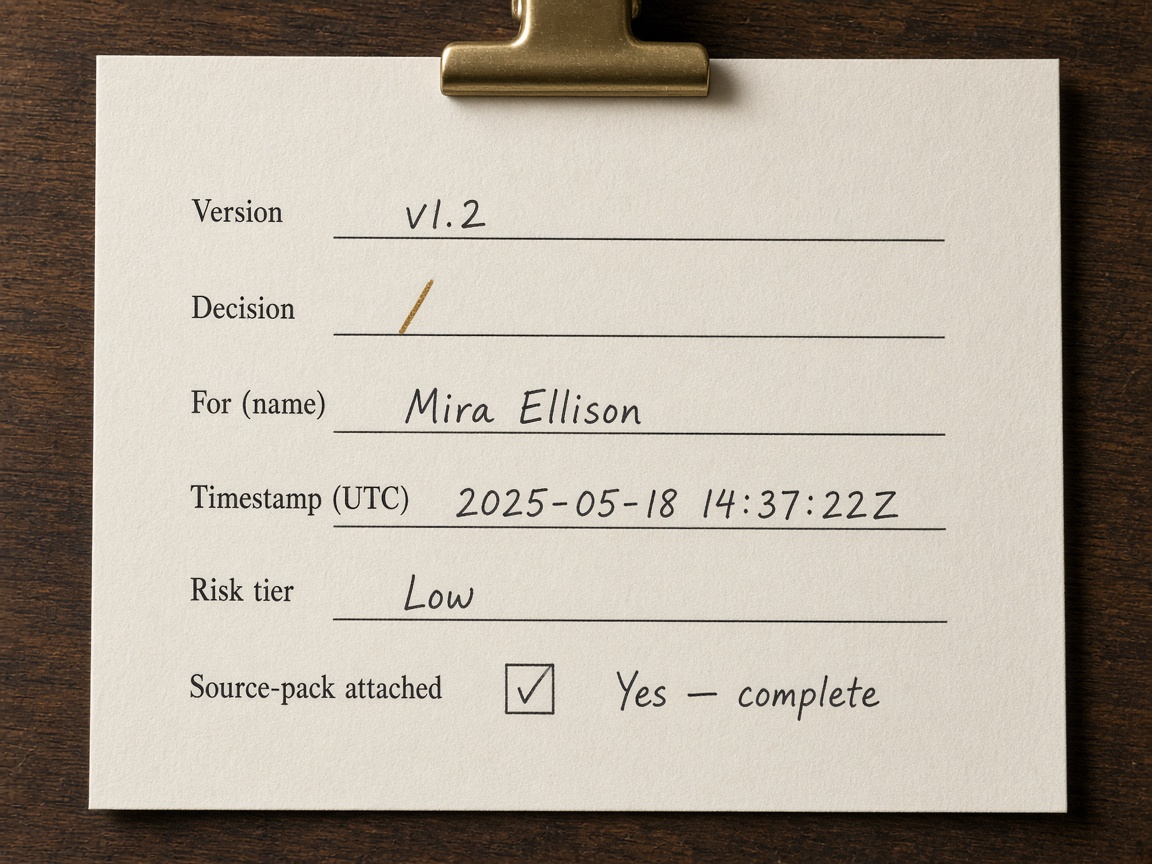
Once the stage clocks stop, the only thing that still explains the outcome is the approval record. Log the pinned version id, the decision, the named human, the timestamp, the claim-risk tier, source-pack status, what was checked—including metadata—and the specific change if the decision is Edit.
That log is what makes Hold, Edit, or Publish auditable later. A score, a chat thread, or an unread checklist is not a record; without those fields, no one can tell who signed which draft, or why it was held.
This pass does not replace the governance policy, which names who may approve, edit, or kill, or the pre-publish checklist, which says what must be true. Those guides cover roles and readiness; this article stops at the decision artifact.
The record — An auditable approval is a named human’s Hold, Edit, or Publish on a pinned draft, with risk tier, source-pack status, checks, and the exact change if it must return—not a score, a chat, or an unread checklist.
Which Metrics Show Approval Is the Bottleneck?
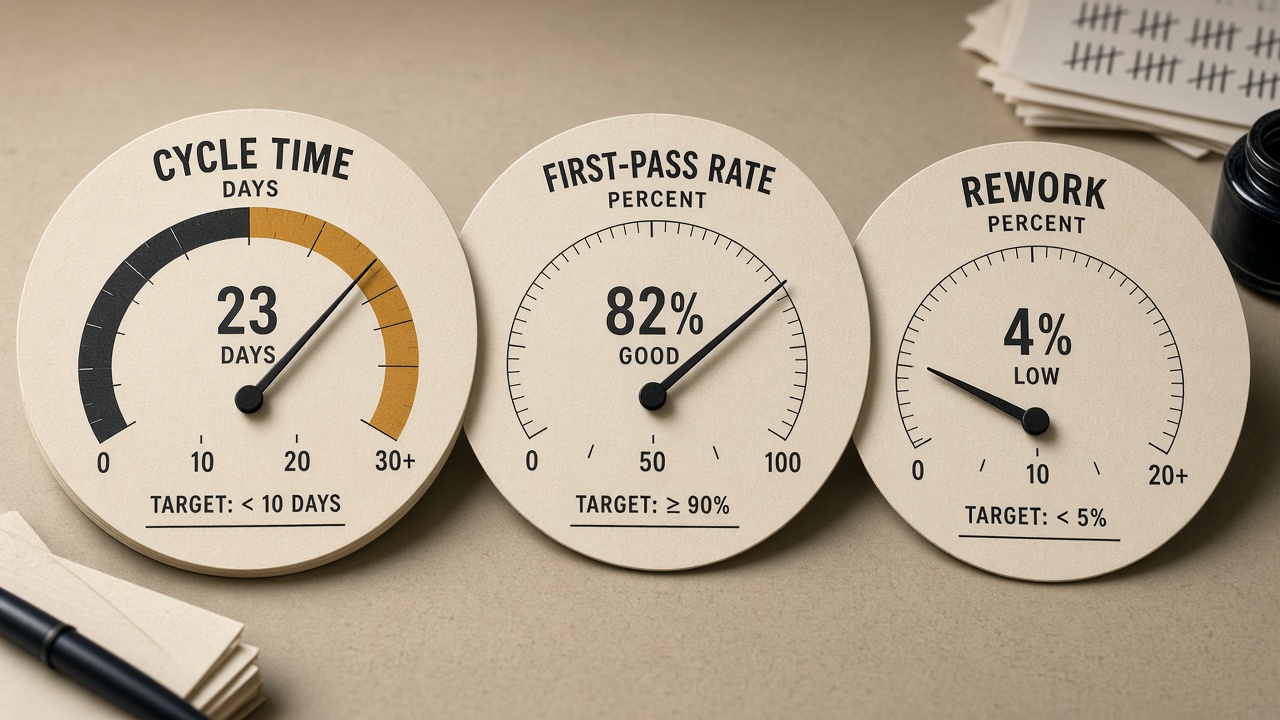
Watch the queue, not how many drafts the model can emit. Internal review and approvals is the top-cited content bottleneck, ahead of briefs and first drafts, and approvals are the biggest on-time launch challenge for nearly half of teams. Workflow issues are a growing productivity drag.
Most teams already use AI for creation—83% of B2B professionals in a 2026 survey—so the wait has moved to approval. Quality, not generation, is the main AI content problem: 82% of content leaders say maintaining quality is their biggest challenge. Track cycle time, first-pass rate, rework rate, silence-to-hold count, and post-publish corrections. Making review time visible cut one team’s average from 3.8 days to 1.9 days within two months. If those numbers stall, the pass is the bottleneck, not the generator.
Read the queue — A stalled queue—cycle time, rework, silence-to-hold, and post-publish corrections—means the one-pass gate is holding publish, no matter how fast drafts appear.
Survey shares behind the approval bottleneck
Key Takeaways
Pin the next draft, name one approver, and record Hold, Edit, or Publish before anything ships.
Frequently Asked Questions
You Might Also Like
- Governance Content Governance for AI Publishing: Who Can Approve, Edit, or Kill a Draft
- Workflows Content QA for AI Drafts: The Review Checklist Before You Hit Publish
- Automation Fail-Closed SEO Briefs: The Publish Gate Autoblogging Needs
- Governance AI Content Governance Policy: A One-Page Rule Set for Lean Teams
- Workflows Content Automation Workflow: Research, Draft, QA, Publish