Prompt Sets for Monitoring AI Citations Across Engines
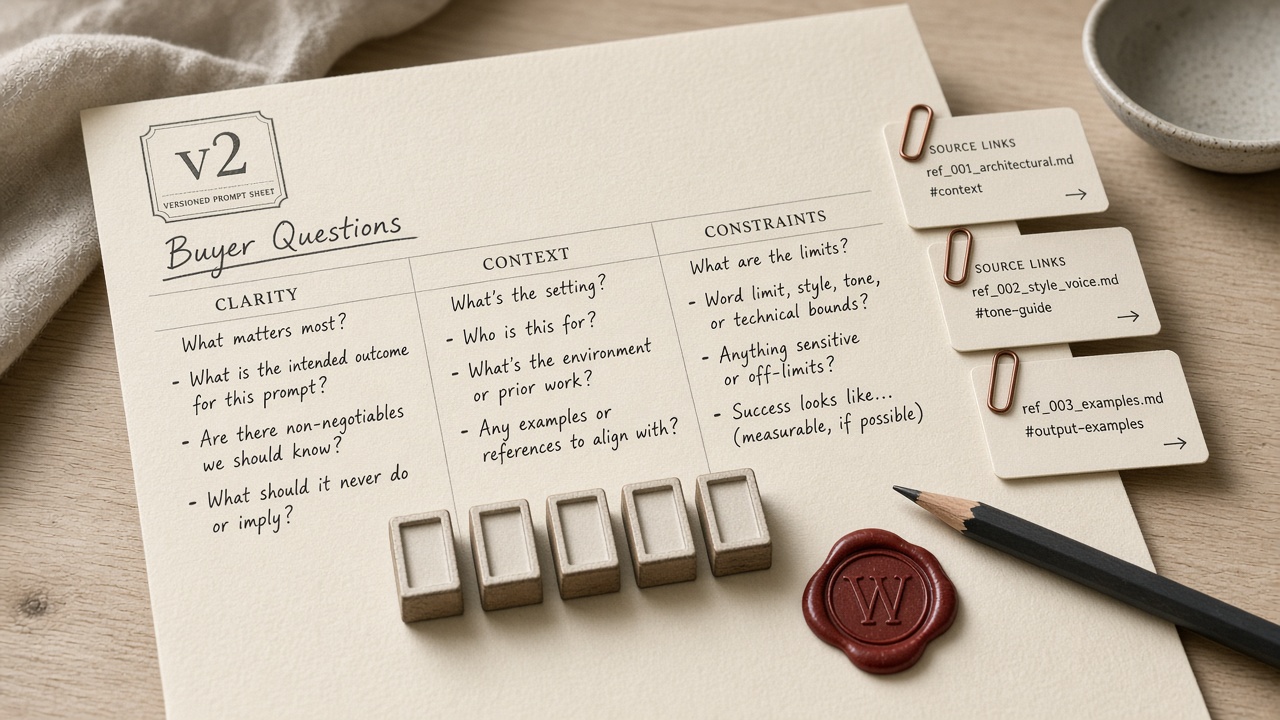
Most teams treat AI citation monitoring prompts as a keyword list rewritten in a chat box. That produces a blended number no one can act on. Engines are not the same sample: across 34,234 responses on 10 platforms, BlueJar reports a ChatGPT citation rate of 0.59% against 13.05% on Perplexity, with Claude, Mistral, and DeepSeek at 0%. A single rate hides the only engine you can actually change.
A usable set is a fixed instrument. Buyer questions stay natural and unaided. Extraction rules — cited domain, mention versus link, competitor cited instead — stay in the log, not inside the query. Mention and citation do not move together. Zen Media, reporting Semrush, found that 61.7% of AI citations never name the brand they link to. Logging only the name, or only the link, records a different fact than the one you think you measured.
The sheet this article builds is small on purpose: intent class, exact wording, engine, mention, cited URL, and a hold rule when the denominator is too thin. BlueJar notes that only 22% of marketers actively track AI visibility, and a manual pass of 15–20 queries across four platforms already takes 2–4 hours. Start there, version the file, and do not publish a rate the sample cannot support.
- Keep buyer questions natural; log extraction rules outside the prompt.
- Never blend engines into one citation rate — ChatGPT, Perplexity, and Claude are different samples.
- Record the cited URL separately from whether the brand was named.
- Withhold a published rate until repeats and sample size can carry the claim.
- Version the prompt file and date model changes before you call a drop a content failure.
What an AI citation monitoring prompt set actually is
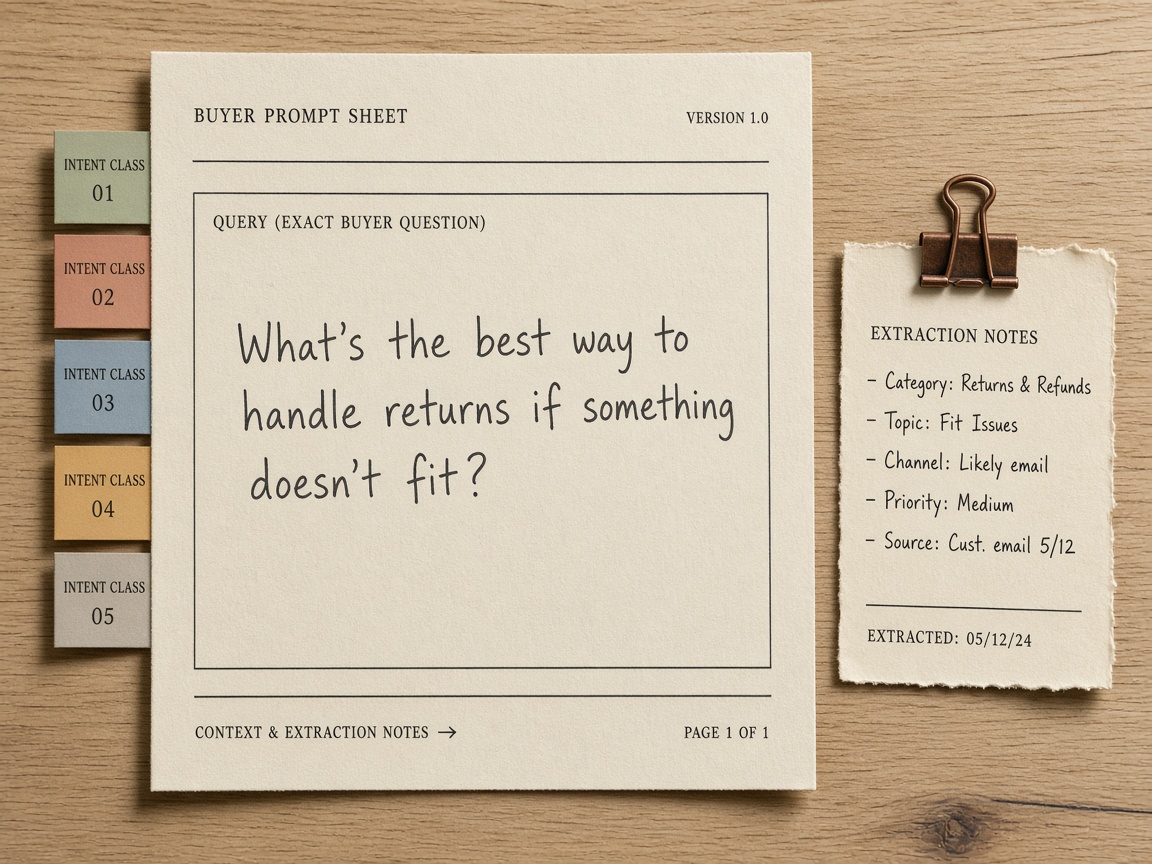
An AI citation monitoring prompt set is a versioned instrument: the same natural buyer questions, rerun unchanged, so a later drop is about the engines rather than a rewritten query. It is not a keyword list, and it is not an auditor script pasted into the chat.
Only 22% of marketers actively track AI visibility, even though AI-referred traffic can convert at 3x the rate of other channels. Separately, only 29% of organizations building LLM apps had standardized prompt templates across use cases. A frozen sheet is the missing instrument.
Stay unaided. Do not name your brand, and do not list brands to check inside the question — that changes what the engine retrieves. Extraction rules, including the cited URL, mention versus link, and competitors, stay in the operator log or a second pass.
SEO keywords do not work as monitoring prompts. Rewrite Search Console queries into the language a buyer would actually type, then keep that exact wording frozen. For what AI visibility means as a term, use the site definition; this article ships the sheet, not another definition.
Fixed instrument — A monitoring prompt set is a versioned sheet of unaided buyer questions you rerun word for word — not keywords, and not a branded audit script.
A citation is the URL; a mention is only the name
A citation is the source URL the engine actually shows. A mention is the brand name in the answer text. Score them in separate columns; they are not one signal.
They move independently. A June 2026 Semrush study reported by Zen Media found that 61.7% of AI citations never name the brand they link to. Gemini named brands in 83.7% of cases but cited domains only 21.4% of the time, while ChatGPT showed a 20.7% mention rate against an 87% citation rate. ChatGPT averaged 15 sources per response and Gemini averaged 3, so a mention-only chart can hide a warm recommendation that cites only review sites.
Do not collapse both into one yes. Keep the fail-closed name-versus-link log in the brand-mention tracking guide. This sheet must not bake that scoring into the buyer question.
Split the score — Log the shown URL and the brand name in separate columns, and never fold either score into the buyer question itself.
Which engines show a source link you can log
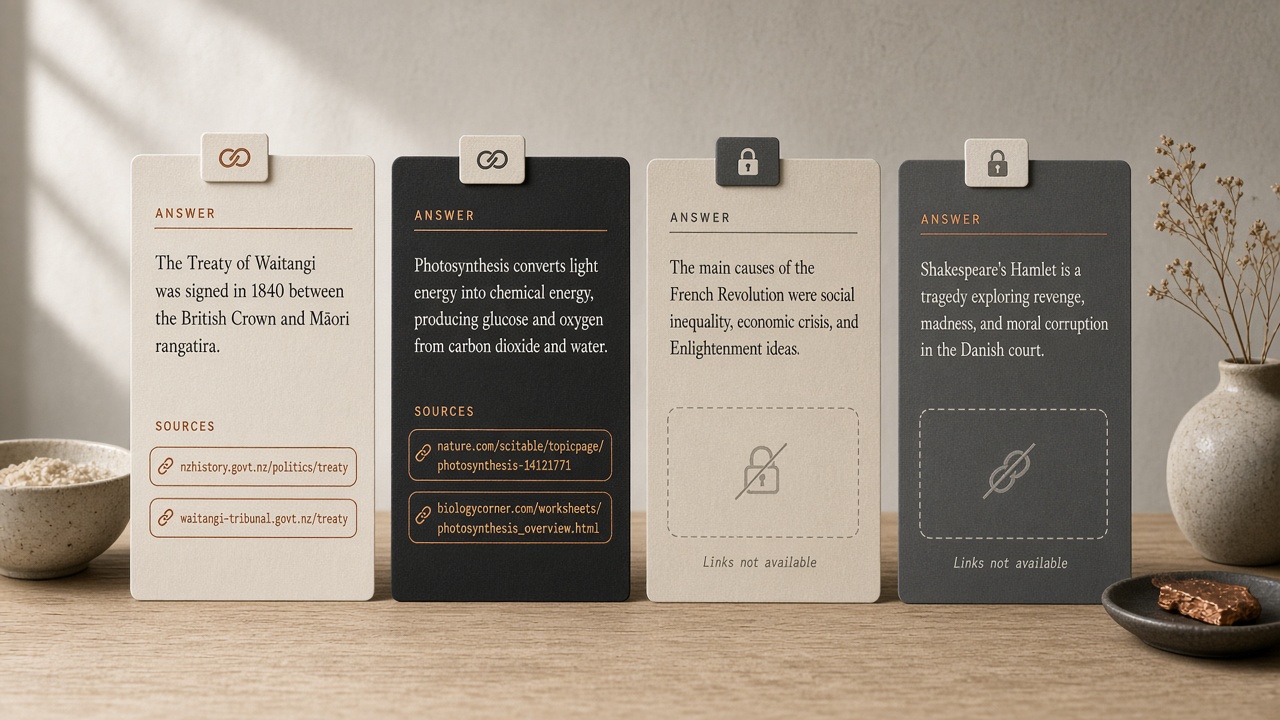
Only log a citation where the product shows a source link you can copy. Engines are not one sample. Across 34,234 responses on 10 platforms, citation rates differed by a factor of 615x.
Google AI Mode at 9.09%, Gemini at 6.38%, AI Overviews at 2.11%, and Copilot at 1.27% sit between those poles. Claude, Mistral, and DeepSeek showed a 0% citation rate, so a blank cell there means the product did not show a link, not that the brand failed. Keep each engine in its own column. A blended rate hides the only engine you can act on.
Keep the buyer question identical. What changes is the session: ChatGPT with search on in a clean thread, Perplexity as its own sourced answer, and Gemini, Google AI Overviews, and AI Mode each in their own column. Do not rewrite the prompt per engine to force a citation. Lock geography and open a fresh session instead of stuffing engine instructions into the question.
Separate columns — Score a URL only where that engine shows one, freeze the buyer question, and never average a non-citing engine into one that does.
Citation Rate by AI Engine
Why the same prompt can cite different domains minutes apart
The same frozen prompt can cite different domains minutes apart because the draw is unstable, not because a page suddenly lost its place. A 2026 study cited by Zen Media put single-answer reliability near 0.01. Brand identity explained only 1.5% of score variance, while resampling the same prompt explained 34.8%. Reliability barely improves after the fifth repeat of one prompt.
One run is noise. Do not treat a domain swap on a second try as a lost citation. Log both draws and keep reading the pattern, not the single miss.
Why tracking prompts should be first-turn questions, not long chats
Profound research found the first turn of a ChatGPT conversation is 2.5x more likely to trigger a citation than turn 10, and nearly 4x more likely than turn 20. Open a clean session, ask once, log the sources, and close. A long chat is a different instrument.
Unstable draw — Domain swaps minutes apart are resampling noise, so log one unaided first-turn question in a clean session and do not score a second-try swap as a lost citation.
How many prompts before a citation rate is usable?
One clean, first-turn log is the right unit of work, and it is not yet a rate. A citation rate is usable only when the denominator can separate noise from a real move. The same 20 prompts, rerun minutes apart on the same model, had a mean cited-domain overlap of 0.40. A rate near 25% over 72 answers still sits in about a ±10 point interval, and claiming a move from 20% to 30% needs about 294 answers in each period. Short of that volume, withhold the rate.
Start with 15–20 first-turn prompts across category, comparison, problem, and recommend intents, and run each engine in its own column. Checking 15–20 queries across four platforms takes 2–4 hours, and manual methods cap near 20 queries. Use that diary to see which prompts retrieve. Do not publish it as a category rate.
A thin sample is an entry tier, or a one-day screenshot treated as a rate. Otterly Lite is 15 prompts, Ahrefs Brand Radar Lite is 5 daily prompts, and Semrush Starter is 50 daily prompts. Refuse the rate when the tool or the week cannot support the claim, and ignore any figure the metrics guide already says is too small to read.
Rerun the same versioned set on a fixed cadence. AI Overview content changes about 70% of the time and citations 46% of the time. Only 30% of brands keep visibility across consecutive answers, and 20% hold across five runs. Weekly is enough for a lean log. Do not call one miss a loss.
Hold the rate — Publish a citation rate only after the sample can separate a real move from overlap noise. Until then the sheet is a retrieval diary, not a score.
What to record besides yes or no
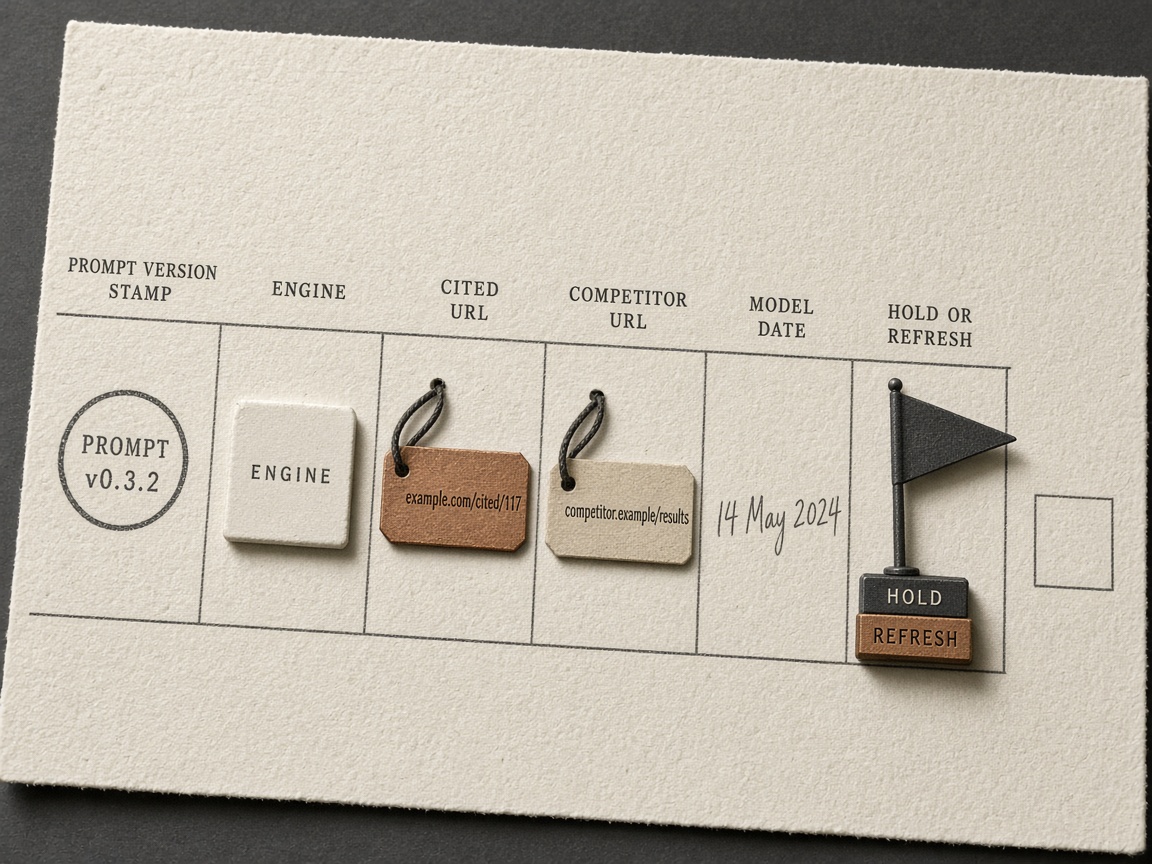
A rate you are finally willing to publish still needs a row that says more than yes or no. For each prompt, record the version, intent class, engine, date, and the model or product label if it is shown, then mention yes or no, the cited URL, the competitor cited instead, and a hold-or-refresh flag. Google Search Console and GA4 do not show AI Overview impressions or citations, so they cannot be that log. Rank tools miss a large share of the same surface: 59.6% of AI Overview citations come from URLs outside the top 20 organic results.
Point that repeated gap at the visibility-checker playbook for the audit rubric. The monitoring sheet only flags hold or refresh; it does not rebuild the rubric.
Log the source — Yes or no is not a citation log. The cited URL, the competitor that replaced it, and the model date are what separate a content refresh from a platform-wide update.
Key Takeaways
Version your first-turn buyer questions, log citations apart from mentions by engine, and rerun the same sheet before you publish a rate.
Frequently Asked Questions
You Might Also Like
- Measurement AI Visibility Metrics That Matter (and Vanity Numbers to Ignore)
- Measurement Brand Mention Tracking for AI Search: How to See Who Cites You
- AEO AI Visibility Checker: How to Audit Whether AI Engines Cite You
- AEO AI Search Visibility: How to Track Mentions Across Answer Engines
- AEO Answer Engine Optimization (AEO): How to Get Cited by AI Search