Brand Mention Tracking for AI Search: How to See Who Cites You
A brand can be named in an AI answer and still never be the page the model uses as evidence. Semrush's 2026 AI Visibility Index found that 45% of marketing leaders cannot accurately measure brand visibility inside AI-generated answers, and only 9% can track every relevant metric. A single visibility score does not close that gap. It hides it.
On Gemini, the overlap between mentioned brands and cited domains can be as low as 30%, according to that same Semrush index. A mention is the name in the sentence. A citation is the URL treated as proof. Searchable's AI brand visibility data makes the prompt problem just as sharp: the median brand was named in 93% of answers to branded prompts and only 7% of answers to unbranded ones. A panel that only asks about your own name will look healthy before you have measured category presence at all.
The working method is a fail-closed log. Hold a fixed set of prompts, record each engine on its own line, split the name from the link, and act only when the same miss shows up again. The first job is to define those two events so the rest of the log has something real to count.
- A mention names the brand; a citation is a page linked as evidence, and on Gemini those two can overlap as little as 30%.
- Branded prompts inflate the score: the median brand appears in 93% of branded answers and only 7% of unbranded ones.
- Track each engine on its own line, because citation pools barely overlap and source counts differ sharply.
- Ignore a single visibility score, a one-off screenshot, and owned-page citations as proof you show up in the category.
- Turn a repeated gap into a refresh or a brief; hold the miss if it does not repeat.
Separate the Mention from the Citation Before You Score Anything
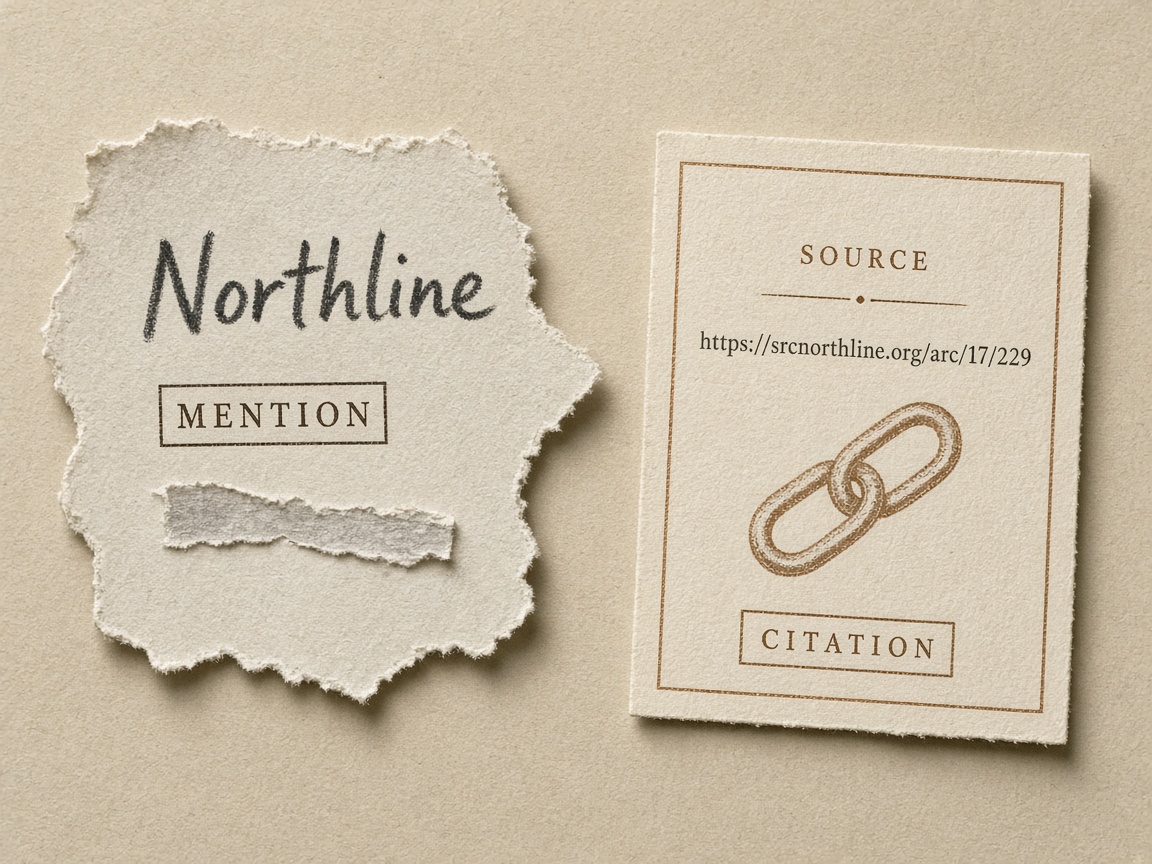
Monitoring only pays off once you stop treating every appearance as the same event. A mention is the brand being named in the answer. A citation is a specific page linked, or used as the evidence behind a claim. Naming and sourcing are different jobs, and engines do not hand them out together.
That split is sharpest where the two lists barely meet. On Gemini, the overlap between mentioned brands and cited domains can be as low as 30%. A brand can be talked about while a different domain supplies the link, or a page can be cited without the brand ever being named. Fold those events into one number and the score hides which of the two you actually missed.
Fractl's own panel shows why a citation lead is not category presence everywhere. The panel was cited far more often than it was named — 76% versus 8.5% — and almost all of that strength sat on Google AI surfaces rather than other engines. Strength on one surface does not travel with you to the others.
If you need the broader definition of AI visibility, use the existing article on that topic; this piece will not re-teach that framework. What to refuse here is simpler: any score that adds mentions and citations into one number. Keep them on separate lines, by engine, or the gap you act on is just arithmetic.
Split the log — A mention names the brand; a citation points at a page. On Gemini those sets can overlap by as little as 30%, so a single score hides which job you actually have.
Sample Each Engine Until the Rate Holds
Once a mention and a citation are logged as separate events, the next mistake is treating one answer as if it were a rate. Model output moves from run to run even when the prompt does not, so a screenshot is a sighting, not a measurement. Note that the brand showed up that time, then go back and sample until the pattern holds.
Keep each engine on its own line. Semrush's 2026 AI Visibility Index found ChatGPT cites about 15 sources per response, while Gemini cites about 3. Those are different source pools. A blended citation rate averages them into one number and hides which engine you are actually winning.
A lead in Google AI Overviews does not transfer to chat engines. Fractl found only 7.2% of domains appeared in both Google's AI Overviews and LLM answers. A citation on one engine is not visibility either, especially for lower-authority domains. Wellows found that 66.5% of lower-authority domains were cited by only one of five engines. A page that lands in a single answer is a local win, not presence across the panel.
Freeze the cadence when the rates stop swinging
Do not invent a magic run count. Repeat a fixed prompt until the mention rate and the citation rate stop swinging, then freeze that cadence and use it every cycle. If either rate is still jumping, you do not have a score yet. The broader operating system for comparing engines lives in the existing cross-engine visibility article. This section only sets the trust bar for the log: stable, engine-by-engine rates, not a one-off screen.
Trust bar — One screenshot is a sighting. Log ChatGPT and Gemini separately — about 15 sources versus about 3 — and freeze the run cadence only after mention rate and citation rate stop swinging.
Keep Branded Prompts from Inflating the Score
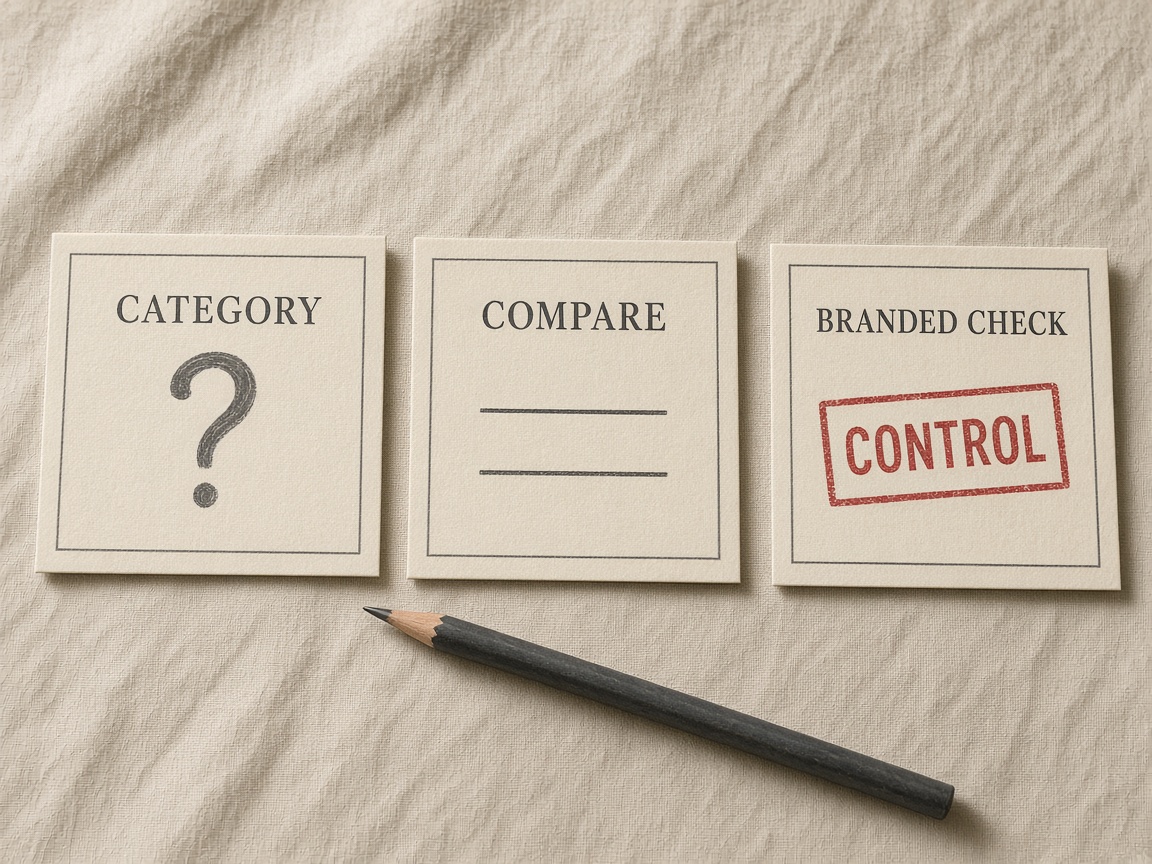
A stable run cadence only tells you something if the questions stay honest. Build a small fixed panel one person can rerun: unbranded category questions, comparison prompts, and a few branded checks. That mix is the whole sample, not a starter set you later replace with name searches.
Branded-only tracking flatters the score. Searchable found the median brand was named in 93% of AI answers to branded prompts but only 7% of answers to unbranded ones. A prompt that already contains the name almost forces a mention. A category question does not. Fold the first number into a visibility score and the brand looks present in a market where it barely appears.
Mark those branded prompts as a control. They show how the model describes you, which facts it repeats, and which rivals it places beside you. They are not proof of category presence. Freeze the wording month to month so a change in the log is a change in answers, not a change in the question. Even a tighter adjective or a swapped competitor name is a new test.
ChatGPT brand-mention checks are one line in that panel, not the audit. Use the existing checker article for a one-time scoring pass. The recurring job is the same unbranded, comparison, and branded prompts, read separately, on the cadence you already froze.
Control, not proof — Branded prompts show how a model talks about you. Category presence lives in the unbranded and comparison lines, and those lines have to stay worded the same way every month.
The monthly row that shows who actually cites you
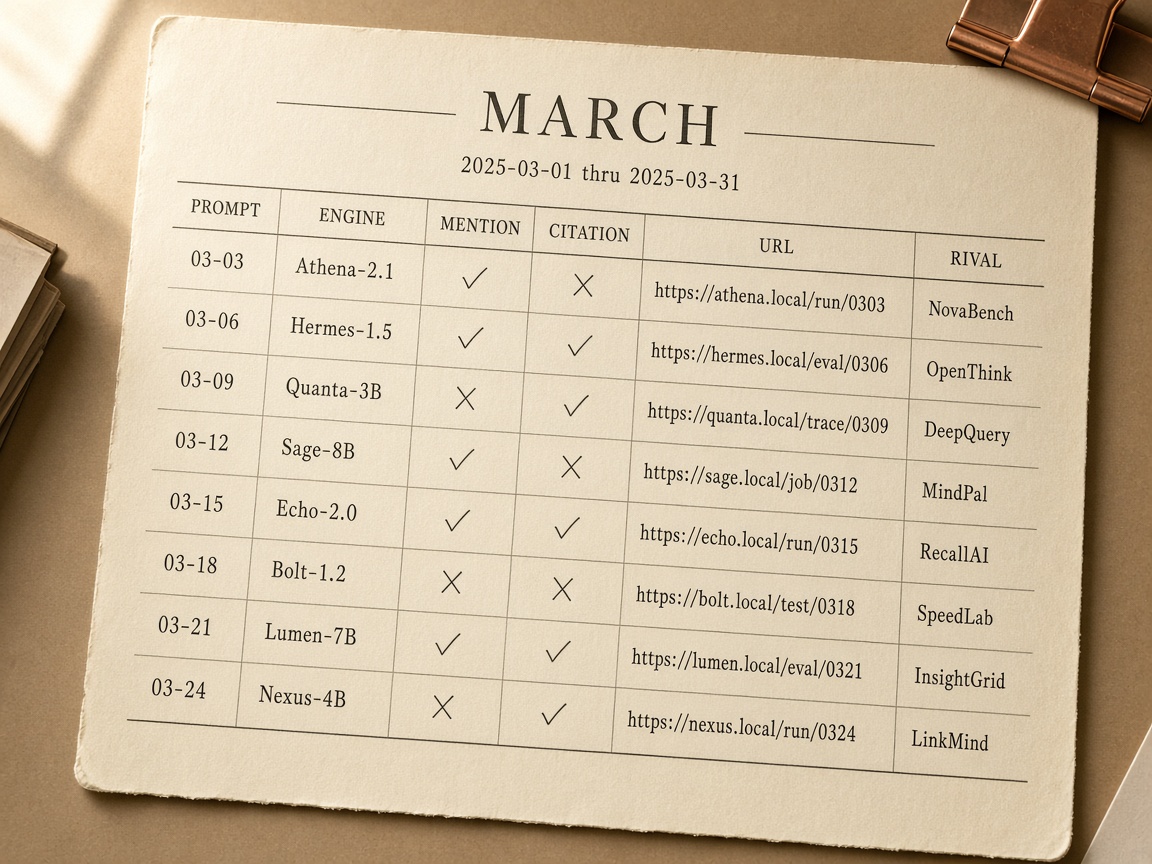
With the prompt panel frozen, the next job is not another score. It is a row you can copy every month, one line for each prompt on each engine, so a later reader can see who was named and which page was used as evidence.
A stable spreadsheet is enough. Skip tool features and new visibility scores until this log holds the same columns month after month.
Three rates, still per engine
Mention rate is how often the brand is named across those frozen runs. Citation rate is how often a page is used as evidence on the same runs. Share of voice is your mentions set against the competitors named on those rows. Keep each rate on its own engine. Blending them hides which answer surface actually moved.
Read those rates with the source mix in mind. Most cited sources do not name a tracked brand at all — 90.4% in Wellows' set — and a brand's own page was only 4.5% of citations. A citation lead is not proof the model said your name, and an owned-page citation is a small slice of the evidence pool, not category presence.
Stop at the row. A missing mention, a competitor URL, or a thin citation is logged. It is not a brief, a refresh, or a calendar item yet. Decision rules wait until that same gap shows up again.
Logged, not tasked — A gap belongs on the monthly row until it repeats. Mention rate, citation rate, and share of voice stay per engine, and every citation carries a source URL.
Classify the Cited URL Before You Call It a Win
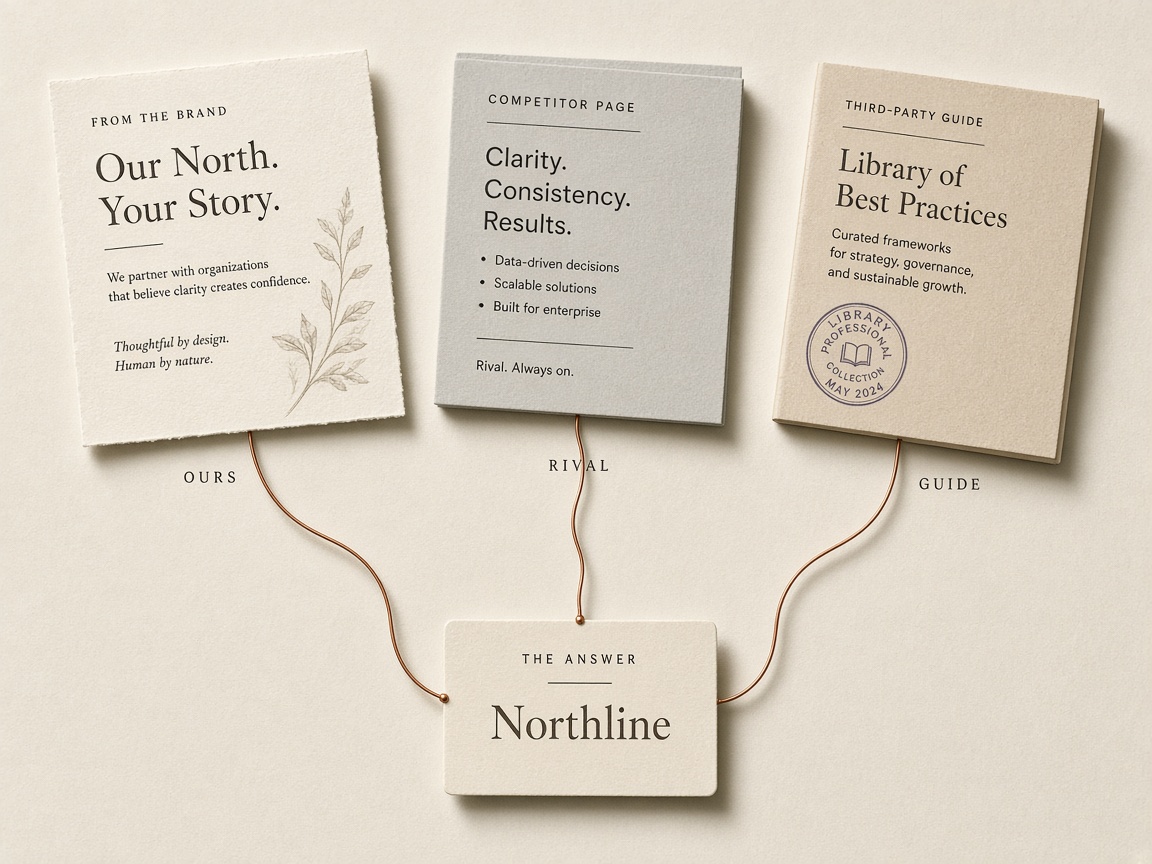
The source URL on the monthly row is not a win until you say what kind of page it is. Classify every cited URL as owned, competitor, or third party before you interpret the result. A link to your own page and a link to a publisher that names you are different evidence, and folding them together hides the gap you actually have.
On unbranded prompts, the brand's own site is a small share of citations. Searchable found brands' own websites earn only about 5% of the citations in AI answers to unbranded prompts. Searchable's September 2026 corpus found about 42% of citations pointed at competitors' websites. Competitors and other publishers supply most of the evidence. That is the ordinary shape of an unbranded answer, not a broken log.
A zero can mean the proof sits elsewhere
A small brand should not expect even visibility in every category. Semrush's 2026 AI Visibility Index found that in some categories, AI visibility is extremely concentrated, at 82.9%. Some categories concentrate answers in a few names, so a zero on an unbranded prompt can mean the evidence lives on someone else's page.
Name the source type on the row so the later brief knows what to match: a thin owned page, a competitor page the engine keeps citing, or a third-party publisher. Do not turn this into a digital-PR program. The label is what the brief needs; outreach is a different job.
Label first — A citation is not a win until you mark the URL as owned, competitor, or third party. On unbranded prompts your own site is only a small share of the evidence, and a zero often means the proof sits on someone else's page.
Keep Search Console as a Google-Only Line, Not the Audit
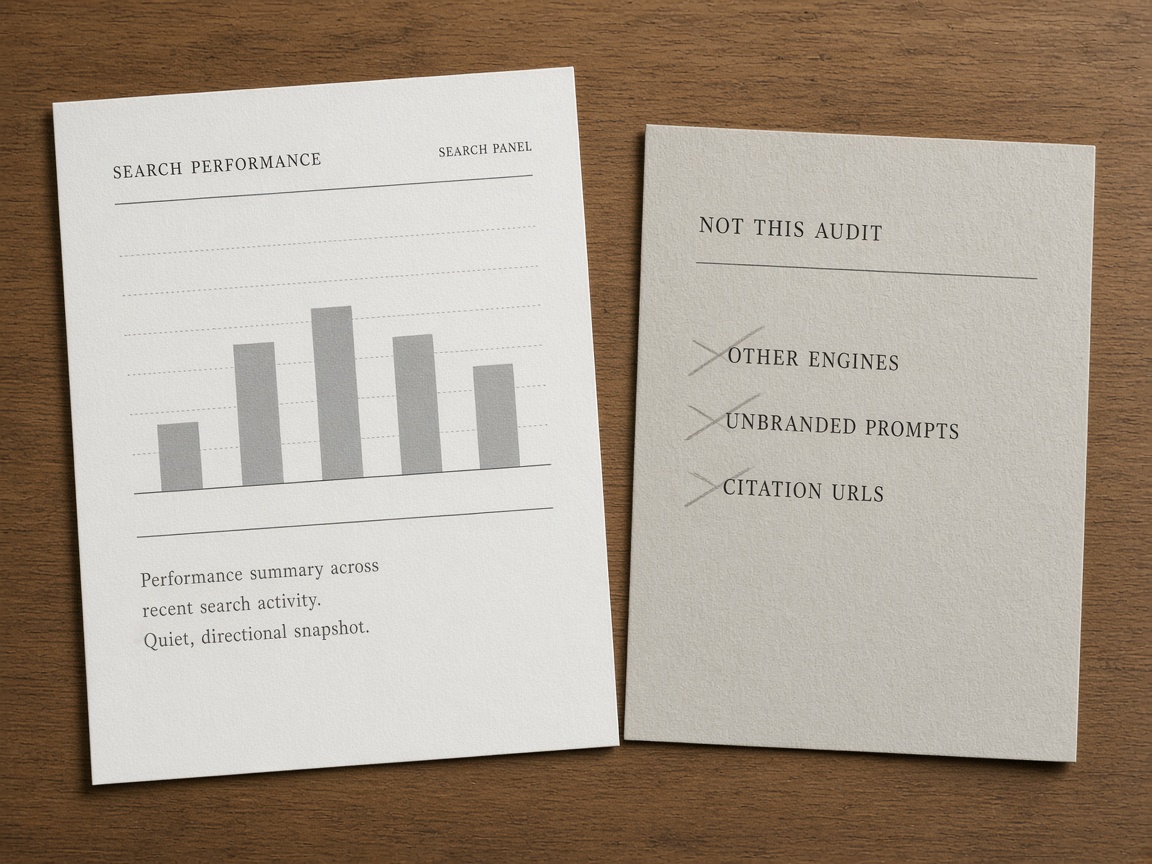
Once a cited URL is typed as owned, competitor, or third party, Google's own numbers still belong in the log — just not as the audit. Search Console's generative AI performance report is the line for impressions inside AI Overviews and AI Mode. Google describes those views as impressions within generative AI features on Search, and by late August 2026 the insights are available to all websites worldwide. Name the report, pull the period totals, and stop. This is not a tour of menus.
The surfaces are large enough that the row is worth keeping. Google's May 2026 figures, as cited by Wellows, put AI Overviews and AI Mode at very large monthly audiences — 2.5 billion. Adobe data cited by Semrush shows AI referral traffic to U.S. retail sites surged 1,324% from late 2024 to May 2026. That is demand moving through Google's AI surfaces. It is not proof that ChatGPT or Perplexity named you, and it is not a substitute for the fixed prompt panel.
What the report cannot score
State the limits in the log notes so nobody promotes the export later. The report does not show competitor share. It does not record ChatGPT or Perplexity mentions. It does not expose a query-level citation gap — which prompt cited which page, and which competitor held the evidence slot. Those gaps still come from repeating the frozen panel, engine by engine, until a miss holds.
Paste the report totals into the monthly spreadsheet as a Google-only row, dated to the same month as the panel: impressions for AI Overviews and AI Mode, and clicks only if that export already shows them. Never fold that row into mention rate, citation rate, or share of voice. A strong Google impression line can sit next to a zero on an unbranded ChatGPT prompt. Both facts stay. Only a gap that repeats becomes a brief or a refresh.
Google-only — The generative AI performance report is the impression line for AI Overviews and AI Mode, not a multi-engine citation audit — paste its totals as their own Google-only row.
Refuse Scores That Only Look Like Monitoring
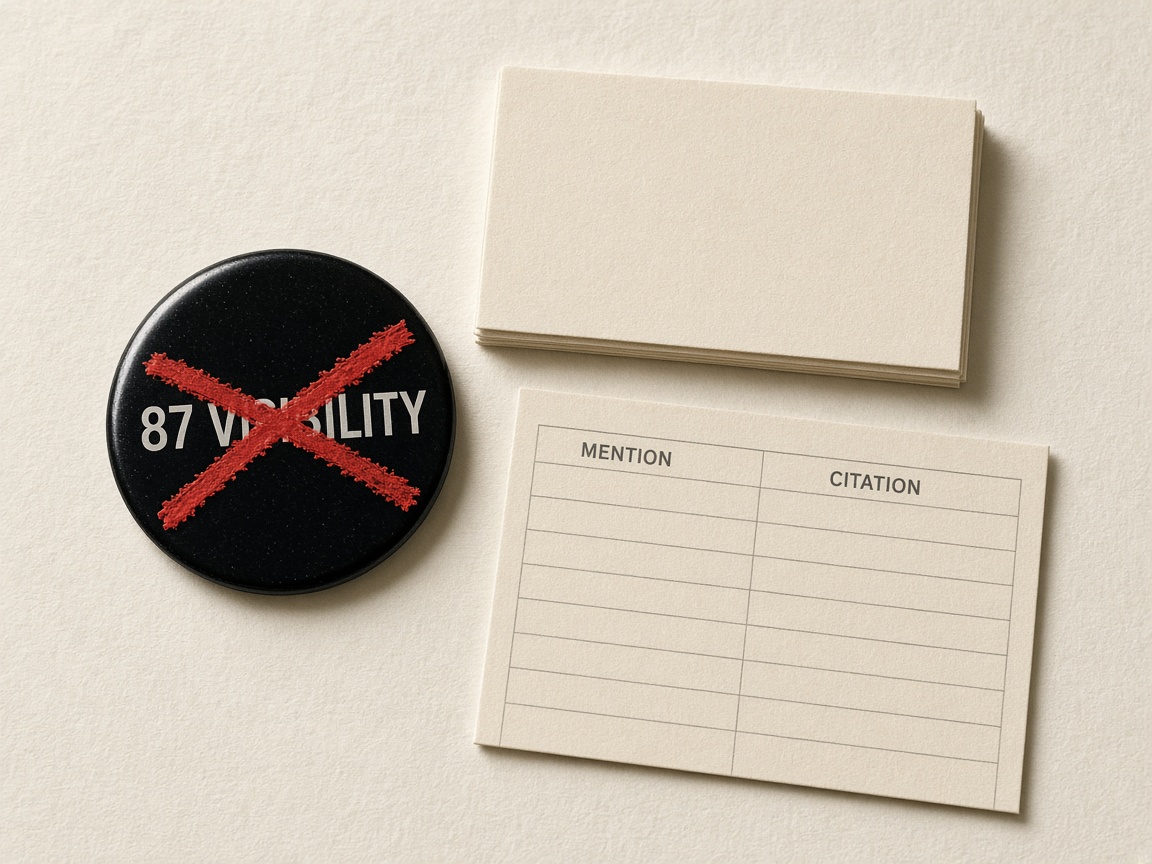
That Google impression line is a total, not a stand-in for the panel. The next thing to refuse is any single visibility score that pretends to be monitoring. It blends engines, blends a mention with a citation, and cannot say which prompt failed. Web-alert tools that never read model output fail the same test: a brand string on the open web is not a brand inside the answer. Treat an API reply as the consumer app and you are logging a different product. If the audience uses the chat interface, sample that interface. Source lists, length, and whether a link is shown can all change between the two.
Use that measurement gap as a buying rule. Most leaders still cannot measure brand visibility inside AI answers, and almost none can track every relevant metric, which is why the panel has to hold still before a tracker is worth a subscription. A vendor score will not fill rows you have not defined.
Organic rank is not the audit either. A top ranking raises citation odds — a page at Google position 1 has roughly a 46–48% chance of an AI citation, versus about 20% at position 10 — but position 1 is not a guarantee. Only a minority of AI Overview citations also sit in the organic top 10. Strong rank is a tailwind. It does not replace a run log.
Owned-page citation share is the vanity trap that belongs with source classification, not with presence. Being the cited URL on your own domain does not prove the category names you. Answer-engine and GEO work are the downstream job this log feeds: a repeated gap becomes a brief or a refresh. They are not a second score, and they do not need to be re-taught here.
Not monitoring — A single visibility score, a web alert that never reads the answer, an API treated as the app, and organic rank used as the audit all fail the same test: they do not log mention and citation by engine on a fixed panel.
Gaps That Rank Scores Miss
Only a Repeated Gap Gets Work You Already Run
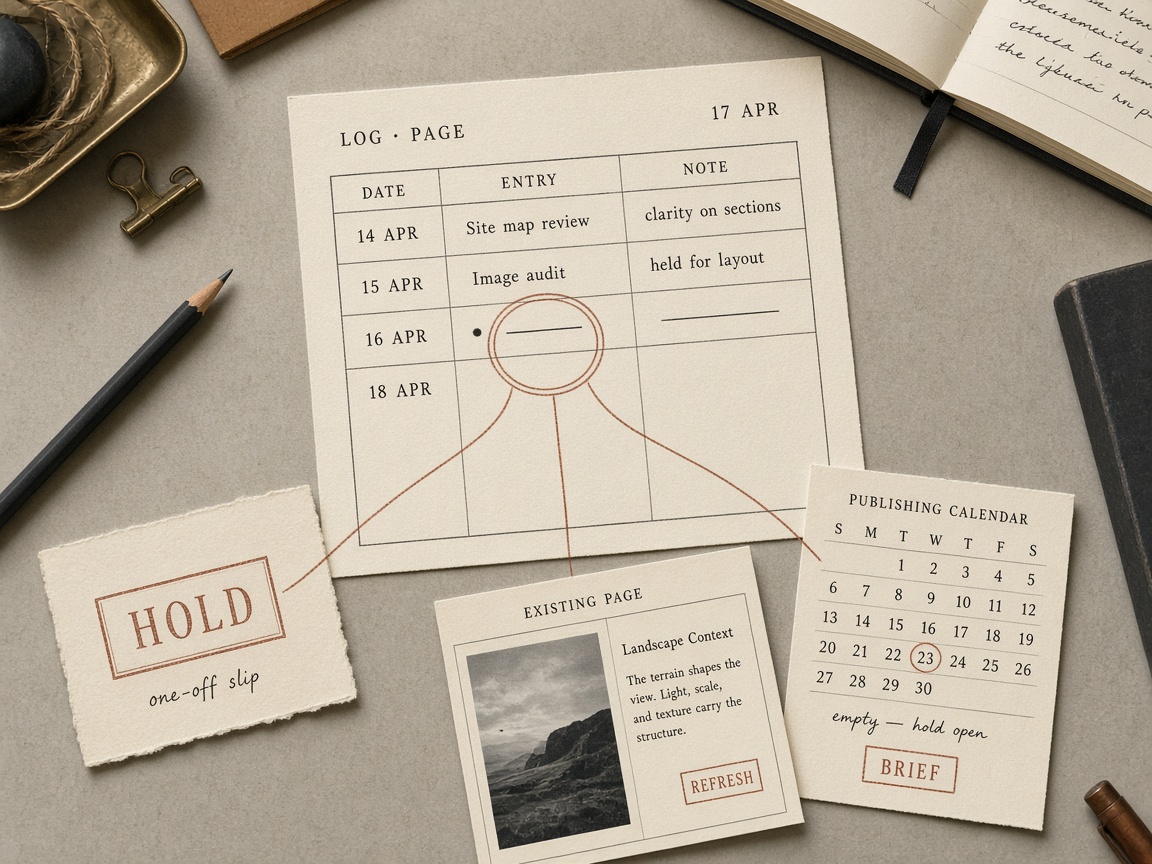
A gap that shows up once is a sighting, not a job. Fail closed: if the miss appears in a single run and is gone the next time that frozen prompt is asked, hold. Do not open a brief, do not commission a page, and do not treat one empty cell as proof the engine has written you out of the category.
The trigger is repetition, and it is specific. When the same competitor is the cited source across runs, look at what you already publish for that prompt. A thin page you own gets a refresh — a tighter answer and clearer evidence on the URL the log already knows. If you have no page that can be cited for that question, brief one. That is the only decision this log is allowed to make.
Match the formats engines already cite
When the brief does open, do not default to original research just because it feels more substantial. On marketing and SEO queries in Fractl's citation set, how-to guides, product pages, and listicles took most of the citations. How-to guides accounted for about 33%, and original research was the cited URL only about 0.6% of the time. Write the page type the engine is already willing to use as evidence.
Fold that decision into the brief, QA pass, and editorial calendar you already run. A separate AI dashboard is another score to ignore. Semrush’s 2026 AI Visibility Index found that teams which fold AI visibility into the existing SEO workflow reported AI-driven traffic or leads far more often — 81% versus 36% among organizations that managed the two areas separately.
How to write the page lives on the ChatGPT citation checklist. How to score the next month lives on the checker article. This section only decides whether work starts. The panel stays frozen, each engine stays on its own line, and a one-off miss stays in the log until it repeats.
Fail closed — Open a refresh or a single brief only after the same competitor citation repeats; a one-run miss stays in the log, and the work joins the SEO calendar you already have.
Key Takeaways
Freeze this month’s unbranded prompt panel, log mentions and citations separately by engine, and only open a brief or refresh after the same gap shows up again.
Frequently Asked Questions
You Might Also Like
- AEO AI Visibility Checker: How to Audit Whether AI Engines Cite You
- AEO Answer Engine Optimization (AEO): How to Get Cited by AI Search
- AEO How to Add Citation-Ready Answers Without Keyword Stuffing
- AEO How to Get Cited by ChatGPT: A Practical Visibility Checklist
- AI Search AI Overview Optimization: How to Structure Pages Google Can Quote