Knowledge Base SEO: Structure Docs So Search and the Concierge Can Cite Them
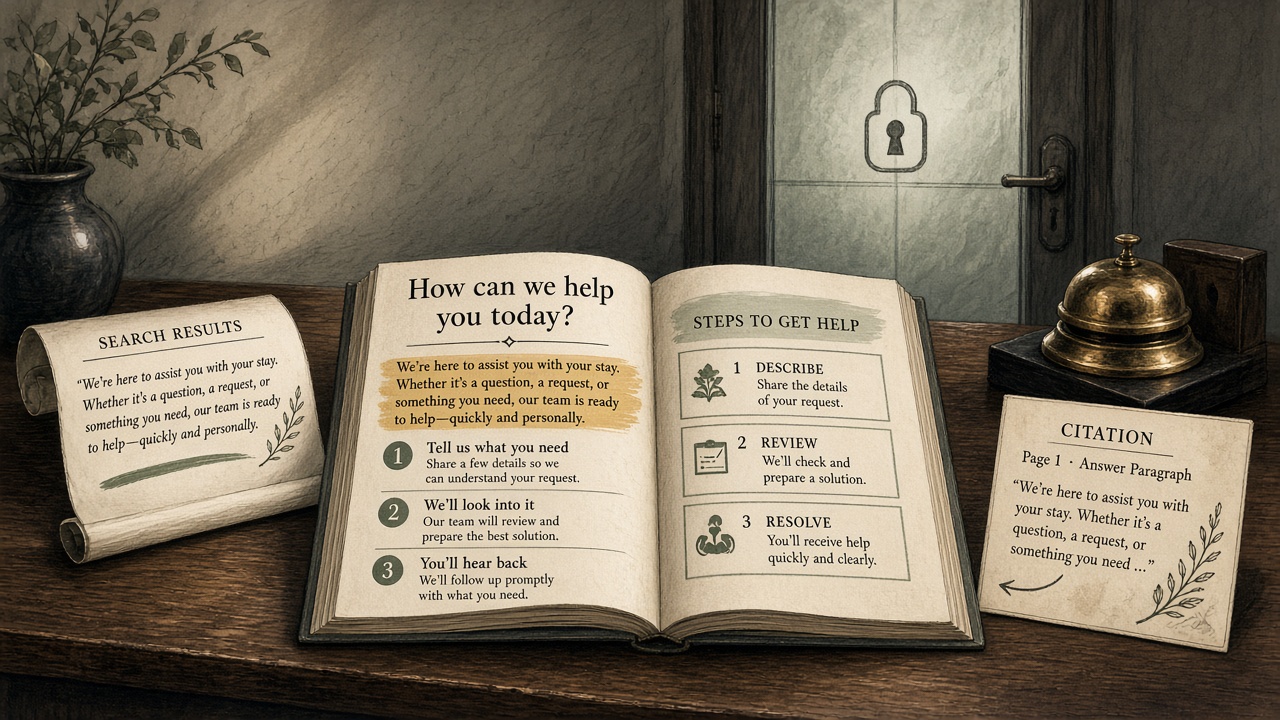
A help article that only a logged-in agent can open is not a knowledge base for search or for an AI concierge. Knowledge base SEO is the public version of that work: one question per URL, the answer in ordinary HTML, and enough metadata that an assistant can lift the chunk, name the source, or hold it when the policy is stale.
Readers now arrive both ways. On GitBook-hosted documentation, AI readers were roughly 9% of traffic in January 2025 and about 41–42% by December, while human readers still accounted for about 60% of views at the start of 2026, according to GitBook. Write the page a person can scan and a model can quote without inventing the rest of the article.
Structure is what you control. A March 2026 rewrite of 200 articles, meaning held constant, raised citation rates 17.3%, and document architecture accounted for 44.9% of that gain (Pepper Content). Google says there are no extra requirements to appear in AI Overviews or AI Mode: the page must be indexed, eligible for a snippet, and have the important content in text. The rest of this guide is how to build that page, and the log the concierge needs before it cites it.
- Publish one public question per URL so search can snippet it and an assistant can lift it as a standalone chunk.
- Put a complete short answer in the first 40–60 words, then steps, edge cases, and a visible last-reviewed date.
- Google requires indexing, snippet eligibility, and text — not special schema or an AI text file.
- Give every chunk a source URL, version, owner, status, and review-by date so the concierge can cite or expire it.
- Measure help-URL entrances, new queries, and ticket volume on documented topics, not a single keyword rank.
What Knowledge Base SEO Is, and Whether the Base Must Be Public
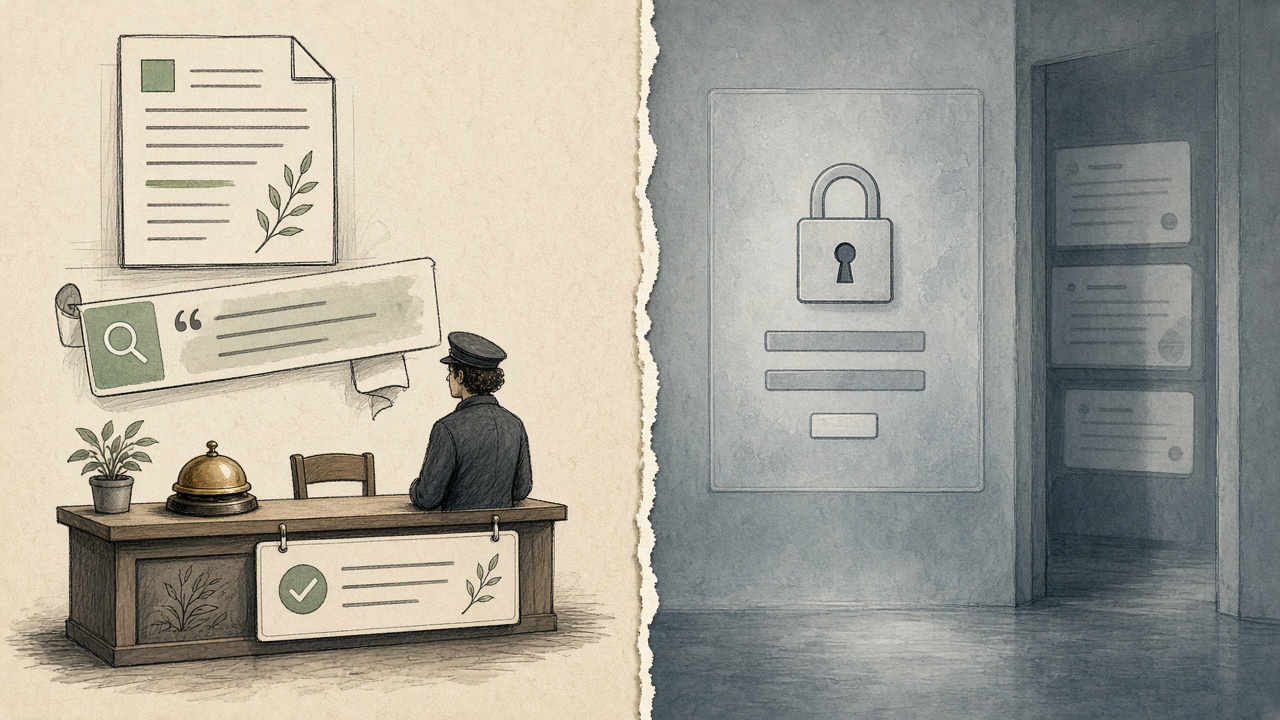
Knowledge base SEO is public, one-question support docs that Google can index with a snippet and an assistant can lift as a standalone chunk—not narrative blog SEO.
Yes, the base has to be public to rank or become a supporting link. A private or login-gated library can feed an internal bot only after ingestion; it will not rank. Structure improves extraction. It does not create eligibility. Treat answer engine optimization as the related layer, not a second indexing rule.
Write that URL for both readers. On the same GitBook-hosted documentation, December AI page views were more than 500% higher than January, so the shift is a surge in AI reads, not a small side channel.
Leads from tools such as ChatGPT convert at roughly four times the rate of organic-search leads. That conversion gap is why the same URL must be quotable, not a reason to publish thin stubs.
Public or invisible — A knowledge base ranks and gets cited only when each question is a public, snippet-ready chunk. Structure helps extraction; a login wall helps neither search nor an outside concierge.
GitBook docs audience share
Subfolder or Subdomain for Help Docs, and What to Noindex
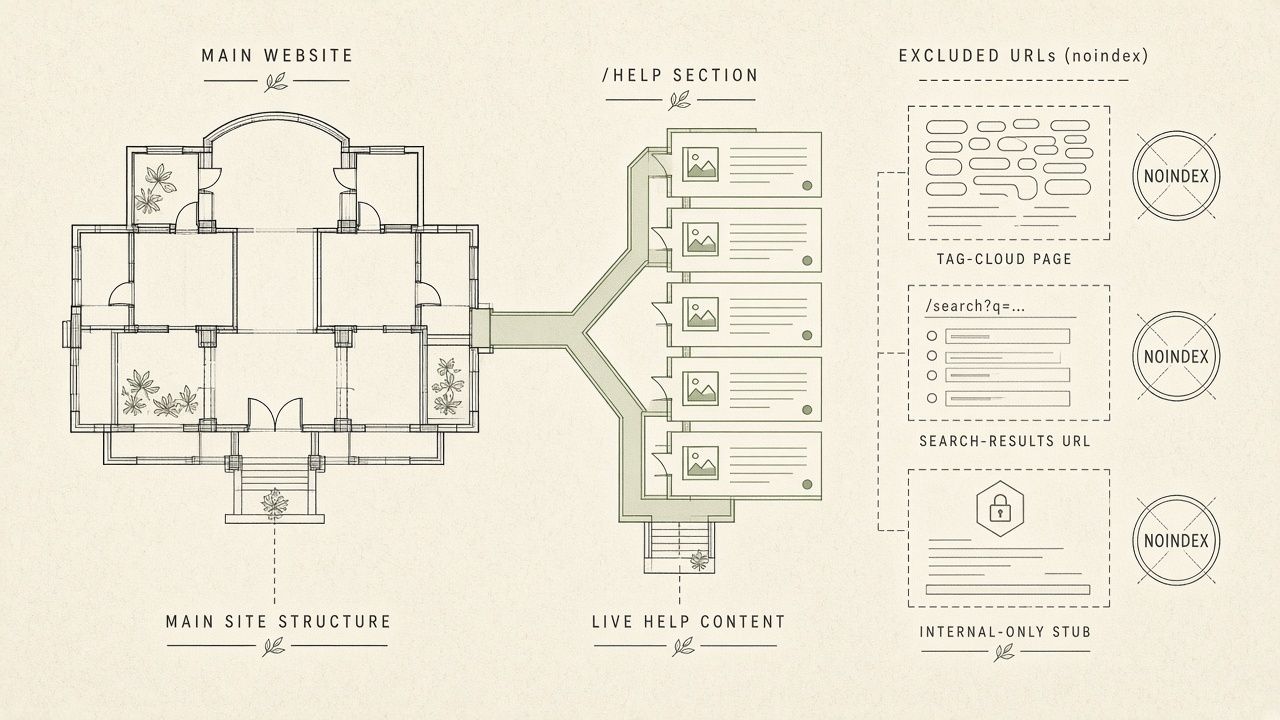
Prefer a subfolder such as /help when the platform allows it. Helply notes that subdirectories tend to rank faster because they inherit domain authority more directly, while a subdomain is treated more like a separate site that must earn authority on its own.
Do not publish the same answer on both a subdomain and a subfolder. Two homes for one question split the signals that should land on a single quotable URL.
Noindex thin stubs, internal-only pages, and tag or search-result URLs so they cannot compete with the canonical answer. Keep that canonical help URL indexed and snippet-eligible. Noindex is a hold on junk URLs, not a substitute for a private knowledge base.
How Deep Should Knowledge Base Categories Go?
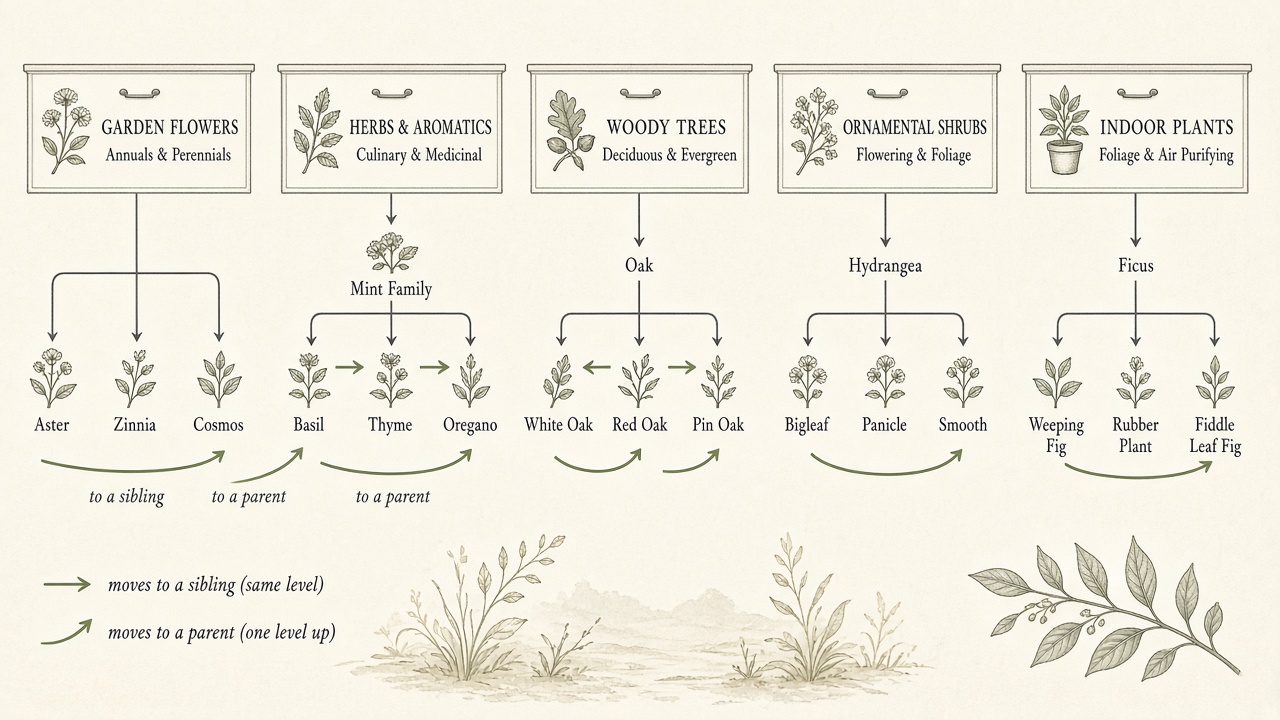
With the canonical help URL settled, keep the tree shallow. Hold top-level categories to about 5–9 and hierarchy depth to 3–4 levels so a customer, and a retrieval pass, can find the article without a maze. Treat claims that each extra level halves discoverability as directional practitioner guidance, not a measured law. Give every category hub a real intro that names who the section is for and links articles in the order a customer actually proceeds. Do not use category pages as a dumping ground for the answer that belongs on its own URL.
Depth limit — About 5–9 top-level categories and 3–4 levels of depth keep the article findable; hubs introduce and sequence links, they do not hold the answer.
Structure One Support Article So Search and a Concierge Can Cite It
The article then has to be quotable: one self-contained question, a complete answer in the first 40 to 60 words under the title, then steps and edge cases, in HTML text rather than an accordion, image, or tab.
The same rewrite split the rest of that citation gain: information chunking accounted for 39.7 percent and visual emphasis 15.4 percent. Add a source or number only if the step needs it; a cited GEO study saw up to 40 percent more generative visibility, not a license to stuff schema. Page-level quoting rules belong in the AI Overview structure guide.
Answer first — Both systems cite the opening answer in text, on one URL, as one chunk.
Should a Recurring Ticket Be Its Own URL or an FAQ Entry?
Give a recurring ticket its own URL when the fix is a procedure. An FAQ line is only for a short, stable answer that is also visible on the page. Do not stuff those steps into one FAQ page and expect search or the concierge to cite the right step.
FAQ schema does not rescue that choice. Google restricted FAQ rich results to government and health sites in August 2023 and fully deprecated the feature in May 2026. FAQPage can remain valid markup; it will not produce that rich result for a general commercial site. An Ahrefs study of 1,885 pages that added JSON-LD, matched to 4,000 controls, found no meaningful citation lift: AI Mode 2.4 percent, ChatGPT 2.2 percent, and AI Overviews down 4.6 percent versus controls. Every page already had more than 100 AI Overview citations, so markup measured extra citations on trusted pages, not discovery of invisible docs.
Keep the visible answer. Add FAQPage only if it matches the on-page text. The one-ticket publishing rule belongs in the help-center SEO brief, not a second copy here.
Own the procedure — A procedure gets its own snippet-eligible URL. An FAQ line is only a short, visible answer, and FAQPage markup will not create a rich result or surface a doc search cannot already see.
Do You Need Schema, Markdown, or llms.txt for AI Overviews?
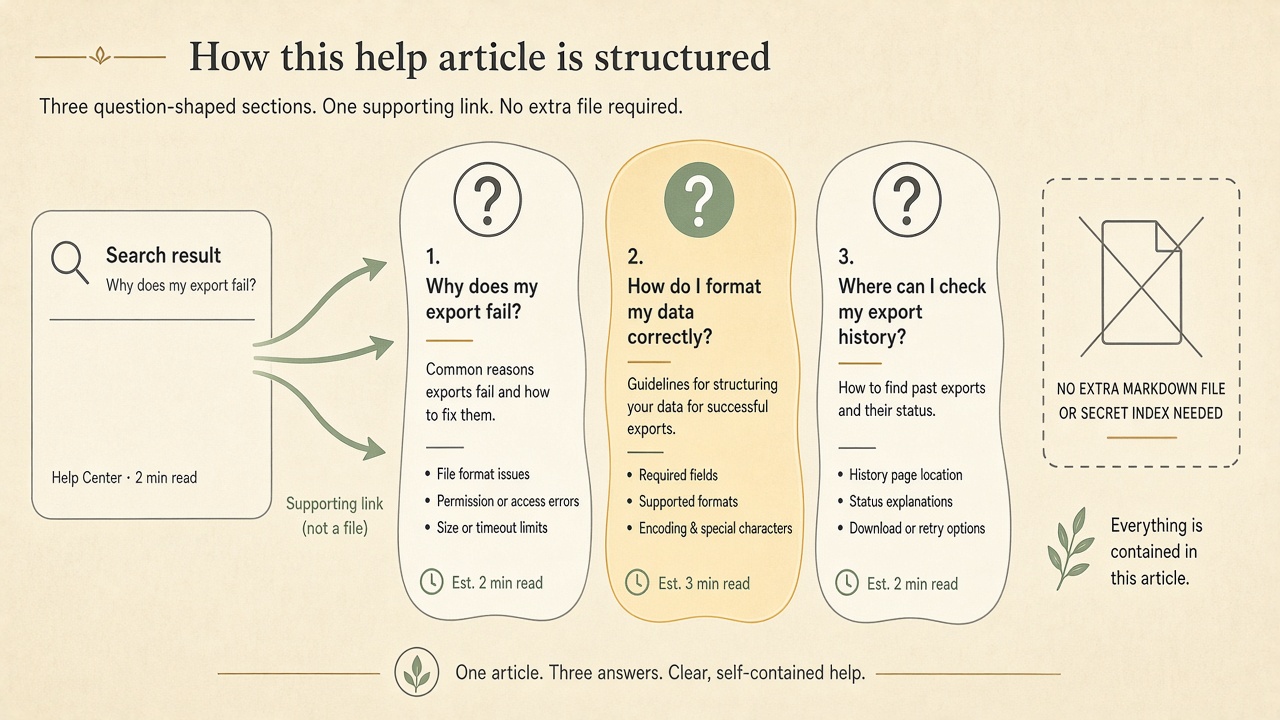
No. Google states there are no additional requirements to appear in AI Overviews or AI Mode, and no other special optimizations are necessary. A supporting link must be indexed and eligible to show in Google Search with a snippet, and important content must be available in textual form. Structured data, if you add it, has to match the visible text.
Markdown or an llms.txt file is optional housekeeping, not a citation lever. A generator file will not place the help center in AI Overviews.
Query fan-out is what changes which section gets cited. AI Overviews and AI Mode may issue related searches across subtopics and can show a wider set of supporting links than classic search, so the cited unit is often a section, not the whole doc. Open each heading with a direct answer that fan-out query can lift on its own.
No special file — AI Overviews need an indexed, snippet-eligible page with the answer in text. Schema, Markdown, and llms.txt do not create eligibility; fan-out cites the section that answers the related query.
What Metadata Must a Doc Carry So an Assistant Can Cite or Refuse It?
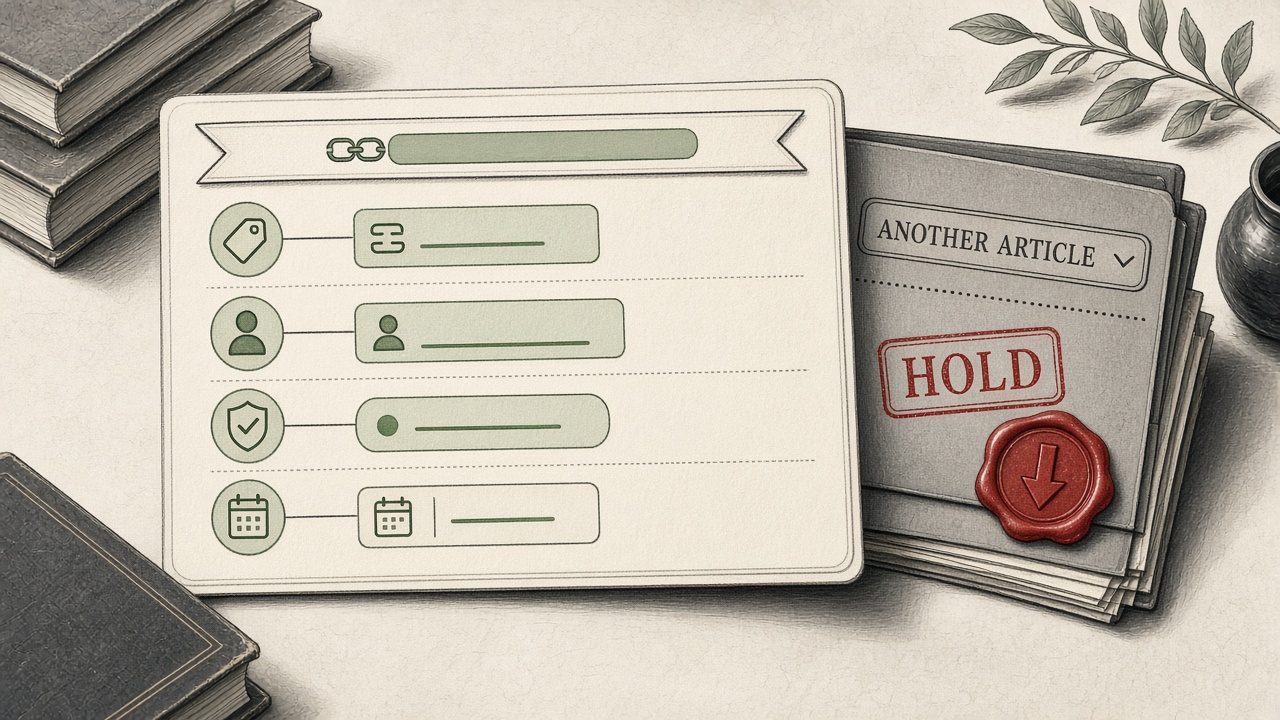
Every citable chunk needs a source URL, domain, topic, version, effective date, and review-by date so the assistant can cite, version-gate, or expire the answer instead of guessing. Add owner and status to that same log so a human can see who may release it. A missing field is a refuse condition, not a prompt to fill the gap.
Hold the article out of the concierge index when the answer sits in an accordion, the policy is stale, the chunk contradicts the live URL, or nobody has reviewed it by the review-by date. Publishing the page to the public help center and admitting that chunk to the assistant index are separate decisions. Intake mechanics belong in the site-assistant training guide; the hold rules stay here.
Refuse, don't guess — A complete chunk log lets the assistant cite, version-gate, or expire. A missing field, hidden answer, stale policy, or contradiction with the live URL means refuse—not guess.
How to Keep Docs Fresh Enough for AI Answers and Measure Ticket Deflection
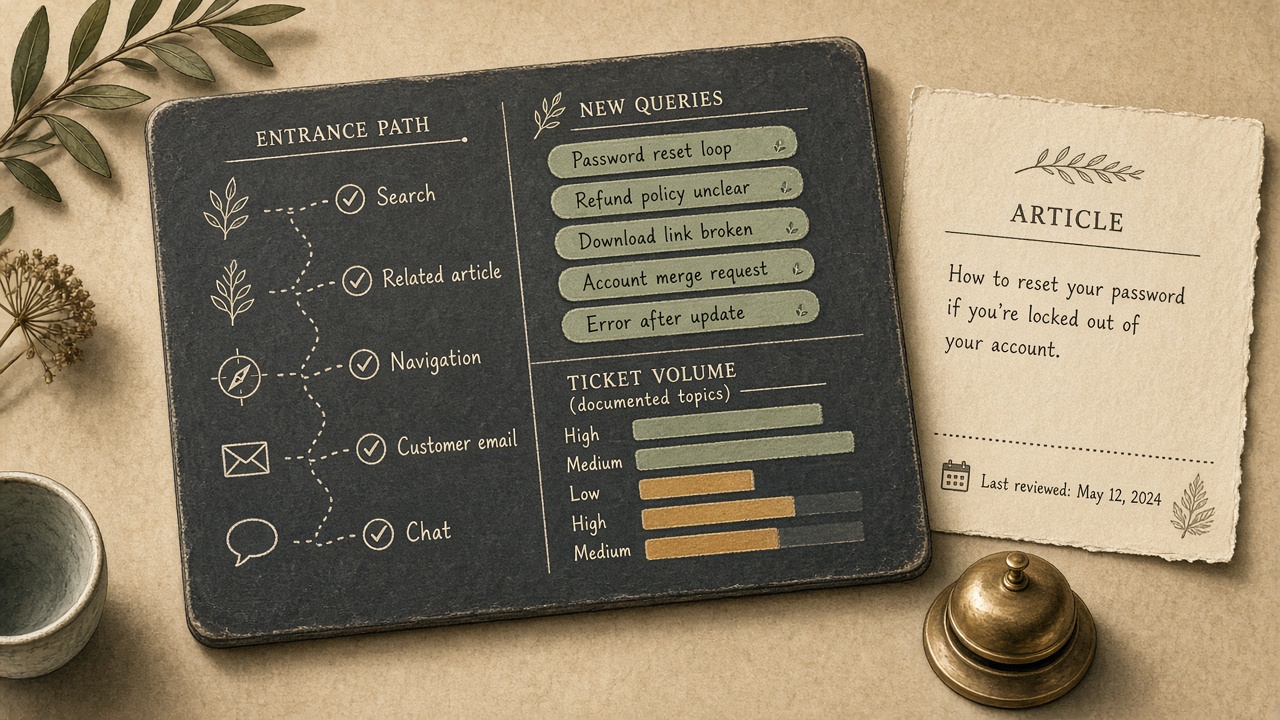
Freshness is a visible last-reviewed date plus a review-by date that expires the chunk. Pull a superseded policy from the assistant index even if the URL still ranks, and re-review when the product, price, or policy changes—not on a vague calendar.
Measure organic entrances to help URLs, new queries versus the prior quarter, and ticket volume on documented topics before and after publish. Do not manage articles by individual keyword rank. Falling ticket volume with rising article traffic is the knowledge base doing support work.
Read self-serve rates as context, not a scoreboard: about 84% of customers try to solve issues themselves before contacting an agent, about 91% would use a relevant knowledge base, and only about one in five companies rate theirs as very accurate. Label vendor resolution rates as vendor-stated. Intercom states Fin averages about a 66% resolution rate across more than 6,000 customers, spanning roughly 25% to 80%+, and attributes that spread almost entirely to the knowledge base. Google says clicks from results with AI Overviews are higher quality, with users more likely to spend more time on the site—a quality signal, not deflection proof.
Rewrite or hold — A doc that ranks but does not cut tickets on that topic needs a rewrite or a hold, not more schema.
Key Takeaways
Audit your public help center against this standard, then publish only the docs your concierge can cite with a source, a version, and a review-by date.
Frequently Asked Questions
You Might Also Like
- AI Search Passage-Level SEO: How to Write Blocks Answer Engines Can Lift
- AI Search AI Overview Citation Patterns: What Gets Quoted vs Ignored
- AI Search Schema for AI Overviews: Which Markup Still Helps
- AEO llms.txt Generator: How to Help AI Crawlers Cite Your Site
- Concierge Flows Concierge: Questions It Should Answer From Your Articles