Impressions Without Clicks: A Hold-or-Rewrite Rule for Existing Pages
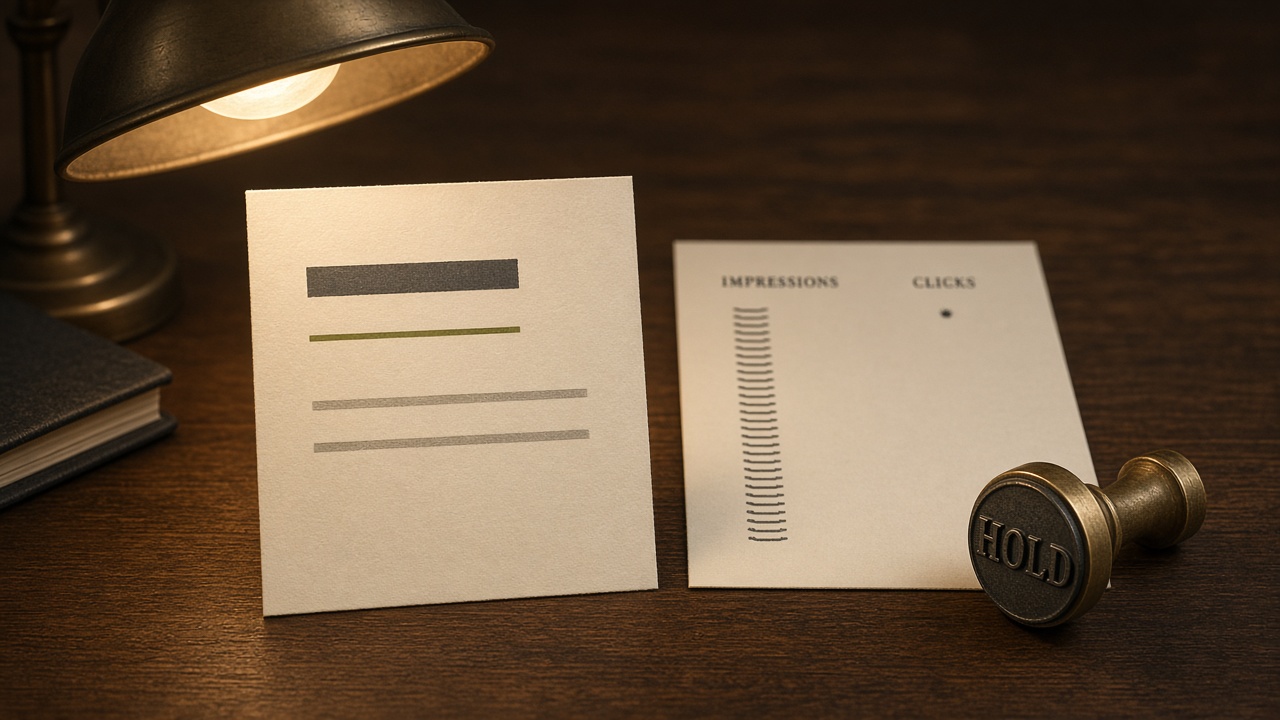
A page can pile up Search Console impressions and almost no clicks without the article being wrong. Google counts an impression when a link appears on the results page that was served, even if the searcher never scrolls it into view. Click-through rate is only clicks divided by that same count, so a low rate often describes where the listing sat, not whether the title failed.
The useful response is a fail-closed gate, not a new content brief. Read average position before anyone rewrites. Near-zero CTR around position 18–20 is what that spot produces; a title change cannot fix a result few people reach. Rewrite the snippet only when the page is already in the click zone, the query is one you want, the live result title is the problem, and CTR is worse than that position should deliver. Hold the body.
Two counting facts make the gate stricter. Google has said impressions, CTR, and average position were mislogged from 13 May 2025 until 27 April 2026, while clicks were not, so that window cannot judge a rewrite. A strong average position with no visit can also mean the page was cited inside an AI Overview, which assigns every cited link the position of the overview block. What follows is the rule for the URL that already exists: what to read, what to ignore, and the one-row log that records hold, snippet test, or refuse.
- An impression means the link was on a served results page, not that anyone saw it or wanted the page.
- Near-zero CTR around positions 18–20 is expected; the fix is ranking, not title copy.
- Test only the snippet when the page is already in the click zone and the query is one you want.
- Do not judge a rewrite from Search Console impressions logged between 13 May 2025 and 27 April 2026.
- A strong position with no clicks can be an AI Overview citation or a normal zero-click pattern, not automatic content failure.
What an Impression Without a Click Means in Search Console
An impression without a click, in Google Search Console, means the link appeared on a results page Google served and the searcher did not click it. That is not proof they saw the listing or wanted the page.
Google still counts the impression if nobody scrolled the link into view, unless the searcher must click to reveal more results. A page-3 result gets no recorded position if the user only views page 1, so a logged impression means the link was on a results set that was served.
Search Console CTR is clicks divided by impressions for the same set of results, so a large impression count with few clicks is a ratio, not a demand verdict. Google’s goal is meaningful impressions, not more impressions from people who will not find the page useful. Do not chase the count.
Served, not seen — An impression without a click is a served listing that went unclicked, not proof of visibility or demand. Treat the ratio as a counting fact, and chase meaningful impressions rather than a larger total.
When a Near-Zero Click-Through Rate Is Normal
Once an impression is only a served link, a near-zero click-through rate is often what that depth should produce. Around position 18–20 and beyond, almost nobody reaches the listing. A page at position 18 with 0% CTR is a normal outcome for that spot; the fix is ranking, not title copy.
Result type matters as much as rank. On one 90-day Search Console export, pages at positions 8–20 converted impressions to clicks at 0.07–0.13%, while a tool page at position 11.5 converted at 9.08%. Intent and SERP type beat any universal CTR target.
Yes, a top-three page can still get zero clicks. In a separate 90-day study, 96.5% of non-branded queries produced no clicks, including 5,575 queries already ranked in the top 3. Informational position-one CTR in the Ahrefs sample fell from 7.6% in December 2023 to 3.9% in December 2025, and from 7.3% to 1.6% on keywords that triggered an AI Overview. Compiled 2026 position-1 benchmarks still range from 39.8% to 8.17%, so a single CTR target is not a rewrite trigger.
Separate the problems by position first. About position 20 and deeper is depth, so hold the copy. A snippet problem exists only in the click zone, when CTR is worse than that position and SERP type should deliver.
Hold first — Near-zero CTR at roughly position 18–20+ is expected ranking depth. Hold the existing page unless it is already in the click zone and still underperforming for that SERP type.
Can You Trust Impressions from May 2025 through April 2026?
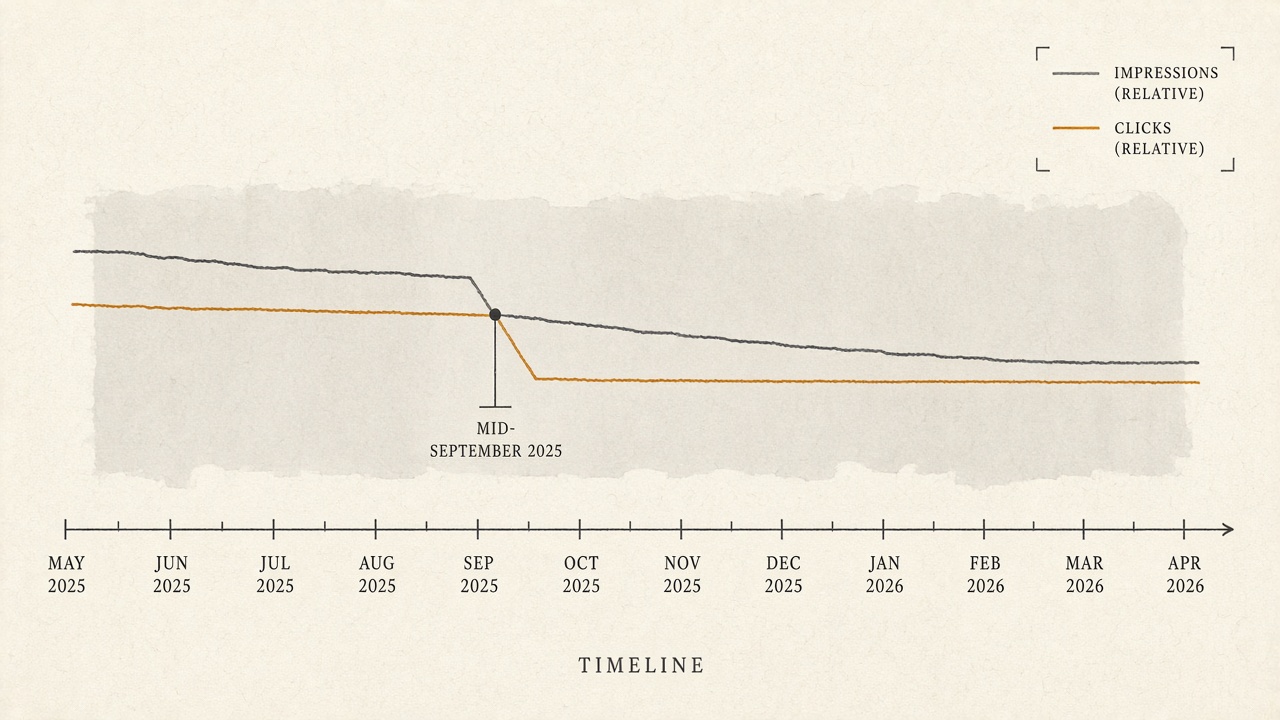
That click-zone test only works if the numbers are real. No: do not judge a rewrite from impressions, click-through rate, or average position between 13 May 2025 and 27 April 2026. Google confirmed a logging error that misreported Search Console impressions across that window, and the historical data was not reconstructed.
Only impressions and the metrics derived from them — CTR and average position — were affected. Clicks were not. Annotate the window, then decide from clicks plus a clean date range outside it.
The September 2025 impression drop with flat clicks was a counting change, not decay. When Google stopped honoring &num=100 around 10–13 September 2025, the median of 1,503 tracked sites lost 33% of impressions within days while clicks moved +4%. In that same cutoff, 99% of tracked sites saw average position improve from a median of 29 to 13, because scraper impressions stopped being counted. A cleaner average position is not a rewrite trigger.
Hold — Treat 13 May 2025 through 27 April 2026 as unusable for impressions, CTR, and average position, and treat the September 2025 drop the same way: judge the page from clicks and a clean range outside the broken window.
How AI Overviews Change Impressions, Position, and Clicks
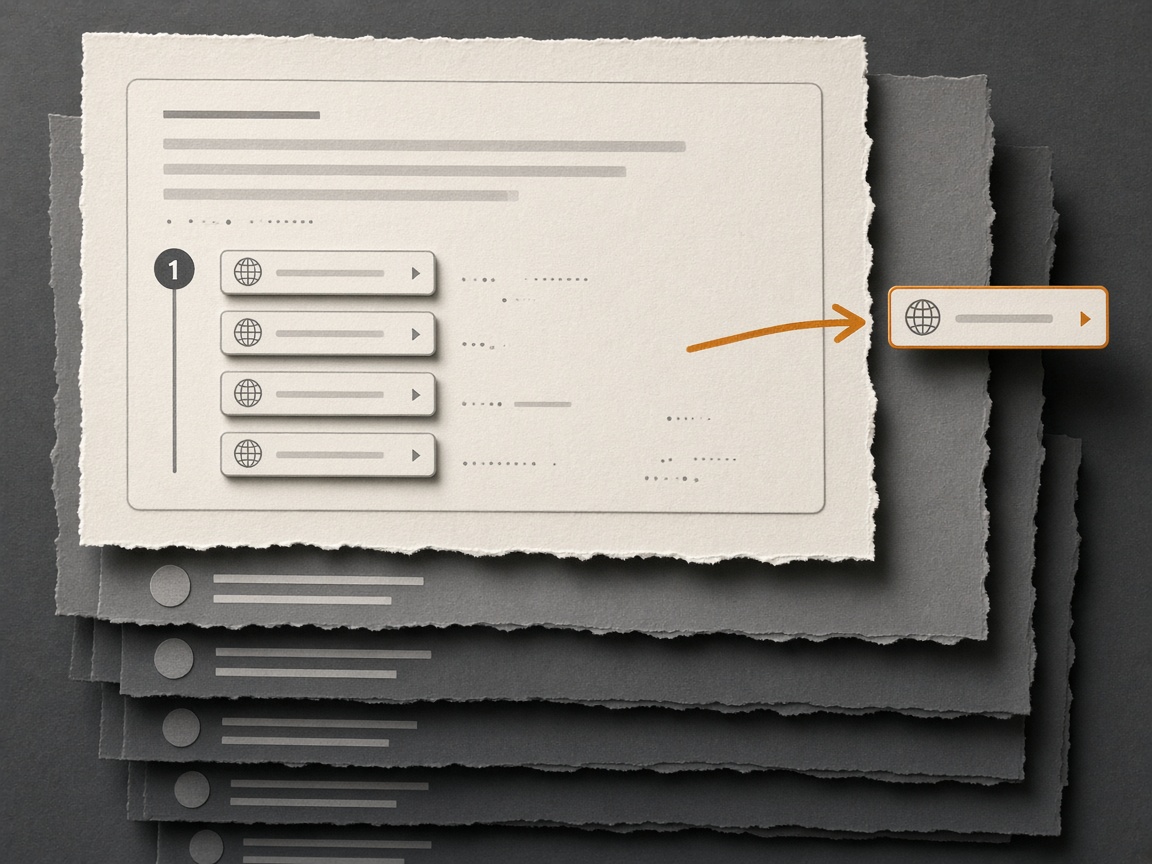
A clean date range still will not turn an AI Overview into a rewrite trigger. Google assigns every link inside an AI Overview the single position of the overview block, not a unique rank among citations. A strong average position with no clicks can mean the page was used as source material, not that the article failed.
A click in an AI Overview is only a click on an external link inside the overview. Staying on Google is not a click. A follow-up question in AI Mode counts as a new query, so one session can add impressions without a visit.
As of December 2025, Ahrefs found AI Overviews correlate with a 58% lower average click-through rate for the top-ranking page, up from a 34.5% reduction in its April 2025 study. The December finding used 300,000 keywords and aggregated desktop Search Console data, comparing December 2023 with December 2025. The click loss continues down the page: about 50.8% at position 2, 32.6% at position 5, and 19.4% at position 10.
The split is now sitewide, not only one results feature. Across 415 sites, median impressions grew 2.18× from October 2025 to August 2026 while clicks grew 22% and click-through rate fell 40%; 79% of sites lost click-through rate. Even among 129 sites whose average position moved by two places or less, click-through rate fell 31%. Marketing and advertising sites lost 52%, the steepest niche drop. Rising impressions with much slower click growth is a normal zero-click pattern, not automatic content failure. Hold the body unless the listing is already in the click zone and still losing clicks that position should have earned.
Hold the page — A strong position and no clicks can mean the page was cited inside an AI Overview, not that the article failed — hold the body unless it is in the click zone and still losing clicks that position should have earned.
Should You Rewrite the Title If a Page Has Impressions and No Clicks?
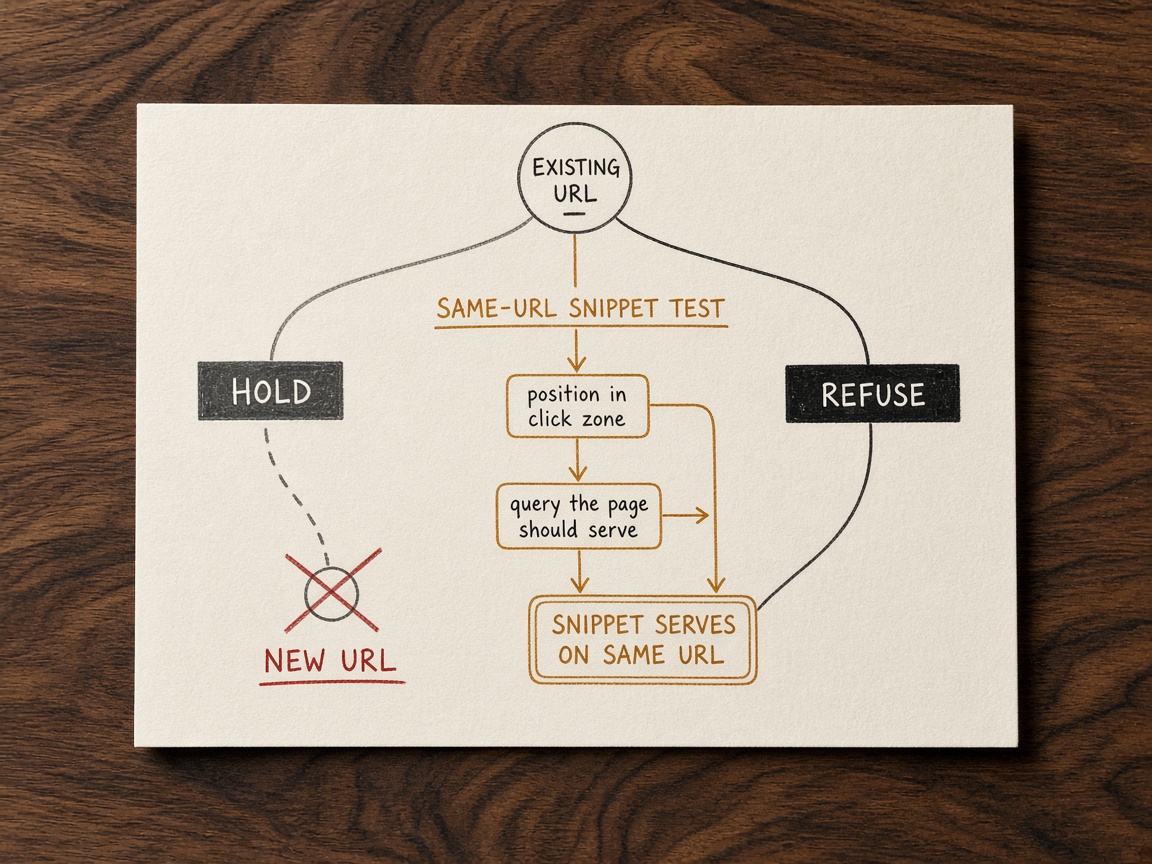
No — not from impressions alone. Rewrite the snippet only when the page is already in the click zone, the query is one you want, the live results title is the problem, and CTR is worse than that position should deliver. Miss any of those four and you hold the body.
A snippet test is the right move only after those four gates pass, and it stays on the same URL: title and meta only, no body rewrite. This rule never opens a full refresh. Impressions without clicks should not become a new URL. Near-page-one positions belong to the striking-distance refresh gate, still decided on the page that already exists.
Hold when position is deep, the date window is the logging error or the September counting change, the results page already answers the query, or the query is off-strategy. A login-intent explainer at position 8.9 had 141,239 impressions, 103 clicks, and 0.07% CTR — a query a title rewrite cannot serve. Do not retitle a useful article to chase it.
Hold first — Impressions without clicks decide hold, snippet test, or refuse on the URL that already exists — never a new page, and never a body rewrite from the count alone.
How to Log the Hold-or-Rewrite Decision So the Next Cycle Does Not Reopen It
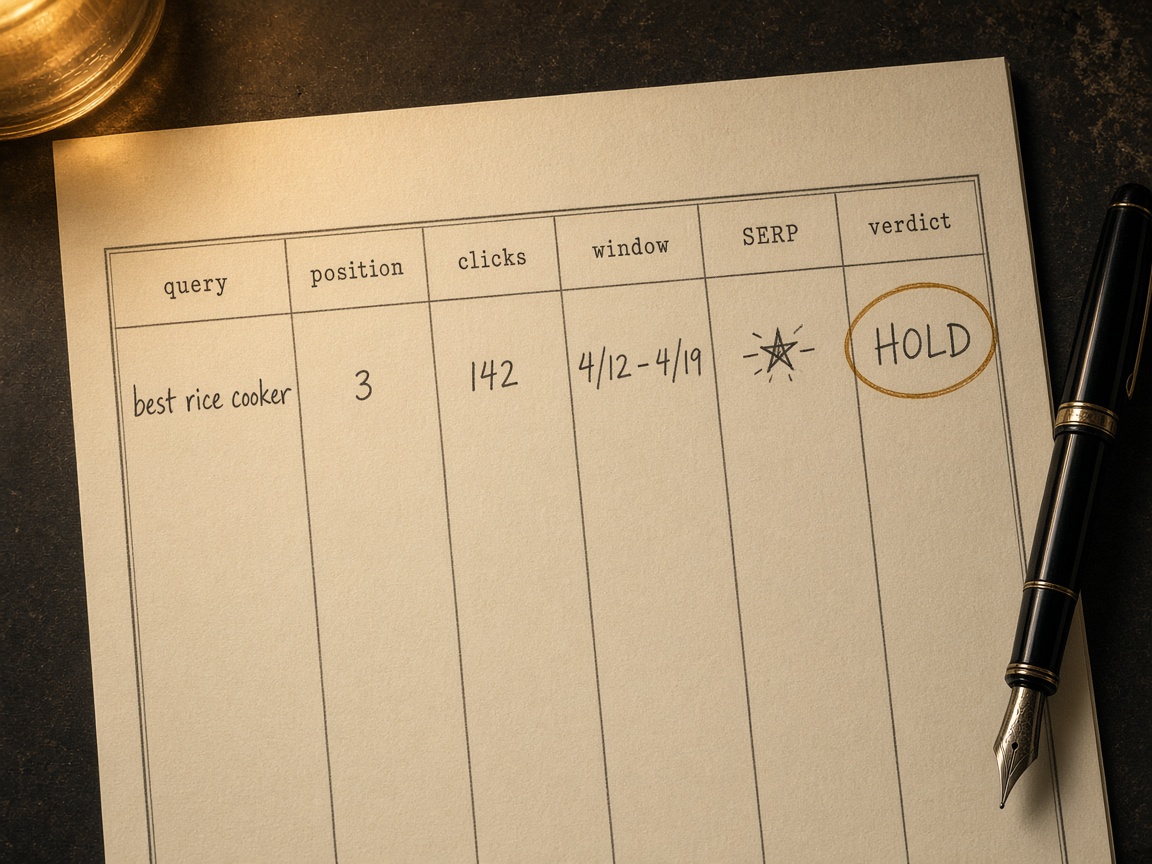
Once those gates are closed, log the call before anyone writes, or the next cycle will reopen the same URL. Ship one row: query, position, clicks, date window, SERP type, and a verdict of hold, snippet test, or refuse. That row is what stops the reopen, and what a scorecard can turn into a brief or a refusal.
This rule is not a striking-distance refresh and not a content decay audit. It only decides hold, snippet test, or refuse on a URL that already has impressions and almost no clicks. Point ranking-depth and near-page-one queries to the striking-distance gate at /striking-distance-keywords-refresh-not-a-new-url. Point click losses to the decay checks at /content-decay-signals-what-to-check-before-you-rewrite-a-ranking-page, /content-decay-checklist-12-signals-to-log-before-you-rewrite, /traffic-drop-vs-content-decay-what-the-brief-should-capture, and /content-decay-audit-a-monthly-checklist-before-rankings-slip, instead of repeating those audits here.
If the row says refuse or hold, do not open a content brief. If it says snippet test, limit the brief to the live title and meta. The existing page stays; only the logged verdict moves.
Key Takeaways
Log the next impressions-without-clicks query against the four gates and hold, snippet-test, or refuse it before anyone writes a brief.
Frequently Asked Questions
You Might Also Like
- Measurement Content Decay Signals: What to Check Before You Rewrite a Ranking Page
- Measurement Striking Distance Keywords: When a Query Deserves a Refresh, Not a New URL
- Measurement Traffic Drop vs Content Decay: What the Brief Should Capture
- Measurement Search Console for Content Ops: Queries That Should Become Briefs
- Measurement Content Decay Checklist: 12 Signals to Log Before You Rewrite