Content Decay Signals: What to Check Before You Rewrite a Ranking Page
A ranking page can lose clicks for months without the copy being the problem. Content decay is a gradual decline in organic traffic and rankings over months or years, not a penalty and not a one-week cliff. The mistake is treating every downward chart as a brief to rewrite.
The useful check is fail-closed. Read clicks, impressions, and average position together in Google Search Console before you open the editor. Clicks down, impressions down, and a worse position is classic ranking decay — the only type a content refresh reliably fixes. Clicks down with impressions flat or rising, and position stable or better, is zero-click capture: the page can still rank, often higher than before, and still lose clicks. Rewriting the body will not put those clicks back.
What follows is the order to run that check: how long a page has to have lived, which period comparison to trust, and when a drop is cannibalization, an indexing issue, or damage from your own last edit rather than stale copy.
- Content decay is a slow loss of traffic and rankings over months, not a sudden penalty or a one-week cliff.
- Only clicks, impressions, and average position all moving the wrong way is the pattern a refresh reliably fixes.
- Clicks down with a stable or better position and flat or rising impressions is a zero-click or SERP-feature loss, not a rewrite case.
- Wait at least six months before calling a drop decay, and do not diagnose pages younger than about three months.
- Rewrite only when intent or quality no longer matches the results page; otherwise update facts, gaps, the title, and internal links.
What Content Decay Is, and How It Differs From a Penalty
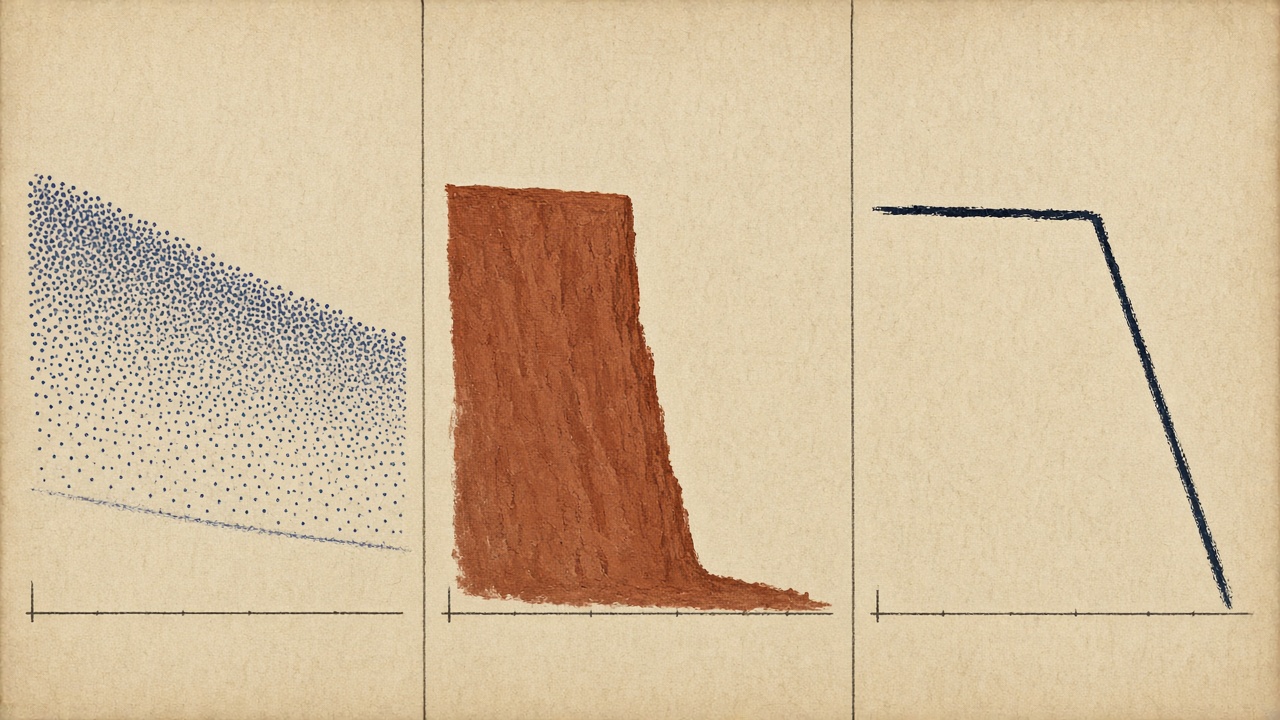
Ahrefs puts the pace plainly: decay is slow — it happens over months, sometimes years.
A penalty or manual action is an enforcement event. A core update often moves many URLs at once. Decay is the slow fade of a page that used to perform, which is why the pattern has to be read before anyone rewrites it.
Wait at least six months before calling a drop decay. Anything published in the last three months is too fresh to diagnose. Use a long enough comparison that a seasonal swing is not mistaken for a fade.
Slow fade — Call it content decay only after six months, when a page that used to rank has slipped gradually — not when a penalty or a core update hits overnight.
Which Search Console signals show decay before clicks collapse?
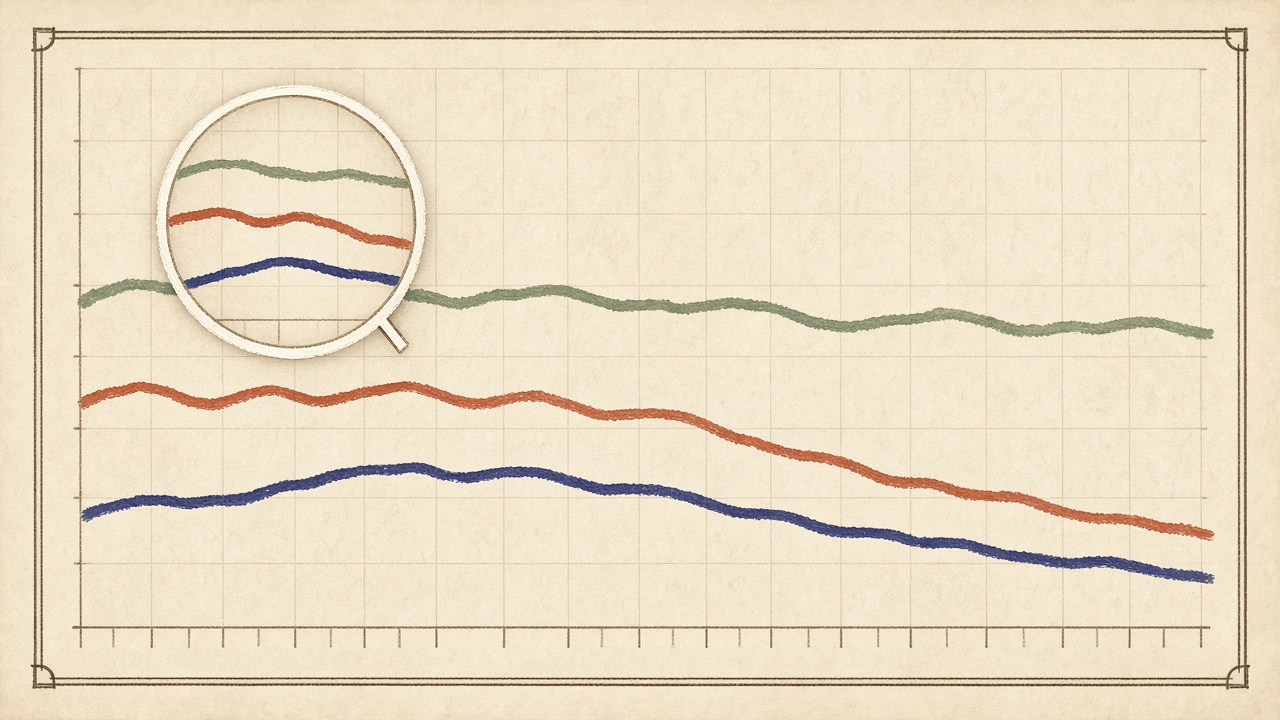
Once the drop looks like decay rather than a penalty, the signals that show it before clicks collapse sit in Google Search Console, not in a traffic report. Traffic is a lagging metric. By the time a page has lost 30 percent of organic visits, the problem may already have been visible in Search Console for weeks.
Watch click-through rate beside position, not the click chart alone. Both impressions and click-through rate declining is a classic decay signal; a worse average position is what marks that slide as the pattern a content refresh reliably fixes.
Flat impressions with falling click-through rate usually means a SERP feature changed around the page, not that the content itself decayed.
Ranking Decay, Demand Decay, Intent Drift, or a Sitewide Update?
Name the drop before you edit. Ranking decay is a worse position. Demand decay is fewer searches while position holds. Intent drift is a SERP that no longer matches the page. A sitewide update moves many URLs together. Only ranking decay is the pattern a refresh reliably fixes.
In 2026, Search Engine Land reports, fewer than one in three Google searches sends a click to the open web, and about 68 percent end without a click, up from roughly 60 percent two years earlier. On queries where an AI Overview appears, the top organic result loses around 58 percent of its clicks. Gartner’s predicted 25 percent drop in search query volume by 2026, as people use assistants, is an interface and demand shift, not proof the copy went stale.
Stable position plus lost clicks is an answer-engine problem. Point citation questions to the AI Overview citation article; do not treat them as a rewrite trigger.
Label first — A worse position is ranking decay a refresh can fix. Lost clicks with rank held are demand, zero-click, or AI Overview loss — not a rewrite trigger.
What to check for cannibalization before you rewrite
Even after you have labeled the drop, do not brief a rewrite or a new URL until an internal check clears this page. The first check is whether the URL was edited before the drop, whether it is still indexed, and whether it is still the only page ranking for the query.
If a sibling owns the query, consolidate or retarget. Do not rewrite the loser as if the copy were stale, and do not open a new-URL brief. The refresh calendar is the gate for that slot.
Before the brief — Refresh only the URL that still ranks alone for the query. A post-edit drop wants a restore; a cannibalized URL wants consolidation, not a new page.
When to rewrite a ranking page instead of refreshing it
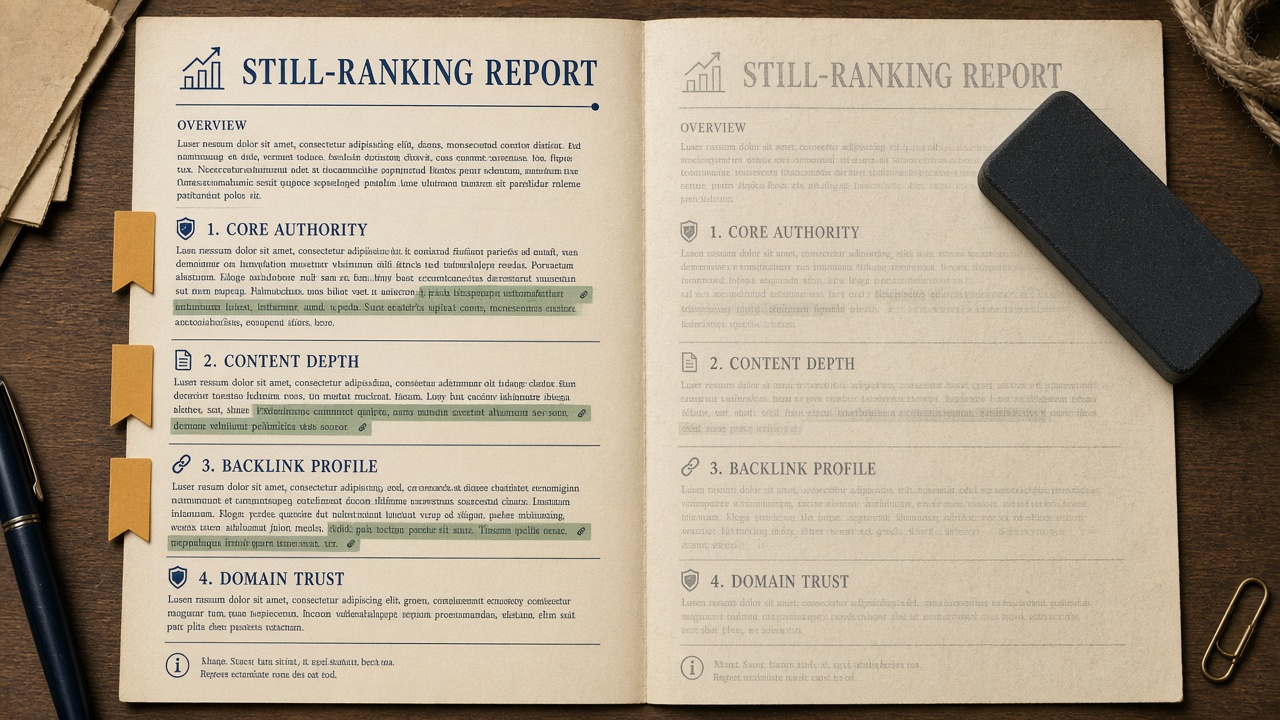
Once those gates are clear, do not rewrite by default. Rewrite only when the page no longer matches search intent or quality expectations; many pages need a targeted refresh instead.
Update when the keyword is still relevant and the structure is sound: fresher data, updated examples, and new subtopics, plus the title and internal links. Rewrite from scratch only when the page was poorly optimized from the start and the topic is still competitive.
A page that drops from position 3 to 8 can often be refreshed. A page that has already lost most of its organic traffic may need a deeper rewrite, new research, stronger internal links, or consolidation — but only after the signal checks pass.
Preserve the URL, the queries it still ranks for, sections that earn links, and internal-link targets. Replacing a working structure can turn a refresh case into a self-inflicted drop. If ranking decay is confirmed and the structure is still sound, stop and follow the content refresh strategy.
Keep the bones — Rewrite only when intent or quality no longer fits. Keep the URL, remaining queries, link-earning sections, and internal-link targets; a sound structure with confirmed ranking decay is a refresh, not a teardown.
Which Decaying Pages Are Not Worth Rewriting?
A confirmed ranking drop is still not a rewrite brief. Skip any URL with no business value, no residual traffic, and no query you can win.
Filter so a link-authority gap is not treated as a content problem. A practical cut is keyword difficulty under 40 before you call the drop a copy issue.
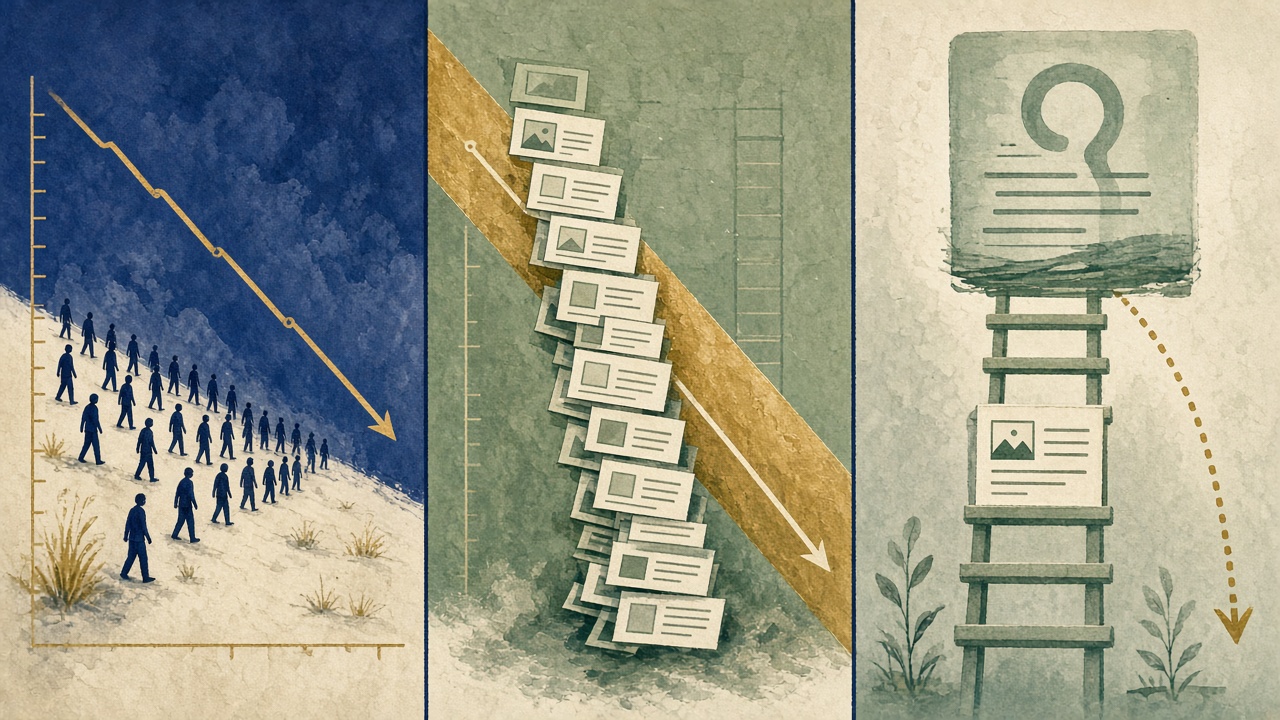
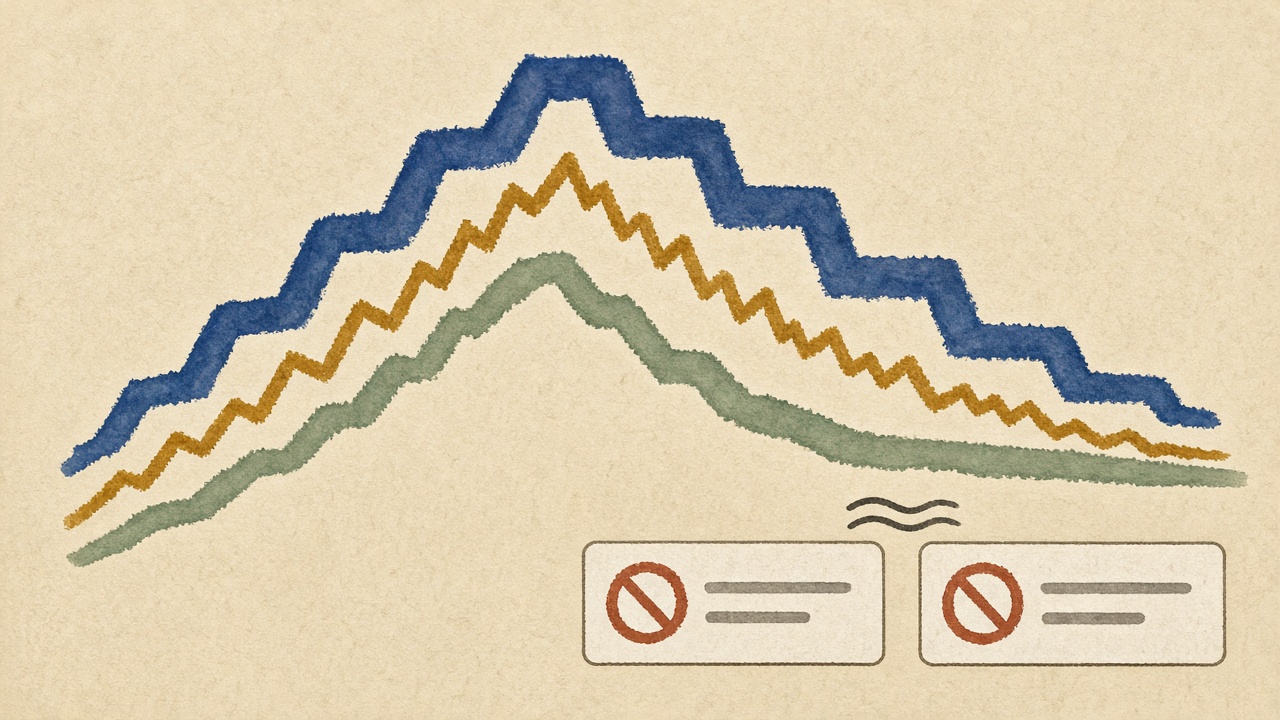
Across 719 editorial pieces, content hit peak traffic a median of four months after publishing, then the typical piece lost about 76 percent of peak traffic within three months.
By three months after peak, research and data pieces lost 89 percent, listicles 82 percent, and how-to guides 61 percent. How-to content retained roughly 30 percent of peak a year later. Prioritize how-to pages that still hold residual traffic and a query you can win. A fast fade on a data piece is often normal, not an automatic rewrite.
Not worth it — Skip a declining URL that has no business value, no residual traffic, and no winnable query. How-to pages that still hold traffic come before data pieces whose fast fade is often normal.
Traffic Lost Within 3 Months of Peak
Does Losing AI Citations Count as Decay If Rank Holds?
The same restraint applies when the missing signal is not a Google ranking. Losing an AI Overview or chatbot citation while rank holds is a separate citation signal, not classic content decay. Do not rewrite a ranking URL only to chase assistant quotes.
Across AI assistants, cited URLs averaged 1,064 days old versus 1,432 days for organic SERP URLs, about 25.7% fresher. ChatGPT citation URLs were 458 days newer than organic URLs, the largest gap measured. Google AI Overviews were the outlier, citing content 16 days older on average than organic results, so a freshness rewrite will not reliably win those citations.
A lean team should audit only ranking pages that still have residual traffic, and only once they are old enough to diagnose. Leave the rewrite or new-URL brief empty until that sheet is complete.
Hold the rewrite — Citation loss with a stable Google rank is not the decay pattern a refresh fixes. Audit residual-traffic URLs before you rewrite, and rewrite only when clicks, impressions, and average position decline together.
Key Takeaways
Audit your residual-traffic ranking pages in Search Console with a three-month versus year-ago comparison before you open a rewrite brief.
Frequently Asked Questions
You Might Also Like
- Workflows Content Refresh Strategy: How to Update Pages So Rankings Do Not Decay
- Workflows Content Refresh Calendar: When to Update vs When to Brief a New Page
- Measurement AI Visibility Metrics That Matter (and Vanity Numbers to Ignore)
- AI Search AI Overview Citation Patterns: What Gets Quoted vs Ignored