How to Audit ChatGPT Mentions for Your Brand Without Guesswork
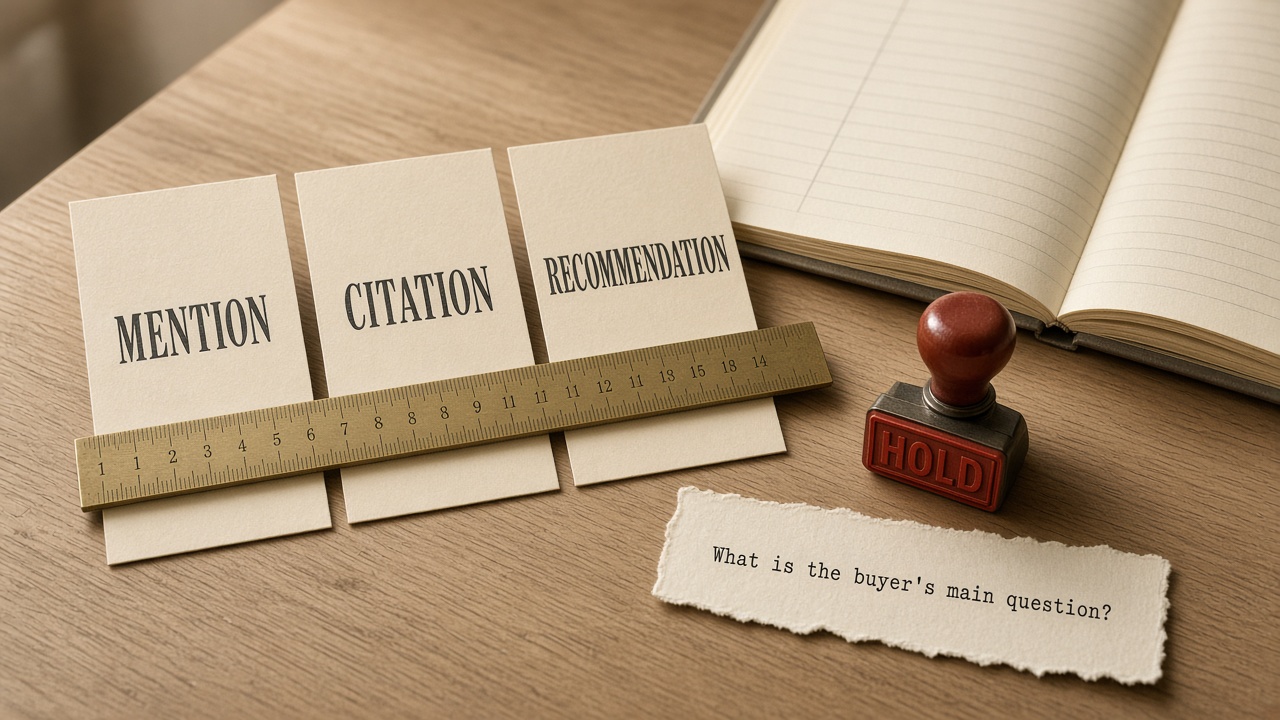
A screenshot of ChatGPT naming your brand is not a measurement. Answers change from one run to the next, a source link is not the same event as being named, and a prompt that already contains your name almost guarantees you appear. Collapse those events into one visibility score and the audit lies.
Keep the three events apart. A mention is the brand named in the answer text. A citation is a linked source. A recommendation is the brand offered as a fit for the question. In the Semrush and Kevin Indig ghost-citation study, ChatGPT cited 87% of the time but mentioned brands in only 20.7% of answers, and 61.7% of domain appearances were source links with no brand name in the answer. A link is not exposure.
This sheet is fail-closed. Score only unbranded prompts, log who was cited instead of you, and refuse to publish a rate from a dirty session, a branded-only set, or a single run. The definitions come first, because every later number depends on them.
- Score mentions, citations, and recommendations as separate events, or the audit overstates visibility.
- Unbranded prompts are the only fair denominator: across 3,736 brands, the median brand was named in 93% of branded answers and 7% of unbranded ones.
- A source link is not brand exposure. In the Semrush study, 61.7% of domain appearances were ghost citations.
- One screenshot is not a sample. Median day-over-day source churn on ChatGPT was 82%, and only 40.9% of day-1 sources were still cited the next day.
- Withhold the number when the session is dirty, the set is branded-only, or the prompt was run once.
What Counts as a ChatGPT Brand Mention?
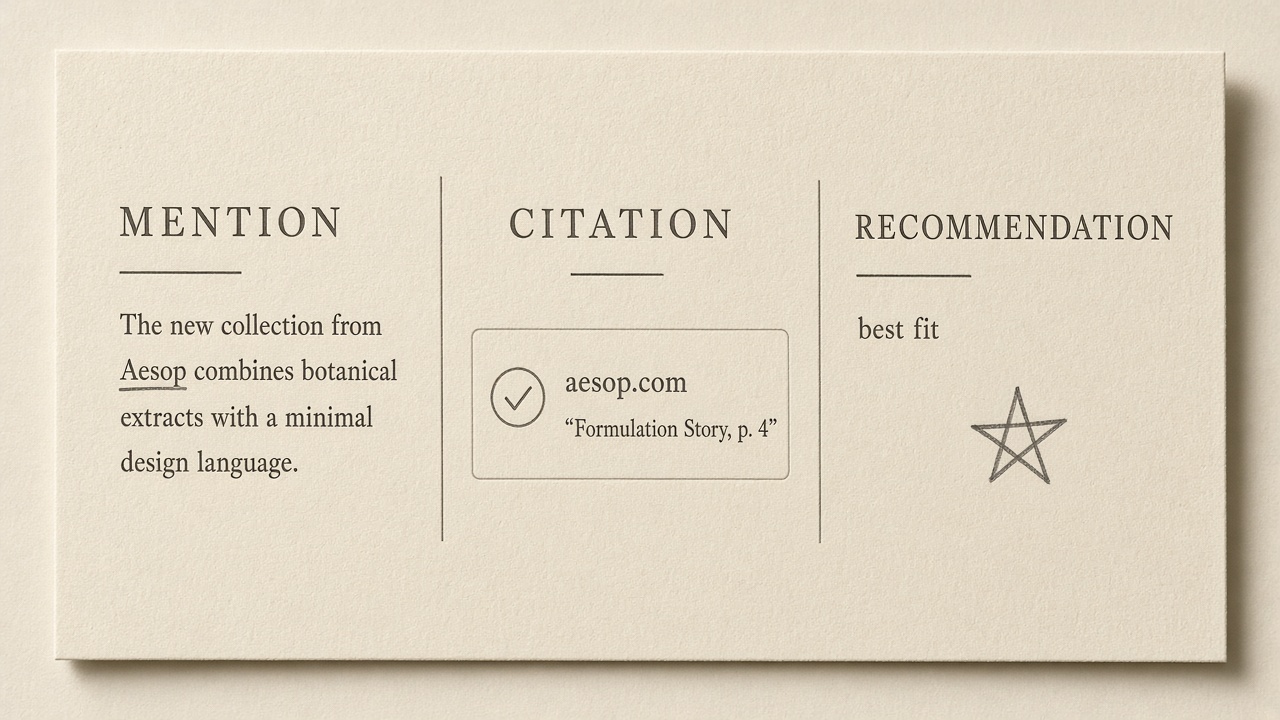
A ChatGPT brand mention is the brand name in the answer text. A link is not a mention, and a mention is not a recommendation.
A citation is a visible source URL. A recommendation is the brand offered as a fit for the buyer’s job. Score all three on the same row, or the audit lies.
ChatGPT cites far more often than it names brands. Semrush recorded an 87% citation rate against a 20.7% mention rate in the same study, so a source list cannot stand in for exposure.
Keep this sheet ChatGPT-only. For cross-engine name-versus-link logging, use the existing brand-mention tracking article rather than rebuilding it here.
Score them apart — A mention is the name in the answer, a citation is the visible URL, and a recommendation is the brand offered as a fit. Score them separately or the audit misstates visibility.
Why One ChatGPT Answer Does Not Prove Your Brand Is Visible
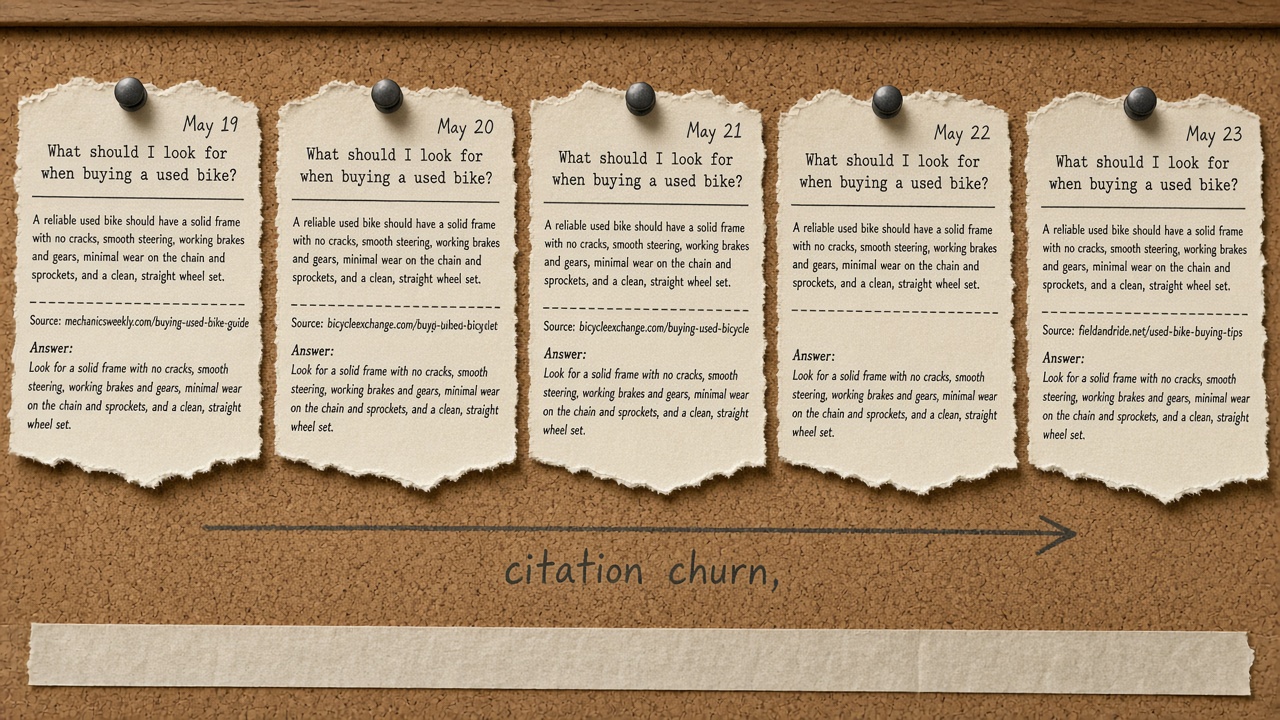
One ChatGPT answer does not prove your brand is visible. Replies are non-deterministic, and the sources under them churn, so a single screenshot is not a measurement. Rerun the same unbranded prompt set weekly while you are changing pages, then monthly once the rate is stable.
Those figures come from a seven-day study of 2,398 queries. ChatGPT reached 900 million weekly active users in February 2026, so a noisy personal session is not the product your buyers see. Do not call a day-to-day source swap a trend until the same gap repeats. A citation is not a slot you hold: log the new URLs, and do not rewrite the mention rate because the footnotes moved.
Not a measurement — Visibility is a rate on a repeated unbranded set, not one answer. Moving footnotes are a log entry, not a reason to rewrite the mention rate.
ChatGPT Source Churn vs Retention
Audit Unbranded Buyer Questions, Then Repeat Before You Publish a Rate
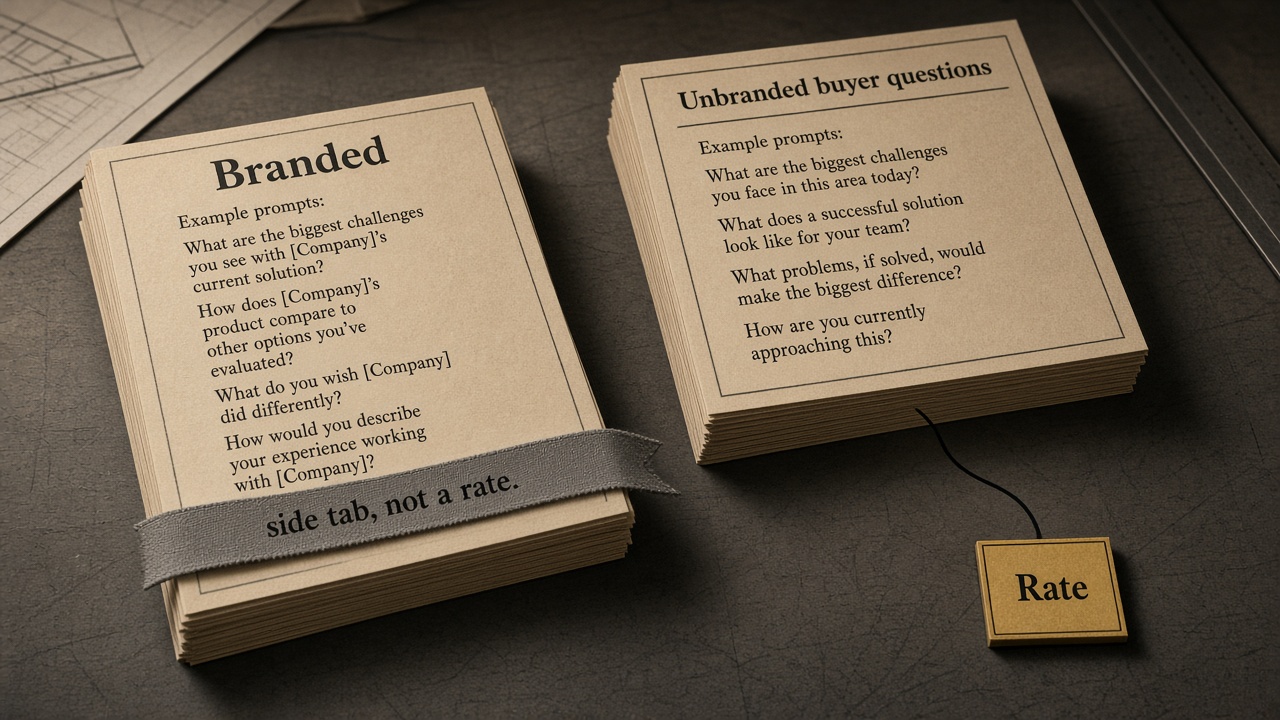
Those repeats only count if the prompts stay unbranded. Score the jobs a prospect asks without typing your name. Branded prompts are a recall check, not a visibility rate.
Across 3,736 brands, the median brand was named in 93% of branded answers and 7% of unbranded ones. Mixing those sets inflates the number. When the question does not name the company, its own site gets about 6% of citations, versus about 29% when it does. Record that split; do not average it.
One pass is not a baseline. Repeat the same prompt, because a single answer is not a stable sample, and a modest set grows fast—twenty prompts, run three times each across four engines, is 240 answers. Publish a rate only after the same unbranded set has been repeated in the same mode and the rate stops swinging wildly. Keep branded runs in a separate tab that never enters the denominator.
Fair rate — A usable ChatGPT rate comes only from a repeated unbranded set. Branded runs are a recall check and never enter the denominator.
Branded vs Unbranded Prompt Results
How to Run a Clean-Room ChatGPT Test So Memory and Web Search Don't Fake the Result
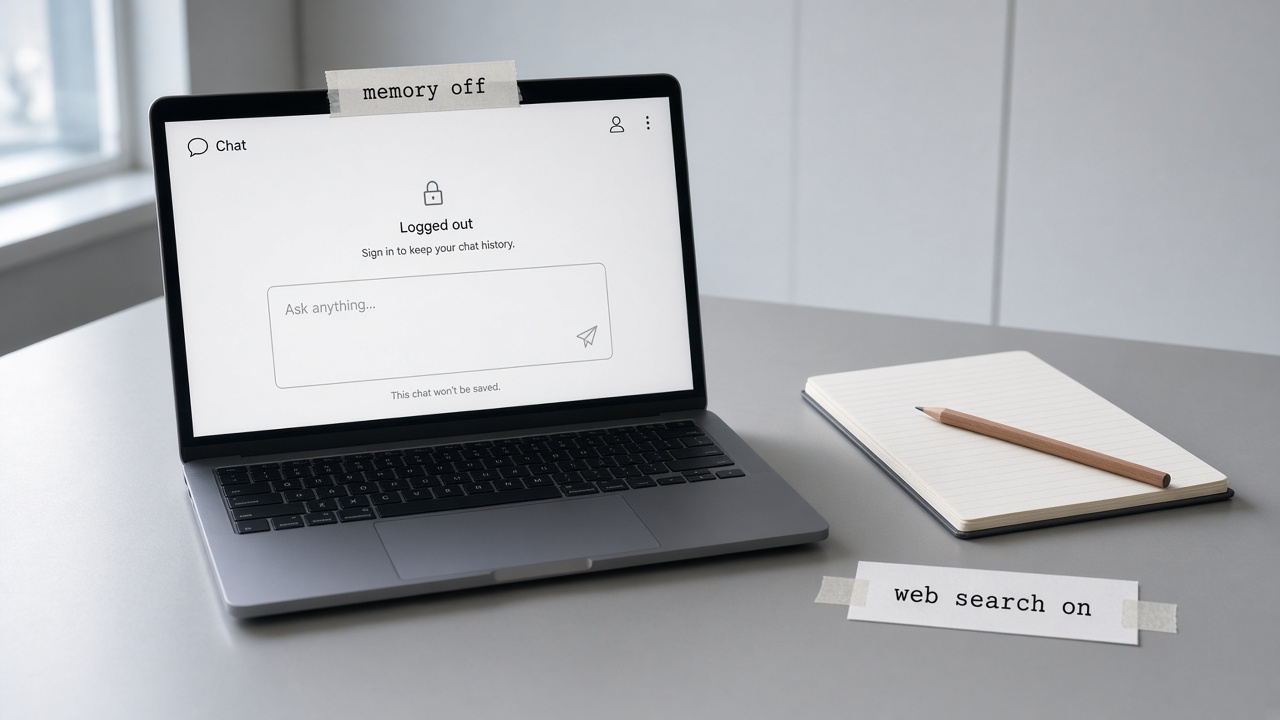
That repeat only counts if the session cannot remember you. Memory, login state, and a follow-up such as "what about us?" can manufacture a mention a buyer would never see. Turning web search on is what makes source links appear, so a no-search mention and a search-on citation are not the same result.
Search on and search off cannot share a column. A volatility study that logged 67,144 answers and 530,875 citations ran ChatGPT with web search on in logged-out sessions, so those results stay with that mode and cannot be pooled with search-off chats.
Hold the dirty run — Score only a new chat, one pasted prompt, memory off or logged out, and one fixed search mode. If the session was steered or the mode changed, it does not enter the rate.
What to Log in a ChatGPT Mention Audit, and How to Score Each Rate
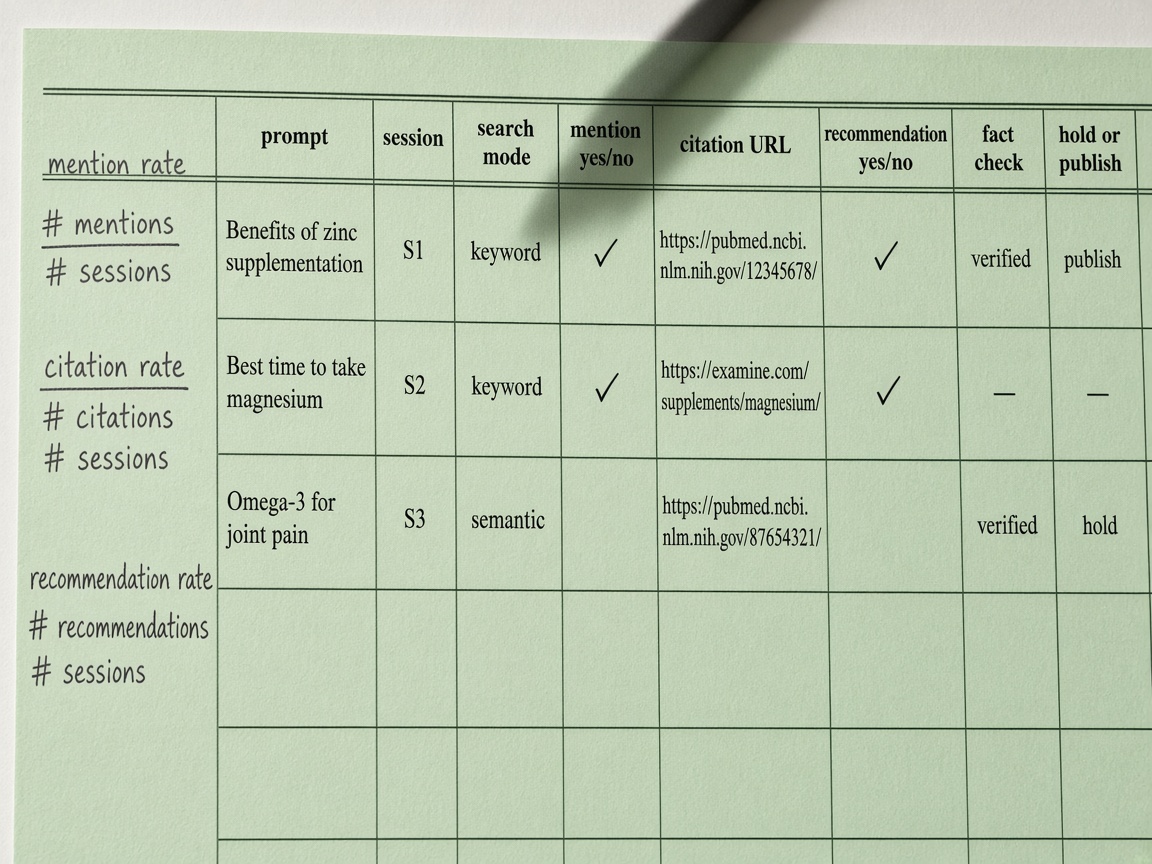
Those session conditions are not optional notes. A row is publishable only if it can reconstruct the run: date, the exact prompt, a branded or unbranded flag, search on or off, login and memory state, mention yes or no, citation yes or no, recommendation yes or no, position, framing, competitors named, visible source URLs, accuracy, and a hold or publish flag.
Mention rate is answers that name you divided by every answer in the fixed unbranded set. Citation rate is answers that link your domain, divided by that same answer count. Share of voice uses a different denominator: your mentions divided by all tracked brand mentions, not by all answers. Never put these three rates on one blended score.
An answer that names the brand three times still counts as one mention. Do not weight by repetition or by how flattering the sentence is. Leave branded prompts out of every denominator. If a field is blank—especially source URLs or session conditions—the row cannot be published.
Three denominators — Score mention rate and citation rate against the same unbranded answer count, score share of voice against tracked brand mentions, and withhold any row that cannot reconstruct the session.
What a Ghost Citation Is, and Why ChatGPT Shows So Many
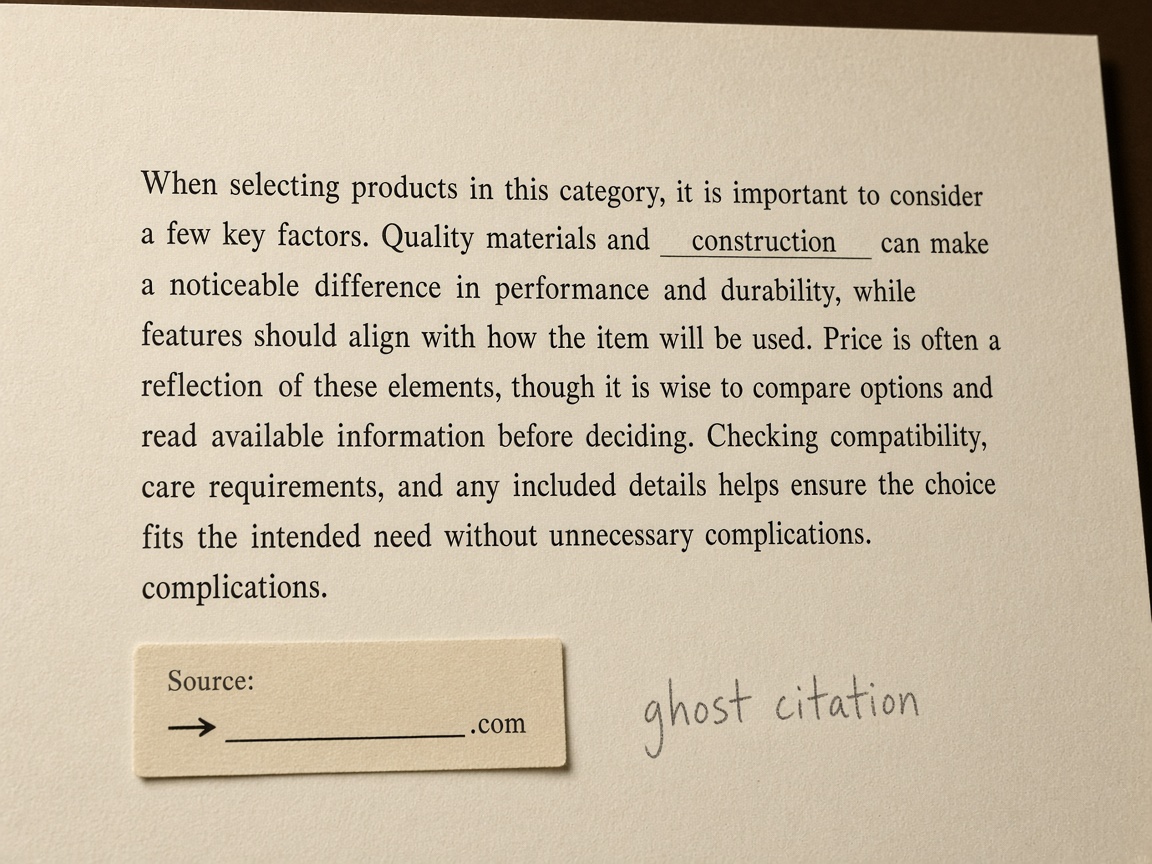
A ghost citation is a source link to a domain whose brand name never appears in the answer. It is a citation, not a mention, and not brand exposure.
In the Semrush and Kevin Indig study, 61.7% of domain appearances were source links with no brand name, and only 13.2% were both cited and named. Ghosts show up often because ChatGPT attaches sources more readily than it says the brand. Treat that split as a classification rule, not a mystery to average away.
Mark the row citation yes and mention no. Do not add it to mention rate or share of voice. Act only if the same prompt keeps citing someone else while omitting the name, and send that repeated gap to the existing ChatGPT citation checklist. Do not invent a new content program from one ghost link.
Not exposure — A ghost citation raises citation rate only. One omitted name is a scoring hold, not a reason to launch new content.
When to Refuse a Mention Number
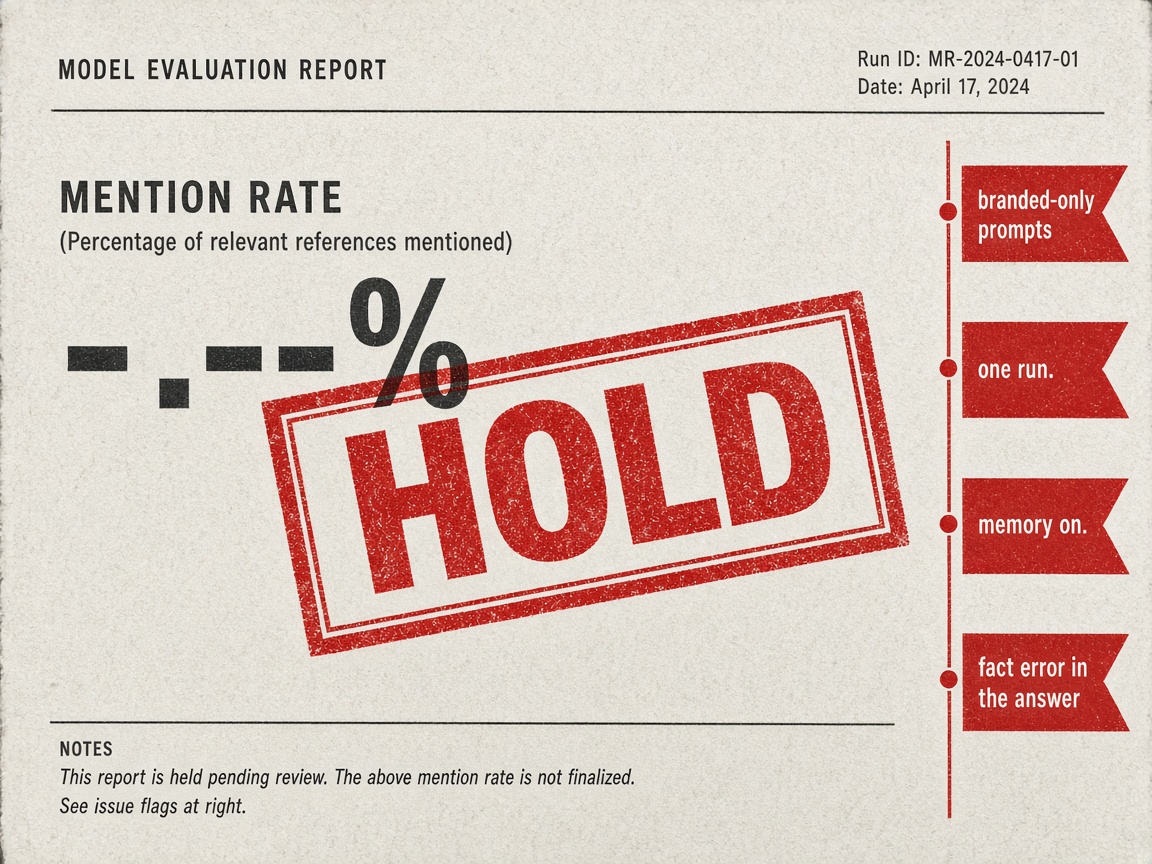
A repeated citation gap is still not a rate you can publish. Refuse the mention number if the set is branded-only, a single run, mixed search modes, a memory-tainted session, or missing source and session fields. A trend needs a repeated clean set.
Check accuracy before you treat a mention as a win. Resonance checked almost 50,000 answers against verified company facts and found two in three got something wrong, inside a sample of more than 1.3 million citations. Verify the name, offer, price, location, and which competitor was confused with you. A wrong fact is a hold, not a visibility win.
Do not import other-engine stats. Across 75,000 brands, Ahrefs found web mentions correlated with AI Overview visibility at 0.664 versus 0.218 for backlinks — correlation, not cause, and not a ChatGPT result. If you cannot say the denominator, the mode, and the repeat count in one sentence, do not publish the percentage.
Withhold it — Publish a mention percentage only from a repeated clean unbranded set in one mode, with the facts checked. Otherwise the number stays a hold.
Which Pages ChatGPT Cites When Your Brand Is Missing
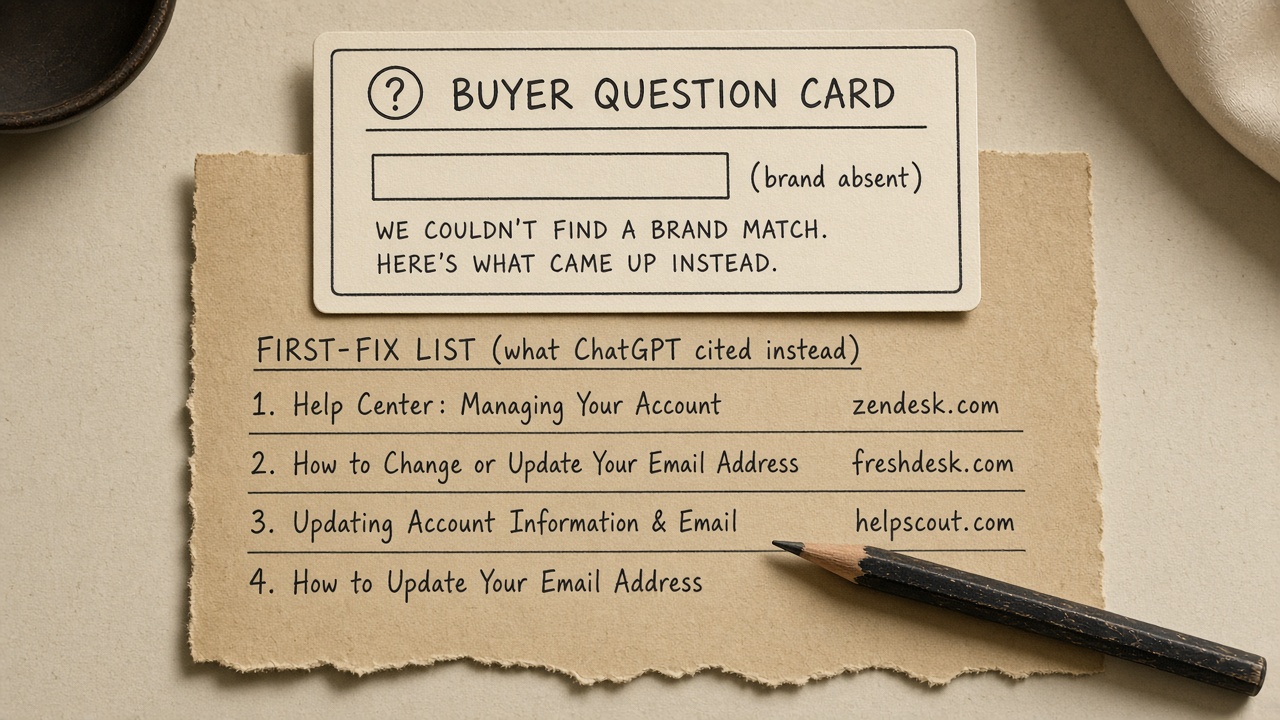
Once a mention number has to be withheld, the useful work is still on the row: record who was cited instead. Those URLs are the fix list, not a vague authority gap. A spreadsheet is enough for the first baseline. Add a paid tracker only after mention, citation, recommendation, and hold rules are stable.
ChatGPT Search citations concentrate in mid-authority domains, so do not start by chasing the highest-DR sites. In August 2026, DR 46–60 took 22.6% of citations and DR 61–75 took 23.4%, while DR 91–100 ended the month at about 3%. Fix first the page type already winning that question. Pages with FAQ markup averaged 5.9 citations versus 4.4 without it, about 36% more, so an extractable answer on the cited format beats a new vanity page.
Hand a repeated missing-page pattern to the existing how-to-get-cited checklist. This article stops at what to fix first, not a full citation program. Cross-engine cadence belongs in the AI search visibility and AI visibility checker articles, not in this ChatGPT sheet.
Cited URLs first — When your brand is missing, the pages ChatGPT already cites are the fix list. Match that page type before chasing high-DR sites or a paid tracker.
ChatGPT Citation Share by DR
Key Takeaways
Run your next ChatGPT check on one fixed unbranded prompt set in a clean session, and publish a mention rate only when you can state the denominator, mode, and repeat count in one sentence.
Frequently Asked Questions
You Might Also Like
- AEO How to Get Cited by ChatGPT: A Practical Visibility Checklist
- AEO AI Search Visibility: How to Track Mentions Across Answer Engines
- Measurement Brand Mention Tracking for AI Search: How to See Who Cites You
- AI Search AI Overview Citation Patterns: What Gets Quoted vs Ignored
- AEO Answer Engine Optimization (AEO): How to Get Cited by AI Search