First-Party Data Blocks: What a One-Person Publisher Can Add to a Draft

Most AI drafts restating the same SERP consensus do not fail because they are short. They fail because they add nothing a reader, or a model, cannot already find. First-party data content is the practical fix: one count from records you own, placed where a draft would otherwise borrow someone else’s statistic. This article shows how to add that block, and when to hold the draft instead.
- Treat a first-party data block as one owned count, a dated window, a method, and a limit.
- Tickets, orders, site search, and product logs already count; a survey is optional.
- On live top-3 pages the unique-figure bar is low: a median of four, and 30 percent with at most one.
- Original, method-backed research is rare in AI citations and earns far more citations per page when it qualifies.
- If the number cannot be stated with a method and a privacy limit, do not publish the cloned page.
What Counts as First-Party Data a One-Person Publisher Can Add

What counts as first-party data a one-person publisher can add to a draft is a count produced from records you operate—support tickets, orders, site search, product logs, or your own publishing log—not a statistic copied from someone else's report.
Zero-party data is what a person deliberately told you, such as a form answer. First-party data is observed in systems you control. Borrowed third-party stats are everyone else's numbers; repeating them does not create a unique source, because the same figure is already available to every other page.
A solo publisher can add one attributable count. They do not need a panel, a branded study, or a score from an optimization tool. If the records are yours and the count can be traced to them, that is enough to qualify as first-party data on the draft.
Do I Need a Survey, or Can Support Tickets and Analytics Count?

No. A survey is optional. Support tickets, order history, site search, and product logs already hold counts a model has not ingested, if you can say how you counted them.
A full month of tickets is a census of that inbox for that month, not a sample of the market. Say so. A small or non-random slice must name who is in, who is out, and what the number cannot prove. Never dress an inbox count up as a market study.
Most content marketers already borrow other people's research. Droven, citing a 2023 CMSWire report, says fewer than 30% of content marketers generated their own original research, while every one used other people's research stats. Owning one honest count is the distinction.
How many original figures does a typical top-ranking page have?

How many original figures sit on a typical top-ranking page? Four, at the median—not a branded study, and not a blank page either.
On-Page.ai’s June 12, 2026 scan of 150 top-3 pages across 50 keywords found a median of four numeric data points found nowhere else in that ranking cohort. Thirty percent carried at most one. The median information-gain score was 52 out of 100.
Unique data points were the strongest page-level correlate of the score: pages with 15 or more unique figures averaged 62.1, versus 40.2 for pages with at most one.
The bar is low and uneven. In 90 percent of those SERPs, at least one generated topic question went unanswered by every scanned top-3 page. Mostly-shared pages, scored below 40, were 24 percent of the top 3 but 37 to 40 percent at positions 4, 7, and 10 in an exploratory extension. One owned figure can clear that bar; fifteen is a different page, not the solo minimum.
The bar — A typical top-3 page carries a median of four cohort-unique figures, and one attributable count can clear that uneven bar without matching the fifteen-figure pages that score higher.
Why Answer Engines Cite Primary Research More Often Than Summaries
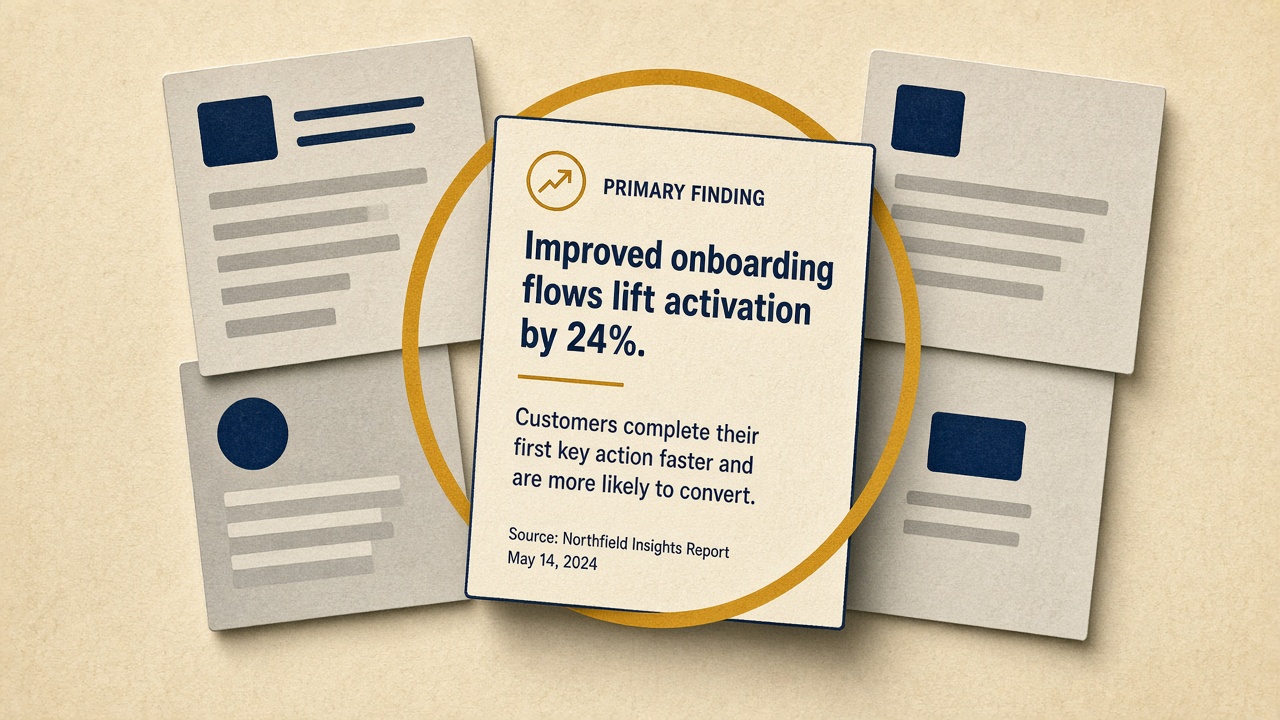
They do not cite it more often in the sense of how many pages qualify. Search Engine Journal, citing Kevin Indig, says first-party research is rare in AI citations but earns 3.3 times more, and that original data is the strongest single predictor of page originality. In the Gauge analysis summarized by GEO Beat, 8 of 301 AI-cited pages—2.7 percent—qualified as primary research (original source data plus a stated methodology) and averaged 11.3 citations each, versus 3.4 for every other cited page. Summaries of industry stats are already in the mix; a buried PDF is not a unique source.
Information gain is not a confirmed Google ranking factor. Ahrefs states there is no official confirmation of an information-gain score and quotes the patent as scoring extra information beyond documents already shown to that user. Google’s March 2024 statement that it reduced low-quality, unoriginal content by 45 percent is a quality action, not proof of a global score. The pre-publish test lives in the site’s information-gain article.
Citation gap — Primary research is scarce in AI citations and earns far more citations only when the finding is owned and method-backed—not because Google has confirmed an information-gain ranking score.
What Fields Must a First-Party Data Block Include So It Can Be Quoted?
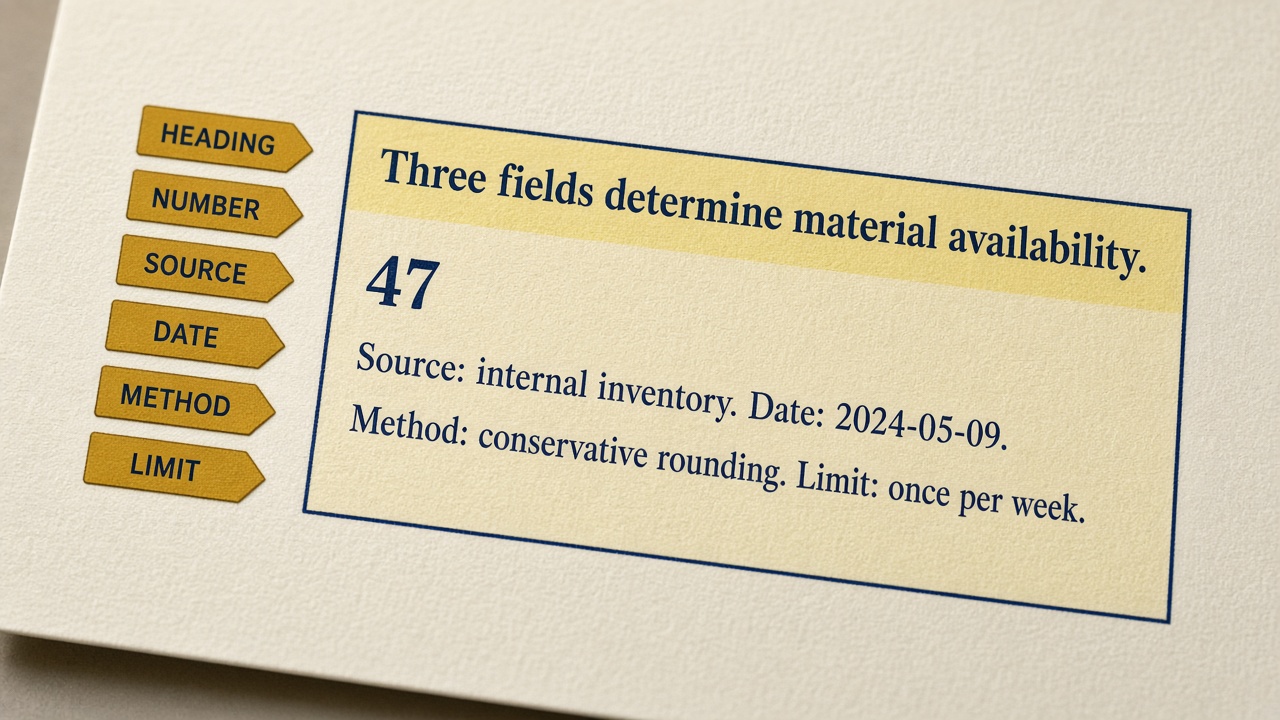
To be quoted, a first-party data block has to travel as one unit: a question-form heading, then one owned number, its source, its date or window, the method, and a limit on what that number cannot prove—all in the same short passage.
That cluster is the citeable package. Droven describes it as one number, its source, its date and the method, placed directly under a question-form heading so the finding stands alone. A figure buried in a PDF, a footnote, or a borrowed industry stat cannot be lifted as your source.
Place the block where that question is answered, high enough that a reader and an answer engine meet it without hunting. Do not park the only original number in a sidebar or a download. The heading should be the question the number answers.
Quote unit — A quotable first-party block is one owned number with its source, date, method, and limit, standing alone under the question it answers—not in a PDF, footnote, sidebar, or download.
How do I add owned data after the AI draft is already written?
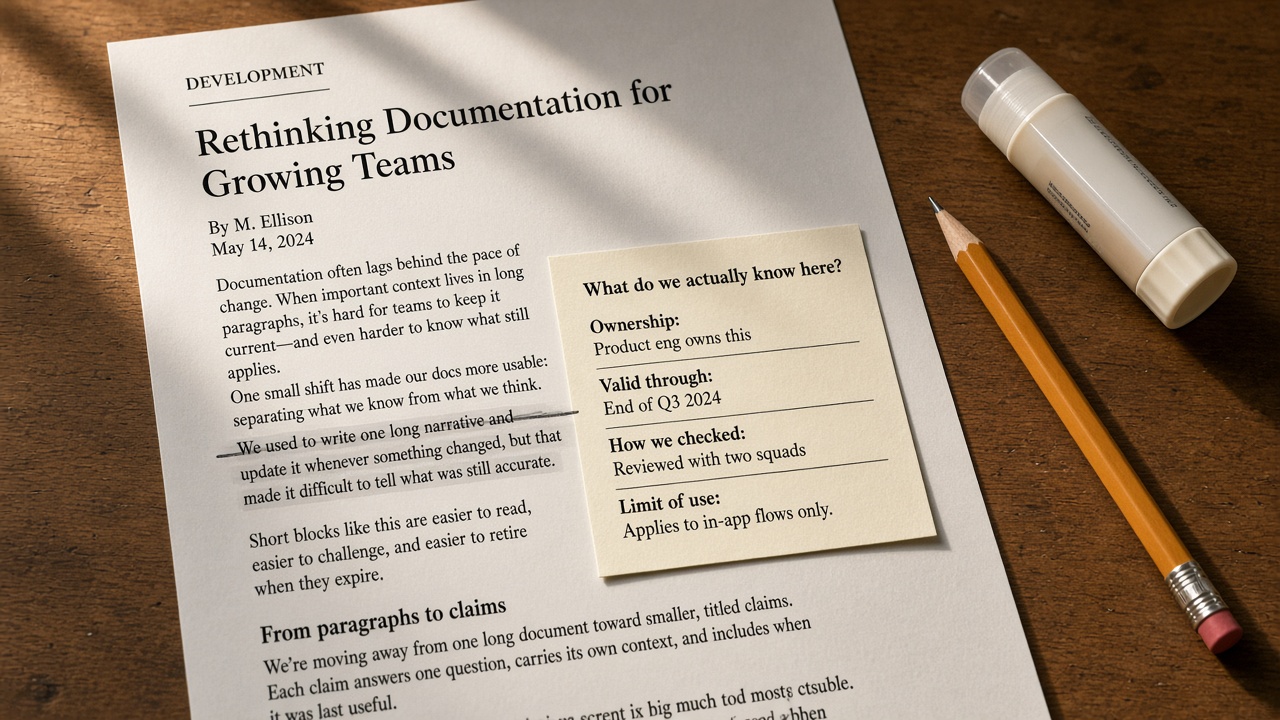
Do not rewrite the draft. Once the introduction has set up the topic, edit in place: find each borrowed claim and replace it with one count from records you operate, plus one sentence on how that count was made, then add the dated window and an explicit limit on what the number cannot prove.
A data block is a checkable figure. An experience note is a first-hand observation without a count; that sibling page covers sources, dates, and first-hand notes. An originality check asks whether engines have already quoted the point; the information-gain article is that gate. Author fields, content-ops metrics, and the SEO brief stay on their own URLs.
Edit in place — After the AI draft exists, the information-gain unit is a swap, not a rewrite: one owned count, a window, a method line, and a limit where the borrowed claim used to be.
What to Refuse, When a Missing Block Holds the Draft, and How Often to Refresh

Once the owned count is ready to drop into the draft, the remaining decision is what never leaves the records. Refuse names, emails, order IDs, raw ticket text, and any product or account detail that identifies a person or exposes a security-sensitive log. Publish an aggregate only when both the method and the privacy limit are true.
Hold or delete if the draft only restates what already ranks, or if the internal number cannot be stated with a method and a limit. A missing block is a publish gate, not a nice-to-have: fail closed rather than ship a cloned page.
There is no universal refresh interval. Treat the figure as current only for the window you named. Refresh when that window ends, when the counting method changes, or before you cite the figure again. A stale “this month” count should hold the update the same way a missing block holds a new draft.
Fail closed — Ship an aggregate only with a method and a privacy limit; otherwise hold the draft, and treat the number as current only inside the window you named.
Key Takeaways
Before you publish the next draft, replace one borrowed stat with a single owned count, its window, its method, and the limit on what that number cannot prove.
Frequently Asked Questions
You Might Also Like
- Quality Information Gain in SEO: How to Add Something Answer Engines Have Not Already Quoted
- AI Search Passage-Level SEO: How to Write Blocks Answer Engines Can Lift
- Quality Experience Signals on AI Drafts: Sources, Dates, and First-Hand Notes
- Workflows Content QA for AI Drafts: The Review Checklist Before You Hit Publish
- Automation Fail-Closed SEO Briefs: The Publish Gate Autoblogging Needs