Experience Signals on AI Drafts: Sources, Dates, and First-Hand Notes
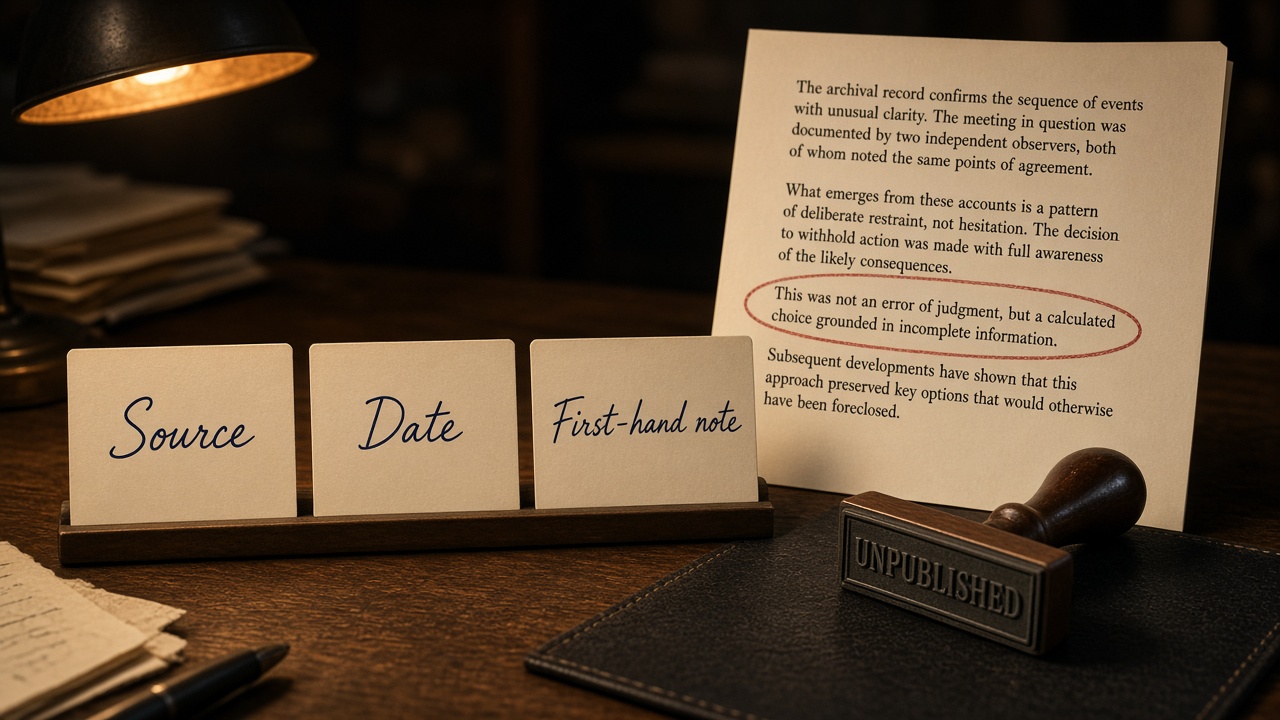
Readers looking for E-E-A-T for AI content are usually asking the wrong question first: how to make a generated draft sound experienced. Google does not treat experience, expertise, authoritativeness, and trust as a score you can pad. Its systems use a mix of factors that can identify content with those qualities, and of the four, trust is the most important. A page does not have to show all four. Some pages earn trust through expertise. Others earn it because someone actually used a product or service, or visited a place—and the page shows that. An AI draft starts behind that bar. Models predict a likely sequence of words; they do not retrieve facts, and they can invent them. Google’s guidance is blunt that every AI-generated page needs a human to fact-check it before it is published, including title, meta description, structured data, and image alt text. Crediting another site does not replace that work. Quality-rater guidance treats large amounts of generative text with no manual oversight as little to no effort, and Search Engine Land’s reading of the rater guidelines is that copied, paraphrased, or AI-generated main content with little originality can still be rated Lowest even when the page names a source. The practical gate is smaller than a style guide. Before a draft leaves the queue, three fields have to be true: a source URL that supports the sentence, an observation or update date that matches a real change, and a first-hand note a named person can defend. If any of those is missing, the draft stays unpublished. Fake bylines, AI headshots, and invented credentials are not a formatting shortcut. Google calls that deception, and deception makes a page untrustworthy to people and to automated quality systems.
- E-E-A-T is not a ranking score; Google looks for signals of experience, expertise, authoritativeness, and trust, and treats trust as the most important.
- Experience means first-hand use, testing, or observation—not a confident tone pasted onto generated prose.
- Attribution does not replace effort: unchecked AI text, even with a credit line, is still low-effort content.
- Publish only when a checked source, an honest date, and a defensible first-hand note are on the draft.
- Fabricated authors and fake freshness dates are deception, not optimization.
What experience means in E-E-A-T for AI content
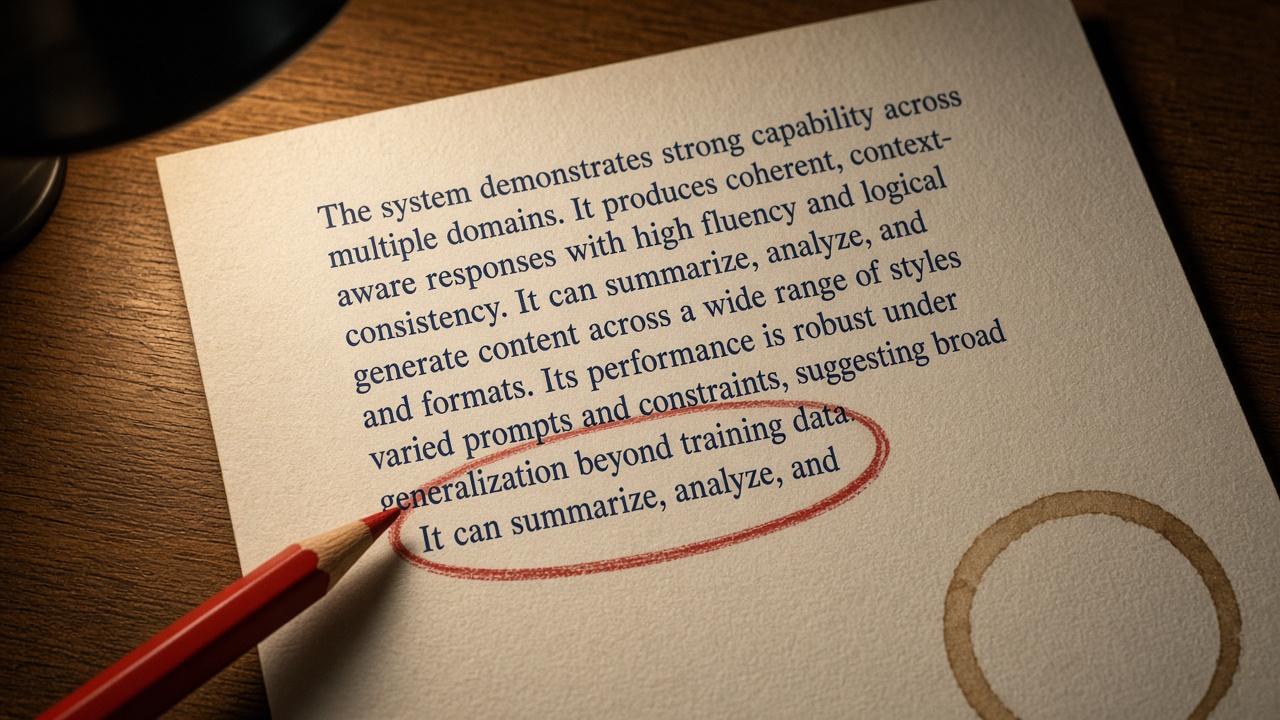
Experience, in Google's people-first test, means first-hand expertise from having actually used a product or service, or visited a place. It is not a confident voice on an AI draft.
On an AI draft, an experience sentence is allowed only when a named person on the team can defend it because they did, saw, or measured it. A model can sound sure without having been there. Until someone who was there will stand behind the line, it stays unpublished.
Experience — Experience is first-hand work a named person can defend, not a tone of voice on a generated draft.
Does Google penalize a page just because AI helped write it?
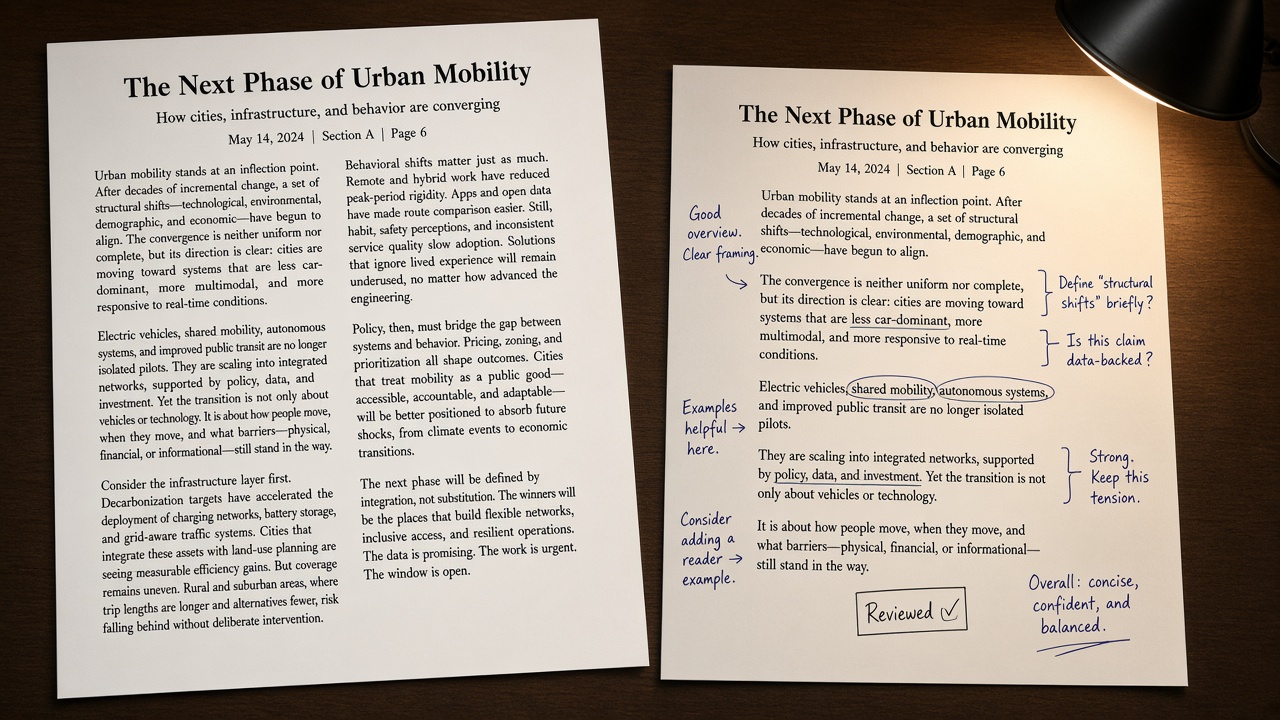
That question has a narrower answer than a ban. Quality-rater guidance says the use of generative AI tools alone does not determine the effort level or the Page Quality rating. The same tools can support high-quality pages and low-quality ones.
What counts as little to no effort is producing large amounts of text with generative AI and no manual oversight or curation. High effort, in that rater framing, is writing original analysis, translating a poem manually, or building a custom interactive map—not assembling predicted sentences.
using generative AI to produce large amounts of text without manual oversight or curation represents little to no effort. Attribution or giving credit to other sources doesn't replace the need for original effort.
— Google Search Central
Citing sources does not replace that original effort. Raters apply the Lowest rating when all or almost all main content is copied, paraphrased, auto or AI generated, or reposted with little effort, originality, and added value—even if the page credits another source.
The operator's move is oversight before publish, not a detector score and not a footer that says sources were used.
Oversight — AI help does not set the rating. Unreviewed bulk text does, and credit to other sources does not replace original effort.
A source citation is not a first-hand note
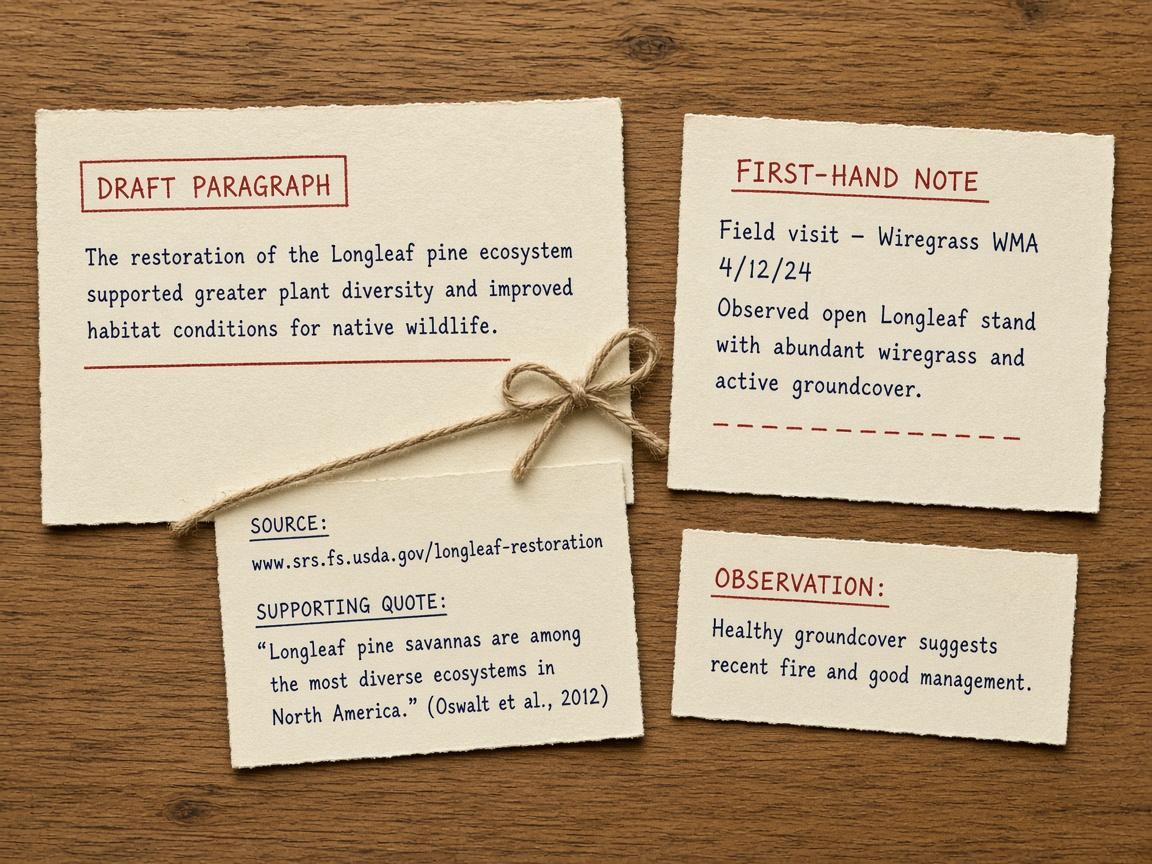
Oversight before publish is two jobs, not one checkbox. A source citation checks a claim against a document. A first-hand note is a different field: it is the part of the page no document can supply.
Manual fact-checking is what turns a link into support for a sentence. If the document does not say what the draft says, the citation fails, no matter how finished the prose looks.
Which claims need a source before publish
Every material claim needs a source URL that supports that sentence: a figure, a product behavior, a policy, or when something changed. A related page and a link dump at the bottom do not count. The same review covers metadata that can appear in Search—title elements, meta descriptions, structured data, and image alt text—because a wrong title can misstate the page even when the body was checked.
A first-hand review has a unique perspective from personal experience. A summary that only restates what is already published, or what a model could easily produce, is not an experience signal. If nobody did the thing, cut the experience sentence. Do not dress a citation up as a visit, a test, or a measurement.
Two fields — A citation proves a sentence against a document. A first-hand note is honest only when a named person did, saw, or measured it—otherwise cut it.
When should a page show a published date and an updated date?
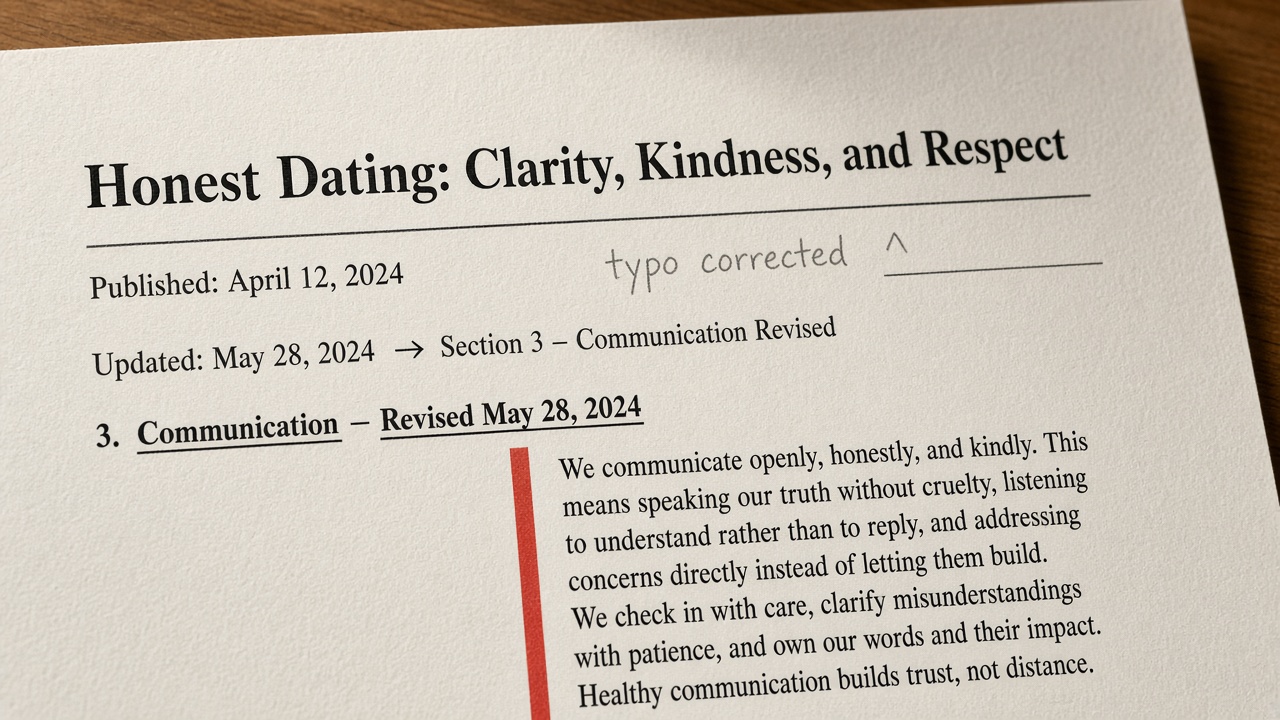
Show a published date when the page first went live with substantive content. Show an updated date only when the content substantially changed, and make that date match the real edit or observation—not the moment someone regenerated the draft.
A light edit does not justify a new date. A typo, a swapped synonym, or a new intro line is not a substantial change, and dating the page as if it were one misstates what happened. Google names this directly as a search-engine-first warning sign: changing a page date to make it seem fresh when the content has not substantially changed.
Treat the date field as a hold. If the operator cannot point to the change the date claims, leave the old date or do not publish. Freshness is not a styling choice; it is a statement a named person has to be able to defend.
Honest dates — A published date marks first substantive go-live; an updated date is allowed only when a real, substantial change can be pointed to—otherwise keep the old date or hold the draft.
How to disclose automation without scaled content abuse
A date that matches a real edit still leaves the next question a reader can ask: how the page was made. When automation substantially generates the content, say so in plain language. Google asks whether that use is self-evident, whether you explain how AI was used, and why it was useful. A short, specific note is enough.
Disclosure is not a license to publish at volume. Scaled content abuse is many pages generated primarily to manipulate rankings rather than help users — typically unoriginal content with little or no value, no matter how it is created. The first example Google lists is generative AI used to generate many pages without adding value. A separate page for every query variation, including fan-out queries, made to manipulate rankings or generative AI responses is the same policy.
Generative AI can still help research a topic or structure original content. The line is value added for the reader, not the tool. Checked sources, honest dates, and notes only where someone did the work keep a small site out of that pattern. Sites that violate spam policies may rank lower or not appear at all. Google points publishers to rater-guideline sections 4.6.5 (scaled content abuse) and 4.6.6 (main content with little effort, originality, and added value); those ratings do not directly influence ranking.
The line — Say in a short note when automation substantially wrote the page, and publish only where the reader gets added value — mass pages made to manipulate rankings or AI responses are scaled content abuse, whatever tool made them.
What to refuse when nobody did the thing the draft claims

That same standard decides what you refuse. If the draft claims a test, visit, photo, metric, or credential nobody on the team can defend, cut the sentence or hold the page. Fabricated expertise is a refusal, not a formatting fix.
On a review, trust comes from how many products were tested, what the results were, how the tests were run, and evidence such as photographs. Those details belong on the page only if that testing happened.
Sources, dates, and first-hand notes are worth keeping because a reader can check them, and because they are not a recycled summary a model could have produced. They are not a citation hack: do not spin a page per query to chase an AI answer. This gate is not an author-page template and not a full fact-check workflow. Those sit in the adjacent guides on E-E-A-T proof before publish, the review checklist, and claim-by-claim checking. The card here is those three fields, or the draft stays unpublished.
Refuse, don't restyle — If nobody did the thing the draft claims, cut the sentence or hold the page. A supporting source, an honest date, and a defensible first-hand note are the whole publish gate.
Key Takeaways
Before you publish the next AI draft, check that each claim has a supporting source, each date matches a real change, and every first-hand note is one a named person can stand behind.
Frequently Asked Questions
You Might Also Like
- Governance E-E-A-T for AI-Written Pages: What a Lean Publisher Must Show Before Publish
- Workflows Content QA for AI Drafts: The Review Checklist Before You Hit Publish
- Workflows Fact-Check Workflow for AI SEO Drafts
- Governance Author Page Template for Automated Publishing: What Must Be Human
- Workflows Who Signs Off an Automated Article? Roles for Lean Teams