Entity SEO for Publishers: What to Name on the Page So Engines Can Cite It
Search and answer engines resolve who or what a page is about before they retrieve a passage. If the URL never names a clear brand, person, product, or concept—or names it as “we” instead of a noun—the page is easy to skip even when it ranks. Entity SEO is not stuffing strings; it is making one uniquely identifiable node with attributes and relationships so Google and AI systems can merge, trust, and cite you.
Google’s Knowledge Graph stores over 1.6 trillion facts about 54 billion entities, and in June 2025 it removed over three billion entities in a week to keep a leaner set for AI features. SparkToro research cited by Ahrefs found about 60% of searches end without a click, partly because Knowledge Graph features answer in the SERP. For publishers, the practical job is smaller: one salient name per URL, identical in title, H1, opening sentence, and schema, plus Organization or Person markup that engines can actually merge.
This article walks through that naming contract—canonical entity, sameAs, Article about and mentions, Wikidata as a reachable co-reference, and how to validate identity without chasing domain rating. The goal is evergreen: pages that stay citeable whenever a reader, crawler, or model next looks them up.
- Give each URL one canonical entity: the same legal name in title, H1, first sentence, and JSON-LD name.
- Engines resolve identity before passages; unnamed or pronoun-only pages are skipped even if they rank.
- Organization and Person schema with a clean sameAs array (Wikidata, LinkedIn, Crunchbase) is the merge instruction.
- Article markup should declare publisher, named author, mainEntityOfPage, about, and mentions.
- Validate with Schema Markup Validator, Knowledge Graph Search API, and prompt tests—not content scores.
Entity SEO vs. keyword SEO: name a thing, not a string
Entity SEO makes a brand, person, product, or concept a uniquely identifiable node—with attributes and relationships. Keyword SEO still optimizes for the strings people type. Engines store facts about entities and retrieve passages only after they resolve identity, so stuffing a phrase is not the same as naming a thing.
A page that never declares a clear entity can still rank and still fail citation, because there is nothing stable to attach the quote to. For publishers, the job is disambiguation and relationships—publisher, author, topic—not repeating the primary keyword in every heading.
Identity first — Citation follows a named identity. Rank on a string if you like; engines only quote what they can attach to a stable entity.
Name One Canonical Entity So Google and AI Can Cite the Page
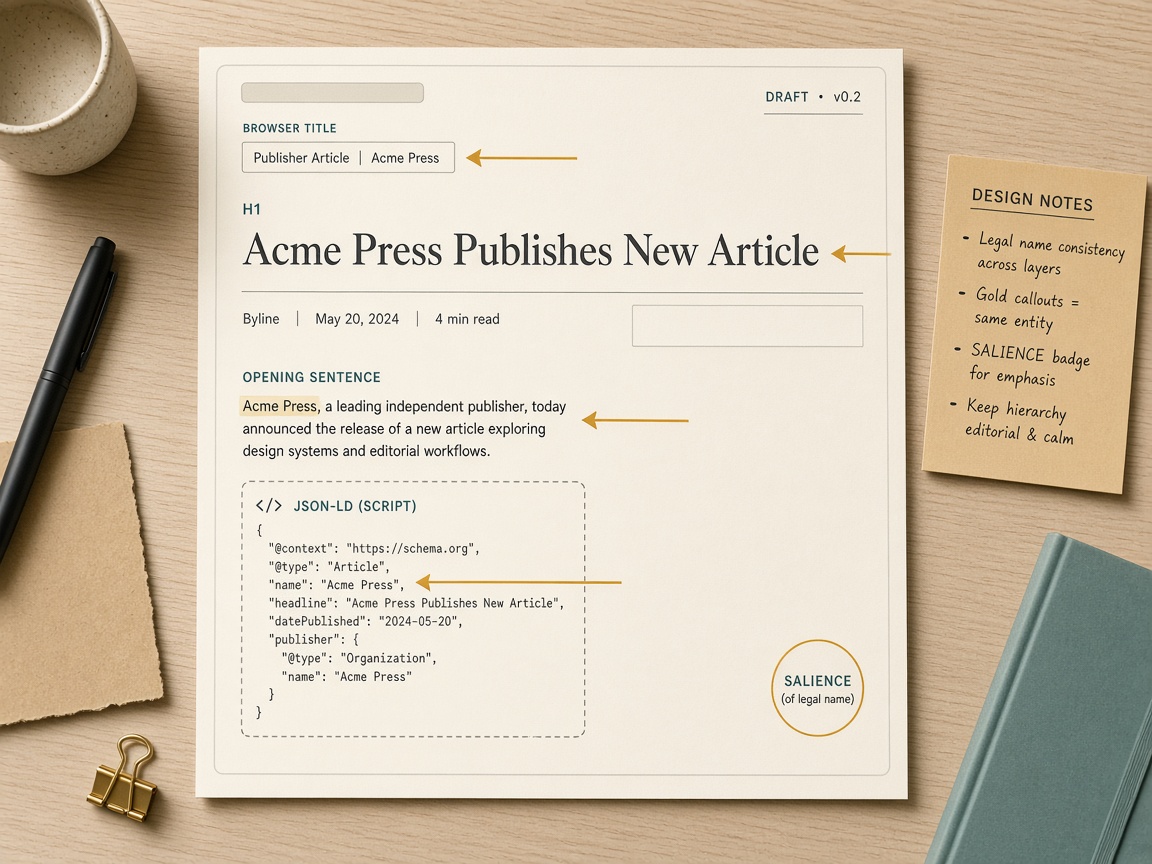
Give every URL one canonical entity and write that identity as a noun—never “we” or “our platform.” Use the identical legal name in the title tag, the H1, the first sentence, and JSON-LD name. Inconsistency across those locations is a documented cause of Knowledge Graph non-inclusion. The opening sentence should be citable on its own: the entity is the subject, not a buried brand mention.
Salience is centrality in the passage, not how often you repeat a string. On article URLs, name the publisher, a real author, the primary topic, and a few supporting concepts—then stop adding extra brands that compete for the main node. Check this with Google’s Natural Language API: the intended entity should score highest. If a generic word or a different brand wins, rewrite the opening rather than the whole article.
Cite by name — One identical noun in title, H1, first sentence, and JSON-LD name is what engines need to cite the page; salience is who the passage is about, not keyword count.
The entity home: one URL owns Organization schema
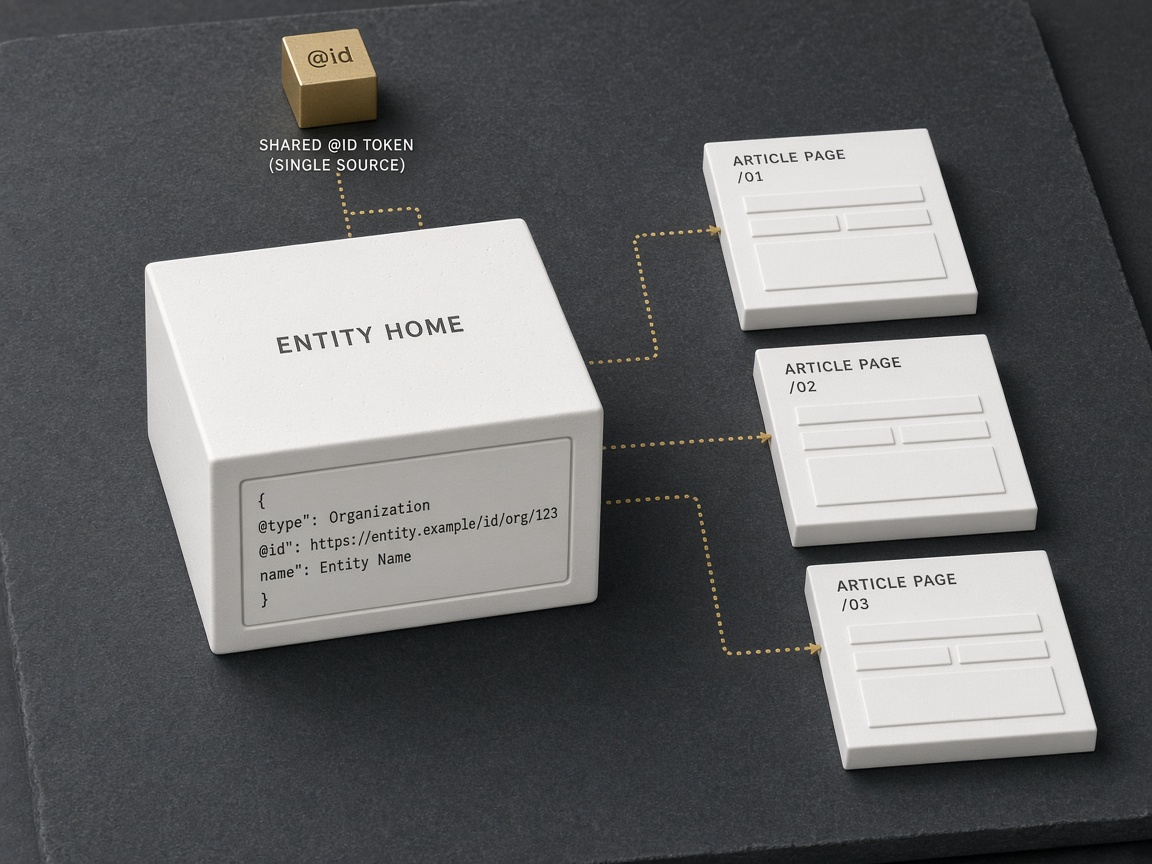
That publisher identity needs a single home. The entity home is the one canonical URL that stands for the publisher as an Organization—almost always the homepage—and that URL is where the full Organization node belongs. Put name, logo, url, and sameAs there, and give the Organization a stable @id that points at the canonical homepage so every later mention can attach to the same node. Ahrefs recommends Organization markup on the homepage with at least those properties plus that @id, calling it the most important single URL for establishing brand identity.
Do not paste a full Organization blob on every blog post. Articles should reference the same @id as publisher so the graph merges instead of forking into lookalike companies. If a post needs publisher context, name the organization in visible copy and point JSON-LD at the entity home rather than inventing a second Organization object.
One home — Full Organization markup lives on the homepage @id; posts only reference that id as publisher so engines merge one brand, not many.
Which sameAs profiles matter most for a small publisher?
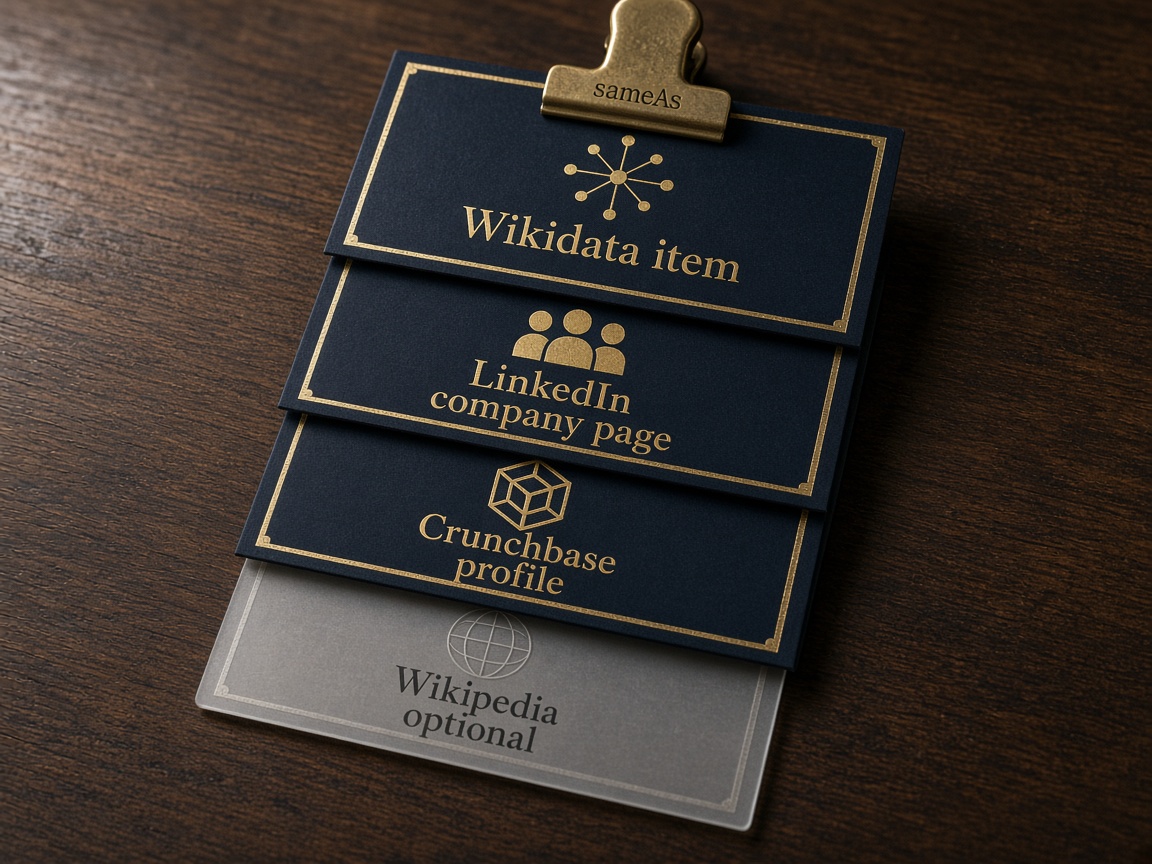
That same Organization object is where sameAs does the real work. It is the merge instruction: a short list of URLs that unambiguously say this publisher is the same node as those profiles—not a dump of every social account. schema.org defines sameAs as a URL that indicates identity (Wikipedia, Wikidata, or an official site), and the property already runs on 10M+ domains. For a lean publisher, keep the list tiny and high-confidence.
Articles still point at this graph via the homepage @id; they do not re-list the sameAs array themselves.
Merge, don’t dump — A small publisher’s sameAs graph is Wikidata, company LinkedIn, and one directory—identical names throughout, no founder profiles, no dead links.
How about, mentions, and mainEntityOfPage differ in Article schema
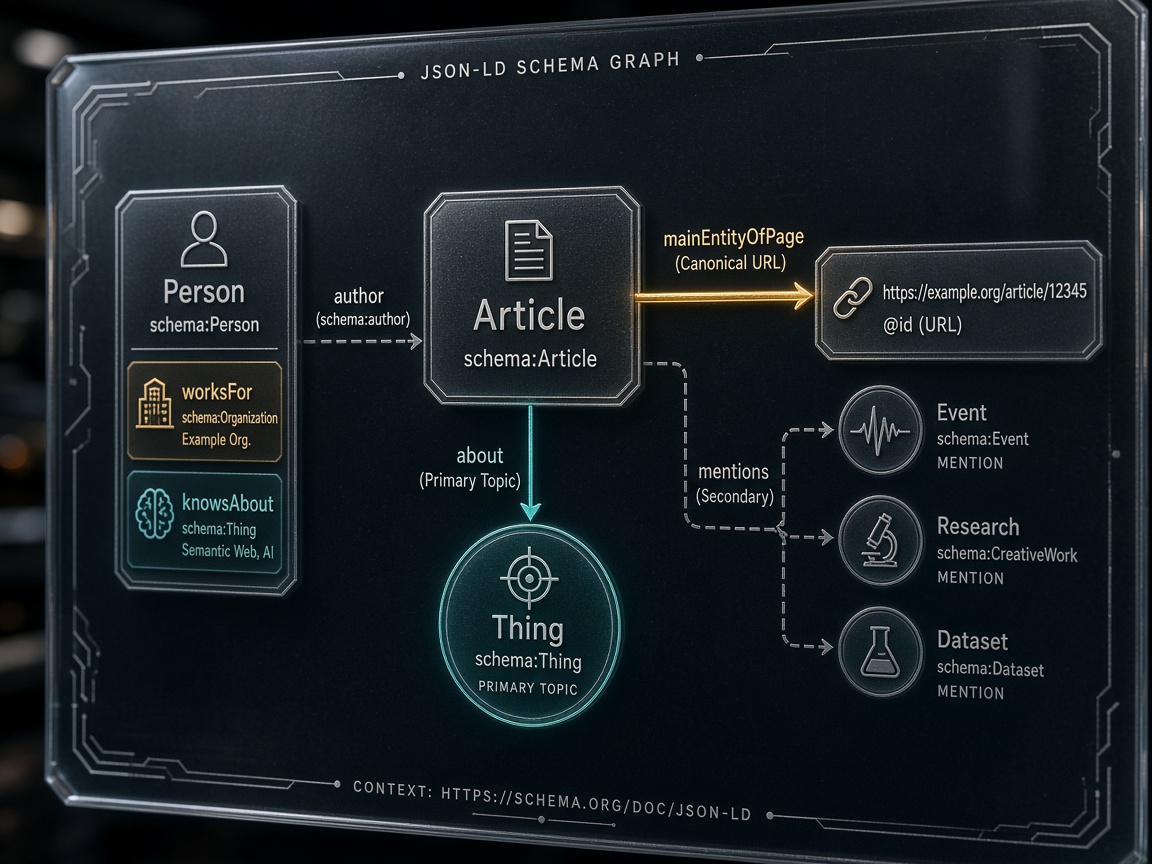
Once the publisher node is stable, the article itself still has to say what it is about and who wrote it. In Article JSON-LD, about is the primary topic entity the page focuses on; mentions are secondary entities brought in only for context. mainEntityOfPage points the Article at its canonical URL so engines treat the markup and the live page as the same thing—not a detached blob of schema.
Google’s Article structured data has no required properties; instead, add the properties that apply to your content. A named Person (or Organization) author is still how engines attach credit, and credit is what gets cited. Mark each author as a Person with name, a url to that author’s entity page, worksFor pointing at the publisher @id, and knowsAbout limited to a few real specialties—not a keyword dump.
Keep about tight: a small set of primary topics so mentions cannot steal salience from the entity you want quoted. Supporting names belong in mentions; they should not compete with the focus of the article.
Schema roles — about names the focus, mentions name the supporting cast, mainEntityOfPage binds the article to its URL, and a Person author with worksFor is how citation credit is attached.
Naming mistakes that split one brand into several Knowledge Graph nodes

Once about, mentions, and author markup are in place, the remaining failure mode is identity drift: one publisher becomes several weak nodes instead of a single, citable brand. Inconsistent name strings, dead sameAs URLs, and a founder’s LinkedIn stuffed into Organization markup are the usual splits. Engines then treat “Acme Inc.,” a product nickname, and a personal profile as separate things—and citation confidence drops.
Do not mix legal name, product name, and nickname across title, byline, footer, and JSON-LD. Pick one noun string and reuse it everywhere engines look, including every profile you treat as the same organization.
Test recognition with the Knowledge Graph Search API, a brand SERP check, Schema Markup Validator, and a few unprompted “who is [brand]” queries—not a content score. If Google returns no kgmid, conflicting logos, or another organization’s attributes, fix the entity home and sameAs before publishing more articles.
One node — One identical name, URL, and description across the entity home and sameAs list keeps the brand as a single node; mixed strings and dead or founder profiles split it.
How entity SEO gets you cited in AI Overviews, ChatGPT, and Perplexity
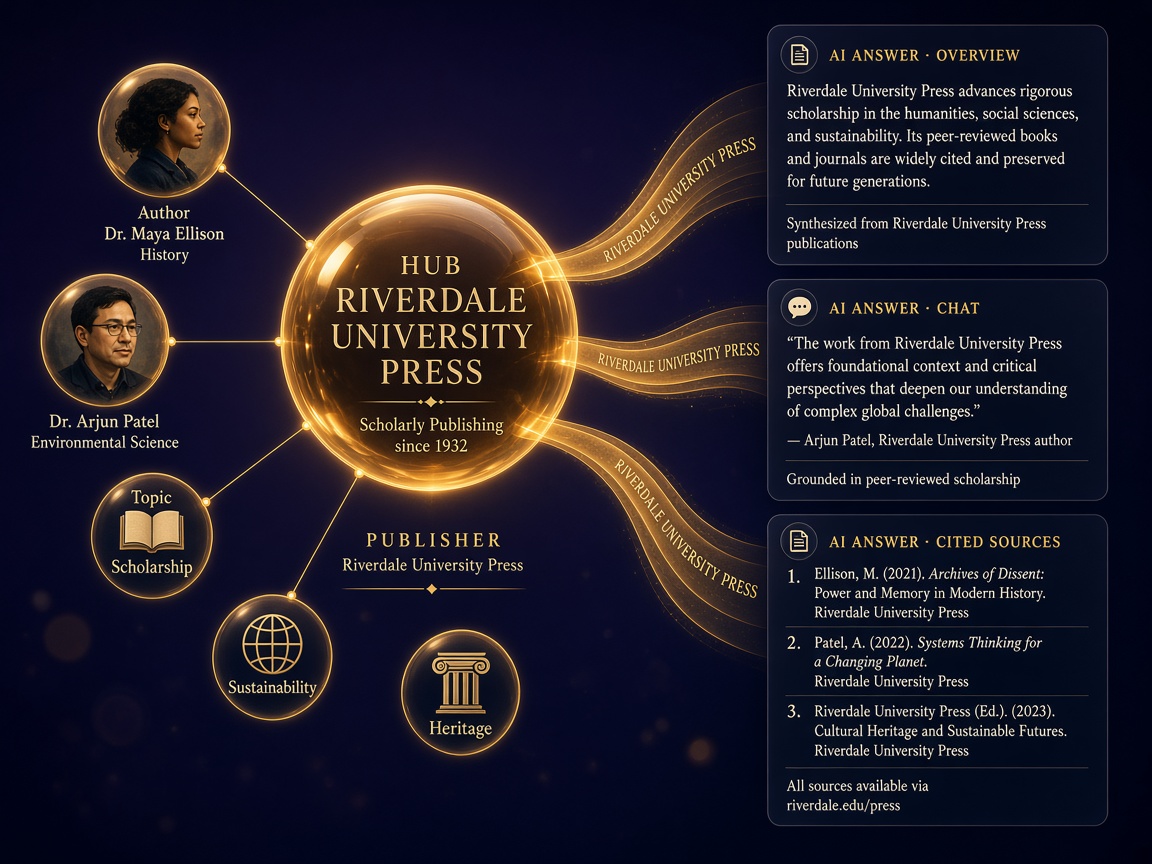
Once the entity home is stable, answer engines can treat the publisher as a source instead of a string. ChatGPT, Perplexity, and AI Overviews cite what they can resolve: a named publisher, a named author, and one salient topic beat an anonymous post that only ranks for a query.
Identity can surface URLs that are not in the organic top 10. In a May 2026 study of 153,425 AI citations, 76.95% of cited URLs sat outside the organic top 10. For Google AI Overviews, other 2026 research reported 92% of citations coming from pages already ranking in the top 10, with complete structured data associated with about 36% higher odds of appearing in summaries. Unambiguous naming still helps when the page already ranks.
Co-citation is being named next to established entities in third-party copy and in your own about and mentions—not a substitute for every backlink, but a cheaper signal. Brand mentions correlated 0.664 with AI visibility, more than three times the 0.218 reported for backlinks in the same research. Without a link budget, connect articles by repeating the same topic entity names, author Person nodes, and publisher @id across a small coherent cluster. Brands with fewer than eight topically coherent pages had a 94% lower Knowledge Panel appearance rate. Eight-plus related URLs that share one graph beat chasing domain rating.
Cite the node — Name one publisher, one author, and one topic on every URL, then repeat those nodes across a small cluster so answer engines can resolve and cite you.
Key Takeaways
Audit your homepage Organization markup and one article against this checklist, then align every new URL to the same canonical entity.
Frequently Asked Questions
You Might Also Like
- AI Search Schema for AI Overviews: Which Markup Still Helps
- AI Search AI Overview Citation Patterns: What Gets Quoted vs Ignored
- AEO How to Add Citation-Ready Answers Without Keyword Stuffing
- AI Search AI Overview Optimization: How to Structure Pages Google Can Quote
- AI Search Passage-Level SEO: How to Write Blocks Answer Engines Can Lift