Blog Post to Help Center Article: When Repurposing Helps the Concierge
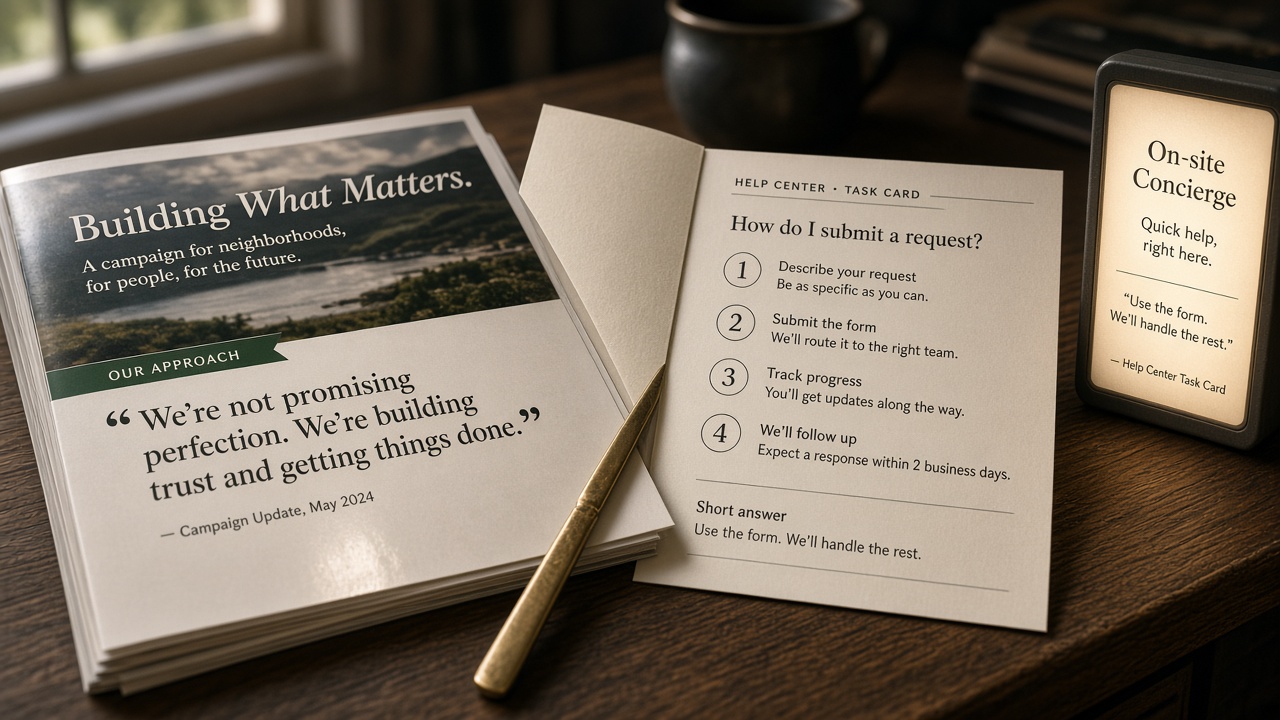
A blog that ranks and a help article the concierge can cite are not the same asset. HubSpot’s split is the right starting point: a knowledge base exists so customers can find solutions, while a blog promotes ideas and brand messages. Product-specific troubleshooting belongs in the knowledge base, not in a narrative post that also argues a point of view.
Sending a task query to the wrong library is expensive. HubSpot cites Accenture research that more than 40% of customers leave a brand after one bad online experience, and Harvard Business Review, as cited by Fini, found 81% of customers try to solve a problem themselves before contacting an agent. If the assistant quotes a dated opinion post, or search returns three near-copies and the reader picks one at random, the model is not the failure. The source library is.
This guide is the decision, not a rewrite recipe. Extract a help-center how-to only when the concierge needs one evergreen task page the blog should not own. Keep the ranking URL when the piece is time-limited, opinionated, or already the best answer. A second public URL with the same centerpiece does not create a cleaner citation. Google treats a canonical tag as a hint, not a rule, and may still pick the other page.
- Repurpose only when the query is a product how-to or troubleshooting task the concierge must cite.
- Do not clone the blog. One question for the same reader needs one owner URL, not a canonical hint on a duplicate.
- Help articles should be answer-first, one problem per page, self-contained, and dated for review.
- Keep the ranking blog when it is opinion, time-limited, or already the best answer, and link the extracted steps back to it.
- Wrong concierge quotes usually come from stale or contradictory source pages, not a broken model.
When should I turn a blog post into a help center article?
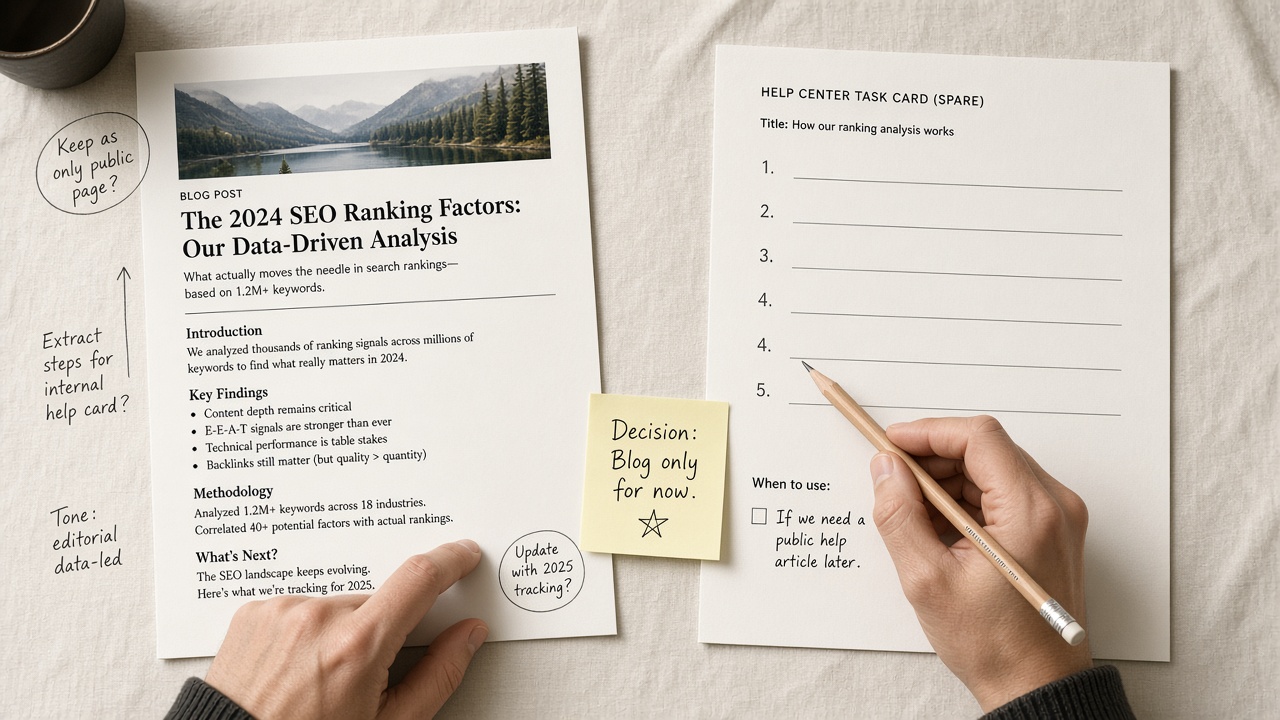
Turn the post into a help-center article only when the query is a product how-to or troubleshooting task the concierge must cite. If the piece has product-specific troubleshooting steps, it belongs in the knowledge base, not the blog. The blog remains the concept or opinion page.
A post that still earns consistent traffic is a candidate to adopt into documentation, not a reason to abandon the original URL without an SEO plan. Use the blog for time-limited content and the docs for evergreen tasks. Do not retire a ranking URL just to feed the assistant.
That card is the gate. If both pages would answer the same question for the same reader, refocus one of them instead of publishing a second copy.
The split — Repurpose a blog only when the concierge must cite a product how-to or troubleshooting task, and keep the ranking blog as the only public URL when it is already the best, time-limited, or opinion answer.
What is the difference between a blog post and a help center article?
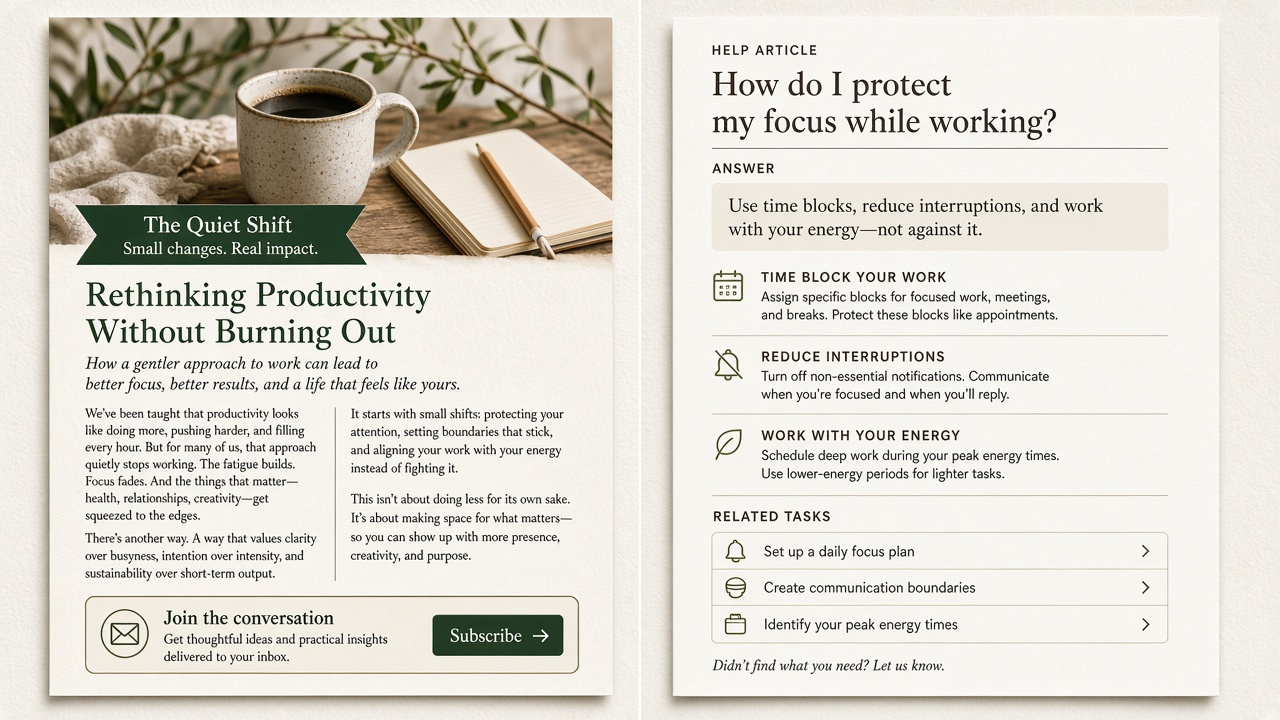
Which URL should own that query is already settled in the support-article-versus-blog owner-URL piece. What still changes the concierge decision is the promise you make by publishing, not the label on the template.
Docs are the heavier promise. Publishing documentation commits you to keeping it accurate; a blog is forgiven as a point-in-time snapshot, which is why it is a poor sole source for a concierge that must stay current.
Split — A blog can age as commentary; the help center owns the evergreen how the concierge has to keep accurate.
Does copying a blog into the help center create duplicate content?
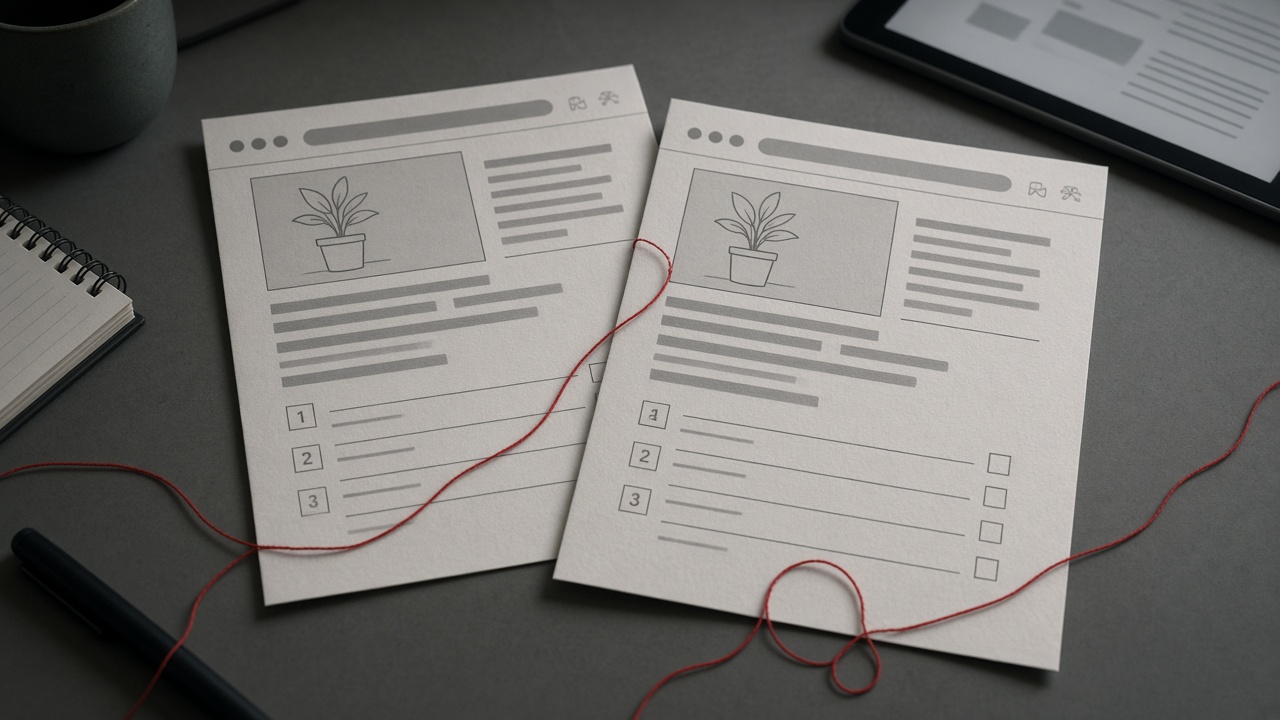
That split does not license a second copy of the same centerpiece. Copying a blog into the help center is a canonicalization issue, not a spam-policy violation: some duplicate content on a site is normal and is not a violation of Google's spam policies. Google clusters pages whose primary content is the same or very similar, picks one canonical, and crawls the others less often.
A rel=canonical tag will not reliably stop the blog and the help article from competing. Indicating a canonical preference is a hint, not a rule, and Google may still choose the other URL.
Related pages are fine. Cannibalization is two pages trying to be the answer to the same question for the same searcher. Refuse the thin second SEO version some repurposing guides recommend, and give the task one owner URL.
Don't clone — Cloning the ranking post creates a cluster, not a penalty, and a rel=canonical tag will not reliably keep the blog and the help article from competing.
Should the help center or the blog be the canonical URL?
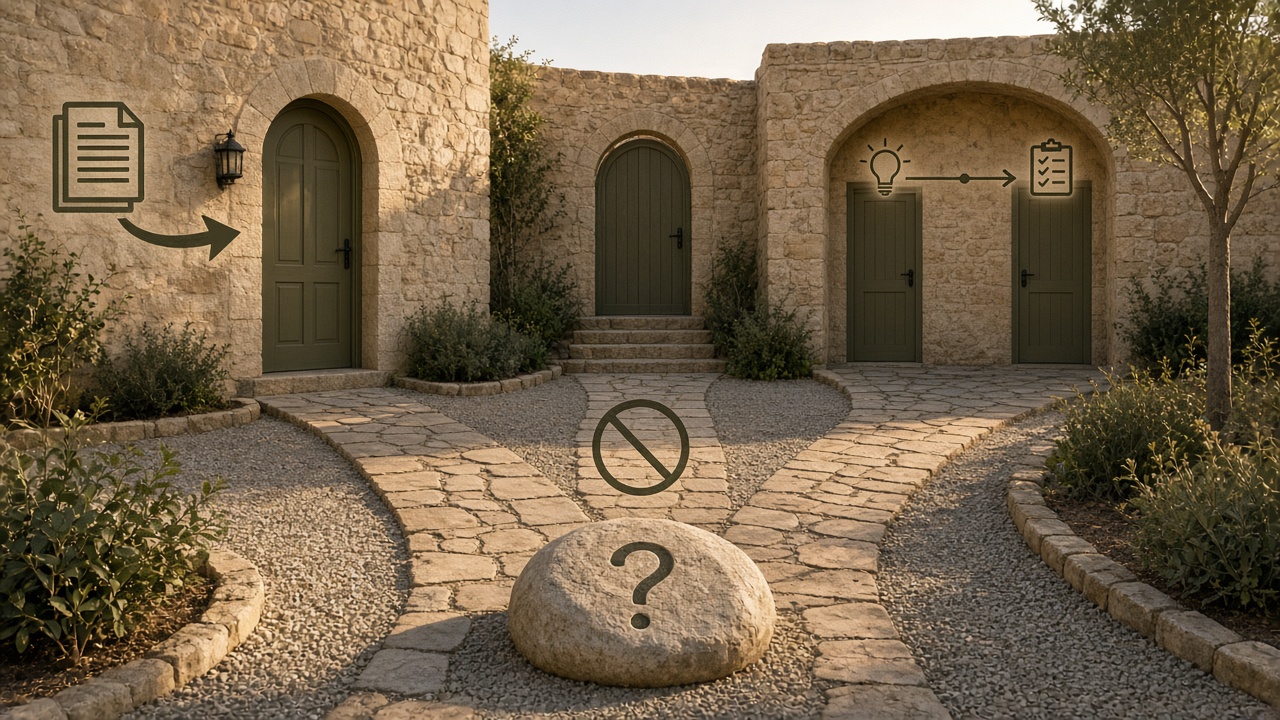
That choice is the page that should answer the question for that reader, not whichever URL you annotate.
If both pages exist for readers and answer the same question, merge and redirect. A canonical tag is a poor substitute for one owner URL.
Redirect the blog only when the help article fully replaces it and you have an SEO plan. Otherwise keep the ranking blog, do not publish the thin help clone, and never noindex the page you want cited.
If a help URL already ranks but is outdated, rewrite it on the same URL so the authority it has accumulated stays put.
One owner — Canonical means the page that should answer the question — task in the help center, concept on the blog — and a tag, a clone, or a noindex cannot stand in for that single owner URL.
Which questions should the concierge cite from the help center?
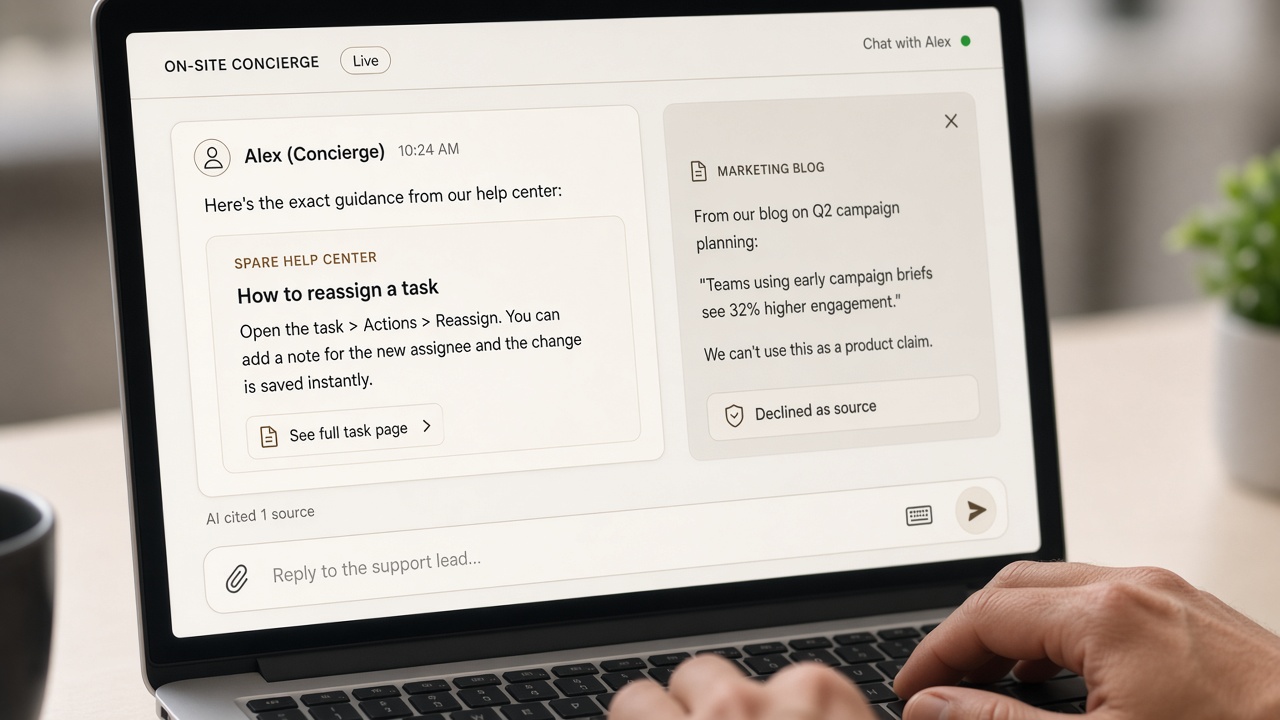
Choosing the owner URL only works if the concierge knows which questions that page may answer. Cite the help center for product setup, how-to, and troubleshooting that has one approved answer. Leave concept, opinion, and campaign questions on the blog, or refuse them.
Refuse pricing spin, launch claims, dated commentary, and any step that exists only inside a marketing post. A wrong answer is usually bad or contradictory source content, not a broken model. Duplicate articles with no canonical owner make the assistant struggle to choose a passage.
About 38% of AI Overview citations come from pages already in the top 10, so the task URL can still be the cite when the blog is the ranking page. Question classes already live on the concierge allow-list article; do not rebuild that list here.
Cite or refuse — Cite the help center only for one approved task answer, refuse marketing spin and dated claims, and never leave the assistant choosing among duplicate passages.
How should a help article be structured so an AI concierge can quote it?
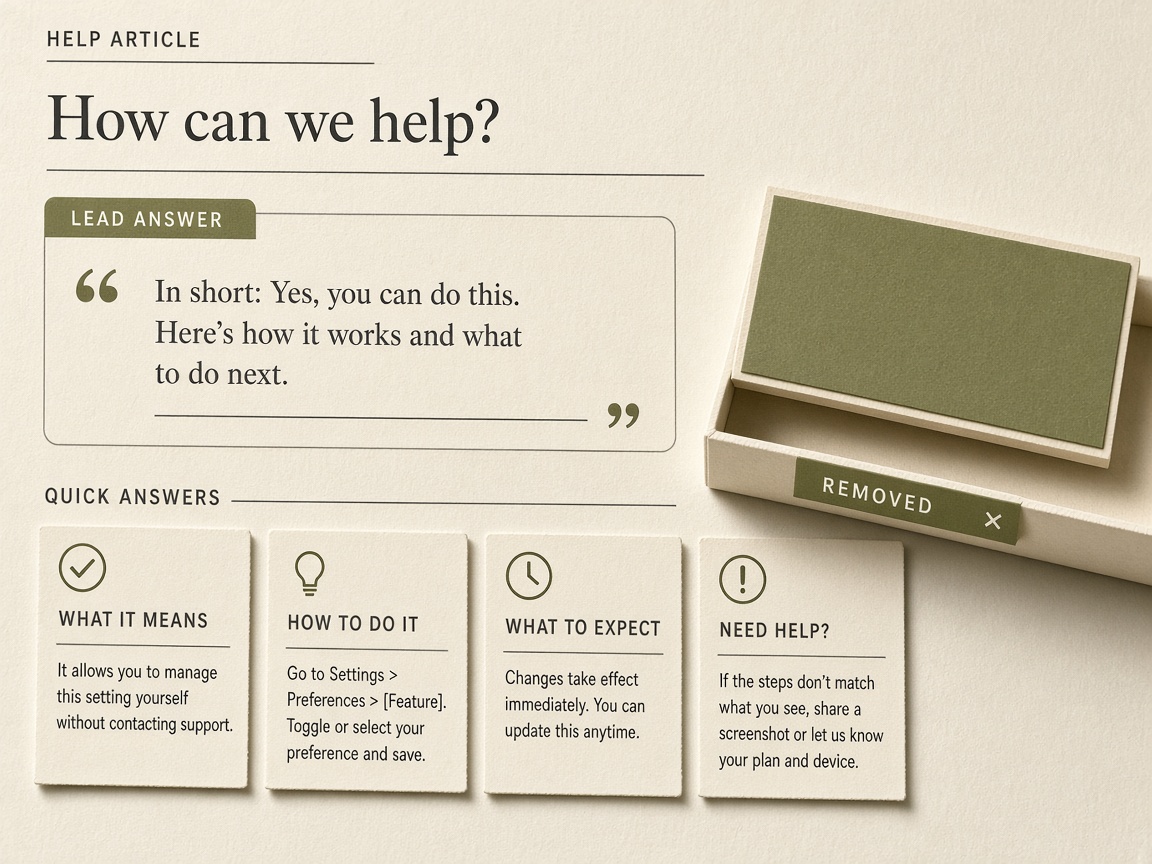
A question the concierge may cite still fails if the page is written like a blog. Write the help article answer-first, in standard product terms, and keep one user problem to the page. Generative systems chunk articles into smaller passages, so each passage has to carry one approved answer and still make sense on its own.
Help-center docs retrieve better than blog narrative because they are answer-first, use standard terms, and break into extractable passages. In a Discovered Labs study of 869 B2B SaaS brands, having a help center was associated with 3.81 points higher adjusted category accuracy per standard deviation.
Before the assistant can use a blog extract, strip anecdotes, marketing calls to action, hedges, campaign dates, and any claim that is not the approved task answer. What remains should be clear, focused, complete, and self-contained.
Quote-ready — One problem, one article, one approved answer—stripped of marketing—so each chunk the concierge retrieves is safe to quote.
Check for an owner URL, then log it before you publish
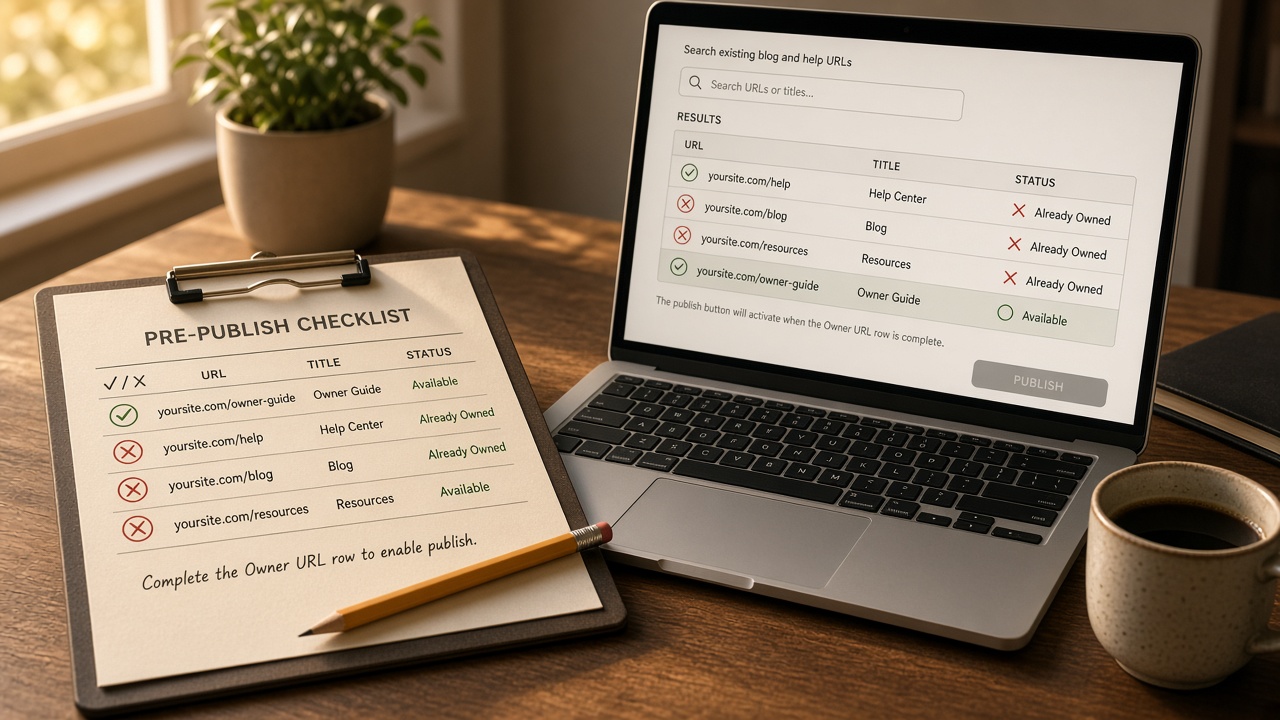
Once the article is built to be quoted, search the live blog cluster, the help center, and the concierge cite list for the same question and the same reader before you commission a help page. If an owner URL already exists, update that page. Do not brief a new URL that clones the post.
Point the brief at the collision-test already published for this cluster and use that test as the gate. Do not restage it in a fresh brief.
Before publish, log the question, the owner URL, the source blog, what was stripped, what the concierge may cite, what it must refuse, and the review date. If any field is blank, do not publish the second URL.
Owner first — If the same question already has an owner URL, update it. A second URL ships only when that pre-publish log is complete.
Does a fresher help center deflect more tickets, and how often should you review it?
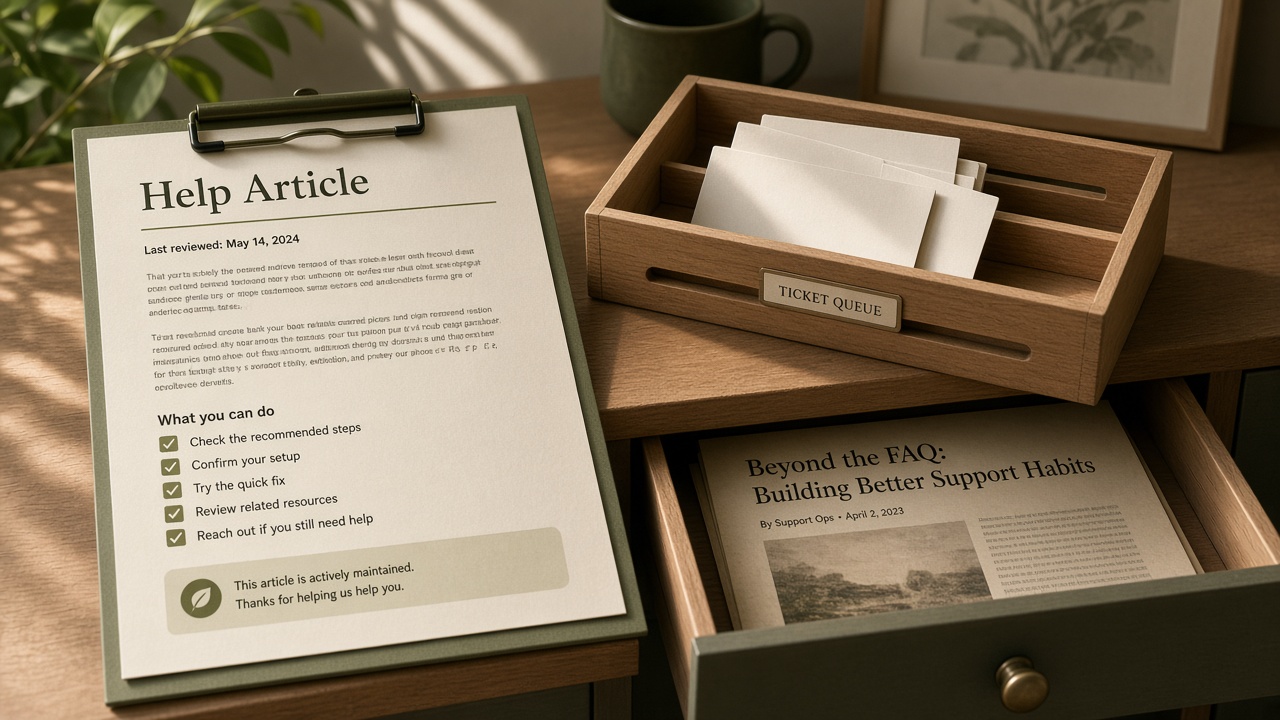
Once that owner URL is logged, freshness decides whether the citation actually deflects the ticket. Yes — when the help center is current and does not contradict itself. A cited median AI self-service deflection rate is 22%, rising to 45% when the help center was updated within 30 days. Poor knowledge bases deflect about 30%; well-curated ones about 80%.
Review a repurposed task article whenever the product changes, and treat 30 days as the freshness window tied to that higher deflection — not a blog-style publish-and-forget date. Buyers often start in self-service: 73% try it first, and 56% abandon a brand after one failed search. The cost gap is just as sharp — $1.84 for a self-service contact versus $13.50 for a human-assisted channel, and $0.10 for a deflected ticket versus $9.50 for a human-handled one. Gartner’s projection that agentic AI will resolve 80% of common issues by 2029 only holds if the help center stays the single source of truth.
Freshness — A current, non-contradictory owner URL is the deflection lever. Review the task article when the product changes, and treat 30 days as the freshness window, not a one-time publish date.
Customers who self-serve first
Key Takeaways
Before you commission another help URL, search the live blog cluster, help center, and concierge cite list for the same question, then log the owner URL and its review date.
Frequently Asked Questions
You Might Also Like
- Governance Support Article vs Blog Post: Which URL Should Answer the Query
- Publishing How to Brief Help Center Pages Without Duplicating the Blog Cluster
- AI Search Knowledge Base SEO: Structure Docs So Search and the Concierge Can Cite Them
- Concierge Flows Concierge: Questions It Should Answer From Your Articles
- Guides Help Center SEO: How to Turn Support Articles Into Rankable Answers