How to Brief Help Center Pages Without Duplicating the Blog Cluster
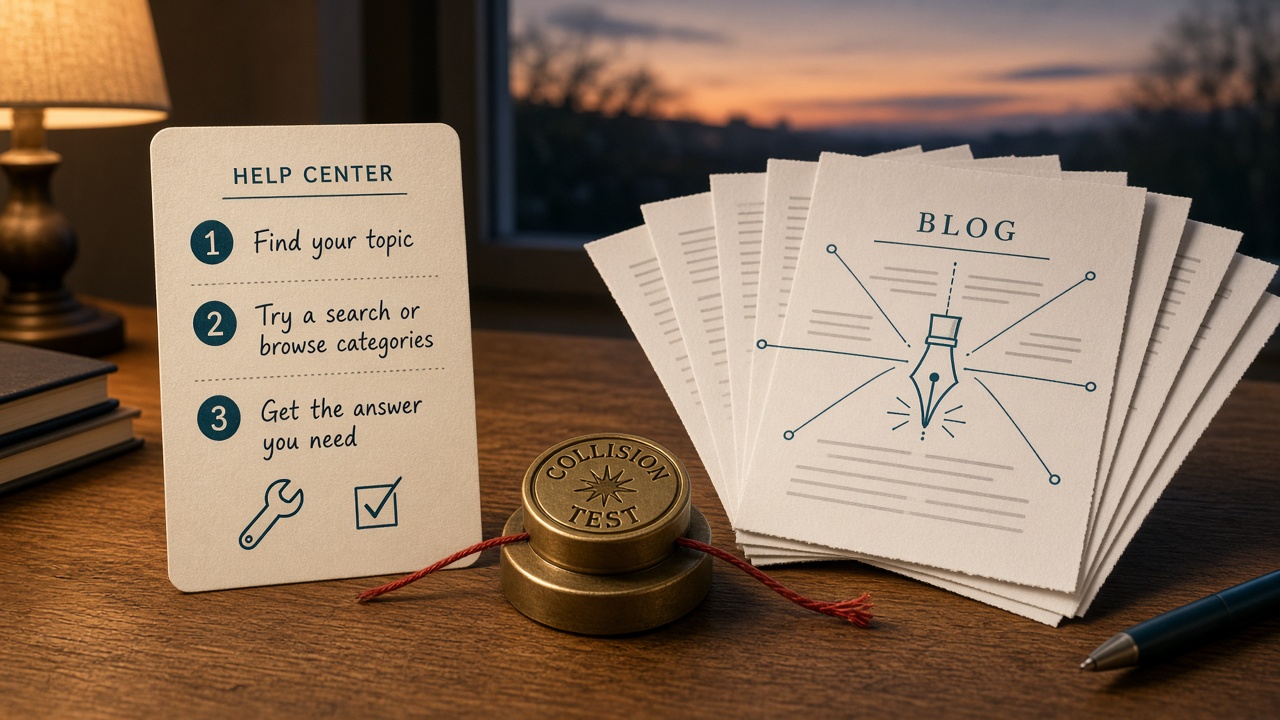
A help center page that restates a blog spoke does not add coverage. It splits ownership. Search engines then have two URLs for one query and often rank neither well, while an AI concierge has two near-duplicates and no single page it can cite with confidence.
The split is intent, not channel. A knowledge base exists so a customer can finish a job in the product. A blog owns the idea, the comparison, and the brand argument. HubSpot's practical line is the same one a brief should enforce: if the piece carries product-specific troubleshooting steps, it belongs in the knowledge base; if it promotes an idea, it belongs on the blog. When those jobs blur, indexed help content cannibalizes the cluster instead of deflecting tickets.
That is why the brief is fail-closed. Collision-test the live site first. If a spoke already owns the primary term, do not retarget it. Commission a help page only when the query has one owner, the page names one task in the customer's words, and the draft can point to the concept page rather than rewrite it. The next step is that ownership check—before anyone opens a blank article.
- Assign one primary keyword to one live URL before anyone writes a help page.
- A help brief is a task contract: customer wording, environment, numbered steps, expected result, and a link to the blog page that owns the concept.
- Keep both URLs only when intent differs—the blog explains the idea; the help article gives account-specific steps.
- Ticket language and Search Console questions beat keyword-tool volume, which often shows zero for real support queries.
- Refuse drafts that clone a spoke, add promotional CTAs, or cannot name a single task; structure the page so a concierge can cite one issue near the top.
What belongs on a help center page instead of a blog cluster spoke?
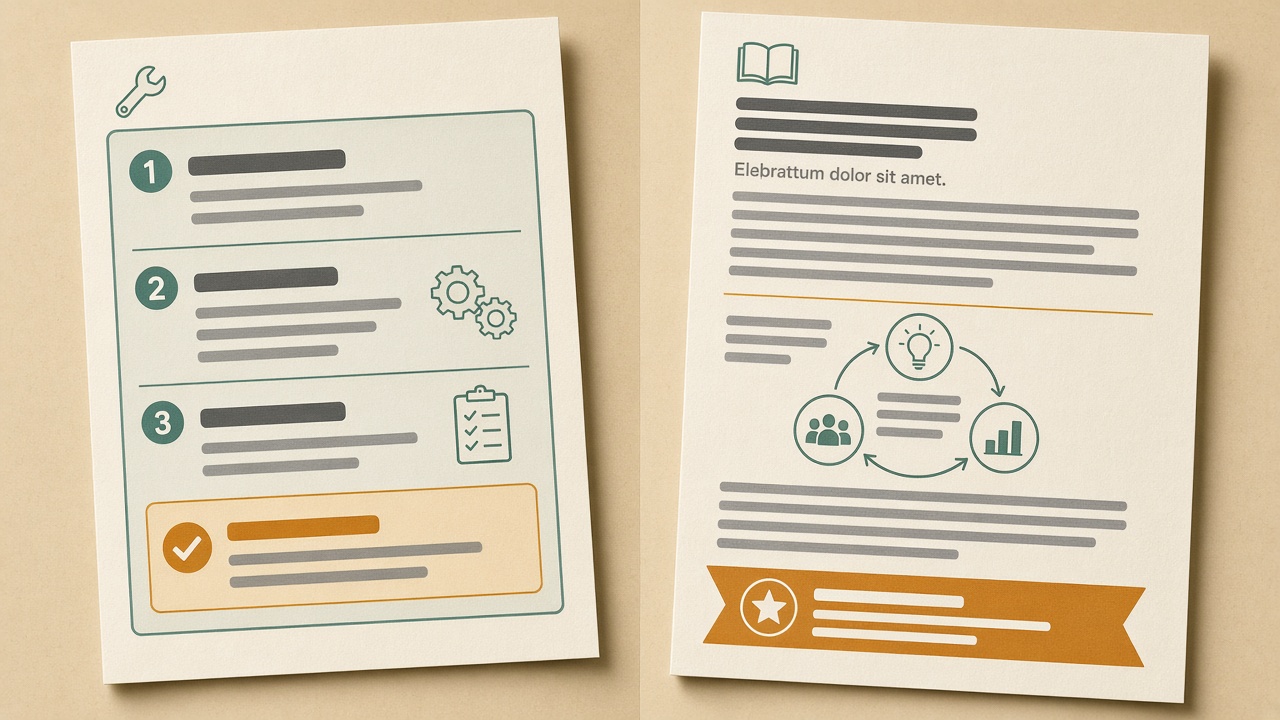
A help center page owns one product task: the issue in the customer's words, the environment, numbered steps, and the expected result. A blog spoke owns the concept, comparison, or idea. The primary keyword follows that split. Neither channel owns terms by default—the URL whose intent matches the query owns it. If the query is conceptual, the blog keeps it, and the help brief must not retarget it.
HubSpot's test is intent. A page designed to help customers find solutions to their problems is a knowledge base; a blog promotes ideas and brand messages. Product-specific troubleshooting is the practical line: if the piece has those steps, it belongs on the help URL, not in the cluster spoke.
Most customers prefer self-service—67% would rather solve the problem than speak to an agent—so the help page has to be findable as a task, not a second essay on the spoke's topic.
Task, not spoke — Put one product task on the help page and leave the primary keyword with whichever URL already matches the query's intent.
How to brief a help article so it does not duplicate the blog
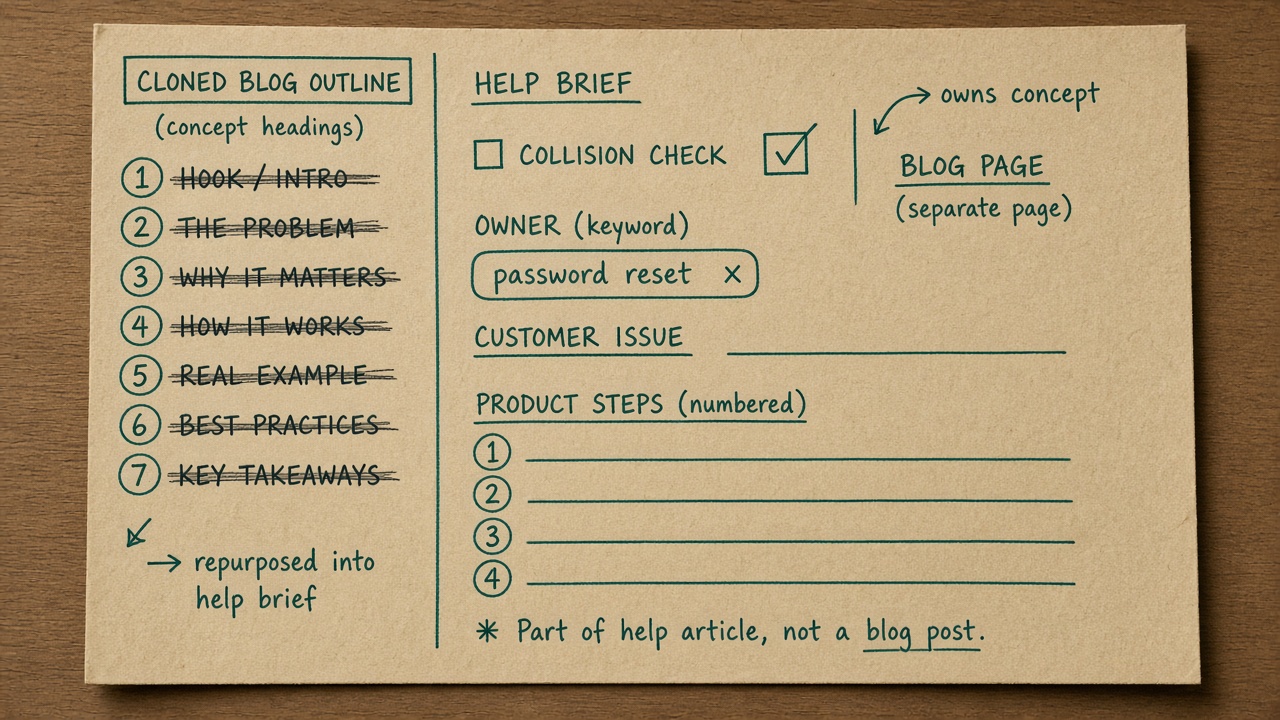
Open the help brief only after that query already has one owner URL. If the blog spoke owns the concept, name that owner and do not retarget the primary keyword. The brief is a task contract, not a mini pillar.
Point writers at the existing brief examples and the support-versus-blog owner decision. Link those pages; do not paste them into this brief. Both URLs stay only when intent differs: the blog explains the concept, and the help article gives the product steps.
Task contract — Commission a short task the concierge can cite—customer wording, product steps, and a link to the concept owner—never a second spoke on the same primary keyword.
Brief from ticket language, not the blog outline or a volume number
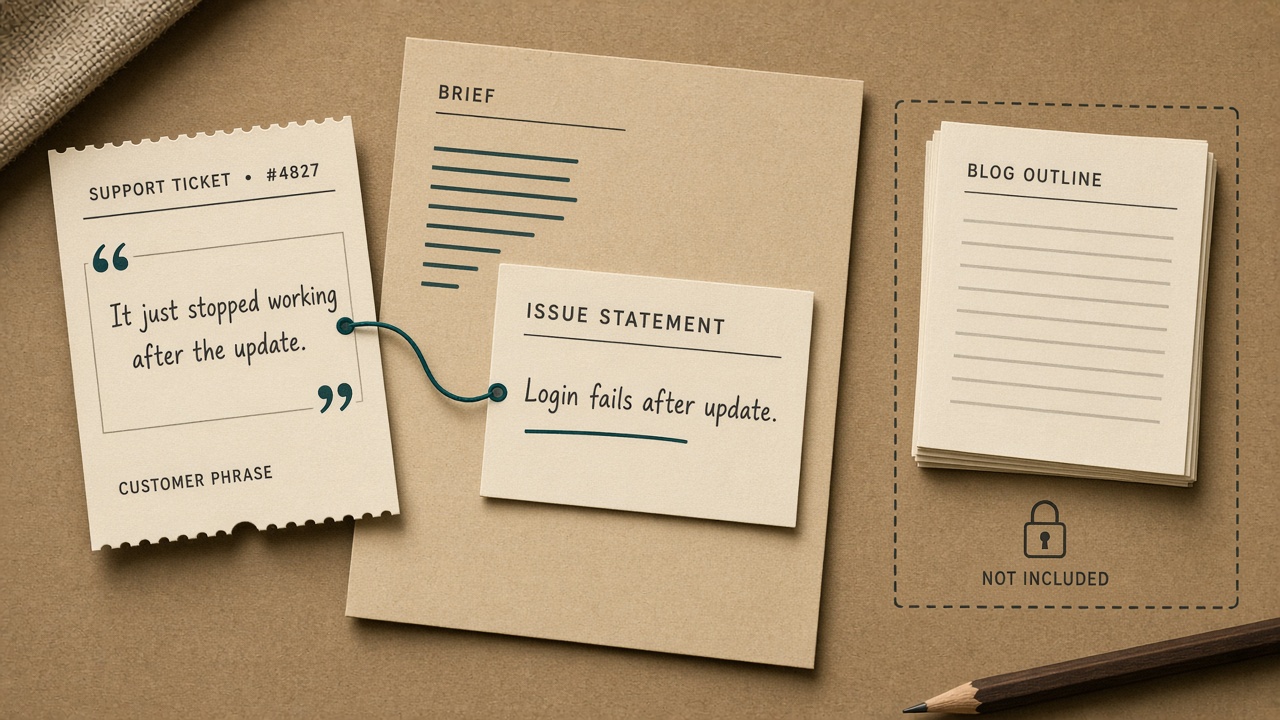
Use ticket language by putting the requestor's words in the issue field, and do not wait on a volume number before you brief the page. KCS practice is specific: the issue is described in the requestor's words and phrases. That wording is what keeps the help page from inheriting the blog's phrasing and outline.
Do not paste the spoke's H2s, intro, or examples into the brief. Steps come from the product task—what the customer was trying to do in the product—not from the concept article that already owns the keyword.
A help article does not need recorded search volume before you brief it. A support question might show no recorded volume in third-party tools. Recurring ticket themes and Search Console questions are the inputs that justify the contract. Volume can prioritize which pages you write next. It is not the gate.
Not a volume gate — Requestor wording in the issue field stops the help page from copying the blog outline. Recurring tickets and Search Console questions justify the brief even when third-party tools show no volume.
Map one recurring ticket to one help URL
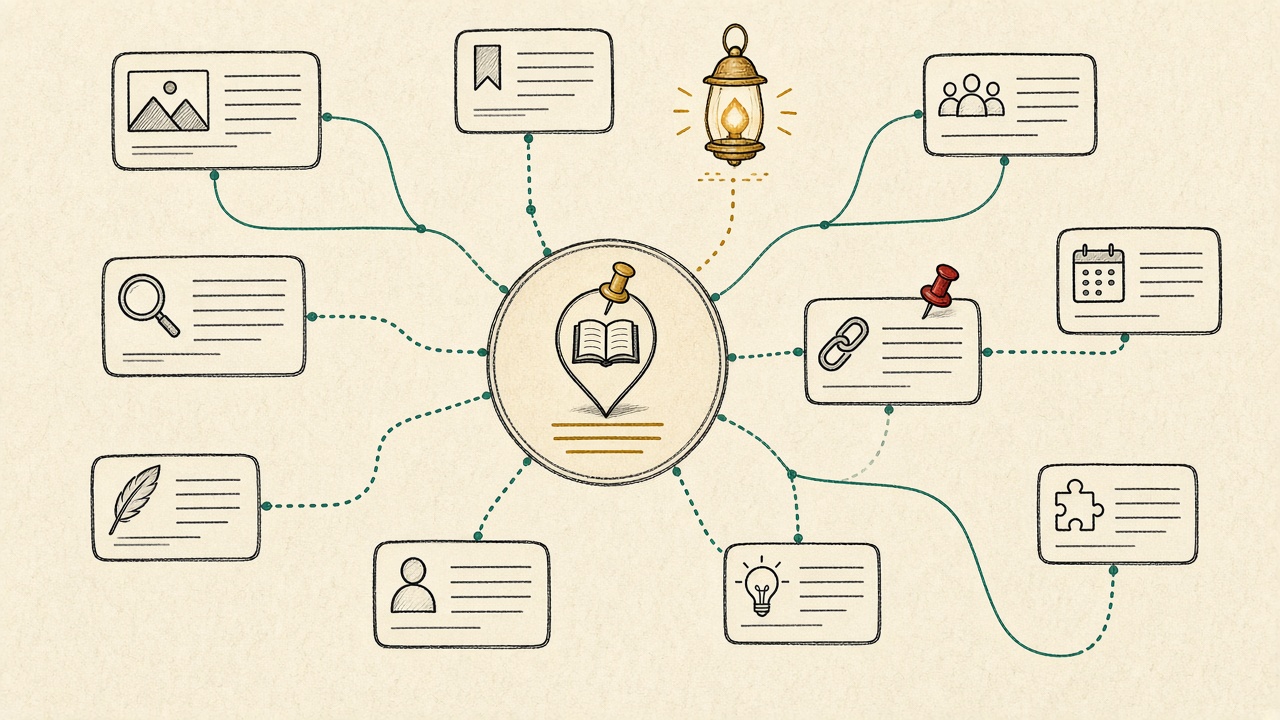
Each recurring ticket theme maps to one help URL in the cluster you already have. If that map already names an owner for the query, update that URL. Different customer wording for the same concept is not a new page.
A shared keyword map is the safeguard, so that no two pages compete for the same primary term. The rule is one primary keyword per page, checked against the live site before publish. On the cluster map you already use, add a help URL only when the problem is distinct from the spoke.
Indexing the knowledge base is the stronger case once you have 50+ substantive articles on distinct problems and a clear split from blog topics. That volume is not a reason to clone spokes. Support writes the issue, environment, and steps from the tickets. The content operator approves keyword ownership, the links, and the hold-or-publish call.
One theme, one URL — Update the existing owner when the query is already mapped. Support drafts the task from tickets; the content operator decides whether that URL may publish.
When to cross-link a help article instead of merging it with the blog
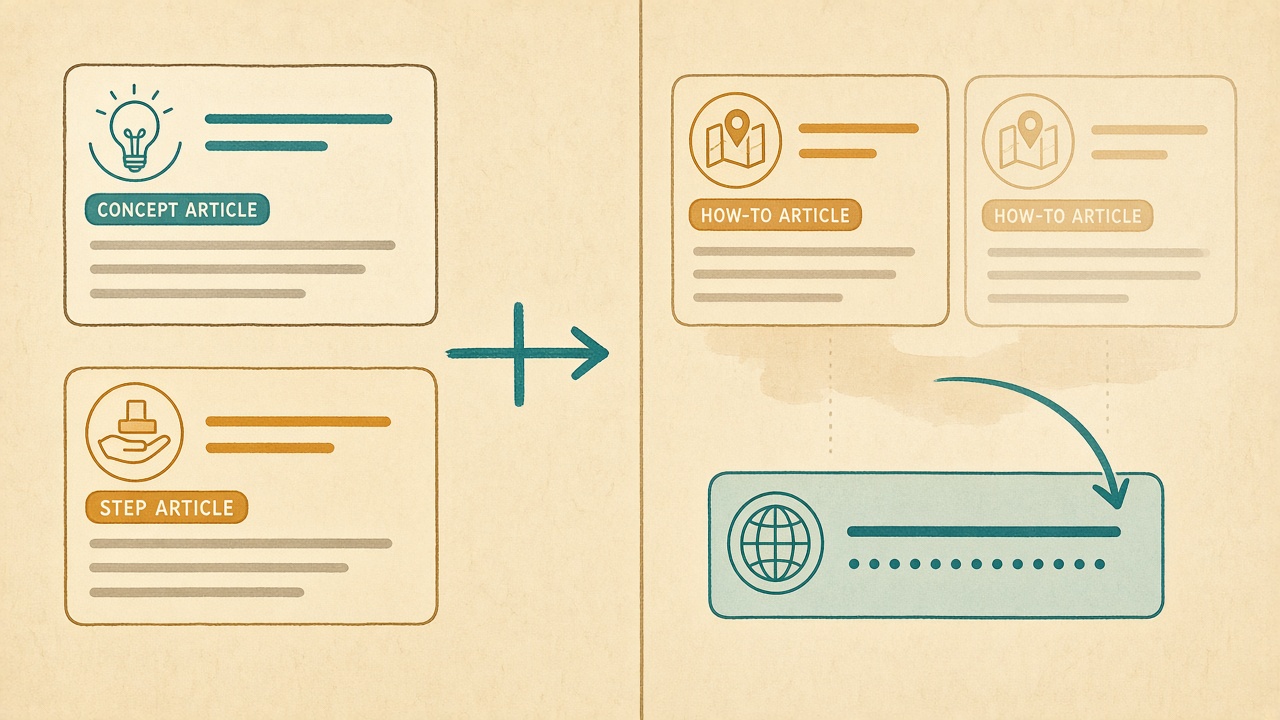
Once the cluster map already names one owner, keep both URLs only when the jobs differ. The blog explains the concept broadly; the help article gives step-by-step, account-specific instructions and links to that concept owner instead of retargeting its primary keyword.
Cross-link rather than merge when a reader who wants the idea and a reader who wants the product steps would leave with different jobs done. Merge, or do not publish, when both drafts answer the same how-to.
The brief must require a link to the blog owner URL, plus links to the support-versus-blog decision and the cluster map. Point to those pages; do not republish them. Use a canonical or a redirect instead of a new brief when the draft would be a second owner of the same intent, and send near-duplicate how-tos to the existing owner URL.
Split or send — Cross-link when the blog owns the concept and the help page owns the product steps. Redirect or canonicalize when both would answer the same how-to.
What to refuse if the draft restates a cluster spoke
When the spoke and the help draft share intent, the draft does not get a second URL. Refuse it when it restates a cluster spoke, adds promotional calls to action, or cannot name a single product task. A help brief is not a place for brand essays.
Hold the page if the collision test failed, the primary keyword matches a live spoke, or the outline could be swapped onto the blog without changing the steps. Do not publish a second owner and hope internal links will sort it out. Merge or redirect near-duplicate how-tos to the URL that already owns the query.
A wrong or confusing URL wastes the cheap self-service path. AMW, citing Gartner 2025, puts a self-service interaction at about $0.10 versus $8 or more for a live-agent contact.
How to make help pages citable by an AI concierge
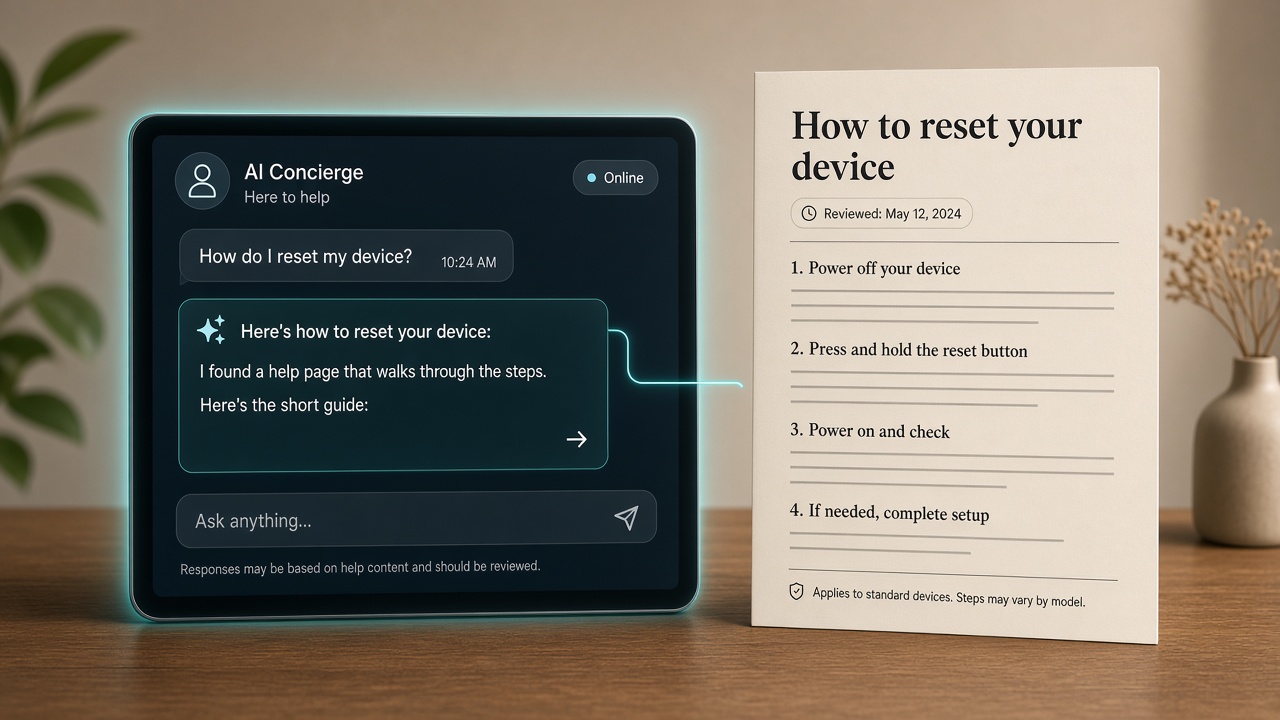
Once a draft clears that refusal test, the surviving URL still has to be quotable. Most support questions now start in search or an AI assistant, so the concierge—and tools such as ChatGPT—should cite the help page, not a second telling of the blog spoke. Structure it as one issue: the answer near the top, stable headings, numbered steps, and a visible review date. Findability failures, not missing essays, send people back to tickets.
Use article schema for a single task page. Use FAQ schema only if the URL is genuinely a short set of distinct questions the blog spoke does not already own. Schema does not replace an answer-first page. Require a freshness review in the brief. Quarterly is the default for high-traffic help articles, because stale UI steps create more tickets—and 34% of self-service sessions fail because content is stale or incomplete.
Quotable — A concierge can cite one task with the answer first and a review date on the page—not a second spoke on the blog keyword.
Why help pages win or lose AI citation
Key Takeaways
Brief the next help page as a one-task contract that cites the concept owner, and hold anything that would become a second spoke on the same keyword.
Frequently Asked Questions
You Might Also Like
- Guides Help Center SEO: How to Turn Support Articles Into Rankable Answers
- Strategy Topic Cluster Content Strategy: Pillars, Spokes, and Internal Links
- Workflows SEO Content Brief: How to Brief Writers (and AI) So Pages Rank
- Templates Topic Cluster Map Template for SaaS Content Teams
- Guides SEO Content Brief Examples for Product, Comparison, and How-To Pages