When Autoblogging Creates Cannibalization: A Hold Rule Before the Next Brief

Autoblogging does not invent keyword cannibalization. A queue that treats every close variant as a new URL does. How to do X, best way to do X, and X guide often answer the same job, and three briefs then fight over one intent while the owner page loses a clear claim on the query.
Multiple URLs in one result are not automatically the failure. In September 2025, Google's John Mueller told Search Engine Journal that three different pages in the same result are not problematic merely because there is more than one, and that pages are not duplicates just because they share a SERP. He also said Search Console shows pages that were actually shown, and that theoretical overlap is not cannibalization. The hold fires only on same intent plus a material split: the ranking URL swaps, impressions split across two pages, or the next brief's intent lock could be pasted onto an existing owner without changing what the reader is trying to do.
The default before a new brief is to name that owner and refresh it. Publish a sibling only when audience, job, format, or next action is structurally different—not when the title swaps synonyms, the subheads are reordered, or the draft adds fluff. Google's scaled content abuse policy, restated in the March 2024 spam update, covers many pages made mainly to manipulate rankings rather than help users, including generative AI pages that add no value, whether automation, humans, or both produced them. Ownership rules keep a faster queue from drifting into that pattern. The next section sets the gate that decides whether the brief is allowed to exist.
- Autoblogging speeds publishing; a keyword-per-URL queue is what creates cannibalization when close variants share one intent.
- Three pages in one result are not a problem by themselves; same intent plus a real split is.
- Freeze the next brief and refresh the named owner unless audience, job, format, or next action is structurally different.
- Synonym titles, reordered subheads, and extra fluff do not justify a second URL.
- Fix collisions and lock intent before raising cadence, or overlapping URLs become index bloat that is hard to unwind.
When an Autoblogging Queue Creates Keyword Cannibalization

The failure is timing. A keyword-per-URL queue publishes the next close variant before anyone names the page that already owns the intent, so the new brief competes with the URL that should have been refreshed.
As the site grows, similar terms start competing, and Google often limits how many results from one domain appear for a query, so an extra page may not earn a second listing. That shows up on mature sites far more than on new ones. Promodo's Anastasiia Pasteka says content cannibalization occurs in almost every second project they work on, and is nearly absent only on newly launched sites.
Cannibalization is shared intent across URLs, not the same text. For the naming test against duplicate content, see /keyword-cannibalization-vs-duplicate-content.
The queue, not the tool — A keyword-per-URL queue creates cannibalization when it ships a brief whose intent matches an owner URL faster than ownership can keep up — shared intent, not copied text.
Is two of my pages showing for the same query always a problem?
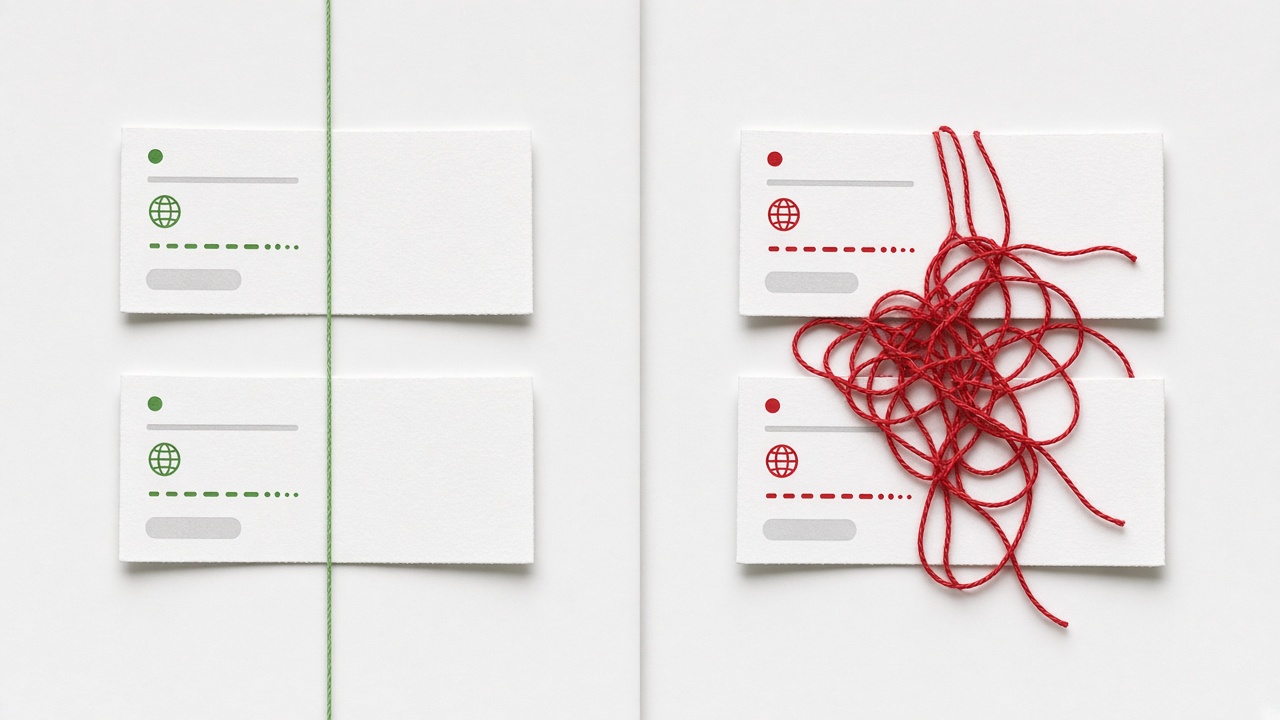
No. Two of your pages showing for the same query is coverage until same intent is proven, not an automatic collision. Most flags fail a volume or intent gate, and the condition that makes the overlap real is same intent.
Use John Mueller’s September 2025 answer as a refuse-to-merge test, not a license for a keyword-per-URL queue to ship siblings. Several pages in one result are not a problem merely because there is more than one.
If you have 3 different pages appearing in the same search result, that doesn’t seem problematic to me just because it’s “more than 1″.
— John Mueller, September 2025
Sharing a result does not make those pages duplicates. Search Console reflects pages that were actually shown, and theoretical overlap is not cannibalization. Reduce unnecessary duplication and build one strong page. How to see which URLs were shown is a separate method, covered in how to find cannibalizing pages in Search Console without a paid tool.
Not automatic — Two URLs in one result stay coverage until same intent is proven; most flags fail a volume or intent gate, and theoretical overlap is not cannibalization.
The hold rule before the next brief is queued

Once overlap is real rather than theoretical, name the owner before the brief is queued. Freeze it when the one-sentence intent lock could be pasted onto that page, when the ranking URL is already swapping, or when impressions are already split across two pages. A brief that fails none of those tests may proceed.
The ownership rule is one intent and one owner URL, not one keyword per page. Different keywords can share a page, and one keyword can hide several intents. Ownership rules beat simply publishing less. BlogSEO puts the prevention line as “One intent, one owner URL. Not ‘one keyword.’ Intent,” and argues the fix is not “publish less.” The fix is publish with ownership rules.
If the new brief would take impressions from the owner URL, do not queue it. Route the update to that owner and refresh it. This article stops at the hold; it does not choose a later merge.
Hold rule — Freeze the next brief and refresh the named owner when the intent lock is interchangeable or the new URL would steal impressions; ship only when that material split is absent.
How do I write an intent lock that proves a new URL is distinct?

The hold is only as clear as the sentence you write before the brief ships. Name the audience, the job, the format, and the next action in one line, then compare that line with the owner's. A new URL is earned only when at least one of those is structurally different. If the two sentences could swap pages without changing who is served or what they do next, do not queue a sibling.
Title tricks fail that test. Swapping synonyms, reordering the same subheadings, or adding 200 words of fluff are weak differentiators and do not justify a second URL. Close variants such as how to do X, best way to do X, and X guide often answer the same query, so they belong on one owner, not three autoblog posts.
Intent lock — A new URL is earned only when audience, job, format, or next action is structurally different from the owner's one-sentence lock — not when the title swaps synonyms or close how-to variants.
Should I refresh the owner page instead of publishing a sibling?
Yes — once that intent lock matches a named owner, refresh and expand that page. A sibling is appropriate only when the topic is the same but the intent differs, not when the brief merely renames the owner's job.
A canonical, or a merge you plan to run later, is the wrong next step at brief time. Those are repairs for URLs that already overlap, not a gate for a draft that has not shipped. How to choose among merge, redirect, and canonical sits on /merge-redirect-or-canonical-decision-rule and /content-cannibalization-audit-how-to-merge-redirect-or-hold-overlapping-urls; this hold does not walk those trees.
That is why you do not create the split. In almost every consolidation one practitioner has run, the merged page outperformed the separate competing URLs within six to eight weeks. Shipping the sibling first only books that repair.
Default — When the intent already has an owner, refresh that URL. A future canonical or merge is not permission to publish the overlap.
Search Console signals that should freeze the queue

Once the named owner is the page you refresh, freeze the queue again if Search Console shows the split after publish. Three signals do that: the ranking URL for a query keeps swapping, impressions split across two pages, or click-through rate drops after a new page ships while impressions stay stable. The Search Console finder holds the filter steps; do not queue another sibling while those signals are live.
Match cadence to the governance you already have. A new site starts at 1 to 3 posts a week, a growing site at 3 to 10 while cannibalization is watched, and 10 or more only on an established site with ownership rules in place. Fix collisions before you raise that rate. Promodo describes an eight-month platform result of 91.7% overall traffic growth on a structure where every page had a purpose and none competed — that cleanup, not a faster keyword-per-URL queue, is what should come first.
Freeze first — URL swaps, a real impression split, or a stable-impression CTR drop freeze the queue; repair the owner, then let cadence follow how governed the site already is.
Conservative posts-per-week cadence
Does Google's scaled content abuse policy apply to overlapping AI posts?
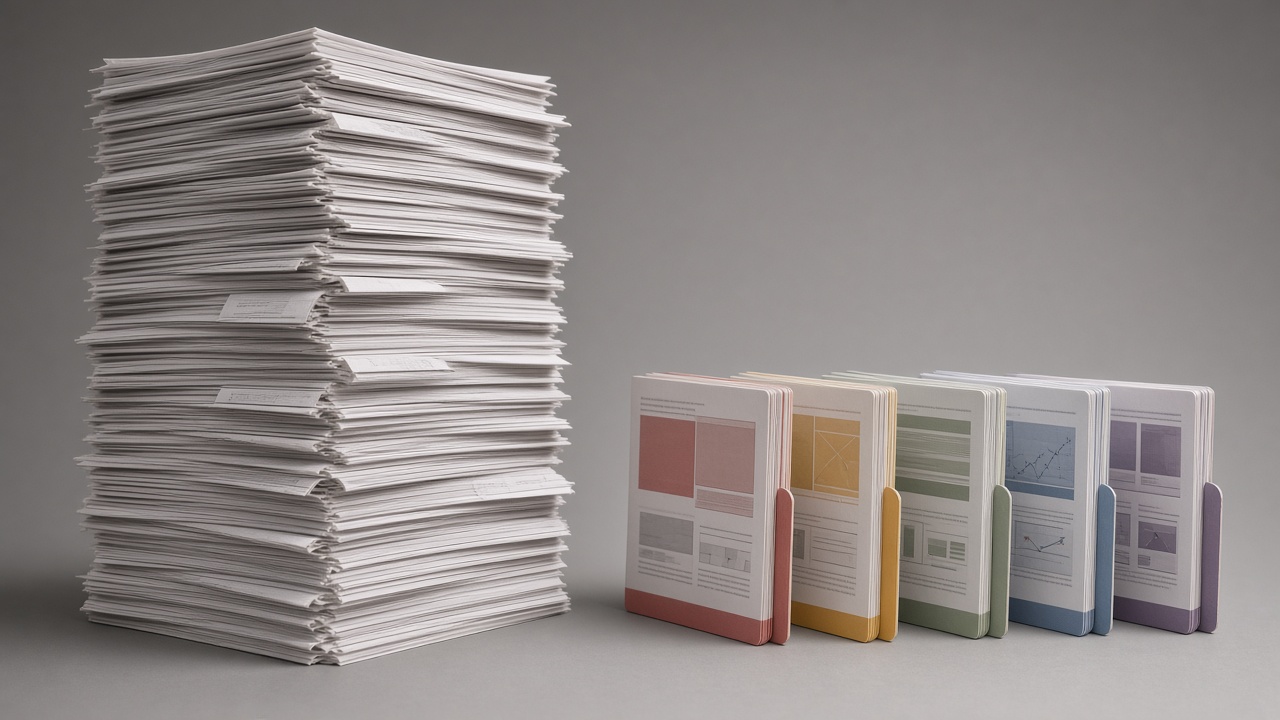
Freezing the queue on a real split is an operations rule first. Overlapping autoblog URLs are not scaled content abuse merely because two AI posts share a query. They drift into that pattern only if the queue never holds and keeps shipping pages made mainly to manipulate rankings rather than help users.
Google defines scaled content abuse as many pages generated for that purpose: large amounts of unoriginal content with little or no value, regardless of how it is created. Using generative AI to produce many pages without adding value is an explicit example. The March 2024 update applies the rule to automation, humans, or both. Substantially similar pages that behave more like search results than a clear hierarchy are the nearby doorway pattern. The hold is the prevention — not a spam-policy workaround for a brief that should have refreshed the owner.
Hold first — Overlap is an ownership failure until a never-held queue starts publishing many low-value pages to manipulate rankings; the hold stops that drift before policy becomes the issue.
What software may queue, and what a human must refuse

Prevention fails if software can ship the next brief alone. It may cluster, draft, and propose candidates. A human must refuse any brief whose intent lock is interchangeable with a named owner, and any queue missing a distinct-intent check, an owner page, fact checks, internal links, and a later consolidate-or-remove path — the gap that creates index bloat, cannibalization, and quality problems that are hard to unwind.
Software may keep a family of 3 to 6 anchor variants so repeated exact-match anchors do not blur which URL should rank. It must not invent a URL to spend a variant.
After that card passes, the next gate is /fail-closed-seo-briefs-autoblogging-publish-gate, not an open firehose. The hold ends here; a cleared brief still has to clear that gate before it can publish.
Refuse — Software may propose clusters, drafts, and anchor variants. A human freezes any interchangeable intent lock and any queue that cannot name an owner, check facts, link internally, and later consolidate or remove.
Key Takeaways
Before the next brief is queued, run the hold card—intent sentence, named owner, lock comparison, material-split flag, then refresh, allow, or freeze—and send anything that fails closed to the publish gate.
Frequently Asked Questions
You Might Also Like
- Quality Content Cannibalization Audit: How to Merge, Redirect, or Hold Overlapping URLs
- Strategy Keyword Cannibalization vs Duplicate Content: Which Problem the Brief Should Name
- Workflows Programmatic SEO or Autoblogging? Route the Cluster Before You Brief
- Publishing Flows for SEO Publishing: What the Stack Automates vs What You Still Own
- Guides SEO Content Brief Examples for Product, Comparison, and How-To Pages