When a Long-Tail Keyword Is Too Thin to Brief

Low competition is a ranking condition, not a reason to open a brief. A long-tail keyword is too thin when it is only a less popular way of asking a parent question, when one new page cannot add a distinct answer, or when reported volume is near zero and nothing outside the tool says the query converts.
The traffic that looks like a hidden win usually belongs to a broader page. Ahrefs found that keywords estimated at 10 or fewer monthly U.S. searches averaged about 11.3 Search Console impressions, and fewer than 1% cleared 100—and Ahrefs called that a small sample, so it is a warning, not a law for every industry. In the same write-up, a phrase estimated at 10 searches sat on a guide that drew about 3.8K monthly search visits because the page already covered a popular topic.
Before a thin string becomes a URL, run a fail-closed test on the live results: brief only a distinct answer, fold supporting variants into the parent page or an FAQ, and refuse the rest. The first cut is whether low competition is real topical demand or just an obscure phrasing of a head term Google already treats as the same search.
- Low competition is a ranking condition, not a reason to brief a new page.
- Near-zero volume rarely hides a traffic jackpot; Ahrefs saw about 11.3 impressions on average, and fewer than 1% of those keywords cleared 100.
- If the live SERP largely matches the parent query, fold the term into that page instead of opening a URL.
- Brief a thin-looking query only for an early trend or a phrase you already know converts.
- One strong page that covers the topic beats a stack of near-duplicate long-tail URLs.
When a long-tail keyword is too thin for its own brief

Publishing on a low difficulty score fills the site with strings that never needed a URL. This section’s test is whether the phrase can carry its own page, belongs on a page you already have, or should be refused before it enters the brief queue.
A low difficulty score does not prove the phrase is a different search. When the phrase is just an unpopular way to search a popular topic, Google often ranks an almost identical set of results, so the string is not easier than the head term.
Most of the keyword universe is this thin. Ahrefs’ U.S. database, as cited in Neal Schaffer’s long-tail guide, shows roughly 95% of unique keywords get fewer than 10 monthly searches — about 31,000 keywords above 100,000 searches versus 3.8 billion under 10. A volume-and-difficulty filter will treat that pile as opportunities.
Finding the phrases and writing the brief are separate jobs — use your long-tail research workflow and the rankable-briefs guide for those, not a new URL for every thin string.
The gate — Low competition only justifies a URL after the live test ends in brief, fold, or refuse — not because the tool says the phrase is easy.
Topical long-tail or supporting variation?
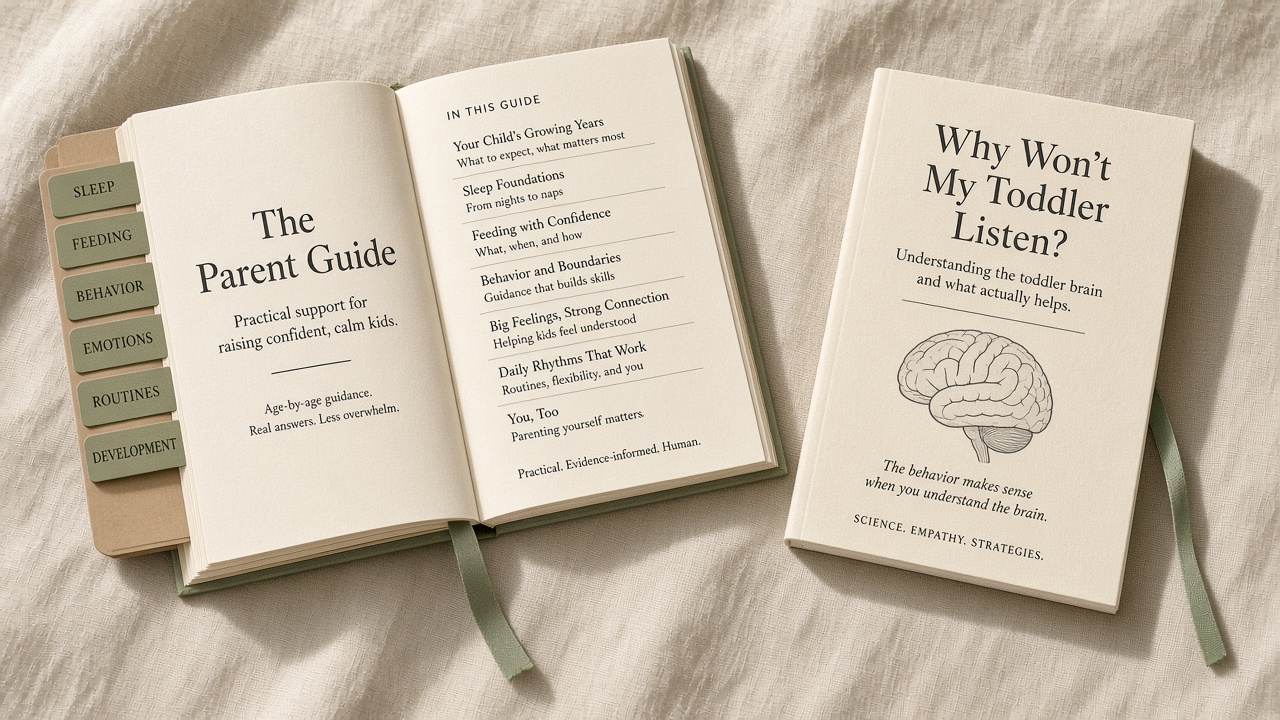
The first cut is treatment, not competition. A topical long-tail has its own question and its own answer, so it can earn a page. A supporting variation is a phrasing, example, or sub-question of a broader page, so it is grouped there—often as an FAQ—not published as its own URL.
Word count and specificity do not make it topical. If the parent already answers the query, fold it into an H2, an example, or an FAQ. Related shoe-care queries that cannot each support real depth belong in one guide: a page aimed at a single long-tail often cannot sustain enough depth. Use the existing keyword-clustering definition instead of redefining clusters.
Before any brief, run a one-sentence fold test: can you state a different answer the parent page does not already cover? If no, make it an FAQ or a section. If yes, continue to the SERP test.
Fold it — Same answer, same page. A thin query that cannot state a distinct answer in one sentence belongs on the parent as an H2, example, or FAQ—not in a new brief.
When SERP overlap means both keywords belong on one page
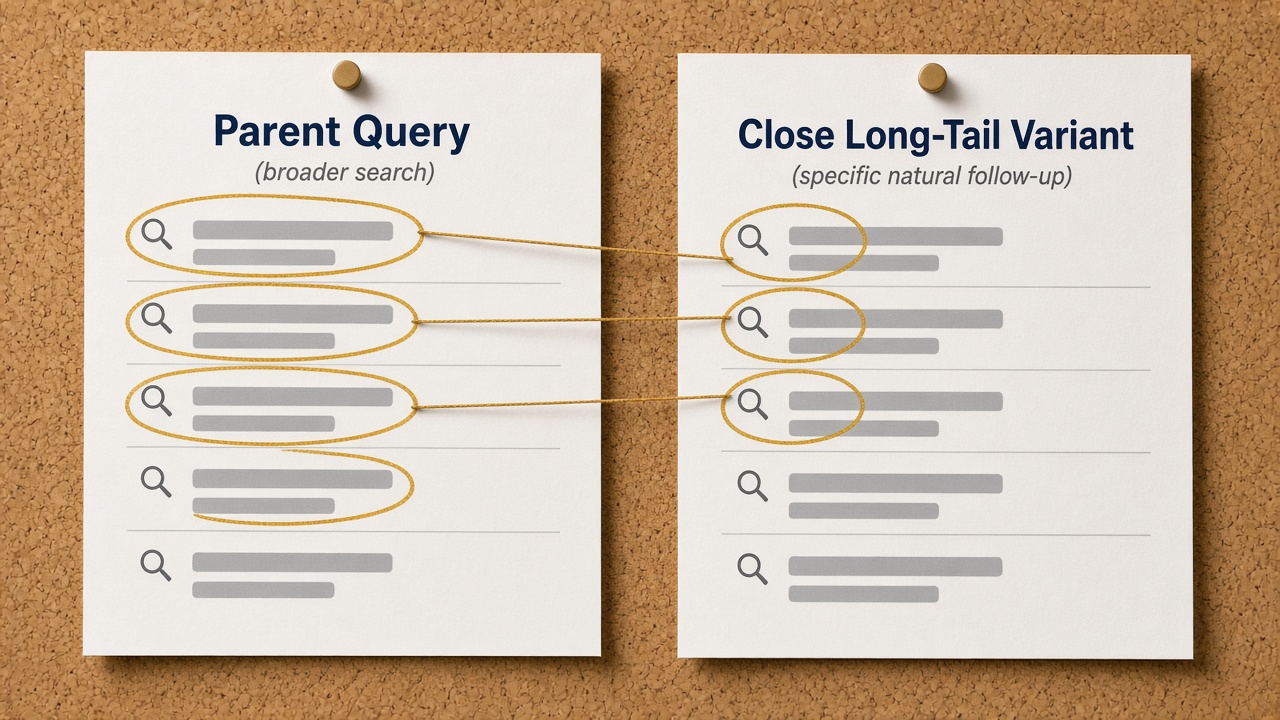
Once you can state a different answer, check the live results. If the top results for the long-tail largely match the parent query, both keywords belong on one page. Overlap is the collision test. Word count is not.
Treat the cutoffs as working thresholds, not a law. One operator rule treats 3–4 shared top-10 URLs as the usual same-page case, 5 or more as a strong merge, and 0–1 as separate pages. Another treats 5 or more overlapping top results plus a similar content style as one page, and fewer than 3 overlaps as a split.
Compare the actual URLs and the format of the results, not the keyword strings. Same guides and the same intent mean the same page.
A clean split is not an automatic brief. Low overlap and a distinct answer can still fail later gates: volume theater, no conversion signal, or a template page.
Same page — If the live top results largely match the parent, fold both keywords onto one page. A clean SERP split still has to clear the later gates before it earns a brief.
Should you target a zero-volume keyword the tool says nobody searches?

No. A reported zero is not a brief. Do not commission a URL on the hope of hidden traffic. In Ahrefs’ small test, keywords estimated at 10 or fewer monthly U.S. searches averaged about 11.3 Search Console impressions over 28 days, and fewer than 1% drove more than 100 impressions. Ahrefs called it a very small experiment that may not represent every industry.
What looks like a zero-volume win is usually one page ranking for many related phrasings. “Submit domain to search engines” was estimated at 10 U.S. searches, yet the guide got about 3.8K monthly search visits because it covered a popular topic. Traffic Potential far above the keyword’s own volume is the tell that low competition is fake: more popular phrasings already cover the topic, so Google is not offering an easy side door.
Contrast a competitive head term with a true niche zero: “link building” at about 14K U.S. searches and KD 87 versus “link building for roofers” at KD 0. Real topical long-tails are easy because the topic is unpopular, not because the string is obscure. If Traffic Potential matches a head term you already cover, fold the zero into that page. Do not commission a second URL to chase the small string.
Skip the zero — A tool zero is not hidden demand. Brief only a true niche topic; if Traffic Potential already matches a head term you cover, fold the string into that page.
Monthly searches vs page traffic
What minimum search volume is worth a content brief?

Folding a zero whose traffic already belongs to a head term is not a volume floor. No monthly-search number earns a brief on its own. A working rule stays above 50 searches unless CPC is above $10, and keeps a new site under keyword difficulty 15 — useful for screening easy informational junk, though it can also pass over thin queries that still convert. Calling anything under 250 monthly searches low volume is a label, not a publish rule, and not every term in that band deserves a page.
A keyword under 20 or 50 still deserves its own URL only as an early trend with no search history yet, or as a phrase you already know converts from sales calls, support tickets, or the product. Price can make thin volume worth a page; a floor cannot. Six articles on keywords under 20 monthly searches drove 149 organic signups for Circuit over two years, and a photographer with $6,000 packages spent $1,500 on five low-volume posts and offset that with one conversion a month. Treat those as conversion evidence, and point the commercial pattern at the existing converting long-tail examples guide instead of briefing a new example set.
The same gates still apply: a distinct answer, a non-colliding SERP, and a conversion or trend reason you can name. Intent decides. A specific zero is not automatically lucrative.
No floor — No search-volume minimum earns a URL. Brief a thin query only when you can name a conversion or early-trend reason, state a distinct answer, and show the live SERP does not already belong to the parent.
What is keyword cannibalization at the long-tail level?

A cleared volume floor still does not earn a second URL when the intent is the same. Long-tail cannibalization is two or more near-duplicate URLs competing for that intent, so close variants rank for none of them cleanly. Four close variants on separate posts become four thin articles fighting one slot; forty thin pages aimed at slight long-tail differences may rank for none of the variants.
One strong page is the asset. Across 3 million queries, the average number-one page also ranked in the top 10 for nearly 1,000 other relevant keywords, with a median around 400. Leave the topic unsplit and one well-optimized page can rank for 2,200 or more related keywords when it actually covers the subject. That is the case for folding supporting long-tails, not for stuffing unrelated questions onto one URL.
One page — Close long-tail variants belong on one parent that can rank for hundreds of related queries; separate near-duplicate URLs split that equity and often rank for none of them cleanly.
One useful long-tail page is not scaled content abuse
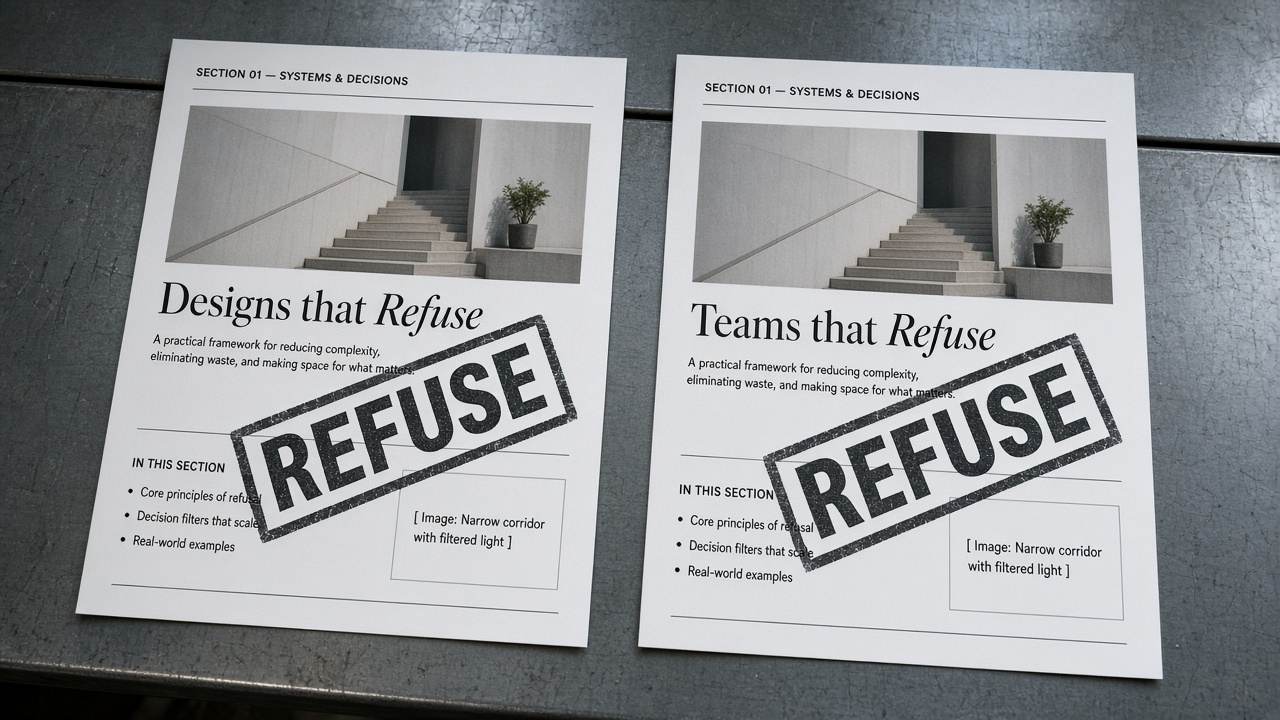
One narrow page that genuinely helps a user is not abuse, and there is no page-count cutoff. Scaled content abuse is many pages generated mainly to manipulate rankings rather than help users, whether humans, automation, or AI produced them. Doorway abuse is pages built to rank for specific, similar queries that send people to a less useful intermediate page.
Google’s examples include generative AI creating many pages without added value, and pages that make little sense but contain search keywords. Read two templated URLs side by side: if only the keyword changed, they are thin even if the template is clever.
Refuse even when keyword difficulty is near zero if there is no distinct answer, the SERP already belongs to a parent, there is no conversion or trend signal, or the only plan is to stamp the string into a template. Specificity is not intent. “How to copy a picture on Facebook without tagging” is a non-lucrative zero, not a brief. Do not mass-delete every narrow URL. Stop commissioning many near-duplicate long-tail URLs whose purpose is rankings.
Refuse the pattern — A single useful long-tail page is fine. The pattern to refuse is many near-duplicate URLs built to rank, including at keyword difficulty near zero.
AI search does not earn a thin long-tail its own page
No. AI search and query fan-out do not lower the bar for a new URL. About 15% of daily Google searches are queries it has never seen, so tools will always miss some demand. John Mueller, via a March 2025 Search Central Live comment, said that share is still about 15% and has not risen just because of AI. Cover those unseen strings on a parent page broad enough to absorb fan-out. For answer engines, split only when two questions need genuinely different answers; do not split on keyword variants.
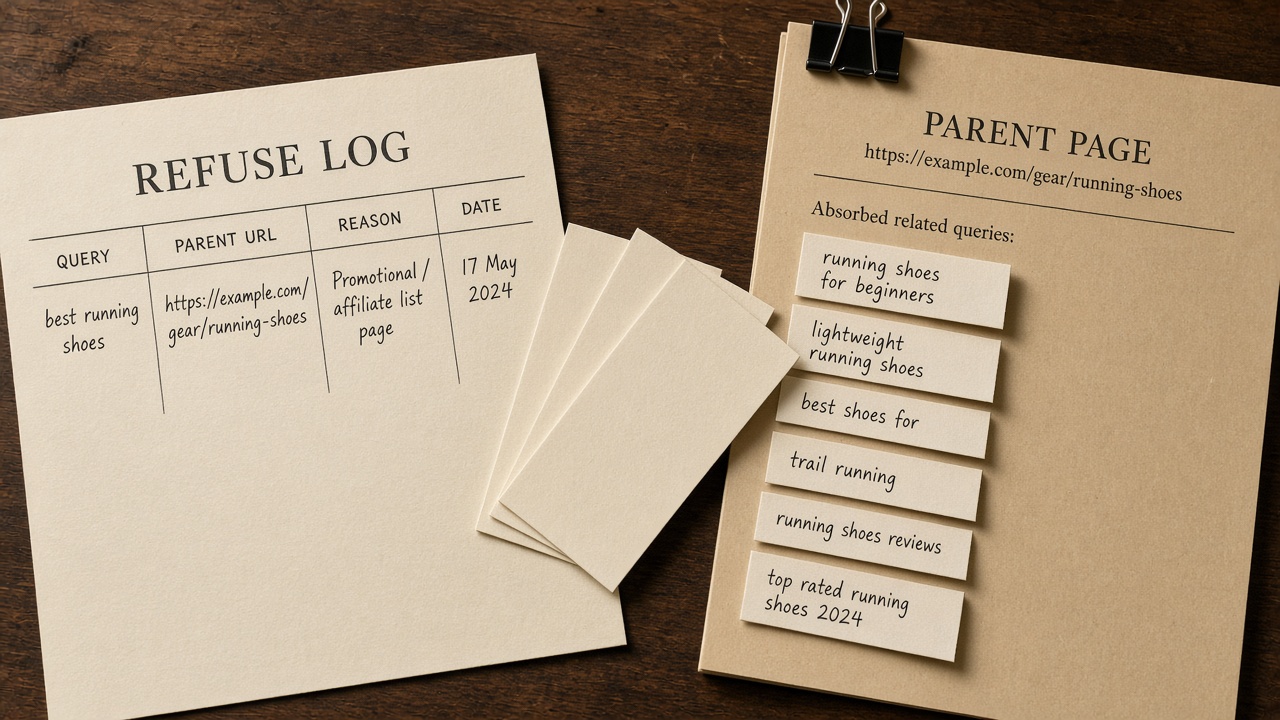
A refused keyword needs a log the next brief must check before commissioning. If the same string reappears, the log is the decision—do not re-research it into a page. Keep it beside the brief queue so automated publishing cannot pick the refused string up as a fresh topic. Record:
- The query
- The parent URL it folds into, if any
- The reason: SERP collision, no distinct answer, no conversion or trend signal, or template-only
- The date
Same bar — Unseen queries and AI fan-out belong on a broad parent page, and a refusal log—not a second URL—is what stops the same thin string from being briefed again.
Key Takeaways
Run the next long-tail through the distinct-answer and live SERP tests, then brief, fold it into the parent, or refuse it and log the decision.
Frequently Asked Questions
You Might Also Like
- Guides Long-Tail Keywords: How to Turn Low-Volume Queries Into Rankable Briefs
- Strategy Keyword Clustering: How to Group Keywords into Rankable Topics
- Strategy Long-Tail Keyword Research: A Practical Workflow for Briefs
- Workflows SEO Content Brief: How to Brief Writers (and AI) So Pages Rank
- Automation Fail-Closed SEO Briefs: The Publish Gate Autoblogging Needs