SEO Content Brief: How to Brief Writers (and AI) So Pages Rank
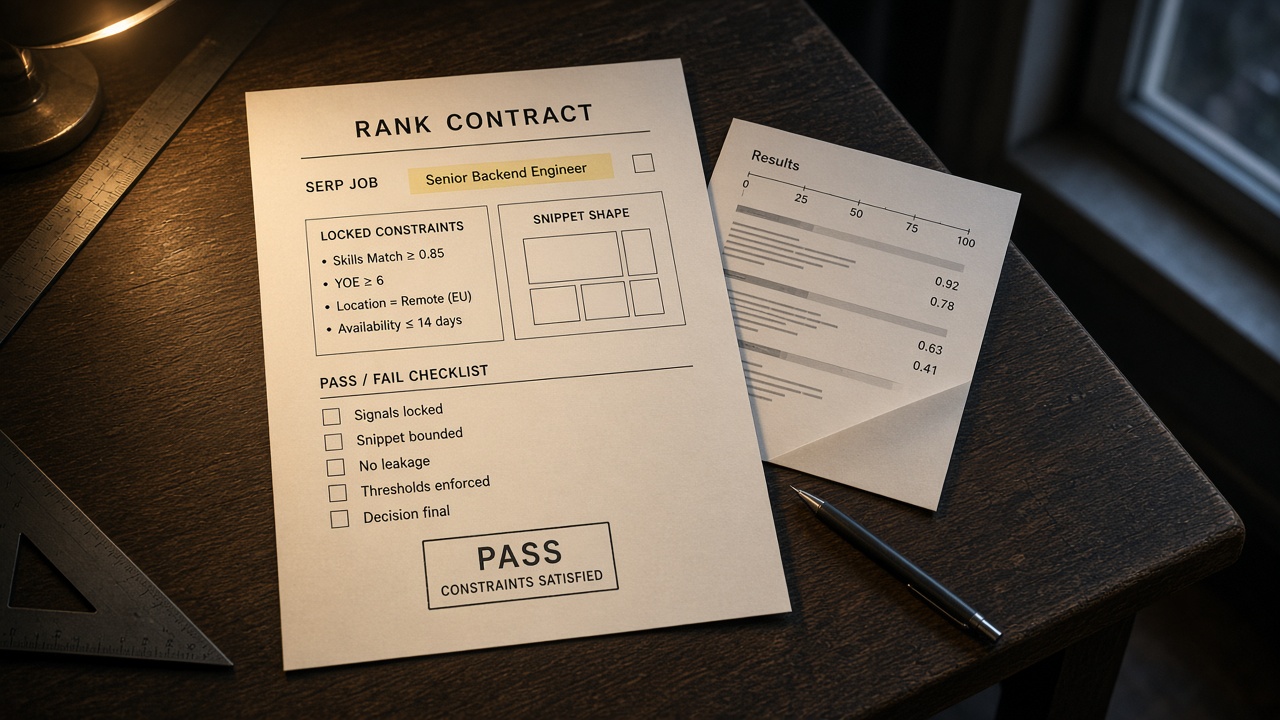
Most briefs describe a topic. Ranked pages need something stricter: a rank contract—what query the page must win, what the SERP already rewards, and how anyone (writer or model) will know the draft failed before it ships.
If the brief is vague, humans pad with generic advice and models hallucinate coverage. If it is a checklist of keywords, you get stuffed copy that still misses intent. The useful brief is executable: one job, one SERP shape, and tests that are pass or fail.
This article walks that contract from keyword and cluster through outline, evidence, and quality gates so the first draft is the draft you can publish—not a prompt dump you rewrite twice.
- Treat the brief as a rank contract, not a topic outline or keyword list.
- Lock the search job, SERP format, and entities before anyone writes a paragraph.
- Give humans and models the same pass/fail tests so drafts fail in review, not in rankings.
- Cluster related queries so one page owns a job instead of competing with itself.
- Automation scales briefs only when the contract is already specific enough to execute.
Treat the brief as a rank spec, not a writing prompt
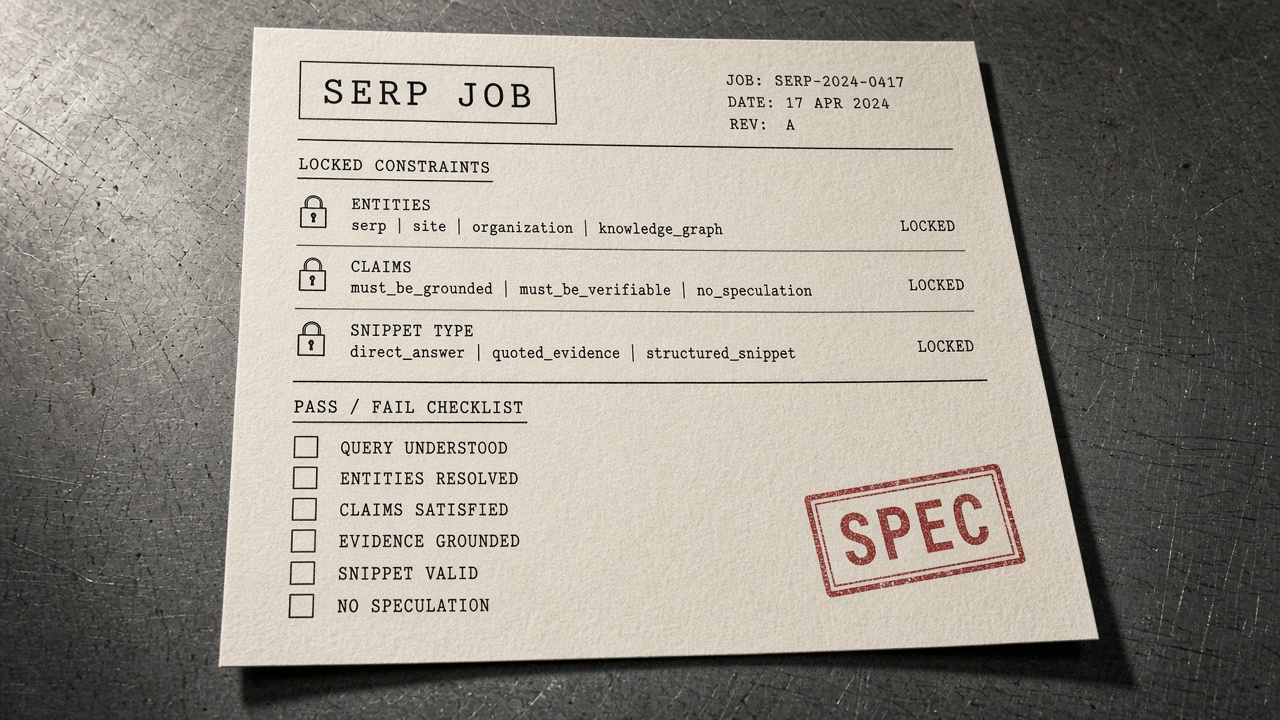
Once the page has a job, the brief is not another dump of keywords, SERP screenshots, or generator output. Those belong in research. The brief is the rank contract: what the page must do in search, which claims it must make, what format the SERP already rewards, and what evidence the draft has to include. Tone adjectives and “write like a human” notes are not that contract. They are style hints. Rankings do not inspect style first.
A ranking specification is narrow on purpose. It names the search job (answer, compare, convert, teach), the must-cover claims a competing page would fail without, the structural shape (list, table, step sequence, explainer), and the proof the writer or model may use. Everything else is optional. If a point cannot be checked as present or missing, it does not belong in the brief.
Revision spirals start when SEOs brief for prose quality and only inspect for rankings after draft one. The writer ships a fluent page that misses intent, omits a required comparison, or buries the answer. Then the SEO rewrites the outline in comments. That is not editing; it is writing the spec after the fact. Humans and models both guess when the pass/fail tests are missing.
Lean operators feel this immediately. Once drafting is delegated—to a freelancer, a team, or an assistant—the brief is the only lever left. You cannot stand over the keyboard. You can only author a contract both executors can follow without guessing, then accept or reject the draft against that contract.
Rank spec — A ranking brief is a pass/fail spec for search job, claims, format, and evidence—not a prompt for nicer sentences.
One rank job both a writer and a model can execute
That spec only works if it names one job a human or a model can finish without another meeting. Write it as an action plus an outcome a reader can complete on the page—for example, help a buyer choose X versus Y without leaving the page—not as a bucket such as informational or commercial. Those labels describe traffic; they do not tell anyone what to produce, what to omit, or when the piece is done.
Then name the winning unit on the SERP. If the results that own the query win with a paragraph answer, a comparison table, numbered steps, a product block, or an FAQ cluster, the brief must pick that unit as the page’s primary shape. Everything else is optional scaffolding. A writer who treats the brief as a prompt will still invent a narrative arc; a model will still pad. A rank job that specifies the unit leaves neither room to guess.
Ban competing jobs on the same brief
Do not stack rank plus thought leadership plus brand story unless each maps to a distinct on-page module with its own pass/fail test. Mixed jobs produce mixed drafts: the comparison never finishes, the origin story crowds the table, and neither executor knows which failure to fix first. One brief, one executable job, one SERP unit. If you need a second job, it is a second page—or a labeled module that cannot steal the primary unit’s space.
Single job — State one action-plus-outcome job and one SERP unit; competing jobs belong on other pages or labeled modules, not in the same rank contract.
Lock the rank constraints, leave voice and examples open
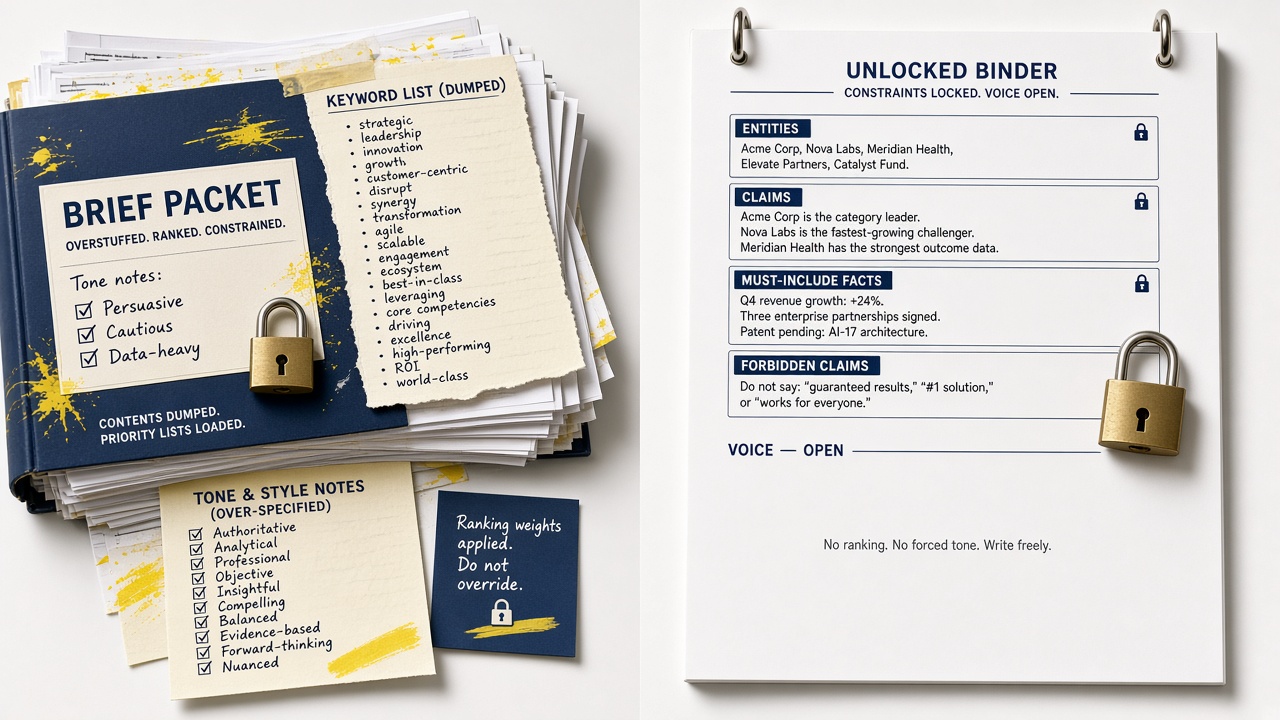
Once the page has one rank job and a named SERP unit, the brief’s next job is to freeze what must not drift. Lock the primary query, the supporting questions that already occupy the results, the entities the page has to mention correctly, any claim that needs a source before it can ship, the internal links that keep the cluster coherent, a hard word-count ceiling, and the angles that are forbidden because they belong to a different SERP. Those fields are pass/fail. If they are missing, a writer or a model will invent a second job.
Leave open what does not change ranking shape: voice, examples drawn from the operator’s own work, and sentence-level style. Humans boxed into a house-voice paragraph write stiff copy. Models given a style essay plus a keyword list satisfy the prompt and pad toward generic filler. Rank lives in structure and coverage, not in a prescribed cadence.
A keyword-stuffed template looks thorough: synonym lists, “inspiration” headlines, competitor quotes, tone adjectives, and a request to also sound like a thought leader. Executors treat every extra field as a requirement. They satisfy the prompt, miss the SERP unit, and still hit the word count. A short constraint set does the opposite. It names the query, the questions, the entities, sourced claims, links, ceiling, and bans—then stops. That is enough to force a rankable outline (heading order, a table or steps where the SERP already uses them, a FAQ cluster only if the results already cluster) without dictating the sentences.
Inspiration fields create drift because they are not tests. They are invitations. The executor who “also weaves in brand story” has already broken the single-job contract. Keep the brief small so humans stay useful and models stay on the unit you named.
Constraint set — Freeze query, questions, entities, sourced claims, links, length, and bans; leave voice and examples free so executors hit the SERP instead of the prompt.
Where humans and models break the same brief
Once those constraints are locked, the remaining risk is not missing keywords. It is two executors failing the same contract in opposite ways. Humans and models both need the rank job, the SERP unit, and the pass/fail tests. They do not need two different briefs. They need one contract plus a short addendum that names how each executor typically cheats.
A writer will usually add a personal anecdote, hedge a sourced claim until it says nothing, or quietly expand the page into a second thesis. Fence the scope in one line: this page answers the named job and nothing adjacent. Add an explicit rule: do not invent a second thesis, even if it feels more interesting. If a story or example is allowed, it must illustrate a locked claim, not replace it.
A model will usually flatten nuance, skip citations, invent tidy lists the SERP never showed, and omit brand-specific proof. Give it evidence slots (claim, source, placement) and a short ban list of generic openers. Require named entities and internal links as tests, not suggestions. Do not “just add more keywords.” Extra terms raise density while leaving the rank job, the winning unit, and the evidence still unexecuted.
Keep the shared contract identical after handoff. The addendum is only the failure mode: scope fence and no second thesis for people; evidence slots and banned openers for models. Two diverging briefs produce two pages that cannot both pass the same tests.
Same contract — One rank contract, two short addenda for how each executor fails—never two briefs, and never more keywords as a substitute for the job.
Brief the SERP shape and extractable answers, not just keywords
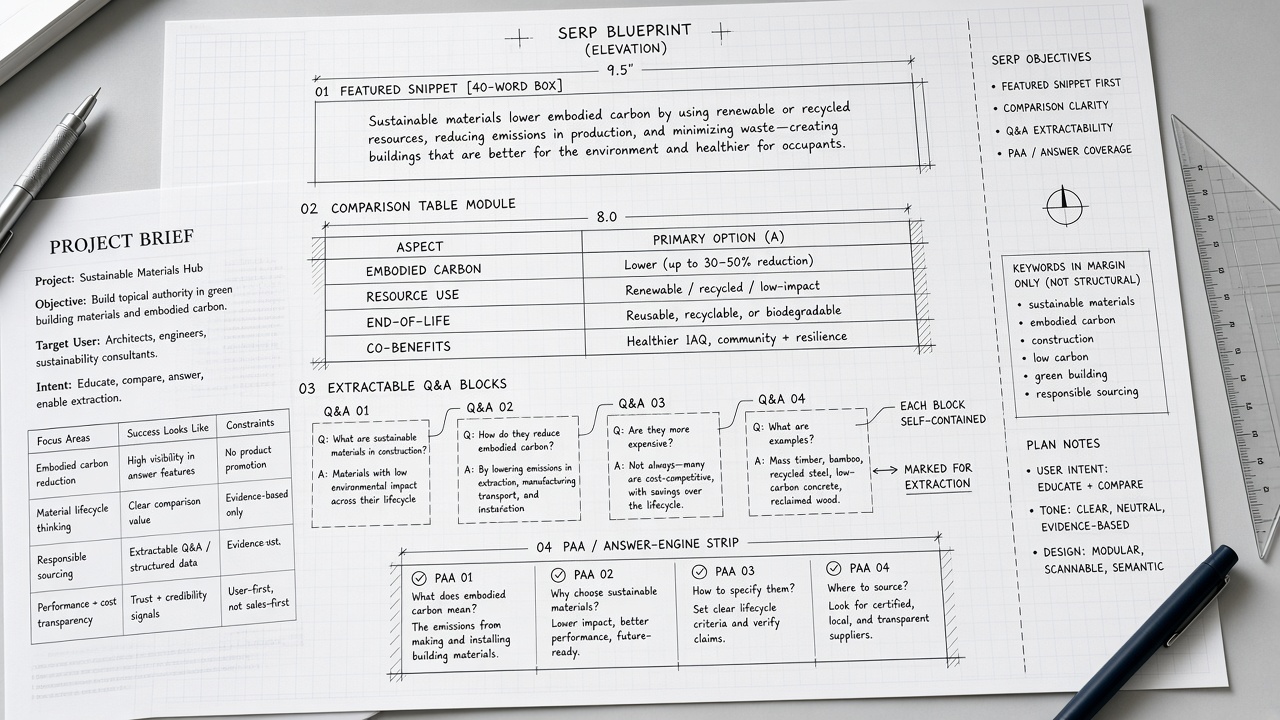
Once the winning unit is chosen, the brief still fails if H2s are just clustered keywords. Specify how that unit is built on the page—comparison table, numbered steps, definition block, spec list, or a product module—and outline only after that shape is fixed. Structure that fights the rewarded format is a rewrite waiting to happen, no matter how well the queries are grouped.
Answer engines and skimmers need the same extractable pattern: a direct sentence that answers the question, then the proof. The brief should list which supporting questions must appear in that form—not as buried paragraphs, not as poetic setup. If a claim cannot be lifted as a standalone answer, it is not briefed as a ranking unit.
Interchangeable drafts come from interchangeable facts. Assign the entities that must be named and the unique claims that must appear so this page cannot be swapped with other articles on the same cluster. Those facts belong in the constraint set, not in a later “add color” note.
Do not treat a FAQ dump as a ranking strategy. “We’ll add FAQs at the end” is forbidden unless each item maps to a question the SERP still leaves unanswered. If the question is already won by a featured snippet or a competing H2, it does not earn a slot just to pad the page.
Rank contract — Choose the rewarded SERP unit and extractable answers first; entities and unique facts make the page non-swappable; FAQs only count when they close an open SERP gap.
Acceptance tests: the brief is finished when a competent draft could rank
Once the SERP shape and extractable answers are named, the brief still is not done. It needs a short pass/fail list a reviewer can run on any draft—human or model—without arguing about voice. Those tests score the contract, not the writer. If a competent executor following it still could not rank, you rewrite the brief, not the person.
Ship a short list of binary acceptance items, not a style rubric. Rank job visible in the H1 and opening paragraph. Required entities present. Format match (the unit the SERP actually rewards). Sourced claims where the brief demanded proof. No second thesis. Unique facts that keep the page from being interchangeable. Internal links placed where specified. Forbidden angles absent. That list is the QA script.
Kill criteria keep reviewers honest. Competing intent in the same module, a commercial claim with no source, or a heading tree that mirrors a rival without a differentiator should stop publication. Extra adjectives and brand warmth are not substitutes. When humans and models fail the same items, you have a contract problem. When only one fails, you have an executor addendum problem—already covered, not a second brief.
Done means rankable — The brief is complete only when a competent draft that follows it could pass rank tests. QA the spec with one shared list; do not grade the writer’s personality.
Freeze the contract, then hand off once
Once those acceptance tests exist, freeze the rank job and the constraints before anyone is assigned. Editing the brief mid-draft is not “tightening copy.” It is a new article wearing the old URL. The executor is still trying to pass yesterday’s tests while you have quietly changed the SERP unit, the entities, or the forbidden angles. Rank contracts only work if they stop moving.
The handoff packet is small on purpose: the frozen brief, the source list those sourced claims must come from, a few examples of on-brand proof (not extra thesis), and the same pass/fail list humans and models already share. That is the whole assignment. Do not add a Slack thread of “also mention…” items. Those extras are a second brief, and they recreate the revision spiral the contract was built to prevent.
Reopen the contract only when the SERP format or the search job itself has shifted. A draft that feels thin is not a reason to rewrite the brief. Thinness means the original spec lacked evidence slots—unique facts, entities, and extractable answers—so the page had nothing to say once the format was filled. Fix that in the next brief; do not punish a competent draft for a hole you left in the spec.
Lean teams scale by reusing this pattern per page type—comparison, how-to, category, FAQ cluster—not by growing a longer template. Same rank job, same locked constraints, same tests, new query. Voice and examples stay open; the contract stays frozen. That is how pages rank without a second brief.
One handoff — Freeze the rank contract before assignment; hand off the brief, sources, proof examples, and tests once; reopen only when SERP job or format changes—not when a draft feels thin.
Key Takeaways
Write your next brief as a frozen rank contract with shared acceptance tests, then hand it off once and score the brief—not the writer.
Frequently Asked Questions
You Might Also Like
- Guides SEO Content Brief Template: The Complete Guide to Briefs That Rank
- Guides Free SEO Content Brief Generator: How to Brief Writers in Minutes
- Strategy Long-Tail Keyword Research: A Practical Workflow for Briefs
- Automation How to Automate Keyword Research for Content Briefs
- Strategy Keyword Clustering: How to Group Keywords into Rankable Topics