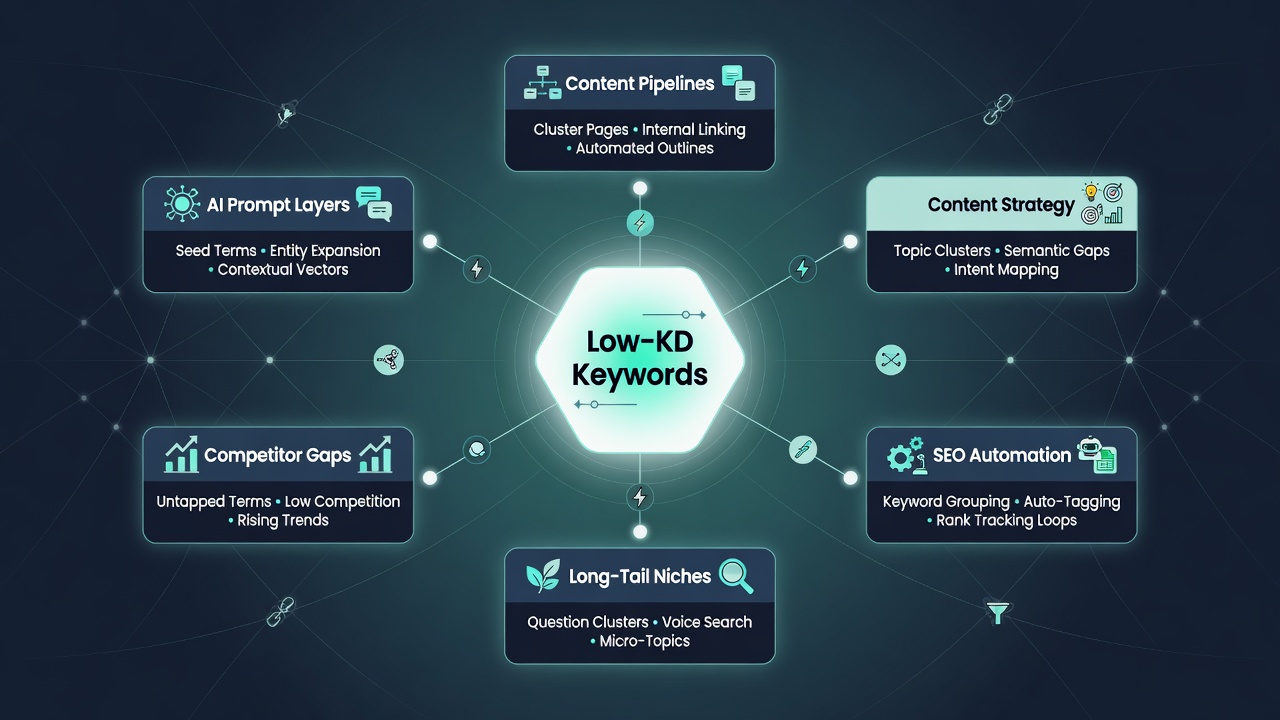
Topic Cluster Strategies Using AI SEO Automation Tools

Building search visibility no longer relies on targeting isolated, high-volume keywords. Modern search engines and generative AI systems reward deep, structured expertise above all else. To establish this level of authority, publishers rely on a topic cluster strategy. A topic cluster is a group of interconnected, thematically related pages on a website, consisting of one pillar page that provides a broad overview and multiple subpages covering specific subtopics, all connected with internal links.
By organizing content into these structured hubs, websites build the comprehensive topical authority required for search engine optimization (SEO) and generative engine optimization (GEO). This structural discipline helps sites rank for a wider variety of keywords and secure placements within large language model (LLM) prompts and AI Overviews. However, manually mapping keywords, identifying content gaps, and managing internal link equity across hundreds of pages is incredibly slow and prone to human error.
This is where AI SEO automation tools transform the workflow. Advanced AI systems automate semantic grouping, identify content gaps, and generate entire cluster structures based on search intent and real-time SERP data. By combining programmatic precision with natural language generation, publishers can deploy self-healing content hubs that automatically maintain internal linking structures, eliminate keyword cannibalization, and keep readers engaged through interactive elements like in-article AI chat assistants.
- 1
A topic cluster consists of a central pillar page linked to multiple detailed subtopic pages, establishing clear semantic context for search engines.
- 2
Building deep topical authority through clusters improves organic rankings and increases visibility in AI-generated answers and LLM prompts.
- 3
AI SEO automation tools eliminate manual overhead by automating semantic keyword grouping, gap analysis, and cluster architecture.
- 4
Proper internal linking within a cluster directly correlates with higher search engine visibility, impressions, and overall keyword rankings.
- 5
Combining automated topic clusters with interactive in-article AI chat enhances user engagement, dwell time, and website monetization.
Why AI Publishing Systems Collapse Without Topic Cluster Architecture
AI publishing systems promise high organic discovery pathways. Yet, when publishers deploy content automation at scale without a rigorous architectural framework, the resulting sprawl of disconnected pages fails to signal topical authority to either Google or modern large language models (LLMs). Generating volume for the sake of volume merely dilutes a site's footprint. Without structured, semantic relationships, search engines view a flood of AI-generated articles as isolated noise rather than authoritative depth.
This structural discipline is no longer just a theoretical best practice; it is hardcoded into how search engines evaluate domains. The May 2024 Google API leak confirmed the existence of two critical site-level signals: siteFocusScore, which measures how concentrated a domain's content is around a core subject, and siteRadius, which tracks how far individual pages stray from that core topic. Sprawling, unlinked AI content actively damages these scores. By contrast, a disciplined topic cluster acts as a mathematical anchor, keeping the site's radius tight and its focus score exceptionally high.
By grouping a comprehensive pillar page with highly targeted cluster pages, publishers transform high-volume publishing into durable ranking assets. This architecture is equally critical for Generative Engine Optimization (GEO). When AI agents and LLMs crawl the web to synthesize answers for conversational search queries, they rely on clear semantic maps to attribute source authority. A well-linked cluster ensures that your brand's insights are packaged exactly how generative engines extract information, securing vital citations in AI overviews.
Topical Focus Wins — Unstructured AI content dilution triggers algorithmic penalties under Google's siteFocusScore and siteRadius metrics, making tightly linked topic clusters the only viable architecture for both traditional SEO and generative engine visibility.Architecting the Pillar-Cluster Blueprint for Automated Pipelines
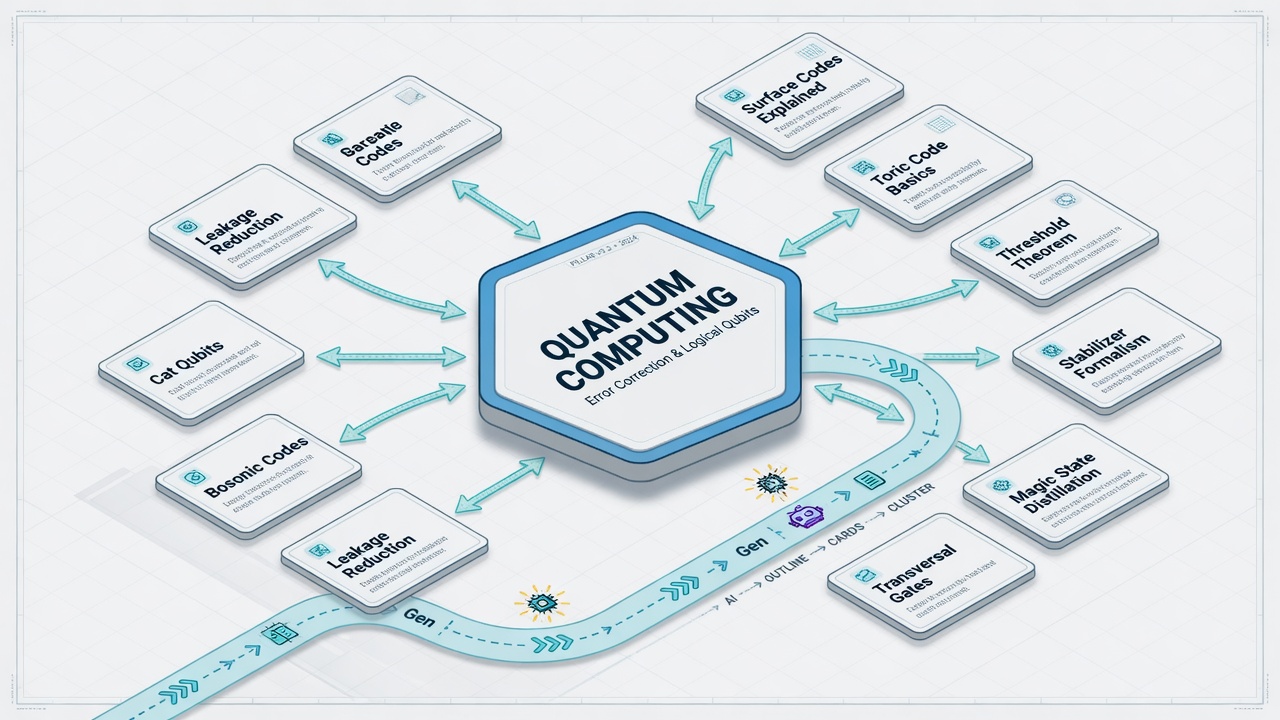
To turn this theoretical semantic map into a functional asset, publishers must establish a precise structural blueprint. At the core of this architecture is a hub-and-spoke model that balances broad authority with deep, niche-specific detail.
This structural framework is not just an organizational preference; it is the mathematical foundation that allows AI content automation engines to scale without producing disjointed or cannibalistic content. By defining these boundaries upfront, you establish clear parameters for bulk generation while preserving semantic coherence and search intent coverage.
When designing this topology for programmatic SEO, scale dictates the depth of the cluster. A healthy pillar typically links to roughly 10–20 subtopic pages to ensure comprehensive coverage of a vertical. Within these individual assets, establishing at least 3–5 contextual internal links per article serves as a strong baseline to distribute PageRank and semantic relevance throughout the entire hub.
Once mapped, these blueprints feed directly into AI SEO automation pipelines. Instead of generating isolated articles, the system ingests the entire cluster design as a single cohesive project, ensuring that every generated page understands its relationship to its neighbors and its role in the broader topical hierarchy.
Topological Precision — A robust cluster blueprint requires one central pillar linking to 10–20 highly focused subtopic pages, utilizing 3–5 contextual links per article to feed semantic context directly into automated publishing workflows.Automating Semantic Grouping and Content Gap Discovery with AI Pipelines
This holistic ingestion is where automated execution begins. Rather than relying on manual keyword grouping—a process that quickly becomes untenable when managing thousands of search queries—modern SEO pipelines leverage machine learning to analyze search intent at scale.
By processing live search engine results pages (SERPs), AI tools automate semantic grouping, identify content gaps, and generate cluster structures based on search intent and SERP data. This reduces manual effort for large keyword sets, transforming what used to be weeks of spreadsheet analysis into a near-instantaneous pipeline input.
How Semantic Pipelines Align Intent to Content Maps
Instead of grouping keywords solely by lexical similarity, automated systems evaluate user intent by analyzing SERP overlap. If Google ranks the same set of URLs for two different search terms, the AI recognizes them as the same search intent and consolidates them. If the URLs diverge, the system flags a content gap and automatically schedules a new cluster page.
- Intent Clustering: Automatically grouping keywords based on URL overlap in real-time SERPs.
- Automated Gap Detection: Identifying high-value subtopics that competitors cover but the publisher's current graph lacks.
- Ready-to-Publish Mapping: Generating structured JSON blueprints that feed directly into programmatic writing agents.
Ultimately, these automated outputs serve as ready-to-publish maps for end-to-end automation platforms. By feeding these highly structured semantic maps directly into the generation queue, publishers can programmatically deploy entire topical networks where every article is pre-optimized to fill a specific semantic void.
Intent-Driven Automation — By automating semantic grouping and content gap analysis based on live SERP data, AI pipelines eliminate manual keyword research and generate ready-to-publish cluster maps that align perfectly with search intent.Engineering Self-Healing Internal Link Graphs to Prevent Content Cannibalization

Translating semantic maps into live web pages requires more than just publishing high-quality text; it demands a rigid, programmatic internal linking architecture. In manual publishing setups, maintaining a clean link graph becomes exponentially harder as the site grows, frequently leading to orphaned pages or accidental keyword cannibalization. AI SEO automation solves this by programmatically enforcing a strict topology where every new asset automatically anchors itself to the broader topical network.
Enforcing Structural Integrity and Eliminating Cannibalization
At the core of an automated internal linking tool is the preservation of search intent. According to SEO research from Moz, structured topic clusters establish topical authority by ranking for all related keywords, improving internal linking structures, and actively preventing keyword cannibalization by grouping content strictly by topic and intent. Instead of multiple pages competing for the same head term, the automation pipeline routes authority upward: cluster pages target long-tail variations and pass equity back to the central pillar.
This programmatic enforcement of link density—ensuring every subtopic starts with at least 3 to 5 contextual links—directly impacts search performance. Historical experiments by HubSpot demonstrated that increased interlinking within a cluster directly correlated with improved SERP rankings, with search impressions rising consistently as more internal links were created among related pages. When automated systems handle this distribution, they eliminate human error, ensuring that sibling pages link to one another and back to the pillar without creating circular loops or dead ends.
Automated Link Graphs — Programmatic internal linking prevents keyword cannibalization by grouping content by distinct search intent, while automatically maintaining the link density required to maximize SERP impressions and indexation health.Deploying Autonomous AI Agents for Continuous Cluster Expansion and Self-Healing Maintenance
This continuous structure is not a static setup; it requires constant vigilance. In a dynamic search landscape where search intent shifts and competitors publish new content daily, static clusters quickly decay. This is where autonomous AI agents step in, transitioning your SEO strategy from a periodic manual audit to a continuous, self-healing optimization loop.
Real-Time Monitoring and Autonomous Quality Gates
AI agents operate as tireless background workers, constantly monitoring search engine results pages (SERPs), tracking your live keyword rankings, and calculating your site's topical radius (siteRadius). When a competitor launches a highly specific subtopic that threatens your topical authority, the agent detects this coverage gap immediately. Instead of merely alerting a human editor, the agent triggers an automated workflow: it drafts a highly targeted cluster page, integrates it into the existing internal link topology, and updates the parent pillar page with a contextual link to the new asset.
To maintain search engine trust at scale, these agents enforce strict programmatic quality gates before any content goes live. These quality gates protect your domain from search engine penalties by checking for:
- Information Gain: Ensuring the new content adds unique value, data, or perspective rather than merely paraphrasing existing web results.
- Cannibalization Checks: Scanning the live index to verify the new page does not compete for the exact primary intent of an existing sibling page.
- Brand Alignment and Tone: Verifying that the language matches your established editorial guidelines and technical accuracy requirements.
By automating both the expansion and the defensive maintenance of your topic clusters, your site builds a compounding moat of topical authority. The system naturally adapts to emerging search queries and algorithm shifts without requiring constant human intervention or manual site audits.
Autonomous Maintenance — Deploying AI agents to continuously audit, write, and link new subtopics ensures your content clusters expand in real time, defending your topical authority against competitors while enforcing strict programmatic quality gates.Layering In-Article AI Chat for Interactive Cluster Navigation and Monetization
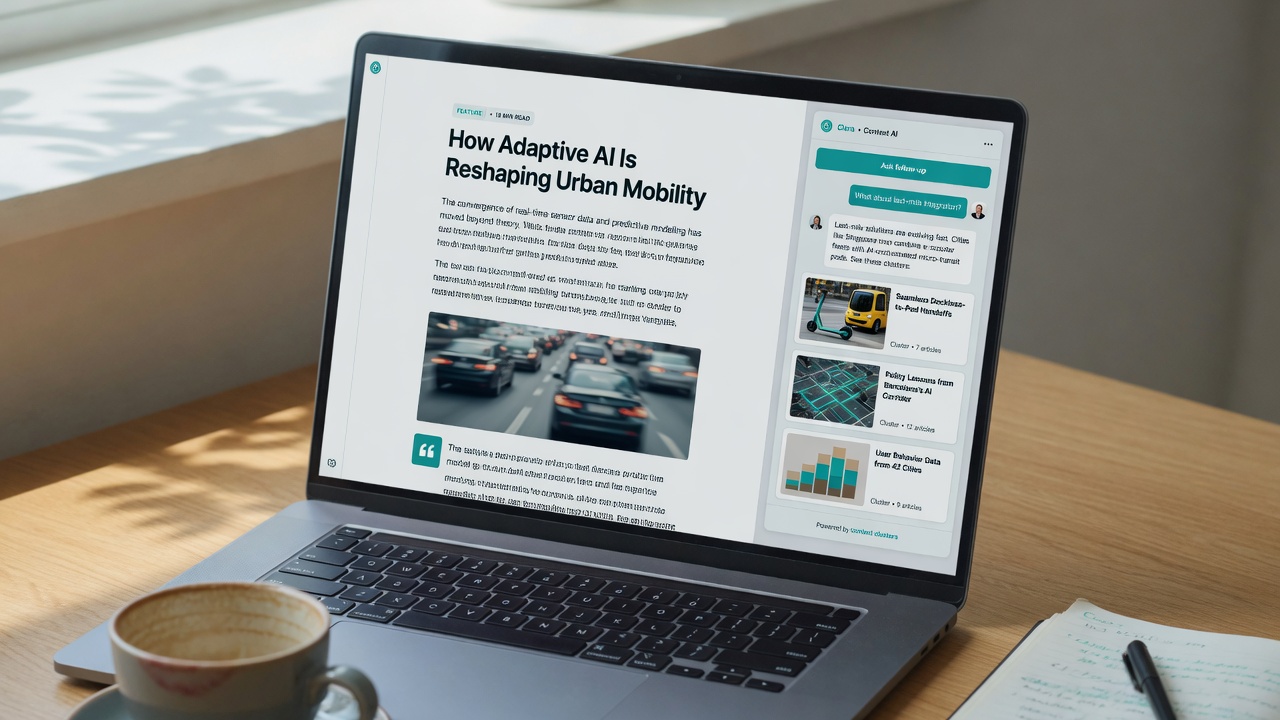
However, the true value of a highly structured topic cluster isn't just how search engines crawl it—it is how human readers interact with it. Layering an interactive AI chat interface directly inside your articles transforms static content into an active, conversational knowledge hub.
When readers land on a cluster page, they are often looking for a specific answer within a broader, complex topic. Instead of forcing them to scroll through thousands of words or click through multiple internal links to find a secondary detail, an in-article AI chat assistant lets them query the entire cluster instantly. Because the AI assistant is grounded specifically in your verified topic cluster, it delivers precise, context-aware answers while citing your other cluster articles as sources. This keeps users deeply engaged inside your ecosystem.
This interactive layer radically departs from the outdated, static layouts of traditional publishing, offering a clear upgrade in user experience and monetization potential:
- Enhanced Dwell Time: Conversational interactions keep users on the page significantly longer, signaling high-quality engagement to search algorithms.
- Frictionless Navigation: The AI chat acts as an intelligent concierge, guiding readers to deeper sibling pages or the main pillar based on their real-time questions.
- Contextual Monetization: The assistant can dynamically suggest relevant products, lead magnets, or booking links directly inside the chat flow when a reader expresses commercial intent.
Ultimately, integrating conversational AI within your automated content clusters bridges the gap between high-volume publishing and premium user experiences. It shifts your site from a simple library of articles into an indispensable, interactive resource that converts traffic far more effectively than static text alone.
Interactive AI Chat — Integrating a conversational assistant within your topic clusters transforms static articles into interactive knowledge hubs, boosting dwell time, simplifying navigation, and unlocking highly targeted monetization opportunities.
Quantifying Cluster Performance: Metrics for Traditional Search and Generative AI Citations
Transitioning to an automated, interactive publishing model is only half the battle; proving and maintaining its value requires a modernized measurement framework. Because AI SEO automation tools operate at scale, tracking individual keyword positions is no longer sufficient. Instead, publishers must evaluate the aggregate health of their topical networks, measuring how effectively their structured content dominates traditional search engine result pages (SERPs) and secures real estate within generative AI engines.
The compounding return on a well-executed topic cluster is clear when looking at mature models. For example, a modest, unpromoted topic cluster built for Viral Loops successfully ranked for more than 1.1K organic keywords and collectively generated approximately 100 organic clicks on weekdays without any active link building or external promotion. On a enterprise scale, Backlinko's highly structured SEO Hub cluster reportedly ranks for over 29,000 keywords, drawing more than 158,000 monthly visitors and earning roughly 165,000 backlinks. These benchmarks demonstrate that when automated internal linking and semantic depth align, search engines reward the entire entity rather than just isolated pages.
The New KPI: Visibility in Generative AI Engine Summaries
As search behavior shifts, measuring performance must expand beyond traditional organic clicks to track inclusion in AI-driven answers. AI Overviews and LLM engines now appear on a meaningful share of queries, reshaping how users discover information. Well-organized topic clusters packed with task-complete, in-depth content naturally earn more links, longer dwell time, and better inclusion in these AI-generated summaries. By structuring content cleanly around clear semantic nodes, automated pipelines make it easier for LLM crawlers to parse, synthesize, and ultimately cite your pages as primary sources.
To continuously optimize your automated publishing engine, establish a feedback loop that monitors four core dimensions. First, track overall topical coverage to ensure your autonomous agents are filling critical semantic gaps. Second, monitor search impressions and indexation health to confirm that your internal link graphs are successfully distributing crawl equity. Third, analyze AI citation share to see which subtopics are frequently pulled into generative summaries. Finally, keep a close eye on site-level focus signals to ensure your content expansion never dilutes your core authority, allowing your self-healing network to adapt dynamically to search engine updates.
Topical Network Tracking — To prove the ROI of automated publishing, measure cluster-wide keyword footprints and generative AI citations rather than isolated rankings, ensuring your self-healing link graph continuously optimizes for both human searchers and LLM engines.Key Takeaways
Transform your content strategy and dominate search rankings by deploying Flows to automate your topic clusters and interactive reader engagement today.
Frequently Asked Questions
A topic cluster is a group of interconnected, thematically related pages on a website. It includes one central pillar page providing a broad overview of a subject and multiple subpages covering specific subtopics, all joined together by strategic internal links.
Publishing high-quality, interconnected content on relevant subtopics builds deep topical authority. This authority helps search engines understand your expertise, enabling your site to rank for more keywords and appear more frequently in LLM prompts and AI Overviews.
A healthy pillar page typically targets broad head terms and links to roughly 10 to 20 subtopic pages. Industry benchmarks suggest starting with at least 3 to 5 contextual internal links per article to distribute authority effectively.
Yes, AI SEO automation tools streamline the entire process by automating semantic grouping, identifying content gaps, and generating complete cluster structures based on search intent and live SERP data, drastically reducing manual planning efforts.
You Might Also Like