Internal Linking Automation Within Topic Clusters
Building a robust topic cluster is one of the most effective ways to signal topical authority to search engines. However, as your content library grows into hundreds or thousands of pages, manually maintaining a perfect hub-and-spoke architecture becomes nearly impossible. For years, SEO teams have struggled with broken hierarchies, orphaned pages, and missed opportunities to pass PageRank efficiently across their domains.
This is where an intelligent internal linking tool transforms your workflow. By leveraging AI-driven automation, you can systematically connect your pillar pages and supporting articles without tedious spreadsheet audits. Industry-leading software has evolved to make this process seamless. For instance, Surfer’s Automated Internal Linking Tool helps you strengthen your website’s structure by quickly inserting contextual internal links, ensuring your cluster relationships are established instantly upon publication.
Similarly, platforms like Link Whisper use AI to analyze all the content on your websites, and then suggest the best places to add internal links as you write. For enterprise-level needs, seoClarity Link Seeker leverages generative AI and NLP to analyze, create, and publish deep links automatically to increase discoverability. Additionally, Moonlit Platform's "Add Internal Links" app leans on semantic search and an LLM to place context-rich links automatically. In this guide, we will explore how to implement these automated workflows to build a self-sustaining, search-optimized internal link graph.
- 1
Topic clusters require a strict hub-and-spoke structure to establish deep topical authority.
- 2
Manual internal linking fails to scale, leading to orphaned pages and poor PageRank distribution.
- 3
AI automation tools analyze content semantically to insert highly relevant contextual links instantly.
- 4
Modern platforms like Surfer, Link Whisper, seoClarity, and Moonlit automate link placement to save hours of manual labor.
Why Topic Clusters Demand Automated Internal Linking
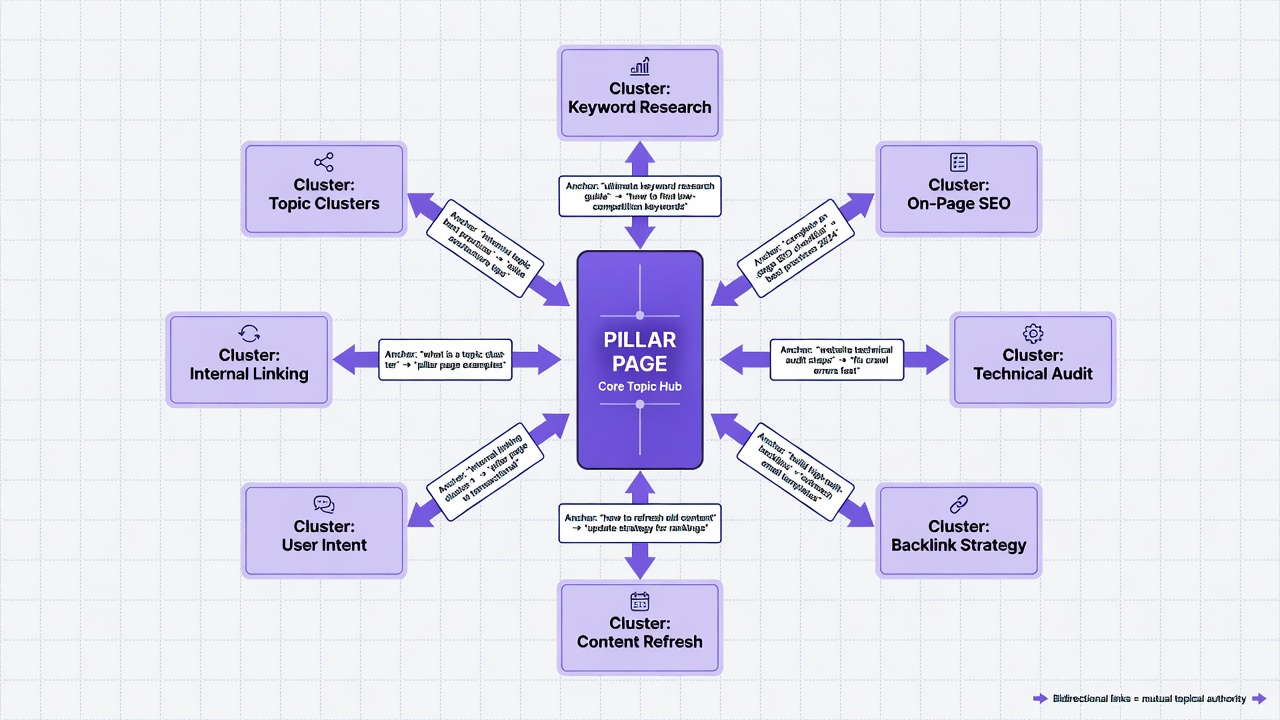
To build topical authority, search engines must easily understand the relationship between your content assets. This is where the hub-and-spoke model becomes essential. At the center sits the pillar page—a comprehensive, high-level overview of a broad topic. Surrounding it are cluster pages (or spokes) that dive deep into specific subtopics. Manually maintaining the connections between these pages quickly becomes impossible as your site grows.
The Architecture of a High-Performing Cluster
A search-optimized topic cluster relies on strict, logical hierarchies to guide both search crawlers and human readers. To establish this authority, your internal linking must follow a highly structured pattern:
- Reciprocal Hub-and-Spoke Links: Every pillar page must link out to its supporting spoke articles, and each spoke must link directly back to the central hub page.
- Inter-Cluster Connections: Related spoke articles must connect directly to one another to distribute page authority and keep readers engaged.
- Contextual Relevance: Anchor text must be descriptive and natural, signaling to search algorithms exactly what the destination page covers.
Without automation, executing this internal link graph across hundreds of pages leads to broken structures, orphaned content, and diluted PageRank. Automating this process ensures that every new piece of content is instantly integrated into its parent cluster, preserving crawlability and topical relevance at scale.
Reciprocal architecture — A successful topic cluster requires systematic, two-way linking between your central pillar and supporting spoke pages, alongside direct connections between related cluster articles to maximize search crawlability and authority.The AI Engines Powering Contextual Link Automation
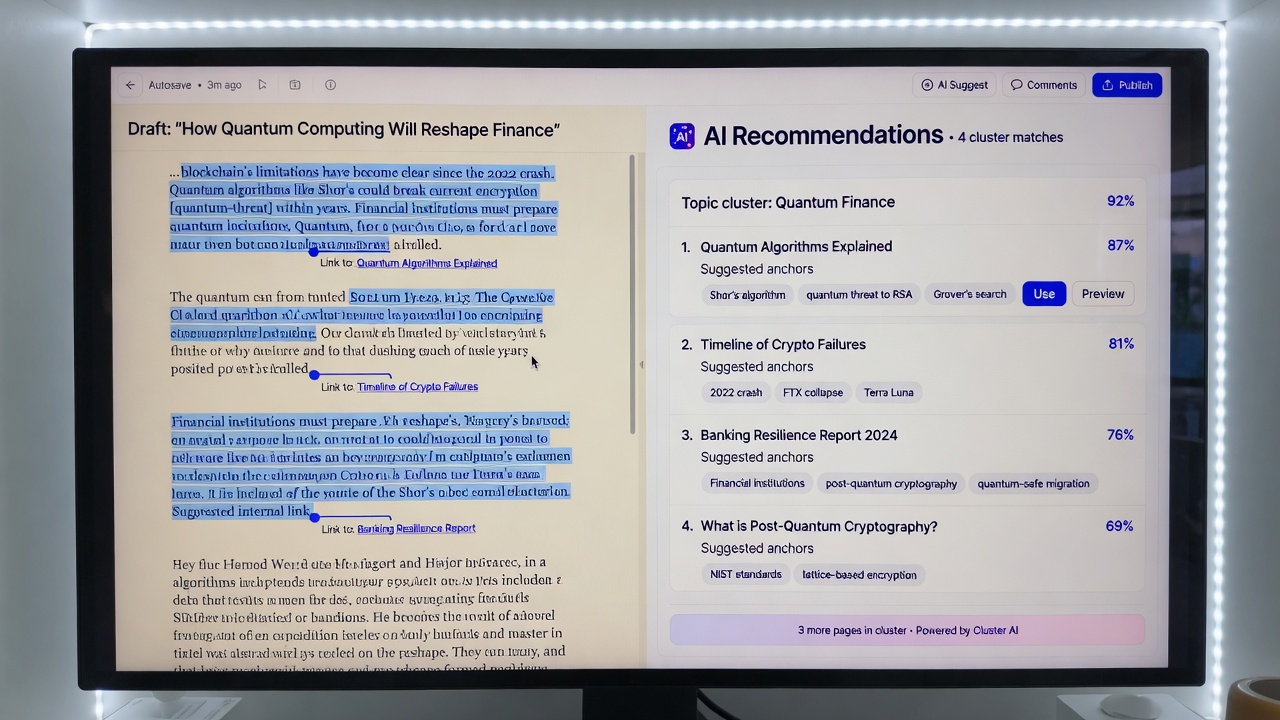
Modern internal linking automation has evolved beyond basic keyword-matching scripts. Today's AI-driven engines analyze the semantic context of your entire site to identify high-value insertion points, ensuring that every link actively strengthens your topical authority.
Real-Time Semantic Analysis and In-Editor Suggestions
Instead of relying on rigid exact-match anchor text, AI tools scan existing content to understand the underlying intent of each paragraph. This allows them to suggest natural, contextual anchor phrases that improve both user navigation and search engine understanding.
- In-context discovery: Platforms like Surfer use automated internal linking capabilities to insert contextual links directly into relevant paragraphs, instantly reinforcing the site's logical hierarchy.
- Proactive writing assistance: Tools like Link Whisper leverage AI to analyze your content database dynamically, presenting highly relevant internal link suggestions in real-time as you draft new posts in your editor.
- Semantic mapping: Rather than forcing repetitive keyword anchors, these algorithms recognize synonyms and related concepts, keeping your link profile natural and safe from over-optimization penalties.
By shifting the discovery process from manual site audits to automated, real-time suggestions, SEO teams can maintain a perfectly balanced hub-and-spoke architecture without interrupting their publishing velocity.
Semantic internal linking — Modern AI tools eliminate manual auditing by analyzing the contextual meaning of your content to suggest and insert natural, highly relevant internal links during the creation process.The Next Frontier: Programmatic Link Placement with Generative AI and NLP
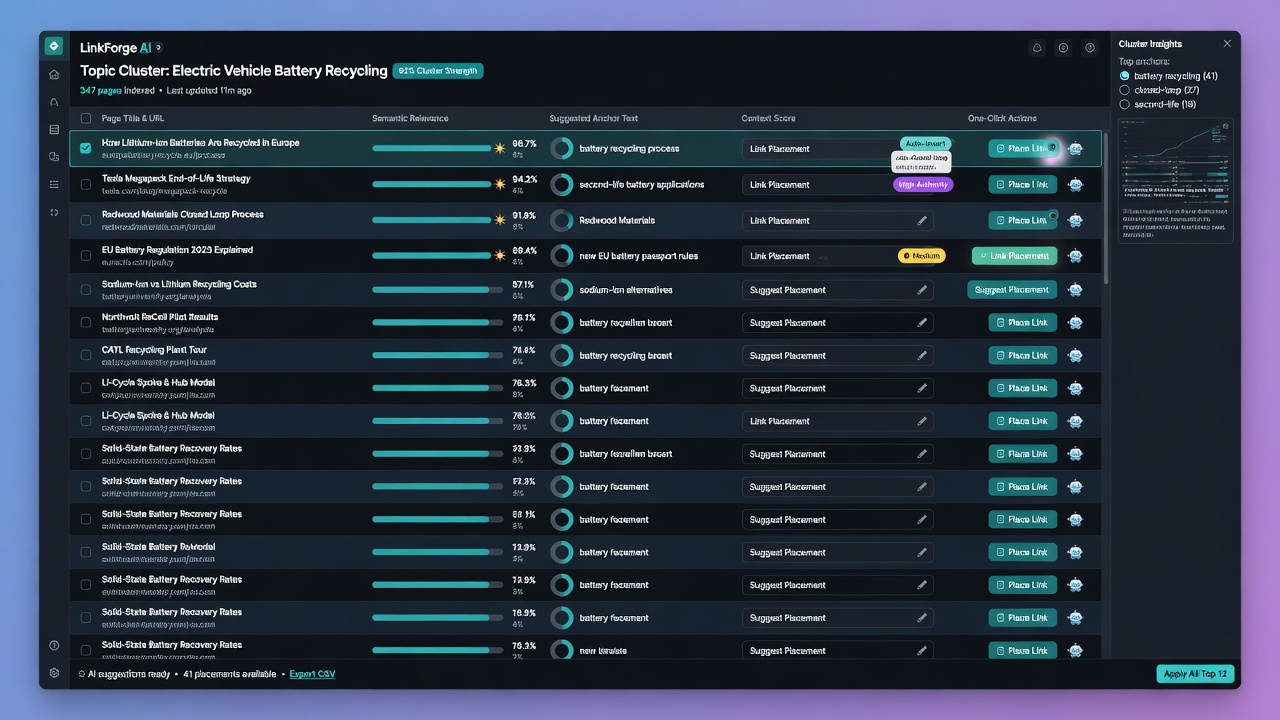
Transitioning from simple editorial suggestions to true hands-off automation requires systems that can actively modify site architecture. Modern programmatic internal linking tools are moving beyond passive recommendations, shifting the heavy lifting of execution onto advanced machine learning models.
Enterprise-level platforms are leading this shift by integrating deep learning directly into the content management lifecycle. For instance, the seoClarity Link Seeker utilizes generative AI and natural language processing (NLP) to analyze, create, and publish deep links automatically across massive site footprints. This removes the manual publishing bottleneck entirely, allowing clusters to self-heal and interlink the moment new content goes live.
To ensure these automated links feel natural to human readers and search crawlers alike, platforms rely on semantic search rather than rigid keyword matching. Tools like the Moonlit Platform feature an "Add Internal Links" app that leans on semantic search and a Large Language Model (LLM) to place context-rich links automatically. By understanding the conceptual nuance of a paragraph, the LLM can weave in a link using natural, varied anchor text that preserves editorial flow while reinforcing the overall cluster hierarchy.
Programmatic link execution — Modern enterprise tools leverage generative AI, NLP, and LLMs to automatically analyze, generate, and publish contextually rich deep links, keeping cluster architectures perfectly optimized without manual intervention.Embedding Internal Linking Automation directly into Your Publishing Workflows
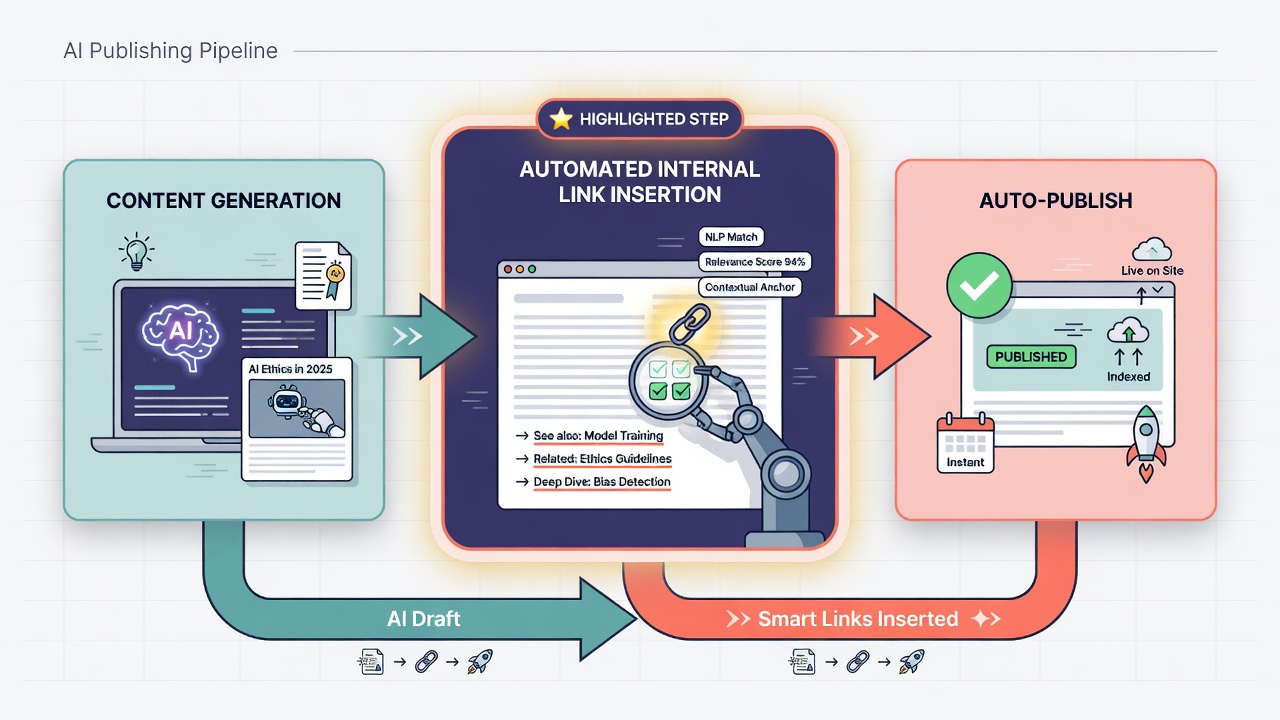
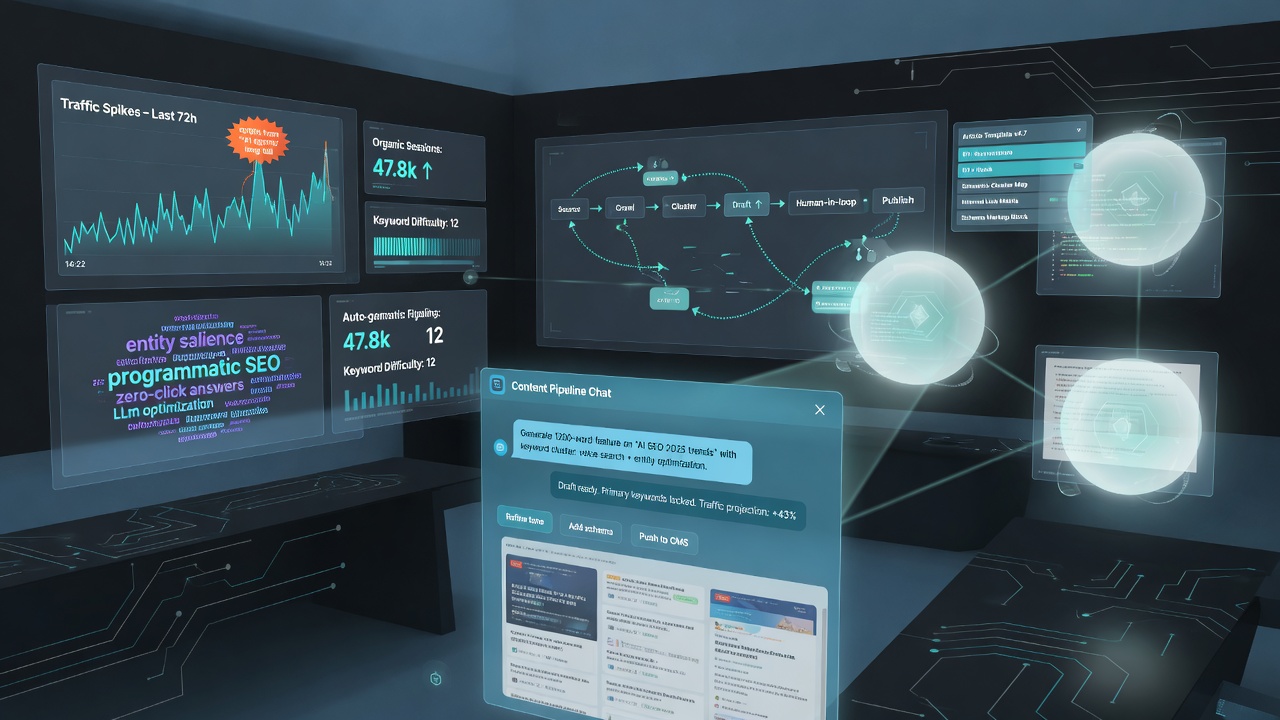
To realize the full efficiency of internal linking automation, SEOs must integrate these tools directly into the publishing pipeline rather than treating link building as a post-publish cleanup task. Modern workflows leverage AI to analyze and inject contextual internal links during the initial article generation phase. By evaluating the draft against the existing site index before it ever goes live, automated systems can instantly establish the necessary hub-and-spoke connections, saving editorial teams from retroactively editing hundreds of pages.
This proactive injection does more than save time; it actively preserves and optimizes PageRank distribution across your domain. When a new spoke page is published with immediate, reciprocal links to its pillar and related cluster nodes, search crawlers discover and index the content faster. Instead of creating temporary dead ends or relying on manual site audits to patch up orphan pages, the automated workflow ensures that link equity flows continuously through logical hierarchies from day one.
Continuous Monitoring and Cluster Health
Even with automated creation, maintaining a clean structure requires continuous monitoring. Sites are dynamic; as content is updated, redirected, or retired, internal link profiles can decay. Automated internal linking tools should run continuous background crawls to identify broken links, redirect loops, or newly formed orphan pages. By setting up automated alerts and auto-remediation rules, SEOs can monitor and refine cluster health in real time, ensuring that the automated network remains structurally sound as the site scales.
Workflow integration — Automating internal links during article generation ensures immediate PageRank distribution and eliminates manual site audits, while continuous background monitoring keeps the entire topic cluster healthy over time.Key Takeaways
Transform your content strategy and eliminate manual workflows by integrating automated internal linking into your publishing pipeline today.
Frequently Asked Questions
According to SEO best practices, a strong topic cluster uses reciprocal hub-and-spoke links, meaning you link from your hub page to each spoke, link back from each spoke to the hub, and connect related supporting articles directly to each other to maximize authority distribution.
Automated tools like Surfer's Automated Internal Linking Tool quickly insert contextual internal links, eliminating the need to manually review older articles whenever new content is published.
Yes, AI-powered solutions like Link Whisper analyze all the content on your websites and suggest the best places to add internal links dynamically as you write your articles.
Enterprise tools like seoClarity Link Seeker leverage generative AI and NLP to analyze, create, and publish deep links automatically, which significantly increases overall site discoverability.
Applications like Moonlit Platform's "Add Internal Links" app utilize semantic search and LLMs to understand the deeper context of your text, placing highly accurate, context-rich links automatically.