Selecting AI Writing Tools for Low KD Opportunities
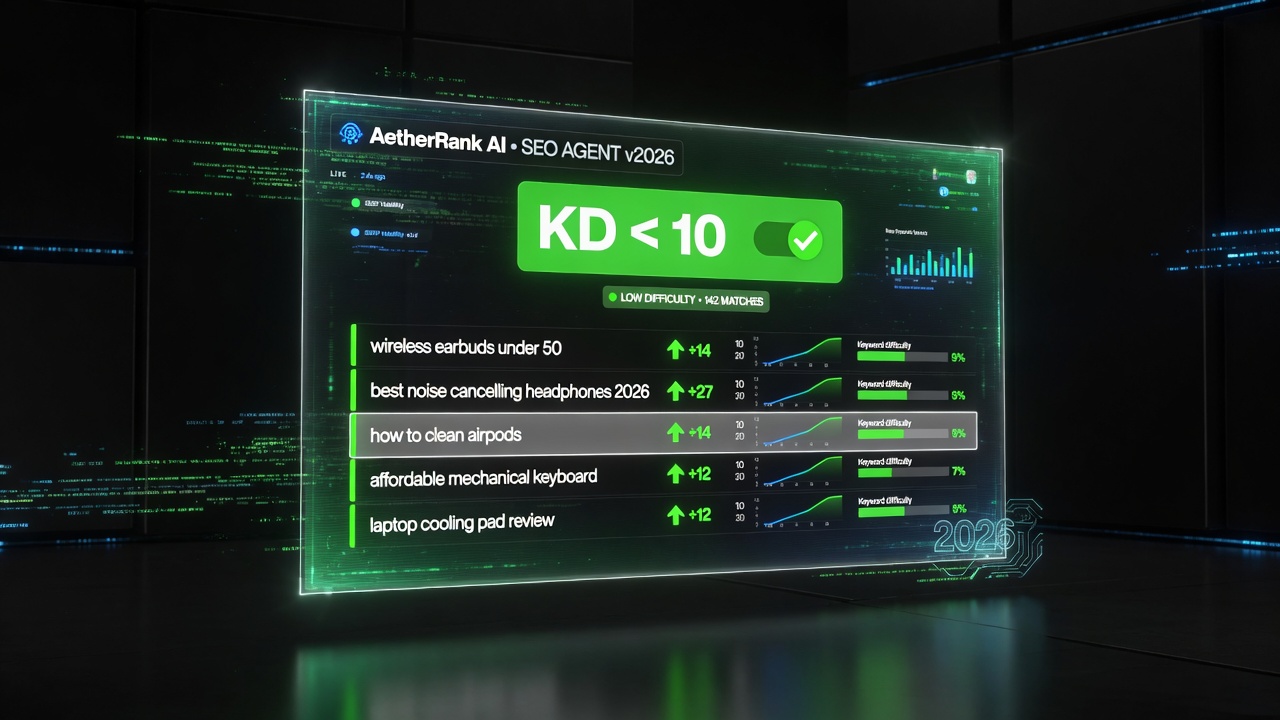
In the evolving search landscape, target selection has shifted toward finding and winning low-competition keywords. According to data from Surfer, low-competition keywords are defined by a keyword difficulty (KD) below 20 or 30, and they often feature monthly search volumes of less than 1,000. While these individual volumes may seem modest, targeting them collectively represents a powerful, highly accessible path to compounding organic traffic because fewer major publications actively compete for them.
Scaling production to capture dozens of these opportunities manually is historically slow and expensive. A typical 500-word blog post takes around 4 hours to complete manually when excluding briefing, proofreading, and revisions, while hiring freelance writers can quickly grow costly with rates upwards of $175 for a single 1,500-word article. To solve this bottleneck, companies are increasingly turning to automated systems; indeed, more than 75% of marketers admit to using AI tools to some degree, and approximately 19% of businesses already deploy AI tools to generate content directly. This shift is yielding clear performance gains, with 65% of companies achieving better SEO results thanks to AI.
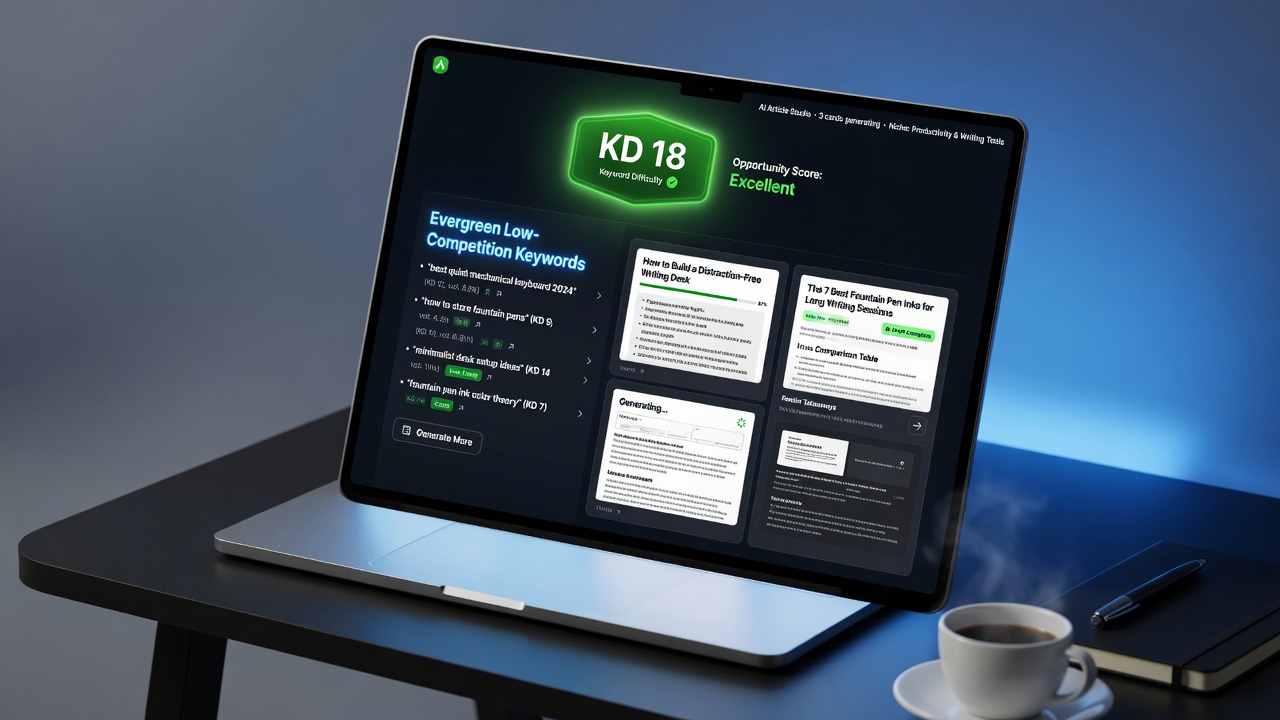
However, successful execution requires more than just generating raw text. To build lasting search equity, publishers must select an ai writing tool or ai content generator that integrates real-time SEO scoring, supports structured evergreen layouts, and facilitates seamless seo content automation. This guide breaks down the core criteria for evaluating these platforms to help you turn low-KD opportunities into a predictable engine for organic growth.
- 1
Low-competition keywords (KD under 20 to 30) offer a highly accessible path to organic traffic with minimal competition.
- 2
Traditional manual content creation is bottlenecked by high costs and time investment, taking around 4 hours for a short post.
- 3
Over 75% of marketers use AI tools, and 65% of companies report achieving superior SEO results through AI integration.
- 4
Winning low-KD terms requires choosing specialized AI writing tools that combine real-time SEO scoring with automated publishing workflows.
The Strategic Symbiosis of Low-KD Search and AI Content Production
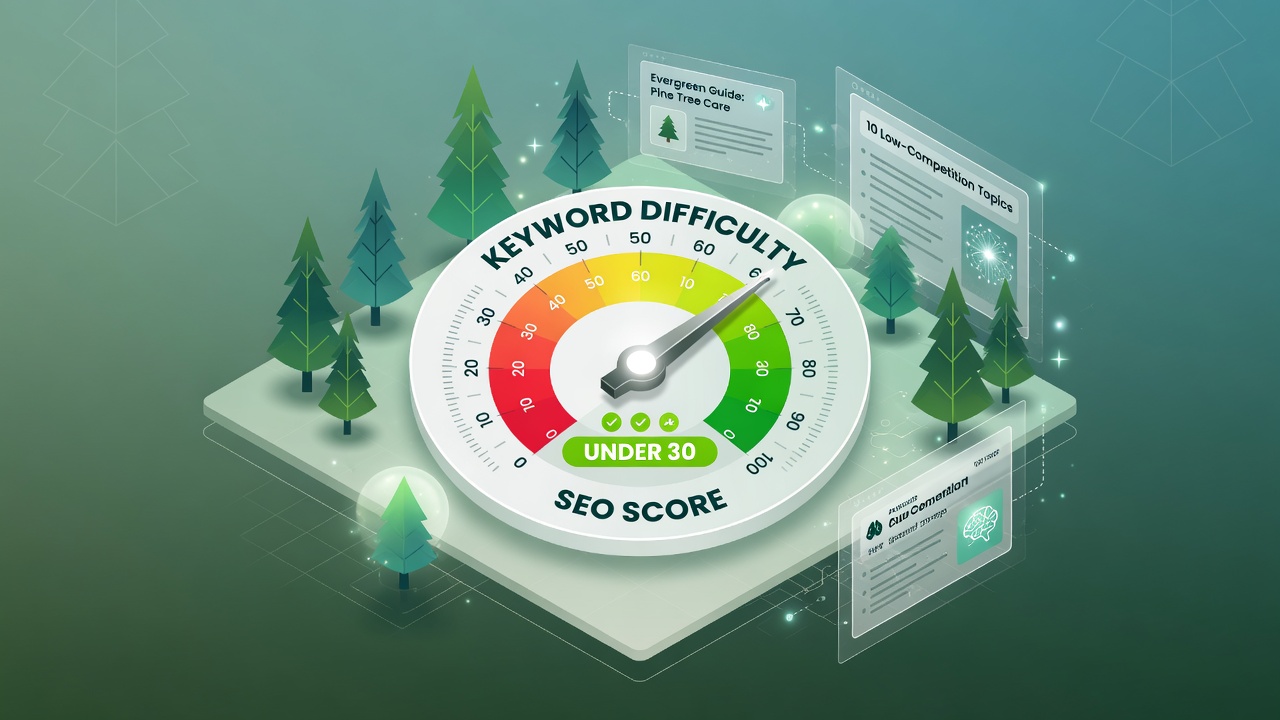
Targeting low-competition keywords is one of the most reliable ways to build early momentum, but doing so manually has historically been cost-prohibitive. These terms often represent highly motivated search intent. When clustered together, a series of these low-volume pages can drive substantial, highly qualified organic traffic to your site without the need for intensive backlink acquisition.
This is where an AI content generator or AI blog writer becomes indispensable. Because these low-KD queries are usually informational, they naturally align with evergreen content—material that focuses on core, unchanging topics and requires very few updates over time to maintain its value. AI writing tools excel at structuring this evergreen content into highly readable formats like step-by-step guides, how-to articles, and structured listicles.
The operational efficiency of this approach is backed by rapid market adoption. The global AI content generation market is projected to expand from $4.81 billion in 2025 to $7.09 billion in 2026, growing at an impressive compound annual growth rate (CAGR) of 47.3%. By leveraging SEO automation to target low-KD clusters, publishers can capture evergreen search real estate at a fraction of the traditional cost and time.
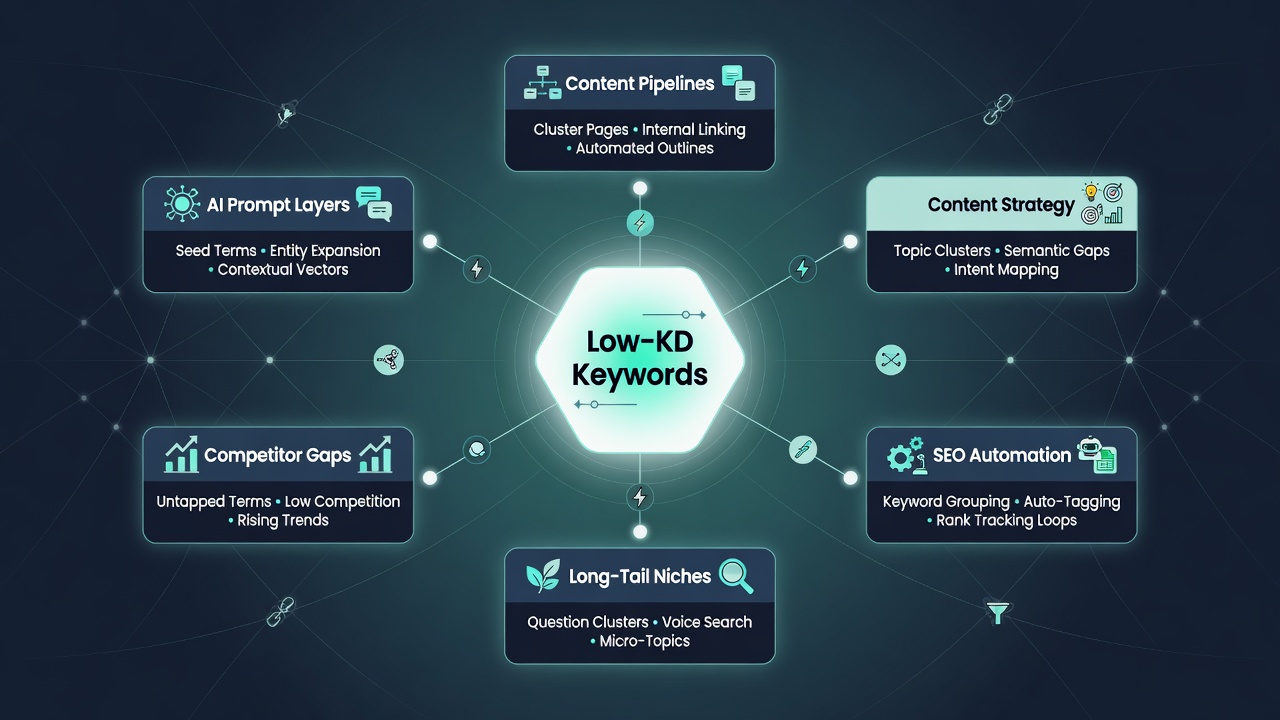
Low-KD Clustering — Pairing keywords with difficulty scores below 20 or 30 with automated evergreen content creation allows publishers to rapidly dominate niche search terms with minimal editorial overhead.The Selection Framework: Evaluating AI Writing Tools for Low-KD Success

To successfully capture these low-competition niches, you cannot rely on generic text generators. Because low-KD keywords represent highly specific user queries, your chosen AI writing tools must possess deep SEO intelligence. Success is heavily weighted toward teams that select tools with real-time SERP scoring and semantic keyword analysis. Your content automation engine must analyze the top-ranking pages in real time, identify semantic gaps, and automatically incorporate secondary and long-tail keywords that naturally expand your search footprint.
While many marketers use AI tools to some degree, the differentiator for high-ranking publishers is the hybrid workflow. The ideal tool does not just output text; it facilitates human-in-the-loop editing. This hybrid setup allows human editors to quickly inject firsthand expertise and E-E-A-T signals into a structured, SEO-optimized draft, turning a rapid AI output into a highly authoritative evergreen asset.
SEO-First Integration — The ideal AI writing tool for low-KD targeting must combine real-time SERP scoring, structured long-form output, and seamless CMS publishing integrations to minimize editing overhead and accelerate rankings.
From Draft to SERP: Matching Top-Tier AI Writing Tools to Low-KD Workflows
To turn this hybrid editing philosophy into a repeatable engine, you need to match your specific publishing volume and automation needs with the strengths of the market's leading AI writing tools.
The Power Players for SEO Scoring and All-in-One Publishing
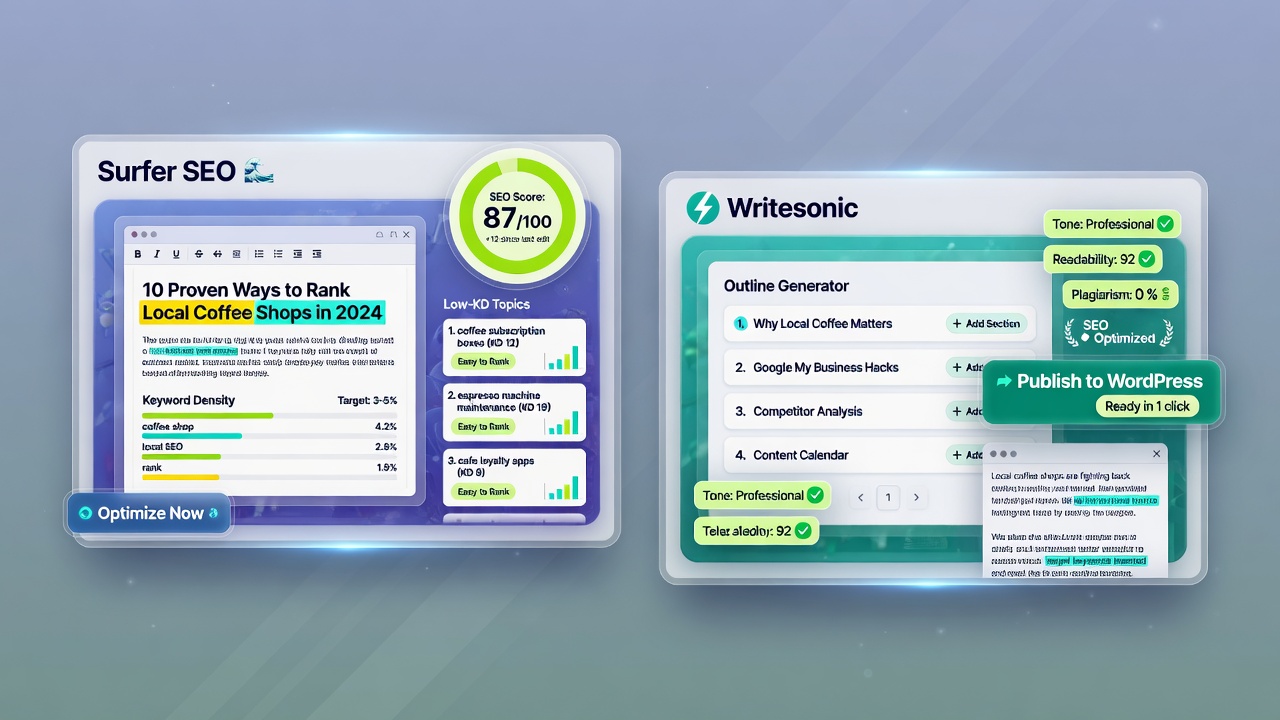
If your priority is granular on-page optimization, Surfer stands out as the premier choice for SEO writing support. It actively analyzes top-ranking articles in the SERPs to provide a dynamic checklist of keywords, images, headings, and overall word count for an actionable optimization score.
For teams seeking a more streamlined, hands-off pipeline, Writesonic serves as an all-in-one content creation and AI SEO platform. It allows you to research, write, optimize, and even publish blog posts directly from one interface, leveraging multi-model AI agents and real-time SEO data to keep content fresh and relevant.
Niche Contenders for Scale, Speed, and Research
Beyond these giants, your choice should align with your operational focus:
- Jasper: Best for enterprise-level, brand-consistent scale where maintaining a highly specific brand voice across thousands of words is paramount.
- Koala AI: Ideal for rapid, value-focused drafts that require minimal configuration to hit search intent.
- Semrush AI: Excellent for an integrated research-to-draft pipeline, allowing you to transition directly from keyword discovery to automated content generation.
Implementing Hybrid AI Workflows: Balancing Automation with Editorial Oversight

Transitioning from tool selection to active execution requires a structured hybrid workflow. While an ai content generator can bypass the blank page problem, treating AI output as a strong first draft remains critical. Industry best practices recommend using an AI article generator to establish the initial structure, then refining the draft with comprehensive human edits to enhance readability, inject specific examples, and add unique depth.
This hybrid approach yields massive resource efficiency. By utilizing an ai blog writer for the heavy lifting of drafting, teams drastically lower production costs while maintaining a rapid publishing velocity.
Designing for Search Intent and Seamless Publishing
To ensure long-term rankings, every piece must be structured specifically for search intent and helpfulness. Google evaluates content quality and helpfulness directly; consequently, AI-written content ranks exceptionally well when it is paired with genuine expertise, human editorial oversight, and an intuitive structure. High-quality seo content automation ensures that searchers get exact answers quickly.
Finally, the most successful publishers connect their drafting tools to automated publishing pipelines. Platforms like Flows auto-publish rich-format articles directly to CMS platforms. To further elevate user engagement and monetize traffic, these pipelines can render an interactive AI chat directly inside the published articles, helping readers navigate complex topics and conversion funnels in real time.
Hybrid AI execution — Combine automated AI drafting with human editorial oversight to bypass traditional writing bottlenecks, reduce costs, and deliver the structured, high-quality content that search engines reward.Key Takeaways
Transform your search engine visibility and automate your evergreen content pipeline by launching your first AI-driven SEO campaign with Flows today.
Frequently Asked Questions
According to industry standards from tools like Surfer, a keyword difficulty (KD) score below 20 or 30 is generally considered low competition. These terms often have monthly search volumes of less than 1,000, making them highly accessible targets for rapid ranking.
A typical 500-word blog post takes approximately 4 hours to complete manually, excluding briefing, proofreading, and revisions. AI writing tools drastically reduce this timeline, allowing teams to scale their production and target dozens of low-KD keywords simultaneously.
Yes, research shows that 65% of companies achieve better SEO results thanks to AI integration. Additionally, more than 75% of marketers report using AI tools to some degree within their daily content and marketing workflows.
Businesses can expect to pay upwards of $175 for a single 1,500-word article when hiring freelancers. Utilizing automated AI content generators significantly lowers this per-article cost, making high-volume keyword campaigns financially viable.
You Might Also Like