SEO Content Automation for Niche Sites Using Low-Difficulty Keywords

Building a profitable niche site used to feel like an endless cycle of manual keyword research, outline drafting, and slow content production. Today, AI-powered SEO content automation platforms handle the entire blog content workflow, from keyword research and competitor analysis to article generation and automatic CMS publishing. Using these systems does not mean risking your search visibility. In fact, Google has explicitly stated that the appropriate use of AI or automation is not against our guidelines, provided it is not used primarily to manipulate search rankings.
The secret to making this automation work safely and efficiently lies in targeting the right opportunities. Niche sites should prioritize long-tail and low-difficulty terms with a keyword difficulty under 30 and a monthly search volume of 100+. Because these low-competition keyword suggestions help small sites rank faster, you can build early momentum without fighting high-authority competitors. To prove the potential of this strategy, look at real-world applications: in one skincare niche case study, implementing an automated content engine increased organic traffic by 28% in just one month. Let us explore how you can build a highly efficient, automated content machine that targets these easy wins and scales your organic traffic without triggering quality penalties.
- 1
Targeting low-difficulty keywords with KD under 30 and volume over 100 accelerates organic growth for smaller websites.
- 2
Google search guidelines explicitly permit AI automation as long as content prioritizes user value over ranking manipulation.
- 3
Automated SEO platforms can now manage entire workflows from niche keyword research to direct CMS publishing.
- 4
Integrating automation can drive dramatic short-term growth, as demonstrated by a skincare niche site that saw a 28 percent traffic spike in one month.
How to Hunt Down Low-Difficulty Keywords That AI Can Dominate
Building this machine starts at the foundation: choosing the right battles. If you target highly competitive terms, even the most sophisticated AI content generator will struggle to rank against established giants. Instead, the secret lies in finding ultra-low difficulty keywords where search intent is specific, and the competition is practically non-existent.
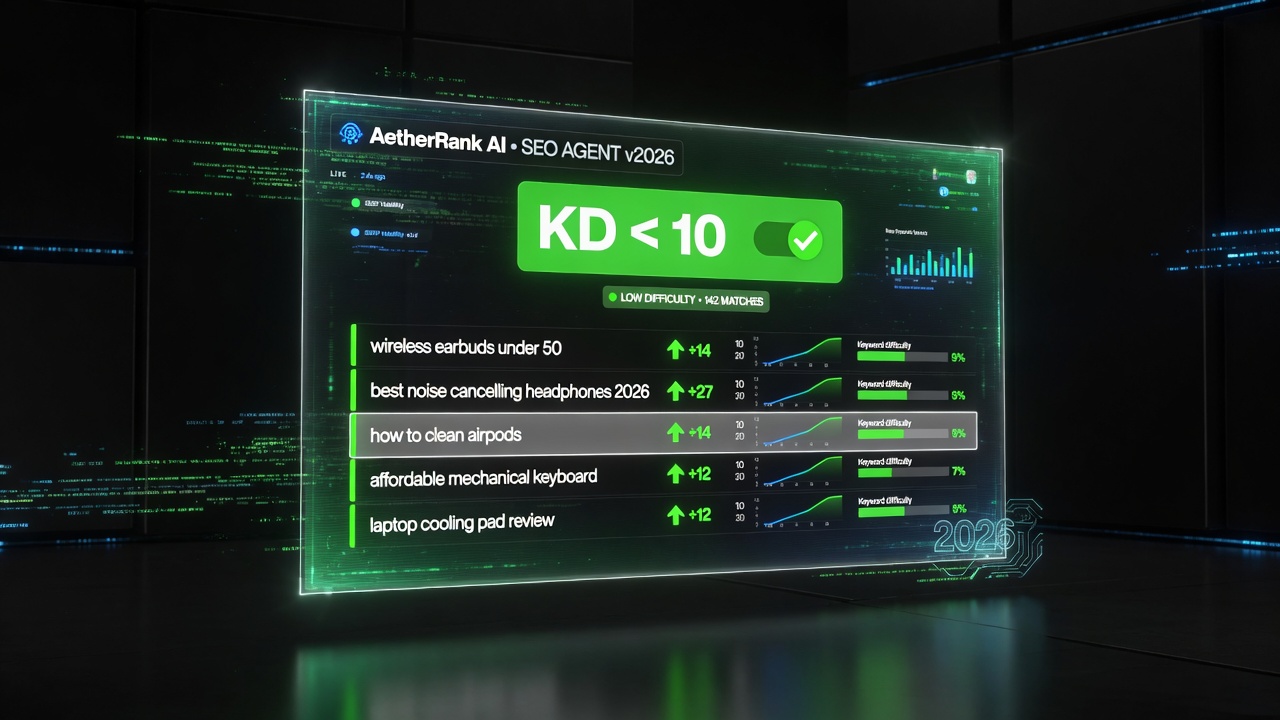
To find these sweet spots, you should prioritize long-tail and low-difficulty terms, specifically targeting keywords with a Keyword Difficulty (KD) under 30 and a monthly search volume of at least 100+. These terms might seem modest individually, but when you scale content production with automation, their cumulative traffic is massive—and far easier to capture.
By focusing your automated pipeline on these specific parameters, you bypass the uphill battle of high-authority competition. Instead of fighting for months to rank for a single high-volume head term, your automated engine can publish dozens of highly optimized, targeted articles that rank almost instantly. Once you have built a library of these low-difficulty targets, the next step is selecting the software that will turn this list into published reality.
Target the gaps — Focusing on keywords with under 30 KD and 100+ volume using specialized tools like RankIQ allows niche sites to build rapid topical authority and scale organic traffic with automation.
Choosing the Right Engine: How to Select an End-to-End Automation Platform
To turn your curated list of low-difficulty keywords into a traffic-generating library, you need an engine that does more than just draft text. You need a platform that bridges the gap between raw data and a live, formatted webpage.
When evaluating these tools, look for software that automates the entire pipeline rather than forcing you to copy-paste between three different apps. For example, AI-powered SEO content automation platforms like BlogSEO handle the entire blog content workflow, from keyword research and competitor analysis to article generation and automatic CMS publishing [e4]. This level of integration is what allows a solo operator or a small team to scale their output without drowning in administrative tasks.
Key Features for Niche Site Success
- Support for Low-Volume Niches: The software must be capable of processing and optimizing for keywords in the 100 to 1,000 monthly search volume range. Many legacy tools ignore these terms, but they are the lifeblood of a rapid-ranking strategy.
- CMS Integration: Look for direct, one-click publishing to platforms like WordPress or Shopify. The goal is to eliminate the manual formatting bottleneck.
- Rich Content and Engagement: The tool should generate structured data, clean HTML, and support dynamic elements like embedded AI chats that help readers navigate your site and boost conversion rates.
By choosing a platform that manages the heavy lifting from research to live post, you free up your time to focus on strategy. However, fully hands-off automation can sometimes miss the mark on depth and brand voice. To truly stand out and protect your site from search engine volatility, you must inject human oversight into the machine.
Streamline the pipeline — Choose an end-to-end automation platform like BlogSEO that handles everything from research to CMS publishing, ensuring it natively supports low-volume, high-intent niches.
The Human-in-the-Loop Advantage: Balancing Speed with E-E-A-T
This doesn't mean you need to write every sentence from scratch. Instead, it means establishing a hybrid workflow that blends the raw speed of AI content engines with the critical oversight of a human editor. By structuring your pipeline to leverage both machine efficiency and human intuition, you can scale your niche site without sacrificing search engine trust.
Injecting Experience into AI Drafts
The secret to scaling with AI is knowing where the machine ends and the human begins. While AI is incredibly efficient at compiling facts and structuring basic answers, it lacks lived experience. To satisfy search engine quality standards, your editorial team should focus exclusively on adding original insights, personal anecdotes, and expert commentary to the AI-generated drafts. This ensures every piece of content feels authoritative and genuinely helpful.
Defeating Duplicate Content with Custom Templates
If you let an AI write completely unguided, it will inevitably default to generic structures and repetitive phrasing. This is a fast track to duplicate content issues. To prevent this, build highly customized, niche-specific templates within your automation platform. By forcing the AI to write within a unique structural framework tailored to your specific industry, you guarantee that every article generated is distinct, highly targeted, and valuable to your specific audience.
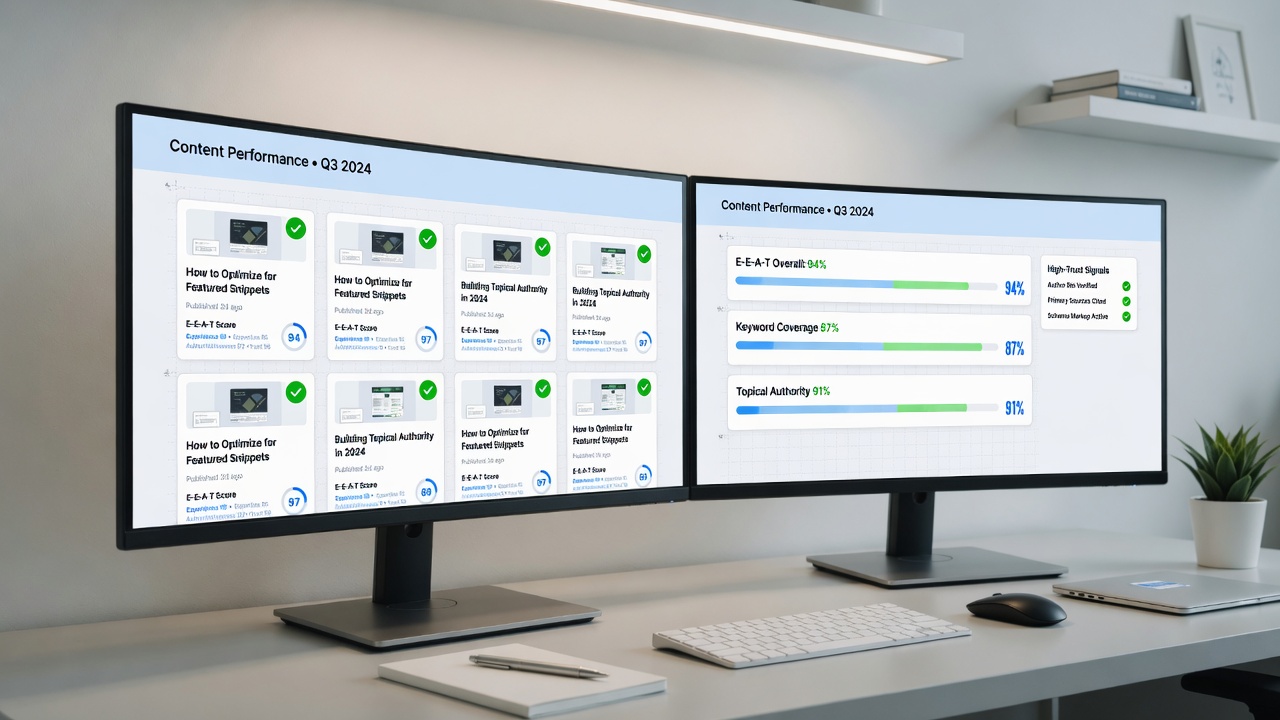
Hybrid workflows scale quality — Combining AI-driven drafting with human editing and niche-specific templates allows you to scale content production rapidly without sacrificing E-E-A-T or risking duplicate content issues.
Playing by the Rules: Aligning AI Automation with Google's Quality Standards
This structural uniqueness isn't just about satisfying your readers; it is also your primary defense against search engine scrutiny. A common misconception in the niche site community is that search engines penalize content simply because it was generated by an AI. In reality, search guidelines are far more nuanced.
According to official guidance from Google, the "appropriate use of AI or automation is not against our guidelines" as long as it is not used primarily to manipulate search rankings. The search giant cares less about the tool you used to write the piece and far more about the intent behind it. If your automation is designed solely to churn out thin, repetitive text for backlinks, you will run into trouble. But if you use AI to efficiently package real, helpful information, you are fully compliant.
Infusing Real-World Experience into Automated Drafts
To ensure your automated content consistently meets these quality standards, your editorial process must inject real-world experience and expertise (the 'E-E' in E-E-A-T). Even with low-difficulty keywords, readers can spot generic, automated fluff from a mile away. You can elevate your automated drafts by embedding proprietary data, unique insights, or specific case studies directly into the AI's generation prompt.
For example, if your niche site focuses on home brewing, don't just publish a generic 'how-to' guide. Program your AI agent to integrate specific temperature readings, yeast behaviors, or common troubleshooting tips that only an experienced brewer would know. This layer of authentic detail transforms a standard automated article into an authoritative resource that search engines trust and users value. Once you have established this level of quality, you can confidently scale your publishing schedule and begin tracking your results.
Quality over origin — Google does not penalize AI-generated content as long as it is helpful and not created to manipulate rankings, meaning success relies on injecting genuine E-E-A-T into automated drafts.
Measuring Success: How to Track ROI and Performance in Automated Campaigns
Tracking the performance of automated campaigns isn't just about watching a traffic graph go up; it is about verifying that your low-difficulty keyword strategy is actually yielding high-efficiency returns. Because you are targeting keywords with a difficulty score under 30, you should expect to see movement much faster than you would with highly competitive terms. Rather than waiting six months to evaluate performance, automated niche sites can often see clear ranking signals within the first few weeks of publishing.
This rapid response is especially visible when automation is paired with niche authority. For instance, in a documented skincare niche example, deploying an automated content engine increased organic traffic by 28% in just one month. This demonstrates how quickly search engines index and reward highly targeted, automated content when it is built on structured templates and refined by human editors.
Key Metrics for Automated Niche Sites
To properly monitor this organic growth without getting bogged down in vanity metrics, you should focus your tracking on a few essential performance indicators:
- Impression Share: Watch for sudden spikes in impressions in Google Search Console, which indicate search engines are indexing your new automated pages.
- Keyword Velocity: Monitor how quickly your low-difficulty pages climb into the top 100 and top 10 positions.
- Cost per Published Page: Compare the cost of your AI automation subscription and human editing hours against traditional manual writing costs to calculate your immediate ROI.
Because AI SEO automation drastically lowers the cost of content production, even modest traffic increases on low-volume terms can translate into highly profitable margins. By treating content as a portfolio of low-risk assets, you can continuously optimize the pages that show the most promise, paving the way for long-term, compounding site value.
Monitor velocity, not just volume — Automated SEO campaigns targeting low-difficulty keywords yield rapid ranking signals, allowing niche sites to realize a 28% traffic lift in as little as one month while drastically lowering production costs.
Key Takeaways
Start automating your niche site's growth today by setting up Flows to publish high-quality, search-optimized content with interactive AI chat built right in.
Frequently Asked Questions
No, the appropriate use of AI or automation is not against our guidelines, as long as the content is created to help users rather than solely to manipulate search engine rankings.
It is best to prioritize long-tail and low-difficulty terms with a keyword difficulty under 30 and a monthly search volume of 100+ to ensure faster rankings.
While SEO is typically a long-term strategy, automated content engines targeting low-difficulty terms have shown rapid growth, such as a skincare niche guide that increased organic traffic 28% in one month.
Yes, because low-competition keyword suggestions help small sites rank faster by bypassing high-authority competitors and capturing untapped, highly specific search traffic.
A modern AI-powered SEO content automation platform handles the entire blog content workflow, managing everything from keyword research and competitor analysis to final article generation and automatic CMS publishing.
You Might Also Like