AI Automation
Scaling Content with Automation Tools

Keeping up with the relentless demand for fresh, high-quality content can quickly exhaust even the most talented marketing teams. The pressure to write, optimize, and publish constantly often leads to an irregular schedule that harms visibility. Fortunately, automated publishing eliminates the feast or famine posting pattern that tanks algorithmic reach on search and social platforms. By shifting from manual labor to smart, systemized workflows, brands can scale their output without losing their unique identity.
Integrating AI into your production pipeline does not mean sacrificing the human touch. In fact, according to NarraReach data, brands using voice-trained automation tools maintain an impressive 89% consistency score. Furthermore, organizations report 84% faster high-quality content delivery when using AI-assisted creation tools. These systems excel at structured, repeatable work like scoring drafts against SERP benchmarks, checking keyword density, and flagging thin pages at scale.
From generating detailed, long-form blog posts of 1,500+ words to pushing finished pieces directly to your CMS, automation handles the heavy lifting so your team can focus on strategy. Let's explore how to build a modern, automated content engine that drives sustainable organic growth.
- Automated publishing prevents irregular posting schedules that damage search engine and platform reach.
- Organizations achieve 84% faster content delivery when integrating AI tools into their creation workflows.
- Voice-trained AI automation tools preserve brand identity, maintaining an 89% consistency score.
- Scaling successfully involves automating repetitive tasks like keyword density checks, scoring, and direct CMS publishing.
The Engine of Consistency: Why Automation is Non-Negotiable for Scaling

Building this engine starts with solving the single biggest bottleneck in content marketing: consistency. Without a structured, repeatable workflow, content teams inevitably fall into a volatile 'feast or famine' posting pattern. This irregularity is highly damaging to organic growth, as prolonged gaps in publishing tank algorithmic reach across both search engines and social platforms.
Automation resolves this issue by streamlining the entire production lifecycle from ideation to CMS upload. In fact, organizations report 84% faster high-quality content delivery when utilizing AI-powered marketing automation tools. By integrating specialized platforms like Surfer SEO and Search Atlas to handle optimization at volume, teams can drastically accelerate their output without sacrificing editorial standards.
To scale successfully, workflows must combine automated generation with human review and direct CMS publishing. This hybrid approach ensures efficiency gains and high consistency scores while protecting the overall integrity of the content. However, moving fast only works if your content still sounds uniquely like your company, making brand voice preservation the next critical challenge to solve.
Consistency drives growth — Automated workflows eliminate publishing gaps that hurt algorithmic reach, accelerating content delivery by 84%.
The Brand Voice Blueprint: Guarding Identity While Multiplying Output
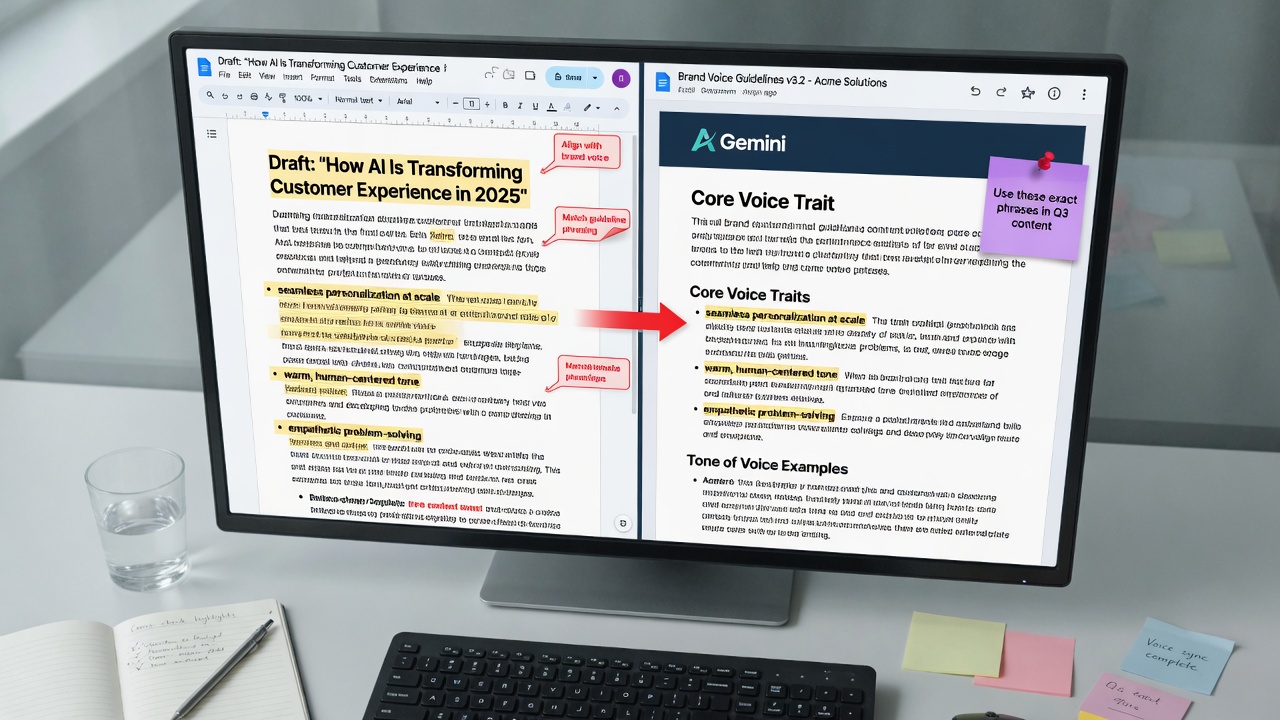
Preserving that identity doesn't mean sacrificing speed. Many teams fear that scaling up with AI means sounding like a generic robot, but modern voice-trained automation tools have successfully closed the gap.
According to data from NarraReach, brands using voice-trained automation tools maintain an 89% consistency score.
The Power of Human-in-the-Loop Guardrails
To bridge this minor gap and safeguard your brand's unique perspective, successful teams build lightweight review layers into their automated pipelines. Instead of writing from scratch, editors act as curators. They quickly audit AI drafts for specific brand idioms, compliance, and unique insights. This hybrid model allows you to scale production volume aggressively without diluting the unique perspective that brought your audience to you in the first place. With your voice secured and your guardrails in place, the next step is choosing the right technology stack to power this high-output machine.
Voice training is essential — Combining voice-trained AI models with a lightweight human review layer allows brands to scale content rapidly while maintaining near-human consistency.
Building Your Stack: The Core Tools Behind High-Volume Publishing
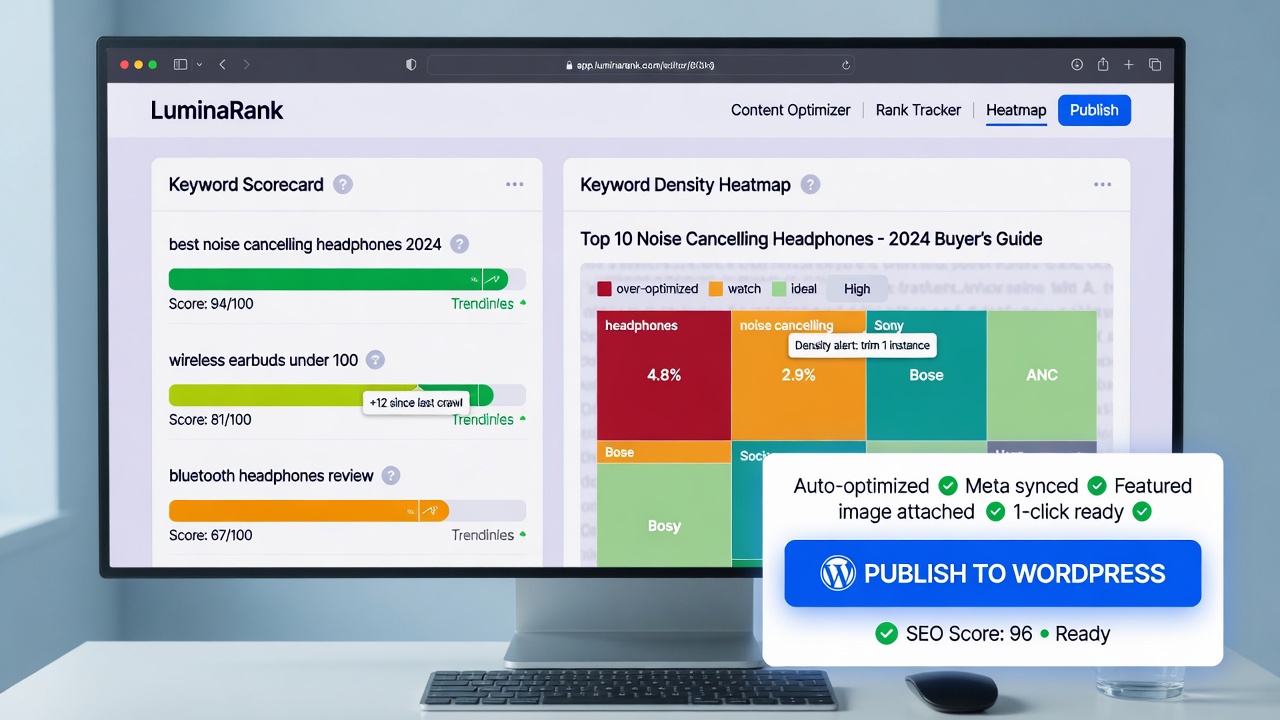
Building this engine starts with identifying where your manual bottlenecks live. For most marketing teams, the slowdown happens during repetitive, granular tasks. Content optimization at volume—scoring drafts against SERP benchmarks, checking keyword density, and flagging thin pages—is exactly the kind of structured, repeatable work that automation handles well. By offloading these tasks to dedicated SEO automation tools, your editors can focus entirely on refining the narrative and ensuring quality rather than manually counting keyword occurrences.
Once your content is optimized, the next hurdle is the publishing process itself. Manual formatting, image uploading, and metadata entry can easily stall a high-cadence campaign. Modern content automation solves this by allowing teams to create long-form blog posts of 1,500+ words much faster through direct AI integrations with platforms like ChatGPT paired with automated WordPress publishing. This eliminates the tedious copy-paste routine entirely.
Integrate to accelerate — Combining SEO scoring tools with direct CMS publishing removes manual formatting bottlenecks, allowing teams to instantly optimize and push long-form content.
From Draft to Live: Crafting Your End-to-End Automation Pipeline
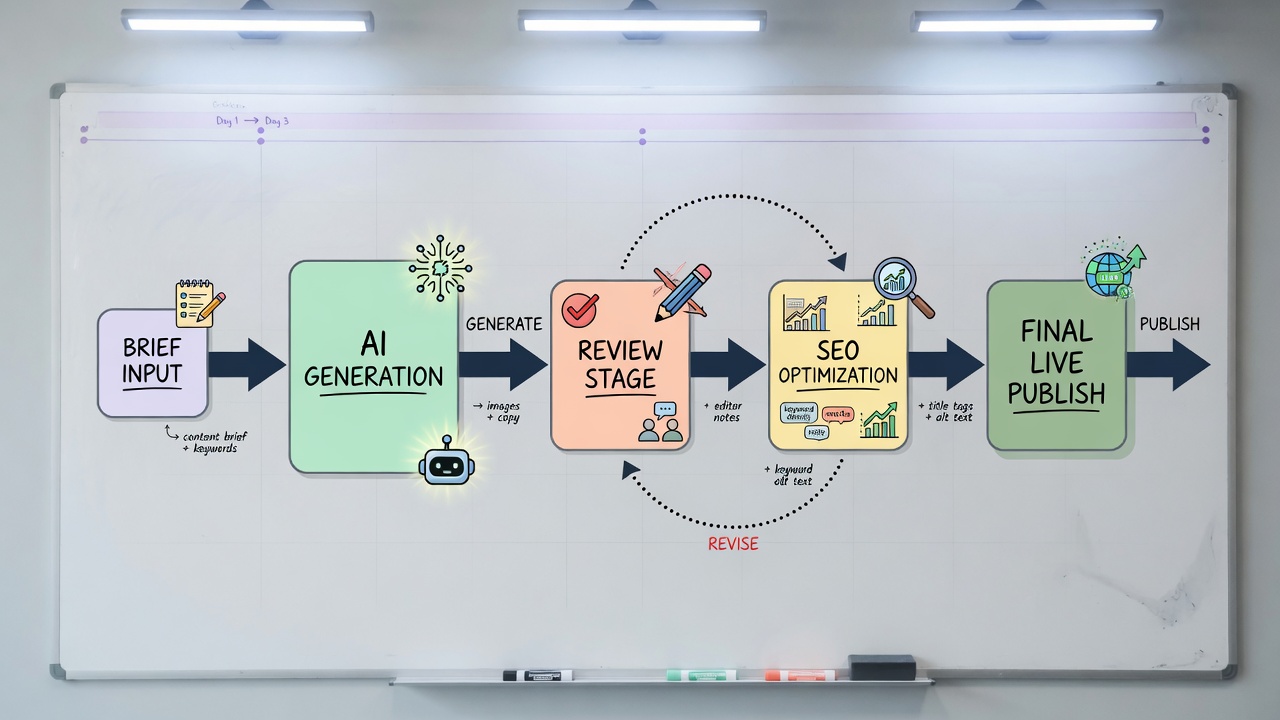
But eliminating manual copy-pasting is only half the battle; the real magic happens when you connect these individual tools into a single, cohesive pipeline. A truly automated workflow doesn't just generate text—it orchestrates the entire journey from a raw keyword to a live, polished URL.
The Perfect Blend of AI Speed and Human Oversight
The secret to scaling without sacrificing quality lies in a balanced handoff. First, AI engines handle the heavy lifting of researching, structuring, and drafting the initial piece. From there, the draft is instantly routed to a human editor who infuses the brand's unique perspective, fact-checks key details, and polishes the tone. This ensures you maintain that critical human touch without slowing down production.
Once the editor approves the draft, the workflow takes over again. Instead of downloading files and manually formatting them in your CMS, automated triggers push the finished content directly to your website as a scheduled draft. By removing the administrative friction from the publishing step, your team can focus entirely on strategy and refinement rather than logistics.
Connected pipelines — The most efficient scaling strategy combines AI-driven drafting with a dedicated human editing layer, backed by automated CMS routing to eliminate administrative bottlenecks.Tracking the Wins: How to Measure the Real ROI of Content Automation
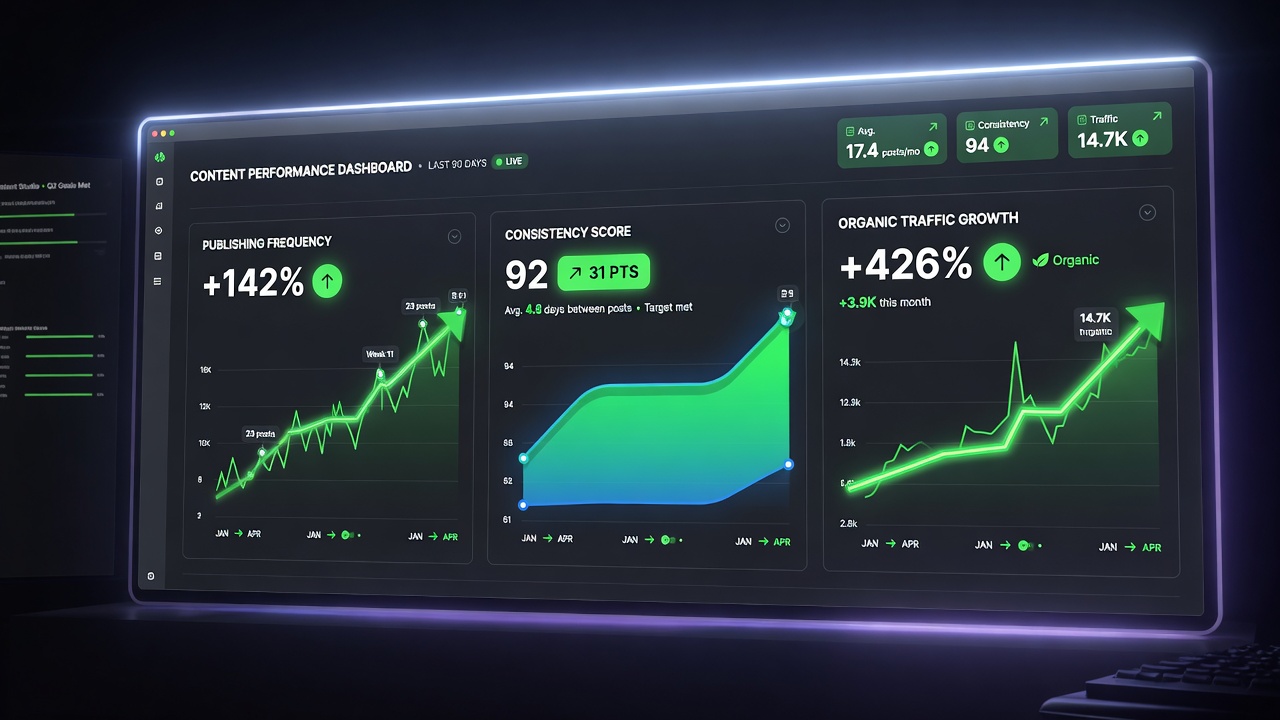
With your pipeline running smoothly, the next step is proving its value. Measuring the success of content automation isn't just about counting the number of articles published; it is about tracking the tangible hours saved and the consistency of your output. When your team no longer spends hours formatting, drafting, or manually optimizing, you can reallocate that time to high-impact strategy.
Beyond internal efficiency, monitor how a highly consistent publishing cadence impacts your organic traffic. Search engines reward predictability and volume. By tracking your search impressions and keyword rankings alongside your publishing frequency, you will likely see a direct correlation between a steady stream of content and growing search visibility. Ultimately, the true return on investment lies in achieving predictable, scalable growth without burning out your creative team.
Track the right metrics — Evaluate your automation ROI by measuring hours saved, consistency rates, and the resulting steady growth in organic traffic.
Key Takeaways
Start scaling your organic traffic today by automating your entire SEO publishing pipeline with Flows.
Common questions
Yes, modern AI tools can be trained on your brand guidelines to maintain high consistency. According to Content Marketing Institute data, brands using voice-trained automation tools maintain an 89% consistency score compared to 94% for human-only content.
Automated publishing eliminates the inconsistent posting patterns that can severely damage your algorithmic reach on search engines and social platforms. It ensures a steady, predictable flow of content that keeps audiences engaged.
Automation excels at structured, repeatable tasks such as content optimization at volume. This includes scoring drafts against SERP benchmarks, checking keyword density, and quickly flagging thin pages for improvement.
Absolutely. Modern integrations allow platforms to connect with advanced language models to generate comprehensive, long-form blog posts of 1,500+ words and publish them directly to your CMS.