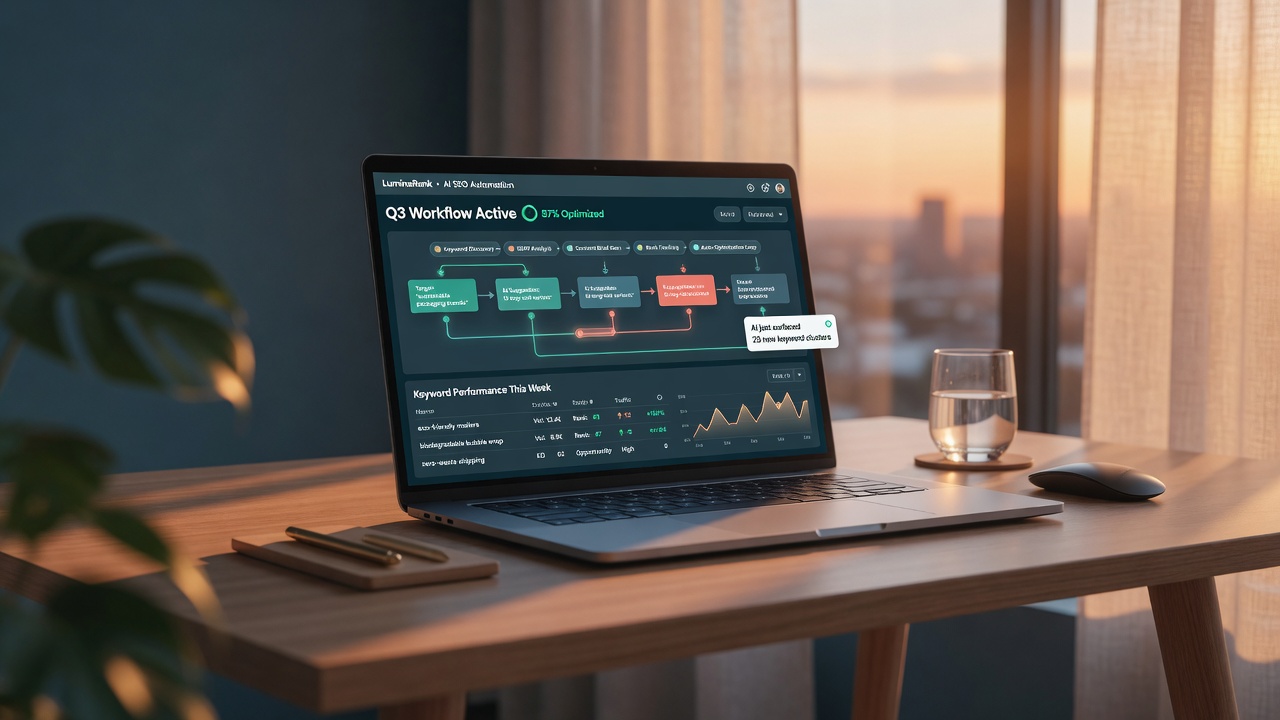
AI Automation
Step-by-Step SEO Automation Setup

TL;DR
- Identify bottlenecks by mapping out your current manual SEO tasks and time allocations.
- Use no-code platforms like n8n or Gumloop to connect SEO APIs directly with AI models and your CMS.
- Build automated pipelines for keyword research, semantic clustering, drafting, and publishing.
- Deploy AI agents to continuously monitor keyword rankings and suggest internal links.
- Maintain content quality by establishing automated review loops before scheduling posts.
First, Map the Grind: How to Audit Your Manual SEO Bottlenecks
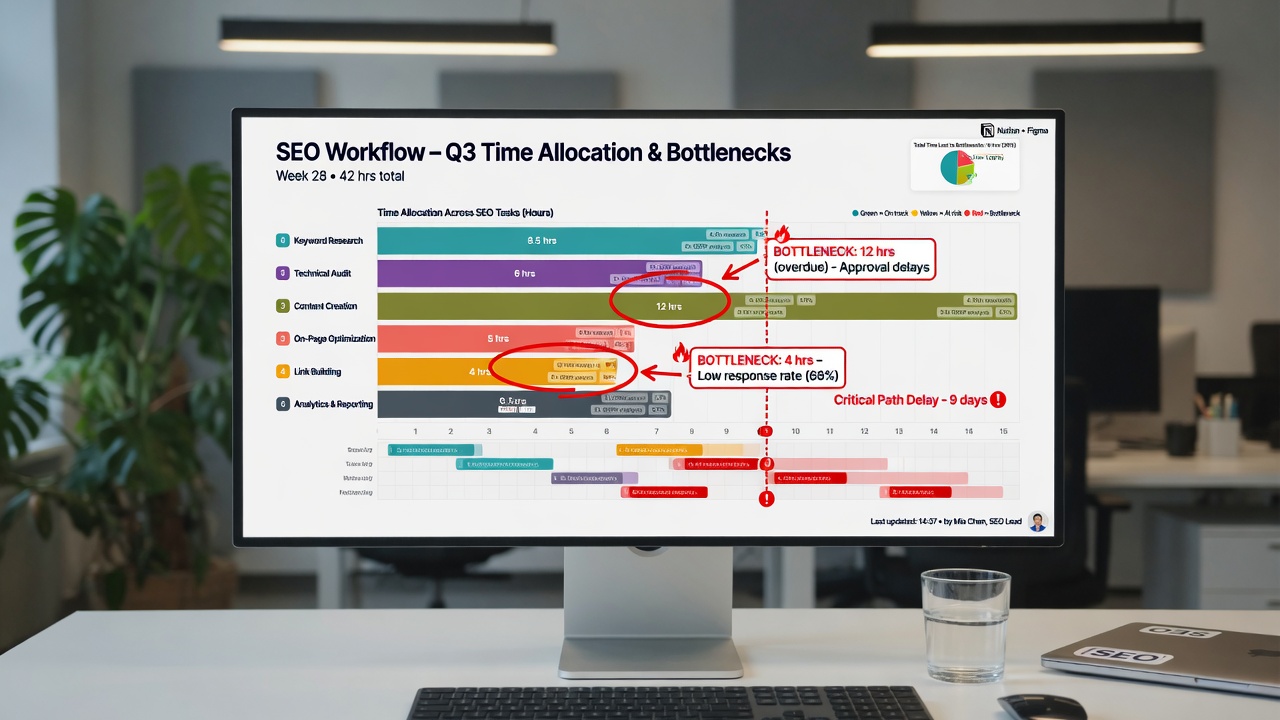
Before you write a single line of automation logic or connect an API, you need to know exactly where your hours are disappearing. Every successful transition to SEO automation begins with a clear framework: auditing your team's current time allocations and identifying the specific bottlenecks that stall your growth.
Think about your typical week. How many hours are spent copying and pasting keyword lists from search tools into spreadsheets? How much time does your team spend manually clustering those keywords, drafting briefs, formatting drafts, and copy-pasting them into your CMS? These repetitive manual steps are prime candidates for automation.
The Three SEO Pillars to Track
- Keyword Research & Clustering: Grouping terms by intent and search volume.
- Content Creation: Structuring briefs, researching topics, and drafting articles.
- Publishing & Optimization: Formatting, adding internal links, and setting up metadata in your CMS.
Once you visualize where the hours actually go, you can easily pinpoint the friction points where human creativity is held hostage by administrative busywork. This clarity is what allows you to design automated pipelines that actually move the needle.
Audit before automating — Map out your team's weekly time sinks in research, writing, and publishing to identify the repetitive tasks most ripe for AI delegation.
Choosing Your Engine: The No-Code Platforms That Power AI SEO
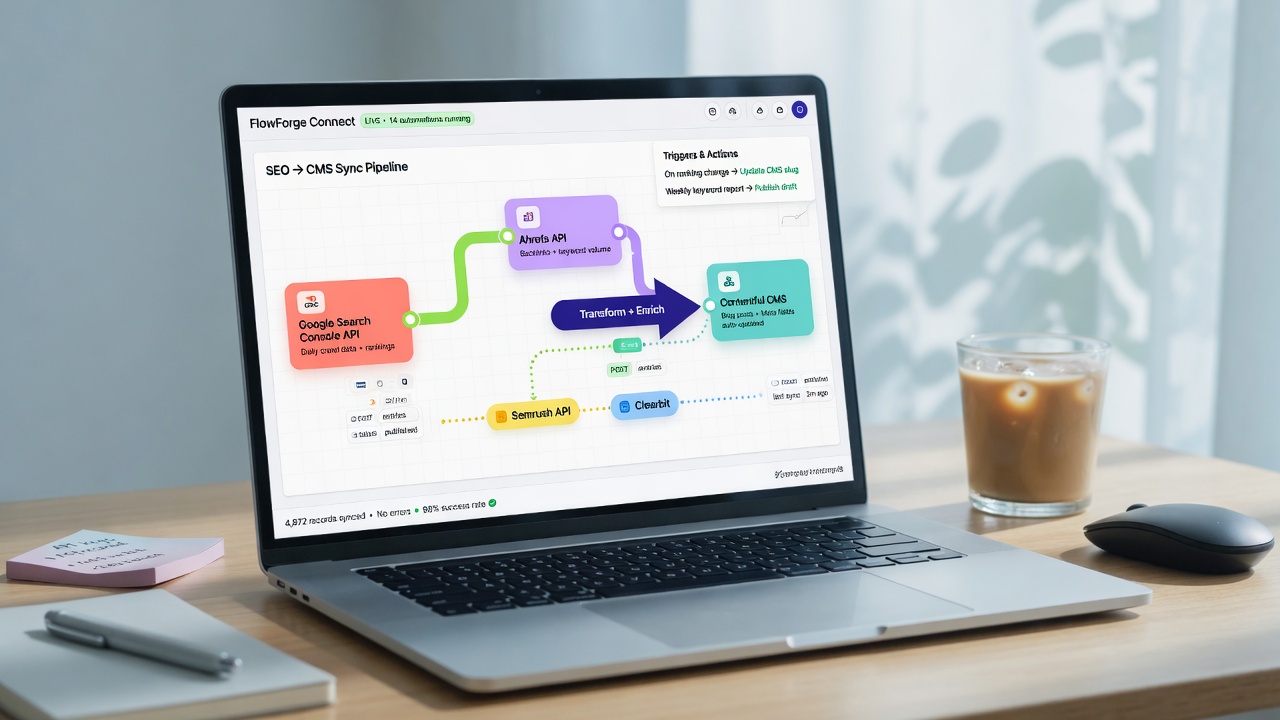
To turn that operational clarity into an active, self-sustaining system, you need an engine that can connect your favorite SEO tools directly to your publishing platform. This is where modern no-code automation platforms come in, acting as the central nervous system for your AI SEO workflows.
While traditional tools like Make.com are fantastic for linear, data-passing tasks, newer players are designed specifically for complex AI operations. Platforms like Gumloop and n8n enable you to build actual AI agents that connect SEO tools, LLMs, and content management systems into cohesive, multi-step workflows. Gumloop offers a highly visual, drag-and-drop interface optimized for AI-native logic, while n8n shines as a flexible AI agent builder that handles complex conditional paths with ease.
Once you select your platform, the setup involves linking your data sources—such as Ahrefs or Semrush APIs—directly to your CMS, like WordPress. By connecting these endpoints, you can automatically pull search volume, keyword difficulty, and competitor data, pass it through an LLM for clustering and drafting, and then push the finished product straight to your CMS as a formatted draft. This eliminates the manual copy-pasting that slows down traditional content production.
Connect with intent — Leverage AI-native builders like Gumloop or n8n to stitch your Ahrefs or Semrush data directly to WordPress, turning disconnected tools into a unified, automated publishing pipeline.Building the Brain: Daily API Ingestion and Automated Keyword Clustering
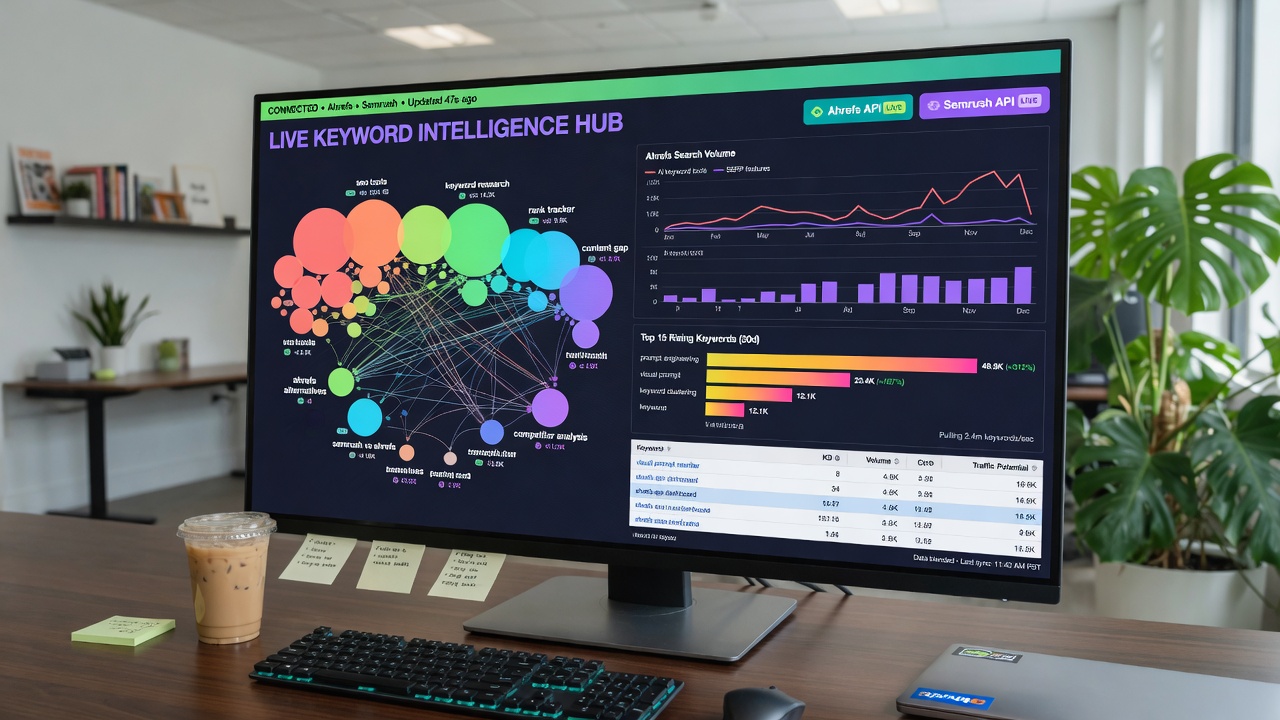
To feed this automated engine, you need a steady stream of fresh, high-quality search data. Instead of manually exporting CSVs from your research tools every week, you can automate the entire ingestion phase. By signing up for a cloud SEO service like Ahrefs Cloud or SEMrush Enterprise, you can connect their APIs directly to your automation workflow to grab target keywords every single day.
This daily feed ensures your pipeline is constantly updated with real-time search volume, shifting keyword difficulties, and competitive gaps without requiring any manual intervention.
Why Semantic Clustering is Essential
Once the raw data lands in your database, you must organize it before any writing begins. If you feed unclustered keywords directly into an AI writer, you will inevitably produce duplicate content that cannibalizes your own search rankings. Automating keyword clustering solves this by grouping search terms based on semantic intent.
By routing your daily API pulls through an LLM agent on a platform like Gumloop or n8n, you can automatically group hundreds of keywords into distinct topical clusters. The output is a structured queue of comprehensive content briefs, with each cluster mapped to a single primary target and its relevant secondary terms, ready for the draft generation stage.
Automated data pipelines — Link cloud SEO APIs to gather search data daily, then use AI agents to group keywords by intent to prevent content cannibalization.From Brief to Live: Automating Content Generation and CMS Publishing
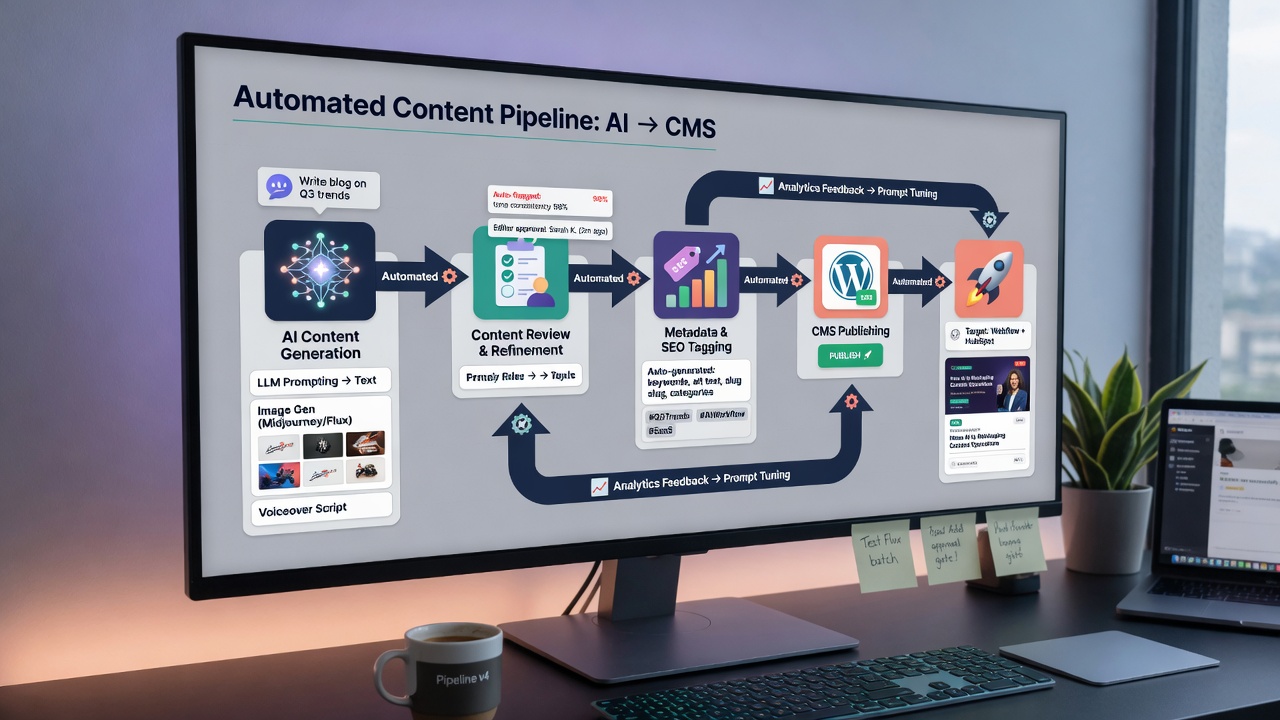
Once those keyword clusters are organized and queued, the system is primed to transform raw briefs into fully formatted, publish-ready assets. Instead of manually writing, editing, and uploading drafts, you can orchestrate a hands-off pipeline that handles the heavy lifting from draft to delivery.
This workflow automates the process of creating a complete SEO-optimized blog post, including generating content, titles, images, and meta tags, and publishing it on WordPress. By linking your automated content engines directly to your website's API, you eliminate the tedious staging phase entirely.
Zero-touch staging — Connecting your AI generator directly to your CMS API allows you to produce fully optimized pages, complete with metadata and assets, without ever leaving your automation platform.
The Self-Correction Loop: Deploying AI Agents for Optimization and Quality Control
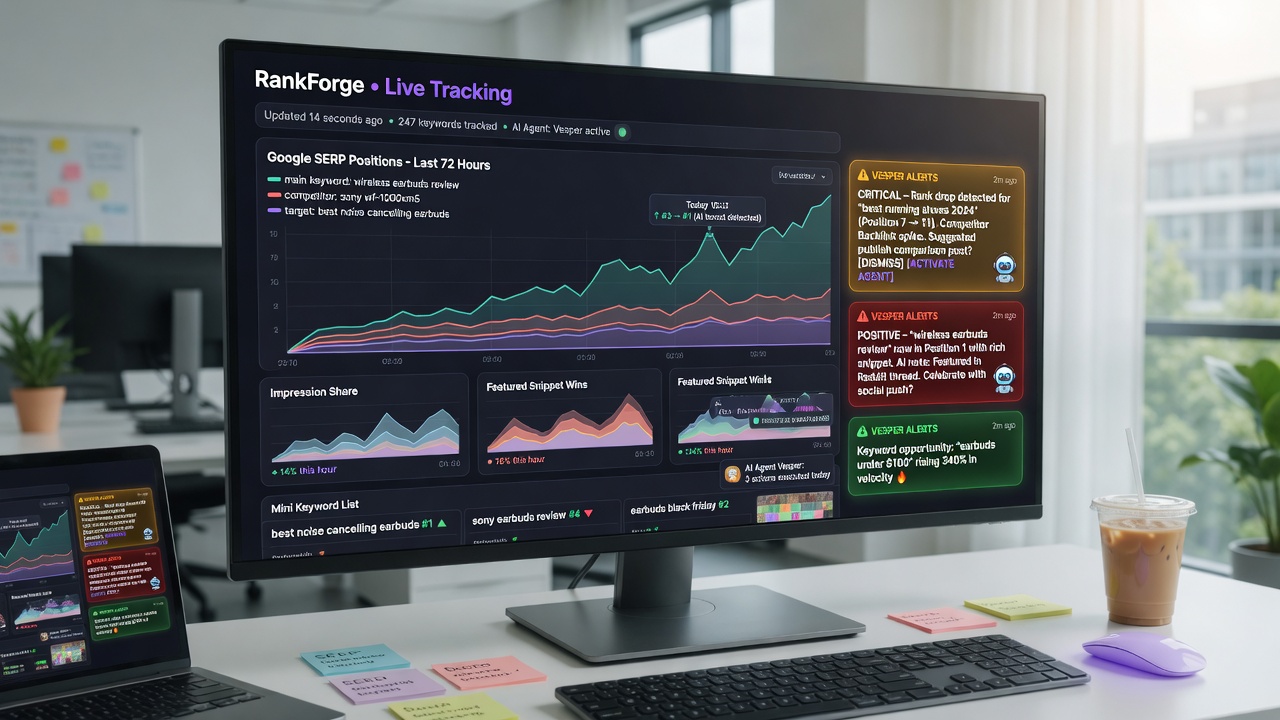
Once your content is live, the work shifts from creation to maintenance. To keep this engine running without manual oversight, you can deploy AI agents to handle ongoing optimization and performance tracking. An autonomous internal-linking agent can scan newly published posts against your existing sitemap, automatically inserting relevant contextual links to distribute page authority. Simultaneously, reporting agents can track keyword rankings and compile performance data into automated dashboards.
Scaling content safely also requires strict quality guardrails to avoid search engine penalties. Before expanding your programmatic footprint, conduct thorough keyword pattern research using tools like Ahrefs, Semrush, or Google Search Console [e1]. This ensures your agents target high-value, structured search intent rather than generating low-quality, repetitive pages. By combining automated monitoring with smart keyword patterns, you maintain a healthy, self-optimizing organic growth engine.
Automated optimization — Deploying AI agents for internal linking, performance tracking, and quality guardrails ensures your automated content engine scales safely without risking search engine penalties.
Key Takeaways
Let Flows handle your entire SEO pipeline from keyword clustering to rich content generation and live publishing, so you can scale your organic traffic on autopilot.
Frequently asked
According to 13 best SEO automation tools I'm using in 2026, platforms like Gumloop and n8n are leading choices for building custom AI agents that connect SEO tools, LLMs, and content management systems into seamless workflows.
Yes, as outlined in the How to Automate SEO Tasks Using Cloud Technology 2026 Guide, you can connect cloud APIs like Ahrefs Cloud or SEMrush Enterprise to configure daily automated data pulls that feed your content pipeline.
Absolutely. The resource Automate SEO-Optimized WordPress posts with AI & Google Sheets explains that modern workflows can automate the entire process, including generating content, optimized titles, meta tags, and images, before publishing directly to WordPress.
Before scaling pages, you must establish a strong foundation. As detailed in Programmatic SEO in 2026: A Complete Guide, it is crucial to conduct keyword pattern research using platforms like Ahrefs, Semrush, or Google Search Console to identify scalable search intent.
The key is building human-in-the-loop workflows. Use automation to handle data gathering, clustering, and initial drafting, but always have a human editor review the final output for accuracy, tone, and unique value before it goes live.