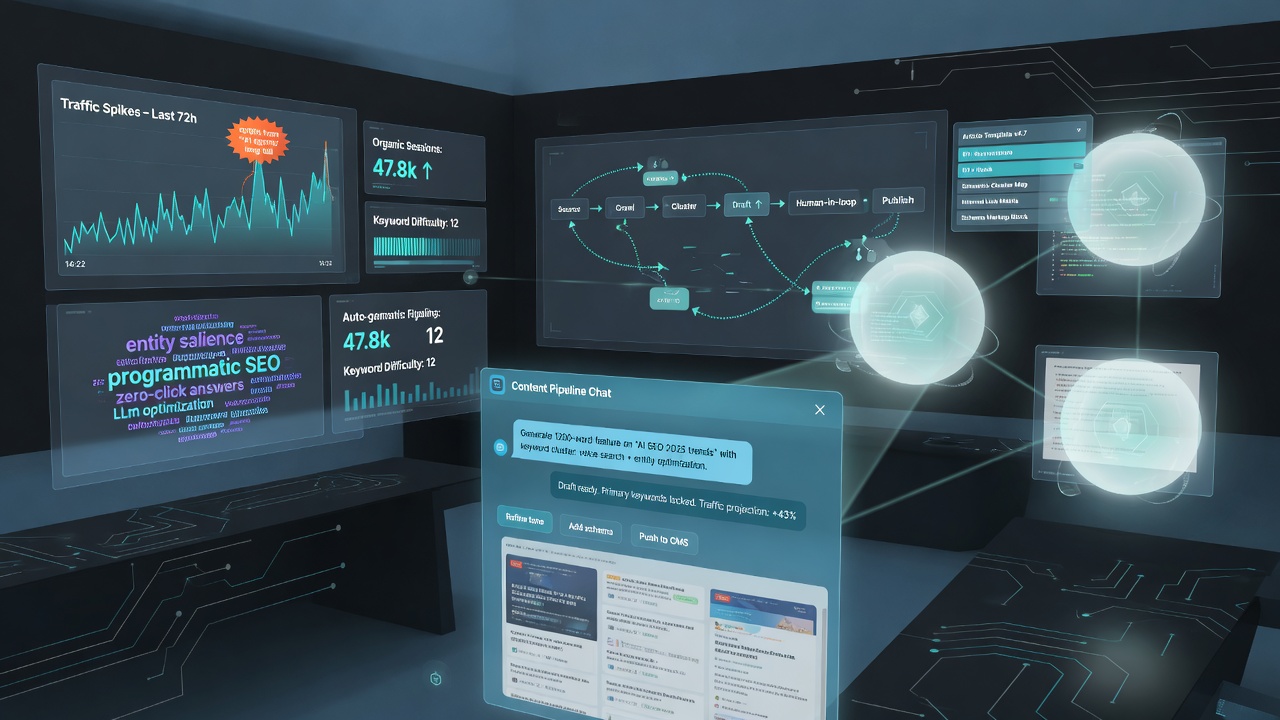
Measuring Success with Programmatic SEO Metrics
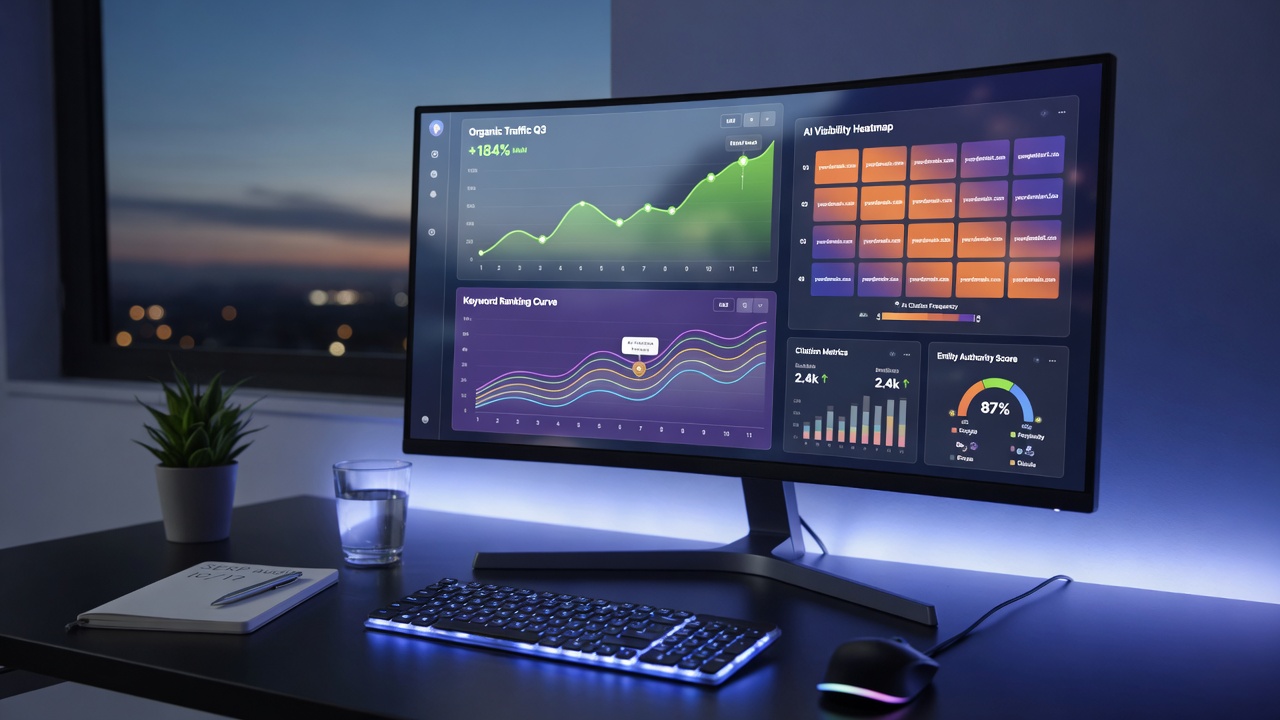
Scaling content through programmatic SEO transforms not only how we publish but also how we evaluate performance. When launching hundreds or thousands of pages, traditional manual reporting quickly becomes obsolete. Today, programmatic platforms commonly track ranking improvements, traffic growth, conversion rates, and crawl efficiency as key performance metrics to ensure automated systems are functioning correctly and driving value.
However, the rapid rise of generative engines introduces a new layer of complexity. Modern search optimization requires tracking both conventional search engines and large language models (LLMs). To address this, sophisticated teams now incorporate LLM consistency and recommendation share (LCRS), which measures how reliably a brand appears in AI-generated responses—effectively serving as the keyword-tracking equivalent for the LLM era. Additionally, key AI search KPIs include AI visibility, citation performance, brand representation accuracy, and AI-influenced outcomes like branded search lift.
To manage this dual-front tracking without overwhelming marketing teams, modern SEO automation tools enable scheduled reports on rankings, organic traffic, technical issues, and top pages and content impact. By integrating these automated insights with classic conversion data, companies can build a resilient, future-proof measurement framework that proves the true business value of their programmatic footprint.
- 1
Programmatic SEO requires tracking both classic search engine metrics and emerging AI-era KPIs to capture full performance.
- 2
Traditional programmatic platforms focus on ranking improvements, organic traffic growth, conversion rates, and crawl efficiency.
- 3
AI search visibility is measured through LLM consistency and recommendation share (LCRS), citation performance, and brand representation accuracy.
- 4
Automated SEO tools streamline reporting by scheduling updates on rankings, technical issues, and content impact.
The Core Metrics of Scale: Mapping Programmatic SEO Performance
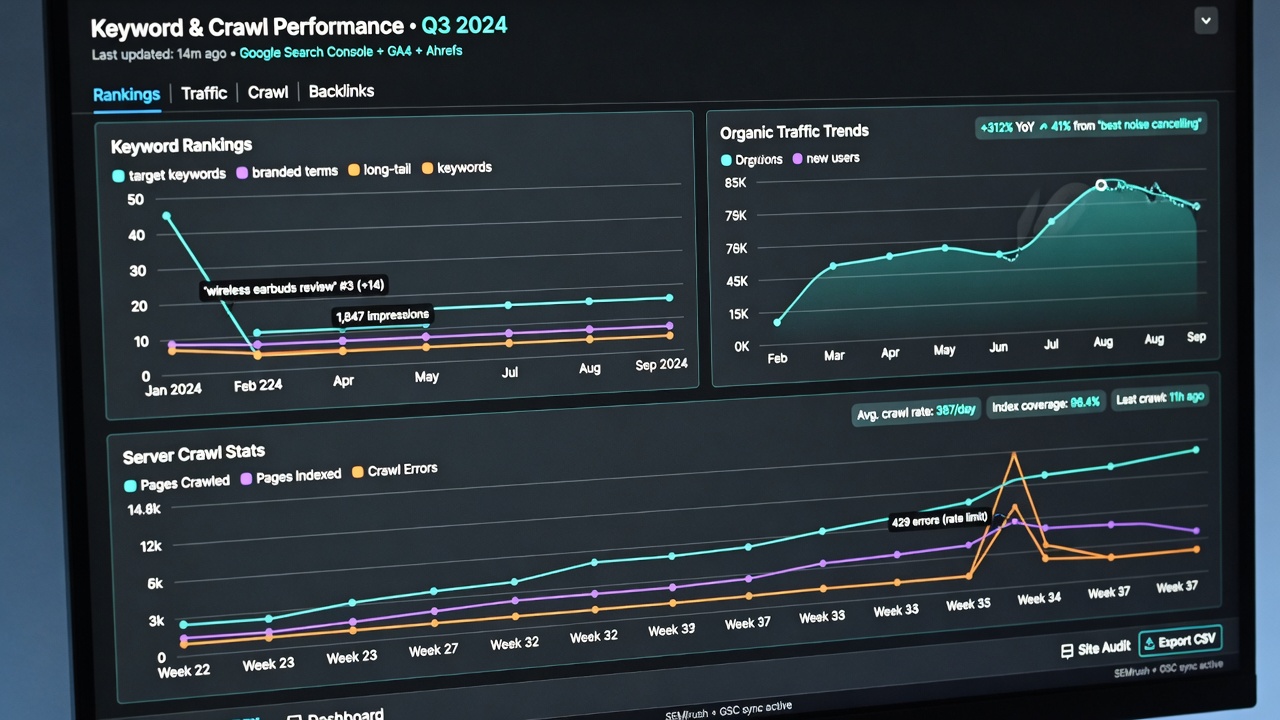
atic campaigns. To establish this framework, we must first master the foundational pillars of programmatic performance tracking. When managing thousands or even millions of pages, traditional manual tracking falls short. Instead, high-growth teams rely on programmatic platforms to systematically monitor four core performance pillars: ranking improvements, organic traffic growth, conversion rates, and crawl efficiency.
Crawl Efficiency and Technical Indexation
For programmatic campaigns, crawl efficiency is the ultimate gatekeeper. If search engine bots waste crawl budget on broken links or duplicate pages, your programmatic pages will never reach the index. Tracking log files and indexation rates helps confirm that your automated site architecture is optimized for search crawlers.
Ranking Improvements and Traffic Quality
Ranking improvements across target keywords must be tracked in aggregate. Rather than watching individual keywords, look at the distribution of your programmatic pages across search engine results pages (SERPs). As these rankings climb, they should drive a corresponding increase in organic traffic. However, traffic volume alone is a vanity metric; you must also monitor traffic quality by analyzing user engagement and bounce rates.
Content-Led Conversion Rates
Ultimately, programmatic SEO must tie back to business outcomes. Tracking conversion rates directly associated with auto-published pages ensures your content automation strategy is attracting high-intent searchers. By setting up automated reporting on conversion values, you can clearly attribute revenue to your programmatic efforts.
Foundational metrics matter — Successful programmatic SEO starts with tracking crawl efficiency, ranking improvements, organic traffic growth, and conversion rates to ensure search engines index and value content at scale.
The New Keyword Tracking: Mastering LLM Consistency and Recommendation Share

While traditional conversion attribution remains vital, the modern search landscape demands a shift in how we track brand visibility. As search engines increasingly integrate generative AI and users turn to conversational engines, programmatic SEO must evolve to measure presence within Large Language Models (LLMs). This is where LLM consistency and recommendation share (LCRS) becomes a critical KPI.
LCRS measures how reliably and competitively a brand appears in AI-generated responses, serving a role similar to keyword tracking in traditional SEO, but for the LLM era [e2]. Instead of merely tracking whether your automated pages rank on a standard search engine results page, you must now measure how often an LLM synthesizes your data to answer a user's direct query.
To track this effectively, you must evaluate consistency across different AI models. A brand might dominate recommendations in OpenAI's ChatGPT but remain virtually invisible in Google's Gemini or Anthropic's Claude. By analyzing brand mention frequency and recommendation share across these distinct platforms, businesses can gauge the true reach and authoritative footprint of their content automation efforts in an AI-first world.
Ultimately, monitoring these variations allows search teams to adjust their data indexing and semantic structuring. By ensuring that your programmatic content is optimized not just for search crawlers, but also for LLM training sets and real-time retrieval-augmented generation (RAG) pipelines, you maintain a steady share of voice regardless of how the user chooses to search.
LCRS is the new keyword tracking — To succeed in an AI-driven search landscape, programmatic SEO must track LLM consistency and recommendation share (LCRS) to measure how reliably a brand is cited across different AI models.Beyond Blue Links: Tracking AI Search Visibility and Citation Performance
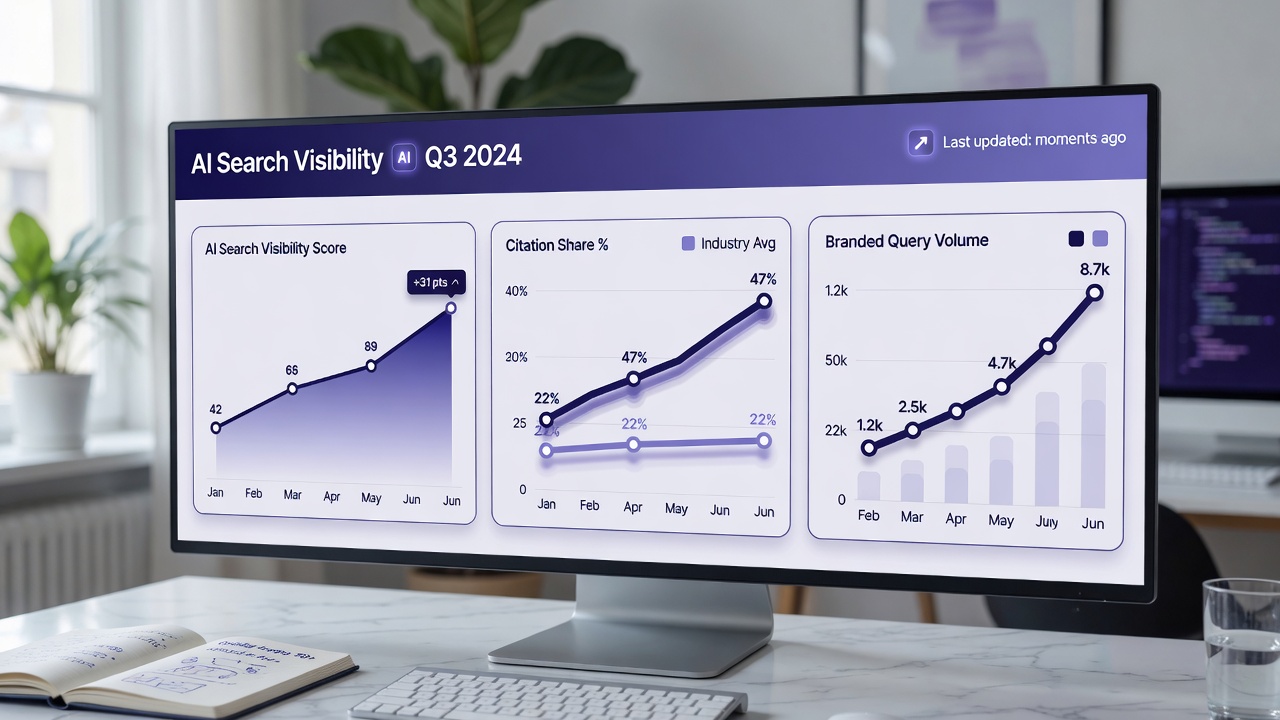
To systematically capture this share of voice, programmatic SEO campaigns must evolve their tracking frameworks to measure performance within generative search engines directly. This means moving beyond standard search engine results pages and analyzing performance across four distinct layers: AI visibility, citation performance, brand representation accuracy, and AI-influenced outcomes.
AI visibility tracks how frequently your brand appears within LLM-generated answers. It is no longer enough to rank first on a static page; your programmatic assets must serve as the authoritative source that these models synthesize. Measuring citation performance and accuracy ensures that when an LLM references your data, it attributes the source correctly and points users back to your site.
Finally, teams must monitor AI-influenced outcomes, such as branded search lift. As users transition from traditional search boxes to conversational interfaces, a rise in branded queries often correlates with high-quality, high-frequency AI citations. Tracking these multidimensional KPIs alongside traditional SEO metrics provides a complete, modern picture of programmatic success in the generative era.
AI-era tracking requires measuring visibility, citation accuracy, and branded search lift to quantify how effectively programmatic content feeds LLM engines and drives user actions.Unified Dashboards: Automating Traditional and AI-Era SEO Reporting
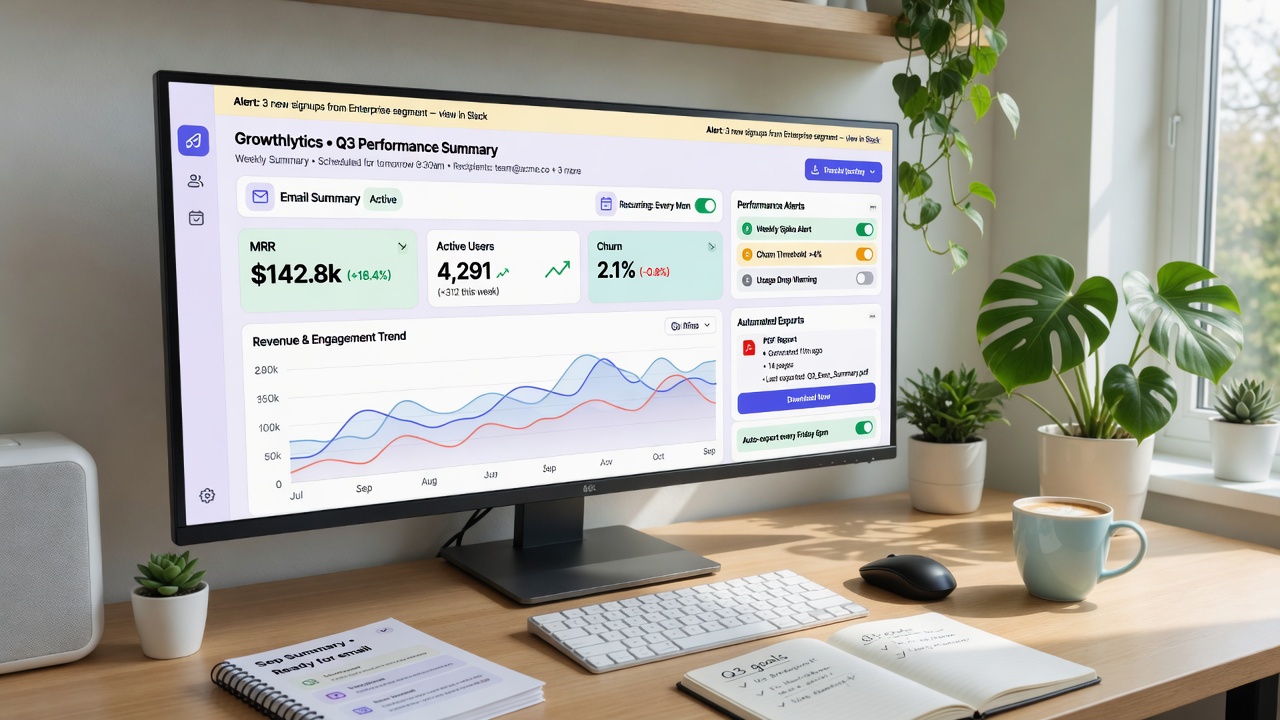
Managing this dual-track strategy—balancing classic search performance with generative AI visibility—demands a highly automated approach. Attempting to manually track thousands of dynamically generated pages across both traditional search engine results pages (SERPs) and LLM engines is a recipe for operational failure. Modern SEO automation tools solve this operational bottleneck by enabling scheduled reports on rankings, organic traffic, technical issues, and top pages and content impact. This automated feedback loop ensures that crawl anomalies or sudden drops in high-performing programmatic templates are flagged and resolved instantly.
To build a truly future-proof dashboard, these traditional automated SEO reports must be unified with modern AI search metrics. Growth teams should integrate brand mention frequency, citation share, and AI-referred sessions directly into their central analytics platforms alongside standard organic conversion value. Synthesizing LLM consistency and recommendation share (LCRS) with classic metrics like crawl efficiency and branded versus non-branded traffic allows organizations to monitor their entire digital footprint in real time, turning raw programmatic data into clear business outcomes.
Unified SEO dashboards — Automating the tracking of both traditional search metrics and AI-era KPIs ensures that scaling programmatic content remains technically sound, highly visible, and directly tied to revenue.Key Takeaways
Transform your search strategy and monitor both traditional and AI-era metrics effortlessly by deploying Flows to automate your programmatic content and interactive reader experiences.
Frequently Asked Questions
Programmatic platforms commonly track ranking improvements, traffic growth, conversion rates, and crawl efficiency. These metrics ensure that large-scale content is indexed properly and converting visitors.
It measures how reliably and competitively a brand appears in AI-generated responses. This metric serves a role similar to keyword tracking in traditional SEO, but tailored for the LLM era.
Key AI search KPIs include AI visibility, citation performance, brand representation accuracy, and AI-influenced outcomes like branded search lift. These layers help brands understand their footprint in generative search answers.
SEO automation tools enable scheduled reports on rankings, organic traffic, technical issues, and top pages and content impact. This eliminates manual data collection and keeps teams updated on massive programmatic directories.