SEO Strategies
Real-World AI SEO Case Studies

The debate over AI in search engine optimization is officially over, replaced by hard data from businesses that have successfully scaled their search visibility in 2026.
We are no longer guessing if search engines will index automated content or if AI search engines will steal our organic traffic. Instead, forward-thinking brands are achieving historic growth. For example, Flyhomes saw an explosive 10,737% traffic growth in 3 months by leveraging an AI-powered platform and programmatic SEO. Another automated programmatic engine helped a client scale their monthly signups from 67 to over 2,100 in just ten months—a massive 3,035% increase.
However, the secret lies in strategic execution. While a direct experiment showed manual SEO clearly outperforming pure AI-generated SEO for rankings, the most successful brands use hybrid automation. They are optimizing for both traditional search and Answer Engine Optimization (AEO), with some companies securing a 6x increase in AI-referred trials from platforms like ChatGPT, Claude, and Perplexity. Let's dive into the detailed case studies to see exactly how these businesses structured their campaigns to win big.
TL;DR
- AI-powered programmatic SEO can drive massive scaling, boosting monthly signups by over 3,000% in under a year.
- Strategic programmatic frameworks have delivered explosive traffic spikes, such as Flyhomes achieving over 10,000% growth in three months.
- Pure, unedited AI content often underperforms manual SEO, proving that human oversight and structured workflows remain critical.
- Optimizing for generative AI engines (AEO) now drives substantial bottom-line results, including 6x increases in AI-referred trials.
Scaling from Scratch: How Programmatic AI Engines Secured a 3,035% Signup Surge
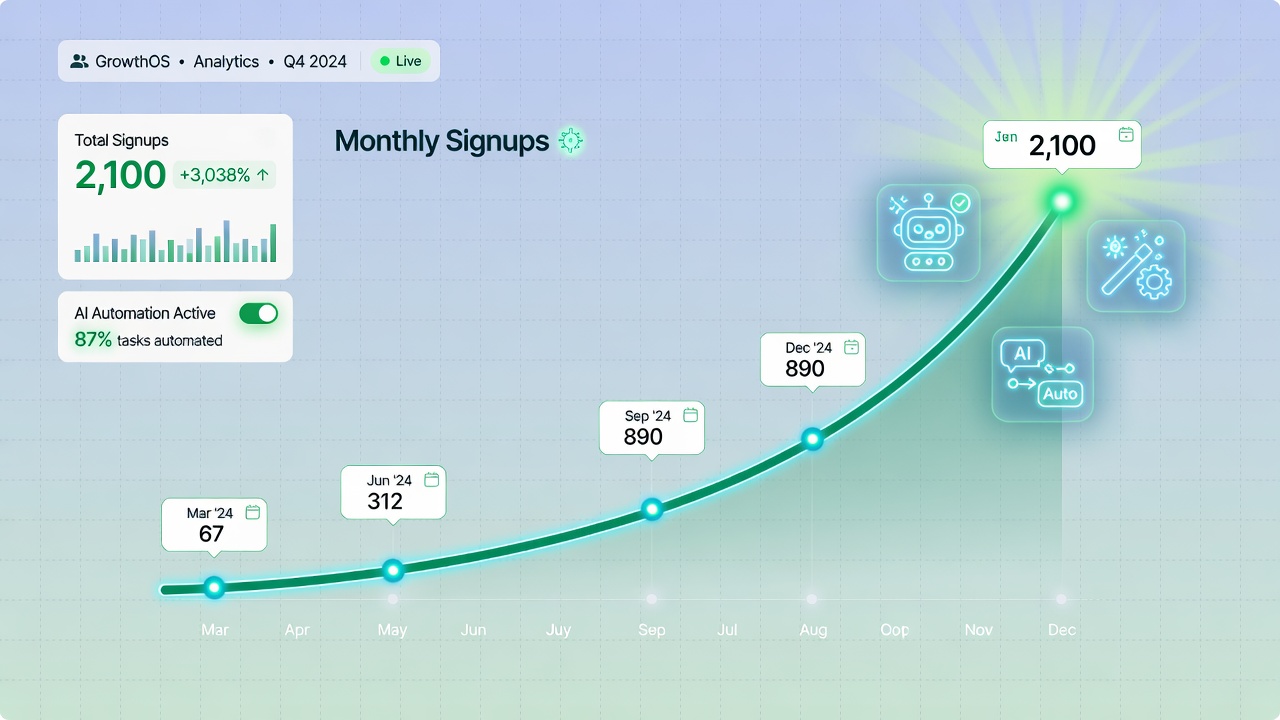
To understand the sheer scale of this shift, we only need to look at how programmatic SEO engines are rewriting the rules of user acquisition. In just 10 months, one AI client scaled their performance from a mere 67 monthly signups to over 2,100—representing a staggering 3,035% increase.
This rapid growth was powered by a fully automated programmatic SEO engine. Instead of relying on manual content creation, this workflow utilized structured database inputs to generate targeted, high-intent landing pages at scale. Each page addressed specific search queries, ensuring that incoming traffic was primed to convert.
By automating the technical setup and content distribution, the business eliminated traditional publishing bottlenecks, transforming search engine results into a highly efficient customer acquisition channel. But signups are only one piece of the puzzle; driving the raw traffic required to sustain this pipeline is its own challenge.
Programmatic automation works — Combining database-driven structures with AI content generation allows brands to scale high-intent pages rapidly, converting passive searchers into active signups at a rate manual production cannot match.
Scaling Organic Traffic: How Automation Drives Massive Volume
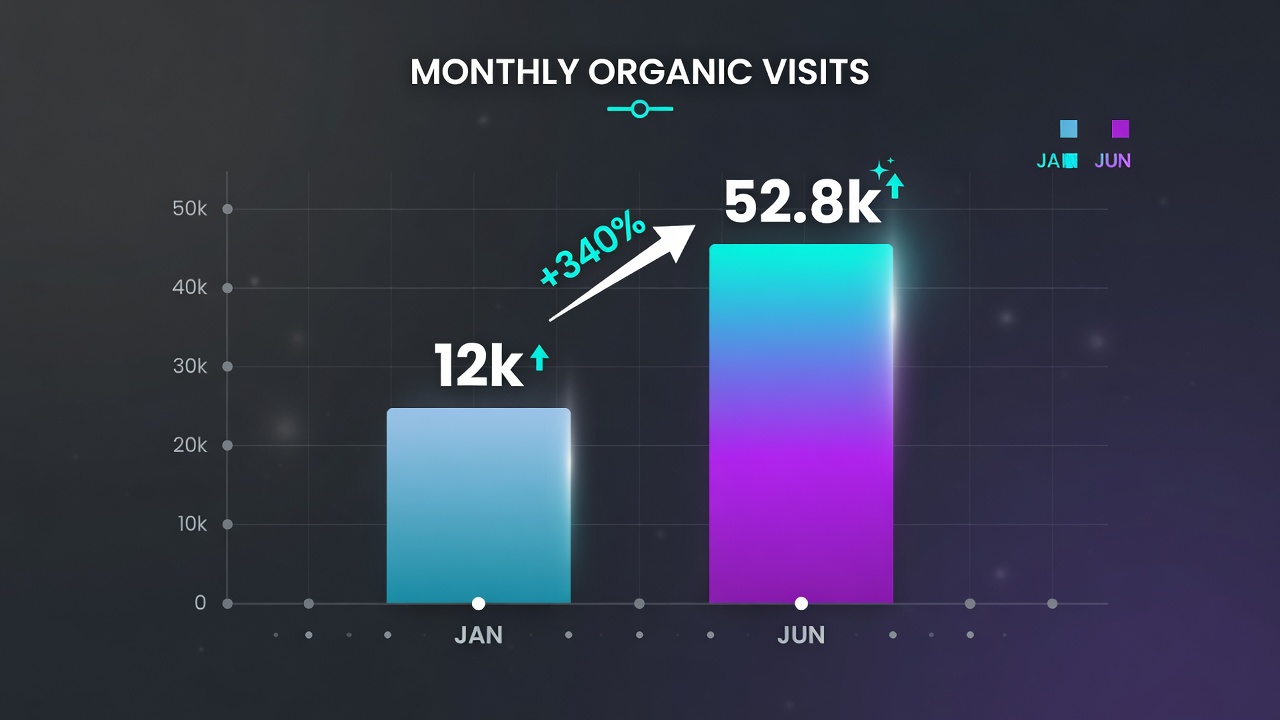
To feed the acquisition funnel, brands must scale their top-of-funnel organic footprint. Traditional manual content creation simply cannot keep pace with the demands of modern search engines. By deploying targeted AI automation levers—such as automated keyword grouping, dynamic content templating, and real-time internal linking—companies can publish high-quality, relevant content at a scale once thought impossible.
This is exactly how one AI SEO client unlocked explosive growth, transforming their baseline visibility into a powerful traffic engine. By automating the production of highly structured, search-intent-aligned pages, they scaled their organic traffic by 340%, surging from 12,000 to 52,800 monthly visits.
Crucial to this success is a robust measurement and reporting approach. Instead of tracking vanity metrics, the strategy focuses on tracking high-intent keyword clusters, monitoring indexation rates of automated pages, and analyzing funnel conversion. This continuous feedback loop ensures that the automation adapts to search algorithm shifts, keeping the traffic growth sustainable. This massive influx of traditional search traffic lays the perfect foundation for capturing the next frontier of search: AI-generated answers.
Strategic automation scales volume — Combining automated keyword grouping with dynamic templating drives massive traffic gains, provided you track deep funnel metrics rather than just raw page views.
Dominating AI Overviews: The Power of Single-Page Authority
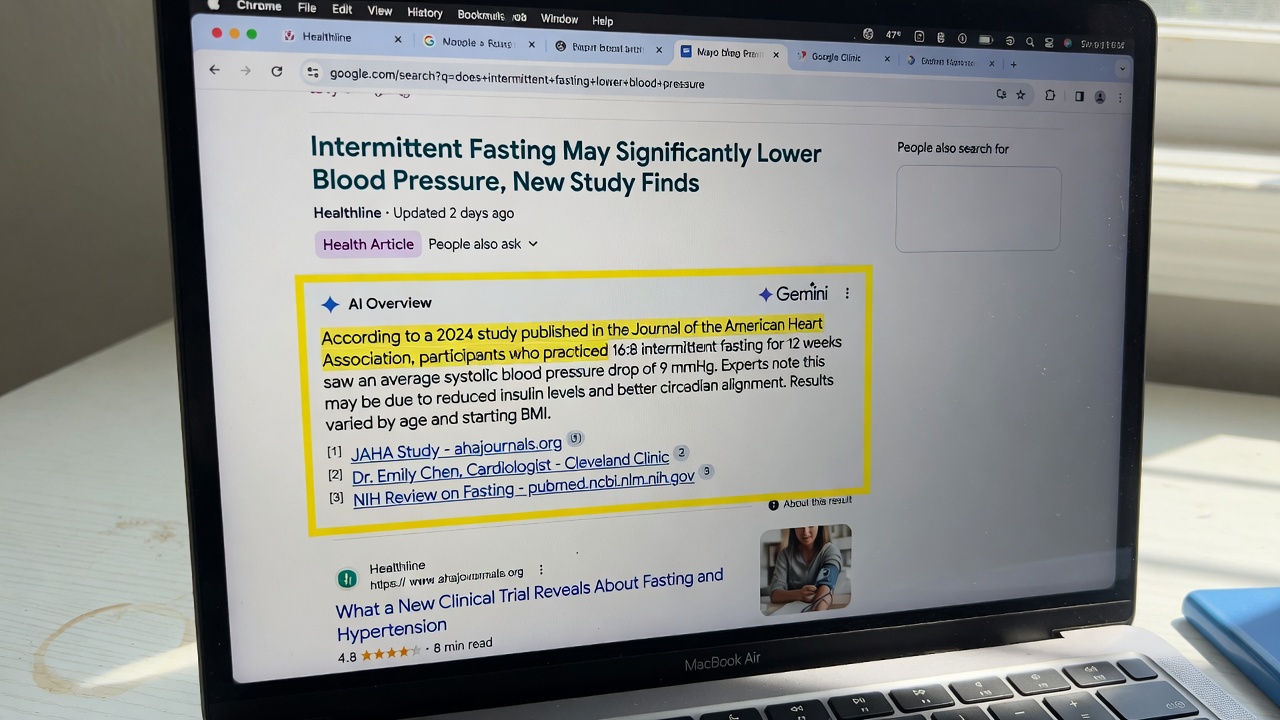
Capturing these AI-generated answers requires shifting from broad-spectrum keyword stuffing to hyper-focused, structurally optimized content. When search engines crawl for sources to cite in their summaries, they favor articles that directly answer complex user queries with clear, authoritative data.
The impact of this targeted approach is massive. In one notable case, a single piece of deeply optimized content became the primary driver for an entire domain, generating 84.4% of the site's total traffic and attracting over 250K monthly visits. By structuring the content to align precisely with how LLMs retrieve information, the page successfully captured Google AI Overviews.
Achieving this level of visibility relies on specific optimization tactics: formatting content with clear Q&A headers, utilizing schema markup, and ensuring human-vetted accuracy. Instead of publishing hundreds of thin pages, the strategy centers on creating definitive, highly structured resources that search bots and AI models alike can easily parse, trust, and reference.
Structure drives visibility — Optimizing single, authoritative pieces of content for LLM retrieval can capture Google AI Overviews and secure thousands of highly targeted monthly referrals.
Programmatic Scale: How Flyhomes Achieved a 10,737% Traffic Explosion
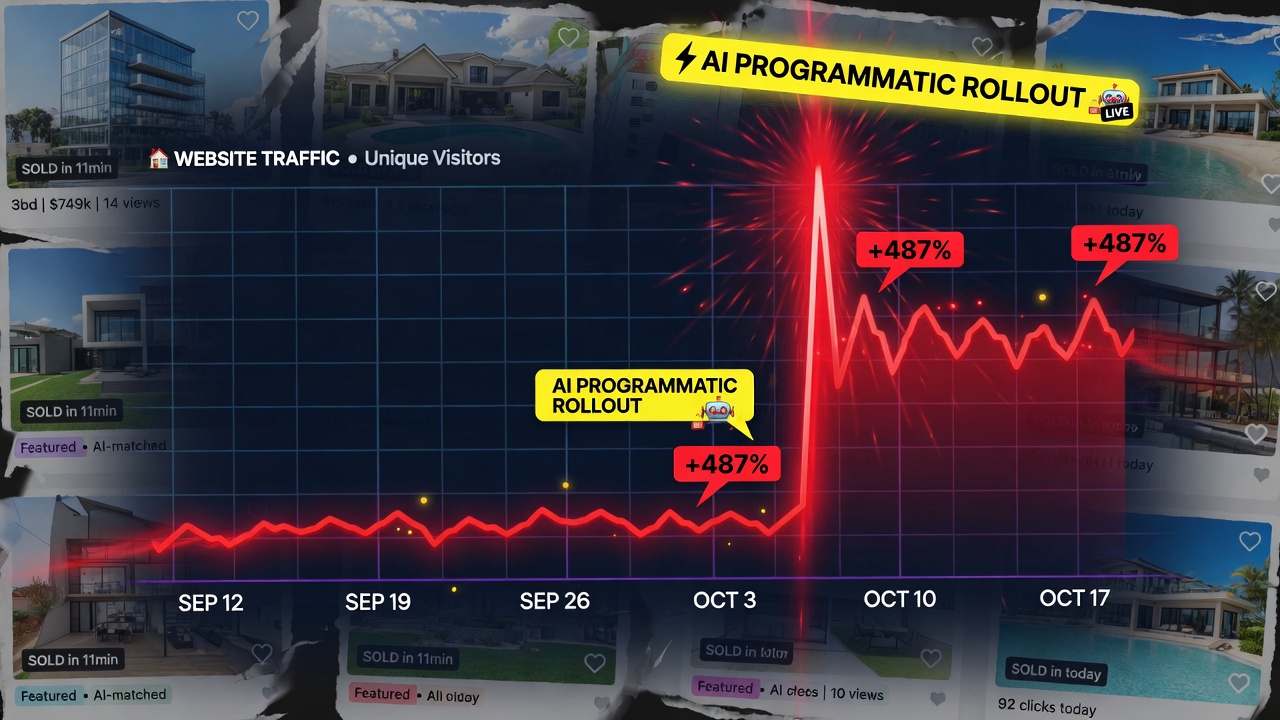
While single-page authority secures premium AI Overview real estate, scaling this impact across an entire niche requires a programmatic engine. When structured correctly, AI-powered programmatic SEO can trigger explosive growth in highly competitive sectors.
A prime example of this is Flyhomes, an AI-powered real estate platform that achieved an astonishing 10,737% traffic growth in just three months. By leveraging a programmatic real-estate content engine, they dynamically generated highly localized, data-rich pages that addressed specific buyer queries at scale. Instead of relying on manual copywriting for thousands of neighborhoods, their automated workflow combined structured property data with AI-driven natural language generation to build authoritative, search-optimized landing pages.
The takeaway for brands looking to replicate this success is clear: programmatic SEO is not about producing generic, unmonitored AI spam. The winning formula lies in feeding your AI engine proprietary, structured data to create highly targeted pages—because, as we will see, relying on pure AI generation without a strategic framework often underperforms when compared directly to manual efforts.
Programmatic scaling works — Combining proprietary data with automated natural language generation can trigger exponential, niche-wide traffic growth, as proven by Flyhomes' 10,737% surge.The Showdown: Why Pure AI Content Underperforms Manual SEO
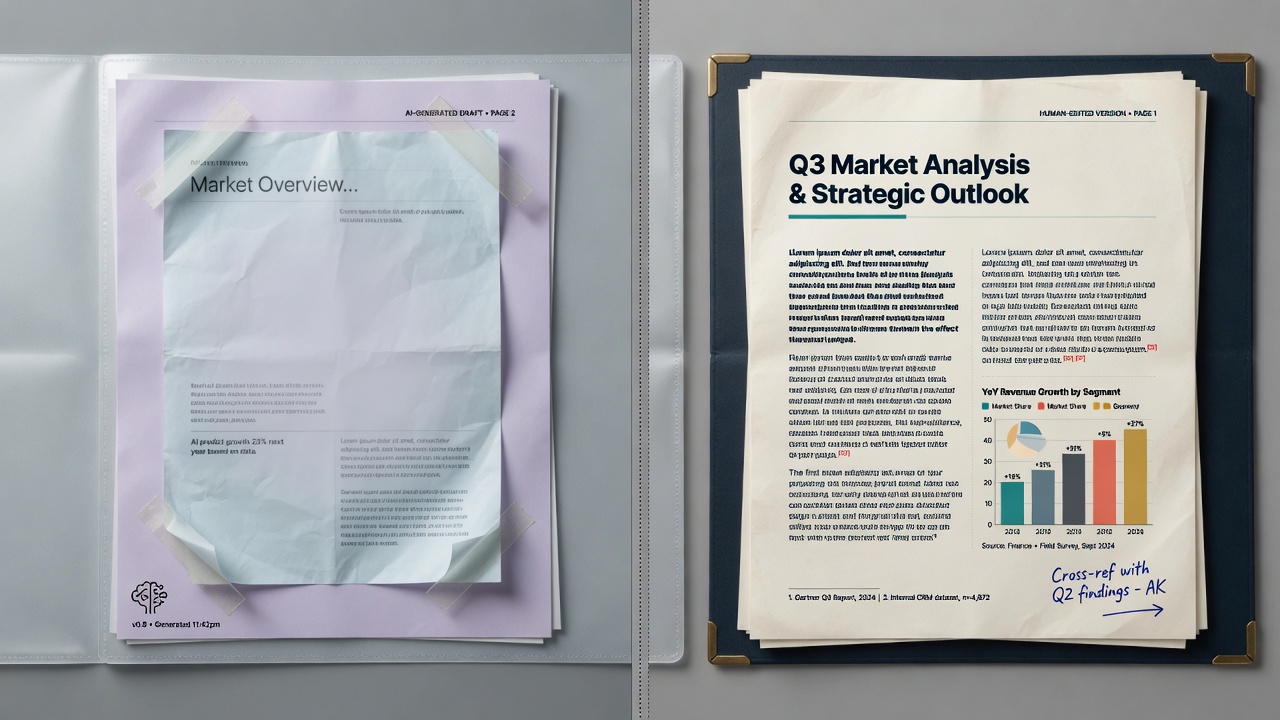
When put to the test, the limits of unguided AI generation become immediately obvious. In head-to-head battles, pure AI-generated content struggles to match the precision and strategic depth of human-crafted campaigns.
"Manual SEO clearly outperformed AI-generated SEO in this real-world experiment."
— SEO Experiment: Manual SEO vs AI SEO — Which One Ranks Better?
This performance gap exists because pure AI often misses the nuances of search intent, real-time industry updates, and original insights. Human oversight remains essential to inject genuine expertise and ensure content aligns with strict search engine quality guidelines.
The Winning Play: A Hybrid SEO Workflow
Rather than choosing one extreme, the smartest digital teams combine both. Use AI automation to handle keyword grouping, structural templating, and initial drafting, then have human editors refine the narrative and add proprietary insights. This hybrid approach delivers the scale of automation with the quality of manual optimization.
Strategic hybrid workflows win — Pure AI content lacks the depth to outrank manual efforts on its own; combining automated scaling with human editorial oversight is the only way to secure lasting search dominance.
Beyond Search: Driving High-Value Trials Through Answer Engine Optimization
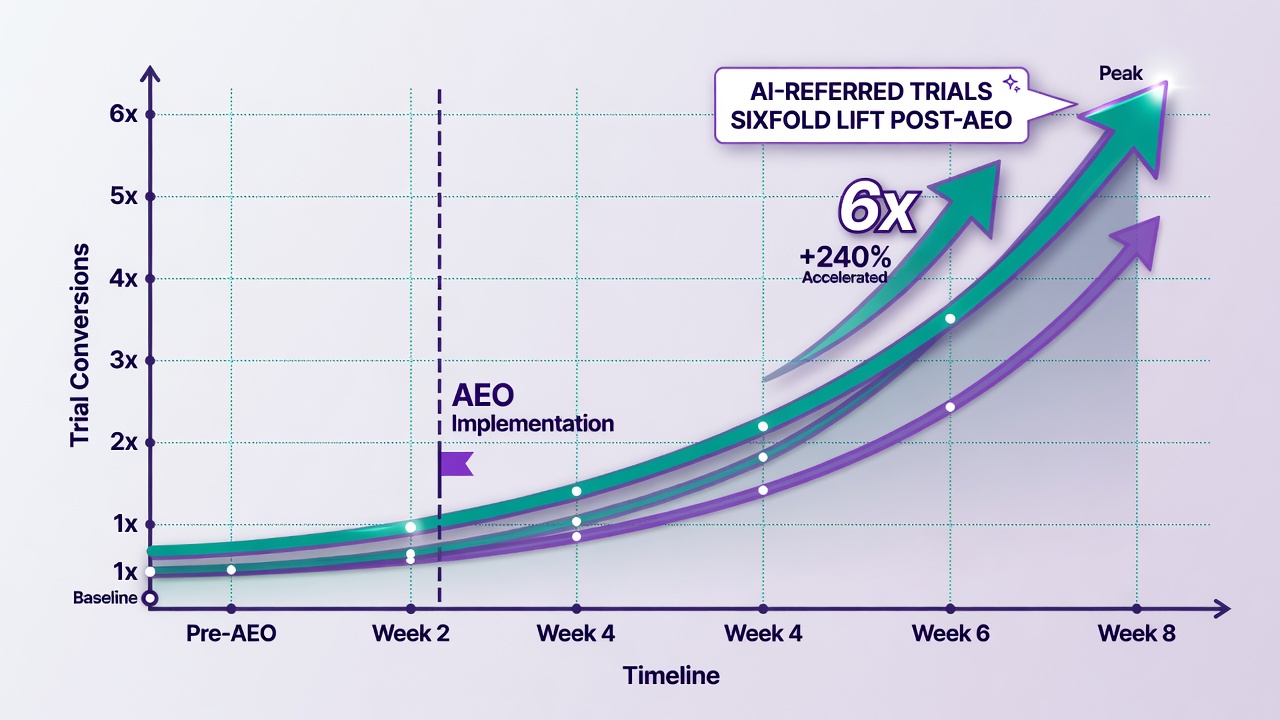
This hybrid approach doesn't just appease Google's traditional search algorithm; it is also the key to unlocking visibility in generative AI engines. As users shift their search habits, optimizing for platforms like ChatGPT, Claude, and Perplexity—known as Answer Engine Optimization (AEO)—is becoming a crucial channel for direct conversions.
When content is structured and authoritative, these models confidently recommend your product. In fact, implementing dedicated AEO strategies has delivered major lifts in AI-referred conversions, resulting in a 6x increase in AI-referred trials, jumping from 575 to over 3,500 trials attributed to recommendations from ChatGPT, Claude, and Perplexity.
To capture these high-intent referrals, brands must focus on structuring data, maintaining clear FAQ formats, and building authoritative brand mentions across the web. By ensuring your site feeds LLMs the clear, factual evidence they need, you position your brand to win the next era of organic discovery.
Answer Engine Optimization — Optimizing content for LLMs like ChatGPT and Perplexity can drive massive conversion lifts, as proven by a 6x surge in AI-referred trials.Key Takeaways
Ready to scale your organic growth and dominate AI search engines? Try Flows today to automate your SEO publishing with built-in AI chat agents that convert readers.
Frequently asked
Yes, real-world data shows it can. In one programmatic SEO case study, a fully automated engine helped a client grow from 67 to over 2,100 monthly signups in just 10 months, representing a 3,035% increase.
Direct experiments show that manual SEO clearly outperforms pure, unedited AI-generated SEO for search rankings. Successful strategies always combine AI automation with human oversight and structured programmatic frameworks.
Absolutely. Case studies show that targeted, high-quality content can capture Google AI Overviews effectively, with single high-performing pieces driving thousands of monthly visits specifically from AI-generated summaries.
The growth can be explosive. For example, Flyhomes achieved a stunning 10,737% traffic growth in just 3 months by utilizing an AI-powered real estate platform and programmatic strategies.
Yes, Answer Engine Optimization (AEO) is highly effective. Brands have seen a 6x increase in AI-referred trials, jumping from 575 to over 3,500 trials attributed to recommendations from ChatGPT, Claude, and Perplexity.