Implementing Programmatic SEO in AI Publishing Workflows

Scaling search visibility no longer requires an army of writers drafting individual posts one by one. By leveraging programmatic SEO, businesses are automating the creation of high-quality, targeted landing pages at an unprecedented scale. In fact, research from Quality at Scale shows that companies adopting AI-powered programmatic SEO achieve 30-70% cost reductions alongside 3-15% revenue increases. When executed correctly, the results can be transformative; one case study from programmatic SEO experts highlighted a client who scaled from 67 to over 2,100 monthly signups—a staggering 3,035% increase—in just ten months.
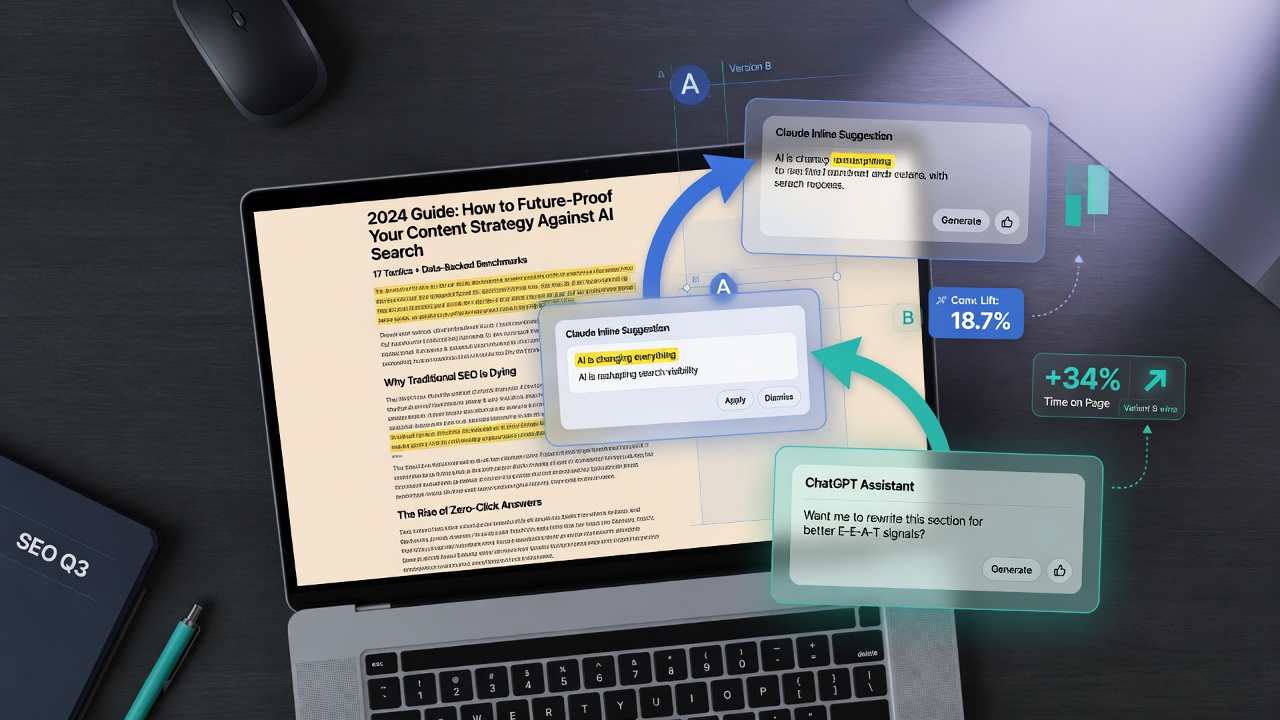
However, as search engines evolve to combat spam, the old playbook of thin, repetitive templated pages is dead. To succeed today, publishers must build advanced pipelines that go beyond simple text generation. This means integrating structured data, ensuring deep variation across pages, and introducing interactive elements—like in-article AI chat assistants—to help readers navigate complex information and drive direct conversions. This guide will walk you through building a modern, penalty-proof programmatic SEO engine that turns automated traffic into a highly monetizable asset.
- 1
Programmatic SEO combined with AI automation allows businesses to achieve massive scale while reducing content production costs by 30% to 70%.
- 2
Modern search engines require programmatic pages to be highly differentiated, with at least 50% unique content to avoid automated spam penalties.
- 3
Integrating interactive in-article AI chat features improves user navigation, dwell time, and direct conversion rates on automated pages.
- 4
A robust publishing workflow relies on structured data pipelines, rigorous automated quality assurance, and smart internal linking.
Beyond Autoblogs: The Hybrid AI Agent + Programmatic Publishing Model
To turn automated traffic into a highly monetizable asset, publishers must move past the era of lazy, templated "autoblogs" and embrace a hybrid model that pairs structured programmatic templates with intelligent AI agents. This approach ensures your content remains deeply varied, engaging, and highly visible across search platforms. By utilizing intelligent workflows, you can scale content production without sacrificing editorial standards.
The Power of Agent-Guided Templates
Traditional programmatic SEO relied entirely on static database fields merged into repetitive HTML templates, which modern search engines easily flag as thin content. A hybrid workflow solves this by using programmatic templates as a structured skeleton while AI agents dynamically generate, enrich, and QA the content. Instead of just pulling raw data points from a CSV, an AI agent reviews the data, synthesizes contextually relevant insights, and writes distinct paragraphs that read like expert editorial content. This ensures every page is unique, authoritative, and safe from search engine penalties.
Dynamic Data and AI Search Visibility
This hybrid model also unlocks powerful interactive capabilities. Because your underlying data is highly structured, it can feed directly into an in-article AI chat assistant, turning static reading experiences into conversational utilities. Furthermore, preparing your site for modern search engines requires a comprehensive approach. A modern programmatic SEO workflow actually includes 10 distinct components, starting from data source ingestion and intent mapping, and stretching all the way to indexation, refresh workflows, and crucially, AI search visibility tracking. By structuring your pages with clean schema and semantic data, you ensure that next-generation AI search engines can easily crawl, understand, and cite your content.
Setting up this sophisticated architecture requires a deliberate, step-by-step approach to keep your content high-quality and penalty-proof. Let's look at the exact pipeline you need to deploy.
Hybrid programmatic SEO — Combining structured data templates with AI agent oversight and interactive chat elements creates high-value, penalty-proof pages optimized for both human readers and modern AI search engines.The 5-Step Content Pipeline for High-Velocity SEO Automation
To transition from basic, repetitive content generation to a high-performing organic search engine, you must establish a structured, data-driven workflow. This is not about spinning generic articles; it is about turning raw data into highly structured, contextually rich web pages. By implementing a systematic five-step pipeline, publishers can transform raw datasets into passage-ready content optimized for both traditional search crawlers and modern AI-driven search engines.
By systematizing this pipeline, you shift your content strategy from manual production to a highly scalable, automated engine. However, publishing hundreds or thousands of pages using automation introduces a major risk: search engine penalties for thin or repetitive content. To ensure long-term viability, you must understand how to inject extreme differentiation into your templates.
Structured Automation — A modern 5-step programmatic pipeline turns raw data into passage-ready content that secures AI search visibility while interactive on-page elements maximize user engagement.Beyond Boilerplate: How to Escape the 'Scaled Content Abuse' Trap
Search engines have grown incredibly sophisticated at detecting mass-produced, boilerplate pages. If your programmatic strategy relies on simply swapping out a city name or a single keyword across thousands of identical landing pages, you are begging for a "scaled content abuse" penalty. Modern search algorithms look for unique value, depth, and genuine variation. When every page on your site reads like a carbon copy of the last, search engines drop those pages from the index entirely, rendering your SEO automation efforts useless.
To build a resilient programmatic engine, successful implementations use AI for specific tasks like content variation rather than total generation. The golden rule for high-velocity publishing is that your content has to differentiate from page to page at least by 50% to stay safe. Achieving this level of variation requires moving beyond basic token replacement. Instead, feed your templates with rich, localized data points, dynamic structured tables, and unique programmatic insights. Use LLMs to rewrite introductory hooks, alter sentence structures, and inject distinct user intents based on the target keyword.
Once you have secured your search rankings with highly differentiated content, the next challenge is keeping those visitors on your page and converting them. This is where embedding interactive AI chat systems directly into your articles transforms passive readers into active users.
The 50% Rule — To avoid scaled content penalties, ensure programmatic pages differ by at least 50% using AI-driven content variation, localized data, and dynamic templates rather than simple keyword swapping.Turning Static Pages Into Interactive Funnels: The Power of In-Article AI Chat
Instead of letting readers skim an article and immediately bounce back to search engines, an embedded AI chat companion invites them to engage deeply with your content. Programmatic pages, by nature, address a wide array of search intents. An in-article chat widget acts as a personalized concierge, allowing readers to extract the exact information they need without digging through thousands of words. This immediate utility dramatically reduces bounce rates and signals strong user engagement to search algorithms.
The contrast between a traditional static article and an interactive, chat-enabled page is stark. Static pages rely on generic call-to-actions that users have learned to ignore. In contrast, an interactive page dynamically adapts to the reader's real-time queries, offering precise navigation and context-aware recommendations.
This interaction directly supports your monetization and SEO strategy. When a reader asks the AI chat for a tool recommendation or a specific solution, the assistant doesn't just answer—it guides. It can serve up hyper-targeted affiliate links, direct users to high-value landing pages, or prompt them to sign up for a newsletter, all within the natural flow of conversation. By aligning the AI's responses with your business goals, you transform informational search traffic into highly qualified leads and direct revenue.
Interactive AI chat — Embedding conversational AI inside programmatic content shifts the user experience from passive consumption to active engagement, driving higher dwell times and unlocking personalized, high-converting monetization pathways.
The Bottom Line: Real-World ROI of Automated SEO Workflows
This shift from static reading to active, chat-driven engagement is not just a user experience upgrade—it directly reshapes a publisher's balance sheet. When you replace manual content creation with a structured, AI-assisted programmatic workflow, the efficiency gains are immediate, moving search marketing from a slow cost center to a highly predictable growth engine.
These metrics highlight the compounding power of the hybrid model. By automating the data pipeline and using AI to handle the heavy lifting of content differentiation, companies using AI-powered programmatic SEO solutions achieve 30-70% cost reductions alongside 3-15% revenue increases. Instead of spending weeks writing template variations manually, publishers can launch thousands of highly optimized, penalty-safe pages in days, freeing up resources to focus on product development and user experience.
The impact on conversion is even more striking when interactive elements, like in-article AI chat, guide the user toward the next step in their journey. In one real-world implementation, a client scaled from 67 to over 2,100 monthly signups—a 3,035% increase—in just 10 months using programmatic SEO. This dramatic growth happens because the landing pages are highly targeted, and the interactive elements capture user intent at the exact moment they are looking for answers.
Ultimately, the true value of programmatic automation lies in its ability to run continuously in the background, scaling your organic footprint while maintaining a flawless user experience. Let's look at how to synthesize these elements into a cohesive, long-term strategy.
Automating with precision drives ROI — Combining structured programmatic frameworks with AI-driven personalization drastically cuts production costs while driving massive conversion gains, turning search traffic into a highly scalable revenue engine.
Key Takeaways
Start building your automated publishing engine today with Flows to turn static search traffic into interactive, high-converting customer journeys.
Frequently Asked Questions
Programmatic SEO is a method of generating large volumes of targeted, high-quality search landing pages using database templates and automation. Instead of writing each page manually, publishers use structured data to create hundreds or thousands of unique pages optimized for specific search queries.
To avoid penalties, you must ensure that your programmatic pages are highly unique. Industry standards suggest that content must differentiate from page to page by at least 50%. Incorporating proprietary data, unique insights, and human editorial oversight prevents pages from being flagged as thin or duplicate content.
A modern workflow typically follows a 5-step pipeline: Data Collection, Template Architecture, Content Generation, Quality Assurance, and CMS Publishing. This structured approach ensures that raw data is efficiently transformed into rich, search-optimized pages.
Adding an interactive AI chat inside your programmatic articles helps users quickly find specific information, navigate complex resources, and take action. This increases dwell time, improves user engagement signals, and directly boosts monetization by guiding readers down the conversion funnel.