AI SEO Strategies for Higher Organic Traffic

Search engine optimization isn't just evolving; it is being completely rebuilt from the ground up. With AI Overviews now appearing in up to 55% of search results, publishers are facing a new reality where traditional keyword stuffing is obsolete and generative search engines dictate traffic flows. But instead of a threat, this shift represents the single greatest scaling opportunity in the history of the web for those who know how to automate correctly.
The proof is in the performance. By leveraging programmatic AI frameworks, brands are achieving results that were once impossible with manual teams. For instance, one AI-driven strategy successfully generated 13,000 pages to boost site traffic by 466% in only 60 days. In another instance, Northeast Medical Group secured a staggering 893% year-over-year increase in organic traffic, proving that highly structured, authoritative content can dominate both traditional indexes and modern AI citations.
To capture this level of growth, you need a playbook that moves past basic prompting and into true automation. In this guide, we will break down the exact AI SEO strategies required to build high-authority entity hubs, optimize for generative engines, and scale your organic pipeline without sacrificing quality. Let's start by looking at how AI automation is fundamentally changing the mechanics of modern search.
- 1
AI Overviews now appear in up to 55% of searches, making structured content and AI-friendly optimization essential for maintaining organic visibility.
- 2
Successful AI SEO campaigns show massive scale is possible, with case studies demonstrating up to 466% traffic growth in 60 days through automated page generation.
- 3
Generative Engine Optimization (GEO) requires structuring content logically with clear headings so AI systems can easily understand, extract, and cite your pages.
- 4
Modern organic growth relies on combining traditional technical SEO foundations with automated workflows that build high-authority topical hubs.
How AI Automation Rebuilds Core SEO From the Ground Up

To understand this shift, we have to look past the hype and focus on the day-to-day mechanics of how search engines evaluate content. Traditional search engine optimization has always been a game of manual endurance—assembling keyword lists, analyzing competitor backlinks, and tweaking copy line by line. AI SEO automation completely upends this paradigm by shifting the focus from manual execution to strategic orchestration.
Predictive Research and High-Intent Discovery
The foundation of any organic strategy is knowing what your audience is searching for. Today, AI tools scan vast data sets to surface high-intent keywords and emerging trends faster than manual methods ever could. Instead of reacting to historical search volume data that might already be outdated, these systems map semantic relationships and predict where search intent is heading next. This allows brands to capture early-stage demand before competitors even realize a trend is forming.
Real-Time Semantic Optimization
Writing content is only half the battle; ensuring search engines recognize its authority is the other. Modern optimization engines score content for readability, entity coverage, and semantic depth in real time. They analyze the top-ranking results for a given query to identify the specific entities and subtopics that search algorithms expect to see. By aligning your content with these semantic frameworks, you can build comprehensive resources that satisfy both human readers and search crawlers.
Furthermore, the optimization doesn't stop once a page goes live. Continuous competitor tracking and dynamic personalization improve on-page relevance and user signals. By analyzing how users interact with your content and adjusting layout or messaging dynamically, AI ensures your pages remain highly relevant over time. As highlighted by Salesforce research, AI enhances SEO by automating keyword research, optimizing content creation, predicting search trends, analyzing competitor strategies, and personalizing user experiences to boost rankings.
Automated workflows — AI transforms SEO from a slow, manual process into a real-time optimization loop, allowing brands to predict search trends, structure content with deep semantic relevance, and dynamically adapt to competitor movements.
But optimizing for traditional search engines is only the first step. As search platforms evolve, we must also prepare our content for a brand-new class of digital gatekeepers: generative AI engines.
Cracking the GEO Code: How to Optimize for Generative Engine Citations
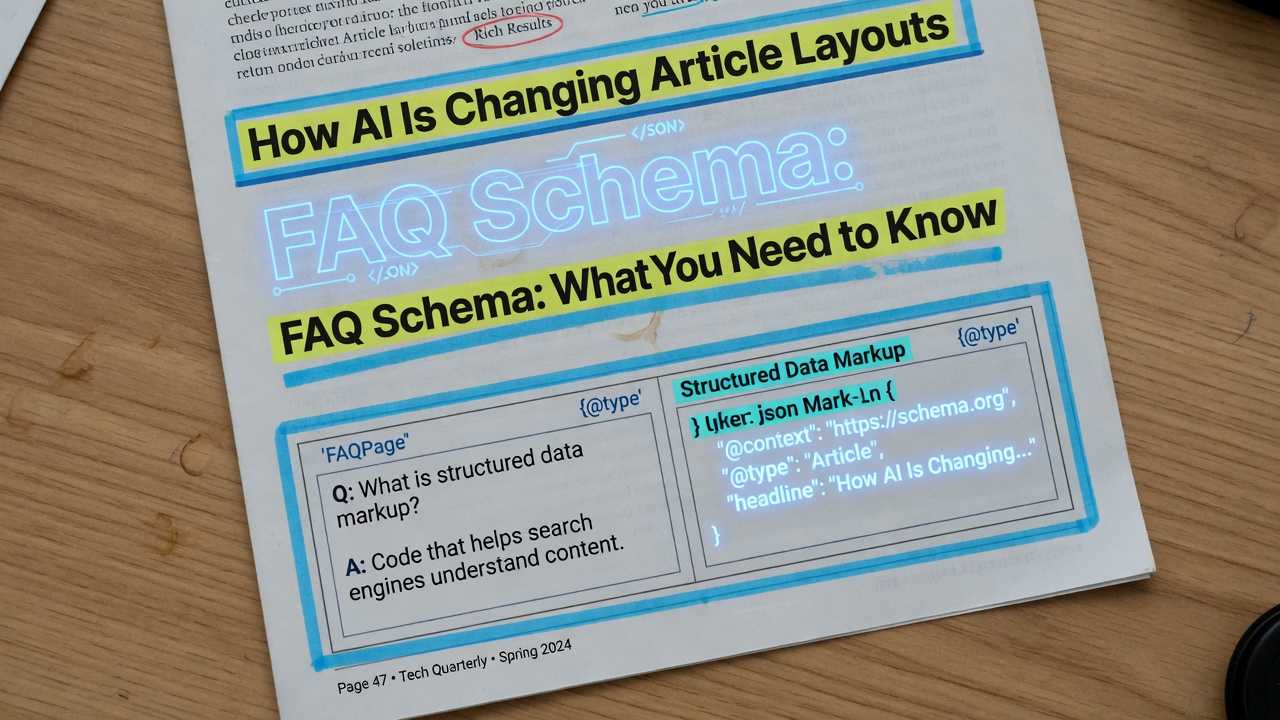
These conversational interfaces don't just index pages; they synthesize answers. To stay visible in an era dominated by AI Overviews and LLM-driven search, brands must pivot toward Generative Engine Optimization (GEO).
GEO focuses on designing content so it can be understood, extracted, and cited by AI systems [e2]. Because these engines rely on pattern matching and semantic relationships, they have a strong preference for structured content with logical headings and paragraphs [e2]. If an LLM cannot easily parse your page's hierarchy, it won't cite you as a source.
By mapping your content to entities rather than just keyword strings, you signal deep topical authority. This structure is what allows AI engines to confidently pull your data into their conversational answers, turning search queries into direct citations for your brand. While these architectural adjustments might sound abstract on paper, the tangible rewards of automating this level of precision are already reshaping the digital landscape.
Format for machines to win humans — Structuring content with clear headings, entity-based clusters, and deep authority signals is the only way to secure valuable citations in AI-driven search results.
From Scale to Authority: Real-World Wins of AI SEO Automation

In practice, this precision isn't just about pleasing algorithms; it translates directly to exponential growth. When organizations move away from manual keyword mapping and embrace automated pipelines, they unlock the ability to target thousands of high-intent search queries simultaneously without sacrificing quality.
Scaling Without Sacrificing Structure
By pairing structured JSON schemas with fast, efficient models like Gemini Flash, businesses can deploy programmatic SEO at a scale previously unimaginable. One strategy leveraged this exact setup to generate 13,000 highly structured pages, which skyrocketed site traffic by 466% in just 60 days. This shows that when automation is paired with clean data architecture, search engines reward the sheer velocity and relevance of the content.
Dominating the AI Overview Space
On the other hand, AI-driven insights also supercharge single-page authority. Consider the case of Northeast Medical Group, which achieved an incredible 893% YoY increase in organic traffic. This massive growth was largely driven by a single, high-authority article, with AI Overviews alone driving 8.3K visits per month to their platform. This demonstrates that AI SEO isn't just a volume game; it's about identifying high-value search intent and dominating those spaces.
Whether you are publishing thousands of programmatic pages or optimizing a single cornerstone piece, the underlying rule remains the same: success requires depth, people-first insights, and flawless technical implementation. Tools like Flows make this balancing act seamless by continually refining your technical foundations, keeping your crawl paths clear, and embedding interactive elements like on-page AI chat to convert readers directly.
Quality meets scale — Successful AI SEO strategies combine programmatic volume with high-authority depth to capture massive traffic across both traditional search and AI Overviews.
Thriving in the Age of AI Overviews: Turning Search Summaries Into Clicks
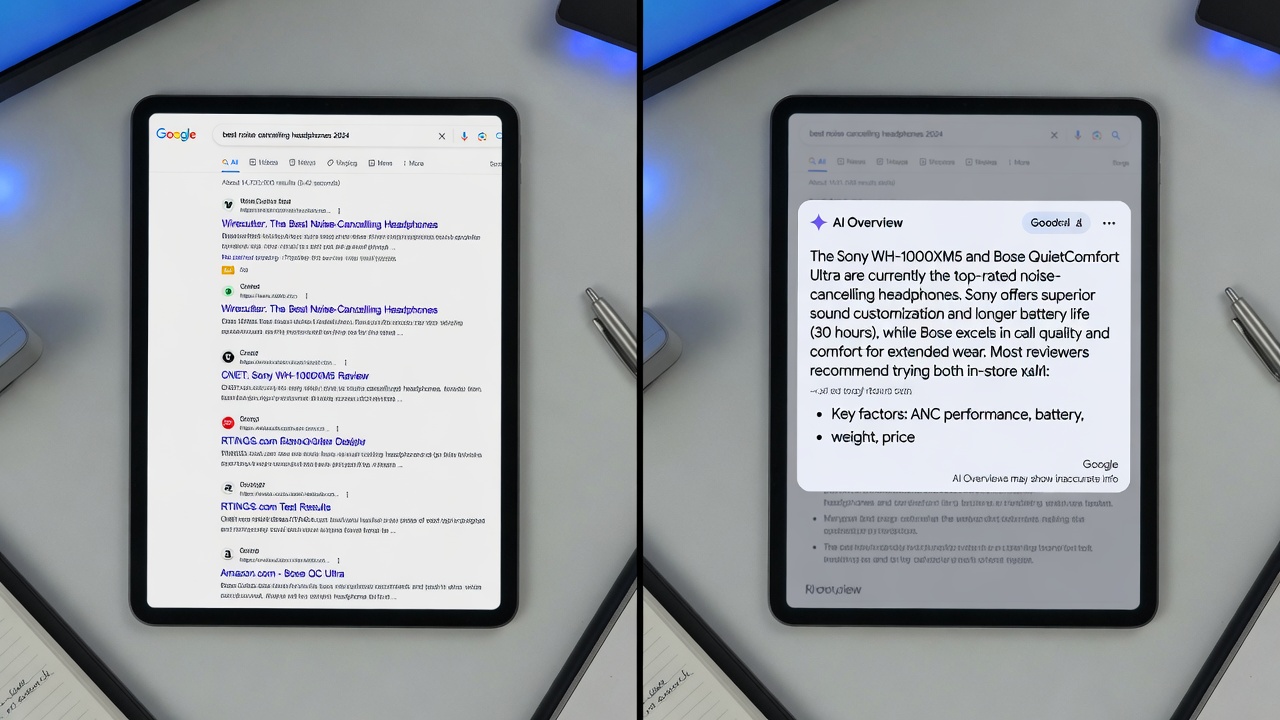
interactive AI chat assistants directly into your articles to help users navigate and digest complex topics. This interactive approach is especially critical now that the search landscape itself is shifting beneath our feet.
With AI Overviews now appearing in up to 55% of searches, publishers are facing a stark new reality where some sites see between 15% and 61% fewer clicks due to these summaries. When search engines answer queries directly on the results page, standard informational content gets bypassed. To survive and thrive, your AI SEO strategy must evolve from simply answering basic questions to providing deep, irreplaceable value.
Strategies for Earning Clicks Beyond the Summary
To capture traffic in this new search environment, your content must focus on three core pillars:
- Proprietary Data and Original Research: AI engines can easily summarize public facts, but they cannot replicate original surveys, proprietary experiments, or unique company data.
- Highly Actionable Insights: While an AI overview can explain 'what' a concept is, your content should focus heavily on 'how' to execute it, complete with real-world nuances.
- Structured, Direct Answers: Provide clear, concise definitions near the top of your pages to make it easy for search bots to cite your brand as the source within the AI overview itself.
The goal is to strike a perfect balance. You must design concise, highly structured sections that feed the AI engines exactly what they need for citations, while simultaneously building deep, people-first content that convinces readers to click through for the full story. By combining automated programmatic efficiency with irreplaceable human expertise, you ensure your site remains a destination, not just a data source.
Adapt to AI Overviews — Counter the 15-61% click drop from search summaries by embedding proprietary data, structured answers for citations, and interactive elements that compel readers to click through.Designing Your Automated Engine: How to Build an End-to-End AI SEO Pipeline

To turn these principles into sustainable organic growth, you need a cohesive pipeline that connects every stage of the SEO lifecycle. An end-to-end AI SEO workflow doesn't rely on isolated tools; it integrates keyword discovery, programmatic content generation, and schema automation into a single, repeatable loop. By piping real-time search intent data directly into LLMs, you can generate structured, citation-ready drafts that are instantly wrapped in rich schema markup. This ensures that the moment a page is published, it is immediately readable by both traditional search crawlers and generative engines.
Keeping Readers Engaged with On-Page AI Assistants
But publishing high-quality, structured content is only half the battle. Once visitors arrive, you must keep them engaged. Modern AI SEO automation platforms, like Flows, allow you to embed an interactive AI chat directly inside your articles. This transforms static blog posts into dynamic, conversational experiences. Instead of leaving your site to search for clarification elsewhere, readers can ask the embedded assistant to explain complex concepts, navigate to related resources, or guide them toward high-intent conversion points. This dramatically boosts time-on-page, deepens user engagement, and unlocks new, context-aware monetization opportunities right within your content.
The Continuous Optimization Loop
To maintain this momentum, your workflow must include a strict feedback loop. By tracking rankings, organic traffic, and on-page conversions on a weekly basis, you can identify which content formats and prompt structures are yielding the highest ROI. If specific types of structured headings or FAQ blocks are consistently earning AI engine citations, you can instantly update your generation prompts to replicate that success across your entire catalog, ensuring your automated engine grows smarter and more profitable over time.
Build integrated pipelines — Unifying keyword discovery, automated generation, and interactive on-page AI chat creates an evergreen SEO engine that captures both search engine citations and high-value user conversions.
Key Takeaways
Start automating your content creation and engaging readers directly on the page by launching your first AI SEO pipeline with Flows today.
Frequently Asked Questions
AI enhances SEO by automating keyword research, optimizing content creation, predicting search trends, analyzing competitor strategies, and personalizing user experiences to boost rankings.
GEO is the practice of designing content so it can be easily understood, extracted, and cited by AI discovery engines. It relies heavily on structured content with logical headings and clear paragraphs.
Yes, highly structured AI-generated content can drive massive traffic. Real-world applications have shown that programmatic content strategies can generate thousands of optimized pages, boosting organic traffic by 466% in just two months.
AI Overviews now appear in up to 55% of searches, which can reduce traditional clicks for some sites. However, optimizing your content to be cited as a source inside these summaries can drive highly targeted, high-intent traffic directly to your site.