Internal Linking Rules for Programmatic SEO Pages

If you generate thousands of pages from a template, internal linking is not a plugin you run after publish. It is template logic: a parent hub, a handful of true siblings, and a few contextual body links whose destinations actually have unique data. Treat it as an after-the-fact crawl of your own site and you get related-blocks that look impressive on a graph and do almost nothing for rankings, citations, or crawl.
Google’s crawl-budget guidance is aimed at large or fast-changing inventories—medium sites with 10,000+ unique pages that change daily, and large sites with 1 million+ pages that change about weekly—not a small blog. Duplicate and unwanted URL inventory is the crawl-demand factor you control most; orphans still burn crawl even when they sit in a sitemap. Every indexable programmatic URL needs at least one in-template inbound path. Hierarchy is the crawl spine on large sets; hub-and-spoke serves commercial money hubs; contextual body links are what AI systems tend to cite. Mesh related-blocks win almost nothing.
The rest of this article encodes those rules so an internal linking tool can scale without turning entity-swap pages into doorway mesh: cap and vary links, keep click depth shallow, put the same crawlable anchors on mobile HTML, add breadcrumbs, and measure indexation, orphans, and inbound-anchor diversity—not raw URL count.
- Encode parent, sibling, and contextual links in the template instead of a post-publish plugin pass.
- Use hierarchy as the crawl spine, hub-and-spoke for money hubs, and contextual body links for AI citations—avoid mesh related-blocks.
- Every indexable pSEO URL needs an in-template inbound path; orphans waste crawl even if they are in the sitemap.
- Cap links (parent plus a few siblings), mix descriptive anchors, and do not auto-link thin or near-duplicate variations.
- Human-review money and cross-cluster links; automate taxonomy only when the destination has unique data.
Bake Parent, Sibling, and Breadcrumb Links Into the Template
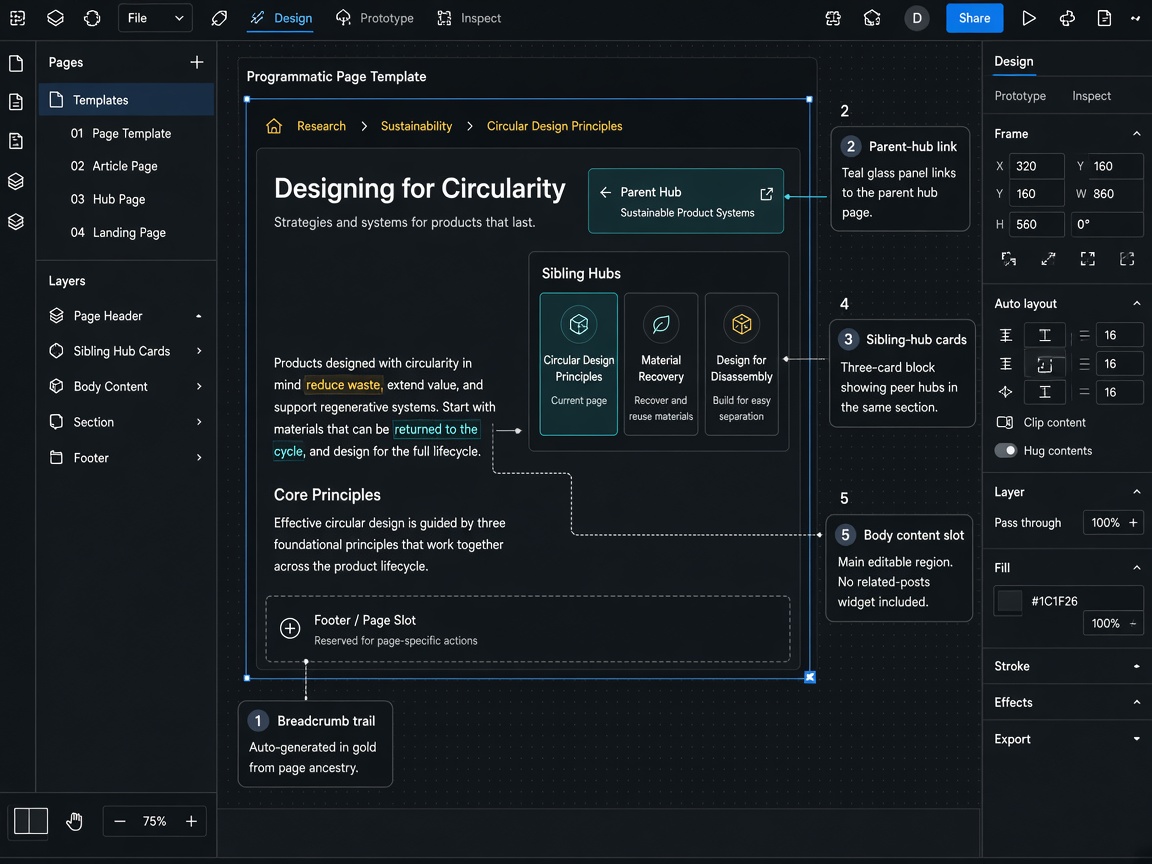
The generator should write a parent hub field, a sibling set drawn from unique data, and optional in-body contextual links as real <a href> markup. Plugins that spray related modules after the fact cannot give Google a stable crawl spine, and they tend to stamp the same destinations on every URL.
Each generated page should link up to its parent hub and a small set of related siblings that actually differ in content. One 2026 playbook is explicit: link each programmatic page to a parent hub and 3 to 5 relevant siblings, not a rotating block of identical modules. Sitemaps can list the same addresses, but they do not create that crawlable parent-or-sibling path on their own.
Keep money and hub URLs on a shallow click path, and emit BreadcrumbList structured data on every generated page so the hierarchy is machine-readable as well as clickable. Because Google indexes the mobile version, the same crawlable links must appear in mobile HTML as on desktop—Google has told large sites to provide the same set of links on both. That is how the template encodes hierarchy instead of hoping a post-publish mesh will invent it.
Template spine — Parent, sibling, and breadcrumb links belong in the generator as crawlable fields. Sitemaps and identical related-blocks do not substitute for a template spine Googlebot can follow on mobile.
Hierarchy Is the Crawl Spine—Not a Related-Block Mesh

Once those parent, sibling, and breadcrumb fields sit in the template, the next decision is which graph they form. Across 300 audited sites, mesh linking underperformed three distinct jobs: hierarchy as the crawl spine on large sets (category → subcategory → entity), hub-and-spoke on commercial money hubs, and contextual body links for people and AI citations. A related-block mesh can look dense on a graph and still fail those jobs.
Avoid “related” modules that interconnect every template instance to the same neighbors. That mesh repeats the same destinations and exact-match anchors, which is a doorway pattern when the copy is mostly entity-swapped. Keep the taxonomy shallow—three levels is ideal, and five or more dilutes authority and crawl. Tier inbound links so category hubs receive far more than individual item pages: main category URLs might each get 50–100+ internal links; item pages should not.
Do not use one pattern for every URL type. Encode the pattern in the template by page role: hierarchical parent/child and a few unique siblings on entity templates, hub-and-spoke on money hubs, and varied contextual body links where you want citations.
Role, not mesh — Let page role pick the graph—hierarchy for scale, hub-and-spoke for money, contextual for citations—never a mesh of identical related blocks.
Protect crawl budget from orphans, facets, and duplicate inventory

Once that spine is in the template, the next constraint is what Google actually spends time fetching. Programmatic inventories often cross the size and change-rate lines in Google’s crawl-budget guidance quickly—especially when filters, sorts, and parameter URLs multiply the same entity.
Faceted and parameter links are the usual leak: auto-linking every filter combination turns the crawl spine into a combinatorial mesh. Do not put those destinations in parent, sibling, or breadcrumb slots. Noindex them or omit them from the template so they never become in-HTML paths. Duplicate and unwanted URLs in those slots waste crawling time you could spend on unique inventory.
Googlebot demand also varies with page quality and uniqueness, not only size and update frequency. Thin clones get crawled less even when they are linked. Orphans are worse: they still consume crawl and produce little traffic even if they sit in a sitemap. Industry writeups put the typical waste at 26% of crawl budget. Hub, breadcrumb, or sibling links in the template keep the crawler on inventory that belongs in the hierarchy instead of discovering pages with no inbound path.
Crawl inventory — Keep template links on unique, hierarchical URLs; leave facets, sorts, and near-duplicates out of crawlable slots so inventory does not eat budget without earning traffic.
Cap Sibling Blocks, Mix Anchors, Skip Thin Auto-Links
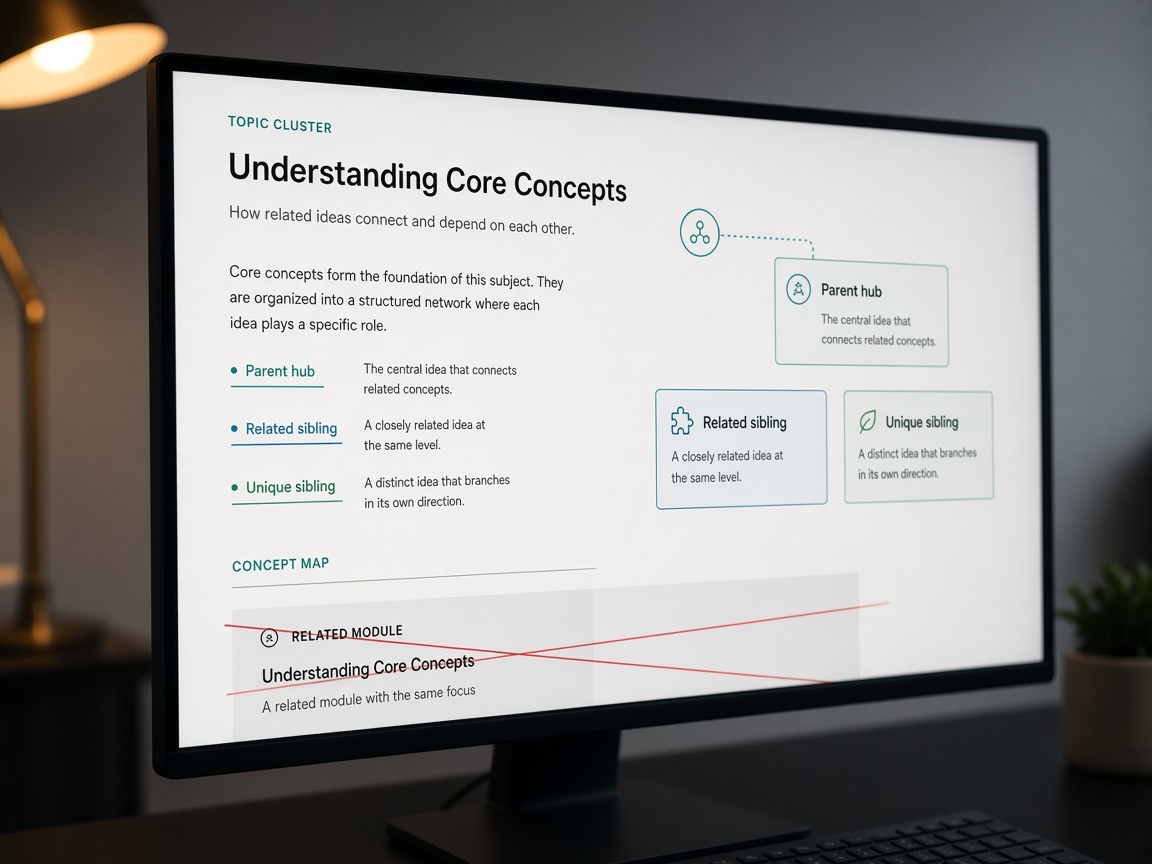
Once facet and duplicate URLs are off the crawl path, the remaining risk is over-linking the pages you do want indexed. Stamp the same destinations onto every template and you have not built a cluster—you have built a thin, automated pattern. Cap the block at the parent hub plus a handful of related siblings, chosen because they share a real attribute, not because they happen to sit in the same generation job.
Keep contextual body links sparse as well: about two to four per 1,000 words so the generated copy does not look stuffed. Google wants link text that is descriptive, reasonably concise, and relevant to both the page it sits on and the page it points to; paying more attention to those internal anchors helps people and Google make sense of the site.
Identical modules plus swapped entities fail the quality bar even if every href is crawlable. Automate only when the destination has unique data and the sentence around the link could stand on its own.
Cap and vary — Parent plus a few unique siblings, mixed descriptive anchors, and no identical related modules—that is a cluster. Repeating the same URLs and one exact-match string is a thin pattern.
Automate Taxonomy Links, Gate Money Pages, Measure Indexation

That same doorway risk is why automation should stop at taxonomy. Parent, child, and sibling blocks belong in the template only when the destination actually holds unique data—a distinct city, SKU, or dataset—not a filter permutation or a near-duplicate of the page already rendering. If the URL is just another facet of the same inventory, leave it unlinked.
Money pages, pillars, and anything that crosses clusters stay human-gated. An internal linking tool that meshes commercial URLs will flatten the hierarchy you just encoded: identical modules, identical anchors, crawl diluted across lookalikes. Review those edges by hand so the template never decides that every product “relates” to every other product.
When orphans and mesh blocks come out, indexation moves. One reported pSEO linking rebuild lifted indexation from 62% of pages to 91% and cut time-to-index. A large-site case reached 70% Googlebot crawl coverage after link remediation. Measure that coverage—not raw URL count.
Run the operating dashboard on four signals: indexation rate, click depth to important URLs, orphan count, and inbound-anchor diversity on hubs. Those numbers tell you whether the template still carries a crawlable hierarchy or has drifted back into a mesh.
Operate the template — Automate unique taxonomy edges only; human-review commercial and cross-cluster links; judge success by indexation, crawl coverage, orphans, and hub-anchor diversity—not URL volume.
Key Takeaways
Audit one programmatic template for parent, sibling, and breadcrumb fields, then ship a hierarchy-first link pattern and watch indexation and crawl coverage on the dashboard.
Frequently Asked Questions
You Might Also Like
- Automation Internal Linking Automation: How to Scale Links Without Manual Work
- Automation Programmatic SEO: How to Scale Pages Without Thin Content
- Automation Internal Linking Tool: What to Automate vs What to Review
- Strategy Topic Cluster Content Strategy: Pillars, Spokes, and Internal Links
- Guides Programmatic SEO Tools: What You Actually Need to Launch