Internal Linking Automation Tools for AI SEO Articles
Autoblogged and AI-generated SEO content only compounds when every page passes equity to related pages and cornerstone hubs instead of sitting in isolation. After the March 2026 updates discounted internal link signals from low-quality programmatic pages, manual linking stopped being viable at volume. Teams that still rely on spreadsheets or developer tickets hit the same wall: 60% of SEOs report internal links as a top priority, but 62% struggle to implement them without the dev team.
Internal linking automation tools close that gap. They use generative AI and NLP to analyze live content, suggest natural anchors, and publish deep links automatically—baking the structure into templates and datasets so every generated page connects to its cluster and to higher-authority content. When those same tools surface contextual links inside an on-page AI chat, the links also become navigation and monetization paths rather than pure ranking signals.
This article walks through the post-2026 requirements, the NLP engines that power modern tools, how to embed automation inside autoblogged templates, the chat-layer opportunity, and the measurement framework that proves equity is actually moving. The goal is a repeatable system you can run without constant engineering overhead.
Why Post-2026 Updates Broke Manual Internal Linking at Scale
Those requirements start with a hard reality: after the March 2026 core updates, search engines began discounting internal link signals that originated from low-quality programmatic pages. Pages that lacked genuine quality signals—thin templates, repetitive AI copy, thin entity coverage—stopped passing meaningful equity. What once looked like a clever scaled architecture suddenly looked like noise. Crawl paths stalled, anchor text lost weight, and entire clusters of autoblogged content stopped compounding rankings the way they had before.
The operational gap made the problem worse. Most teams already knew internal linking mattered; they simply could not execute it fast enough once volume exploded.
That mismatch is fatal for AI SEO and content automation workflows. When thousands of pages are generated from templates and datasets, every new URL needs contextual links the moment it goes live—otherwise equity pools in a few hub pages while the long tail stays orphaned. Manual audits and ticket-based link requests cannot keep pace. Developers become the bottleneck, anchor text drifts into unnatural patterns, and the very pages the 2026 updates scrutinized most carefully never receive the internal reinforcement they need to rebuild quality signals.
The practical response is no longer “add more internal links later.” It is to treat linking as a first-class output of the content system itself—NLP-driven analysis that understands topical relationships, deploys relevant anchors automatically, and keeps the graph healthy without constant engineering overhead. Only then does link equity actually move across an autoblogged library instead of dying on low-quality nodes.
Post-2026 reality — Low-quality programmatic pages lost internal-link equity, and the 60/62 priority-versus-execution gap means manual processes cannot fix it at the scale AI SEO now demands.
How NLP Turns Content Analysis into Automatic Link Publishing
That shift from manual patches to system-level linking is what AI internal linking tools now operationalize. They treat every new article as both a content asset and a graph node, running natural language processing across the full library the moment a piece is ready to publish. The NLP layer extracts entities, topical clusters, and semantic proximity so the system can identify which existing pages genuinely belong in the same conversation—without a human scanning a spreadsheet or waiting on a ticket queue.
Once those relationships are scored, the same pipeline moves straight into creation and deployment. Generative models draft context-aware anchor text that reads naturally inside the sentence rather than feeling bolted on. The tool then inserts the links at the optimal density and position, updates the internal graph, and pushes the finished page live. In short, AI internal linking tools use generative AI and NLP to analyze, create, and publish deep links automatically—turning what used to be a post-publication chore into a first-class step of the publishing workflow itself.
Cutting the developer bottleneck
Because the entire sequence lives inside the content system, marketing and SEO teams no longer need engineering sprints to wire up new templates or bulk-update anchors. Configuration happens through rules and topical thresholds rather than custom code. The result is consistent linking across thousands of AI-generated pages while the crawl paths and equity flows stay healthy—exactly the scale required once programmatic libraries outgrow manual maintenance.
NLP-to-publish pipeline — Modern internal linking tools analyze topical relationships with NLP, generate natural anchors, and auto-publish deep links in one continuous flow, removing the need for ongoing developer involvement.Baking Link Rules Straight into Autoblogged Templates
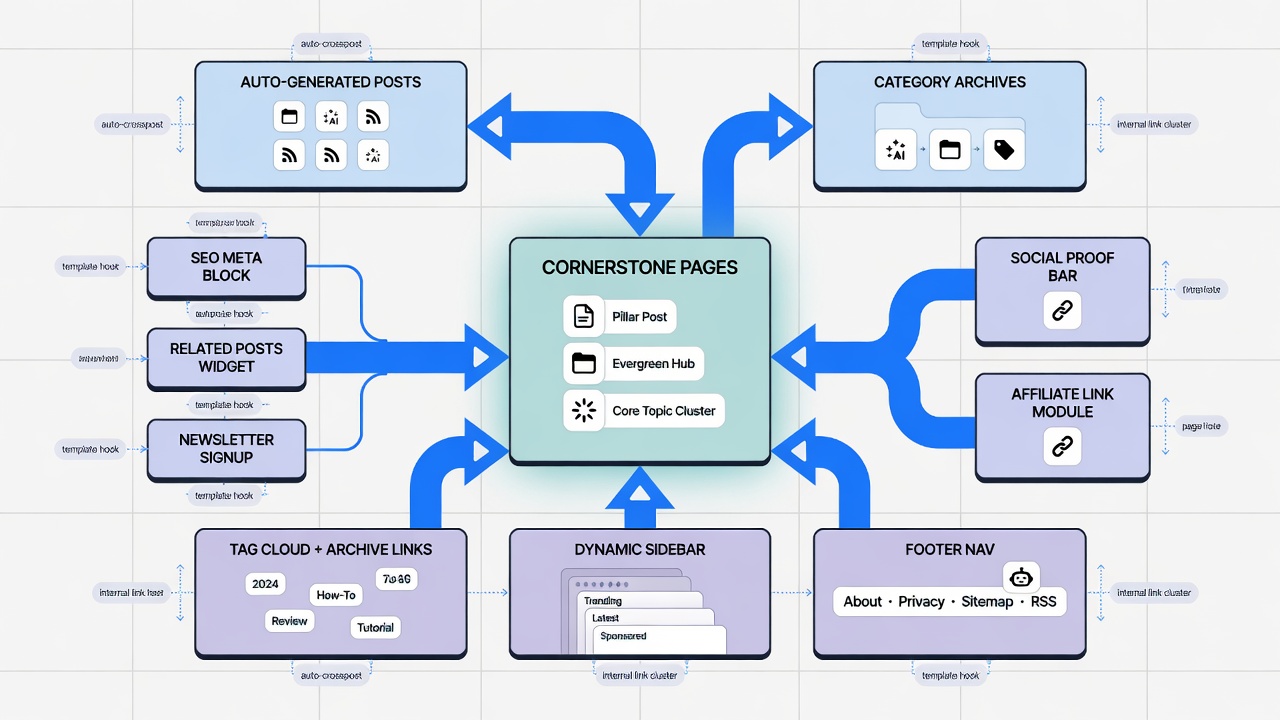
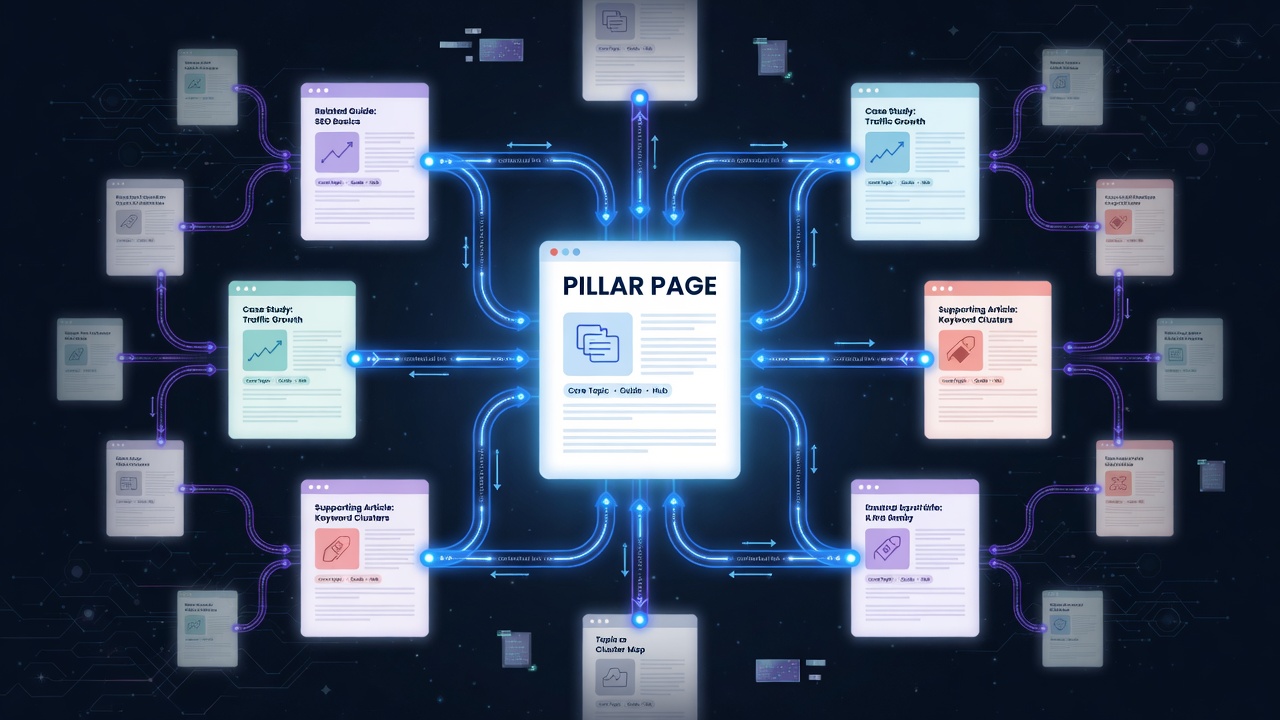
That scale only holds when the linking logic lives inside the templates themselves—not as a separate cleanup job after pages go live. Internal linking is where programmatic site structure either compounds or collapses, which is why the rules must be baked into the template and the underlying datasets from the start. Once those rules sit in the generation layer, every new AI-written page inherits the same equity paths, topical clusters, and crawl signals without anyone touching individual URLs.
The practical goal is simple: every generated page should connect to related pages in the same set and to cornerstone content elsewhere on the site. When the template enforces that connection, readers never dead-end on thin programmatic leaves, and search engines keep discovering deeper inventory through healthy internal paths.
How to embed the rules so they fire on every publish
When these steps sit inside the autoblogging workflow, link equity stops being an afterthought and becomes a structural property of every page that ships. Crawl paths stay intact even as the library grows into the thousands, and readers always have a clear next step toward deeper or higher-value content.
Template-baked linking — embed NLP-driven link rules and minimum connection thresholds directly in programmatic templates so every generated page automatically reaches related and cornerstone content, turning site structure into a compounding asset instead of a maintenance burden.
How Embedded AI Chat Amplifies Automated Internal Links
That structural clarity opens the door to something more interactive. Once links are automatically placed and validated at publish time, the same NLP map that chose them can feed an AI chat agent sitting right on the page. The chat does not invent destinations; it draws from the live internal link graph. A reader asking for a deeper explanation, a related comparison, or the next step in a journey receives answers that include the exact anchors the automation already deployed. Click-throughs stay on-site, link equity keeps circulating, and the conversation feels like a natural extension of the article rather than a bolted-on widget.
Wiring the link graph straight into chat context
Placement is straightforward inside modern autoblogging stacks. The same template that injects body links also reserves a chat container—often sticky or inline after the first major section—and passes the page’s cluster ID, cornerstone targets, and monetization paths as context. When the reader engages, the agent already knows which related articles, tools, or offers sit one click away. No separate knowledge base is required; the site’s own linked content becomes the retrieval source. Generative responses stay grounded because every suggestion the chat surfaces is already a validated internal link the automation layer has published.
This connection drives engagement because the chat resolves friction in real time. Confused about a technical term? The agent points to the glossary or explainer page the linker already surfaced. Ready to act? It surfaces the conversion or product page that the template rules marked as high-value for that cluster. On autoblogged libraries that stretch into thousands of pages, manual chat scripting is impossible; tying the agent to the automated link layer keeps every conversation accurate and commercially aligned without constant human oversight. Readers move from passive scanning to guided sessions, dwell time rises, and the paths that carry link equity also become the paths that carry revenue intent.
The result is a closed loop: NLP builds the links, the links train the chat, and the chat turns ordinary pageviews into interactive funnels that guide readers toward deeper content and monetization events. Link automation and AI chat stop being separate features and become a single system for both SEO structure and on-page conversion.
Link-to-chat loop — Feed the same automated internal link graph into an embedded AI chat agent so every conversation draws live, validated destinations for navigation and monetization, turning autoblogged pages into guided conversion paths at scale.Measuring Link Equity Flow and Monetization Lift
Once that single system is live, the next discipline is measurement—otherwise you cannot prove the closed loop is actually moving equity or revenue. Tracking starts the moment automated links publish: you need visibility into how link equity redistributes across the library and whether those paths convert into the monetization events the chat is trained to surface.
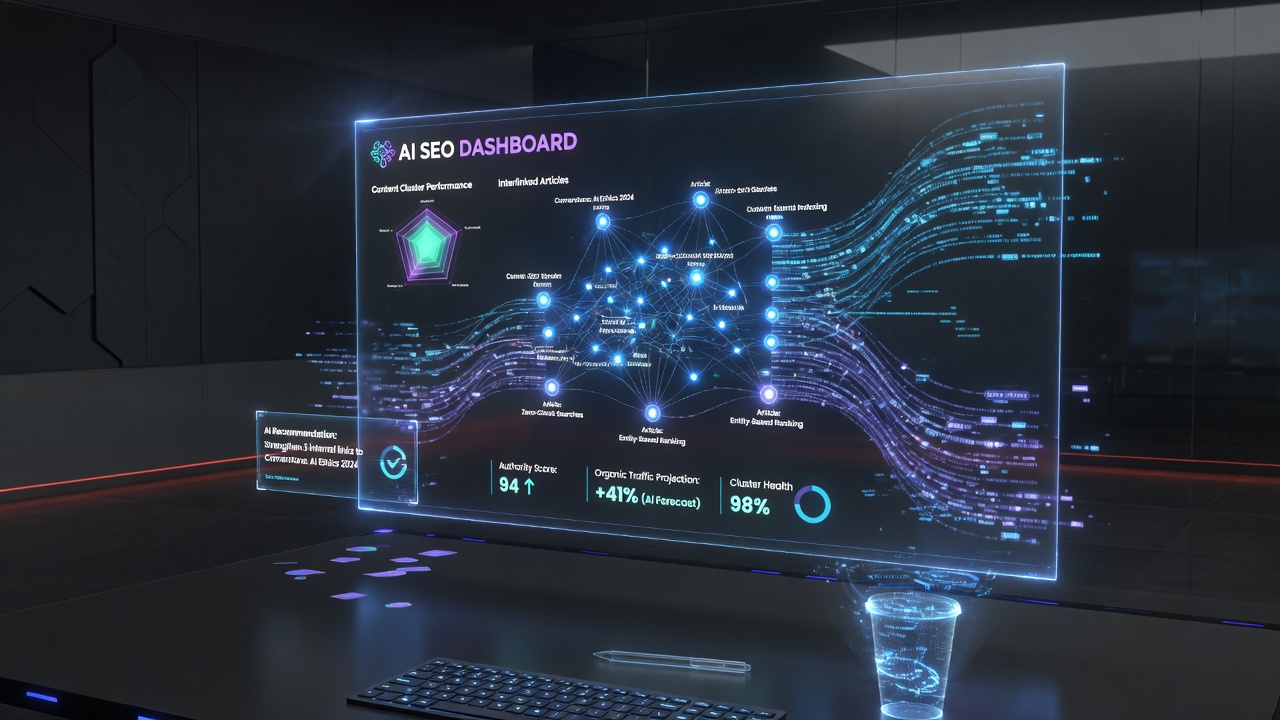
Post-automation equity tracking focuses on three signals that do not require developer tickets. First, crawl and index coverage of newly linked deep pages—confirm the bots are following the fresh internal paths. Second, internal PageRank or equity-flow estimates between cornerstone hubs and the programmatic clusters they now feed. Third, click-through and session depth on the auto-inserted anchors themselves, so you can see whether readers (and the embedded chat) are actually using the graph. Together these show whether equity is pooling usefully or still dying on orphan pages.
From equity maps to monetization KPIs
Equity alone is incomplete. Tie every major link cluster to the monetization KPIs the chat is already guiding toward—affiliate clicks, lead-form starts, product-page views, or subscription prompts. Attribute assisted conversions back to the internal paths that delivered the reader, then compare pre- and post-automation cohorts on the same templates. When the chat recommends a linked resource and the reader converts, that event closes the measurement loop and tells you which relationship rules deserve higher thresholds in the next template iteration.
A practical cadence keeps the data actionable without turning into another manual project:
Running this cycle turns internal linking automation from a set-and-forget feature into a measurable growth system. You continuously see where equity is traveling, which chat-assisted paths produce revenue, and where the next round of NLP rules should tighten or expand.
Measure the closed loop — track equity redistribution through crawl, flow, and click signals, then attribute monetization KPIs back to the automated paths and chat recommendations so every template iteration is guided by real performance.
Key Takeaways
Embed NLP link rules and AI-chat hooks into your autoblog templates today so every new article ships already distributing equity, guiding readers, and driving monetization.
Frequently Asked Questions
The updates discounted internal link signals originating from pages that themselves lacked quality signals, so thin or purely programmatic pages could no longer reliably pass equity. Linking structure now has to be paired with stronger on-page quality.
They leverage generative AI and NLP to analyze existing content, identify relevant targets, generate natural anchor text, and publish deep links automatically—removing the need for manual audits or developer tickets at scale.
Internal linking must be baked into the template and underlying datasets so every generated page automatically connects to related pages in the same set and to cornerstone content elsewhere on the site.
Yes. When the same relevance engine that places article links also powers contextual suggestions inside an AI chat widget, readers get guided navigation while the site continues to distribute equity and surface monetization paths.
Even though 60% of SEOs rank internal links as a top priority, 62% struggle to implement them without involving the development team—making no-code or low-code automation essential for consistent execution.