Best Practices for AI-Driven Internal Linking
The mechanics of search have shifted from simple keyword matching to deep semantic understanding. As AI-driven search engines and answer engines increasingly rely on clear topical relationships, internal linking plays an even bigger role in establishing authority and boosting discoverability. For modern websites scaling their content production, managing these connections manually is no longer viable. Implementing an automated internal linking tool has become essential to sustain organic growth, but automation without strategy risks diluting search authority.
Using strategic internal linking can boost rankings for target pages by 10-30% in competitive SERPs, based on 2025 case studies. These internal links signal hierarchy, context, and clusters, which increases the chances of AI snippet inclusion and strengthens topical authority. AI-assisted tools can suggest links and draft anchor text, but require careful oversight to align with content intent and E-E-A-T. By blending automated precision with human editorial standards, publishers can build a resilient, crawlable site architecture that feeds both traditional search crawlers and modern generative engines.
- 1
AI-driven search engines rely heavily on internal link structures to map complex topical relationships and context.
- 2
Strategic internal linking can boost rankings for competitive target pages by 10% to 30%.
- 3
Automated internal linking tools scale operations but require strict human oversight to maintain E-E-A-T standards.
- 4
Clear hierarchical link structures increase a website's chances of being featured in AI-generated search snippets.
Why Semantic Link Structures Dictate Search Visibility in the AI Era
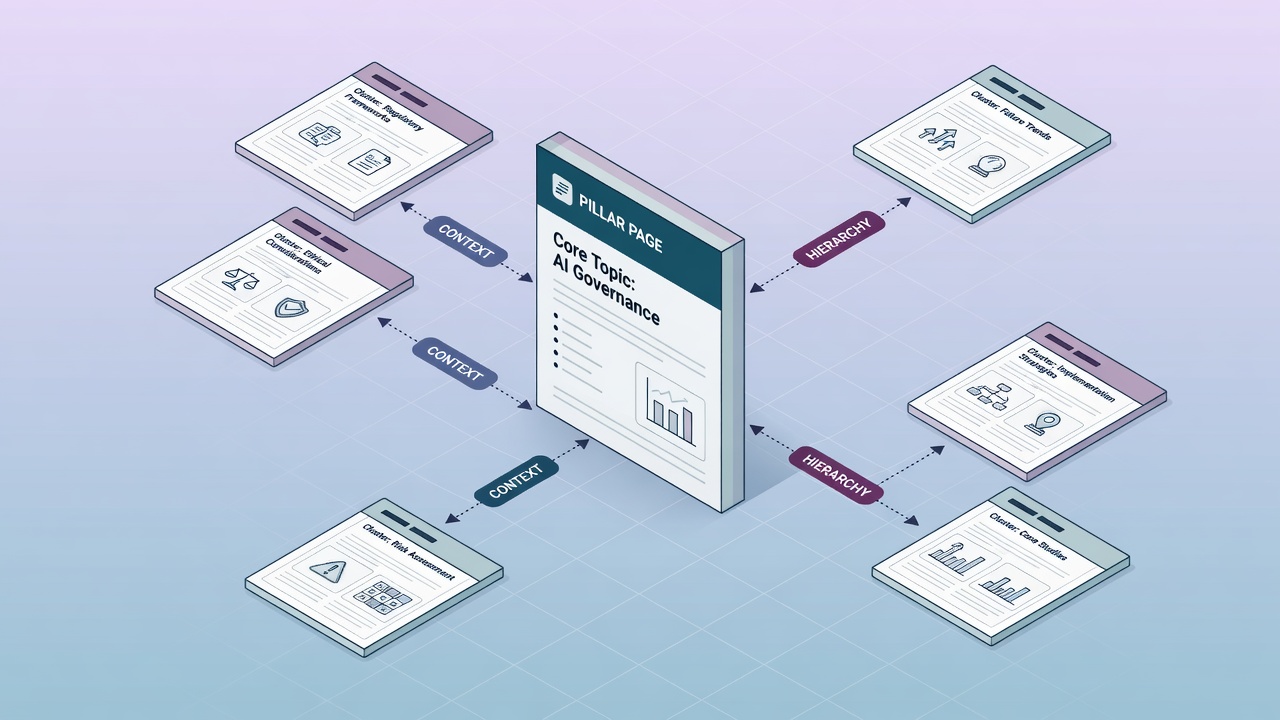
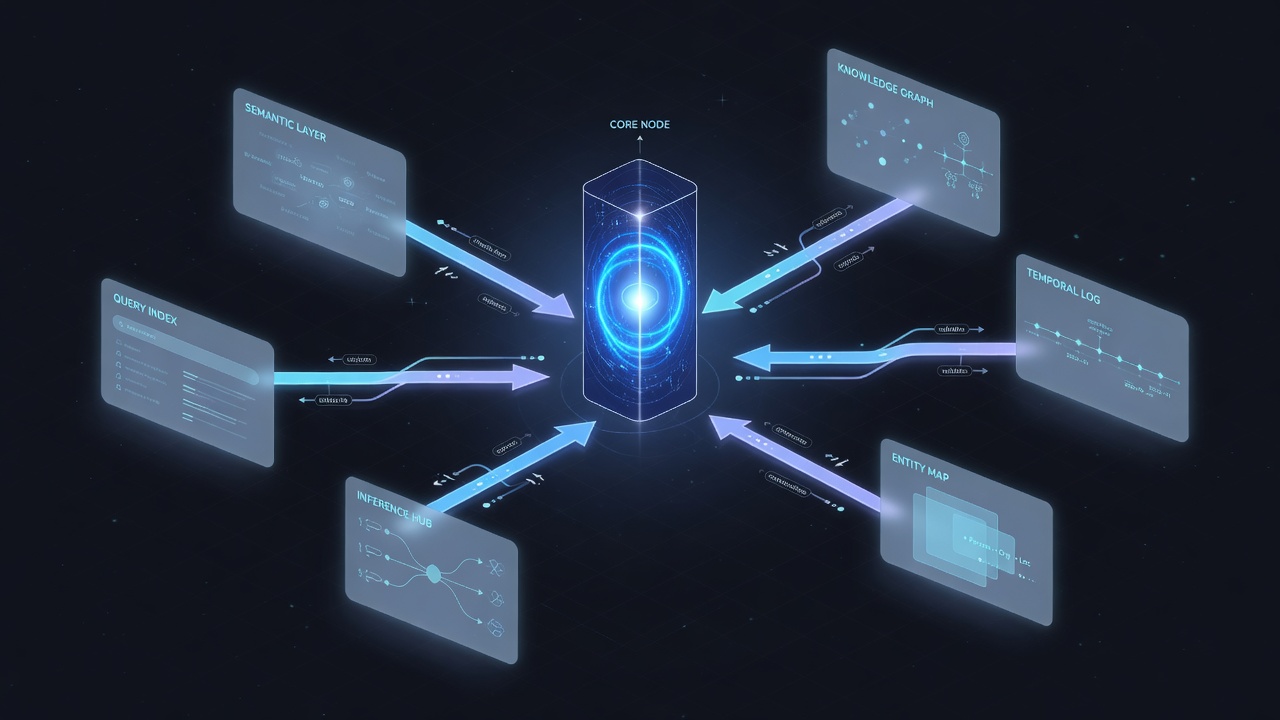
Modern search has evolved past simple keyword matching. Today, internal linking is crucial for Answer Engine Optimization (AEO), as modern AI systems rely on link structures to understand topic relationships. When generative engines crawl your site, they do not just index isolated pages; they map the semantic connections between them to build a comprehensive knowledge graph of your brand's expertise.
The Shift to Relationship-Based Discoverability
In 2026, internal linking plays an even bigger role in establishing authority and boosting discoverability as AI-driven search engines rely on clear topical relationships. Without a deliberate, automated internal linking structure, highly valuable content can remain isolated, invisible to the LLMs and crawlers that populate AI Overviews and conversational answer engines.
- Contextual Mapping: Links act as semantic bridges, explaining how a subtopic supports a broader pillar page.
- Crawl Efficiency: Automated internal linking ensures new programmatic pages are instantly discoverable.
- Authority Distribution: PageRank and topical context flow seamlessly to high-intent conversion pages.
Evaluating the Tech Stack: How to Choose and Govern an Internal Linking Tool
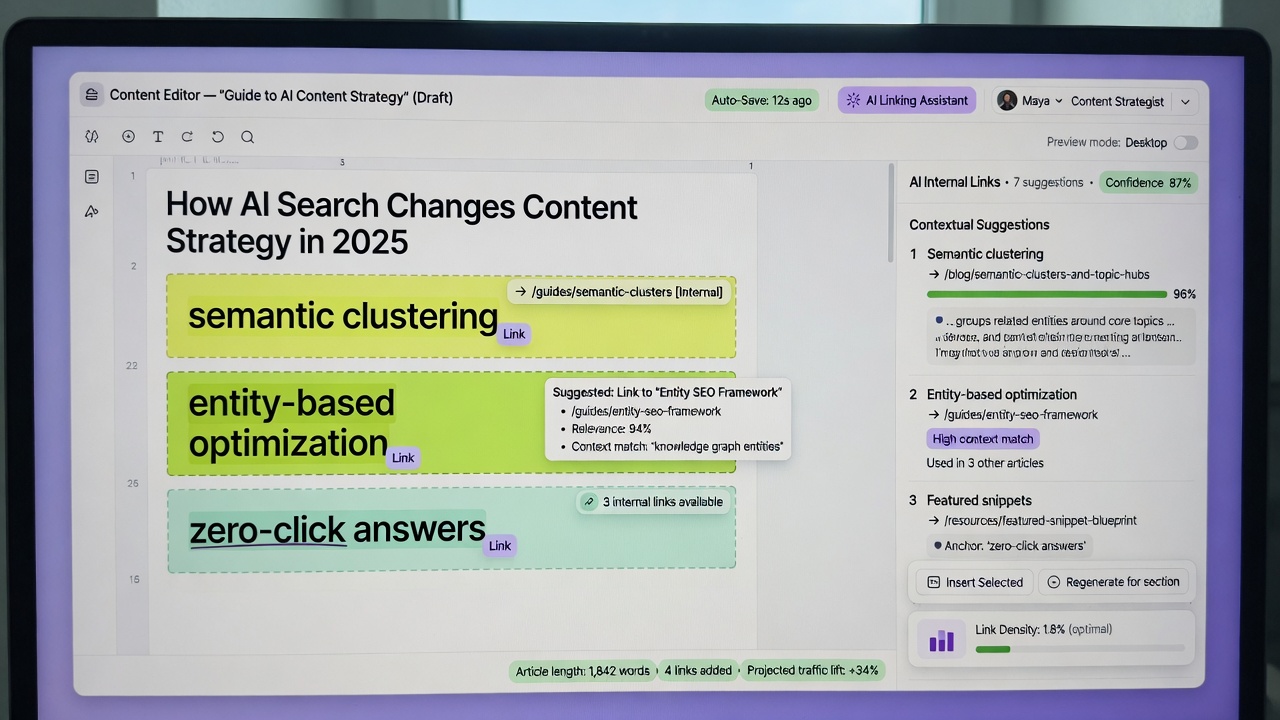
To scale semantic mapping without creating a chaotic web of irrelevant connections, you need the right internal linking tool. Modern platforms approach automation in fundamentally different ways. Link Whisper is excellent for WordPress-heavy environments, offering rapid, semi-automated suggestions directly within the editor. For enterprise-level programmatic SEO and deep semantic analysis, platforms like Similar.ai and Surfer SEO analyze search intent and topical gaps at scale, helping you map out entire clusters before a single link is built.
The Imperative of Human Oversight
While these platforms dramatically accelerate discovery, fully autonomous linking is a major risk. Algorithms often miss the subtle nuances of user intent and brand voice. AI-assisted tools can easily suggest technically viable links and draft anchor text, but they require careful human oversight to ensure every connection genuinely aligns with content intent and preserves E-E-A-T.
- Anchor Text Quality Control: Ensure automated anchors read naturally and avoid over-optimization.
- Contextual Relevance: Verify that the linking page actually adds value for a reader exploring the target page.
- Conversion Safeguards: Prevent automated links from distracting users on high-intent landing pages.
Structuring Topical Clusters: How Internal Links Signal Authority to Search Engines
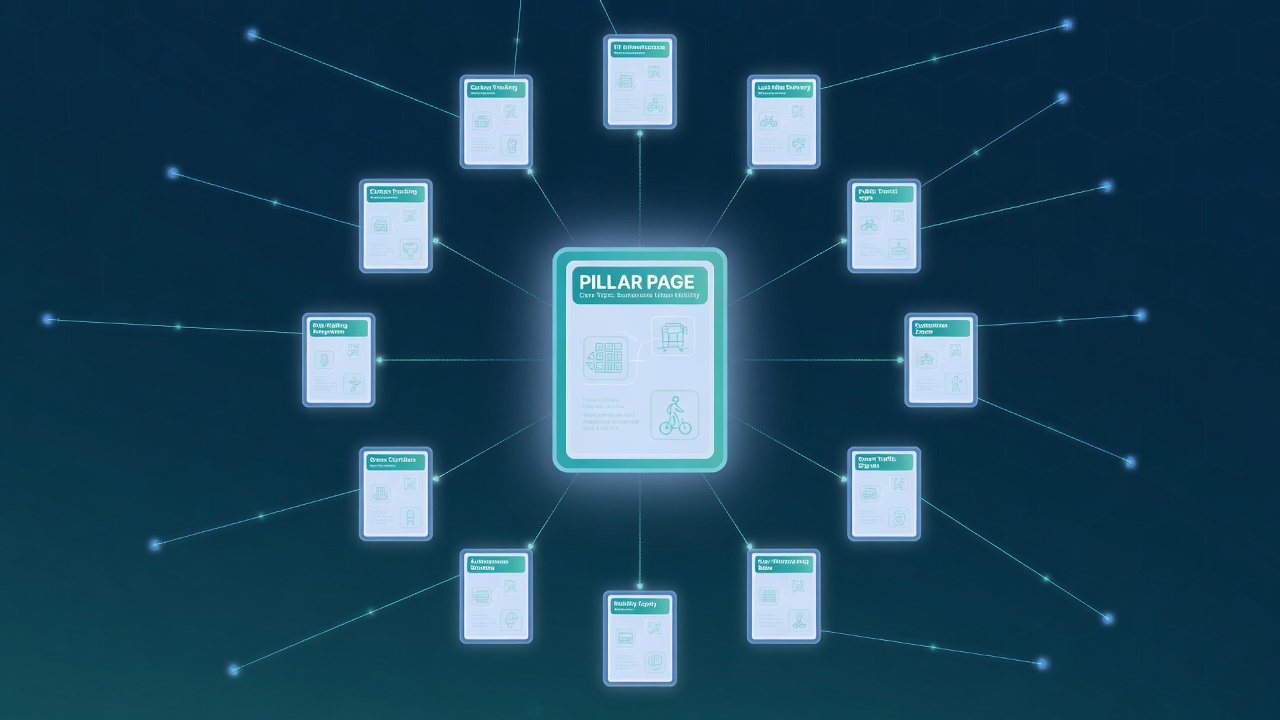
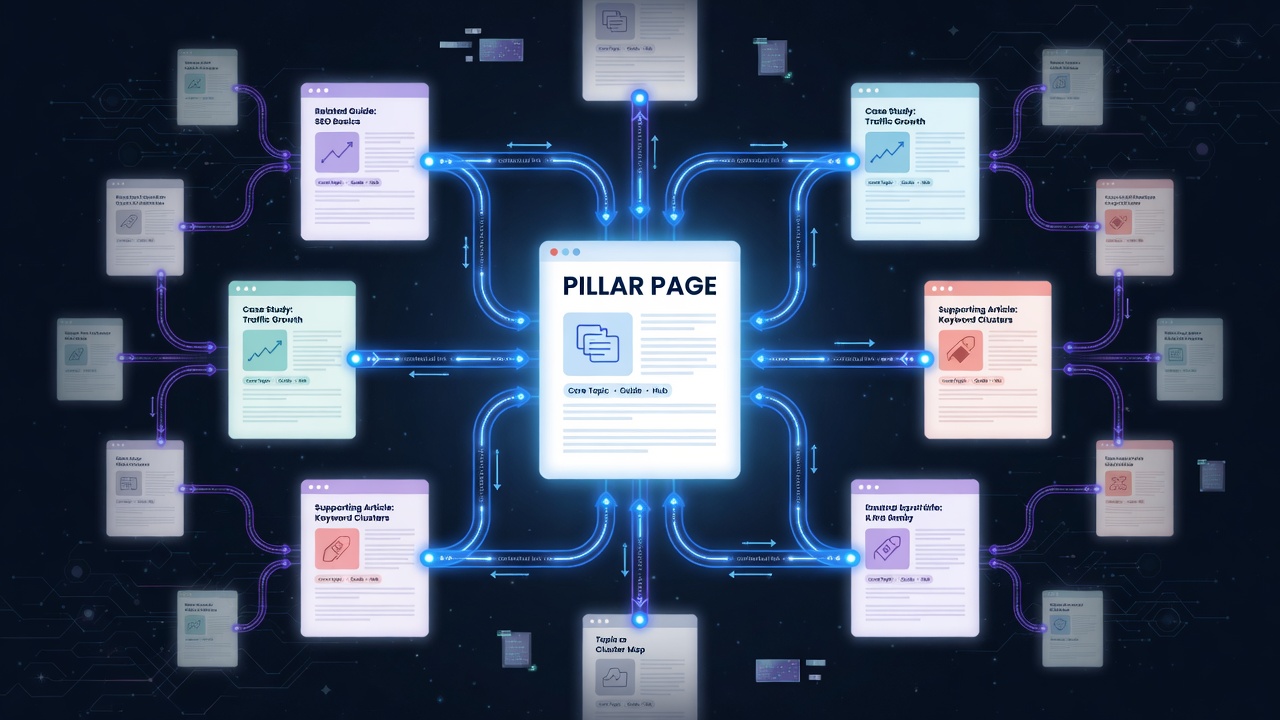
To turn a collection of individual articles into an authoritative knowledge base, you must strategically map your internal links to reflect clear topical hierarchies. Modern search engines and AI discovery tools do not just look at pages in isolation; they analyze the relationships between them. By linking a central pillar page to its supporting subtopic pages—and linking those subtopics back to the pillar—you create a self-reinforcing topic cluster.
These internal links signal hierarchy, context, and clusters, which directly increases your chances of AI snippet inclusion and strengthens your overall topical authority. Instead of relying solely on manual, in-text link insertion to build these clusters, you should embed "related-pages" sections directly into your programmatic page templates. This ensures that every new piece of content is automatically and correctly situated within its broader cluster from the moment of publication, preventing orphaned pages and reinforcing semantic associations at scale.
Topical Clustering — Building structured internal links between pillar and subtopic pages signals clear hierarchy and semantic context to search engines, significantly boosting topical authority and the likelihood of AI snippet inclusion.Refining Anchor Text and Enforcing Human Oversight
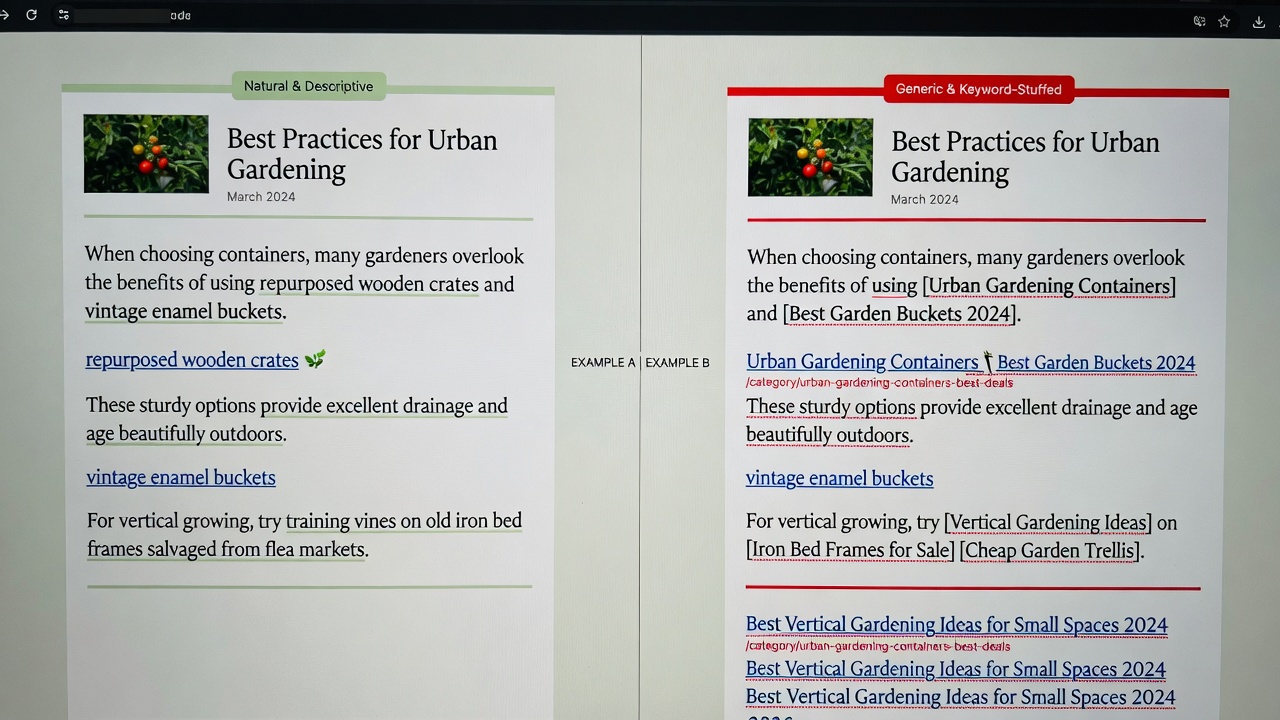
Automating link placement inside your programmatic templates handles the structural foundation, but the contextual signals—specifically your anchor text—require a highly strategic touch. AI search engines and modern ranking algorithms evaluate anchor text to understand the precise relationship between two pages. Generic anchors like "click here" or "read more" waste valuable semantic real estate, while over-optimized, keyword-stuffed anchors risk triggering search engine devaluation filters.
To strike the perfect balance between programmatic efficiency and semantic precision, SEO teams should implement a standardized workflow for anchor text generation and quality control.
Measuring the Impact: Tracking Rankings and Traffic Gains from Automation
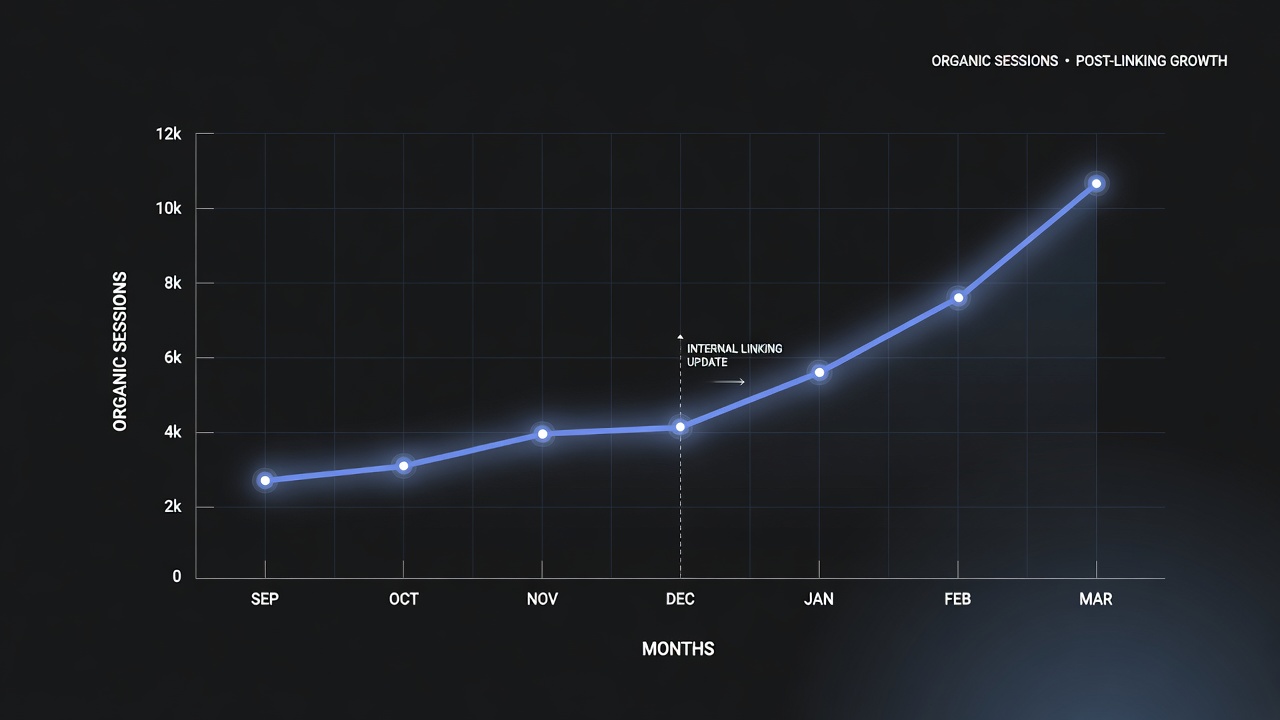
Once your automated workflows and human review guardrails are in place, the final step is measuring the tangible impact of your internal linking tool strategy. Because search engines rely on internal links to distribute PageRank and establish semantic context, programmatic improvements yield rapid, highly visible performance gains. Rather than waiting months for content updates to register, algorithmic adjustments to your site structure often trigger swift crawl updates and ranking shifts.
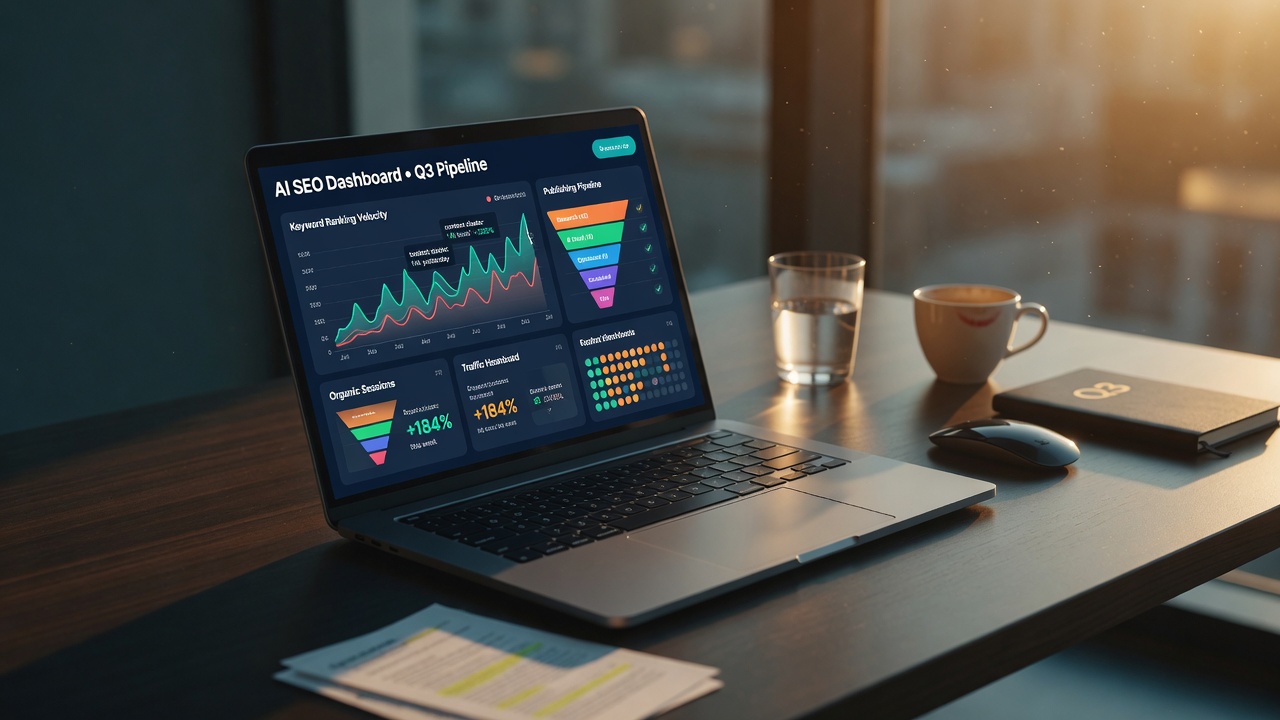
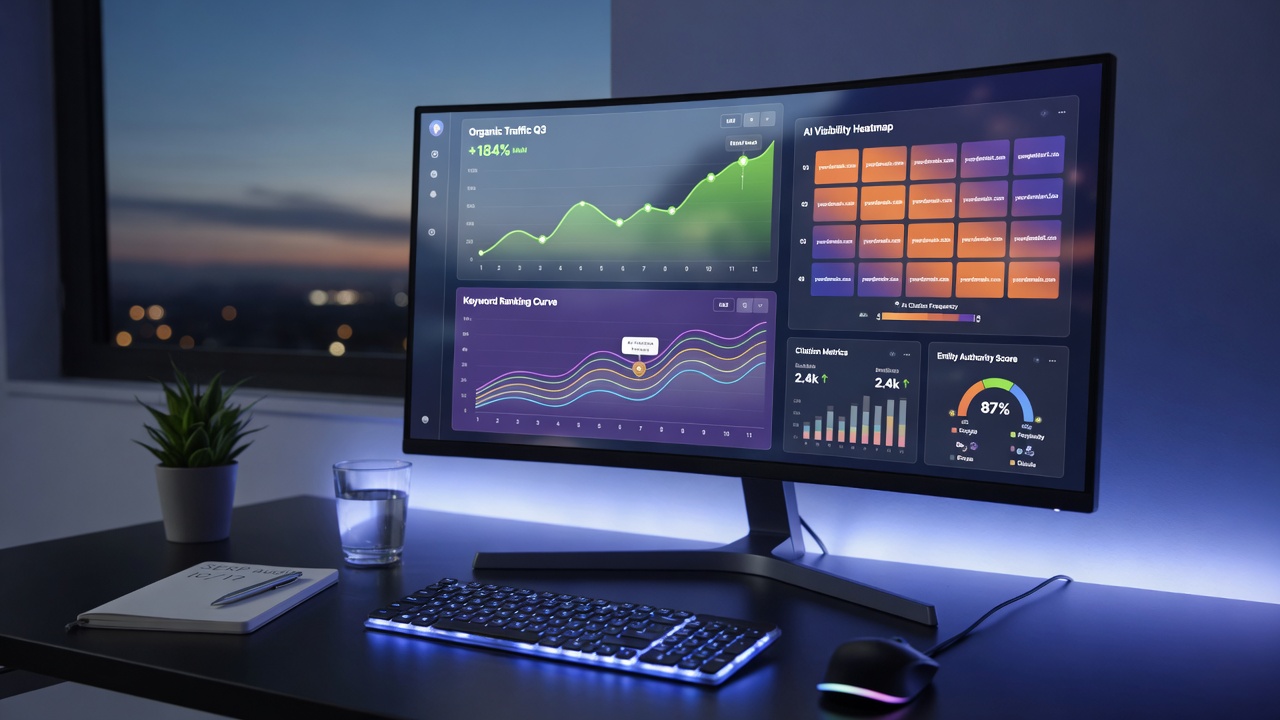
To accurately track these results, monitor ranking lifts for target cluster pages and overall crawl frequency. Case studies from 2025 demonstrate that strategic internal linking can boost rankings for target pages by 10-30% in competitive SERPs. Furthermore, the speed of recovery can be remarkable; in one retail site case study, resolving internal linking structural issues added 150,000 annual visits within just three weeks. By establishing baseline metrics before deploying your automated internal linking tool, you can isolate these structural lifts from normal seasonal fluctuations.
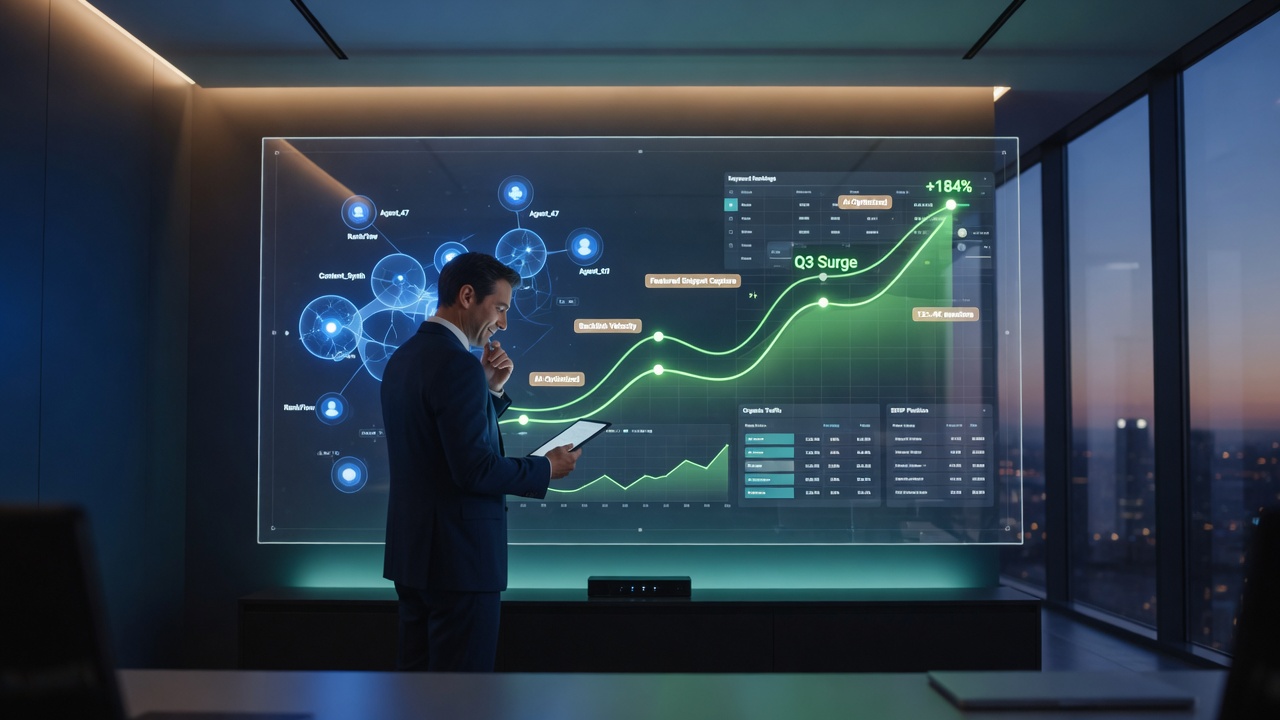
Measure structural velocity — Internal link optimization delivers rapid SEO dividends, often yielding 10-30% ranking boosts and massive traffic recoveries within weeks of deployment.
Key Takeaways
Transform your content strategy and automate your internal linking by exploring how Flows can streamline your publishing and boost reader engagement today.
Frequently Asked Questions
Internal linking is crucial for Answer Engine Optimization (AEO) because modern AI systems rely on these link structures to understand topic relationships and map semantic context.
While AI-assisted tools can suggest links and draft anchor text, they require careful human oversight to ensure the links align with actual content intent and E-E-A-T guidelines.
Strategic linking can boost rankings for target pages by 10-30% in competitive SERPs by optimizing PageRank distribution and signaling content hierarchy.
Internal links signal hierarchy, context, and topic clusters to search crawlers, which directly increases the chances of your content being selected for AI snippet inclusion.