Information Gain Checklist Before an Automated Article Clears QA
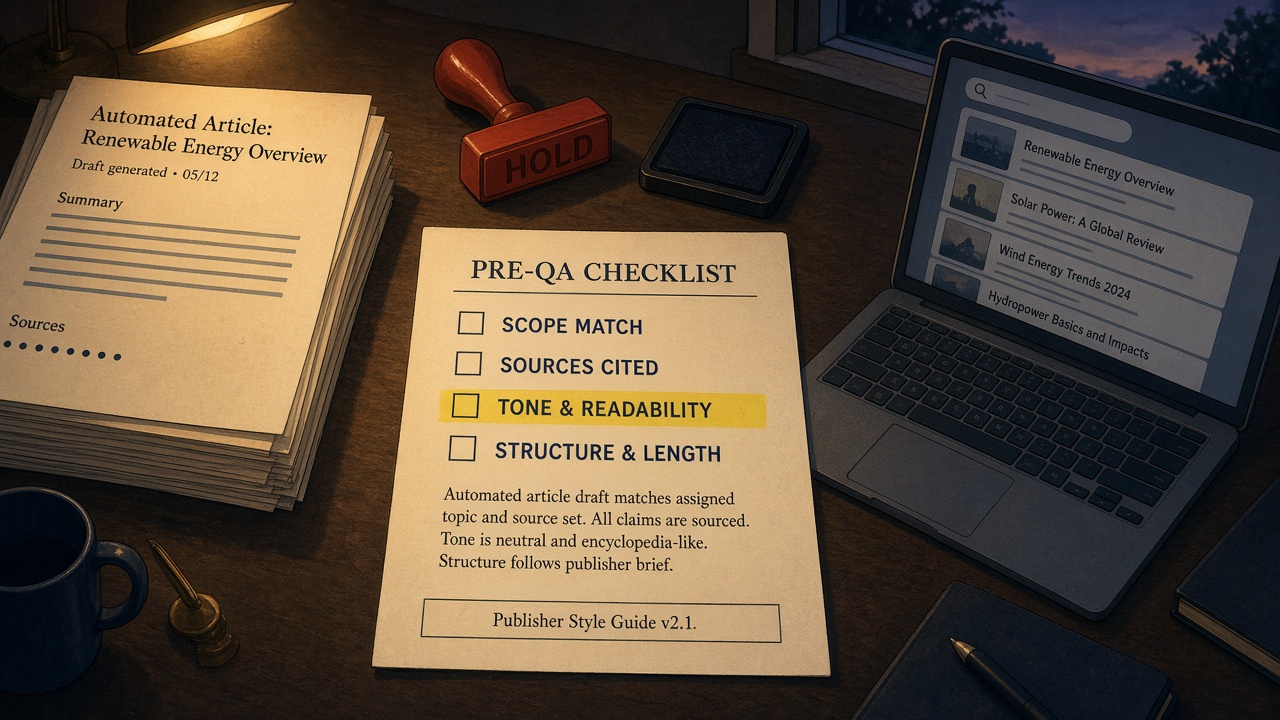
An information gain checklist is an editorial hold, not a public Google score. Before seo automation or content automation ships a URL, someone has to name one block the reader cannot rebuild from the current results: a first-party observation, a bounded test, a worked calculation, or a decision rule with a source. If deleting that block leaves a complete article, the draft has not earned a publish.
Ranking is a poor substitute for that test. On-Page.ai scored 150 top-3 Google pages across 50 keywords and found a median information-gain score of 52 out of 100; 24% were mostly shared, and medians for positions 1, 2, and 3 were 52, 51.5, and 52. The same study treats Google's information-gain patent as a described capability, not proof of a confirmed ranking weight. A high on-page score, a longer seo content brief, or a polished recap can still add nothing an answer engine has not already quoted.
Google's scaled content abuse policy is explicit about the failure mode: many pages made mainly to manipulate rankings, including generative AI used to generate many pages without adding value, no matter how they are created. The first gate below is therefore fail-closed. It asks what this URL adds for search and for answer engine optimization, then holds the page if that addition cannot be pointed to, sourced, and lost on deletion.
- Information gain is an editorial hold, not a published Google score or an AI-detector result.
- Pass only if one owned, sourced block still changes a decision after the consensus is deleted.
- A content score, a longer outline, or a top-3 ranking does not prove the page adds anything new.
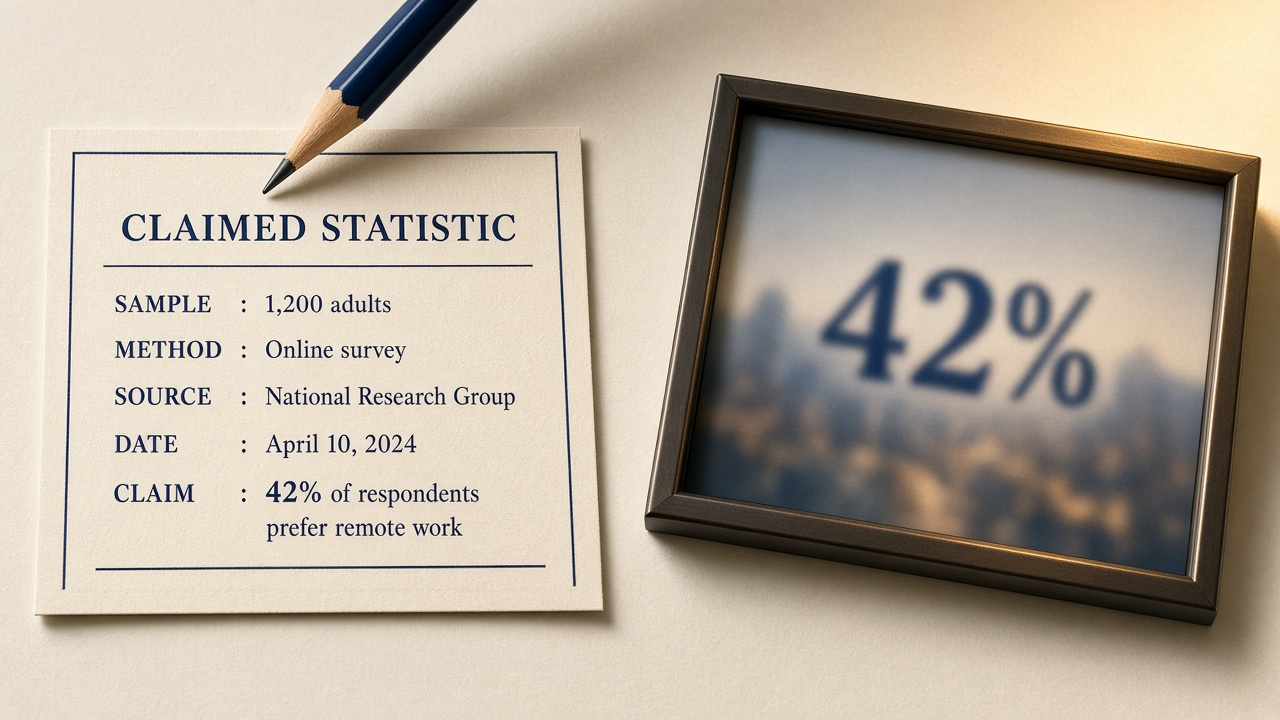
- A statistic counts as gain only when sample, method, source, date, parsable text, and the claim itself are present.
- If the delta is not defensible, merge, noindex, or delete rather than pad the draft.
What an information gain checklist is before an automated article clears QA
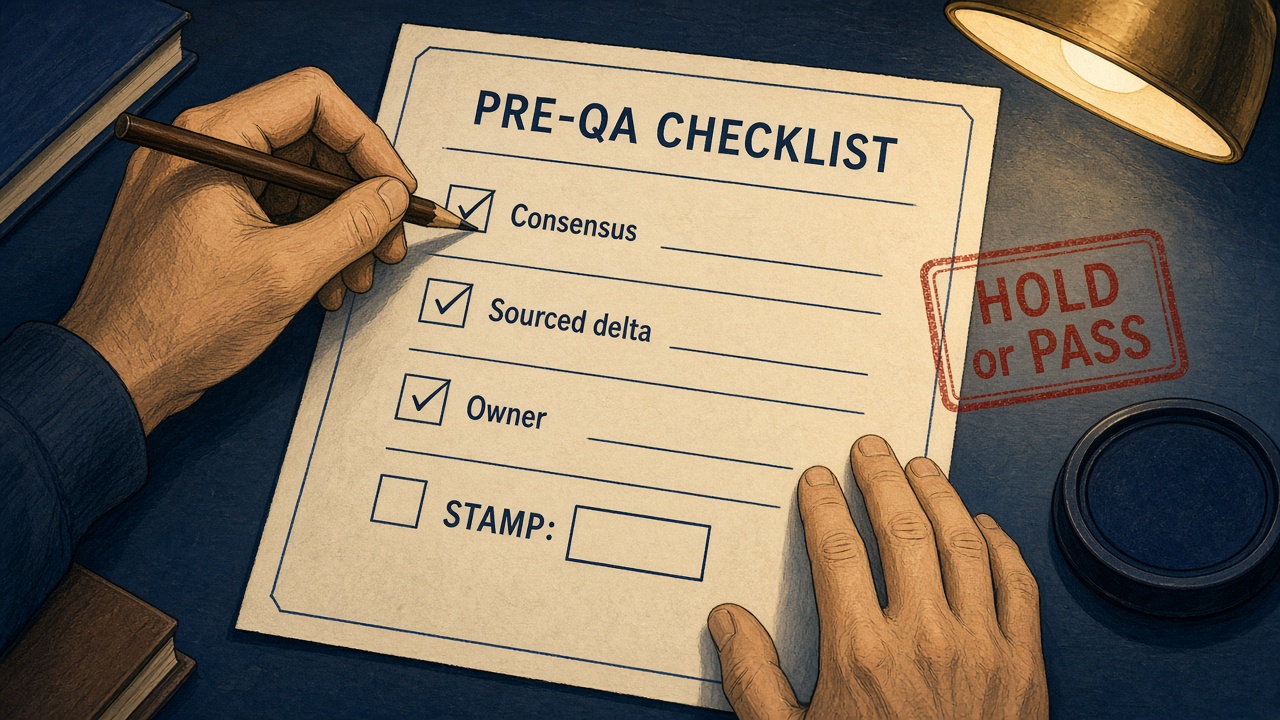
An information gain checklist is a copyable pass/fail sheet, not a score to look up. Before an automated article clears QA, write the SERP consensus in a few lines, name one sourced block, and pass only if a named person can say what the reader loses if that block is deleted. Fill six fields before sign-off: consensus, the delta, source, owner, deletion test, and the decision—pass, hold, merge, or delete.
Borrow the author-side self-audit Searchbloom describes: five questions before publish, reported to catch about 80% of failures that would drop its information-gain score below the production target. Keep this gate separate from the named-owner and retract-path governance checklist and from the broader AI-draft QA review. Those stay adjacent links, not a second explanation of the same gate.
Pass/fail sheet — Clear QA only when a named person can point to one sourced block and say what the reader loses if it is deleted.
Is Information Gain a Confirmed Google Ranking Score You Can Look Up?
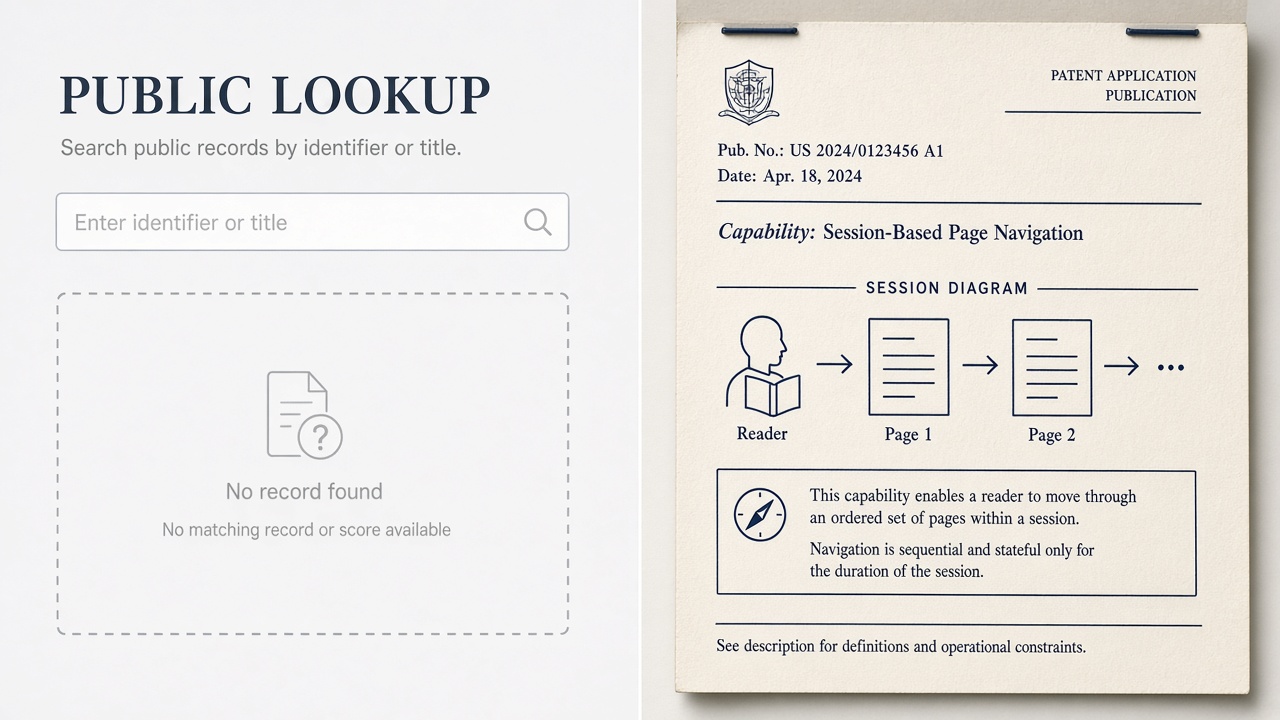
No. There is no public Google information-gain ranking score to look up, so the checklist cannot wait on a dashboard number. On-Page.ai defines gain as what a page adds beyond the pooled ranking cohort.
Searchbloom states that US 11,354,342 B2 scores additional information relative to documents the user already viewed in a session. A June 2025 re-grant, US 12,326,889 B2, does not turn that session measure into a published global novelty score.
Google does not publish a universal information-gain score. BlogSEO’s pre-publish tests stand in for it: subtraction (whether removing the contribution loses a useful explanation), provenance, boundary, and whether the reader can decide more confidently. Do not delay QA for a number that does not exist. The hold is editorial.
Not a score — Information gain is an editorial judgment of what a page adds beyond the cohort, not a confirmed Google ranking score anyone can look up.
How Information Gain Differs from a Surfer Content Score or an Originality Percentage
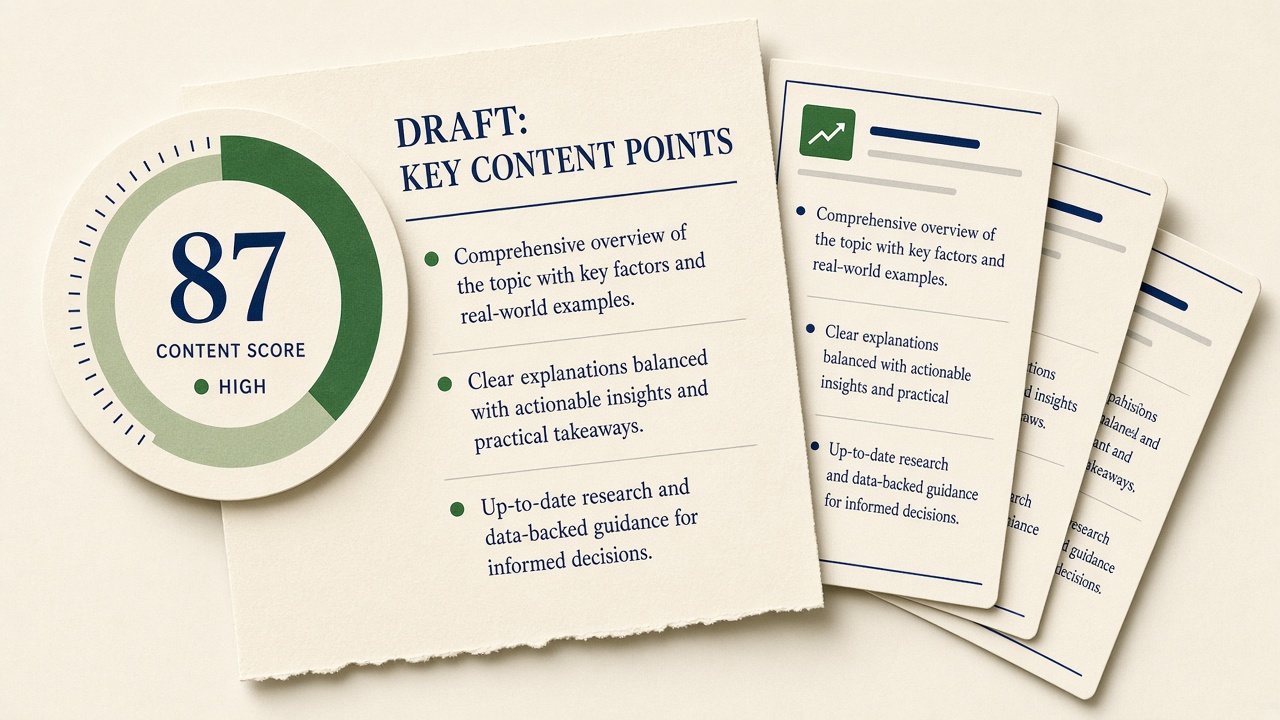
A Surfer content score, an originality percentage, and an AI-detector score answer different questions from information gain. A detector estimates whether text resembles machine output; it does not establish accuracy, usefulness, evidence, or originality. Those readouts do not replace the deletion test.
Adding word count or more FAQs does not increase information gain when those lines restate the same consensus. Length is not a delta. If the extra sections can be removed without losing a decision, example, or sourced figure, they are padding. Do not let a green content score clear QA.
What Counts as Real Information Gain on an AI Draft, and How Many Insights It Needs
Real information gain on an AI draft is a distinct sourced insight the top results do not already give: a decision rule, a worked calculation, a bounded first-party observation, or an unanswered reader question—not a smoother recap of the consensus. For competitive informational queries, Searchbloom's working range for pages that earn AI citations is five to seven distinct sourced insights, and pages under five rarely earn citation share. Refuse a packed-topic draft below that floor.
On-Page.ai's study of 150 top-3 pages ties more unique data to higher scores: pages with 15 or more unique data points averaged 62.1, versus 40.2 for pages with at most one unique figure. A lean publisher should not invent filler figures to chase 15; each figure has to be real and sourced.
Real gain — Clear QA only for a sourced insight the top results lack, and hold any packed-topic draft under five distinct insights.
Information Gain by Unique Figures
How to Compare a Draft to the Top Results Without an Embeddings Tool
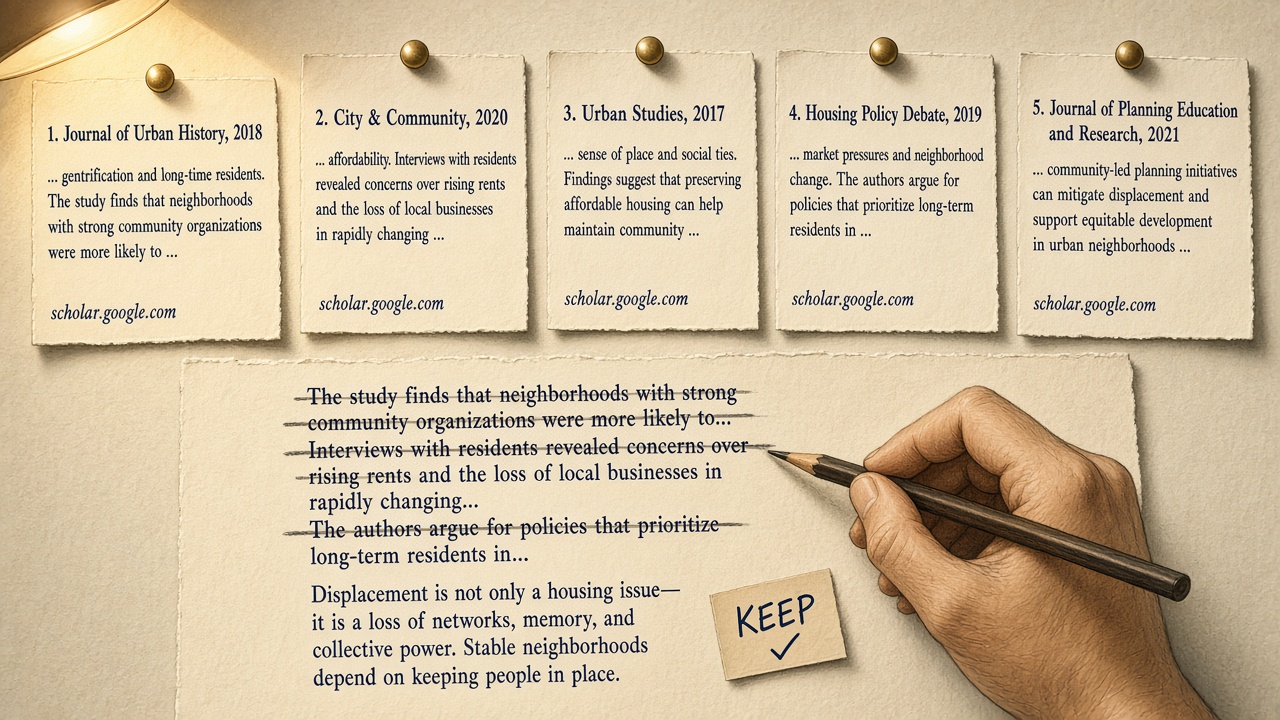
Open the top results and write the shared answer in a few lines. List only claims the draft adds, and cross out any line you can rebuild from those pages. You do not need cosine similarity to make the hold; if that subtraction already fails, skip the tool.
A vendor score of 1 minus the maximum cosine similarity to the top 10, with Searchbloom’s suggested floor of 0.35 to 0.39, is a proxy, not a Google score.
On-Page.ai found that in 90% of sampled SERPs at least one common topic question went unanswered by every scanned top-3 page. Force that decision, not another recap. If the draft only repeats the SERP, hold it, merge the URL into a page that already owns a delta, noindex it, or delete it—do not pad it.
Subtraction first — If you can rebuild the draft from the top results, hold, merge, noindex, or delete it rather than waiting on a cosine score or padding the page.
Which claims a human must verify, and how statistics should be formatted for an answer engine
Claims that survive subtraction against the top results are not finished. Before the information gain checklist can pass, a human verifies every material claim meant to be the gain: the source supports that sentence, the date is fit to cite, and a named person can defend it. Unsourced “studies show” fails even when the prose is confident. Send claim extraction to the fact-check workflow; this gate passes only claims that survive that check and still count as a delta.
Format the statistic so it can be quoted
Searchbloom, citing Aggarwal et al. (GEO, KDD 2024), reports that adding cited sources, quotations, and statistics was associated with up to a 40% visibility gain on generative engines in a 10,000-query benchmark of that period. Format the number so an answer engine can quote it. Do not add unsourced figures to chase that lift.
Verify, then cite — A gain claim clears only when a named human can defend a sourced, dated sentence an answer engine can quote—and the statistic still changes a decision after the consensus is deleted.
How the Information Gain Checklist Relates to Scaled Content Abuse

The information gain checklist is how this URL is tested against scaled content abuse before it ships.
Automation may draft. It may not clear QA on pages that only echo the SERP. One failing URL is a hold; a template that fails on every URL is a program stop. Publishing more URLs does not create gain. If the checklist fails at scale, stop the template rather than lower the gate. Map that policy to the site's quality checklist for AI SEO pages. This article only decides whether this URL adds a defensible delta.
Can a One-Person Publisher Add Information Gain Without a Survey, and Where Should the Unique Block Sit?

Yes. A survey is one path, not the requirement. A one-person publisher adds information gain with one owned block they can stand behind: a first-party observation, a bounded test, a worked calculation, a decision rule, or a real subject-matter quote.
That placement is the quotable spot. Searchbloom’s audit of about 400 priority pages found absorbed pages typically carried zero to one original insights, while cited pages carried five or more. The same source reports an average 400% visibility lift from adding a direct expert quote—its own measurement, not a Google guarantee.
Do not bury the block, and do not brief a catalog of example types. One owned block is the deletion-test minimum; on a packed topic it does not replace the five-insight floor.
Own one block — A solo publisher can add gain without a survey, but the block must be owned and quotable, and a packed topic still needs five distinct sourced insights.
What Fails the Checklist Even If the Prose Sounds Expert
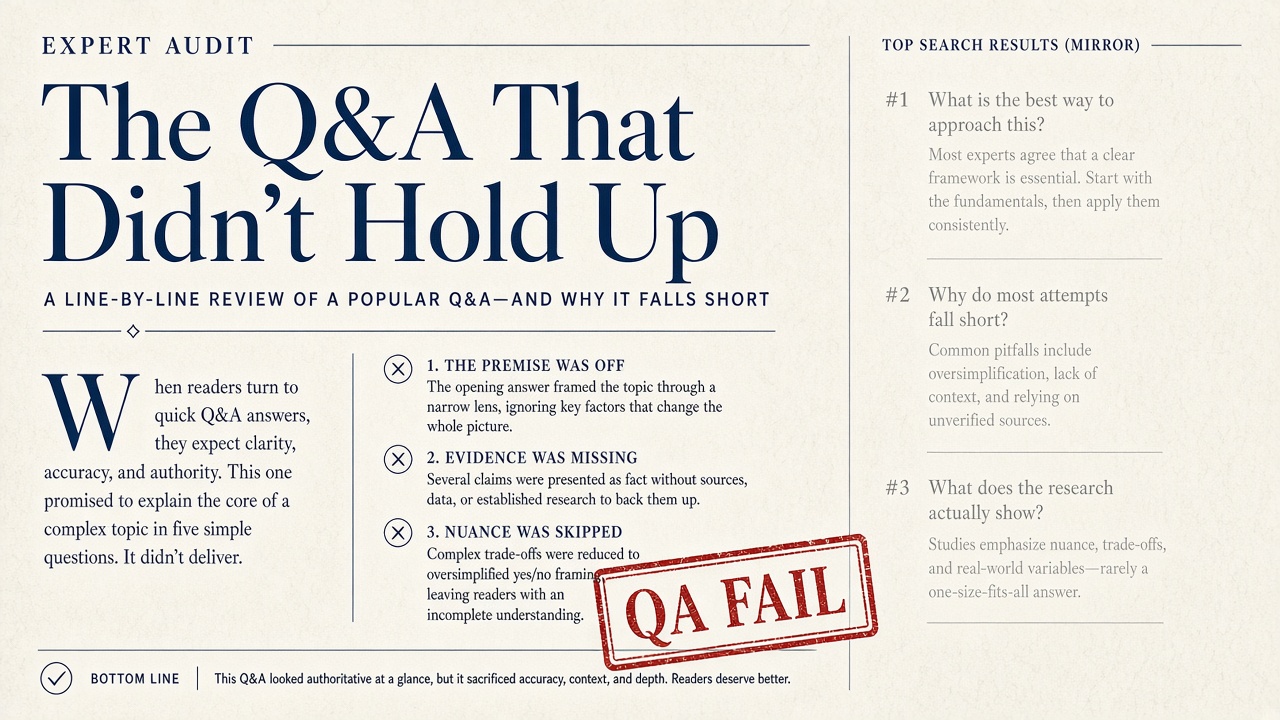
Sounding expert is not a pass. The draft fails if it could be recreated from the first five search results without losing anything. A fluent page fails with an unsourced statistic, no named owner, no boundary on the advice, or a gain that is only a longer outline. Shazz SEO recommends not publishing a high-stakes page below 75 on a 100-point editorial rubric without a documented reason—hold on that, do not optimize the number. Pass only when subtraction, provenance, and ownership all hold; otherwise the URL does not clear QA.
Key Takeaways
Run the next automated draft through the information gain checklist and hold, merge, or delete any URL that fails the deletion test on its one owned block.
Frequently Asked Questions
You Might Also Like
- Quality Information Gain in SEO: How to Add Something Answer Engines Have Not Already Quoted
- Workflows Content QA for AI Drafts: The Review Checklist Before You Hit Publish
- Workflows Fact-Check Workflow for AI SEO Drafts
- Automation Originality Checks That Do Not Kill Useful Automation
- Quality Experience Signals on AI Drafts: Sources, Dates, and First-Hand Notes