IndexNow vs Google Indexing API: Which Ping a Content Ops Stack Should Send

IndexNow and the Google Indexing API look like the same automation: a URL changed, so a content ops stack pings a search engine and expects a faster crawl. They are not substitutes. IndexNow is a shared change notification for participating engines. The Indexing API is a Google-only crawl request that, as Google Search Central states, can only be used to crawl pages that contain JobPosting structured data or a BroadcastEvent embedded in a VideoObject. That split decides the ping, not the volume of automated posts. An ordinary article, product page, or news URL belongs on IndexNow after the publish gate, plus a sitemap with an accurate lastmod. It does not belong on the Indexing API, even when the call returns HTTP 200. A 200 from either channel is a receipt that the notification arrived, not proof the URL is indexed. The rest of this piece is the decision a content ops stack can ship: send, refuse, or hold, with the fields that keep the ping honest until an indexing SLA says otherwise.
- IndexNow and the Google Indexing API are not interchangeable pings.
- Send IndexNow after a real new, updated, redirected, or deleted URL; do not dump the site or resubmit unchanged URLs.
- Refuse the Indexing API on ordinary articles. Google limits it to JobPosting pages and BroadcastEvent livestream pages.
- Google does not participate in IndexNow. Normal articles still rely on a sitemap with accurate lastmod, plus Search Console.
- Treat HTTP 200 as receipt only. Index confirmation belongs in the indexing SLA, not in the ping job.
Does Google Support IndexNow?

No. Google does not support IndexNow and does not participate in it, so a successful IndexNow ping does nothing for Google even when other engines accept the same submission.
Manual Search Console “request indexing” clicks, and any wait-before-hold indexing check, belong in the after-publish cluster rather than in this ping job.
The operating rule does not depend on a rumor that Google joined IndexNow. Until Google is a participating engine, the Google path stays sitemap plus Search Console.
What Pages Can the Google Indexing API Officially Request a Crawl For?

That refusal is not a hole you close with a different Google endpoint. The Indexing API is not a general URL submission tool for blog posts, product pages, news posts, or other owned URLs. Officially, it can only be used to crawl pages that contain JobPosting structured data, or a BroadcastEvent embedded in a VideoObject.
Quota approval does not move that line. Extra daily publish requests are not a license to ping ineligible pages, and third-party “index any URL” tools are the misuse this stack should refuse. Fail closed: allow the Indexing API only when the URL is a genuine job page or livestream page; otherwise send IndexNow and stop.
Official limit — The Indexing API is a crawl request for JobPosting pages and BroadcastEvent livestream pages only—not a substitute for IndexNow on ordinary content.
What Is the Default Google Indexing API Quota, and Is It Free?

Eligibility is not the same as capacity. The default publish quota is 200 requests per Cloud project per day, covering both URL_UPDATED and URL_DELETED, and it resets at midnight Pacific Time. Use of the API is free.
Read-only metadata calls are capped at 180 per minute per project, and all endpoints at 380 requests per minute per project. Those quota docs were last updated on 16 October 2026.
Callers may batch up to 100 calls in one HTTP request. Batching is not a way around the daily cap or the page-type limit.
Do not open extra Google accounts to exceed the quota. Google tells callers not to dodge submission limits that way, and extra quota still does not make ordinary articles eligible.
Free, not unlimited — The default is 200 free publish requests per Cloud project per day. Splitting that cap across extra accounts breaks Google’s guidance and still does not authorize ineligible pages.
Which Search Engines Receive One IndexNow Submission?
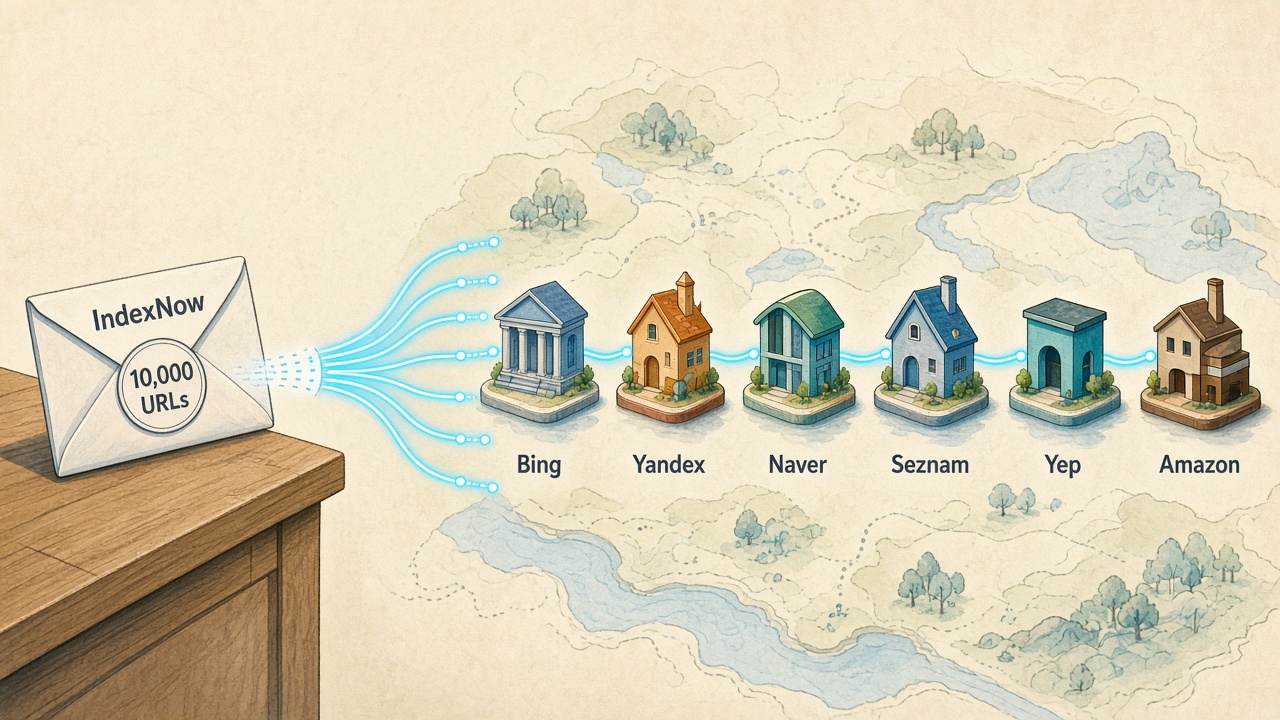
One IndexNow submission is shared across participating engines, so do not ping each engine separately. The documented endpoints are the global API, Amazon, Bing, Naver, Seznam.cz, Yandex, and Yep. Call any one of them and the submission is shared with every IndexNow-enabled search engine.
One POST can include up to 10,000 URLs. An HTTP 200 on that request means the engine received the URL or URL set, not that any URL was indexed.
Bing's 12 December 2024 webmaster post reported more than 3.5 billion URLs submitted through IndexNow per day, and 18% of all new URLs clicked in web search results came through it. That adoption is why one shared ping still belongs in the stack for participating engines.
One ping — One IndexNow endpoint is enough. Participating engines share the submission, and a 200 only confirms receipt.
Does an IndexNow Ping Count Against Crawl Quota—and How Soon Can You Resubmit?

Yes. Every URL you send through IndexNow counts toward the site's crawl quota, and submitting a URL does not guarantee immediate indexing. Receipt is not a crawl promise.
IndexNow is for URLs that were recently added, updated, or deleted. It is not designed as a full-site dump, and it is not a way to spend quota on pages that have not changed.
Resubmit the same URL only after a meaningful change, and wait at least 5 minutes between those submissions. When the URL, the content, and the status are all unchanged, the stack should hold the resubmit—even if a retry job is trying to nudge the engines.
Spend it once — Every IndexNow URL spends crawl quota and still may not be indexed. Hold the ping unless the page was meaningfully added, updated, or deleted, and never resubmit the same URL sooner than 5 minutes.
Should Deleted, 404, 410, or Redirected URLs Be Pinged?

Yes. A deletion, a 404, a 410, or a redirect is a real change, so IndexNow should hear about it—not only new publishes. You still need the XML sitemap. IndexNow does not replace it, and the sitemap remains the discovery path Google actually uses.
For an Indexing API removal, the URL must already return 404 or 410, or the page must already carry a noindex robots meta tag. IndexNow asks for the same honesty on ordinary URLs: notify redirects and pages that return 404 or 410, and keep a sitemap of the full inventory so coverage is not left to one ping.
Status first — Set the live status, then ping, then sync lastmod and the sitemap—never the other way around.
Does an HTTP 200 Mean the Page Is Indexed?
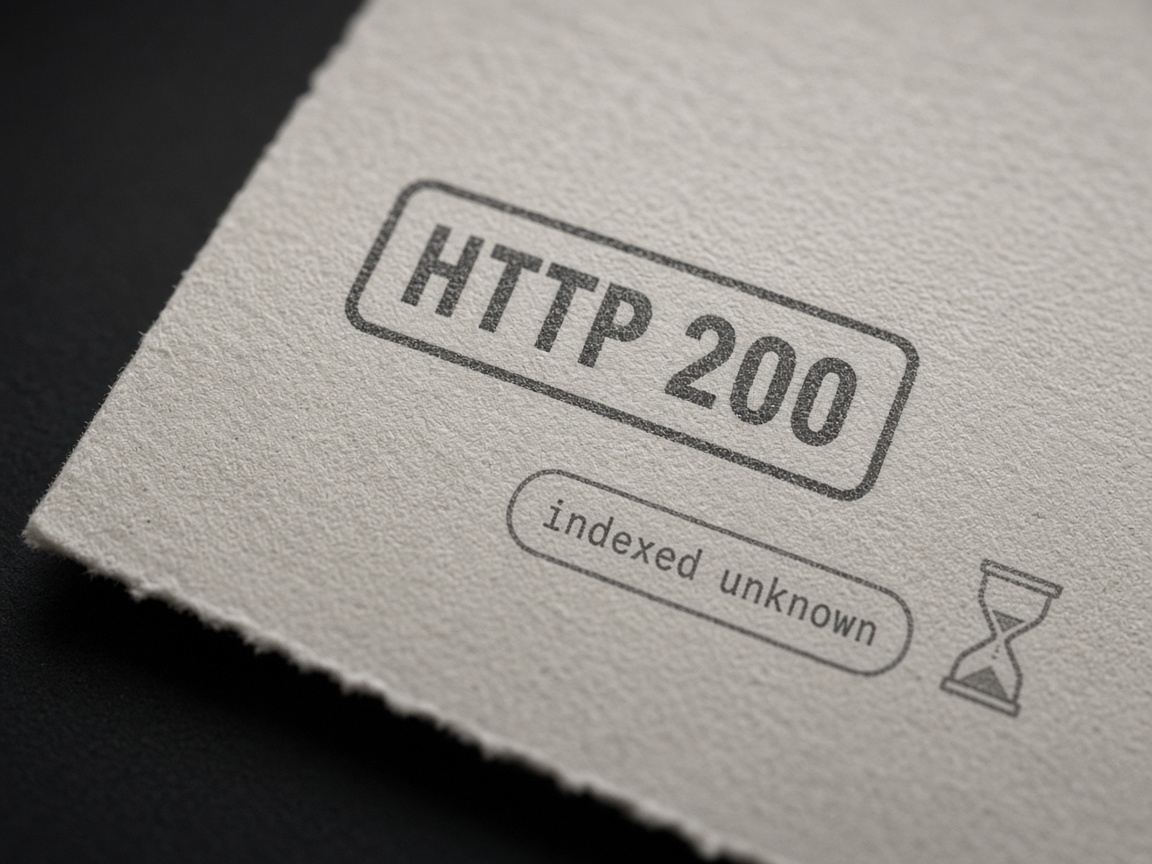
No. After the live status is confirmed and the ping goes out, an HTTP 200 from the Google Indexing API only means Google may try to recrawl that URL soon. It is not confirmation that the URL is indexed. The metadata endpoint is narrower still: it reports whether a notification was received, not when Google indexes or removes the URL.
IndexNow’s HTTP 200 is the same kind of receipt. The URL, or the set of URLs, was accepted. Nothing in that code says a participating engine has crawled or indexed it.
Store the URL, change type, channel, HTTP code, and indexed status as “unknown until SLA.” Never mark the ping job as an indexing pass. Index confirmation belongs in the indexing SLA, not in this post-publish job. A green 200 must not close the index-health check.
Receipt, not index — A 200 from either channel is a receipt, not proof the page is indexed. For the Indexing API it means Google may try to recrawl the URL soon; for IndexNow it only means the engine received the URL or URL set. Leave indexed status unknown until the indexing SLA.
How Do You Prove IndexNow Key Ownership?

A green receipt still depends on a key the engines can verify. Prove ownership by hosting a UTF-8 text file they can fetch; the key must be 8 to 128 characters.
Generate the key, host the file where they expect it, and confirm a public fetch before the post-publish job may send. If that file is missing or not fetchable, fail closed: do not send the ping, and do not treat the publish as notified.
Fail closed — Host a fetchable UTF-8 key file of 8 to 128 characters and verify it before any IndexNow send; if the file fails, do not ping and do not mark the URL notified. That gate never authorizes the Indexing API for an ordinary page.
Key Takeaways
Wire the post-publish job to send IndexNow after a real change and to call the Google Indexing API only when the URL is a JobPosting or BroadcastEvent livestream page.
Frequently Asked Questions
You Might Also Like
- Publishing IndexNow and Fast Indexing: What Automated Publishers Should Ping After Publish
- Automation Content Automation: What to Automate in Your Publishing Stack
- Measurement Search Console for Content Ops: Queries That Should Become Briefs
- AI Search When an AI Citation Should Trigger a Content Refresh