How to Write SEO Articles That Survive AI Overviews
Ranking first is no longer a traffic plan. As of December 2025, the presence of an AI Overview correlates with a 58% lower average clickthrough rate for the top-ranking page versus a no-Overview forecast—and on those same keywords, position-one CTR fell to 0.016. Comparison queries triggered an Overview 95.4% of the time in one tracked set; question-format queries did so 85.9% of the time. Roughly one in three informational queries now shows one.
Citation still helps, but it is not a full substitute for the old SERP. Being cited inside an Overview delivers about 120% more organic clicks per impression than appearing on the same page uncited—and still underperforms queries with no Overview by about 38%. Pew’s panel found result clicks on 8% of visits with an Overview versus 15% without. The writing job is therefore dual: become the passage an engine can lift, then give the reader a reason to leave the summary.
This article is the contract for that dual win. You will write answer-first sections (question-shaped headings, a standalone 2–4 sentence answer, then proof), raise fact density so extractors have something to cite—typical cited articles cover 62% more facts, and 55% of citations come from the top 30% of the page—and add what a summary cannot copy: original examples, named methods, verifiable sources, and people-first reporting Google still asks for. Scaled AI with no added value is a spam-policy risk, not a ranking tactic.
- AI Overviews correlate with a 58% lower CTR for the #1 result; ranking alone is not a traffic plan.
- A citation still matters (+120% clicks per impression vs uncited on the same AIO SERP) but lags no-Overview queries.
- Write answer-first: question H2s, a 2–4 sentence standalone answer, then proof, constraints, and links.
- Fact density and top-of-page extractability win citations; original reporting and E-E-A-T still earn the click.
- Assume Overviews on comparison and question queries; add what the summary cannot copy.
Ranking First Is No Longer a Traffic Plan
Treat an AI Overview as a standing tax on the #1 organic result, not a one-off experiment in the results. When the summary box appears, the blue link you fought to own no longer behaves like the default next click. Ranking still matters for eligibility and for the handful of people who scroll past the generated answer—but “we still rank” is a vanity check, not a publishing KPI.
On queries that later triggered Overviews, position-one CTR fell from 0.073 in December 2023 to 0.016 in December 2025. That two-year drop sits inside the December 2025 finding that AI Overviews correlate with a 58% lower average CTR for the top-ranking page versus a no-Overview forecast. Visit-level data tells the same story in plainer terms: Pew’s March 2025 panel found result clicks on 8% of visits with an Overview versus 15% without, and only 1% clicked a source inside the box. The page can still sit at number one and starve.
Citation is the recovery lever on those SERPs, not a return to the old world. Being cited inside an Overview delivers about 120% more organic clicks per impression than appearing on the same AIO results page uncited. That gap is real and worth writing for. It is also incomplete: a citation still underperforms queries with no AI Overview by about 38%. You get more of a shrinking pie; you do not get the pie back.
Survival, then, is two outcomes on the same page. First, earn the citation when an Overview appears—extractable, fact-dense answers that an engine can lift without inventing you. Second, give a reason to open the URL anyway: original proof, constraints, methods, and examples the summary cannot copy. Ranking without those two jobs is traffic you already paid for and then lost at the click.
Two jobs — Plan for the Overview as a tax on #1, then write to be cited and still worth the click—citation recovers traffic on AIO SERPs but does not restore a no-Overview world.
Brief for the queries that almost always trigger an Overview
That traffic tax is not evenly distributed. Treat AI Overviews as the default on comparison and question-shaped informational searches, not as a surprise that appears after you publish. In Seer’s tracked set, comparison-style informational queries triggered an Overview 95.4% of the time, and question-format informational queries did so 85.9% of the time. If your brief is “best X vs Y,” “how does Z work,” or a cluster of related questions, you should assume the SERP will summarize you before anyone reaches the blue links.
Informational intent and transactional intent are not the same writing problem. Roughly one in three informational queries now shows an AI Overview, versus about 5% of transactional queries. Teams that still draft every URL from the same keyword map waste extractable answers on product pages that rarely get summarized, and they under-prepare the explainers that almost always do. Query selection comes first: flag likely-Overview URLs before anyone opens a blank doc.
Change the pre-draft brief, not the whole content model. When the query is likely to get an Overview, require three deliverables besides the keyword map: an answer-first block that can stand alone, a compact fact list engines can lift, and one uncopyable asset—an original example, named method, template, or screenshot—that the summary cannot steal. That is a briefing rule, not a manifesto about answer-engine optimization versus classic SEO. You are choosing which pages must be citation-ready and click-worthy from outline one, so the next writer can enforce the dual-win contract instead of discovering Overviews in Search Console after the fact.
Brief first — Assume Overviews on comparison and question informational queries, and require answer-first copy plus an uncopyable asset in the brief—do not write every URL the same way.
The dual-win writing contract: citeable first, clickable second
Once the brief locks in an answer-first block, a fact list, and an asset the model cannot copy, the page itself has to honour that split. Treat every major heading as a contract: the first two to four sentences must stand alone as a complete answer a model can lift without the rest of the article. If those lines disappear into an Overview, the remainder of the section still has to give a human a reason to open the URL.
Shape the heading as the question people actually type, then answer it immediately. Do not bury the point in paragraph seven while you warm up with keywords. After the extractable answer, write what the summary cannot substitute: proof, limits, exceptions, named methods, and internal links that continue the job. That second layer is how you stay useful after you have been cited.
What changes on the page
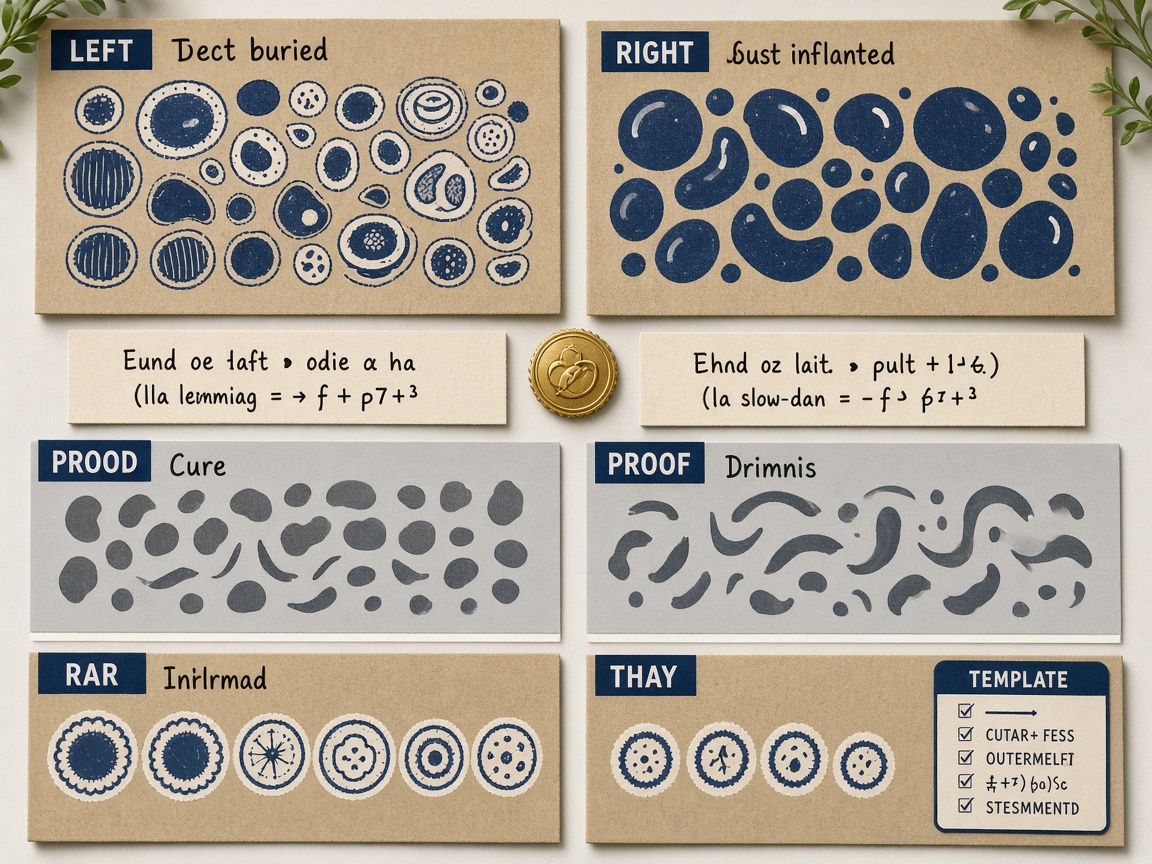
The left-hand habit is still common: a keyword-stuffed H2, a long throat-clear, then the actual answer somewhere after a list of related terms. Models skip that structure or compress it badly, and readers who already saw a summary have no extra reason to click. The right-hand habit is mechanical. Question-shaped heading. Two to four sentences that could be quoted without the rest of the page. Then constraints, counter-examples, a template or screenshot, and a link deeper into your own library. You are not adding adjectives; you are changing where meaning sits.
- Open each H2 with a standalone answer, then expand—never reverse that order.
- Put proof, exceptions, and internal links after the lift, not inside it.
- Match heading language to how people ask, not to a stuffed variant of the seed keyword.
The contract — Every major heading owes the model a 2–4 sentence answer it can lift, and owes the reader original proof, limits, and links the Overview cannot fully replace.
Citation-ready structure: sequential headings, front-loaded facts, no stuffing
That dual-win contract only holds if the page is built so an answer engine can lift a clean passage without dragging along keyword padding. Sequential headings do most of that work: each H2 (or H3) answers one question, and the next heading is the logical follow-on—definition, then constraints, then comparison, then exceptions—not a cluster of synonym variants. Sequential heading structures have been associated with 2.8× higher AI citation odds, because the model can map “this block answers this ask” without guessing.
Pack the verifiable material at the top of each of those blocks, and of the page. A CXL study of 100 AI Overview pages found 55% of citations came from the top 30% of page content. Lead with the number, the definition, and the constraint in the 2–4 sentence answer you already owe under the heading. Save the anecdote and the long setup for after the extractable claim. If a fact cannot be checked, it does not belong in that opening span.
Aim for higher fact density than a thin explainer. Typical AI Overview-cited articles cover 62% more facts than typical non-cited articles: more distinct, checkable claims per section, each sitting next to a method, a date range, or a named source. Density is not stuffing. Stuffing repeats the same query phrase; density adds a second true statement the first one did not already contain.
Where you have a real conversation on the record, add a named expert quote. In SE Ranking data cited by HubSpot, pages quoting experts averaged 4.1 ChatGPT citations versus 2.4 without expert quotes. Anonymous “industry experts say” does not count; attribution is the point. Keep the surrounding passage short and self-contained so the quote can stand alone if it is lifted. A citation that looks like a stuffed snippet is a citation you will lose the next time the model rewrites the Overview.
Structure — Scannable sequential headings plus checkable facts in the first third of the page earn the lift; synonym stuffing and buried numbers do not.
Add what an Overview cannot copy
Once headings, front-loaded facts, and extractable answers are in place, survival depends on original proof a summary cannot steal: named methods, operator templates, screenshots of real workflows, worked examples with your numbers, and claims tied to sources a reader can check. An Overview can paraphrase a definition. It cannot reproduce your field notes, your failed attempt, or the spreadsheet you actually used.
Google’s helpful-content guidance still asks a blunt question: does the content provide original information, reporting, research, or analysis? That is the bar. Remixing the SERP—even with cleaner sentences—does not meet it. People-first pages start from something you observed, measured, or built, then wrap the citeable answer around that asset so the engine can quote you without replacing you.
Original assets, not scaled filler
Using AI or automation mainly to manipulate rankings is not a scale tactic. Google treats that as a violation of spam policies on scaled content. Automation can draft outlines or check structure; it cannot be the reason the URL exists. If the page would look the same without your process, your data, or your voice, it is not proof—it is inventory.
Searchers still leave the summary for a human when the Overview is generic. Google notes that people are increasingly seeking out and clicking on sites with forums, videos, and podcasts—authentic first-hand voices—even as overall organic click volume stays relatively stable. Process notes, named frameworks, and artifacts you can screenshot are the article equivalent of that click: they give a reason to open the tab after the citation.
- Publish one uncopyable unit per section: a template, a screenshot, a named method, or a worked example.
- Tie every non-obvious claim to a verifiable source or to first-hand reporting you can describe.
- Keep the voice of the operator who did the work—not a blend of competing SERP copy.
Uncopyable proof — Citation-ready structure gets you quoted; original examples, methods, and first-hand artifacts are what still earn the click after the Overview.
Format, schema, and the publish gate that keeps scaled drafts honest
Once those original assets exist, the last job is to make the page easy to lift without making it empty. Short paragraphs, a list where a sequence actually exists, and a table when you are comparing options give both classic snippets and answer engines a clean passage to quote. Dense walls of text hide the same facts that sequential headings and front-loaded answers already earned.
Schema is a mirror, not a hiding place. Add FAQ or HowTo markup only when the visible copy already answers those questions in the same words a reader would see. If the schema invents questions, restates keywords, or disagrees with the body, it does not help citation and it can look like stuffing. Match on-page language first; mark it up second.
A writing gate for every AI-assisted draft
Scaled drafts fail the dual-win contract when they skip the gate. Before publish, require a standalone answer under each question-shaped heading, a fact sitting next to its source, one uncopyable asset (example, template, screenshot, named method), and no stuffed repetition of the same claim. If a section cannot pass that check, it is not ready—automation is a drafting aid, not a ranking tactic.
Operators who need the full research-to-publish sequence or thin-content guardrails should use the adjacent runbooks for those workflows. This page stays on the writing contract: extractable answers at the top of each section, original proof the Overview cannot copy, clean format so engines can cite you, and a reason to click that still lives only on your URL.
Gate, then ship — Publish only when each heading can be cited in two to four sentences and the page still holds something an Overview cannot steal.
Key Takeaways
Audit your next informational brief against this dual-win contract before you publish, then ship the uncopyable asset that makes the click worth it.
Frequently Asked Questions
You Might Also Like
- AEO Answer Engine Optimization (AEO): How to Get Cited by AI Search
- Comparisons AEO vs SEO: What's Different and What Still Matters
- Strategy GEO Optimization: How to Optimize Content for Generative Engines
- Workflows SEO Content Brief: How to Brief Writers (and AI) So Pages Rank
- AEO How to Get Cited by ChatGPT: A Practical Visibility Checklist