AEO vs SEO: What's Different and What Still Matters
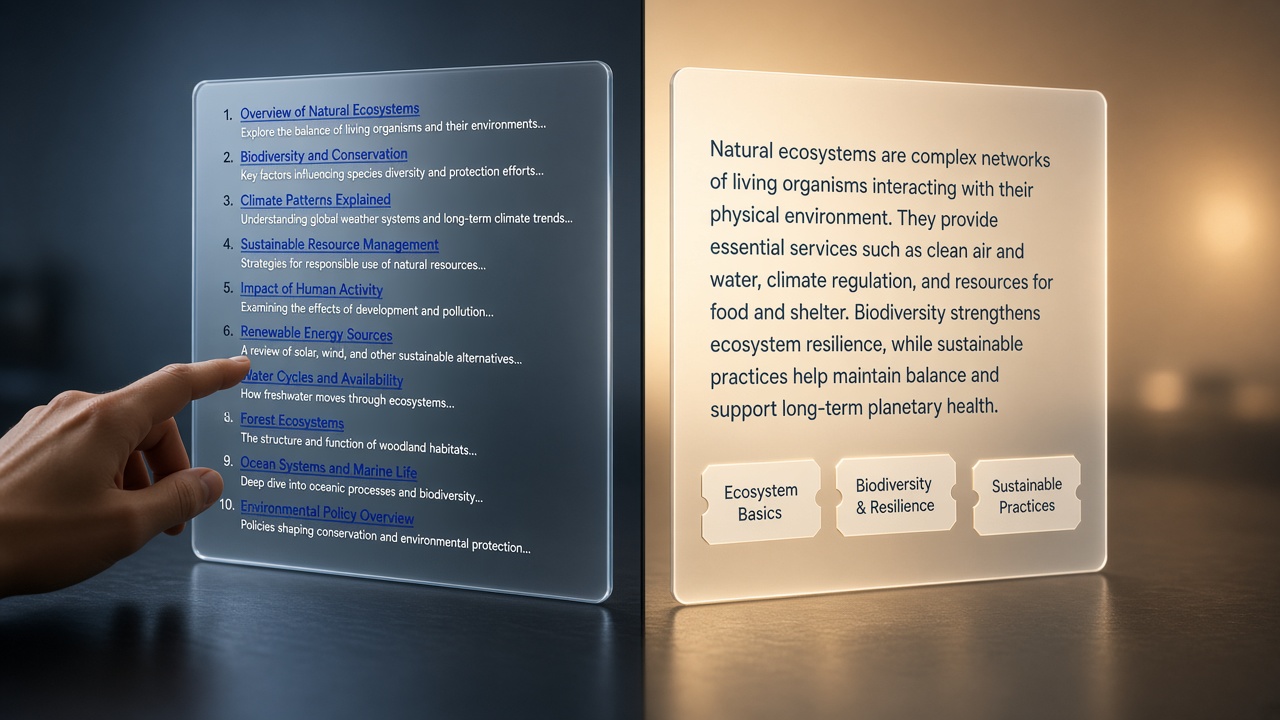
Search used to mean a list of blue links. Today it also means a synthesized answer that may never send a click. That is why people now ask AEO vs SEO—not because one replaced the other, but because ranking a page and earning a citation are different jobs with overlapping foundations.
SEO still means making pages discoverable, relevant, and competitive in traditional results. Answer engine optimization (AEO)—sometimes discussed as AI search visibility or GEO—means structuring facts, entities, and proof so models can quote you accurately when they compose an answer. The work that still matters is crawl access, clear claims, original evidence, and a brand people already trust.
This article splits those two outcomes so lean teams can keep classic discovery healthy without treating every AI-overview headline as a new ranking factor. You will leave with a practical way to decide what to keep doing, what to add, and what not to chase.
- SEO optimizes for ranked pages and clicks; AEO optimizes for being cited inside AI-generated answers.
- Both still need crawlable pages, clear entities, original facts, and a trustworthy brand.
- AI answers compress sources, so unique evidence and unambiguous statements matter more than keyword stuffing.
- Lean teams should keep technical SEO and intent coverage, then add extractable Q&A and citation-ready proof.
- Treat GEO, AEO, and AI visibility as the same family of work: earn inclusion, not just a position.
What AEO and SEO actually mean
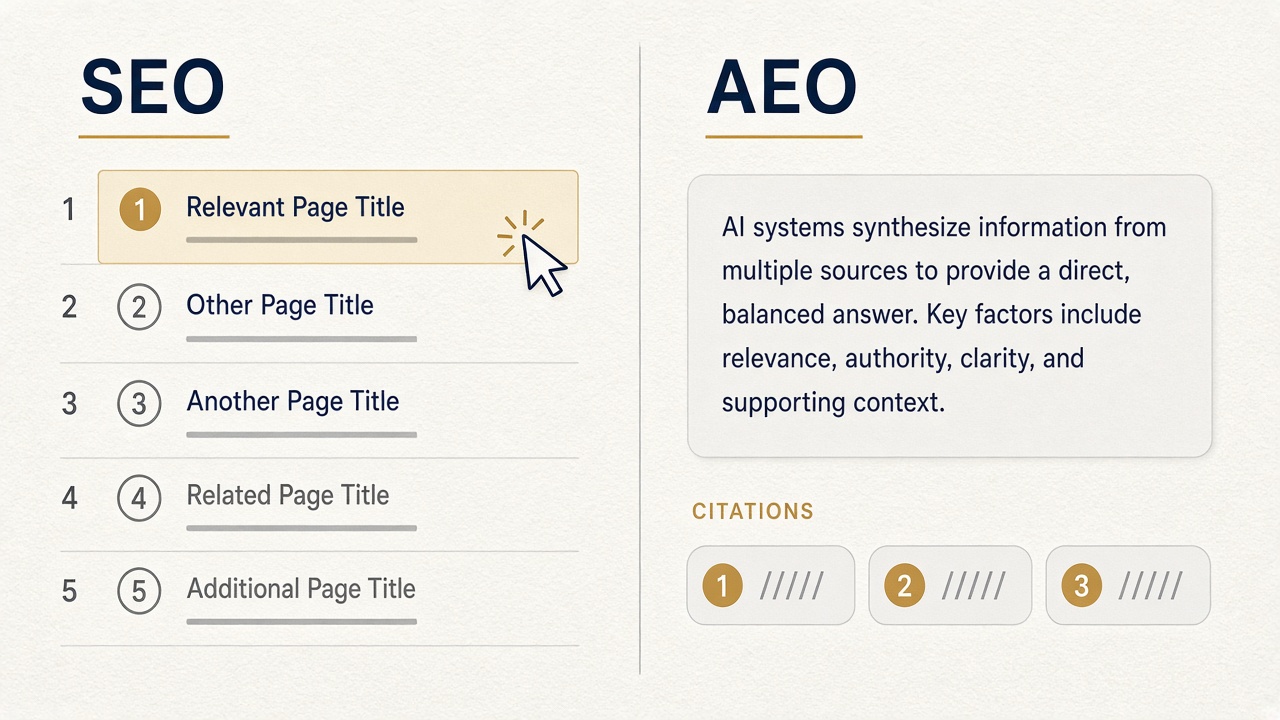
That comparison is a question about jobs, not a new name for the same checklist. Search still starts with pages a crawler can fetch, parse, and trust—but what those pages are asked to do next has split in two.
SEO is the work of shaping pages and sites so traditional search engines can crawl them, rank them, and earn a click from a results list. The outcome is visibility in a ranked set of links, and the unit of success is still a visit to your URL.
AEO is the work of making those same pages extractable, attributable, and worth citing when an answer engine synthesizes a response. The outcome is being used inside the answer—quoted, paraphrased, or named as a source—rather than merely listed among destinations. Crawlable, trustworthy content is the shared foundation; the optimization target is different.
GEO is a related label for the same shift toward generative and AI engines. This piece stays on the AEO-versus-SEO decision: which job you are hiring the content to do. Tactics for generative placement and for earning citations belong in a GEO playbook and an AEO citation guide, not in a rehash of ranking checklists.
Jobs, not a rebrand — SEO optimizes for crawls, ranks, and clicks; AEO optimizes for extractable, attributable citations inside synthesized answers. Same crawlable trust, different job.
How people actually get answers now

That split in jobs only matters because the path to an answer has changed. A huge share of questions no longer end on a classic results page you scan, compare, and click. They resolve inside an overview, a chat reply, or a synthesized box that tries to settle the issue on the spot. The user still searched; they just never left the answer surface.
That is why ranking first is not the same as being the source the model names. A page can sit at the top of ten blue links and still be skipped when an engine compresses several documents into one reply. Another page can sit lower, or never “win” the traditional slot, and still be quoted, linked, or paraphrased because it was easy to extract and safe to attribute. Visibility here is not a renamed ranking report. It is whether you show up as a mention, a citation, or a chunk inside the answer itself.
Once the reply is composed on that surface, the user may never scan a list of titles or open a second tab. The engine has already chosen which facts to keep and which sources to name. Discovery still happened; it just finished before a click.
The shift — AI search is a different surface—inclusion in the answer, not a new name for position one.
Ranking and a click vs. citation inside the answer
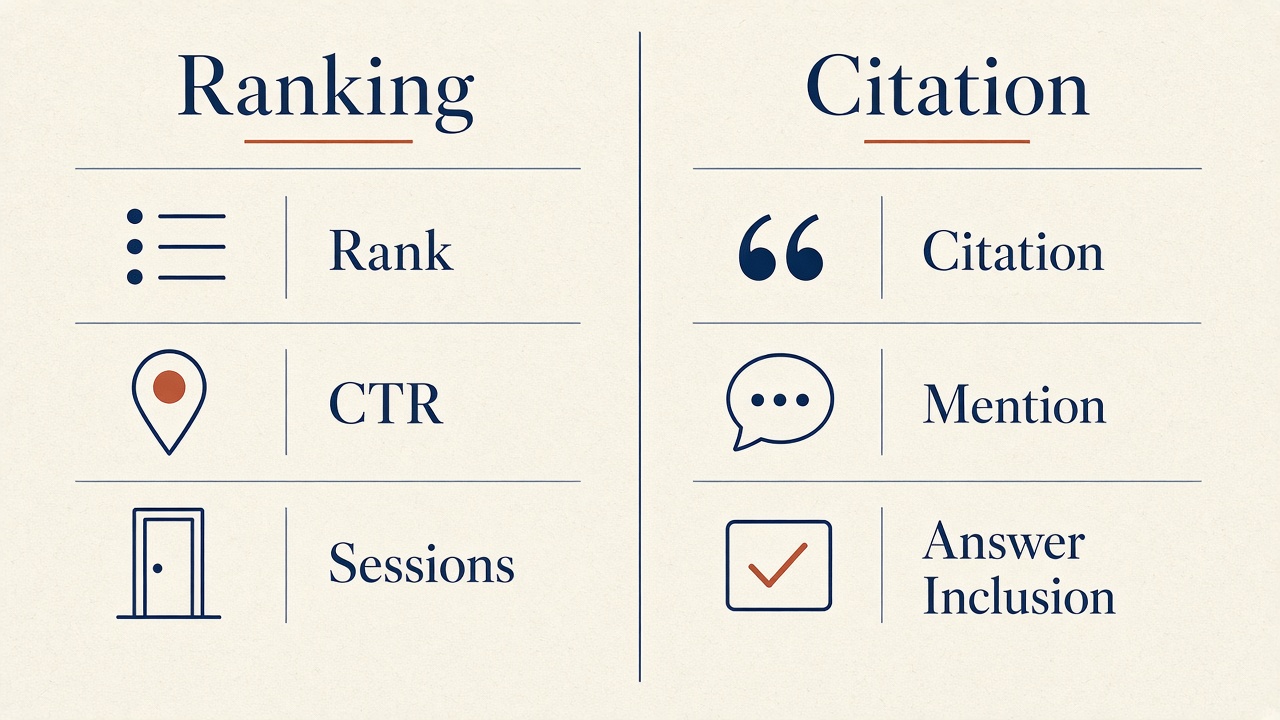
Those two surfaces need different success conditions. A ranked page still wins when it earns the click and holds the visit. A cited page wins when a fact, definition, or step is lifted into the reply and attributed—even if nobody lands on the URL.
Content shape follows the job. Classic SEO still leans on keyword-intent pages, supporting sections, and internal links that pass context between URLs. Answer-engine work favors concise, sourceable statements: clear definitions, numbered steps, and answer-ready blocks a model can lift without guessing. You do not abandon structure; you make the extractable unit obvious.
How you measure each job
Measurement splits the same way. SEO still tracks rankings, organic sessions, and conversions from the visit. AEO is whether you are mentioned, cited, or included in the answer, and whether key claims appear intact. Treat those as different dashboards, not interchangeable KPIs.
What does not transfer is equally important: stuffing prompt-like phrases, cloning thin FAQ pages for every query, and chasing every chatbot as if they ranked the same way. Those tactics waste crawl budget and rarely produce attributable facts.
Two jobs — Optimize the page for a rank-and-click when that is the outcome; shape extractable, attributable claims when the outcome is being used inside the answer.
What classic SEO still decides for both rankings and citations

That contrast does not make the old fundamentals optional. Answer engines and classic crawlers still have to find a page, trust it, and tell it apart from copies. If robots are blocked, the site is slow, canonicals conflict, or the same article lives in three URLs, you will not rank and you will not be cited. Structure, speed, and a single clear version of the truth remain the shared floor.
Experience, expertise, authoritativeness, and trust still decide whether you are a source worth using. Original evidence, named entities, and a match to search intent are how both ranking systems and synthesizers judge whether a passage is safe to lift. Thin rewrites of the same FAQ do not become “AEO-ready” just because they are short.
Links, brand demand, and on-page clarity still help twice: they support classic rankings and they raise the chance a model retrieves you as a source. Internal links that show how ideas connect, titles that state the claim, and copy that can be quoted without extra context all serve both jobs.
Autogenerated pages without a point of view fail both. Quality is the shared constraint, not a new trick. If the page adds nothing a careful editor would keep, neither a ranking algorithm nor an answer engine has a reason to use it.
Shared floor — Crawlable, canonical, original, intent-matched pages remain the shared requirement; AEO does not replace that floor, it only changes what “winning” looks like once the page is eligible.
How to split AEO work from the SEO you already do

That foundation is also how you divide the work. Technical SEO, intent mapping, and pages with a real point of view stay the base. AEO is not a second site or a parallel content factory. It is an extra pass on URLs that already deserve to be sources—clear enough to extract, specific enough to attribute, and strong enough that an answer engine would rather cite you than paraphrase a weaker page.
Do not run that pass on every URL. Put AEO effort on definitional, comparison, and how-to queries where synthesized answers actually appear. Product hubs, thin blogs, and pages built only for branded navigation can stay in the classic rank-and-click lane. Lean teams should write one research brief—audience, entities, evidence, objections—and ship it once for both surfaces instead of staffing two programs.
Operators who need the citation-ready mechanics—sourceable blocks, entity clarity, how answers get attributed—should follow the existing AEO citation guide rather than a second playbook here. SEO still earns the right to be found. AEO is how you stay named when the click never happens.
The split — Treat AEO as a selective pass on pages that already qualify as sources, not as a duplicate content program.
Key Takeaways
Start with the pages that already earn trust, then use the GEO playbook and AEO citation guide to make those URLs extractable and worth citing.