How to Find Long-Tail Keywords Without a Big Research Stack
Long-tail is a demand label, not a word-count label. Ahrefs treats a query as long-tail when monthly searches are small compared with the head term, and calls defining it by length a mistake. Their example, “can meditation make you smarter,” is long-tail because it gets about 50 searches a month — not because it has five words. A two-word niche term can sit in the tail; a popular four-word phrase can be the head.
The tail is most of the keyword set and almost none of the volume, which is why a paid stack is a poor first stop. In Ahrefs’ U.S. database, keywords with fewer than 10 monthly searches account for almost 93% of the set — about 2.3 billion terms — while Backlinko’s study of 306 million U.S. keywords found long-tail terms (1–100 searches) were only 3.3% of total search volume, with a median volume of 10. Google has long said about 15% of daily searches are new, and Ahrefs notes that figure was reconfirmed in 2025. Tools that need repeated searches to show a number will undercount exactly the queries you came to find.
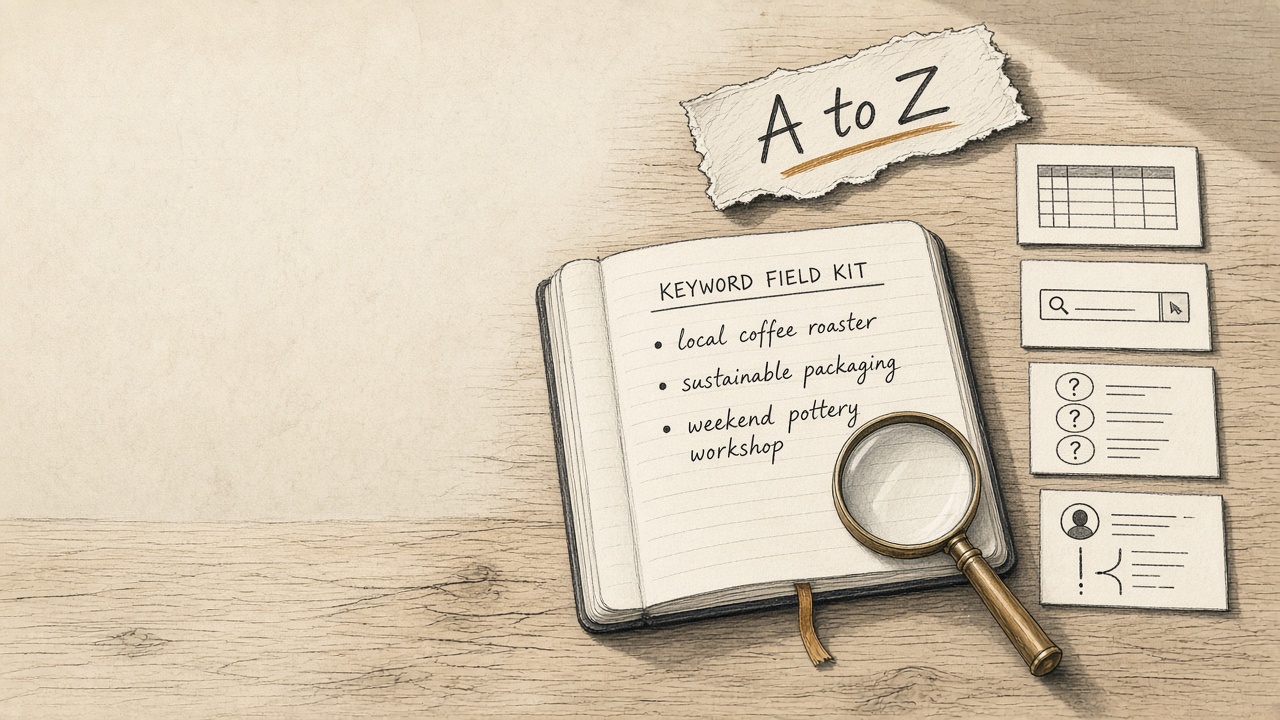
A free field kit is enough if you stop before thin pages. Mine Google Search Console first, then autocomplete (including A–Z expansion), People Also Ask, related searches, and niche forums. Group same-intent variants onto one URL: Ahrefs notes that a page ranking for a parent like “healthy dog treats” (6.8k searches) already picks up many of its variations. Collision-test the live results before you brief anything. SparkToro’s September 2024 panel found one-off queries were 59% of terms and only 2.2% of volume — a curiosity is not a page.
- Long-tail means low demand relative to the head term, not a fixed word count.
- Search Console, autocomplete, People Also Ask, related searches, and forums cover most discovery without a paid stack.
- Queries already showing impressions around positions 8–30 are demand Google already ties to your site.
- Same-intent variants belong on one page; the live SERP is the parent-topic check.
- Refuse generator mashups and single-search curiosities before they reach a content brief.
What is a long-tail keyword if it is not just a long phrase?
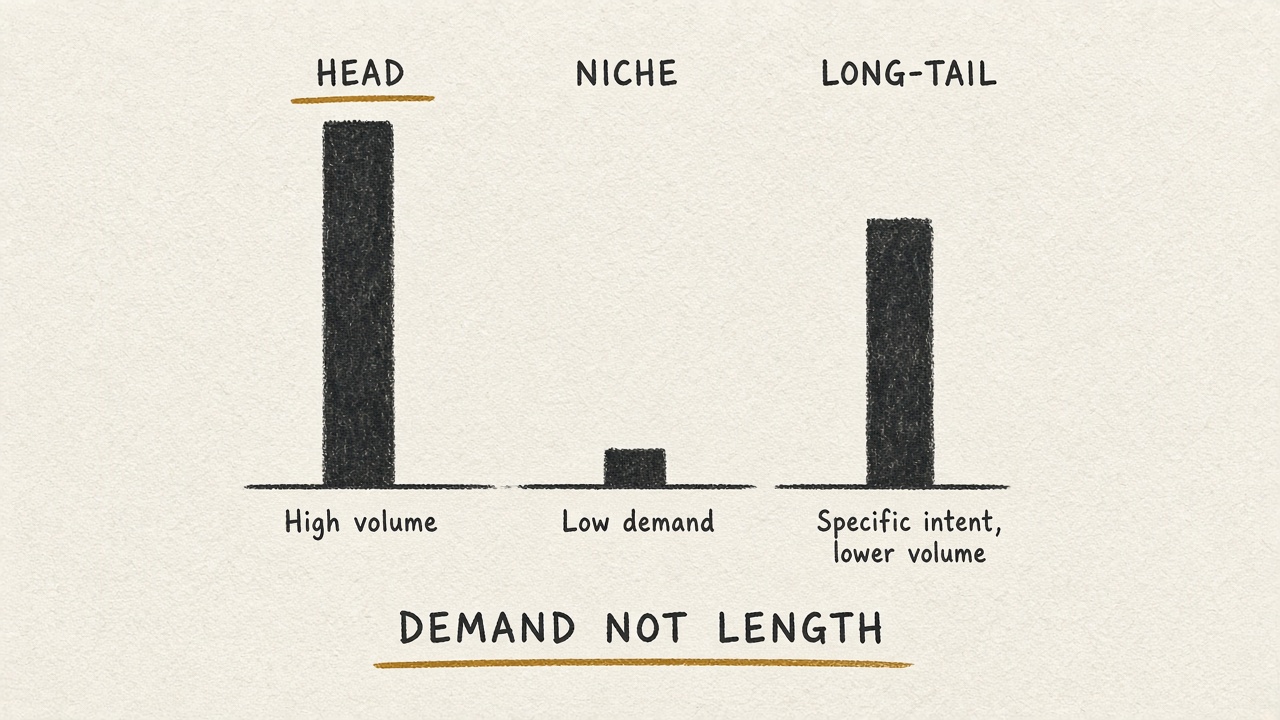
There is no fixed monthly-search cutoff. Ahrefs says the label depends on how the query compares with its head term, and that word count is the wrong test — a length filter will not separate tail from head.
That is why a volume tool can show zero for a query people still type. Terms of five or more words get about 10 times fewer searches than terms of one to three words, but that gap is not a word-count rule. Treat a reported zero as unmeasured until Search Console or the live results confirm demand.
Low demand, not length — A long-tail keyword is low search demand relative to its head term. A zero in a volume tool usually means the query is undercounted, not that nobody searches it.
How do I find long-tail keywords without Ahrefs or Semrush?

You can find them without either tool. Four free sources cover most of what paid platforms return: Search Console, autocomplete and People Also Ask, community forums, and internal site search. A focused pass takes 45–90 minutes, not a research day.
Start with one seed in autocomplete, People Also Ask, and related searches, then pull Search Console queries that already have impressions at an average position between 8 and 30. Filter volume last. Paid databases undercount the small queries this method is built to catch, so a blank volume field is not a reason to drop a term.
That batch—Search Console mining, autocomplete, and a few manual result checks—should beat trusting a difficulty score alone. Cap it: one seed, one export, one community set, plus on-site search if you have it. Stop at a shortlist, not a spreadsheet dump.
Hand that shortlist to the clustering and brief workflow you already use. This pass only captures candidates; it does not decide which variants share a page or which fields go in the brief.
Free stack — Autocomplete, People Also Ask, related searches, Search Console positions 8–30, forums, and internal search cover most long-tail capture in a 45–90 minute pass that ends at a shortlist.
How do I pull long-tail queries from Google Search Console?
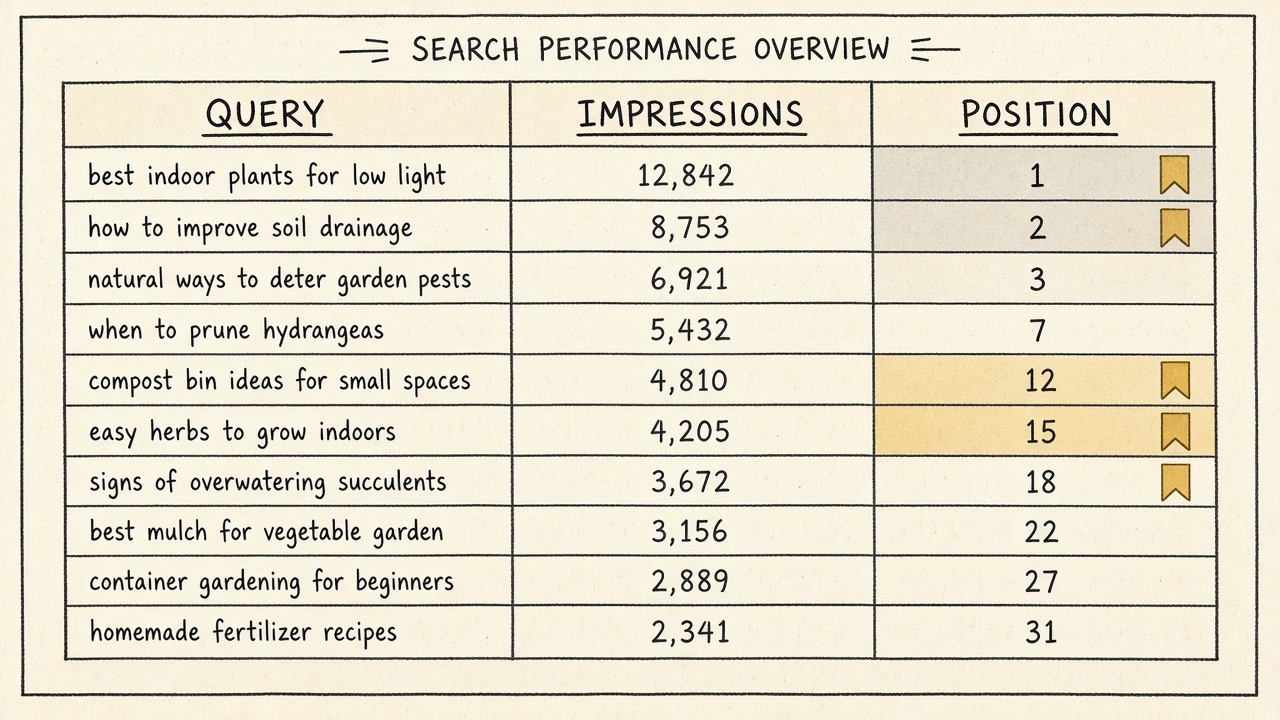
Those position 8–30 rows only become a harvest once you filter them. Mine the Performance report for queries that already earn impressions, especially that band: demand Google already ties to your site. Ahrefs treats Search Console as an underused long-tail source, and a question-word regex is the fastest way to see it.
The page already earning the impression is the default home. Do not mint a new URL from a Search Console row until the live results disagree on intent.
Stay on the earning page — A Search Console impression is a vote for the URL that already ranks, not a brief for a new page.
How alphabet-soup autocomplete, People Also Ask, and Reddit become keyword ideas
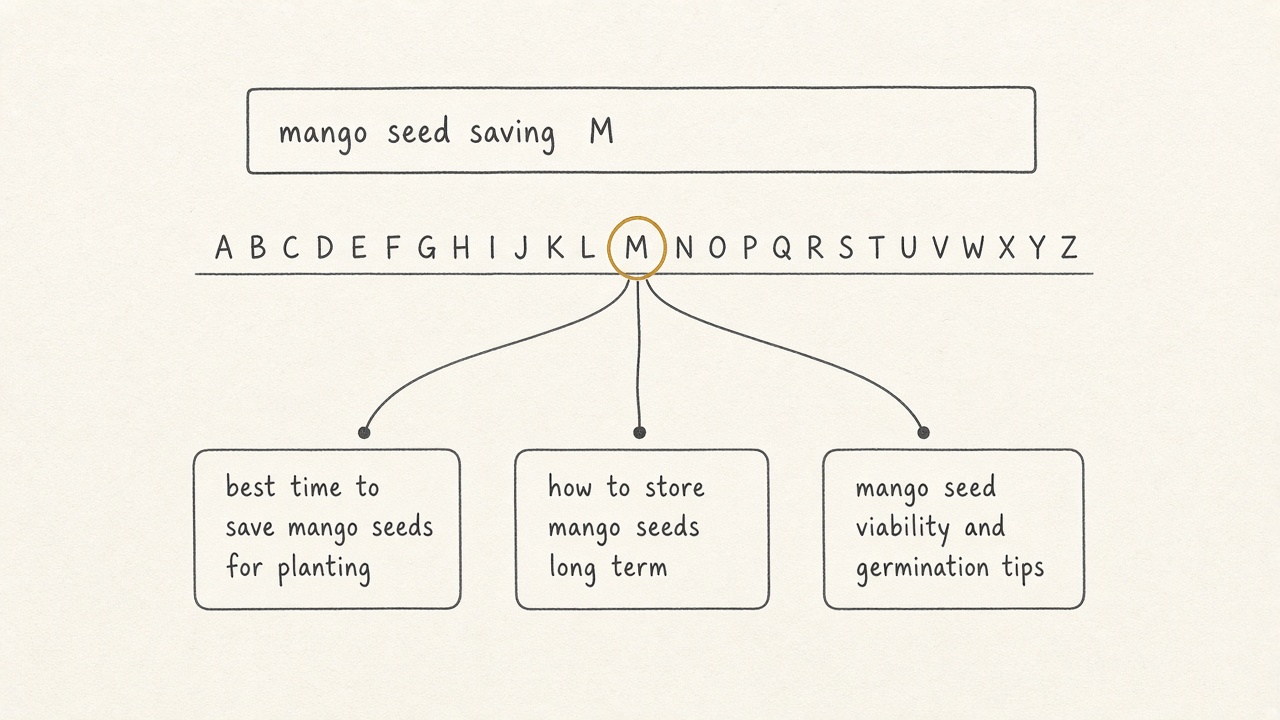
Search Console shows queries that already earn impressions. Alphabet soup is how you surface the modifiers those reports never list. Type the seed, then each letter, and again with a space plus each letter, so autocomplete fills in combinations you would not have guessed. One seed can yield 150–200 unique suggestions.
Keep suggestions that name a real task, audience, or constraint. Free generators often mash a seed with common words and invent phrases nobody searches—those go to the refuse pile.
People Also Ask boxes and the related-search row are ready-made sub-questions and sibling intents. Question queries were 14.1% of Backlinko’s sample, and “how” was the most common type. Open each People Also Ask box and record whether the ranking pages already match a URL you have. If they do, the idea supports that page rather than starting a new one.
On Reddit or a niche forum, search the seed and copy how people phrase the problem—symptoms, constraints, failed attempts—not the thread title alone. Use that phrasing as support or FAQ language, not as an automatic new page.
Filter first — A suggestion is only a candidate when it names a real task and the live results do not already answer it on a page you have.
Should you create a page for every long-tail keyword?

No. Most of what you just harvested is support, an FAQ line, or a refuse—not a new URL. Group same-intent variants onto one page.
A supporting long-tail often ranks the same pages as a more popular parent, so those variants should not each get a URL.
Do not trust an automated parent-topic label. Open the live results. Same pages and the same intent means support. A different format, audience, or job can earn its own brief; if the top results already answer the query, hold the page.
Refuse generator mashups, single-search curiosities, and anything the current results already cover.
Rare is not valuable in aggregate. In Backlinko’s study of 306 million U.S. keywords, 91.8% were long-tail (1–100 searches a month). Average monthly volume was 989 only because a few head terms skew the mean.
Same intent, one page — Most long-tail finds are support, FAQ, or a refuse. Brief a new URL only when the live results show a distinct job.
Do longer keywords convert better than short ones?

Longer paid-search queries can convert better than short ones because they carry clearer intent, not because every long phrase deserves a page. An NP Digital study of 40 companies, branded terms excluded, found six-word queries converting at 1.94%, against 0.17% for one-word and 1.02% for three-word queries. Organic traffic curves the other way. In a May 2025 Ubersuggest sample of 103,921 sites, three- and four-word queries held the largest shares, with three-word queries at 31.5%, one-word queries at 3.7%, and two-word queries at 10.1%.
Conversational AI does not replace that pass. More than 95% of conversational long-tail queries on AI platforms have no measurable volume, because phrasing rarely repeats. Answers often match sub-questions the system generates, called query fan-out, so brief the stable sub-question rather than one user's sentence. Hand only the held shortlist into the existing brief as primary, support, FAQ, or reject; do not paste the raw capture list into brief fields. Clustering and the practical brief stay in those workflows. This article stops at capture, collision, and hold rules.
Hold, then brief — Clearer intent is why longer paid queries convert better. Brief the stable sub-question from the held shortlist, not a one-off conversational sentence or the raw capture list.
Key Takeaways
Run one seed through that free pass this week, then brief only the queries whose live results show an intent you do not already cover.
Frequently Asked Questions
You Might Also Like
- Guides Long-Tail Keywords: How to Turn Low-Volume Queries Into Rankable Briefs
- Strategy Keyword Clustering: How to Group Keywords into Rankable Topics
- Strategy Long-Tail Keyword Research: A Practical Workflow for Briefs
- Workflows SEO Content Brief: How to Brief Writers (and AI) So Pages Rank
- Guides Free SEO Content Brief Generator: How to Brief Writers in Minutes