Automation
How In-Article AI Chat Boosts Dwell Time and SEO Rankings for Autoblogged Content in 2026

Autoblogged content scales output, but scale alone does not hold attention. Readers arrive, scan a few paragraphs, and leave—short sessions that send weak behavioral signals and leave rankings exposed. In 2026 that gap matters more than ever: pages ranking in Google's top three average over three minutes time on site while page-two pages average under ninety seconds, and AI-generated answers now appear in over 55% of searches, compressing organic CTR further.
The missing layer is conversation. When an AI chat sits inside the article—trained on the piece itself plus your site knowledge—it answers follow-up questions instantly, guides readers to related posts, and turns passive scanning into active dialogue lasting several minutes. Aggregate case data shows session duration rising from 1 min 45 sec to 4 min 30 sec and bounce rates falling from 68% to 42%. Those gains compound with the E-E-A-T and structured-data work already baked into modern AI SEO automation.
This article unpacks exactly how in-article chat lifts dwell time and rankings for autoblogged content, how the conversation logs feed fresh long-tail ideas back into the automation pipeline, and the placement, training, and measurement practices that keep the experience fast, useful, and Core Web Vitals-friendly. If you publish at scale, the chat is no longer a nice-to-have widget—it is the engagement engine that protects and grows the organic traffic your automation creates.
TL;DR
- In-article AI chat converts passive reading into multi-minute conversations that raise dwell time and lower bounce—key ranking signals in 2026.
- Top-three pages average over three minutes on site; chat routinely lifts sessions from under two minutes into that range.
- Chat logs surface real reader questions and long-tail terms that feed directly back into content and SEO automation pipelines.
- Placement, site-specific training, and lightweight loading keep the experience helpful rather than intrusive.
- Measured lifts in session duration, pages per session, and organic traffic compound with existing E-E-A-T and schema work.
Why Autoblogged Pages Struggle With Behavioral Signals in 2026
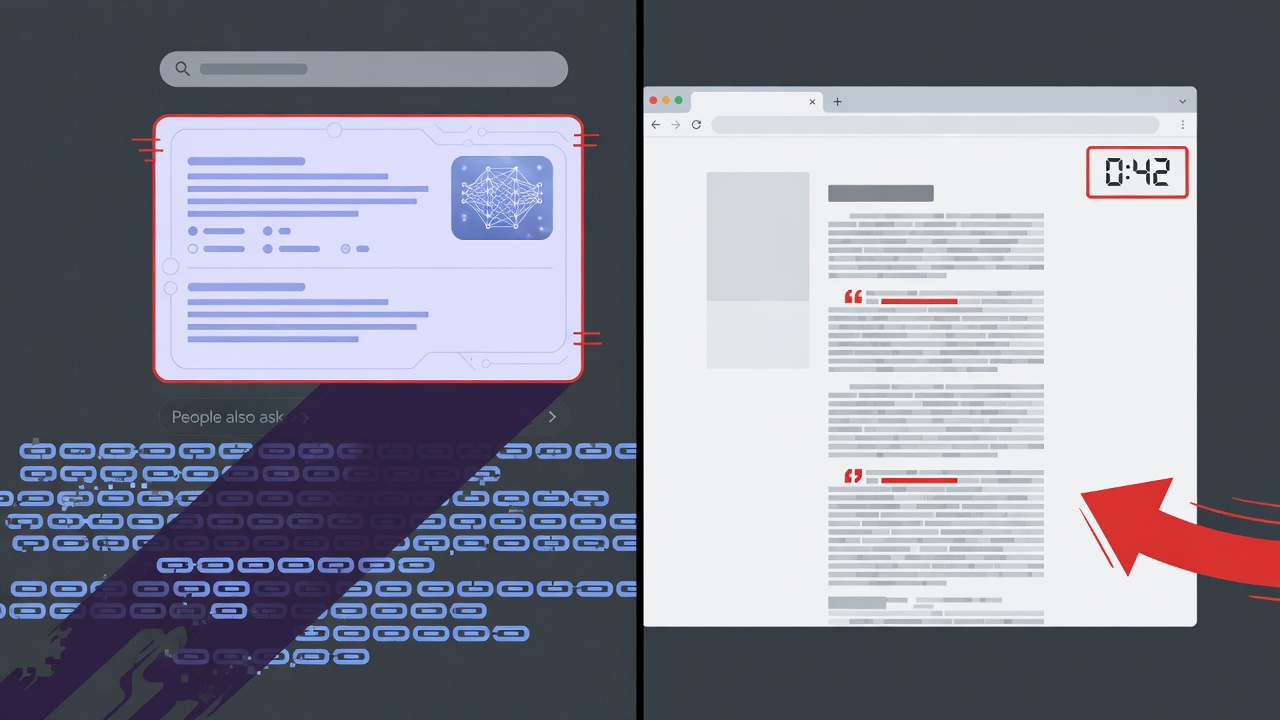
In-article AI chat is the engagement layer that turns static autoblogged pages into interactive sessions. Without it, even well-structured AI content fights an uphill battle for the behavioral signals search engines now weigh most heavily.
AI-generated answers now appear in over 55% of all Google searches. That single shift moves the real contest from winning the SERP click to proving value once the reader lands. On queries where AI Overviews show up, organic CTR drops 61%. Fewer visitors arrive, so every session that does begin has to work harder: longer dwell, deeper scroll, lower bounce, more pages viewed. Autoblogged pages are especially exposed here. They often read as complete—tight structure, clean headings, solid coverage of the primary query—yet they leave the natural follow-up questions hanging. A scanner finishes the last paragraph, still wonders “what about X?” or “how does this apply to Y?”, and exits. The behavioral footprint stays thin.
High-volume publishing without an interactive layer compounds the problem. Automation excels at shipping pages at scale, but scale alone does not create the session depth that competing, conversation-ready content generates. Search systems see short visits and rapid exits as weak relevance signals, especially when stronger pages on the same topics keep users engaged. A sitewide support bot does not solve this; it sits outside the article, pulls attention away from the content, and rarely feeds useful query data back into the SEO pipeline. What publishers need is a scalable way to hold attention inside the piece itself—answering the next question the moment it forms, guiding the reader to related sections or articles, and turning passive consumption into an active exchange.
That is the precise gap in-article AI chat closes. It meets the reader where the unanswered questions arise, extends the session without forcing navigation elsewhere, and begins generating the engagement metrics that protect and grow rankings for autoblogged content at scale.
Behavioral signals now decide rankings — With AI answers in over 55% of searches and a 61% CTR drop where Overviews appear, autoblogged pages must convert quick scanners into longer sessions or lose ground to more interactive competitors.Dwell Time, Bounce, and Pages-per-Session: Ranking Inputs You Can Still Influence
Those engagement metrics start with how long a reader stays and whether the visit ends almost immediately. Top positions still correlate with multi-minute time on site. Pages ranking in Google’s top three average over three minutes on site, while page-two pages average under ninety seconds. Broader studies put top-ranking pages at roughly two minutes and thirty-seven seconds of dwell, with lower-ranking pages averaging under one minute. Weaker pages simply fail to hold users past that first minute—and autoblogged content that feels “complete” often loses them right there.
Even when Google’s exact weighting remains opaque, dwell time and related behavioral signals stay practical proxies publishers can influence. Bounce rate, session duration, and scroll depth are measurable in every analytics setup. A reader who lands, finds an unanswered follow-up, and leaves after thirty seconds leaves a thin footprint. One who stays long enough to ask a clarifying question, receive a useful reply, and keep reading builds the richer session that search systems continue to reward.
Pages-per-session and return paths multiply the effect. A single landing article that sparks conversation can guide the reader deeper into the autoblogged library instead of ending the visit cold. Each internal suggestion answered by the chat turns one click into two or three pageviews and raises the chance the visitor comes back. That compounds the value of every organic arrival—especially when AI Overviews already tax click-through.
In that environment, engagement quality becomes a defensive moat. Static pages that leave questions hanging lose the session and the ranking signal that comes with it. Interactive sessions that extend dwell past the one-minute mark, cut bounce, and increase pages-per-session give autoblogged content a measurable edge competitors without in-article chat cannot easily match.
Behavioral signals still decide rankings — top pages hold readers over three minutes while weaker ones lose them under a minute; dwell, bounce, and pages-per-session remain the proxies publishers can actively improve even when Google’s exact weights stay hidden.
How In-Article AI Chat Rewrites the Reader Session
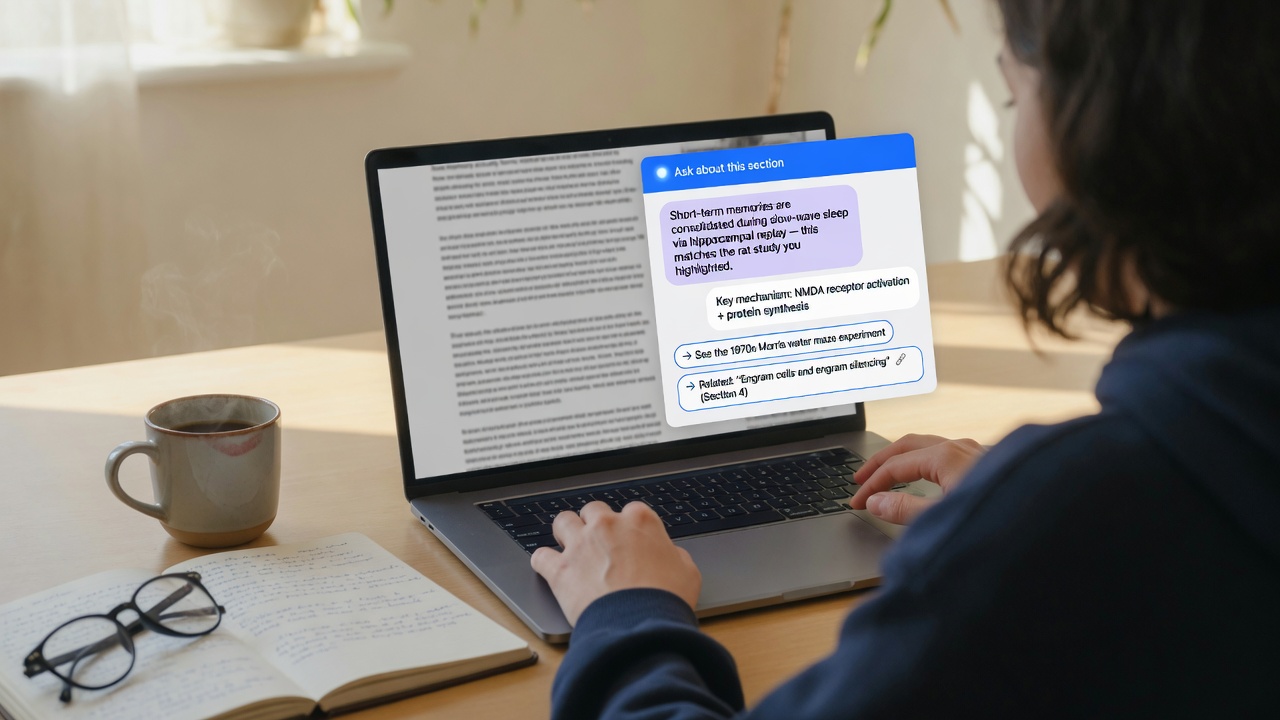
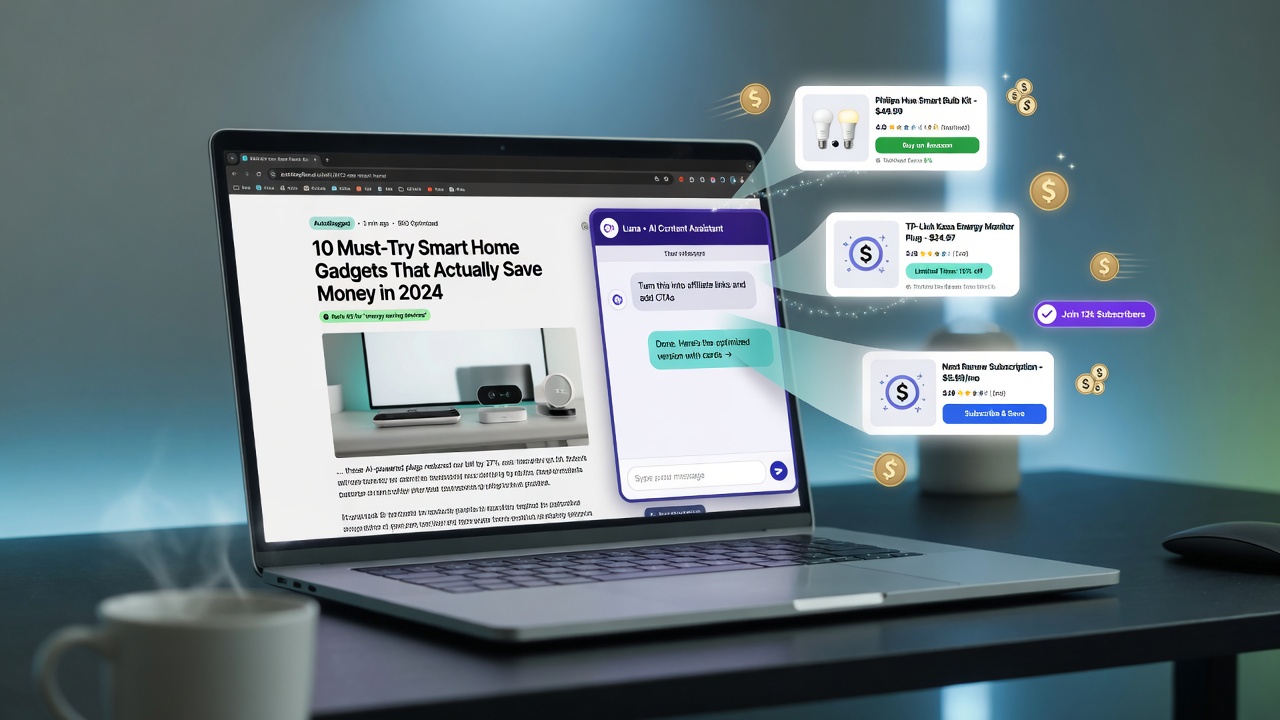
That edge arrives the moment an unanswered question stops being a reason to leave and becomes the start of a conversation. In-article AI chat trained on the piece itself—and on the surrounding autoblogged library—meets the reader at the exact point of confusion. Instead of bouncing to a search tab or a competitor, the visitor types the follow-up, gets a contextual answer drawn from the article, and stays inside the session. The page stops feeling like a finished monologue and starts behaving like a live expert who is still in the room.
Because the chat is scoped to the article rather than bolted on as a generic sitewide bot, the replies feel relevant the instant they appear. A reader finishing a section on keyword clustering can ask how that maps to their own niche and receive an answer that references the paragraphs they just read, not a canned FAQ. That contextual usefulness is what keeps the clock running and the bounce from registering.
The measurable lift when chat is well deployed
Case patterns across publishers who added article-scoped chat show the same directional story. Aggregate data records average session duration rising from 1 minute 45 seconds to 4 minutes 30 seconds—a 157 percent increase—while bounce rate dropped from 68 percent to 42 percent. In a separate six-month deployment, average dwell time moved from 1 minute 22 seconds to 3 minutes 48 seconds (a 178 percent lift) and organic traffic climbed 52 percent. A well-deployed chatbot keeps visitors engaged by providing instant answers, which naturally increases time on site and reduces bounce rate as core SEO signals.
Those gains compound when the chat does more than answer. Responses that surface related internal links turn a single landing page into a guided tour of the autoblogged corpus. One dataset shows pages-per-session climbing 89 percent—precisely because the dialogue pulls readers deeper into connected pieces rather than ending at the footer. The chat has rewritten the session from a short, complete-feeling scan into an active, multi-page exploration that search engines still reward.
Article-scoped chat converts hanging questions into continued dialogue, delivering documented lifts of 157% in session duration, 38% lower bounce, and 89% more pages per session while keeping the experience contextual instead of generic.
Before vs After AI Chat Deployment
The Chat-to-Pipeline Loop Most Autobloggers Overlook
That multi-page exploration does more than pad session metrics. Every question a reader types into the in-article chat is a live signal of what the piece left unresolved—gaps that neither keyword research tools nor a single-pass AI draft reliably surface. Those queries arrive in the reader’s own language, at the exact moment curiosity spikes, so they expose the real holes in coverage far more honestly than planner spreadsheets ever can.
When you treat the chat log as an input rather than a novelty, the pipeline starts to feed itself. Repeated questions become the seed for FAQ blocks that can be inserted or expanded on the next refresh. Clusters of follow-ups around a sub-topic flag which sections deserve priority rewrites. Entire new autoblogging briefs emerge already phrased in demand language instead of guessed intent. Engagement stops being a one-way ranking tactic and turns into continuous fuel for the content automation system that produced the page in the first place.
How the loop compounds at scale
The real power appears once the cycle runs for more than a single publish. Stronger articles, refined by earlier chat data, answer more of the obvious questions up front. That raises the quality of the remaining conversation: readers dig into finer distinctions, edge cases, and related intents. Those sharper gaps then become the briefs for the next wave of automated pieces. Each generation of content arrives better calibrated, the chat grows more useful, and the behavioral signals search engines still reward keep climbing without requiring a larger editorial headcount.
Publishers who ignore the log leave the most valuable output of the interaction on the table. They get the dwell-time lift and stop there. The ones who close the loop convert every conversation into a permanent upgrade to the automation itself—turning static autoblogged pages into a self-improving library that stays aligned with what readers actually need next.
Chat logs are pipeline fuel — repeated reader questions expose coverage holes keyword tools miss, seeding FAQs, refreshes, and new briefs so engagement continuously sharpens the entire autoblogging system.Embed In-Article Chat Without Tanking SEO or UX
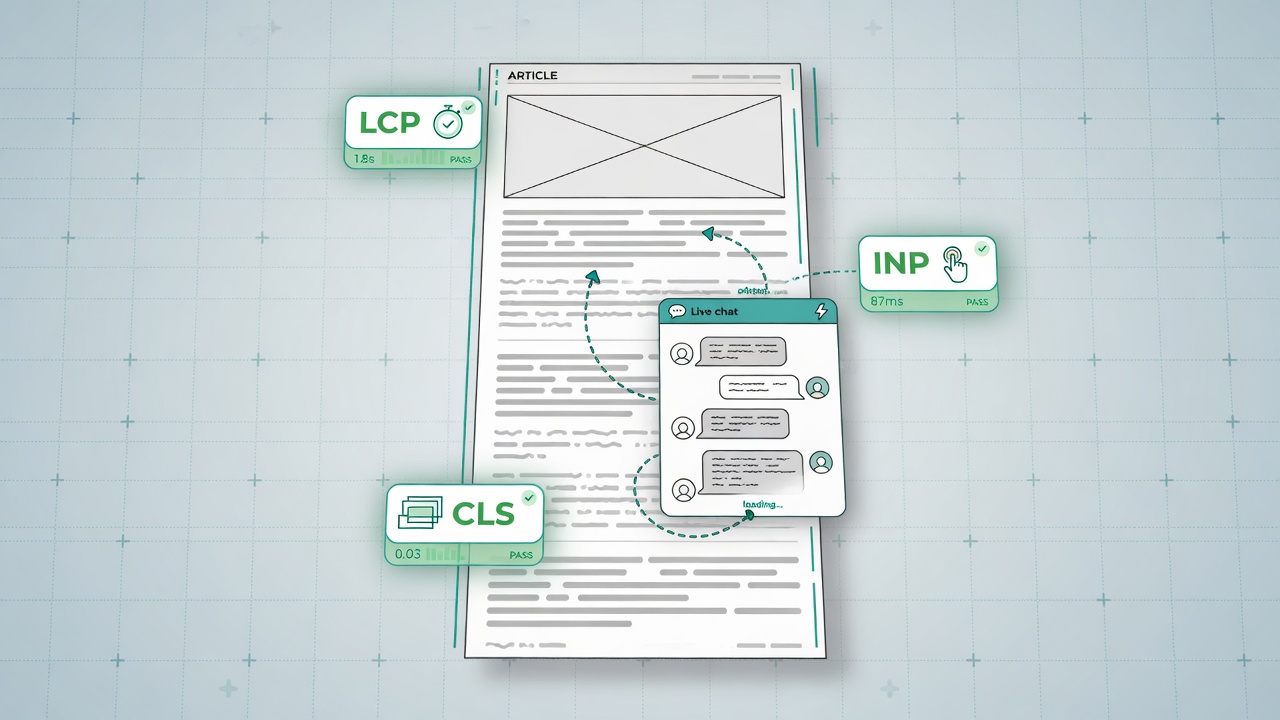
That upgrade only sticks if the chat itself is embedded thoughtfully. Drop an aggressive popup or a sluggish generic bot onto an autoblogged page and you can erase the very dwell and bounce improvements the conversation was meant to create. The goal is a widget that feels like a natural extension of the article—present when the reader needs it, invisible when they do not.
Start by choosing placement that respects attention. In-flow blocks that appear after a relevant section, or a discreet sticky launcher scoped to the current article, keep the reader inside the piece. Full-screen takeovers and auto-opening modals, by contrast, interrupt scanning, inflate bounce, and train users to close the tab. The same principle applies to answers: every response must be grounded in the current article plus an approved set of site sources. When the model stays inside that boundary it reinforces topical authority instead of drifting into generic advice that weakens E-E-A-T signals.
When those constraints are met, live or AI chat enhances user engagement, improves dwell time, and reduces bounce rates—all of which contribute positively to search rankings. The reverse is equally true: a slow script that tanks Core Web Vitals or a generic bot that answers outside the article’s scope sends the opposite signals and can undo months of automation work. Treat the chat layer as part of the page’s performance budget and editorial voice, not as an afterthought bolted on top.
Non-intrusive, article-grounded chat — Embed with in-flow or sticky placement, async loading, and strict source grounding so the widget lifts dwell and rankings instead of harming UX or Core Web Vitals.Compounding the Gains: Schema, Internal Links, and GEO as One System
Once the chat layer sits cleanly inside the performance budget and editorial voice, the real multiplier appears when you stop treating it as a standalone widget. Dwell lifts from in-article conversation and structured data reinforce each other: better on-site behavior tells algorithms the page is worth ranking, while clearer entity and structure signals make the same page easier for AI systems to understand, cite, and surface.
Schema is the quiet partner here. Accurate structured data can make content 3.4× more likely to be cited and deliver up to a 50% potential lift in AI search visibility. After the March 2026 updates, accurate schema also delivered a 3.2× AI Mode citation lift by acting as a trust and entity signal. Chat protects the post-click experience that those citations send traffic toward; schema improves the odds the page gets cited in the first place. One without the other leaves half the loop unfinished.
The same principle applies inside the conversation itself. When chat replies surface deep internal links—related autoblogged pieces, supporting guides, or cluster hubs—they turn a single session into multi-page exploration. That strengthens topical clusters across the library, raises pages-per-session, and feeds the crawler a denser, more coherent site graph. The reader stays longer because the next useful answer is one click away; the automation pipeline benefits because every suggested link is already scoped to content the system itself produced.
Treat chat, schema, and internal linking as one compound system rather than three isolated tactics. Ground the model on the current article plus approved sources so answers stay on-voice. Mark up the page so entities, FAQs, and relationships are machine-readable. Let the chat recommend the next relevant piece so clusters tighten over time. The engagement signals protect rankings after the click; the structured signals improve visibility before it. Together they turn static autoblogged pages into living sessions that keep compounding long after the draft is published.
One compound system — Pair in-article chat with schema and intentional internal links so dwell lifts, citation odds, and topical clusters reinforce each other instead of competing for attention.Key Takeaways
Add grounded, article-scoped AI chat to your next autoblogged pieces and let the engagement data start sharpening both dwell metrics and your automation pipeline.
Frequently asked
Yes. By extending dwell time and cutting bounce, chat strengthens core behavioral signals. Case data shows average session duration rising from 1 min 45 sec to 4 min 30 sec (+157%) and bounce falling from 68% to 42%, while six-month results linked +178% dwell gains to +52% organic traffic.
Pages in Google's top three average over three minutes time on site; broader studies put top-ranking pages around two minutes thirty-seven seconds while lower-ranking pages stay under one minute. Chat is one of the most reliable ways to push autoblogged pages into that range.
They become a continuous source of real reader questions, FAQ candidates, and long-tail keyword opportunities. Those insights feed topic selection, content refreshes, and internal-link suggestions back into the automation loop.
Only if it is heavy, intrusive, or poorly trained. Lightweight, deferred loading, contextual placement, and training on the full article plus site knowledge keep the experience fast and helpful rather than disruptive.
AI-generated answers now appear in over 55% of Google searches and can cut organic CTR by 61% on those queries. Stronger on-site engagement and clear entity signals become more important for the clicks that still arrive and for earning citations.
Track GA4 session duration, bounce rate, pages per session, and scroll depth before and after launch, then compare organic traffic and keyword movements over 30–90 days. A/B testing placement further isolates the lift.
You Might Also Like