
How to Optimize AI Autoblogged Content for Google AI Overviews and Generative Engines in 2026
AI Overviews, ChatGPT Search, Gemini, and Copilot no longer just rank pages—they synthesize answers and name the sources they trust. If your content is produced by AI autoblogging pipelines, the old playbook of keyword density and bulk publishing is not enough. Generative engines favor pages that look and read like citable primary sources: clear direct answers, original framing, verifiable claims, strong entity coverage, and signals of experience and editorial care.
That shift is already visible in how teams work. More than 47% of marketers are already implementing AI SEO tools to improve search efficiency, and another 84% are using them to identify and leverage emerging search trends. Another 19% of marketers plan to add AI to their SEO strategy in 2026 alone. The winners will not be the sites that publish the most automated posts; they will be the ones that turn automation into consistently quotable assets.
This guide is the practical citation-engineering playbook for that reality. You will learn how Generative Engine Optimization (GEO) and Answer Engine Optimization (AEO) change what “good” autoblogged content looks like, how to structure every article so models can extract and attribute it cleanly, which hybrid QA gates prevent thin or generic output at scale, which AI SEO and GEO tools actually help you measure visibility beyond classic blue links, and how an in-article AI chat layer turns passive posts into engagement and monetization surfaces that reinforce the same authority signals. The goal is evergreen: whenever a reader (or a model) lands on your content, it should be the clearest, most usable source on the topic.
Why High-Volume Autoblogging Still Loses AI Overview Citations
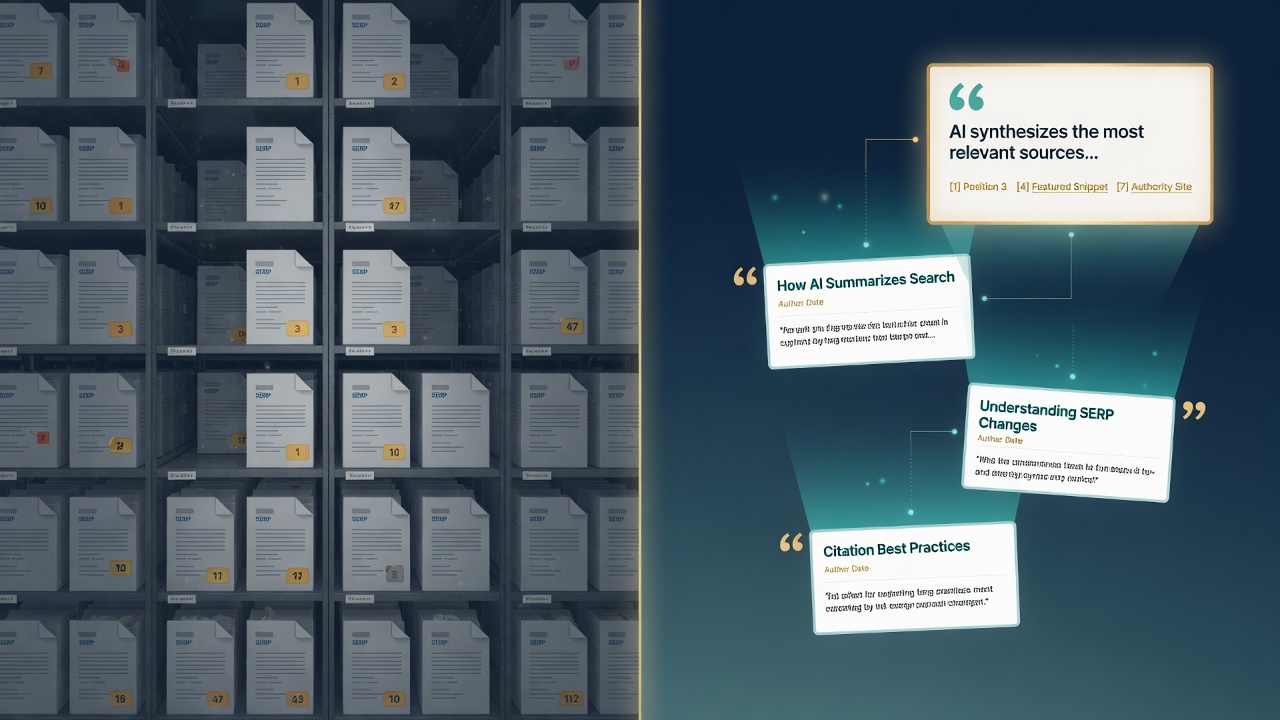
The full stack—including in-article AI chat that compounds authority and engagement—only works once you close the citation gap that pure-volume autoblogging leaves wide open.
In 2026, Search Everywhere Optimization—powered in part by Generative Engine Optimization (GEO)—is essential. AI Overviews, Bing Copilot, and ChatGPT Search mean discovery is no longer Google-first. Pages can still rank in classic blue-link results yet remain invisible when generative engines answer the query. The most significant shift is the rise of GEO and Answer Engine Optimization (AEO): models like Google Gemini, ChatGPT, and Microsoft Copilot no longer just index pages; they generate direct answers and summaries by synthesizing a handful of primary sources.
Classic SEO still rewards keywords, backlinks, and technical health. Generative engines prefer something different: clear, extractable answers, well-defined entities, original statistics, and claims that can be attributed cleanly. GEO focuses on optimizing content to be a primary source for those AI-generated responses. An autoblogged post stuffed with secondary summaries and thin variations rarely qualifies. It may rank; it simply is not selected when the model builds its overview.
The rest of this article supplies the missing post-generation layer—the deliberate engineering between content automation and AI citation. Without it, scale only multiplies invisible pages.
Citation gap — Autoblogged pages optimized only for classic rankings stay invisible in AI Overviews and generative engines because those systems synthesize primary sources, not blue-link lists.Lock In Answer-First Architecture at Generation Time
That missing layer begins with structure, not polish. Answer-first architecture means every automated post opens with a concise, extractable resolution to the core query—usually two to four sentences that a generative engine can lift cleanly—before any narrative expansion, background, or supporting argument. The model gets a self-contained block it can cite; the reader gets immediate value. Everything that follows exists only to deepen, qualify, or evidence that opening answer.
Generation rules make the block reliable. Require explicit entity density so primary and related entities appear early and in natural proximity. Force a short definition snippet for the main concept and one or two related-question subheads that mirror how people actually query generative engines. Keep the quotable answer brief and self-contained, then allow supporting depth afterward. Undifferentiated walls of AI prose fail here; short, attributable blocks plus clear expansion succeed.
These rules only scale when they live inside the generation system itself rather than as a later editing pass:
When prompts, briefs, and templates all enforce the same answer-first contract, citation structure is produced at scale instead of bolted on after the fact. The result is autoblogged content that generative engines can actually use as a primary source.
Answer-first architecture — every automated post must open with a short, extractable resolution plus clear entities and definition snippets, encoded directly into prompts, briefs, and CMS templates so the citable structure is generated at scale rather than repaired later.
Hybrid QA Gates That Keep E-E-A-T Intact at Autoblog Scale
That primary-source readiness still collapses if quality slips once volume ramps up. Teams are already leaning hard into AI SEO tooling, so the control layer has to keep pace—or the same systems that generate answer-first posts will flood generative engines with thin, unattributable copy they simply skip.
Hybrid gates close the gap without killing throughput. Run automated checks first: claim verification against source libraries, statistic consistency scans, uniqueness scoring, and entity coverage tests. Only the survivors reach a short human review focused solely on experience and trust signals—does the piece surface first-party data, named expertise, or clear authorship? Reviewers spend minutes confirming those markers, not rewriting drafts.
Inject trust signals into the workflow, not after it
Bake authorship into CMS templates so every programmatic post carries a real byline and bio. Pull first-party metrics or proprietary benchmarks from analytics or internal databases straight into generation prompts. Maintain a lightweight expert-quote library that the AI can insert and a reviewer can approve in one pass. The result is E-E-A-T that travels with the content at scale instead of being bolted on later.
This is not generic “write better AI content” advice. Generative engines treat attributable experience as a citation filter. Posts that clear hybrid gates become eligible primary sources; those that don’t remain invisible in AI Overviews even when they rank organically.
Hybrid QA gates — pair automated claim, stat, and uniqueness checks with brief human review of first-party data, expert quotes, and authorship so E-E-A-T scales with autoblogging and directly unlocks generative-engine citations.
On-Page Patterns That Make Autoblogged Content Citation-Ready

Eligibility alone is not enough. Generative engines still need extractable structure on the page before they will treat an autoblogged URL as a primary source. Once hybrid gates clear a draft, the next layer is deliberate on-page patterning that turns every generated post into something an AI Overview, ChatGPT Search, or Gemini can quote without heavy rewriting.
The patterns that raise citation odds are concrete and programmable: FAQ blocks that mirror real queries, numbered step sequences for how-to intent, definition callouts that isolate entity meaning in a single scannable unit, and inline statistics paired with clear attribution. Each creates short, self-contained blocks that generative engines can lift directly. AI Citation & GEO Optimization has become a core SEO-automation trend precisely because these layout choices determine whether a page is synthesized or skipped.
Bake the patterns into the generation pipeline
Autoblogging systems should not leave structure to chance. At generation time the pipeline can auto-attach FAQPage, HowTo, and Article schema, enforce a single H1 plus logical H2/H3 nesting, and inject the FAQ, steps, and definition blocks as first-class template sections rather than optional add-ons. Consistent heading hierarchies and matching structured data turn GEO preferences into machine-readable signals on every URL.
The difference is easiest to see side-by-side.
A thin automated draft typically dumps long, undifferentiated paragraphs with no scannable units or schema. The citation-ready version of the same topic surfaces the core answer first, wraps key claims in definition or statistic callouts, adds a query-matched FAQ, numbers any procedural steps, and ships with complete structured data. That visual and markup contrast is what moves a post from organically ranked but invisible to actively cited.
Citation-ready structure is programmable — FAQ blocks, numbered steps, definition callouts, sourced stats, and auto-attached FAQ/HowTo/Article schema turn each autoblogged URL into an extractable primary source generative engines prefer.AI SEO Tools Built for Citation Tracking—Not Content Sprawl

That same contrast only pays off if you can measure which posts actually get cited. Once answer-first structure, callouts, FAQs, and schema are locked in, the tool conversation has to leave behind “which writer generates more words.” In 2026 the stack that matters centers on semantic research, content gap analysis, on-page optimization, and GEO visibility tracking across AI Overviews and other generative engines.
Current AI SEO capabilities now include semantic keyword research that surfaces related terms and user intent, content gap analysis that flags topics competitors rank for but you do not, predictive analytics that forecast rising queries, automated on-page optimization, and technical SEO audits. Those functions turn a high-volume pipeline into a citation-focused operating rhythm instead of another content factory.
Platforms that pair optimization with multi-engine tracking
A few platforms already reflect that shift. Surfer is noted for combining content optimization with GEO tracking in a single workflow. AirOps is built for agencies that need to automate SEO content production at scale. Rankability is designed around the agency reality that optimization now includes Google AI Overviews, ChatGPT, Gemini, local results, and classic organic rankings, with unified GEO-style visibility tracking across those surfaces.
Routine automations map directly onto the same rhythm. Technical audits, internal-linking suggestions, and performance tracking can run continuously, freeing teams to concentrate on strategy, original insight, and the hybrid quality gates that keep autoblogged posts citation-eligible.
Selection criteria if you already autoblog
For teams already running on an autoblogging platform, the filter is straightforward: choose tools that measure generative citations and multi-engine visibility, not another generic writer. Prioritize semantic and gap features that tighten entity coverage and answer density, GEO dashboards that surface AI Overview presence, and automation hooks that reinforce internal links and freshness without flooding the site. The result is a closed loop in which every generated post is scored, optimized, and tracked for whether generative engines treat it as a primary source.
Citation-focused tooling — Move past word-count generators to platforms that deliver semantic research, gap analysis, and GEO tracking across AI Overviews and multi-engine search so autoblogged posts can be measured—and improved—as primary sources.In-Article AI Chat That Compounds Authority and Monetization
That closed loop gains a further amplifier when you embed AI chat inside the article itself—not as a bolted-on widget, but as a live extension of the same primary-source architecture already engineered for generative engines. Readers stay longer and move through more pages because they can query your corpus directly: ask follow-ups, request clarifications, or surface related entities without leaving the post. Those engagement signals (dwell time, pages per session) reinforce the quality signals search systems already reward, while the conversation itself becomes a navigation and monetization surface.
Ground the assistant exclusively on the structured, sourced material you optimized for citations—the answer-first blocks, definition snippets, FAQ units, and attributable claims. When every chat response is retrieved from that corpus rather than an unanchored model, the assistant restates and expands your authority instead of diluting it with generic or conflicting language. The same entity density and schema that make the page citation-ready also become the retrieval layer the chat relies on, so generative engines and human readers encounter one consistent primary source.
Placement, boundaries, and commercial routing
Place the chat after the opening resolution or as a persistent panel so it appears once the core answer is already visible. Constrain system prompts to stay inside your topic graph, refuse off-corpus invention, and require short, extractable replies that mirror the article’s quotable style. For commercial intent, route qualified questions toward lead forms, product comparisons, or demo paths without breaking the helpful tone—turning curiosity into conversion while the underlying content remains the citable asset. This is what separates the approach from generic chatbot blogs: the UX is inseparable from the GEO-ready architecture, so every interaction still trains both readers and engines to treat the page as the authoritative source.
Close the Loop: Measure Overview Wins and Retrain the Pipeline
Closing that loop requires measurement that goes beyond classic rankings so the autoblogging system learns what actually earns generative citations.
Treat generative visibility as its own scorecard. Practical KPIs include AI Overview appearances for target queries, branded and unbranded citations inside ChatGPT Search, Gemini, and Copilot, assisted conversions that touch a cited or chat-enabled URL, and engagement lifts (dwell time, pages per session) on pages that carry the in-article assistant. These signals tell you whether answer-first structure, entity coverage, and hybrid QA are producing extractable primary-source material—or only more pages.
Feed wins and misses straight back into generation
When a post is cited, capture the exact phrasing, entities, and supporting stats that engines pulled. Push those patterns into the next content briefs, expand the shared entity list, and strengthen internal-link graphs toward the winning URLs. When a post is ignored despite solid rankings, flag thin answer blocks, missing definitions, or weak sourcing and rewrite the generation rules accordingly. The pipeline should optimize for citation rate, not raw output count.
Keep the cadence light: a short weekly scan of new Overview and multi-engine citation movement, plus a monthly review that updates prompts, templates, entity maps, and internal-link priorities. That rhythm turns automation into a self-improving citation engine instead of a content factory.
How do we instrument AI Overview and multi-engine citations without a full custom stack?
Start with GEO-focused trackers that log Overview appearances and mentions across ChatGPT, Gemini, and Copilot, then join those URLs to your analytics for assisted conversions and chat engagement. Manual spot-checks on priority queries fill gaps until automation is complete.
What should we change first when citation rate stays flat?
Audit the answer-first opening, entity density, and sourced claims on non-cited pages; those three elements are the most common blockers. Update briefs and CMS templates before adding more volume.
How do we avoid chasing vanity generative metrics?
Tie every visibility number to assisted conversions or qualified chat routes. If a citation never influences a next step, treat it as a content-quality signal, not a win.
Run this measurement-and-retrain loop consistently and every autoblogged post becomes a sharper primary source. That is how high-volume programs stay eligible for Google AI Overviews and generative engines over time—by engineering for citation, proving it, and feeding the proof back into the system.
Measure citation rate, not just output — track AI Overview appearances, multi-engine citations, assisted conversions, and chat engagement, then fold wins and misses back into briefs, entities, and links on a weekly/monthly cadence so automation compounds authority.Key Takeaways
Audit one autoblogged post against answer-first structure, hybrid QA, citation patterns, and chat grounding, then retrain your pipeline on what actually earns Overview and generative citations.
Frequently Asked Questions
GEO focuses on optimizing your content to be a primary source for AI-generated responses. For autoblogged posts, that means writing so models can extract clear answers, attribute claims, and prefer your page over generic competitors in AI Overviews, ChatGPT, and similar engines.
Classic SEO often optimizes for clicks and rankings; AI Overviews and generative engines optimize for synthesis and citation. You still need technical health and relevance, but structure, direct answers, originality, and trust signals determine whether your page is quoted inside the generated answer.
It can when automation is paired with hybrid quality gates, editorial standards, and citation-ready formatting. Pure unreviewed bulk output tends to look interchangeable to models; posts that add original insight, accurate sourcing, and human-checked accuracy compete far better.
Priority capabilities include semantic keyword research, content gap analysis, entity and intent coverage, automated on-page checks, technical audits, and visibility tracking that includes AI Overviews and other generative surfaces—not only classic organic rankings.
Embedded chat increases time on page and pages per session by helping readers clarify concepts, navigate related topics, and take next steps. Those engagement signals support overall quality perception while opening direct paths for guidance and monetization inside the article itself.
Track traditional rankings alongside AI citation and overview visibility, branded and non-branded mentions in generative answers, engagement on pages that earn citations, and whether updates to structure or evidence improve how often models reference your URLs.
You Might Also Like