SEO Strategies
How Does AI SEO Work in Practice

Search is undergoing its most radical transformation since the invention of the link. We are moving away from simple keyword matching toward highly dynamic, personalized experiences. According to research by BrightEdge, AI-powered search engines focus on intent and context to generate personalized answers that cite webpages rather than rank them.
For marketing teams, this shift requires a complete overhaul of how we approach organic growth. Fortunately, the same technology changing search is also upgrading our toolkits. Salesforce notes that AI enhances SEO by automating keyword research, optimizing content creation, predicting search trends, analyzing competitor strategies, and personalizing user experiences to boost rankings. Instead of spending weeks on manual spreadsheets, Semrush highlights that teams can now use AI for tasks like keyword research, content planning, SERP analysis, on-page improvements, and content refreshes in seconds.
This is not just theoretical; it is a proven playbook for scale. For example, financial publisher Bankrate increased organic traffic by publishing hundreds of AI-generated articles that were first examined and modified by human specialists. The secret lies in understanding how modern search engines evaluate this content. Google's AI systems analyze over 200 factors to determine which web pages are the most relevant, utilizing advanced techniques like retrieval-augmented generation (RAG) to pull up-to-date web pages directly into generative search results. To master this new landscape, we need to look closely at how these automated systems interact with your website in real time.
TL;DR
- AI SEO shifts focus from traditional keyword matching to satisfying deep search intent and user context.
- Modern search engines analyze over 200 factors and use retrieval-augmented generation to synthesize live web results.
- AI tools streamline complex tasks like keyword research, content planning, and automated post-publish refreshes.
- Successful organic scaling combines automated AI generation workflows with expert human review and editing.
Understanding the Engine: How AI Search Decodes Intent and Relevance
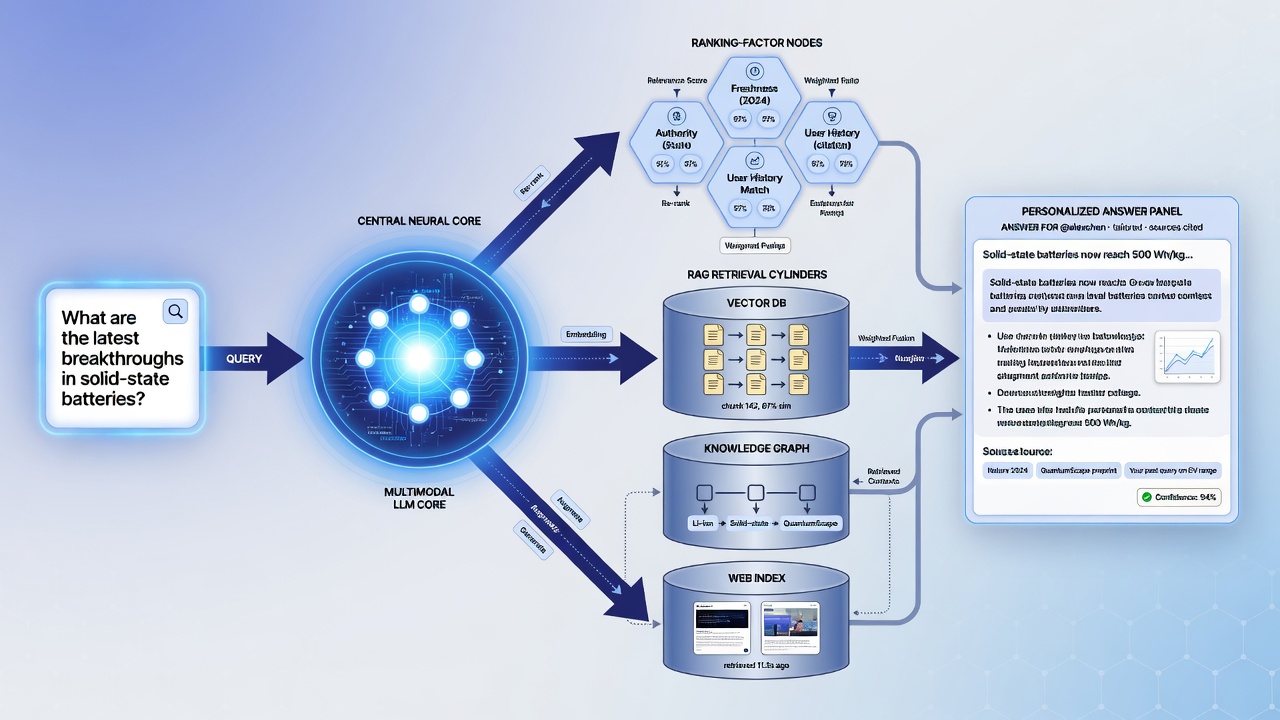
This real-time interaction is governed by a highly sophisticated, multi-layered process. Rather than running a simple checklist, Google's AI systems interpret over 200 ranking factors with layered spam detection, relevance scoring, and quality evaluation to determine which web pages deserve visibility. These layers act as a series of filters, instantly weeding out low-effort manipulation while elevating content that demonstrates genuine depth and authority. Instead of trying to game a static algorithm, modern optimization requires aligning your site with how these dynamic evaluation layers process information.
The Shift From Indexing to Intent
This evolution shifts the goals of SEO automation in several fundamental ways:
- Contextual Mapping: Content must address the broader topic ecosystem, answering adjacent questions that a user might ask next.
- Synthesized Citations: Because AI search engines generate direct, personalized answers, your content needs to be structured so that algorithms can easily extract and cite your data points within their generative summaries.
- Dynamic Relevance: Search engines constantly update their understanding of what constitutes a 'good' answer based on real-world user interactions and shifting context.
By understanding that search engines are actively synthesizing answers based on intent rather than merely sorting a list of links, we can shift our focus to the practical tools that help us map this landscape. This starts with identifying how AI can uncover these deeper intent patterns and analyze search engine results pages automatically.
Intent-first optimization — Modern AI search engines bypass traditional indexing to synthesize personalized answers based on user context, meaning SEO success now relies on providing structured, authoritative content that algorithms can easily cite.
Automating the Map: How AI Decodes Keywords and SERPs at Scale
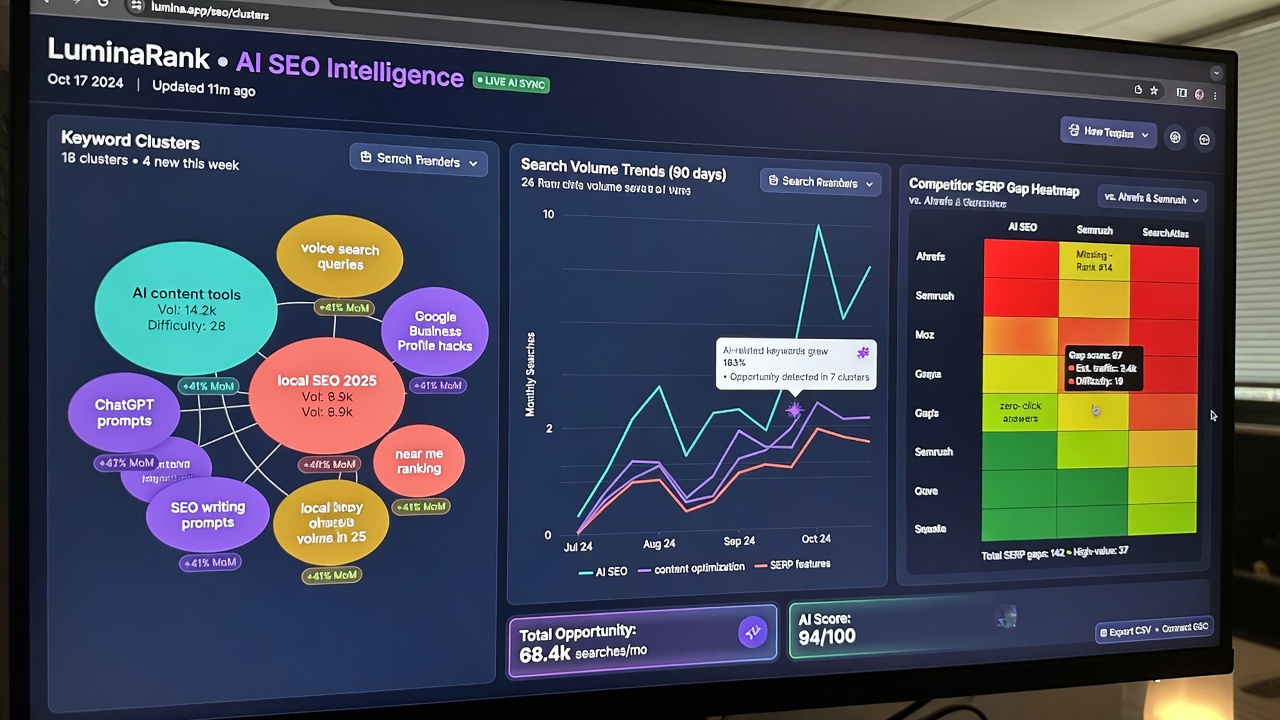
This automated discovery starts by replacing the oldest bottleneck in SEO: manual search query analysis. Historically, mapping out a search landscape meant exporting massive CSV files, manually grouping keywords, and guessing at search intent. Today, modern AI SEO tools process complex search data in seconds, allowing marketing teams to handle keyword research, content planning, and SERP analysis almost instantaneously. By analyzing thousands of search queries simultaneously, these tools find hidden semantic relationships that human analysts might overlook.
The real advantage of this approach lies in speed and scale. When you can analyze the entire competitive landscape for a topic in a matter of seconds, your content planning becomes proactive rather than reactive. Instead of chasing historical search volume, AI allows you to spot emerging trends and structural gaps in competitor content before they become saturated. This rapid analysis lays the perfect foundation for the next stage of the process: translating these keyword blueprints into high-performing, optimized content.
Automated discovery — AI-driven tools eliminate the manual bottleneck of keyword clustering and SERP analysis, turning hours of data-crunching into instant, actionable content blueprints.
Scaling Content Creation: Merging AI Automation with Human Expertise
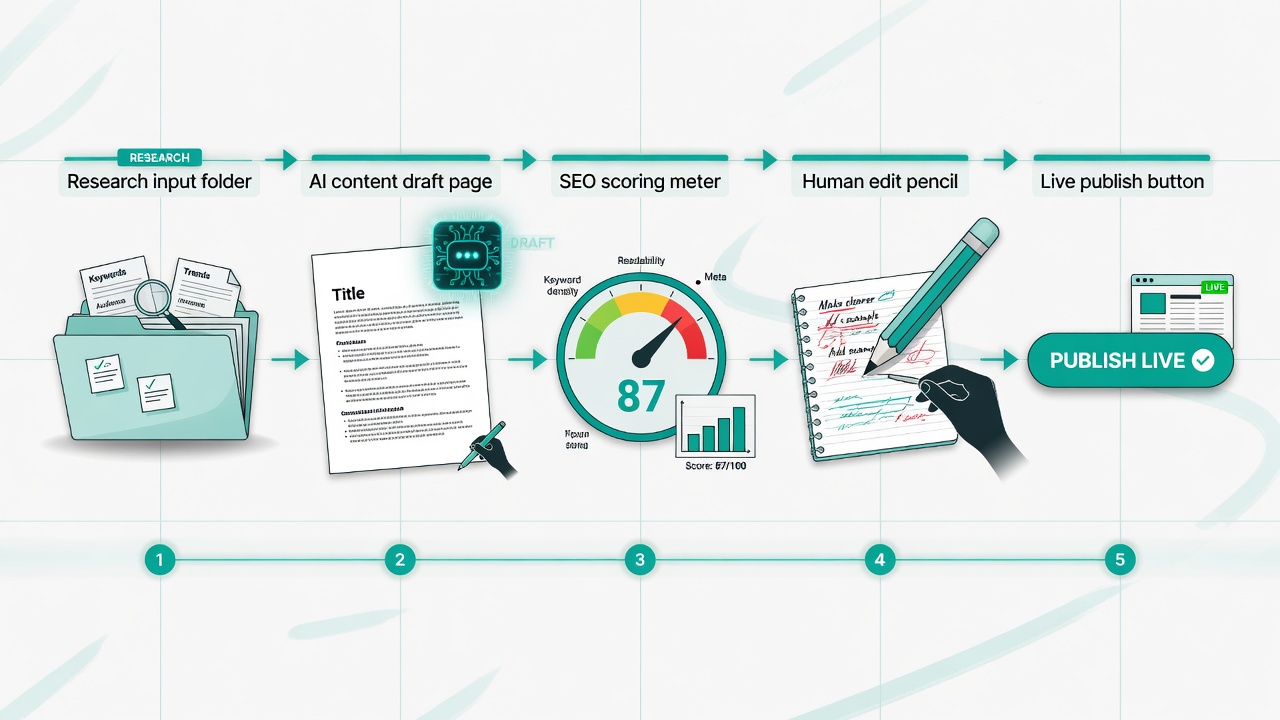
Translating a structured keyword map into actual, readable content used to take days of manual brief-writing and drafting. With modern AI SEO workflows, this process becomes an automated pipeline where machine learning models handle the heavy lifting of drafting, trend prediction, and personalization. Instead of starting from scratch, marketing teams can instantly generate deep, comprehensive drafts structured around the exact semantic intent search engines expect.
However, automated content creation is not a simple 'set-it-and-forget-it' solution. The true power of AI SEO lies in integrating these rapid automation capabilities with expert human oversight. While AI excels at analyzing vast datasets to predict which search trends are gaining traction and tailoring copy to match specific user profiles, human editors remain indispensable. They inject real-world experience, verify facts, and ensure the brand's unique voice shines through. This collaborative workflow ensures that the content is not only highly optimized for algorithms but also deeply valuable to human readers.
The AI-Assisted Editorial Pipeline
- Dynamic Brief Generation: AI analyzes top-ranking SERP competitors to build an optimized outline, identifying critical subtopics and semantic keywords.
- Predictive Personalization: Algorithms adjust the tone and complexity of the draft to align with the target audience's specific intent.
- Human-in-the-Loop Refinement: Subject matter experts review the draft to add original insights and authoritative perspectives.
By standardizing this hybrid approach, brands can scale their content production exponentially without sacrificing the high-quality signals that search engines demand. This optimized foundation is crucial, especially as search engines shift from displaying simple links to generating real-time, synthesized answers directly on the search results page.
Hybrid Workflows — Combining AI-driven automation for drafting and personalization with human expert oversight creates high-ranking content that satisfies both search algorithms and user intent.
Winning the AI Overview: How to Rank in Generative Search
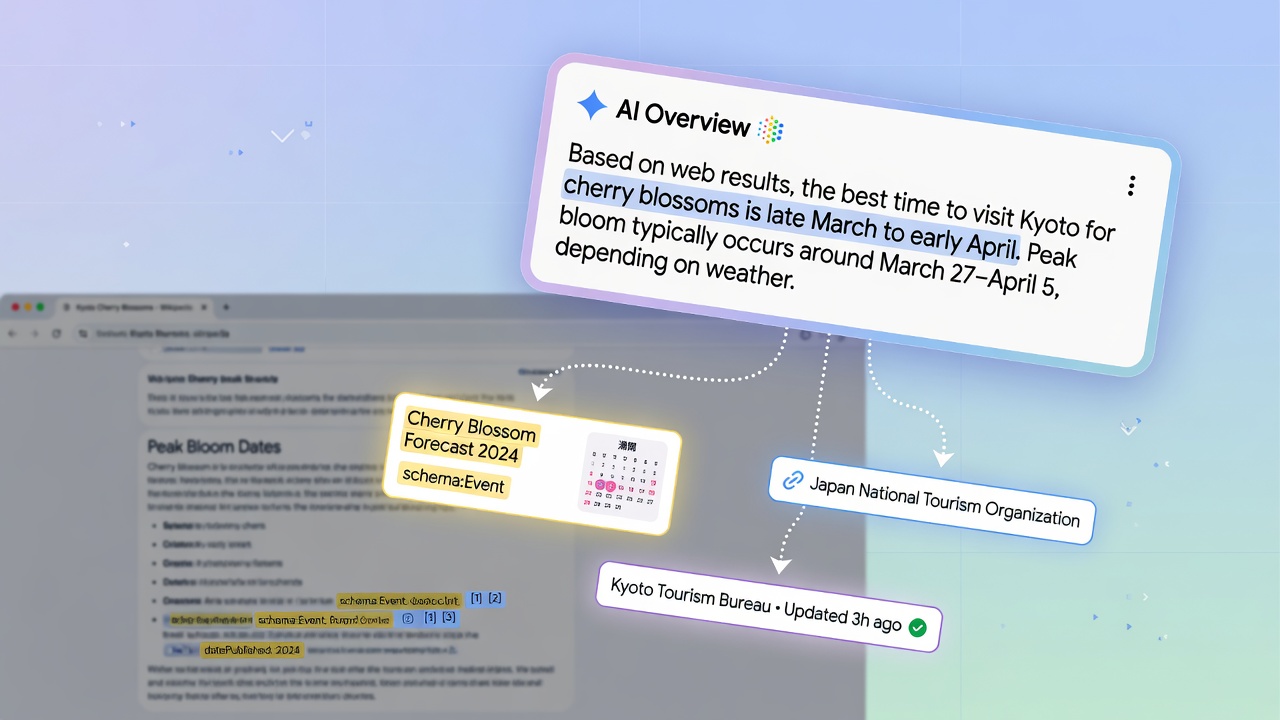
These synthesized answers, known as AI Overviews, represent a fundamental shift in how search engines process information. Instead of just matching keywords, Google relies on complex machine learning models like RankBrain and BERT to understand the deep semantic meaning of a query. To construct these generative responses, Google uses retrieval-augmented generation (RAG) and query fan-out in AI features to retrieve and synthesize content from the search index, ensuring the AI-generated answers are grounded in high-quality, up-to-date web pages.
To secure a spot in these AI-synthesized summaries, your content must be structured in a way that AI models can easily parse and trust. This requires a shift from traditional keyword stuffing to modern optimization tactics that align with dynamic retrieval systems:
- Target the "Query Fan-Out": Since AI search expands a single query into multiple sub-topics, structure your content to answer primary questions directly, followed by highly relevant, nested sub-headings that cover related follow-up questions.
- Prioritize E-E-A-T and Unique Data: Generative engines look for consensus but highlight unique, expert perspectives. Incorporating original research, first-party data, and clear author credentials signals to AI retrievers that your page offers high-value information.
- Deploy Schema Markup: Structured data acts as a direct translator for AI agents, making it simple for search crawlers to identify entities, facts, and relationships within your content.
- Maintain Freshness with AI Agents: Because retrieval systems prioritize real-time accuracy, using automated AI agents to monitor search intent shifts and continuously update outdated facts ensures your content remains the most reliable source available.
By aligning your content structure with how these retrieval systems evaluate relevance, you position your brand to be the primary source that AI search engines cite. This systematic approach is already yielding measurable success for forward-thinking brands.
Optimize for RAG — To rank in AI Overviews, focus on highly structured, deeply authoritative content that directly answers complex queries, allowing Google's retrieval systems to easily synthesize your pages into generative search results.
From Theory to Traffic: Real-World Results of AI SEO in Action
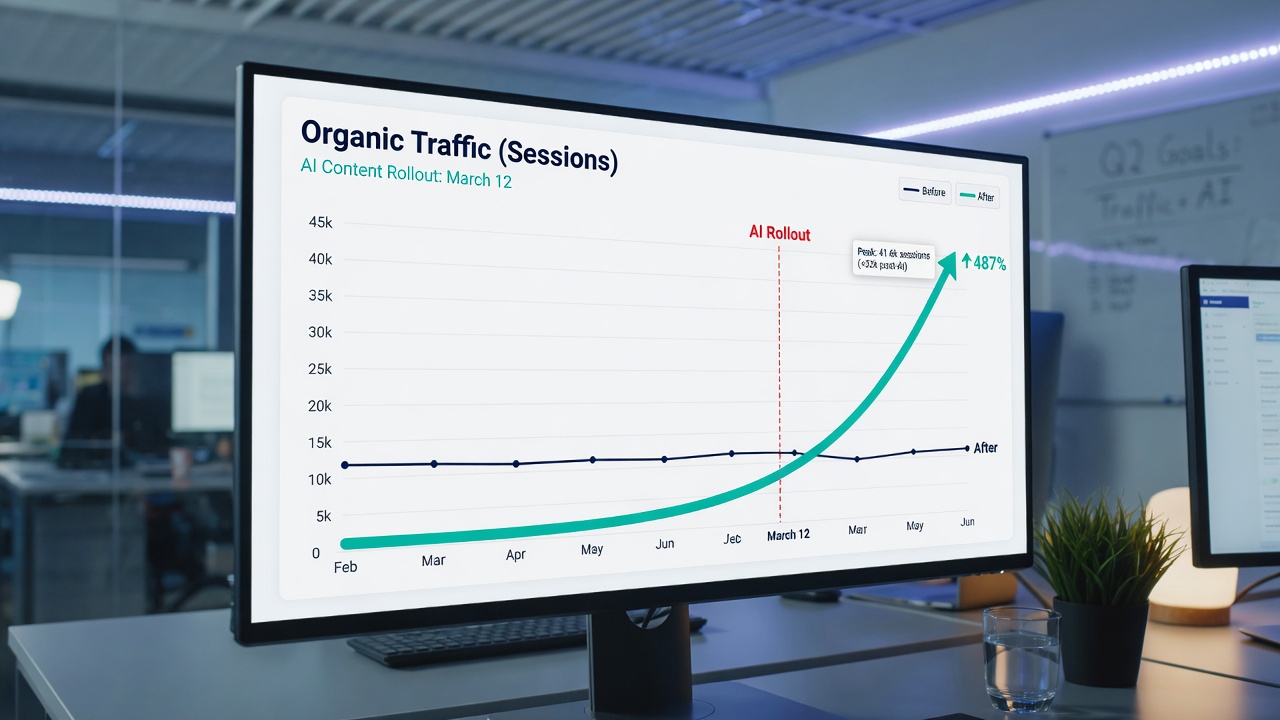
These aren't just theoretical projections; they represent a fundamental shift in how high-growth companies scale their organic footprint. When implemented with the right guardrails, automated content workflows move from a speculative experiment to a core performance driver.
Take the financial services sector, where accuracy and trust are paramount. Leading financial website Bankrate.com has been effectively increasing organic traffic using AI-generated content.
The Power of the Hybrid Editorial Model
This human-in-the-loop model is the secret to scaling without sacrificing integrity. By pairing the speed of AI generation with the oversight of experienced editors, brands can rapidly build out topical authority while ensuring every piece of content meets strict quality guidelines. This systematic review process is crucial for penalty avoidance, protecting the site from search engine updates designed to weed out low-effort, purely automated spam.
The results demonstrate that search engines do not penalize AI-assisted content simply because of its origin. Instead, they reward depth, utility, and user alignment. When AI handles the heavy lifting of structuring and drafting, human experts can focus on adding unique insights, proprietary data, and real-world experience—the exact signals that modern search algorithms prioritize.
With these real-world successes proving the viability of the technology, the next logical step is understanding how to build these workflows for your own brand.
Human-verified scale — Combining AI-driven content generation with expert editorial oversight allows brands to safely scale production to hundreds of articles, driving traffic growth while avoiding search engine quality penalties.
Key Takeaways
Let Flows automate your entire SEO publishing pipeline and engage your readers with interactive on-page AI chat today.
Frequently asked
Google uses advanced AI systems to analyze over 200 factors, matching pages to user intent and context. It also employs retrieval-augmented generation to retrieve and synthesize real-time web data directly into generative search features.
Yes, AI-generated content can rank highly if it is accurate, unique, and helpful. Many leading brands scale their organic traffic by publishing AI-assisted articles that are thoroughly reviewed and edited by human specialists to ensure high quality.
AI SEO tools can automate time-consuming processes like keyword research, content planning, SERP analysis, and on-page optimization. They can also predict search trends and automatically trigger content refreshes to keep articles up to date.
Traditional search focuses heavily on keyword matching and static index ranking. AI-powered search prioritizes semantic intent, context, and personalized answers, often synthesizing information from multiple sources and citing them directly.