SEO Strategies
AI SEO Algorithms and Ranking Factors

Search engines are no longer just indexing machines; they have evolved into highly sophisticated cognitive systems. Today, ranking at the top of search engine results pages requires understanding how artificial intelligence processes human language and intent. According to industry insights, AI-powered search engines like Google analyze over 200 factors to determine which web pages are the most relevant to a user's query. This massive analytical scale means that traditional, static SEO tactics are no longer sufficient to maintain visibility.
The transformation began when Google introduced AI models like RankBrain and BERT, which helped the search engine move from simple keyword-matching to true meaning-matching. Instead of scanning for exact phrase repetitions, these deep learning systems dissect the nuance, context, and underlying intent behind every search. This shift has redefined how content is evaluated, placing a premium on depth, clarity, and user experience over mechanical optimization.
To succeed in this modern landscape, creators must align their strategies with how these advanced systems evaluate web pages. In this guide, we will break down the mechanics of modern search algorithms, explore how core ranking engines collaborate with generative AI models, and outline actionable strategies to ensure your content thrives under AI-driven evaluation. Let us begin by exploring how Google's foundational AI models revolutionized the way search engines interpret human language.
TL;DR
- Google's AI systems like RankBrain and BERT have transitioned search from simple keyword matching to deep intent and semantic understanding.
- AI-powered search engines evaluate over 200 ranking factors, prioritizing content relevance, user experience, and E-E-A-T signals.
- AI-generated content receives no inherent ranking boost; its success depends entirely on its originality, usefulness, and quality.
- Optimizing for modern search requires balancing traditional ranking systems like PageRank with newer AI models like Gemini and MUM.
From Keywords to Context: How Google’s AI Rewrote the Rules
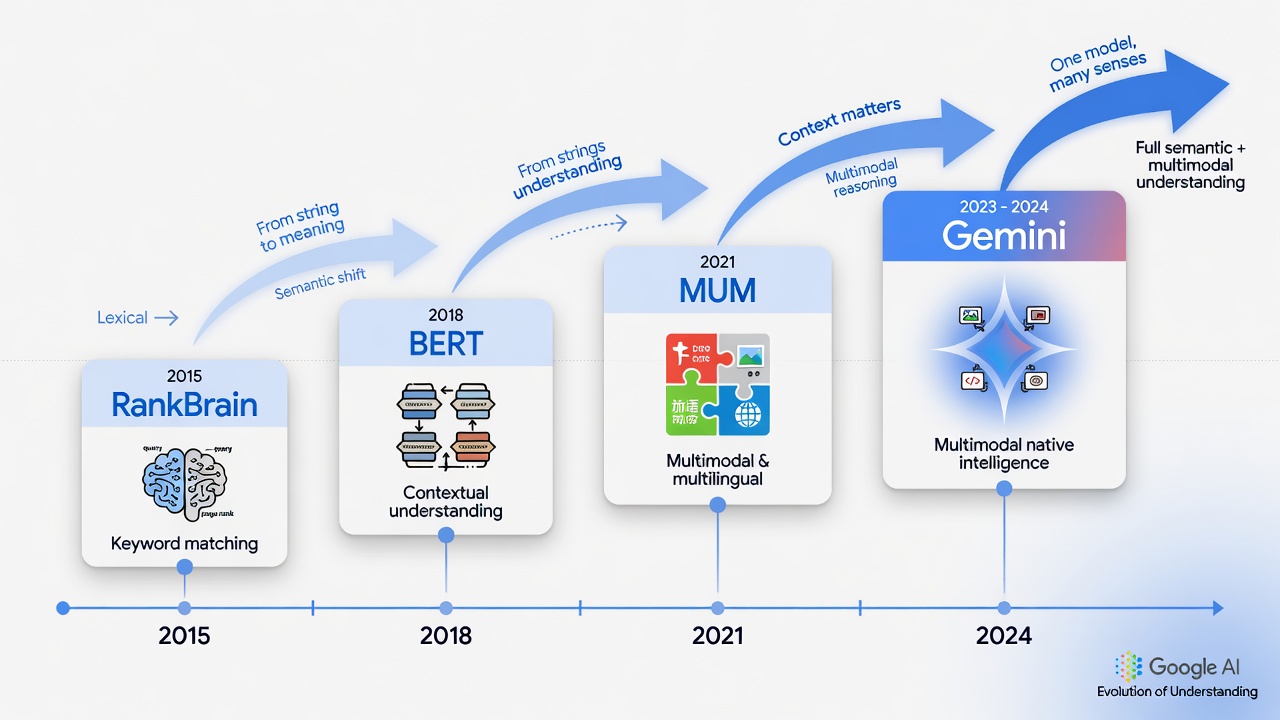
Historically, search engines operated like digital index cards, matching the exact phrases on a page to the words typed into a search query. That rigid era ended when Google began integrating machine learning into its core systems. The introduction of foundational AI models like RankBrain and BERT marked a massive shift, helping Google move away from simple keyword-matching and transition toward understanding true meaning and intent.
Instead of just counting how many times a term appeared, search engines started reading between the lines, grasping context, synonyms, and conversational language just like a human reader would. Today, this semantic capability has evolved even further. Advanced models like MUM (Multitask Unified Model) and Gemini now power AI Overviews, synthesizing complex information across formats to answer highly nuanced queries instantly.
For publishers, this evolution means that traditional optimization shortcuts no longer work. AI-powered search systems do not grant special ranking advantages to content just because it was created a certain way; instead, they evaluate how well your content demonstrates real-world expertise, experience, and authority. Classic signals like PageRank and user experience still matter, but they are now interpreted through a highly sophisticated cognitive lens that prioritizes depth and utility over basic optimization.
Intent over keywords — Modern Google algorithms prioritize semantic understanding and user intent, meaning your content must focus on depth and genuine utility rather than keyword density.Under the Hood: How AI Weighs the 200+ Signals of Modern Search

This cognitive lens doesn't replace the foundation of search; it supercharges it. AI-powered search engines analyze over 200 factors to determine which web pages are the most relevant, processing traditional signals alongside modern semantic understanding. Rather than looking at these signals in isolation, AI systems evaluate how they intersect to paint a complete picture of your site's credibility.
Within this complex calculation, content quality and freshness carry far heavier weight than ever before. Static, outdated information is quickly deprioritized by algorithms designed to serve real-time utility. Similarly, user experience signals are no longer optional checkboxes; they are core components of how AI measures overall engagement and satisfaction, ensuring that the highest-ranking pages are both informative and easy to navigate.
Multidimensional ranking — Modern AI search engines weigh over 200 ranking factors simultaneously, prioritizing fresh, high-quality content and seamless user experiences over static keyword optimization.
Does Google Care If an AI Wrote Your Content?

This focus on helpfulness and user satisfaction naturally raises a major question for modern publishers: how does the algorithm view AI-generated text? With the rise of advanced SEO automation and publishing agents, many creators wonder if using AI content gives them a secret advantage—or lands them a penalty.
According to Google's official guidance, using AI to generate content is completely acceptable, provided the final output is helpful, original, and aligns with their E-E-A-T framework (Experience, Expertise, Authoritativeness, and Trustworthiness). However, simply using AI does not provide any special ranking boost. As Google clarifies, "Using AI doesn't give content any special gains. It's just content. If it is useful, helpful, original, and satisfies aspects of E-E-A-T, it might do well in Search."
To ensure your AI-assisted content performs well under these rules, focus on three key pillars:
- Original insights: Inject proprietary data, unique case studies, or expert perspectives that an AI cannot invent on its own.
- Expert editorial review: Have human specialists verify the factual accuracy and tone of automated drafts.
- User-first structure: Ensure the layout is clean, highly readable, and directly answers the user's intent.
Ultimately, the engine does not reward the tool used; it rewards the value delivered to the reader. Once you have established a content workflow that meets these strict quality benchmarks, the next step is ensuring your technical foundation allows that content to shine.
Value over origin — Google treats AI-generated content just like human-written content; it receives no special ranking boost, meaning success relies entirely on meeting high E-E-A-T standards and delivering genuine utility.Beyond the Text: How Technical Performance and UX Fuel AI Rankings

This technical foundation isn't just about clean code; it's about removing any friction between your reader and the insights they came for. While Google's semantic AI systems like Gemini and RankBrain excel at understanding intent, they do not operate in a vacuum. Traditional core ranking systems—such as PageRank and indexing infrastructure—still work in tandem with these modern AI models to determine what surfaces in AI Overviews and standard search results.
If your site is slow, unresponsive, or difficult to navigate, even the most helpful content will struggle to rank. This is particularly true on mobile devices, where user experience is heavily scrutinized. According to a recent study by Moz, sites that improved their mobile UX saw a 15% increase in rankings post-update. Ensuring fast load times, intuitive navigation, and seamless readability is no longer a separate technical chore; it is an active ranking driver.
By aligning flawless technical performance with deeply helpful, intent-driven content, you give both human readers and AI search engines exactly what they need to succeed.
Technical UX is an AI ranking factor — Modern search engines combine core systems with semantic AI, making mobile optimization and user experience critical drivers that can yield up to a 15% lift in rankings.Key Takeaways
Let Flows automate your SEO strategy and publish high-ranking, intent-driven content that satisfies both search engines and your readers effortlessly.
Frequently asked
No, using AI does not give content any special ranking gains in search results. Google evaluates AI-generated content the same way it does human-written content, meaning it must be useful, original, and demonstrate strong E-E-A-T signals to rank well.
AI models like RankBrain and BERT helped Google move from keyword-matching to meaning-matching. They analyze the context and intent behind queries to deliver more relevant search results even when exact keywords are not present.
Rankings in AI Overviews are influenced by Google's core ranking systems, such as PageRank, Reviews, and Helpful Content, alongside advanced AI models including Gemini and MUM.
AI-powered search engines like Google analyze over 200 factors to determine which web pages are the most relevant and high-quality for any given search query.
Yes, optimization remains critical; for instance, a study by Moz showed that sites improving their mobile UX saw a 15% increase in rankings following major algorithm updates.