SEO Strategies
Optimizing AI Published Articles for Search

AI content is everywhere. In fact, recent data shows that 87% of businesses are using AI to create SEO content, leveraging automation for blogs, product descriptions, and service pages. But simply generating text and hitting publish is no longer enough to capture search traffic. To win in today's landscape, publishers must treat AI search optimization not as a separate, mysterious discipline, but as a natural extension of standard search engine optimization.
According to Google, optimizing for generative AI search is simply optimizing for the overall search experience. This means that foundational SEO best practices remain the bedrock for visibility in generative AI search features. To stand out and secure citations—especially since AI Overviews cite an average of 7.7 sources per query—your content must be highly structured, accurate, and deeply valuable. Automation gets you on the track, but human oversight keeps you ahead; currently, 93% of marketers edit AI-generated content before publishing to ensure it meets these high-quality standards.
By understanding how search engines and AI models evaluate automated content, you can build a publishing workflow that consistently ranks. Let's explore the practical strategies to optimize your AI-generated articles for both traditional search engines and next-generation AI search experiences.
TL;DR
- Optimizing for generative AI search is fundamentally an extension of foundational SEO, not a separate discipline.
- A striking 87% of businesses leverage AI for SEO content creation, making high-quality differentiation essential.
- Human editing remains critical, with 93% of marketers refining AI-generated drafts before they go live.
- AI Overviews cite an average of 7.7 sources, rewarding structured, accurate, and easily extractable data.
- Success relies on combining automated speed with human oversight and modular formatting.
The Non-Negotiable Core: Why Classic SEO Matters More Than Ever

It is easy to assume that the rise of artificial intelligence completely rewrites the playbook for search. However, the reality is that foundational SEO best practices remain the bedrock for visibility in generative AI search experiences. AI search engines and traditional crawlers ultimately share the same goal: delivering the most helpful, reliable, and well-structured information to the user.
To make your AI-published articles stand out to both human readers and machine algorithms, you must avoid shortcuts that ignore E-E-A-T (Experience, Expertise, Authoritativeness, and Trustworthiness). Instead, focus on these core elements:
- Prioritize people-first value: Create content that directly answers search intent with original insights.
- Structure for readability: Use clear headings, bulleted lists, and schema markup to help search engines easily parse and cite your pages.
- Optimize for snippets: Write concise answer blocks that AI engines can easily extract for search overviews.
While technical structure and classic optimization lay the groundwork for visibility, maintaining quality at scale is impossible without active human oversight.
Foundational SEO is AI SEO — Optimizing for generative search doesn't require reinventing the wheel; clear structure, high-quality information, and robust E-E-A-T remain your primary ranking levers.
The Human Filter: Elevating AI Drafts into High-Ranking Content
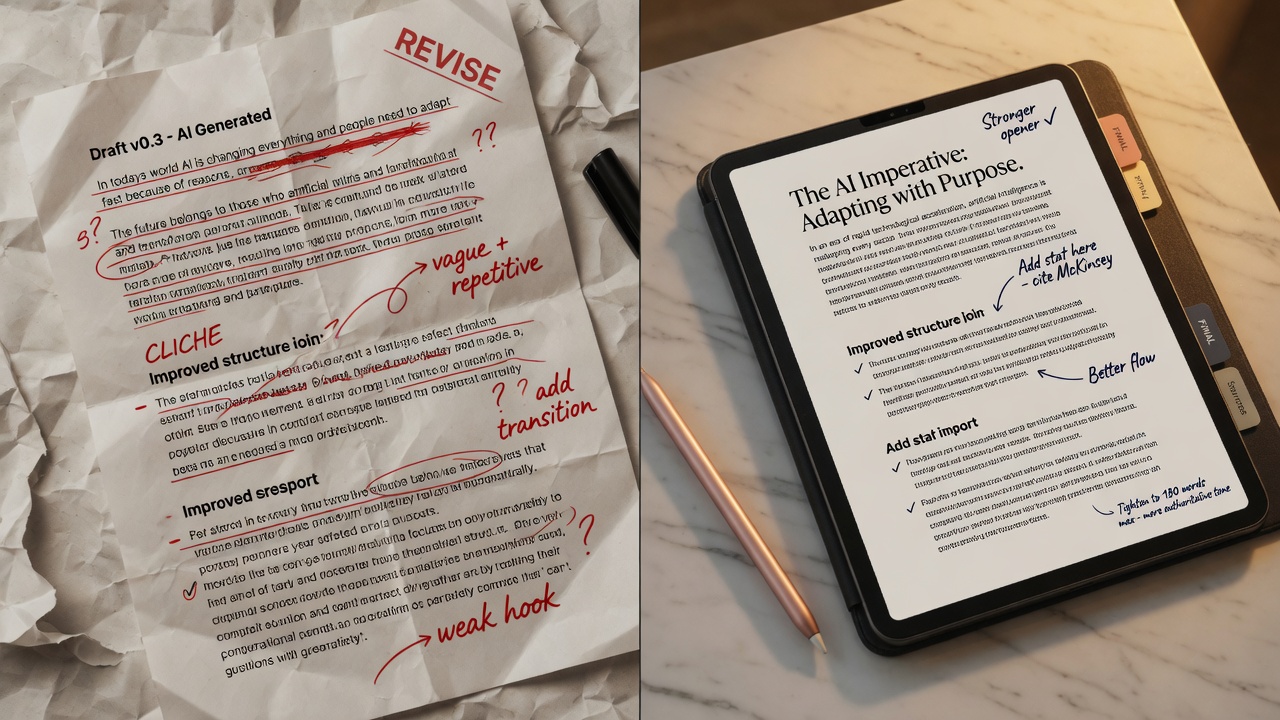
This is why human editing isn't just a final check—it is a critical ranking factor in its own right. AI is incredible at producing structured drafts quickly, but it lacks personal experience, original insights, and real-world data. To stand out, a human editor must inject these unique elements, bridging the gap between a generic summary and authoritative content.
Where Human Editors Move the Needle
- Injecting original insights: Adding proprietary data, case studies, or personal anecdotes that AI cannot replicate.
- Fixing factual errors and tone: Correcting robotic phrasing, repetitive structures, and flat-out inaccuracies.
- Boosting E-E-A-T: Grounding the article in real expertise to satisfy search engine quality standards.
The industry reflects this necessity: 93% of marketers actively edit AI-generated content before hitting publish. This human filter ensures that the final output doesn't just read well, but actually solves the reader's problem in a way a machine cannot. Once the content is polished and uniquely valuable, the next challenge is formatting it so search crawlers and AI models can easily parse it.
Human oversight is non-negotiable — While AI handles the heavy lifting of drafting, human editors are essential to inject the E-E-A-T, original insights, and factual accuracy required to rank.
Formatting for the Machine: How to Structure Content for AI Citations
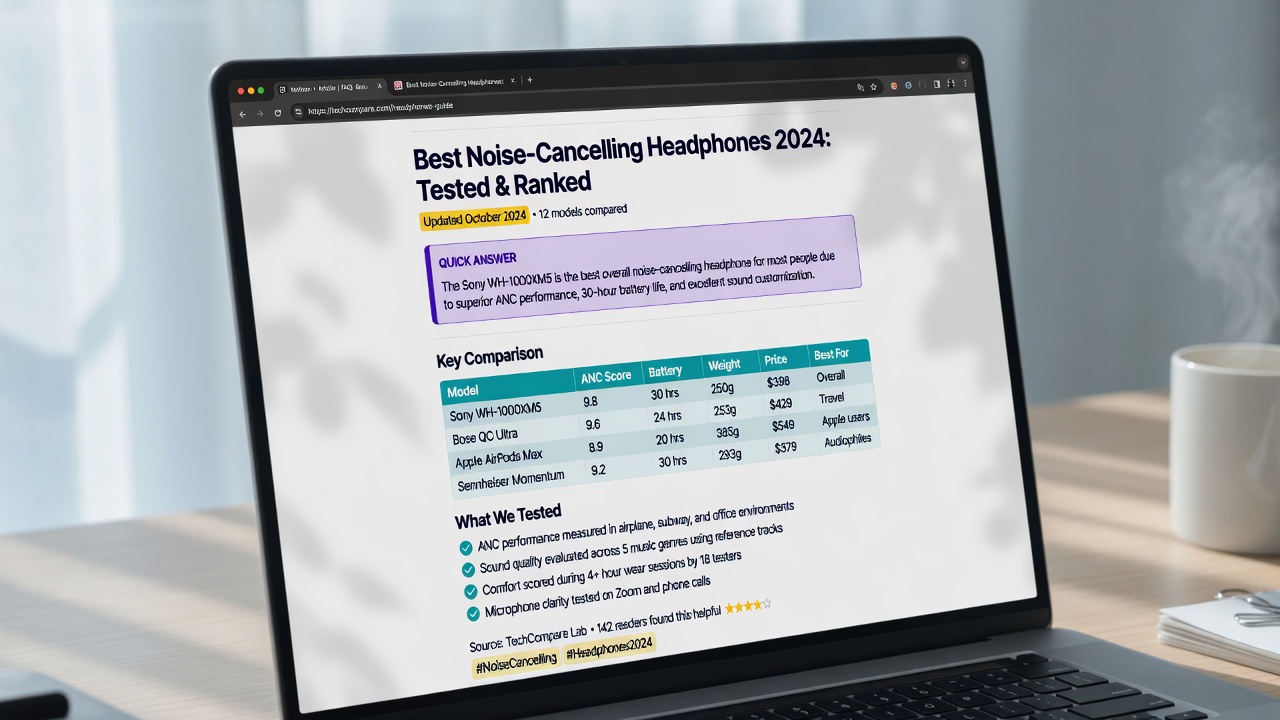
Generative search engines do not read like humans; they scan for highly structured, high-density information. When an AI search engine compiles an answer, it pulls from multiple high-quality places. In fact, AI Overviews cite an average of 7.7 sources to construct their responses, meaning there is ample opportunity for your content to be featured if it is easy to extract.
By aligning your layout with how machines parse data, you position your brand as an authoritative source in AI-generated answers. But formatting is only part of the equation; understanding where the broader industry is heading is crucial to staying ahead.
Structure drives citations — AI engines rely on clear formatting, concise answer blocks, and structured data tables to extract and cite information easily.
Scaling Smart: How Modern Brands Deploy AI Content
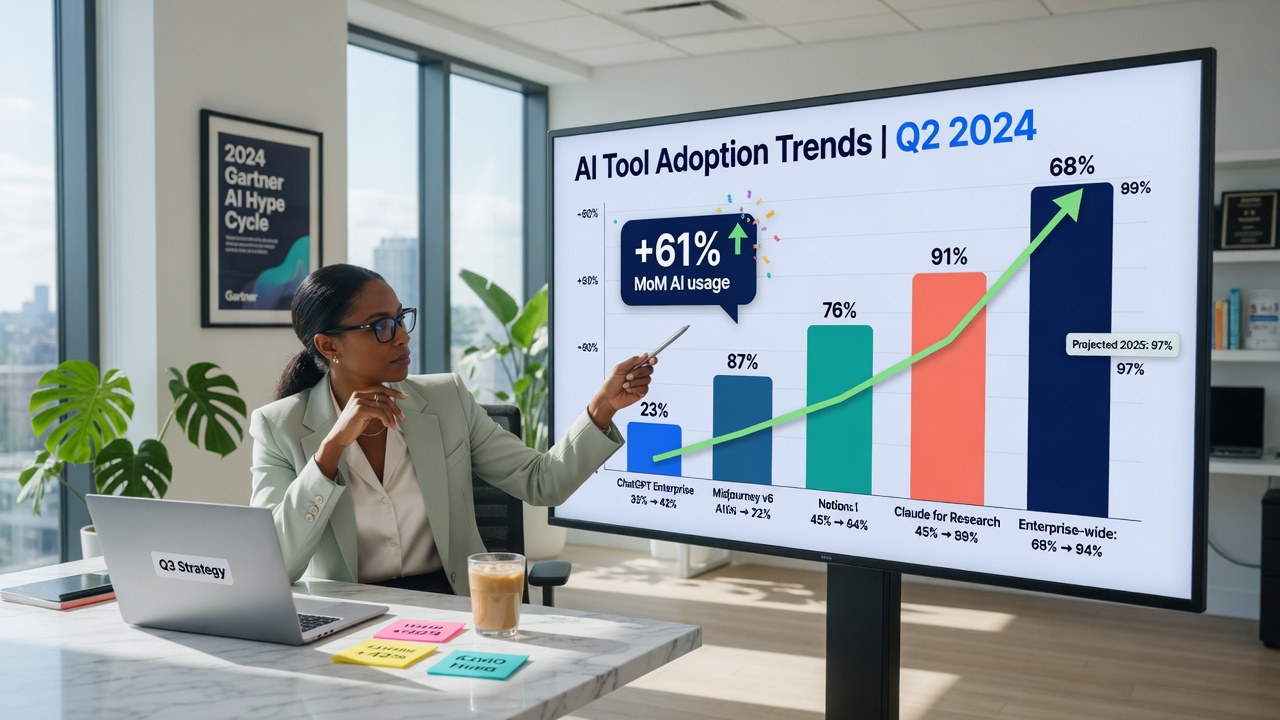
Keeping pace with this industry shift means recognizing just how deeply automated workflows have integrated into modern marketing. Today, 87% of businesses are using AI to create SEO content, with blogs, product descriptions, and service pages emerging as the most popular formats.
However, as the web becomes saturated with automated drafts, volume alone is no longer a competitive advantage. The brands winning the search game are those redirecting their saved time into researching and targeting evergreen, deeply valuable topics. Instead of chasing fleeting trends, they use AI to build comprehensive libraries of authoritative content that answers core user questions year after year.
This shift from simple generation to strategic curation ensures that your automated pipeline produces assets, not noise. It sets the stage for how search engines—and the new wave of AI engines—evaluate your site's overall utility.
Quality over volume — With 87% of businesses using AI for content creation, standing out requires focusing on evergreen, highly valuable topics rather than just scaling output.
Why AEO and GEO Are Simply Modern SEO
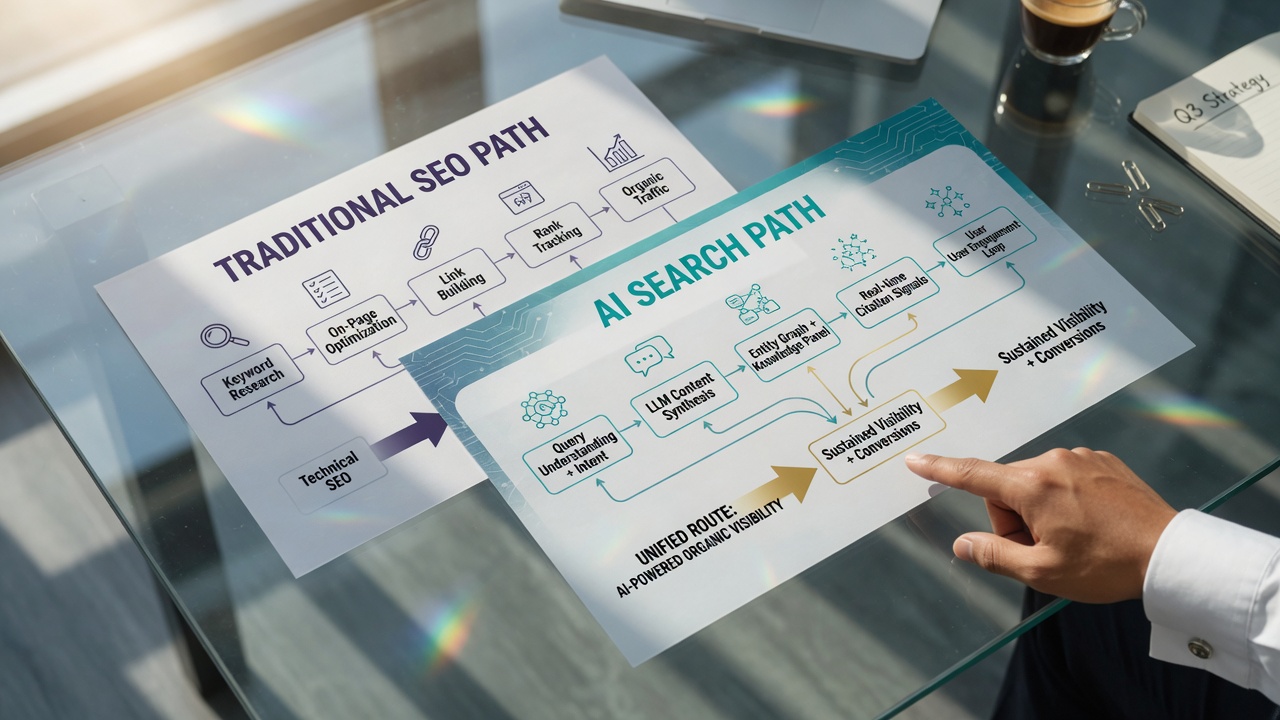
This evaluation of utility brings us to a crucial realization: Answer Engine Optimization (AEO) and Generative Engine Optimization (GEO) are not entirely new disciplines. They are simply modern SEO. In fact, Google’s own guidance clarifies that optimizing for generative AI search is optimizing for the search experience, making it fundamentally still SEO.
You do not need to rewrite your entire playbook or adopt experimental markups like llms.txt. Instead, focus on the fundamentals that have always driven search success: clarity, structure, and original value. AI models search for authoritative sources to cite, meaning that publishing unique data, proprietary insights, and clear, modular text is your best path to visibility.
By treating AEO and traditional SEO as one and the same, you build a sustainable strategy that satisfies both human readers and the algorithms that guide them.
AEO is just SEO — Do not get distracted by experimental tactics like llms.txt; optimizing for AI search simply means creating highly structured, original, and valuable content for users.
Key Takeaways
Streamline your modern search strategy by using Flows to automatically publish structured, search-optimized content complete with interactive AI chat features that engage your readers.
Frequently asked
No, Google does not penalize AI-generated content simply for being created by AI. The search engine focuses on the quality, usefulness, and originality of the content, meaning that well-optimized and helpful AI content can rank just as well as human-written pieces.
Human editing is crucial for ensuring accuracy, tone, and depth. In fact, 93% of marketers edit AI-generated content before publishing to inject unique insights, verify facts, and build the trust signals that search engines prioritize.
AI Overviews are generative search summaries that appear at the top of Google search results. These overviews cite an average of 7.7 sources on average, favoring websites that provide clear, structured, and factual answers to user queries.
No, you do not need to treat AI optimization as a separate discipline. Google treats optimization for generative features as standard SEO, meaning that foundational SEO best practices remain the primary driver for visibility in these AI experiences.