SEO Strategies
Common AI SEO Mistakes to Avoid

AI has transformed how publishers scale content, but speed without strategy often tanks rankings. After auditing over 500 websites that used AI for SEO in 2025 and early 2026, researchers identified 15 recurring mistakes. The biggest: publishing raw AI output without human editing, which triggers Google’s helpful-content penalties for thin copy. Over-optimization and ignoring user intent rank close behind. Success now requires unique, non-commodity content that satisfies both searchers and search engines. Below are the critical pitfalls and how to build a smarter AI workflow.
TL;DR
- Publishing unedited AI content is the quickest way to trigger search engine penalties.
- An audit of over five hundred websites revealed critical recurring errors in automated content strategies.
- Over-optimizing keywords and ignoring search intent remain major pitfalls in modern AI search environments.
- Successful AI SEO requires human oversight to produce unique, high-quality, non-commodity content.
The Autopilot Trap: Why Pure Automation Is Your Biggest SEO Risk

It is tempting to treat modern AI as a “set-it-and-forget-it” solution, but doing so is the fastest way to lose search visibility. The core risk is relying on automation without human oversight. At the heart of almost every failure is a lack of editorial guardrails.
Finding Your Blind Spots and Building Checkpoints
To prevent your site from falling victim to these common errors, you must actively audit your current AI workflows. Look for areas where the AI is left entirely to its own devices—such as auto-generating keyword lists or publishing drafts directly to your CMS. To fix this, establish clear checkpoints before any content goes live:
- Context and Intent Checks: Ensure the AI actually answered the searcher's query instead of just matching keywords.
- Fact-Checking Protocols: Verify any statistics, dates, or technical claims, as AI models are prone to confident hallucinations.
- Tone and Brand Alignment: Inject your unique brand voice so the content doesn't read like a generic encyclopedia entry.
By inserting human oversight into these key moments, you transition from lazy automation to smart, assisted scaling. This oversight is especially critical when it comes to the actual writing, as publishing raw, unedited AI drafts is one of the quickest ways to trigger search engine penalties.
Oversight is non-negotiable — Pure automation strips away the unique value search engines reward; auditing your workflows and building human checkpoints keeps your content accurate and competitive.
The Raw Draft Trap: Why Unedited AI Content Triggers Penalties
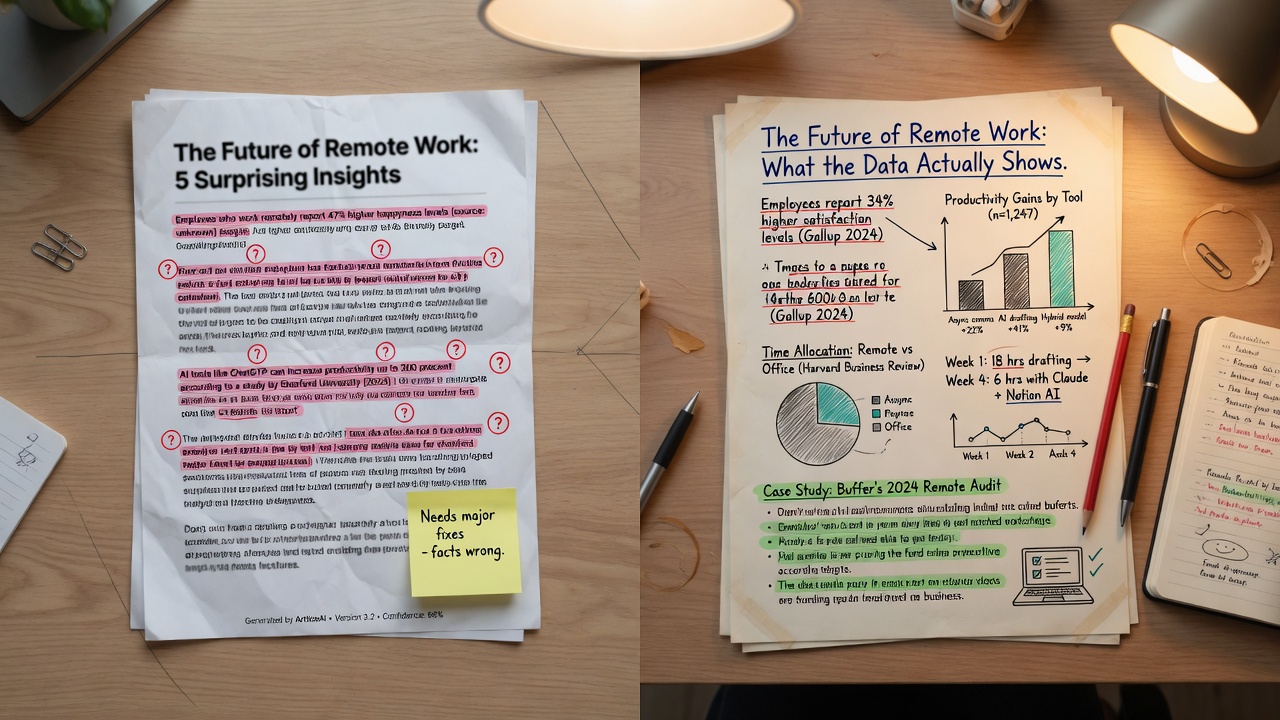
Treating your AI generator as a finished-product writer rather than a tireless assistant is the single biggest misstep you can make. Publishing AI-generated content without human editing directly triggers penalties from Google’s helpful content system for thin, unrefined copy.
When you publish raw AI output, you inherit all its natural limitations. AI-generated text is prone to generic phrasing, factual inaccuracies, and hallucinations—especially if you ask it for real-time data it cannot access. To keep your search visibility intact, you must review every draft for accuracy and brand voice consistency.
But editing is more than just proofreading. To truly stand out, you need to inject unique insights, original perspectives, or proprietary data before hitting publish. This human layer transforms generic AI summaries into authoritative, high-value content that actually answers user intent. Once you have refined the substance of your content, the next hurdle is resisting the urge to over-engineer it for search bots.
Human editing is non-negotiable — Publishing unedited AI drafts is the quickest way to trigger thin-content penalties; success requires manual refinement to inject unique insights and brand voice.
Ditch the Keyword Counter: Why Over-Optimization Fails in the AI Era

It is incredibly easy to fall into this trap because AI tools make it effortless to inject target phrases at scale. However, over-optimizing or keyword-stuffing has cemented itself as a top mistake in the 2026 AI search era. Modern search engines are far too sophisticated to be fooled by a high density of exact-match terms; in fact, they actively penalize it.
Instead of instructing your AI to repeat the same primary keyword, use it to build comprehensive topic clusters. Ask the AI to identify related subtopics, semantic variations, and natural synonyms that support your core theme. This shifts your content from a repetitive checklist of keywords to a rich, contextually dense resource. By using AI to expand your vocabulary and cover a subject from multiple angles, you signal genuine depth to search bots while keeping the copy engaging for human readers.
Prioritize semantic depth — Shift your AI prompts from keyword repetition to semantic variation and topic clustering to satisfy modern search engines without sacrificing readability.
The Intent Gap: Why AI Misses What Searchers Actually Want
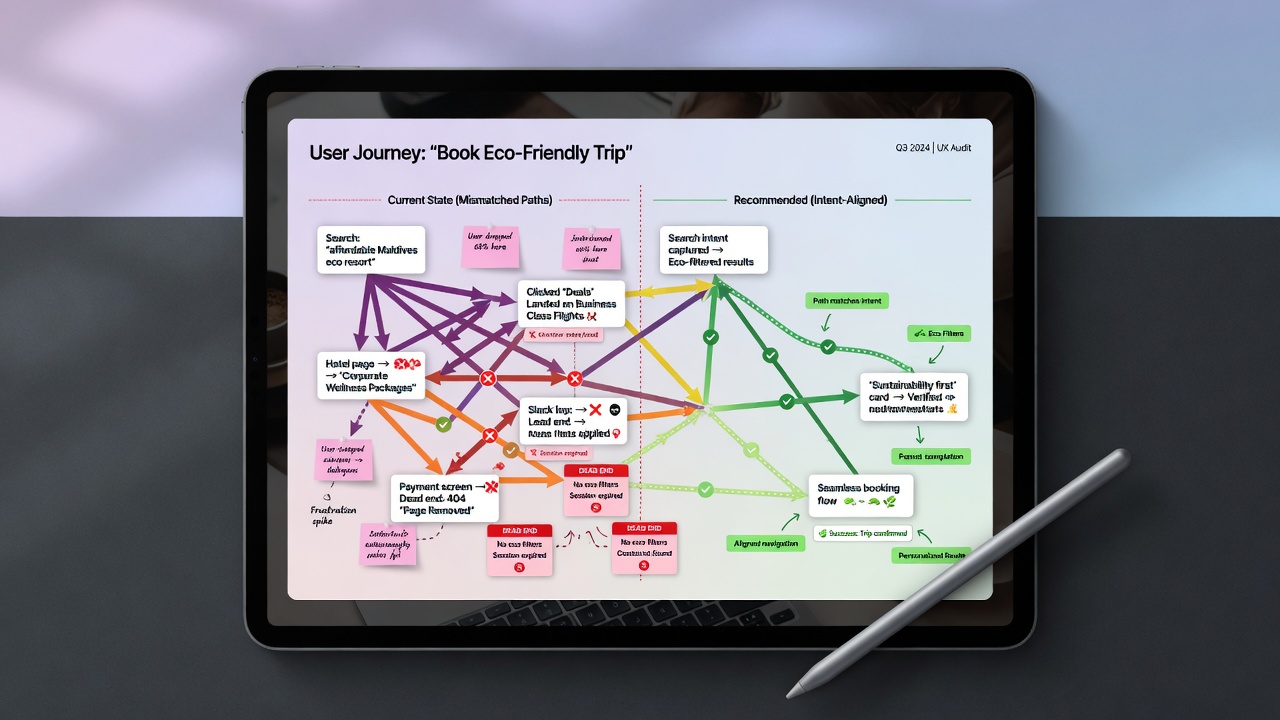
But even the most engaging vocabulary won't save your rankings if your content solves the wrong problem. Ignoring user intent and context is one of the most common SEO mistakes in 2026, often because AI tools default to generic, encyclopedic summaries when a searcher is looking for a quick, actionable solution.
To bridge this gap, you must actively guide your AI to map content to specific intent types. If a user is searching for a transactional guide, they do not need a historical overview; they need a step-by-step checklist. Always test your AI outputs against real-world user questions to ensure your content aligns with searcher expectations, keeping readers on the page and signaling true relevance to search engines.
Align with intent — Always test AI-generated drafts against real user queries to ensure you are providing direct, actionable solutions instead of generic informational fluff.
The Echo Chamber: Why Generic AI Content Fails (and How to Stand Out)

But relevance is only half the battle. If your AI-generated content simply repackages the same information found on the top ten search results, you fall into the commodity content trap. To win in today's search landscape, you must "Focus on making unique, non-commodity content that visitors from Search and your own readers will find helpful and satisfying."
This requires injecting proprietary data, original case studies, and personal experiences that an LLM cannot scrape from the web. By weaving real human insights into your AI workflows, you elevate your content from a generic summary to an authoritative guide.
To take engagement a step further, modern platforms like Flows allow you to embed an interactive AI chat directly inside your articles. This lets readers dive deeper into your unique insights, ask questions, and navigate complex topics in real-time, turning static pages into dynamic, high-converting hubs.
Inject original value — Break free from the AI echo chamber by blending proprietary insights with interactive on-page AI chat features to satisfy searchers and search engines alike.
Key Takeaways
Discover how Flows combines smart AI SEO automation with interactive on-page chat to help you publish high-ranking, engaging content safely and efficiently.
Frequently asked
The single biggest mistake is publishing AI-generated content without human editing, which often leads to Google's helpful content system penalizing the site for thin, low-value material.
Over-optimizing or keyword-stuffing is a major error in the current AI search era, as search engines easily detect unnatural keyword repetition and prioritize natural, high-quality writing instead.
Ignoring user intent and context is one of the most common SEO mistakes because AI often generates generic answers that do not directly solve the specific problem the searcher is trying to resolve.
You must focus on making unique, non-commodity content that visitors find helpful, combining AI efficiency with strong human oversight and editing to ensure accuracy and depth.