SEO Strategies
Implementing AI in Your SEO Strategy

Search engine optimization is undergoing its most significant shift since the advent of mobile browsing. With AI Overviews appearing on 80–88% of informational queries in 2026, according to the report 2026 SEO Trends and What It Mean for Your Business, the way audiences discover information has fundamentally changed. Businesses can no longer rely solely on manual, slow-paced content production to stay visible in search results.
Instead, modern marketing teams are turning to AI to scale their efforts. By automating time-consuming tasks like keyword research, structural optimization, and initial drafting, brands can publish high-quality content at a fraction of the traditional cost. This is not just about cutting expenses; it is about driving real business growth. In fact, one company achieved over 60% increase in revenue from search traffic using AI-driven SEO, as documented in SEO Case Studies.
However, successful AI SEO is not as simple as clicking "generate" and walking away. To win in this new era, you must strike a balance between automated speed and human expertise, while preparing your site for both Google and generative AI engines. This guide will walk you through the practical steps to build an automated, high-performing SEO workflow that respects search engine guidelines and consistently converts readers.
TL;DR
- AI tools automate keyword research and content creation to maximize SEO workflow efficiency.
- Optimizing for AI Overviews and Generative Engine Optimization is essential for 2026 search visibility.
- Human oversight remains critical to refine AI drafts and maintain high E-E-A-T standards.
- Integrating AI assistance can drive dramatic increases in organic search traffic and revenue.
The New Search Era: Why AI SEO is No Longer Optional
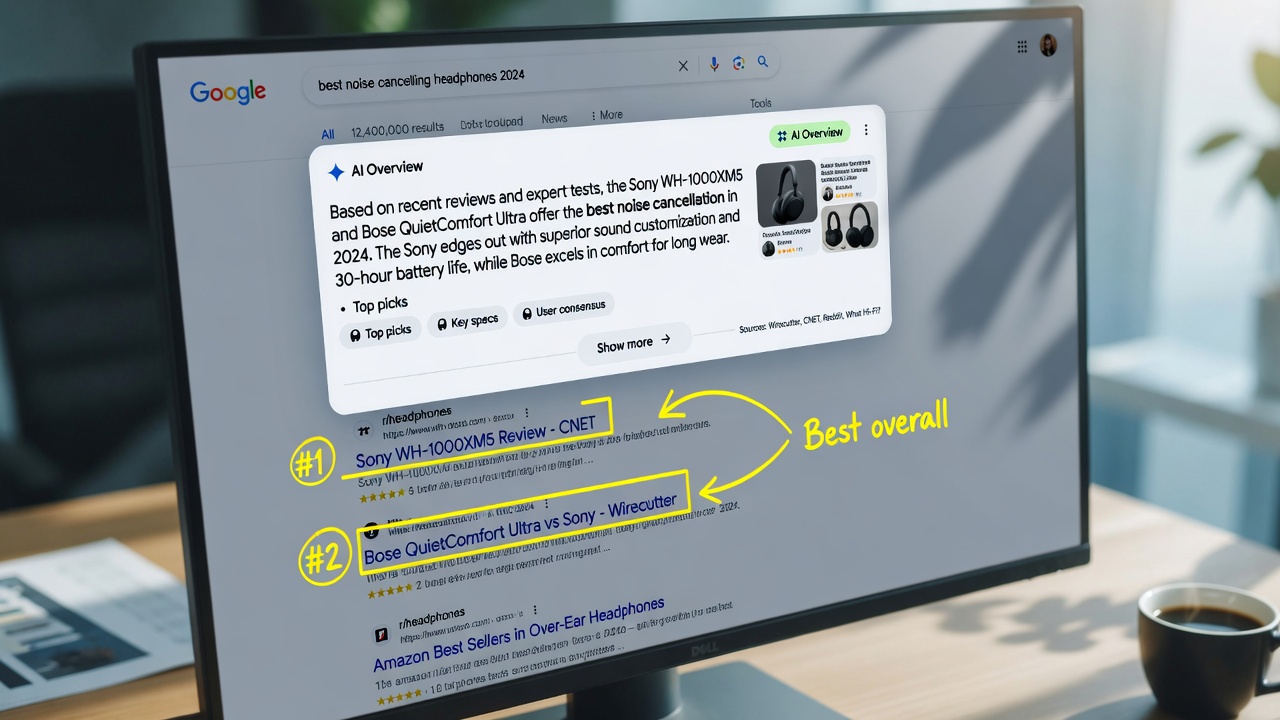
Achieving this balance begins with understanding how fundamentally the search landscape has shifted. Traditional blue links are no longer the sole gateway to organic traffic. Instead, search engines are increasingly answering user queries directly on the results page using generative AI.
In fact, AI Overviews now appear on 80–88% of informational queries, fundamentally changing how users interact with search results and where they click. This shift means that securing a top-three organic ranking is no longer enough; your brand must also be cited within these AI-generated summaries.
The Shift to Generative Engine Optimization
To survive in this environment, businesses must adopt new optimization approaches like Generative Engine Optimization (GEO). This requires building deep topical authority and establishing strong E-E-A-T (Experience, Expertise, Authoritativeness, and Trustworthiness) signals. Because manual workflows cannot keep pace with this real-time evolution, leveraging SEO automation has become a necessity to scale content production while maintaining high editorial standards.
Adapt to AI Overviews — With generative summaries dominating informational searches, SEO success now requires optimizing for AI visibility alongside traditional search rankings.
Integrating AI Workflows: From Keyword Research to Content Drafts
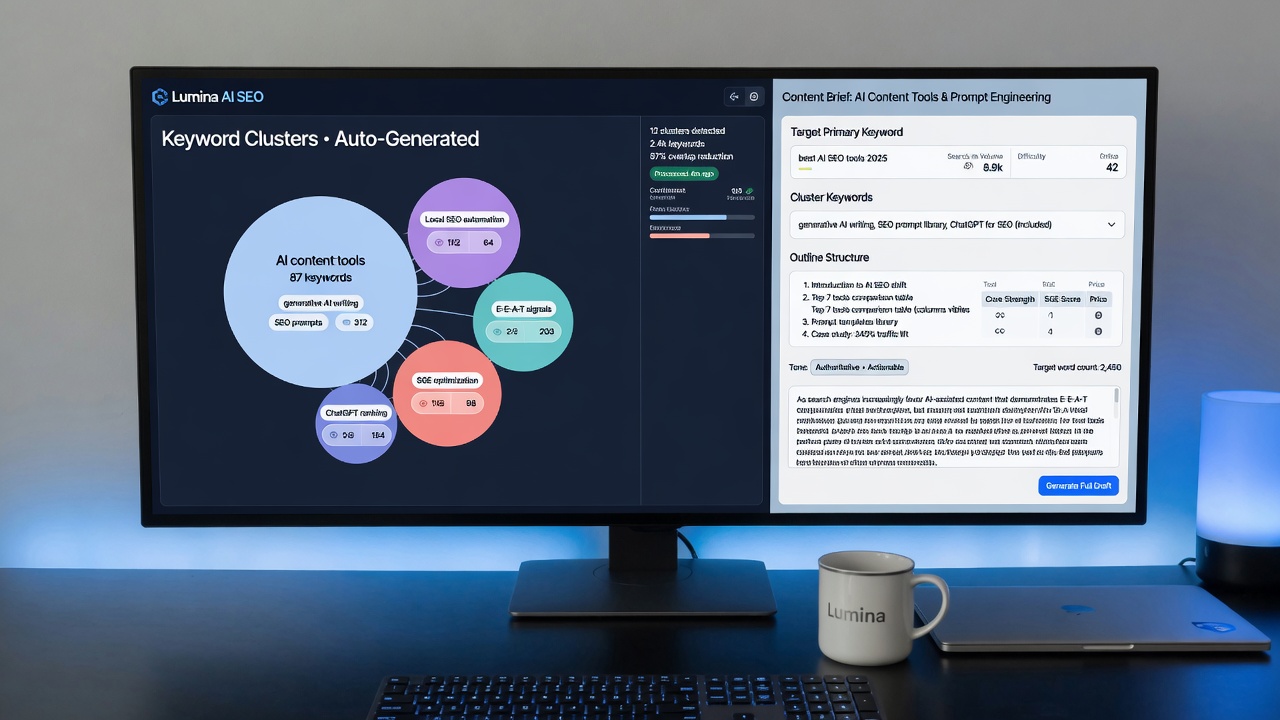
To scale effectively, modern marketing teams are turning to specialized AI systems to handle the heavy lifting of search optimization. AI-powered tools can automate time-consuming tasks such as keyword research, content optimization, and link building. Instead of spending days sorting through spreadsheets to find search volume and keyword difficulty, algorithms can instantly identify semantic gaps and map out entire topical clusters. This shifts your team's focus from tedious manual data entry to high-level strategy.
While these automated steps dramatically accelerate production, the magic happens during the handoff. AI generates the foundational data and initial drafts, but human editors provide the critical experience and expertise that search engines demand. This hybrid approach ensures you publish at scale without sacrificing quality, preparing your site for the next wave of generative search.
Smart automation scales your output by letting AI handle research and drafting, while human editors preserve E-E-A-T and brand trust.
Cracking the GEO Code: How to Optimize for AI Overviews
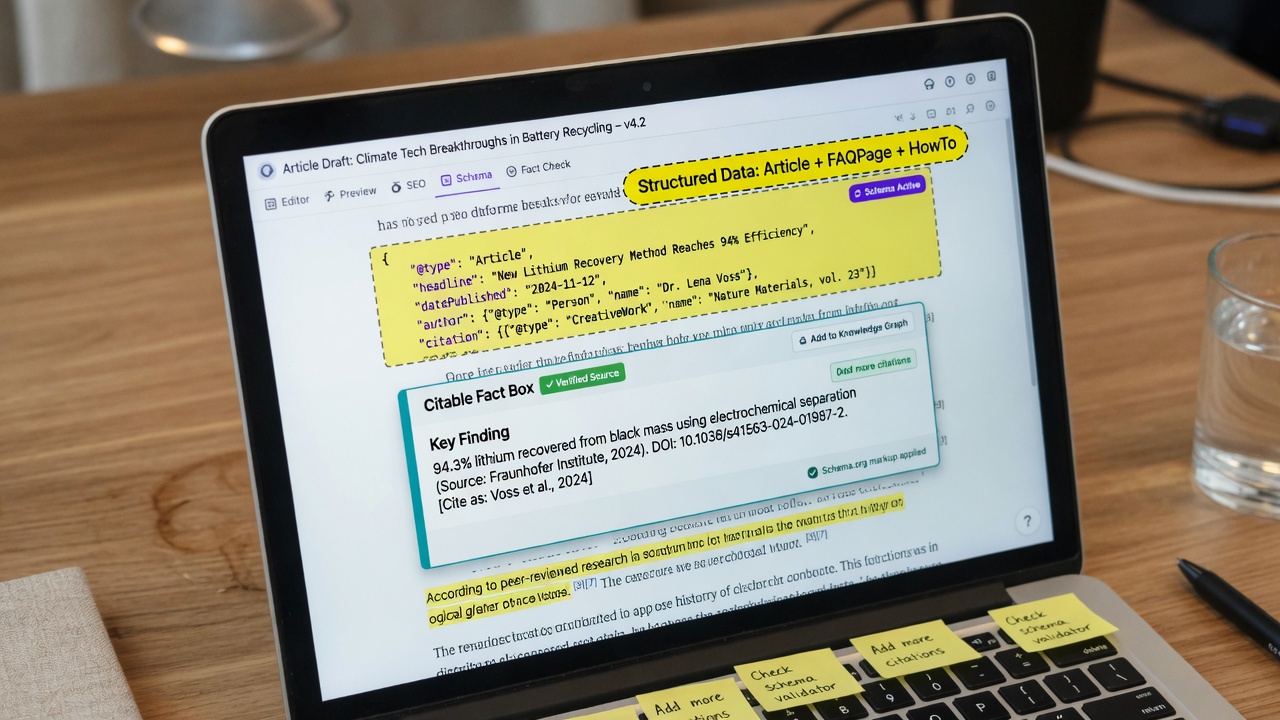
To win in this generative landscape, we must shift our focus from traditional keyword density to Generative Engine Optimization (GEO). While traditional SEO prioritizes blue links, GEO focuses on making content citable, quotable, and machine-readable for AI systems. When an AI search engine synthesizes information to answer a user's query, it scans the web for sources that present facts clearly, directly, and authoritatively.
Actionable Tactics for GEO Structuring
To make your content easily digestible for these AI models, structure is everything. You can optimize your pages using a few highly actionable formatting techniques:
- Direct Q&A Formatting: Use clear subheadings for common user questions, followed immediately by a concise, direct answer in the first sentence.
- Incorporate Schema Markup: Leverage structured data to help AI scrapers quickly map out the entity relationships on your page.
- Publish Original Data: AI models love to quote primary sources. Sharing proprietary data, unique case studies, or expert quotes makes your content highly citable.
By formatting your pages to feed these algorithms exactly what they need, you secure your place as a primary source in AI-generated answers. But once you've optimized your content for these engines, how do you track performance and maintain editorial standards over time?
Optimize for citation — GEO requires structuring your content with direct answers, schema markup, and proprietary data so AI search engines can easily read, quote, and cite your site.Tracking Success and Safeguarding Quality: The Final Mile of AI SEO
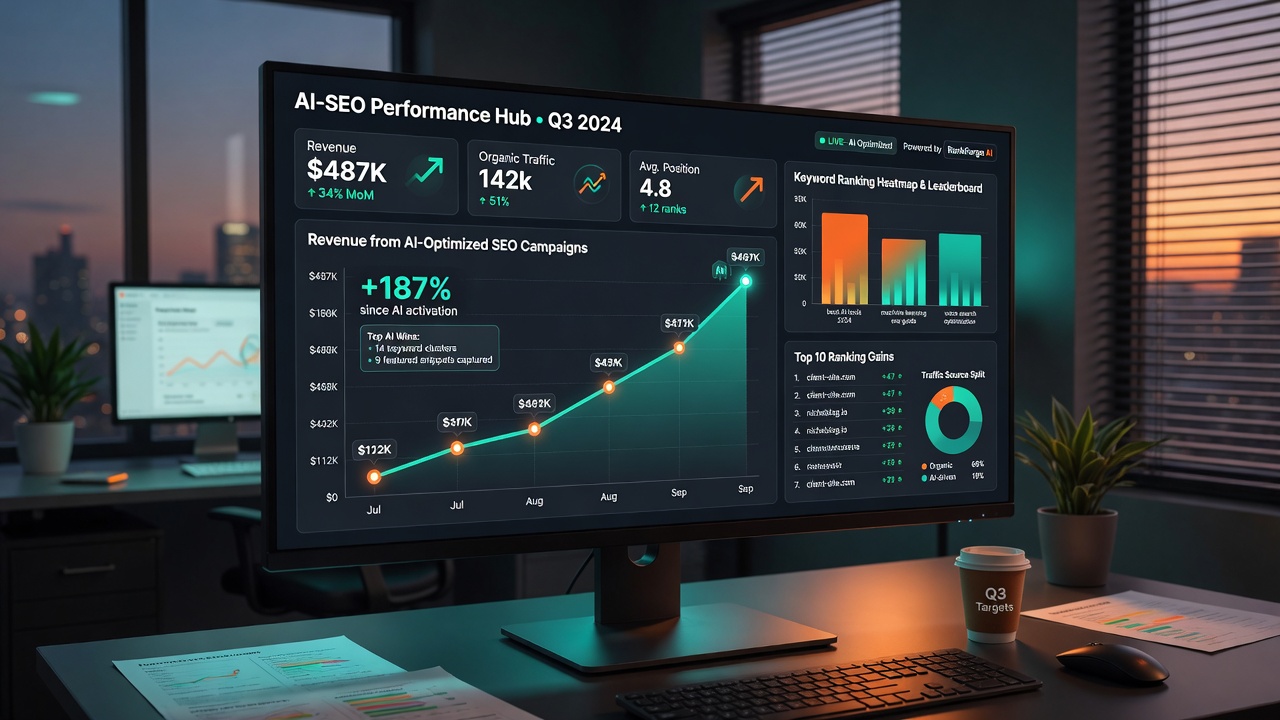
Answering that question requires shifting how we define SEO success. While traditional rank tracking still matters, the ultimate proof of an AI-driven strategy lies in real-world business growth. The return on investment is clear: one company achieved over a 60% increase in revenue from search traffic using AI-driven SEO.
The Human-in-the-Loop Editorial Workflow
These results only hold steady when you safeguard your content quality. To prevent automated drafts from diluting your brand authority, establish a clear editorial pipeline. You should use AI for structure and speed, but assign experienced writers or strategists to review, refine, and inject genuine expertise.
- Verify Technical Accuracy: Fact-check all claims, data points, and automated assertions to maintain trust.
- Enhance Brand Voice: Inject your brand's unique perspective, real-world anecdotes, and tone into every draft.
- Engage Readers Directly: Deploy interactive elements, such as Flows' integrated AI chat, to help readers navigate complex topics and convert in real time.
Balance speed with supervision — Combine AI automation for scale with human experts who refine the content, ensuring your SEO strategy drives measurable revenue growth without sacrificing brand trust.
Key Takeaways
Start automating your content creation and optimizing for the generative search era by launching your first automated SEO campaign with Flows today.
Frequently asked
According to AI for SEO: Your Guide for 2026, AI-powered tools can automate time-consuming tasks such as keyword research, content optimization, and link building. This allows marketing teams to focus more on high-level strategy and creative execution.
As highlighted in The Best AI SEO GEO Strategies to Implement in 2026, GEO focuses on making content citable, quotable, and machine-readable for AI systems. This ensures your brand is referenced directly within AI-generated search summaries.
While AI speeds up drafting, human review is crucial. The guide AI Content SEO Strategy for Marketing Agencies in 2026 advises teams to use AI for structure and speed, but assign experienced writers or strategists to review, refine, and inject genuine expertise.
Yes, when implemented correctly with human oversight, AI-driven SEO can yield massive returns. For instance, one company achieved over 60% increase in revenue from search traffic using AI-driven SEO, according to SEO Case Studies.